Id Kah Mosque
Id Kah Mosque, People's Republic of China
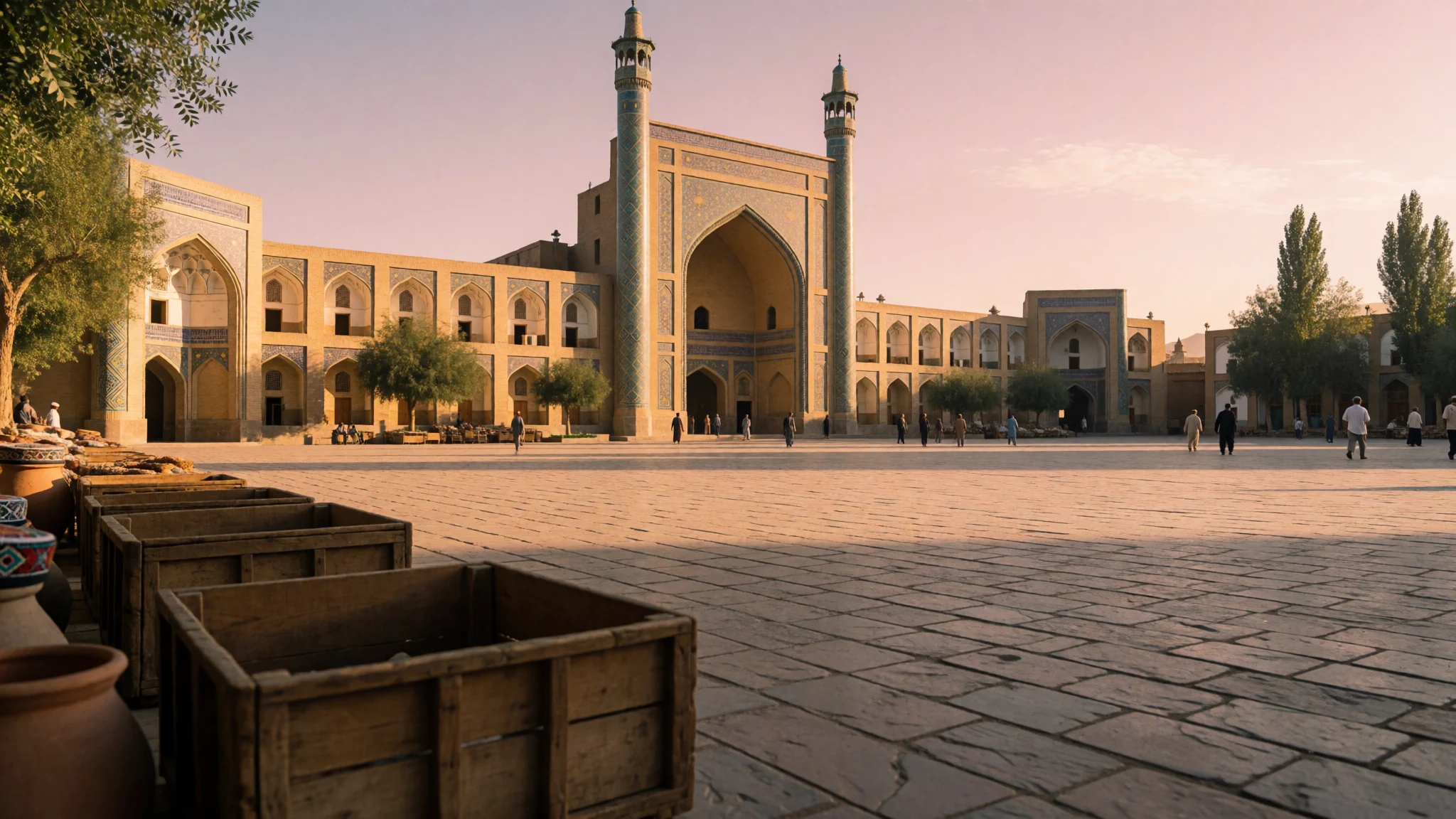
Visit Id Kah Mosque to witness a monumental piece of Silk Road history and Central Asian Islamic architecture.
The place
Id Kah Mosque stands as a defining landmark in the heart of Kashgar, situated in the far western reaches of China where ancient desert trade routes met. The Id Kah Mosque complex features a grand yellow-brick portal, expansive interior courtyards, and quiet prayer halls shaded by mature trees. Long before modern pavement reached these arid plains, the oasis town of Kashgar served as a vital meeting point where northern and southern tracks around the Taklamakan Desert converged after splitting near Dunhuang. Today, the immediate surroundings retain much of their traditional atmosphere, drawing visitors who wish to observe desert vernacular architecture and the daily rhythms of local life against a backdrop of distant mountain ranges and dusty skies. Within the sprawling complex, open spaces and arched galleries reflect centuries of regional building traditions influenced by Persian and Central Asian aesthetics. The outer plaza acts as a natural gathering point for residents, providing a wide-open public space where community members congregate beneath the vast desert sun. While modern urban changes have reshaped much of the surrounding municipality, the mosque remains an architectural anchor that recalls the era of camel caravans, textile merchants, and cross-continental exchange that forged this historic Silk Road outpost.
Its story
Id Kah Mosque has witnessed centuries of regional political shifts, dynastic transformations, and dramatic events that shaped modern Xinjiang. Historical records indicate that the Id Kah Mosque was established in the fifteenth century, specifically in the year 1442, by Saqsiz Mirza to honour his ancestors while incorporating older foundations dating back much earlier. Later periods brought major architectural renewals, notably the construction of the golden-brick structure in the late eighteenth century and subsequent expansions during the nineteenth century that brought the complex to its current expanse. During the twentieth century, the precinct occasionally served as a dramatic stage for political declarations and violent conflicts involving regional leaders and military figures during periods of severe civil unrest. In more recent decades, the site has experienced shifting administrative policies, closing for general worship while remaining a protected cultural heritage asset. Scholars, diplomats, and international visitors have documented its evolving role through changing political eras, recording its tilework, courtyards, and enduring place in Central Asian history. These layered episodes of patronage, conflict, and conservation illustrate how a single desert sanctuary can mirror the complex geopolitical currents of a vast and contested frontier region over hundreds of years.
What to see
- Id Kah Mosque — Central Kashgar
Id Kah Mosque itself occupies the centre of the municipal square, displaying distinctive yellow walls and traditional Central Asian brickwork. Visitors can admire the towering entrance portal and expansive interior courtyards during designated opening windows. Modest attire covering shoulders and legs is required for entry. - Kashgar Old Town — Old City District
Kashgar Old Town preserves a labyrinth of earthen alleys, traditional courtyard dwellings, and artisanal workshops. Walking through these narrow lanes reveals open-air metal smiths, woodcarvers, and bakeries using traditional clay ovens. The neighbourhood offers a tangible glimpse into historic residential architecture that has survived centuries of desert winds. - Mal Bazaar — Outskirts of Kashgar
Mal Bazaar is a traditional livestock market held on open fenced ground outside the main urban core where rural breeders gather to trade sheep, goats, camels, and horses. The energetic weekly gathering provides an unfiltered look at traditional rural commerce, bargaining traditions, and animal husbandry practices across the region. - Tomb of Apak Hoja — Northeastern Suburbs
Tomb of Apak Hoja is a grand mausoleum complex built in the seventeenth century featuring striking green-and-white tilework and distinctive corner minarets. As an important regional pilgrimage site, the mortuary compound showcases classical Islamic funerary design and intricate tile mosaics crafted centuries ago by master artisans. - Gaotai Ancient Homes — East Gate District
Gaotai Ancient Homes clings to a high clay cliff just outside the historic east gate, featuring tightly clustered residential dwellings built on elevated platforms. Visitors can explore portions of the raised earthen architecture, where traditional homes are stacked closely together along steep pedestrian pathways.
Culture
Id Kah Mosque exists within a culturally rich region shaped predominantly by the traditions, language, and social customs of the Uyghur people. Hospitality remains a core value in local daily life, often expressed through the immediate offering of hot tea and dried fruits to guests and travellers. Traditional music and dance, featuring instruments like the dutar and rawap, play a central role in family gatherings, weddings, and seasonal community celebrations. Artisan guilds have passed down specialized crafts for generations, including intricate carpet weaving, copper beating, knife making, and pottery fired in wood-burning kilns. Daily life in the surrounding streets moves to the rhythm of Islamic prayer times, traditional market days, and seasonal agricultural cycles across the oasis basin. Visitors should always ask permission before photographing local residents, particularly elderly community members and those gathered in public squares near religious sites.
What to wear
Id Kah Mosque and the surrounding streets showcase a distinct blend of traditional attire and modern wear influenced by Central Asian heritage and regional climate demands. Traditional Uyghur dress for men frequently includes a embroidered four-sided skullcap known as a doppach, paired with loose tunics or patterned outer robes, while women often wear colourful silk dresses, embroidered vests, and headscarves crafted from locally woven fabrics. In contemporary daily life, younger generations frequently wear western-style trousers, jackets, and utility wear, though traditional caps and regional textiles remain common sights in markets and public squares. Visitors exploring the area should dress conservatively to respect local cultural norms, ensuring that both shoulders and knees are fully covered at all times. Lightweight, breathable layers are recommended to cope with intense summer heat and dust, while sturdy walking shoes are essential for navigating unpaved alleyways and uneven cobblestones throughout the historic quarters.
What to eat
- Evening Food Stalls — Square opposite Id Kah Mosque
Evening food stalls operating directly opposite the mosque offer a wide variety of local snacks, grilled meats, and regional street delicacies once the sun begins to set. - Yasin Kariagim Silk Road Uighur Restaurant — Central Kashgar
Yasin Kariagim Silk Road Uighur Restaurant is popular among local residents for serving exceptionally fresh meat dishes prepared according to traditional regional recipes. - Karakoram Cafe — Near Id Kah Mosque
Karakoram Cafe provides a welcoming western-style oasis offering hot drinks, quality meals, and helpful English-speaking service in the middle of the city. - K2 Rooftop Cafe — Overlooking the Mosque Plaza
K2 Rooftop Cafe features a plant-covered terrace with fine coffee, pizza, desserts, and a direct panoramic view overlooking the courtyard of the mosque. - Pakistani Shawarma Stalls — Kashgar Market District
Pakistani Shawarma Stalls run by expatriates from across the border serve authentic home-style Pakistani dishes and spiced meat wraps to hungry travellers.
Plan it
Best time. April to May and September to October offer comfortable daytime temperatures and pleasant weather, avoiding the extreme summer heat and harsh winter cold of the desert basin.
How long. 2–3
Getting there. Fly into Kashgar Laining International Airport, then take a metered taxi, airport shuttle bus, or public bus line into the city centre.
Budget. mid
Tips
- Check current local regulations and opening schedules before visiting the mosque.
- Carry sufficient cash, as digital payment acceptance can vary in smaller shops.
- Obtain a Border Area Pass in advance from the Foreign Affairs Office if planning to travel toward Tashkurgan.
- Wear comfortable footwear suitable for walking on dusty, uneven terrain.
Etiquette
- Dress modestly by keeping shoulders and legs covered when visiting religious and cultural sites.
- Always ask permission before taking photographs of local residents.
Nearby
Sources
- Wikidata Q1325825 (CC0)
- Wikipedia (rev 1376634782) (CC-BY-SA 4.0)
- Wikivoyage (rev 5406344) (CC-BY-SA 4.0)
- Photo 01 (CC BY-SA 4.0)
- Photo 02 (CC BY 3.0)
- Photo 03 (CC BY-SA 4.0)
- Photo 04 (CC BY-SA 4.0)
- Photo 05 (CC BY-SA 4.0)
- Photo 06 (CC BY-SA 2.0)
- Photo 07 (CC BY-SA 2.0)
- Photo 08 (CC BY-SA 2.0)


