Hwaseong Fortress
Hwaseong Fortress, South Korea
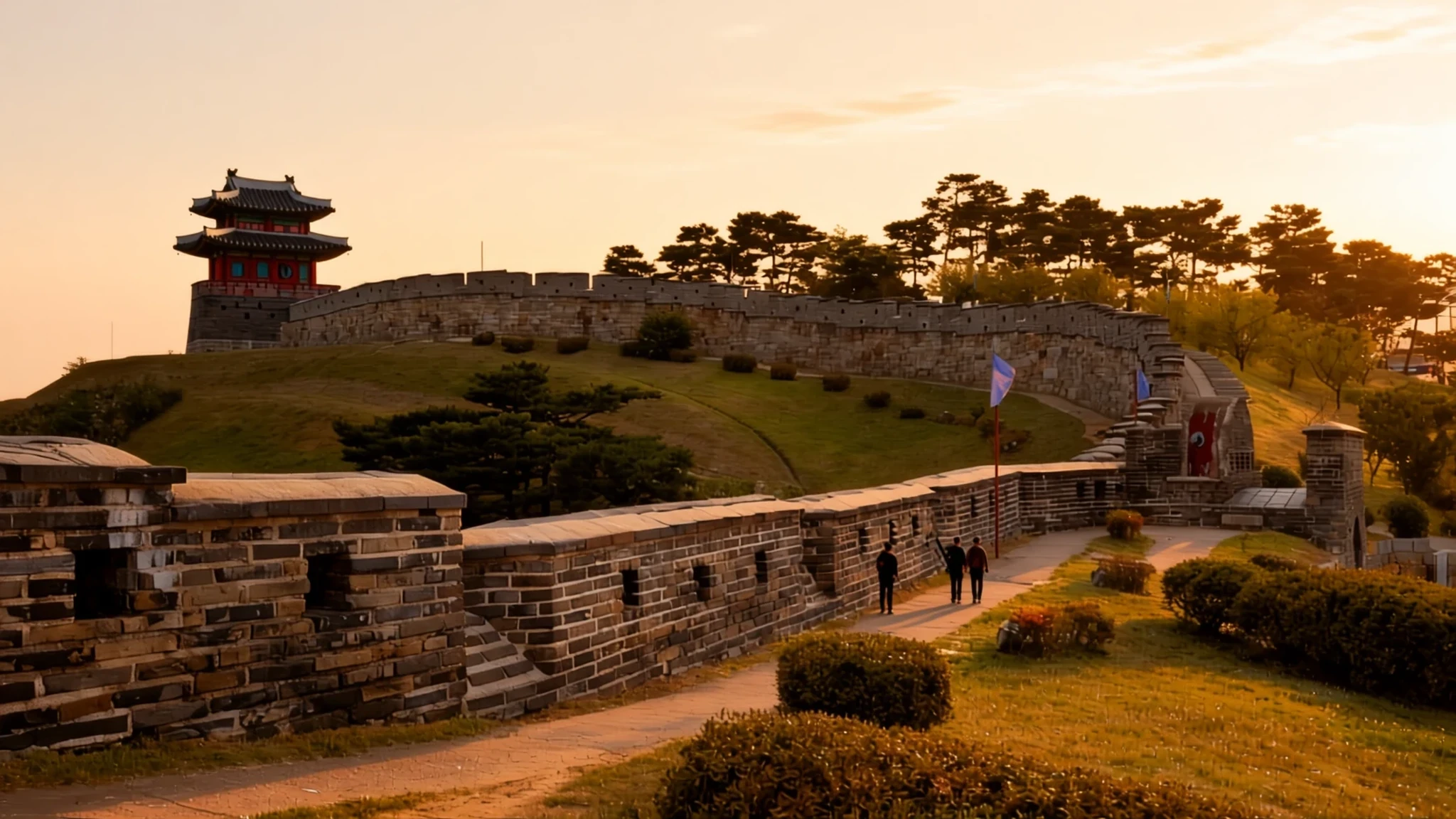
A walled fortress wrapped around central Suwon, built in the 1790s and easy to reach as a day trip from Seoul.
The place
Hwaseong Fortress is a walled fortress that encloses much of the centre of Suwon, the provincial capital of Gyeonggi Province in South Korea. Suwon sits about an hour south of Seoul by train, so the fortress works well as a day out from the capital. The wall was built between 1794 and 1796 under King Jeongjo of the Joseon dynasty, and it is more than a line of stone. Inside its circuit you will find the Suwoncheon, the main stream of the city, which passes through the fortress under two sluice gates. There are four main gates, and within the walls stands Haenggung, the temporary palace where the king stayed when he visited. The fortress and its palace were added to UNESCO's World Heritage list in 1997. The landscape is mostly gentle hills, with the Gwanggyo Mountains passing through the district and the ground falling gently from northeast to southwest. Much of modern Suwon now lies outside the walls, so the old town feels like an island of older streets among apartment blocks and shopping areas. Expect a mix of stone walkways, grassy slopes and quiet courtyards, with more people on weekends.
Its story
Hwaseong Fortress was built as a memorial as much as a defence. King Jeongjo of the Joseon dynasty ordered its construction between 1794 and 1796 to house and honour the remains of his father, Crown Prince Sado. Sado had died after his father, King Yeongjo, had him sealed inside a rice chest, a punishment that left a lasting wound in the royal family. Jeongjo could not undo what had happened, but he could give his father a dignified place within a carefully planned town. The project combined walls, gates, a stream with sluice gates and a temporary palace, so that the king could stay close to the tomb on his visits. The design reflected Joseon ideas about order, defence and royal authority, and the walled town was meant to show loyalty as clearly as it showed strength. After Jeongjo's death, the fortress became a symbol of his reign and of a city built with unusual care for the needs of the court. Later centuries brought neglect, damage and rebuilding, and the surviving structures were eventually recognised by UNESCO in 1997. Today the story is told through the walls, the gates and the palace, which together show how a personal grief was turned into a public work of architecture.
What to see
- The fortress wall and gates — Around the centre of Suwon
The fortress wall is the reason to come. It was built between 1794 and 1796 and runs around the centre of Suwon, with four main gates, two sluice gates over the Suwoncheon and long stretches you can walk. Plan on several hours if you want the full circuit, and pick a clear day, because much of the route is open and exposed to the sun.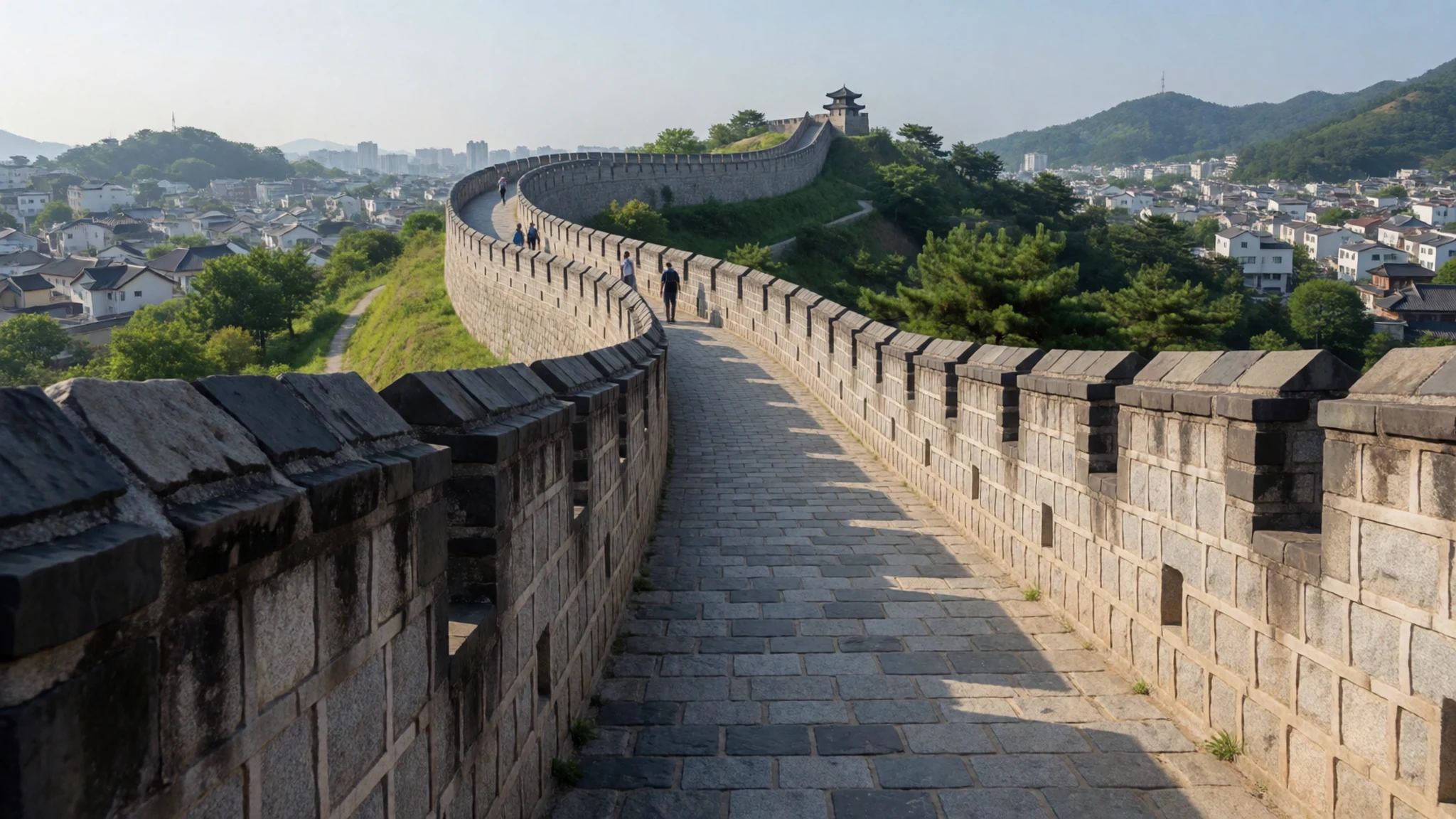
- Hwaseong Haenggung — Inside the fortress walls, near the centre
Hwaseong Haenggung was the temporary palace where King Jeongjo stayed on his visits to the tomb. Its courtyards and pavilions give a sense of how a royal visit was organised. The open square in front is where the weekend performances and martial arts displays take place. Go in the morning, when the courtyards are quieter and the light is good for photographs.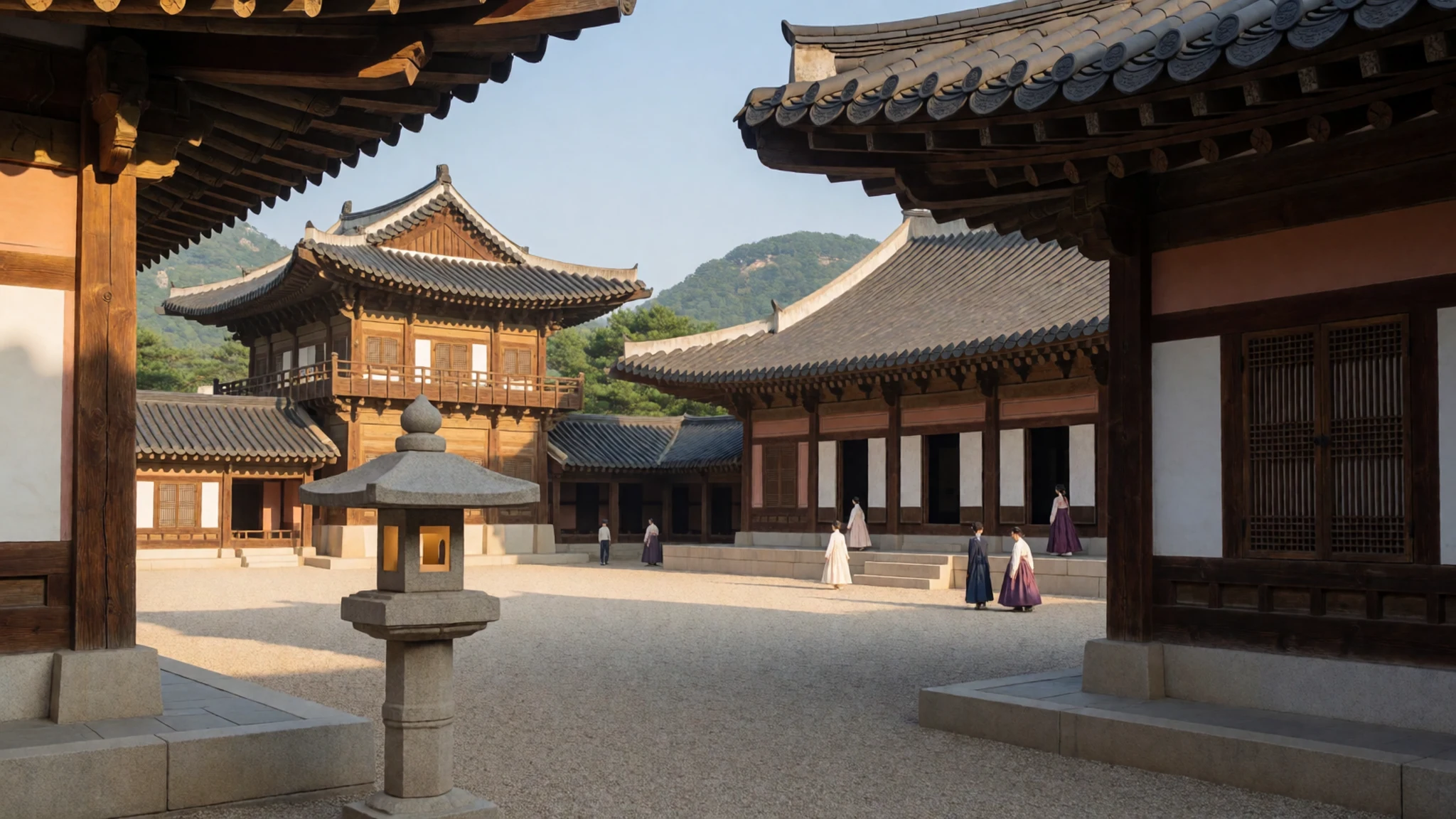
- Paldalmun gate — South side of the fortress
Paldalmun is the southern gate and one of the most striking points on the wall. It was built in 1794 and has a broad arched passage beneath a tiered gate tower. The stone base and tiled roof show the detailing of Joseon military architecture. Traffic runs close by, so cross carefully and take your photos from the pavement rather than the road.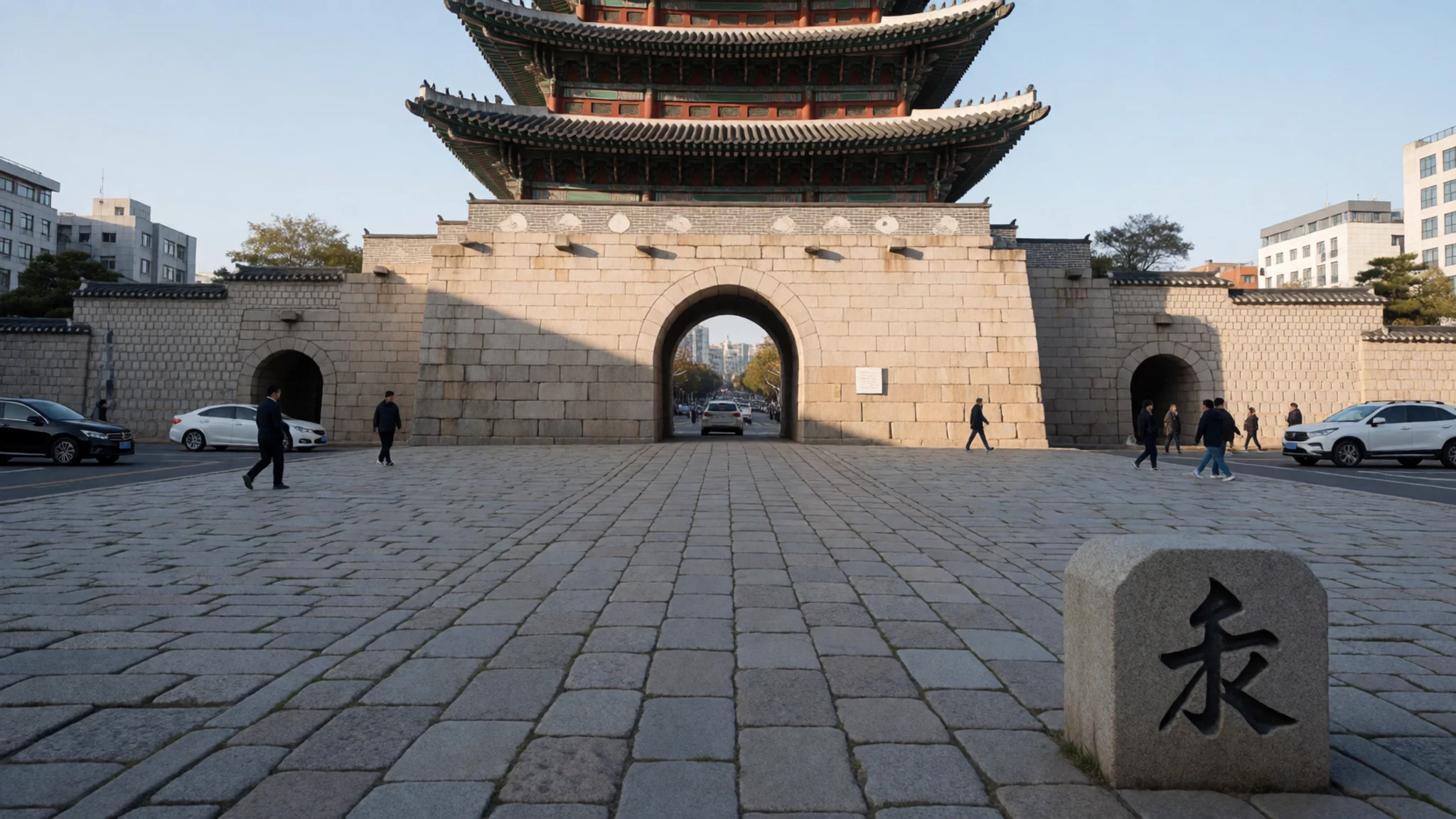
- Manseok Park — North-east of the old town
Manseok Park lies beside a reservoir called Manseokgeo, which was dug by people who moved to nearby areas while the fortress was being built. Today it is a broad, open park popular with walkers and families, and a useful place to rest after the wall. Benches sit near the water, and the paths are busiest in the cooler hours of the morning and evening.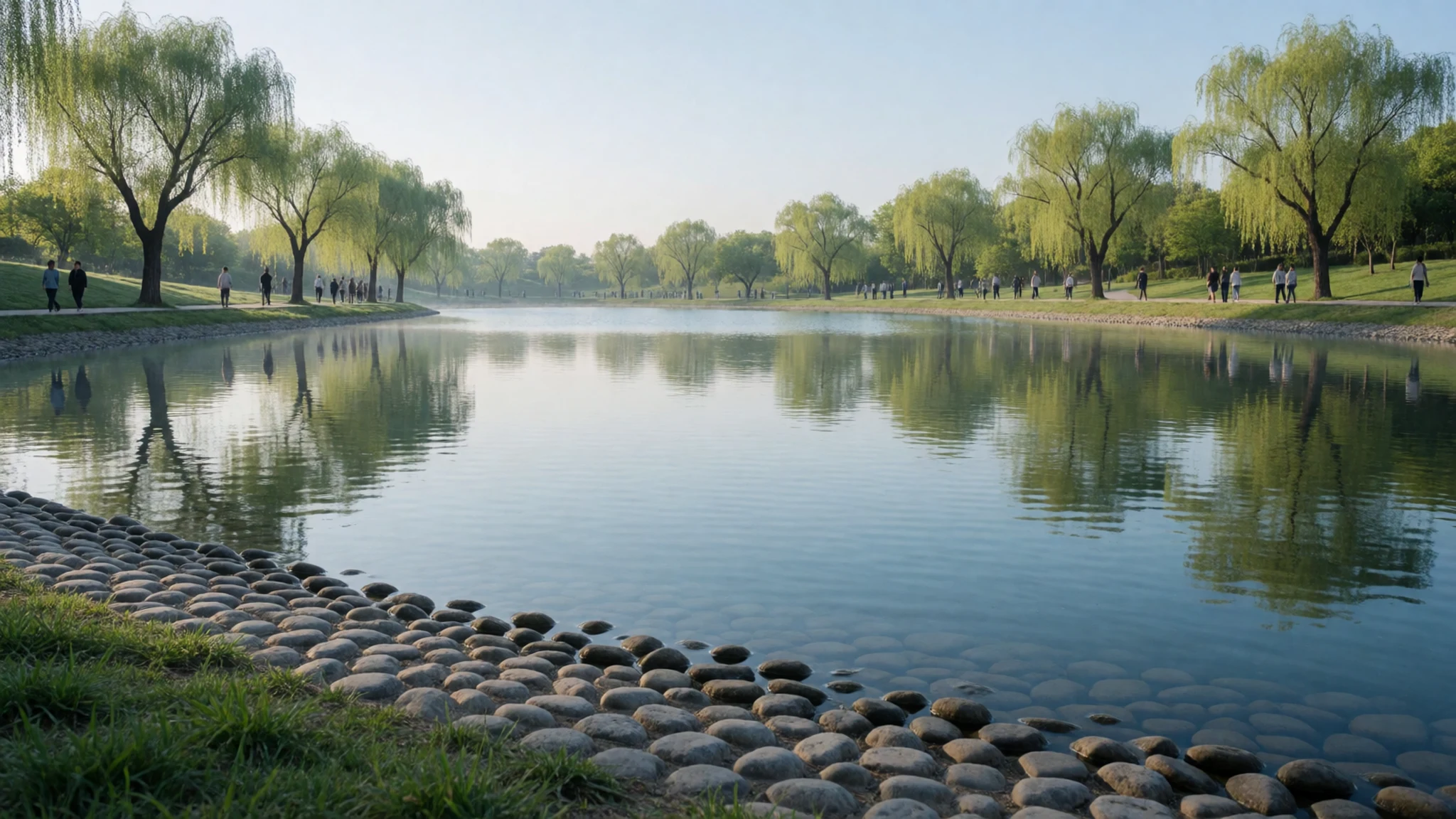
- Suwon World Cup Stadium — East of the old town
Known as the Big Bird, Suwon's World Cup Stadium hosted one of the quarter-finals of the 2002 FIFA World Cup and is now home to the Suwon Blue Wings in the K League. It sits east of the old town, so it shows a different side of Suwon from the walls. Match days bring crowds and traffic, so check fixtures before you plan a visit.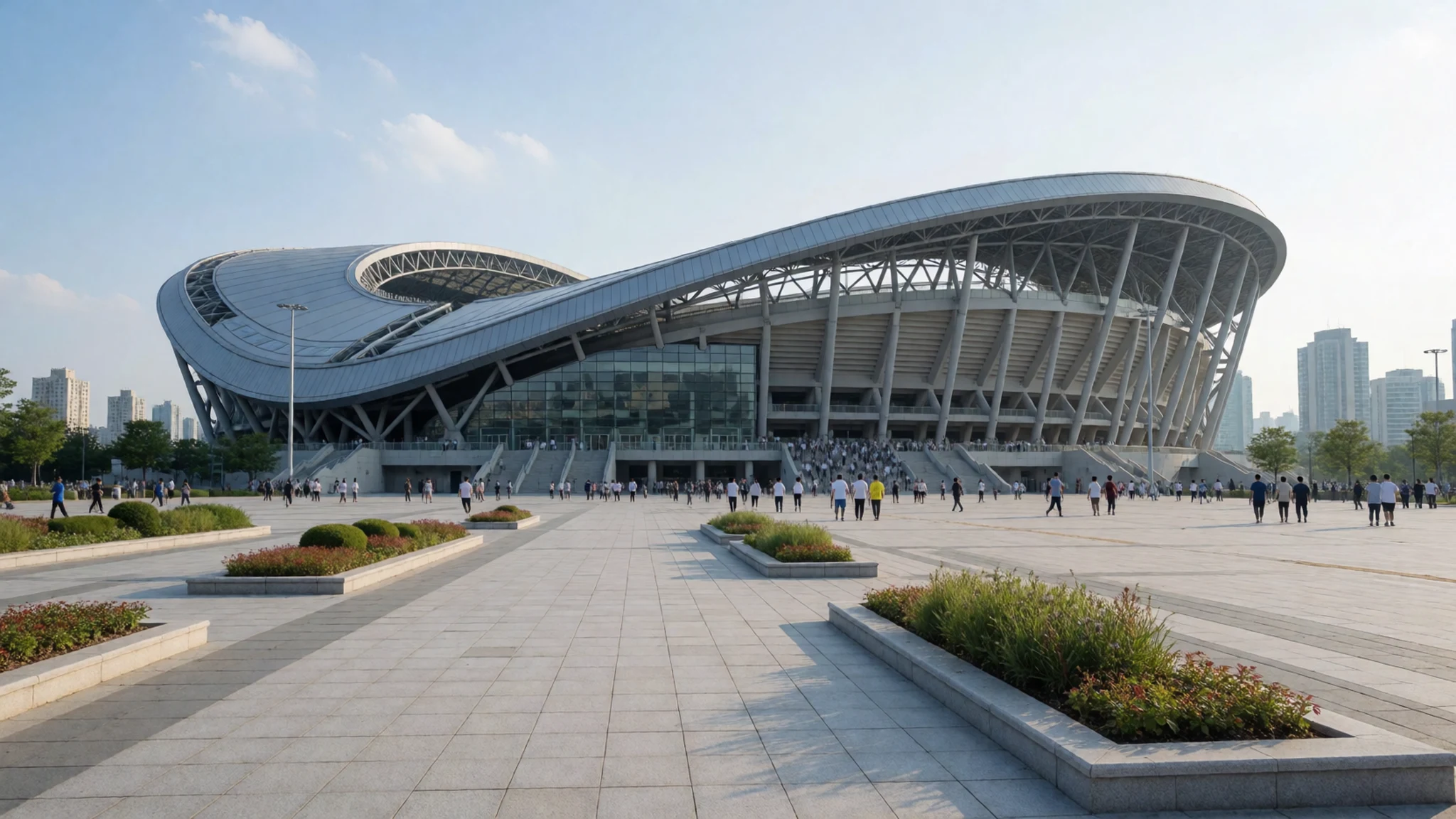
Culture
Hwaseong is more than a stone wall, and its square in front of the Haenggung palace is where living traditions are performed. From March to November, a traditional arts performance takes place there each Saturday at 2 p.m. A martial arts display runs at 11 a.m. most days from March to November, except Mondays, and on weekends only in December. The routine uses twenty-four martial arts compiled in 1790 at King Jeongjo's request, drawing on the training textbook of the Joseon period and practised by the soldiers of Hwaseong. A royal guard ceremony reconstructs one held in the 1790s, when the guards trained within the fortress. These events are performed by people doing their jobs, so treat them as you would any live performance. Stand behind the crowd barriers, keep your voice low, and switch off your flash while a demonstration is running.
What to wear
The traditional dress of Korea is the hanbok, a garment of a short jacket called jeogori and a wrap skirt called chima, worn for festivals, weddings and royal occasions. Hanbok are usually made from silk or ramie, with bright colours and simple lines, and you will see them on performers in the square at Haenggung and on people visiting the palace area at weekends. Day to day, people in Suwon dress much as people do in Seoul: jeans, knitwear, sneakers and dark coats, with padded jackets in winter. Suwon has a cold-temperate continental climate, so winters are cold and summers can be hot and humid. For a visit, dress in layers that you can add or remove as you walk. Wear shoes with good grip, because the wall path and the stone steps can be uneven and slippery after rain. Covered shoulders are a sensible choice at the palace and temple-style sites, and a light scarf or jacket helps in spring and autumn when mornings are cool.
What to eat
- Galbi — Grill houses around the city centre
Galbi is marinated beef short rib, grilled over charcoal at the table and wrapped in lettuce with garlic and ssamjang. Suwon has many galbi restaurants, and the grill houses around the city centre are a good place for a shared dinner.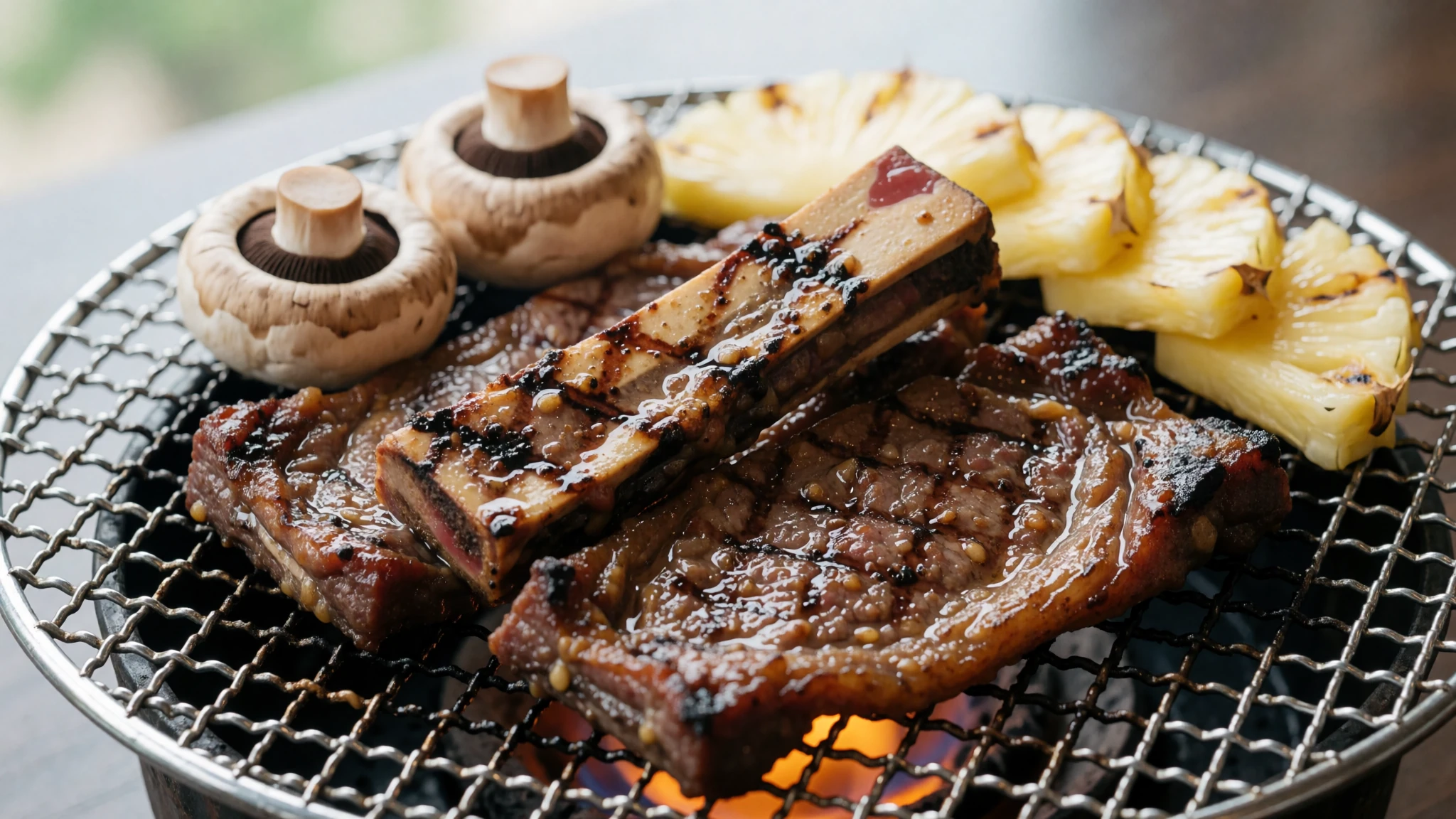
- Budae jjigae — Small eateries near the old town
Budae jjigae is the army stew, a spicy pot of kimchi, sausage, ham and instant noodles shared at the table. The small eateries near the old town draw lunch crowds, so arrive before midday to avoid queuing.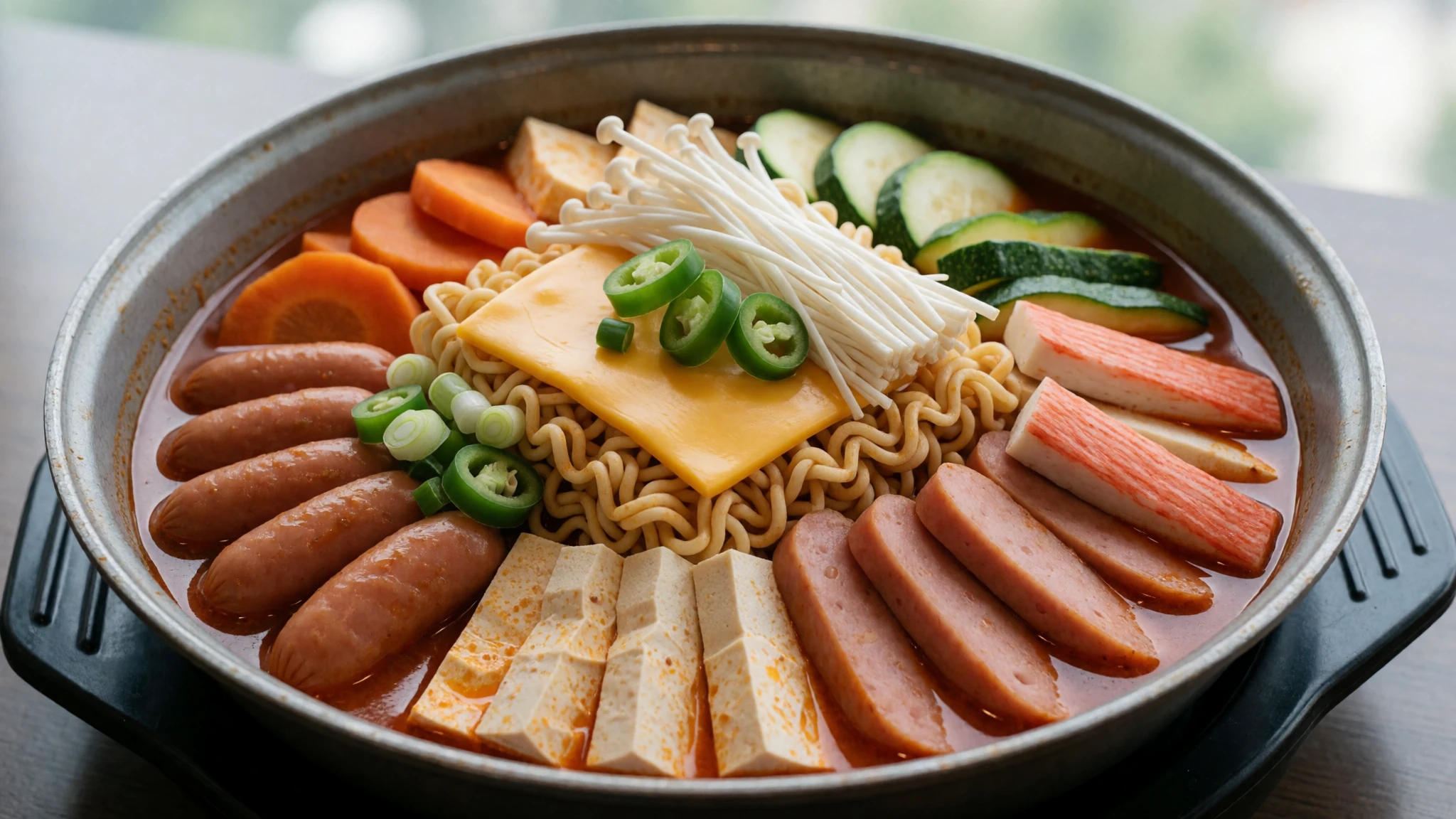
- Kalguksu — Noodle houses in the city centre
Kalguksu are hand-cut wheat noodles in a clear broth, often with clams or chicken. Cheap noodle houses in the centre serve generous bowls at lunch and make a good refuel after the wall.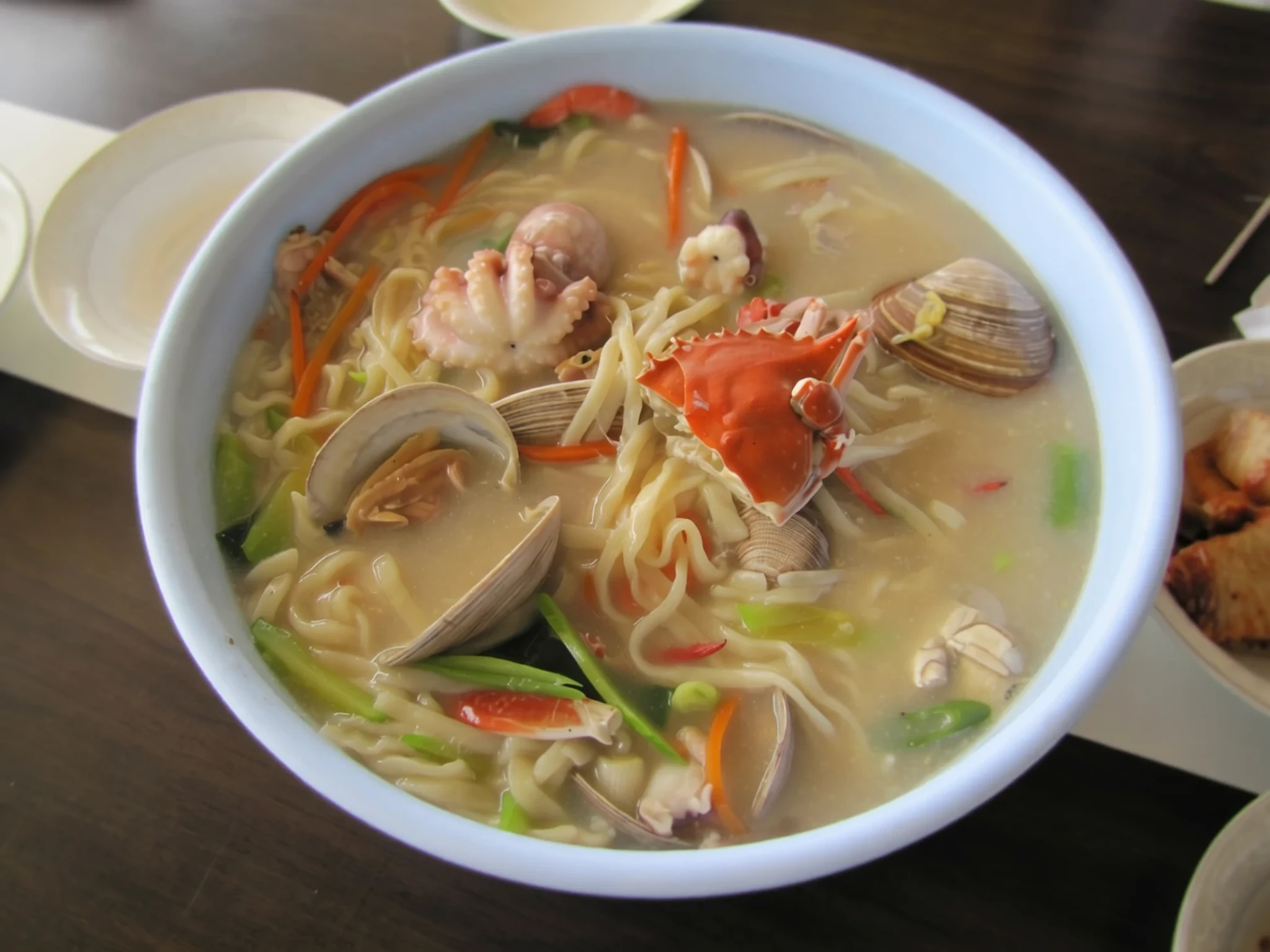
- Suwon fried chicken — Chicken houses in the city centre
Suwon's fried chicken is famous for its crisp coating, which softens quickly. Eat it on the premises rather than packing it to take away, and look for chicken houses in the centre where it comes straight from the fryer. - Haejangguk — Soup houses across the city
Haejangguk is a hangover soup, usually a beef and ox-bone broth with cabbage and bean sprouts, eaten hot. Soup houses across the city suit a cool-morning walk along the wall.
Plan it
Best time. Spring from March to April and autumn from October to November, when the weather is mild and the walls are easy to walk. Summers are hot and humid, and winters are cold.
How long. 1–2
Getting there. Fly into Incheon International Airport, then take the Airport Railroad to Seoul Station and transfer to Line 1 heading south towards Cheonan and Sinchang. The ride to Suwon Station takes roughly an hour. Commuter trains from Seoul Station are faster but run less often.
Budget. low
Tips
- Check the official site at swcf.or.kr for performance times and any closures before you go
- Walk the wall early, before the midday heat in summer
- Plan your Saturday around the 2 p.m. weekend performance if you want to see it
- Carry some cash for small eateries and markets
- Bring water, especially on the open wall path
- Many budget stays are motel-style, so compare locations before booking
Etiquette
- Keep to marked paths on the wall and stay off closed sections
- Ask before photographing performers in costume up close
- Keep your voice low in the palace courtyards
Nearby
Sources
- Wikidata Q482423 (CC0)
- Wikipedia: Hwaseong Fortress (rev 1382310983) (CC BY-SA 4.0)
- Wikivoyage: Suwon (rev 5404759) (CC BY-SA 4.0)
- Hwaseong Fortress, Suwon, Gyeonggi-do, Republic of Korea (2) by Lance Vanlewen (CC BY-SA 4.0)
- Map of Hwaseong Fortress by Jpbarrass (Public domain)
- The South Secret Gate of the Hwaseong Fortress in the 1801 Uigwe (Public domain)
- The North-East Pavillon of the Hwaseong Fortress in the 1801 Uigwe (Public domain)
- Aufenthaltsturm im Süden: Feldseite und Innenseite (Public domain)
- The South Flood Gate of the Hwaseong Fortress in the 1801 Uigwe (Public domain)
- The Beacon Tower of the Hwaseong Fortress in the 1801 Uigwe (Public domain)
- 화성, 화성 행궁 by KIMJUNGWOOK (CC BY-SA 4.0)


