Huahine
Huahine, France
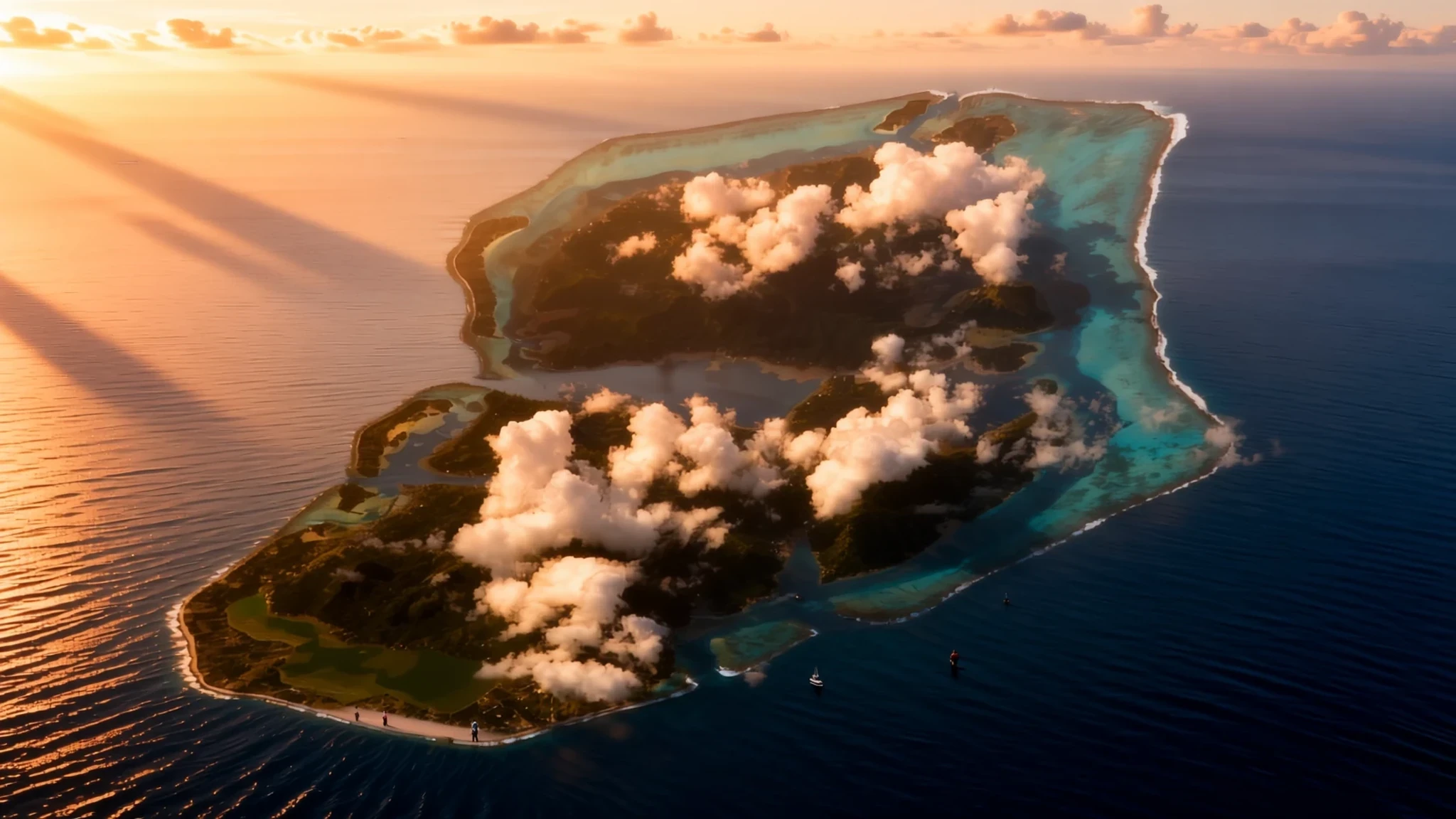
A quiet Society Islands stop where a fringed lagoon, ancient marae and a brackish lake sit close together, with few crowds.
The place
Huahine lies in the Leeward group of the Society Islands, part of French Polynesia, an overseas territory of France in the South Pacific. Measured end to end it runs about 16 km, and at its widest about 13 km. The island is really two main landmasses: Huahine Nui to the north and Huahine Iti to the south. A few hundred metres of water separate them, a sandspit joins them at low tide, and a small bridge now carries the road across. Together they cover about 75 square kilometres, and around 6,300 people live here. A fringing reef encircles the island, broken up by a scatter of motu, the small coral islets you notice from the air as you come in.
Inland the island is green. Coconut palms cover much of it, and copra has long been an economic mainstay alongside vanilla and melons. Two botanical gardens reward an unhurried morning: Ariiura Garden Paradise, which grows traditional Polynesian medicinal plants, and l'Eden Parc, a collection of fruit trees from many parts of the world. In the north-west of Huahine Nui lies Lac Fauna Nui, a brackish lake of about 375 hectares. It is what remains of an ancient lagoon that was once enclosed by the atoll.
The island's natural wealth is in its fish and birds. The reef teems with life, and the island's birdlife once included the Huahine starling, a species that vanished centuries ago and survives mainly as fossil remains.
Fare is the main village and the practical base, a short drive from the airport. Most people come for a few slow days on the water rather than a packed sightseeing schedule.
Its story
People have lived on Huahine for at least a thousand years, and the marae scattered across the island are the clearest evidence. Archaeologists think Tahitian Maʻohi settlers reached the island from at least the 9th century AD, and Huahine holds one of the richest concentrations of Polynesian archaeological remains dated to roughly 850 to 1100 AD.
Until the late nineteenth century, Huahine was an independent kingdom, usually called the Huahine and Maiao Kingdom. Three dynasties are traditionally said to have followed one another. The first began in the seventeenth century and ended with Queen Tehaʻapapa I, whom Captain Cook met in 1769. She worked to keep the kingdom united and independent. She and her husband, Mato a Tamatoa, founded the Tamatoa branch, which reigned until 1854. The Teururaʻi dynasty, descended from a Huahine chief and a Tamatoa woman from Raiatea, held the throne from 1854 to 1895.
The succession grew tangled because chiefly families were linked across the neighbouring islands. A prince with claims to both Huahine and Raiatea could not hold both crowns, so the thrones were divided between brothers. Teriifaʻatau Marama became prime minister in 1884, and he became a central figure in the annexation of the kingdom by France.
For visitors the history is physical: stone platforms scattered in the bush, a royal residence at Fare, and the memory of a kingdom that was absorbed into France's Pacific holdings.
What to see
- Belvedere — Huahine Nui
A viewpoint over Maroc and Bourayne bays, with Motu Vaiorea out on the water. It is the quickest way to read the island's shape: the fringing reef, the colour changes in the lagoon and the motu strung along the edge. Go in the late afternoon, when the light is softer and the crowds, such as they are, have thinned.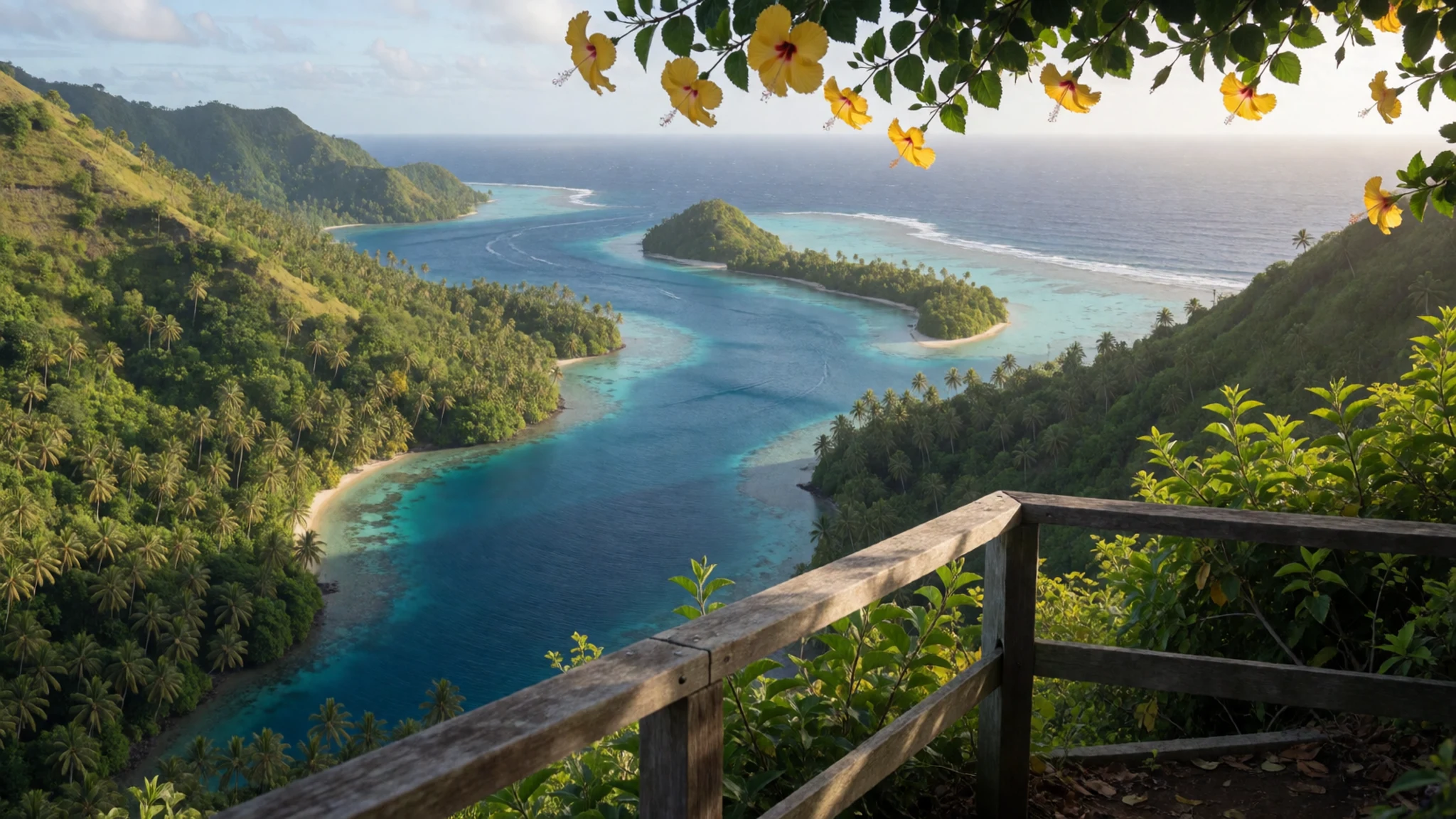
- Maeva — Motu Maeva and the north-west of Huahine Nui
Maeva is the name you will meet most often on Huahine. The airport sits on Motu Maeva, and the brackish lake in the north-west, Lac Fauna Nui, is also called Lac Maeva. It suits a slow walk along the shore, watching the water rather than expecting a set attraction. Ask your host which parts are open to visitors before wandering onto private land.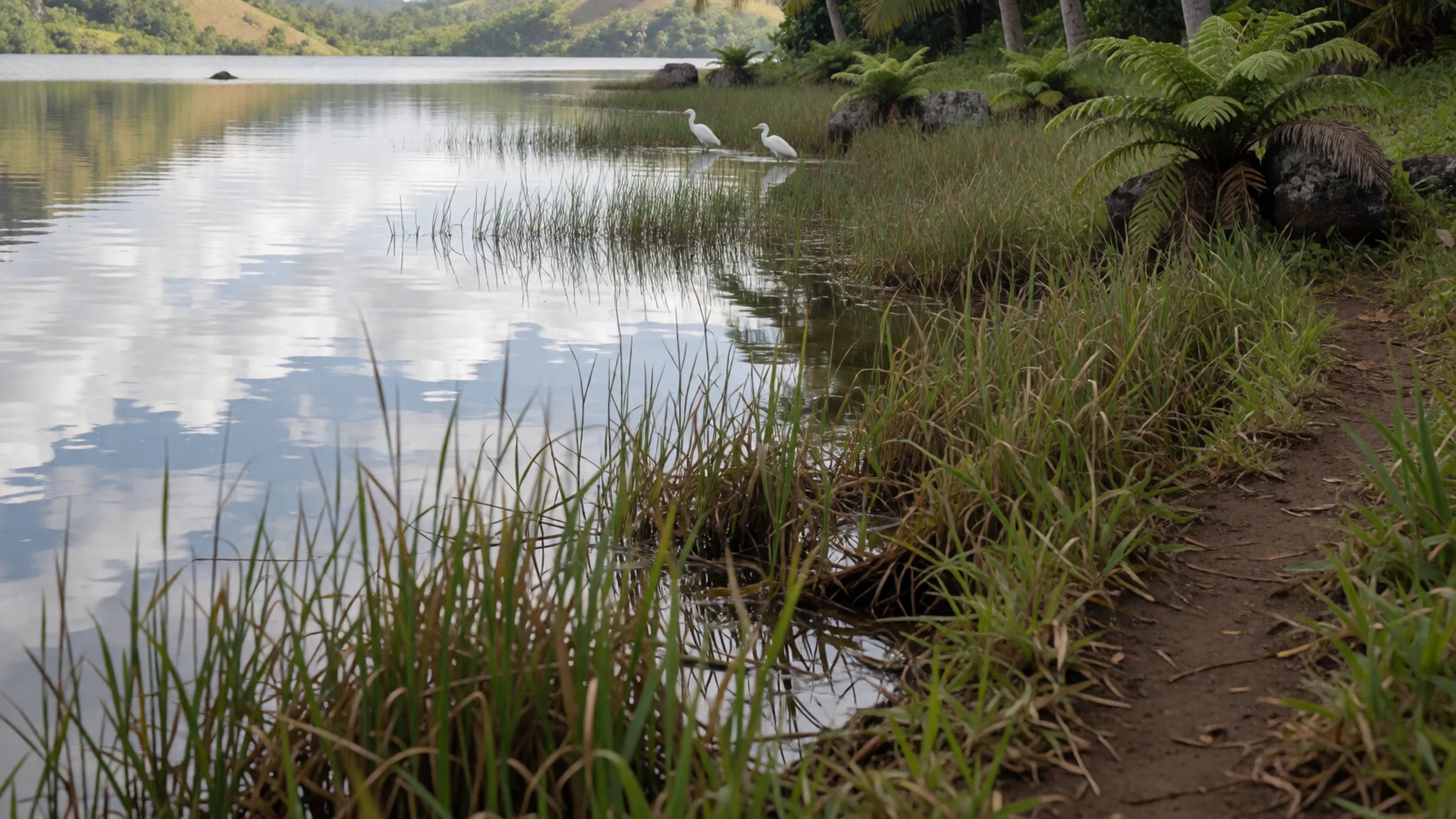
- Marae Manunu — Huahine Nui
Marae are the stone and coral ceremonial platforms that mark the island's long Polynesian past, and Marae Manunu is one of several you can visit. Expect an open site rather than a museum: low stone walls, a raised altar area and few signs. Walk around quietly, remember it was a place of worship, and ask locally how to find it if the track is unmarked.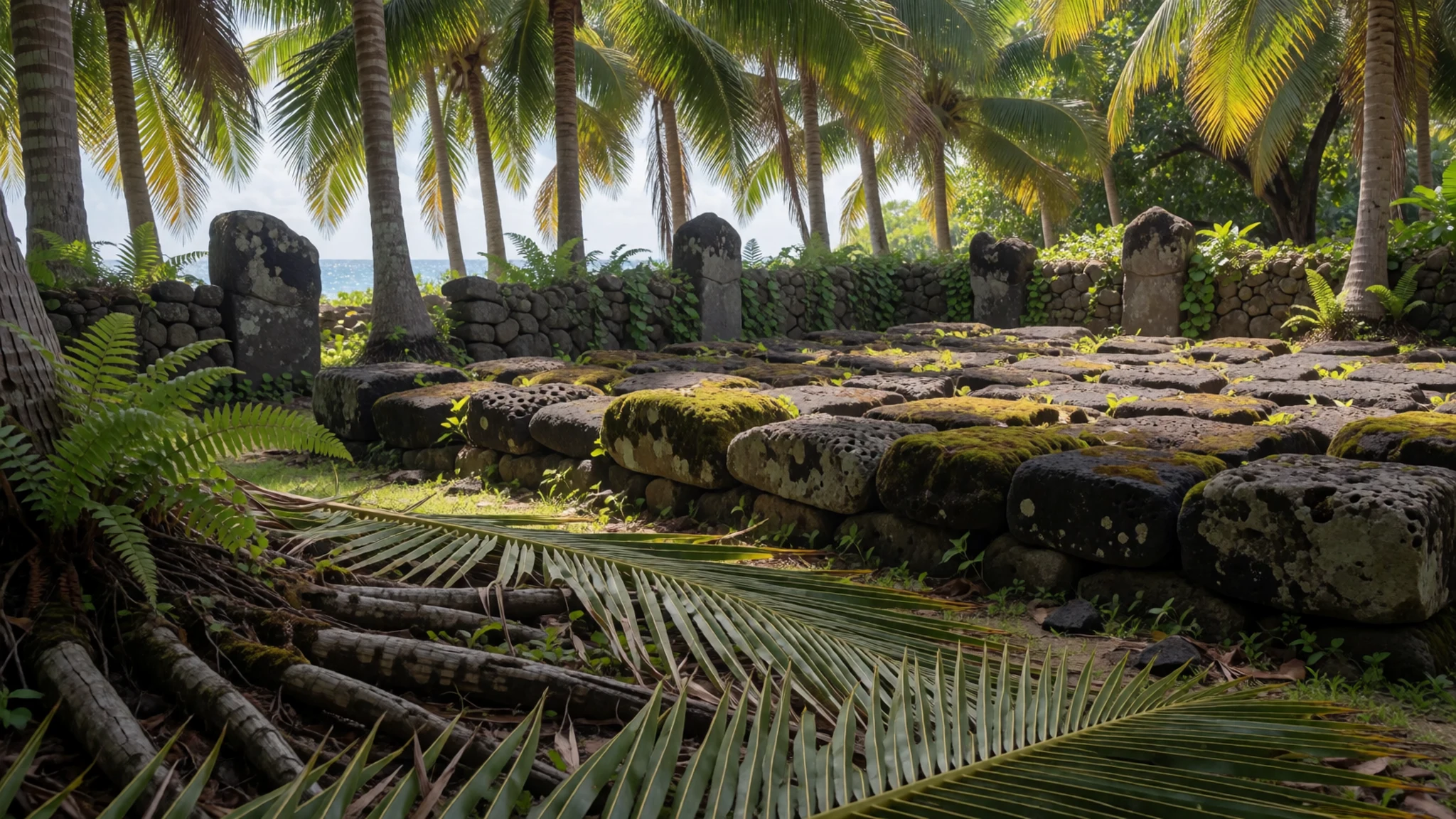
- Marae Anini — Huahine Nui
Marae Anini gives you a second chance to see how these sites are laid out, usually with a central platform and open ground beside it. Pair it with Manunu on the same morning so you can compare them. Visit in daylight, wear closed shoes against coral and roots, and ask before you climb onto anything.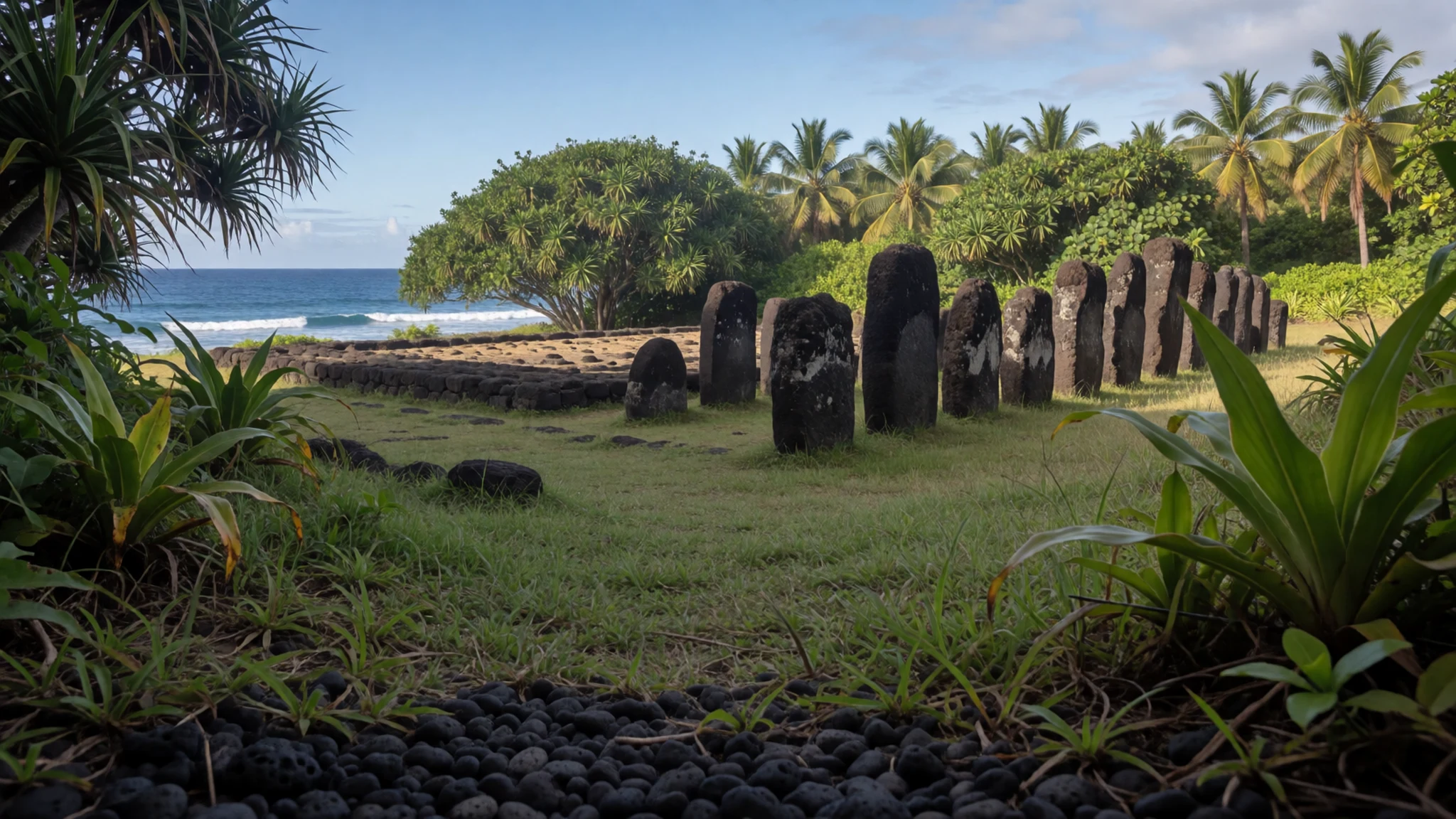
- The eel stream — On the island, reached by road
One of Huahine's best-known sights is a small bridge over a freshwater stream, where eels up to about 1.8 m long glide beneath the planks. Local belief treats them as sacred. Visitors can buy a can of mackerel to feed them, and it is a popular stop. Keep your hands clear of the water when the eels surge, and treat them as a local tradition rather than a show.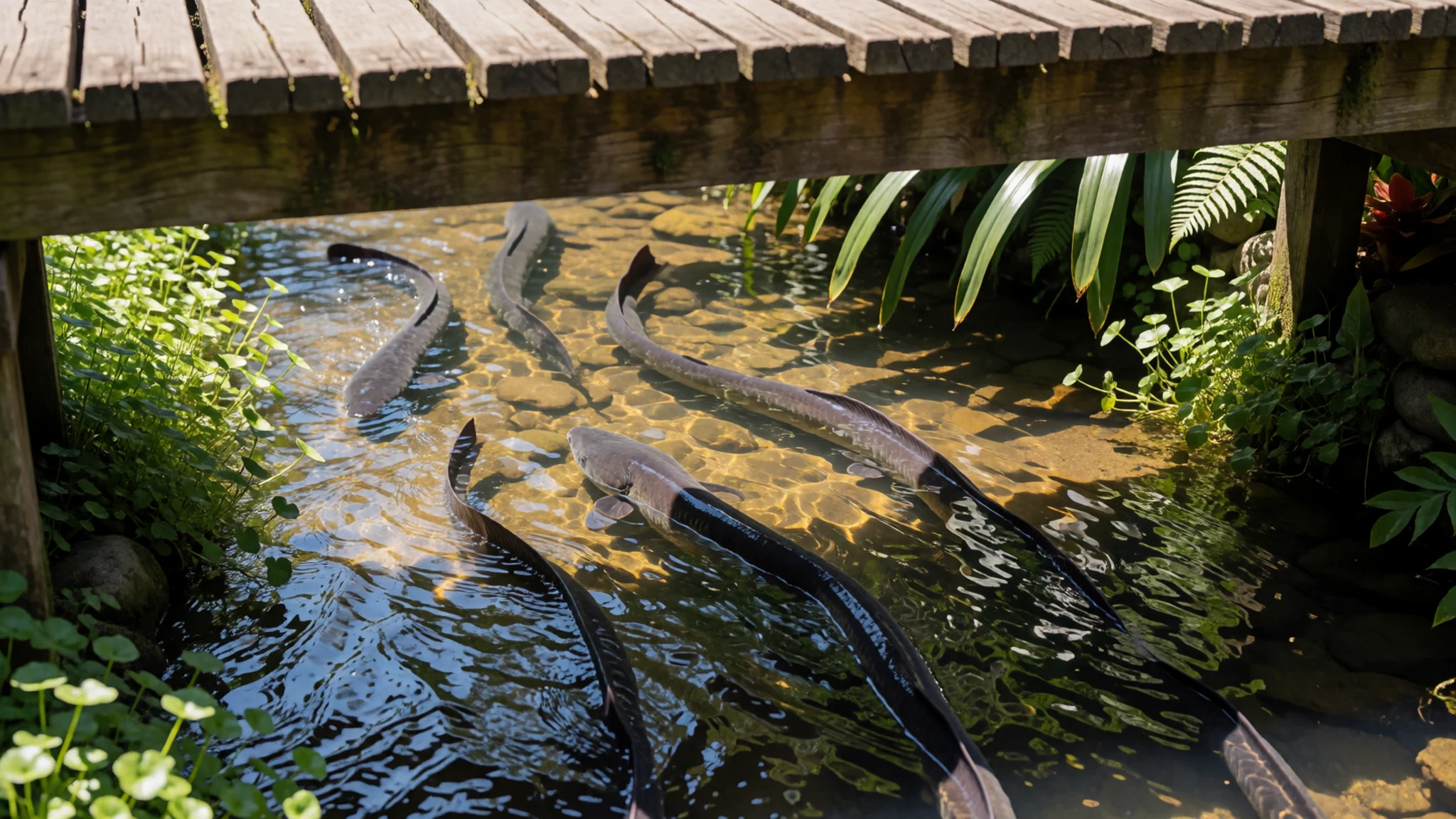
- Ariiura Garden Paradise — Huahine Nui
A botanical garden that brings together traditional Polynesian medicinal plants, the kind of knowledge islanders relied on long before modern pharmacies. An hour in the morning is enough, when the air is cooler and you can take your time. It is a calm change from the lagoon, and a good place to recognise plants you will later see along the roadside.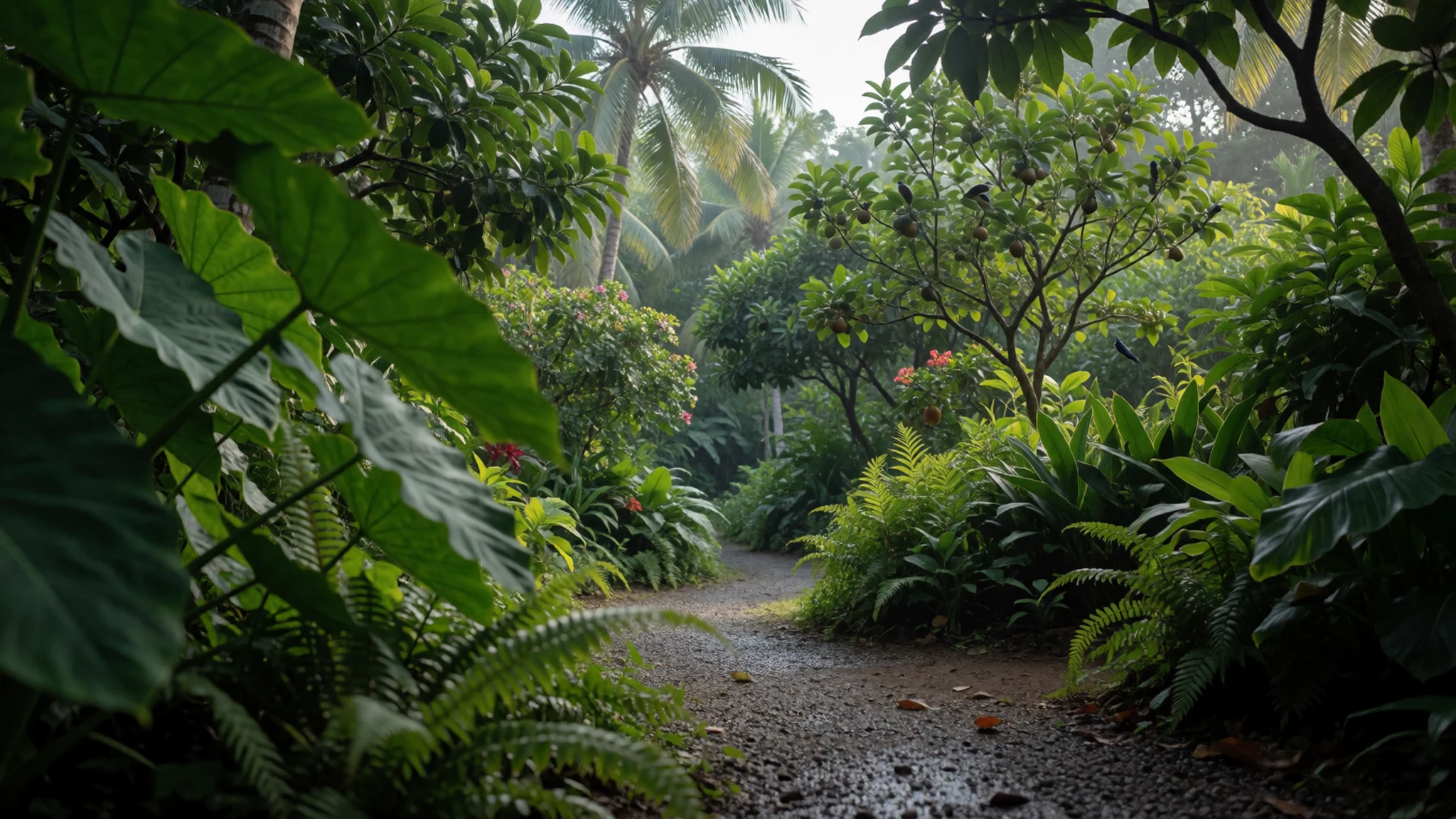
Culture
Huahine is part of French Polynesia, where Polynesian and French habits sit side by side. Family ties, fishing and village life set the rhythm of the day, and Fare is the easiest place to see it. Greetings are warm and unhurried, and a simple 'Ia Orana' is a friendly way to start a conversation. Marae were places of worship and ceremony, and the eels in the stream are regarded as sacred, so both deserve a quiet, respectful approach.
The island's visitor economy is modest, and tipping is not expected in French Polynesia. Locals are often hostile towards tourists, and yachtsmen in particular are frequently targeted, so a courteous and low-key manner goes a long way. Keep noise down in the evenings, especially in villages, and ask before you photograph people, particularly at ceremonies or inside homes. Ask before photographing people, and never take stones or coral from an ancient site.
What to wear
Traditional dress on the Society Islands centres on the pareu, a rectangular wrap of printed cotton that can be tied many ways, and on flower crowns and shell ornaments worn for dances and festivals. Older clothing was made from tapa, beaten bark cloth, while woven pandanus and coconut-fibre materials went into mats and hats. Dancers in Huahine still perform in these styles at festivals, and their costumes can be elaborate, built from feathers, flowers and woven elements.
Day to day, people on Huahine dress lightly and practically. Shorts, T-shirts and sundresses are common in Fare, with the pareu worn as a sarong or beach wrap. Many people wear rubber sandals on the road. For church, or for a family celebration, people usually dress more carefully, often in clean white or bright printed clothing.
What a visitor should wear comes down to sun, sea and respect. Pack loose cotton or linen, a wide-brimmed hat and a rash top for snorkelling, and use plenty of sun cream, as the sun is strong near the lagoon. Reef shoes or water sandals protect your feet from coral and sea urchins. Cover shoulders and knees when you visit a village or a marae, and save swimwear for the beach.
What to eat
- Poisson cru — Roadside snack stalls and family eateries in Fare
Raw fish cured in lime juice and dressed with coconut milk, onion and tomato. It is the island's everyday starter, and the fish is usually caught the same day. Look for it at roadside snack stalls where a cool box of fish sits in the shade.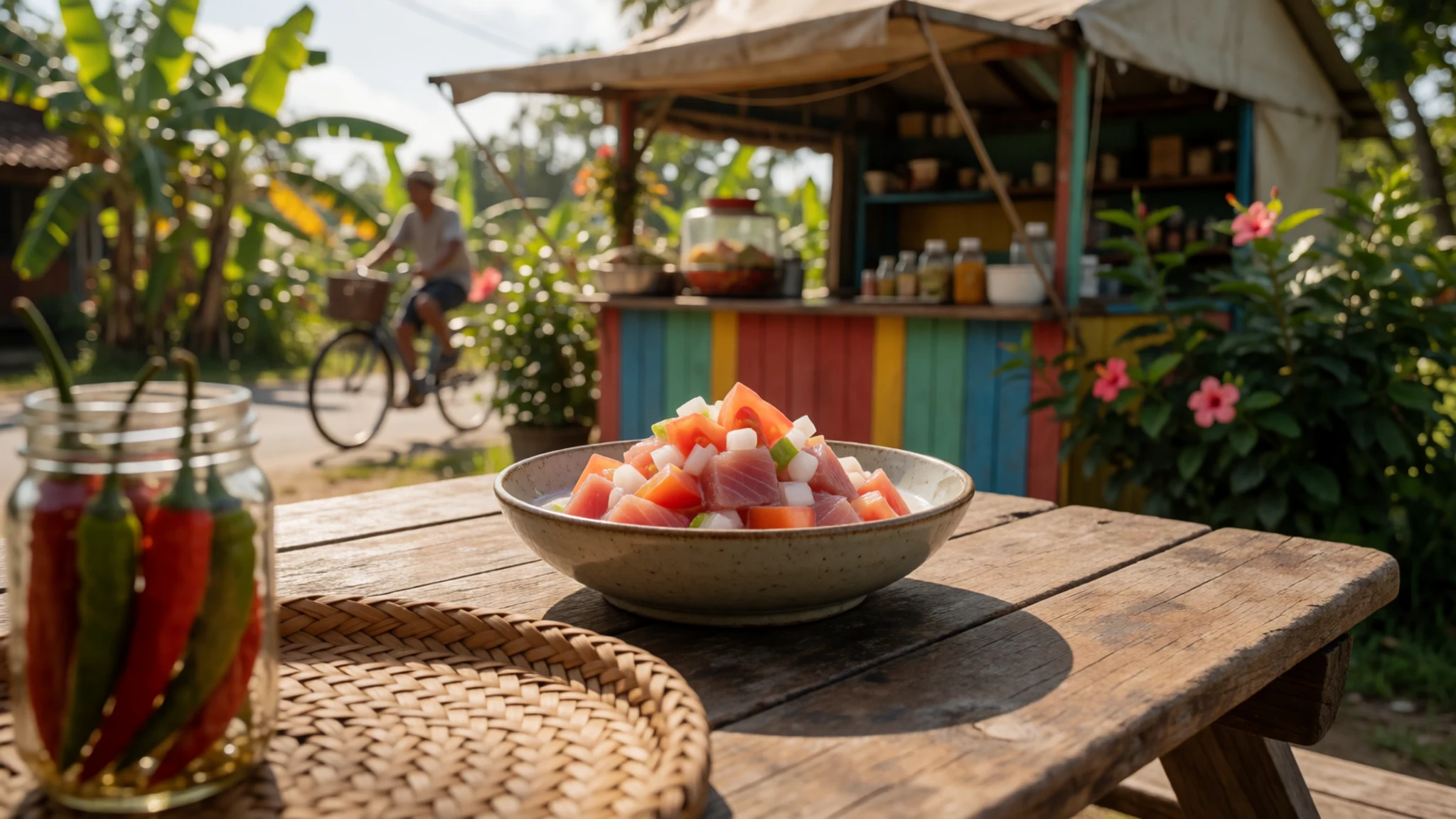
- Umu — A guesthouse or family table, arranged in advance
Food cooked in an earth oven, with hot stones and banana leaves sealing in pork, chicken, fish, taro and breadfruit. It is slow and communal, and it is usually cooked for a family or a Sunday gathering. Ask your guesthouse host a day ahead whether an umu is planned.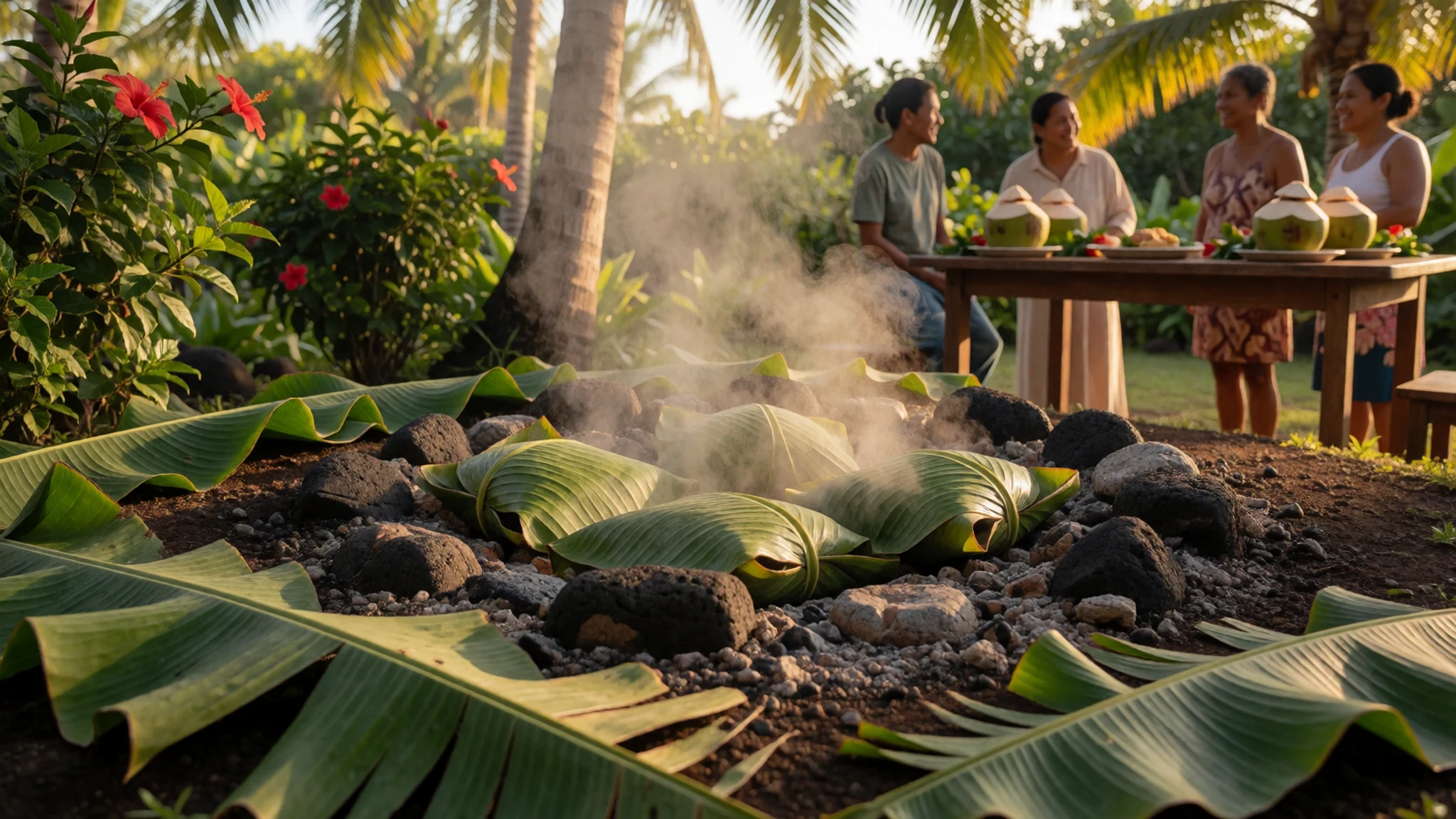
- Fafa — Home-style cooking at guesthouses and the morning market in Fare
Taro leaves simmered slowly in coconut milk, often with fish or chicken. It is a simple, rich dish that shows how much the island depends on coconut. You will find it in home cooking more often than on menus. - Poe — The market in Fare and bakery stalls
A baked pudding of banana, pumpkin or taro sweetened and set with coconut milk. It makes a good afternoon treat with fresh coconut water. Look for it at the market or bakery stalls rather than in restaurants. - Grilled fresh fish — A beachfront grill or the harbour at Fare in the evening
Reef fish or tuna, grilled simply with lime and salt. The catch changes day to day, so ask what came in that morning. It is the easiest meal on the island to eat well without planning ahead.
Plan it
Best time. May to October is the drier stretch, with calmer seas and less rain. November to April is wetter and more humid. Check a current forecast before you book, as rain can arrive in any month.
How long. 3–4
Getting there. Fly into Huahine airport on the northern shore of Huahine Nui. Air Tahiti runs three to four flights a day from Papeete, about 40 minutes in the air. Taxis wait at each arrival, and the drive to Fare takes about 15 minutes.
Budget. high
Tips
- Book Air Tahiti flights early, since seats on small inter-island planes can run out in busy periods
- Arrange your transfer or taxi before you land; the airport is small and there is no long queue of options
- Carry some cash for small stalls and markets, and check whether a card is accepted before you order
- Pack reef shoes, sun cream and a refillable bottle, as the sun is strong all day
- Visit the markets and Belvedere early or late in the day, when it is cooler and quieter
- Check the official site for current flight timetables, which change from season to season
Etiquette
- Ask before photographing people, especially at ceremonies or inside homes
- Do not climb on or remove stones from the marae
- Be courteous and low-key; locals are often hostile towards tourists, and yachtsmen are frequently targeted
Nearby
Sources
- Wikidata Q521020 (CC0)
- Wikipedia (rev 1381998039) (CC BY-SA 4.0)
- Wikivoyage (rev 5404273) (CC BY-SA 4.0)
- DSC061 Polynésia Huahiné Island, Daniel Julie (CC BY 2.5)
- Royal residence of the Queen of Huahine at Fare, Madame Hoare (Public domain)
- Tahiti, French Polynesia - Huahine (48083851953), Matthew Dillon (CC BY 2.5)
- Seal of the Commune of Huahine, Commune of Huahine (Public domain)
- Huahiné Island Lapita Village Faré Village, Daniel Julie (CC BY 2.5)
- Agostini - Tahiti, plate page 0122, Jules Agostini (Public domain)
- Agostini - Tahiti, plate page 0126, Jules Agostini (Public domain)
- Approaching Huahine, atoll pass to Tahateao, David Broad (CC BY 3.0)


