Hopewell Ceremonial Earthworks
Hopewell Ceremonial Earthworks, United States
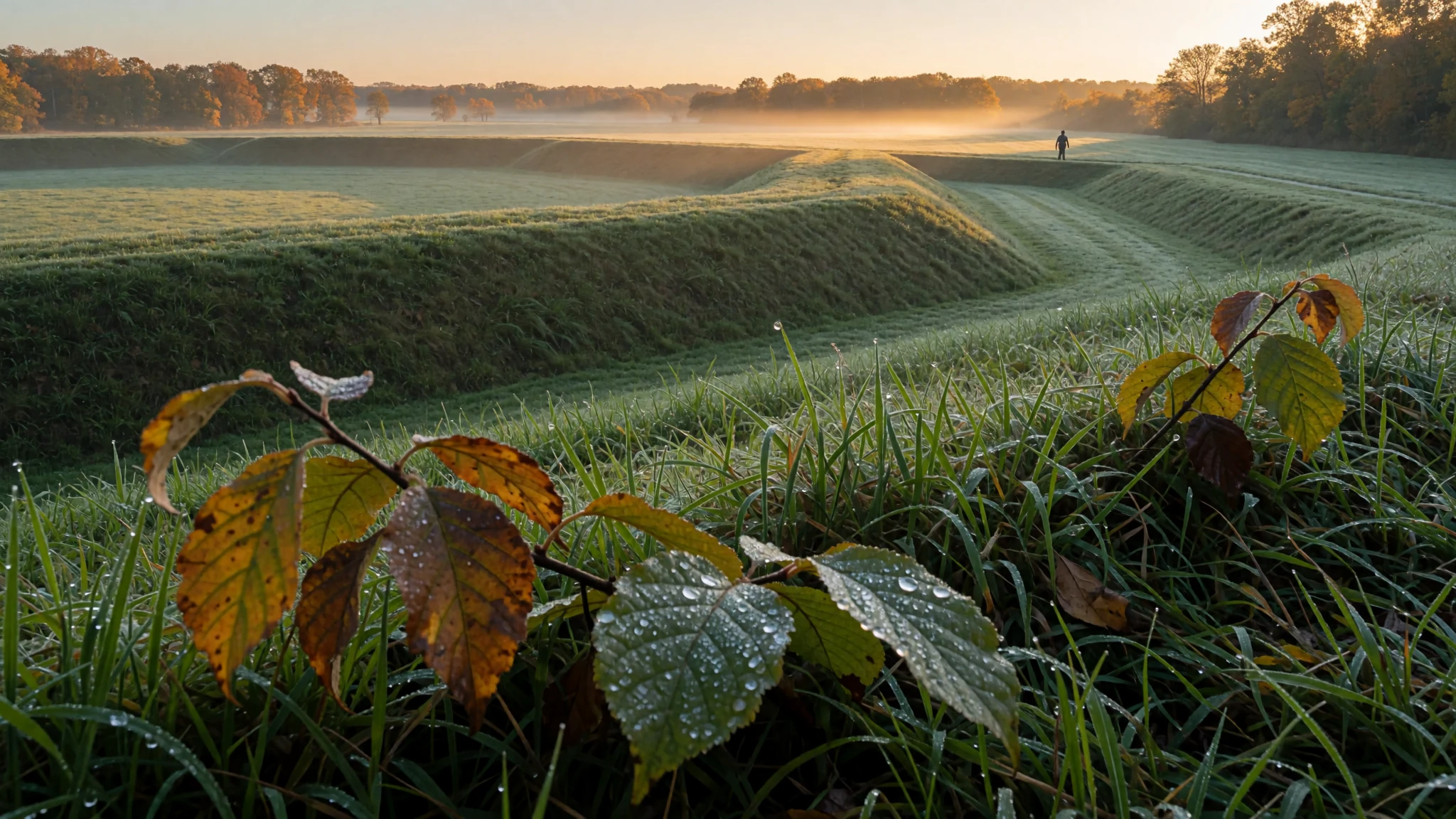
Discover monumental geometric earthworks built by the ancient Hopewell tradition, preserved across tranquil river valleys in the United States.
The place
The Hopewell Ceremonial Earthworks represent a monumental achievement in landscape architecture, consisting of vast geometric enclosures built along tributaries of the Ohio River. These remarkable sites at the Hopewell Ceremonial Earthworks feature soaring earthen walls, precise circles, squares, and octagons that cover dozens of acres. Constructed primarily between the years 1 and 400, the earthworks demonstrate sophisticated ancient knowledge of geometry and astronomy. The complexes were created by indigenous communities of the Hopewell tradition, who gathered here for sacred rituals, community gatherings, and honoring the dead. Over the centuries following European settlement, many of these grand structures suffered from agricultural ploughing, which reduced their height and altered their surrounding terrain. Today, these surviving landscape monuments are protected across multiple locations in Ohio, managed jointly by federal park services and historical preservation groups. Visitors walking the grassy trails today can still trace the immense scale of these ancient walls, which rise mysteriously from flat river floodplains under wide American skies. The surrounding region carries a quiet rural charm, defined by winding rivers, fertile agricultural fields, and small towns that have witnessed centuries of shifting American history.
Its story
The builders of the Hopewell Ceremonial Earthworks belonged to a vast cultural and trade network that stretched across North America long before European arrival. Societies associated with the Hopewell tradition did not live in dense cities; instead, they lived in dispersed homesteads and traveled great distances to congregate at these monumental ceremonial centers. They imported exotic raw materials from distant regions, crafting intricate ornaments from copper, mica, obsidian, and marine shells, which were then deposited in ritual burials within the sacred mounds. For generations, these earthwork complexes functioned as sacred landscapes where astronomy guided the alignment of massive embankments with lunar cycles. After centuries of vibrant use, the tradition gradually transformed, leaving these silent earthworks to rest beneath forest growth and eventually farm fields. During the nineteenth and twentieth centuries, pioneering archaeologists began mapping and excavating the mounds, revealing the staggering craftsmanship of a culture that understood mathematics and celestial movements on an exquisite scale. Following decades of advocacy by historians and indigenous advocates, the perseverance of preservationists culminated when the complexes were officially inscribed as a UNESCO World Heritage Site, recognizing their universal significance in human history and honoring the enduring legacy of native American builders.
What to see
- Mound City Group — Chillicothe, Ohio
Situated near Chillicothe, this compact site features a cluster of twenty-four burial mounds enclosed within a rectangular earthen wall. Visitors can explore the excellent visitor center, walk the flat perimeter path among the restored mounds, and observe exhibits detailing the sophisticated artifacts unearthed during early excavations in the area.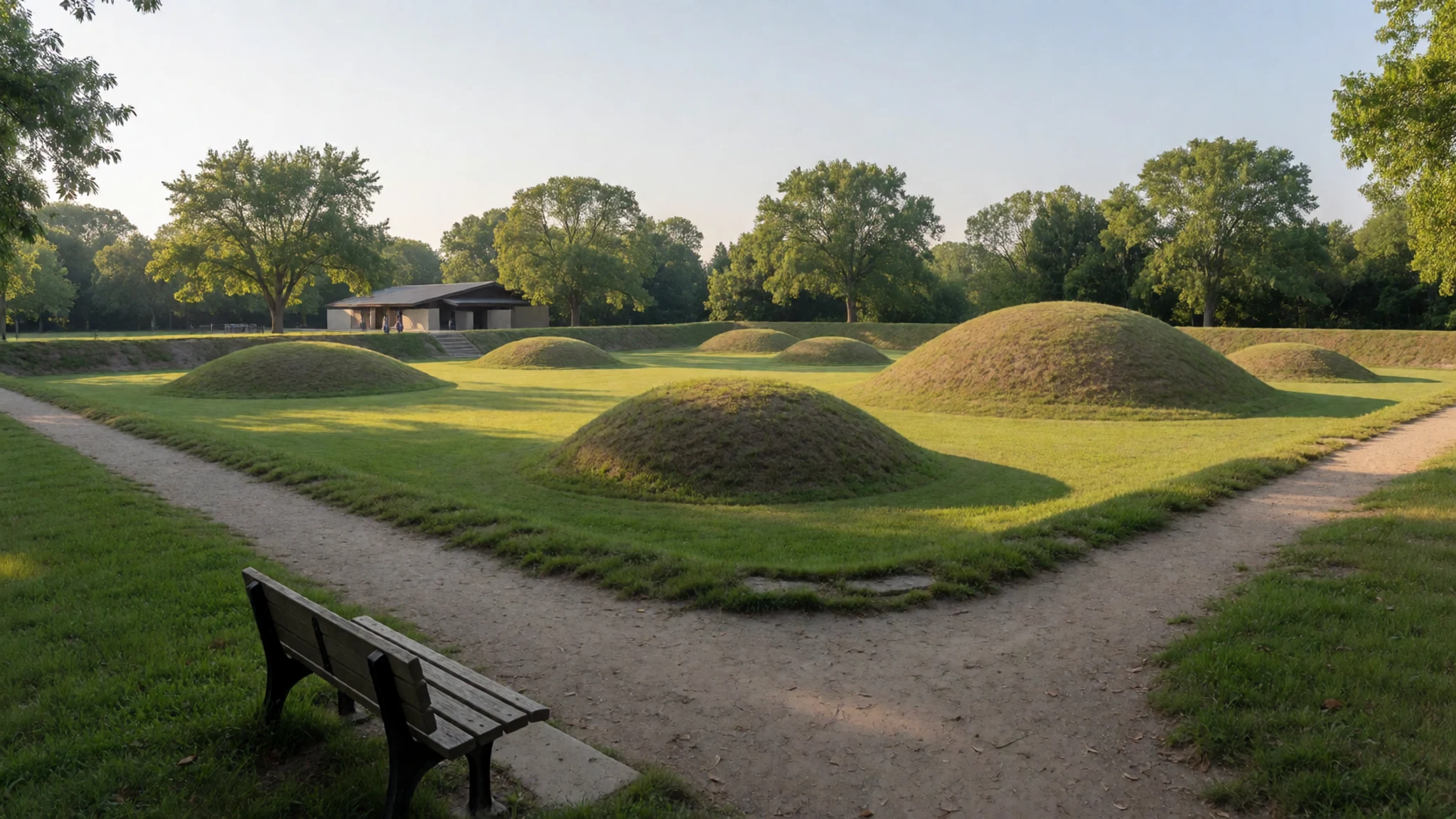
- Newark Earthworks (Octagon) — Newark, Ohio
Encompassing an astonishing geometric expanse, this site near Newark showcases an immense octagonal enclosure combined with a massive circular earthwork. The scale is difficult to grasp from the ground alone, making the interpretive trails and observation platforms essential for tracing how ancient builders aligned their monumental architecture precisely with the complex seventeen-year lunar cycle.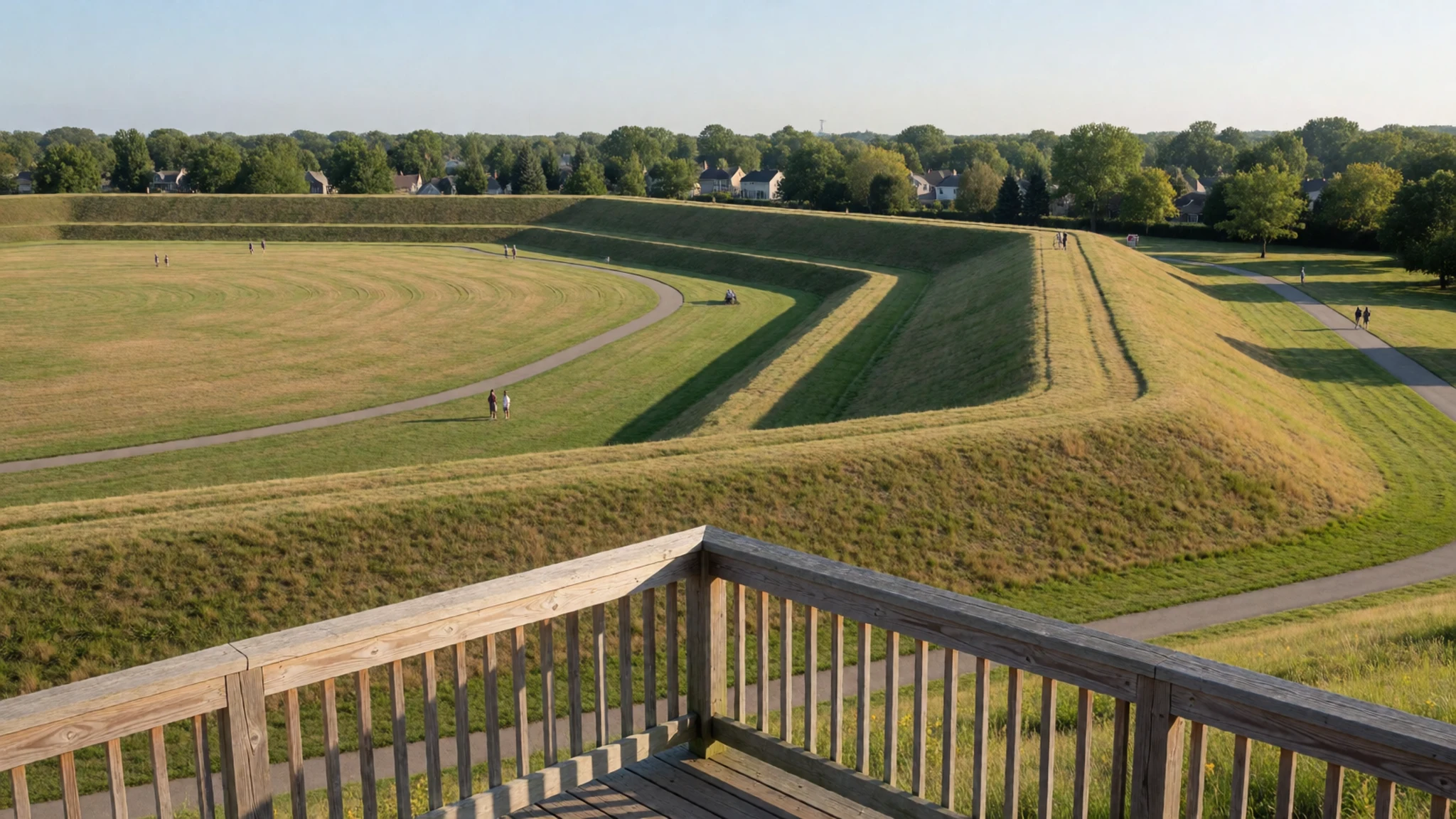
- Great Circle Earthworks — Heath, Ohio
Located in Heath, this impressive park preserves a colossal circular embankment featuring a deep interior ditch and a dramatic entranceway. Walking beneath the towering earthen walls gives a profound sense of the immense communal labor and sacred architectural design invested by the ancient Hopewell tradition centuries ago.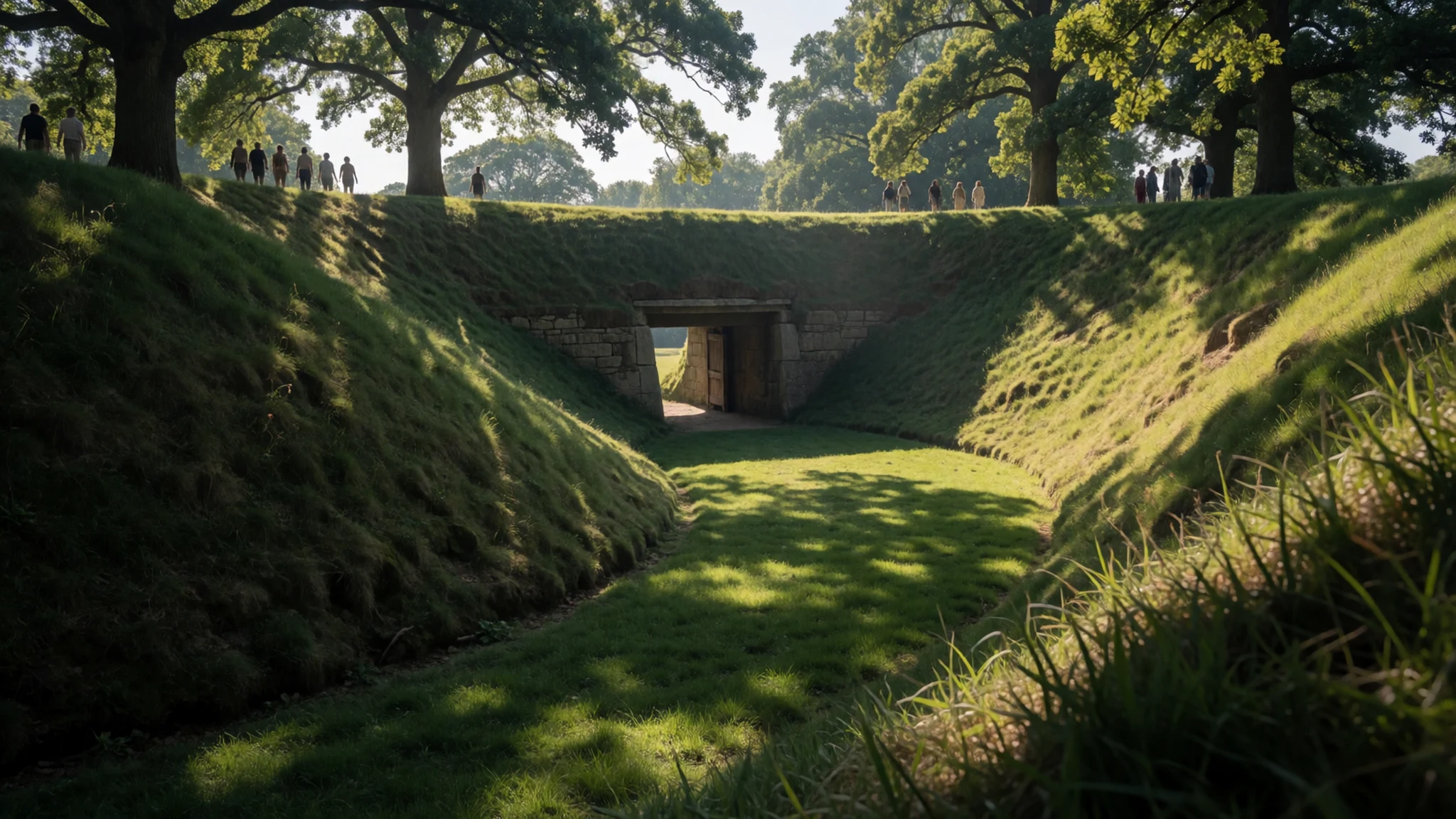
- Seip Earthworks — Bainbridge, Ohio
Set amid agricultural fields near Bainbridge, this sprawling complex includes large circular and rectangular earthworks alongside significant burial mounds. Informative walking trails lead visitors across the expansive landscape, offering quiet views of the river valley where ancient communities once gathered for ceremonies and trade exchanges.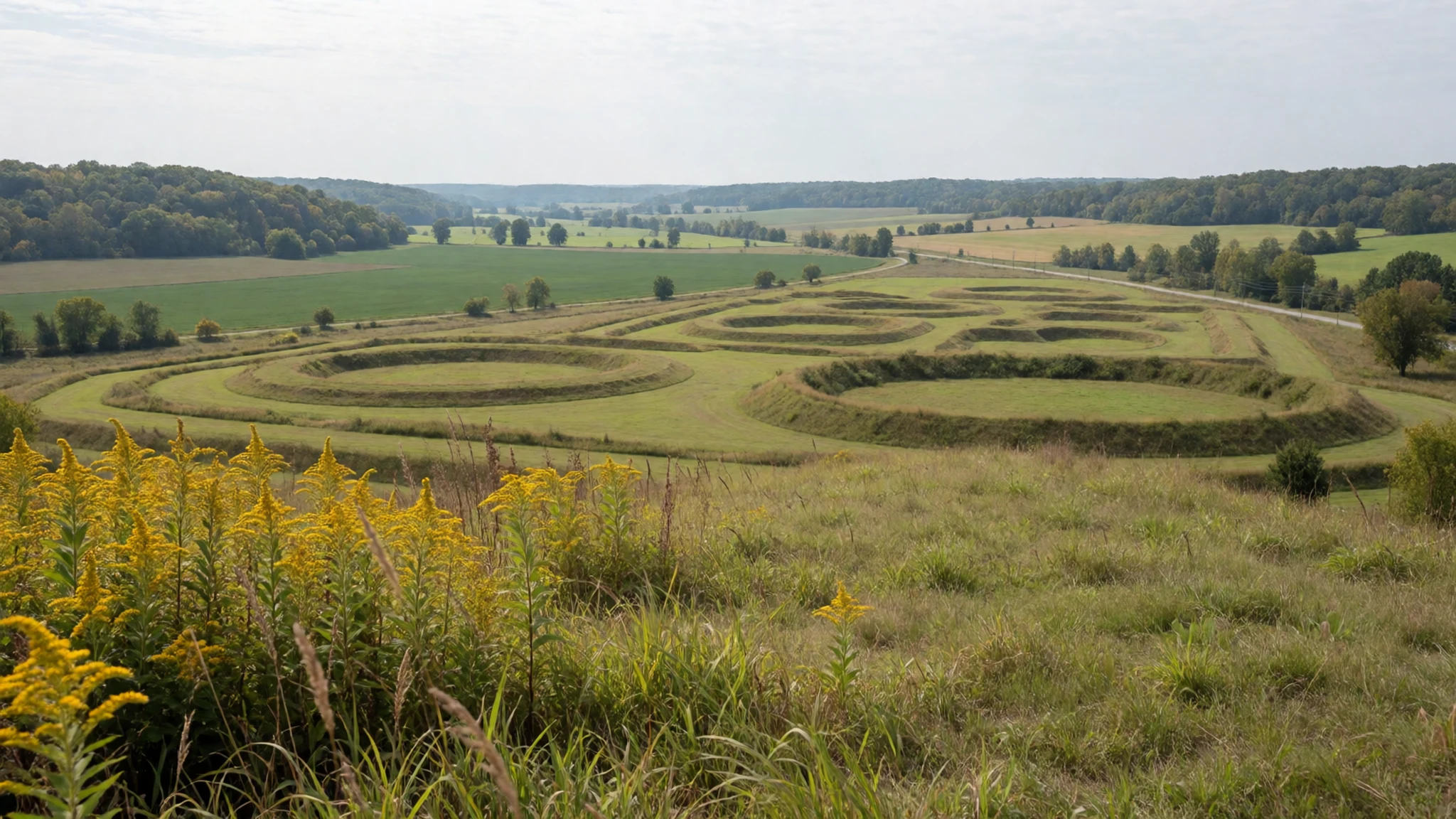
Culture
Visitors exploring the communities surrounding the Hopewell Ceremonial Earthworks will encounter proud Ohioans who are quick to share local history, neighborhood pride, and regional traditions. The population reflects a broad cross-section of American society, blending diverse immigrant heritages, traditional Midwestern warmth, and vibrant urban pockets. Cultural life here is also deeply tied to collegiate sports, particularly the passionate rivalry between Ohio sports fans and neighbouring Michigan supporters, which runs high during autumn football season. When discussing the local heritage, residents at the Hopewell Ceremonial Earthworks deeply respect the precontact indigenous history and the careful stewardship required to protect these ancient monuments for future generations. Refrain from walking on top of the fragile earthen mounds or disturbing vegetation, as these historical earthworks are treated with reverence and archaeological care.
What to wear
When exploring the Hopewell Ceremonial Earthworks and surrounding Ohio regions, historical traditional dress is absent from daily life, surviving only in museum exhibits showcasing precontact hide garments and copper ornaments worn by ancient indigenous leaders. Today, locals wear practical, casual American attire suited to the changing Midwestern seasons, including denim jeans, comfortable footwear, fleece jackets, and baseball caps. Visitors heading to the earthworks should prioritise comfortable walking shoes or sturdy trainers capable of handling grassy fields and unpaved park trails. Layered clothing is essential for outdoor exploration, as spring and autumn breezes can shift quickly across open river floodplains, while summer visits require breathable fabrics, sun hats, and reliable rain gear for sudden afternoon showers.
What to eat
- Tony Packo's Hungarian Hot Dogs — Front Street, Toledo
A legendary Toledo institution serving iconic spicy Hungarian hot dogs topped with mustard, onions, and a rich meat sauce, celebrated across the state.
- Geauga County Maple Syrup — Village of Burton, Geauga County
Produced across family-run sugarbushes in northeast Ohio, this pure amber syrup highlights local agricultural traditions rooted in maple harvesting.
- Salisbury Steak — Classic diners and eateries throughout Cleveland
A classic American comfort food dish of minced beef steak seasoned and browned, created by Cleveland physician Dr. James H. Salisbury. - Findlay Confections and Spiced Nuts — Findlay town centre
Handcrafted sweet treats, roasted spiced nuts, and artisanal ice creams that showcase the rich confectionery heritage of northwest agricultural towns.
Plan it
Best time. May to September offers warm weather and accessible park trails, while autumn brings crisp air and colorful foliage across the river valleys.
How long. 2–3
Getting there. Fly into John Glenn Columbus International Airport, then rent a car to drive east toward Newark and south toward Chillicothe along major interstate highways.
Budget. mid
Tips
- Rent a car, as public transport to rural earthwork sites is limited
- Wear sturdy walking shoes suitable for grassy park paths and uneven terrain
- Check official site hours before visiting individual earthwork locations
- Carry water and sun protection when exploring open archaeological complexes
Etiquette
- Never walk, climb, or stand upon the fragile prehistoric earthen walls
- Respect all designated archaeological protection zones and park signage
Nearby
Sources
- Wikidata Q10525989 (CC0)
- Wikipedia (CC BY-SA 4.0)
- Wikivoyage (CC BY-SA 4.0)