Honolulu
Honolulu, United States
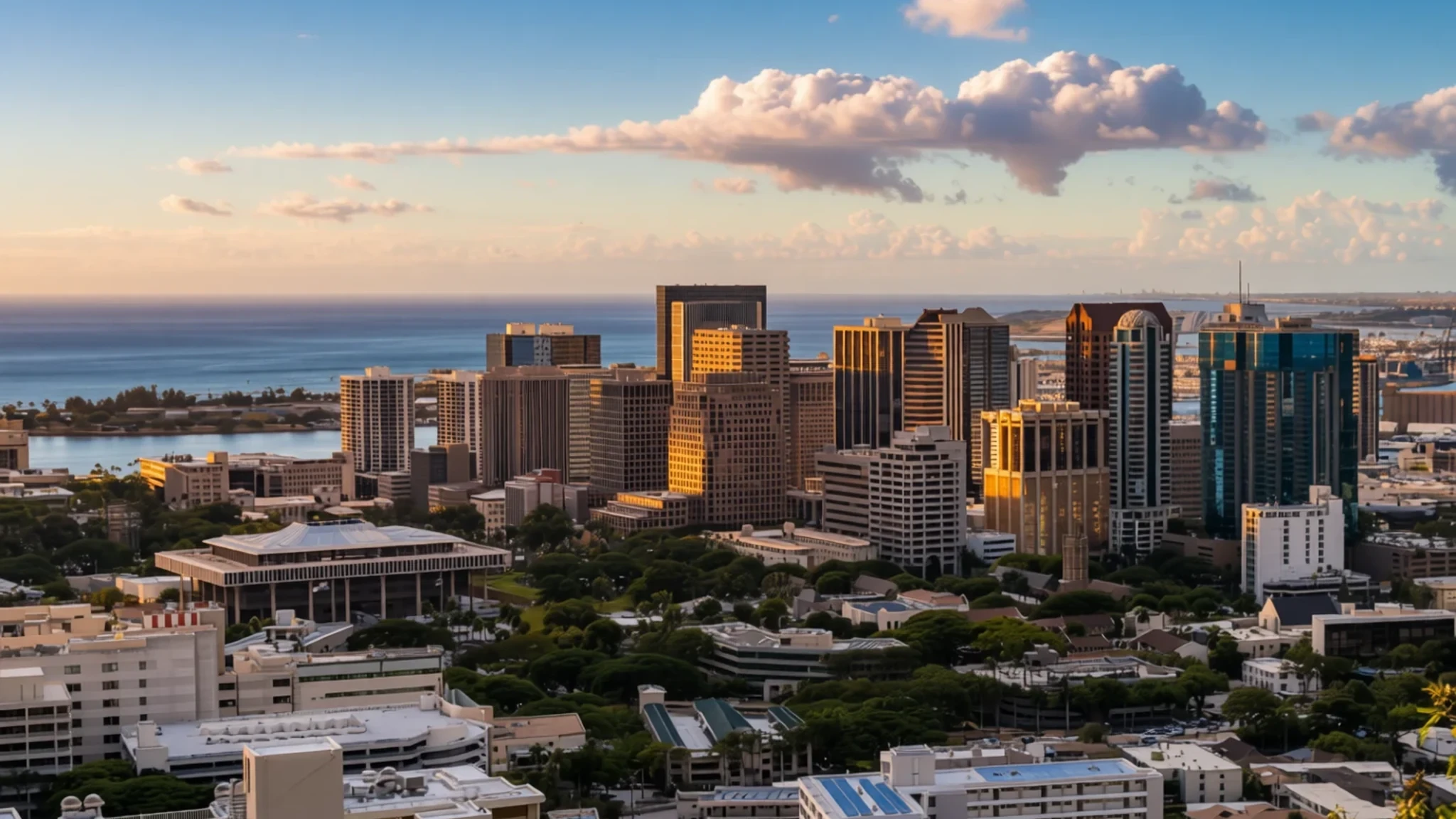
Honolulu combines a working Pacific capital, a royal past and famous beaches in one busy, walkable city.
The place
Honolulu sits on the southern coast of Oʻahu, the island that holds the state capital. Honolulu serves as the administrative center for the merged city and county, meaning the name refers to a much larger area than just the urban core tourists typically focus on. The 2020 census counted 350,964 residents, and the wider urban area holds close to a million people, a gap that shapes how the city feels. Downtown has government buildings, banks and older streets close to the water, while Waikiki, a few kilometres east, is a dense strip of hotels and beaches. Honolulu is the westernmost and southernmost major city in the United States, and it feels distant from the mainland in both distance and rhythm. The weather stays warm for most of the year, with trade winds easing the heat. The city is expensive by American standards, and food, car hire and rooms add up quickly. Traffic is heavy around the harbour and on main roads at rush hour, so visitors often plan their days around it. The harbour that made the place valuable as a port is still a major naval base, and military sites sit among civilian neighbourhoods. Beyond the famous shoreline, the city offers museums, gardens and a strong tradition of Hawaiian music, which gives a fuller picture than the postcard view.
Its story
Honolulu's story begins long before foreign ships arrived, with Polynesian settlers whose descendants passed on accounts of life along this shore. Oral histories and archaeological finds suggest a village stood where the city now sits by the 11th century. The turning point came with Kamehameha I, who united Oʻahu after winning the Battle of Nuʻuanu and then moved his royal court across the island, first to Waikiki and then into what is now downtown. In November 1794, Captain William Brown of Britain sailed into the harbour, and other ships soon followed, so the anchorage became a stop for traders moving between North America and Asia. Trade turned a cluster of houses into a town. In 1845, Kamehameha III moved the permanent capital of the kingdom from Lahaina on Maui to Honolulu. His successors built a royal palace, a cathedral and government offices that gave the city its formal character. The kingdom ended in 1893, and the city became the capital of a United States territory after annexation in 1898. The attack on Pearl Harbour in 1941 drew the United States into the Second World War and placed the islands at the centre of Pacific defence. Statehood in 1959 made Honolulu the capital of the state. A fire in 1900 destroyed much of the Chinatown quarter, a reminder of how crowded and fragile the old wooden streets were.
What to see
- Iolani Palace — Downtown
Iolani Palace is the former royal residence of the Hawaiian monarchy, set in grounds built for the kingdom in the late nineteenth century. Its formal rooms, throne room and carved woodwork show the kingdom at its most formal. Guided tours run through the building on set days, so check the official site for current times and any booking requirements.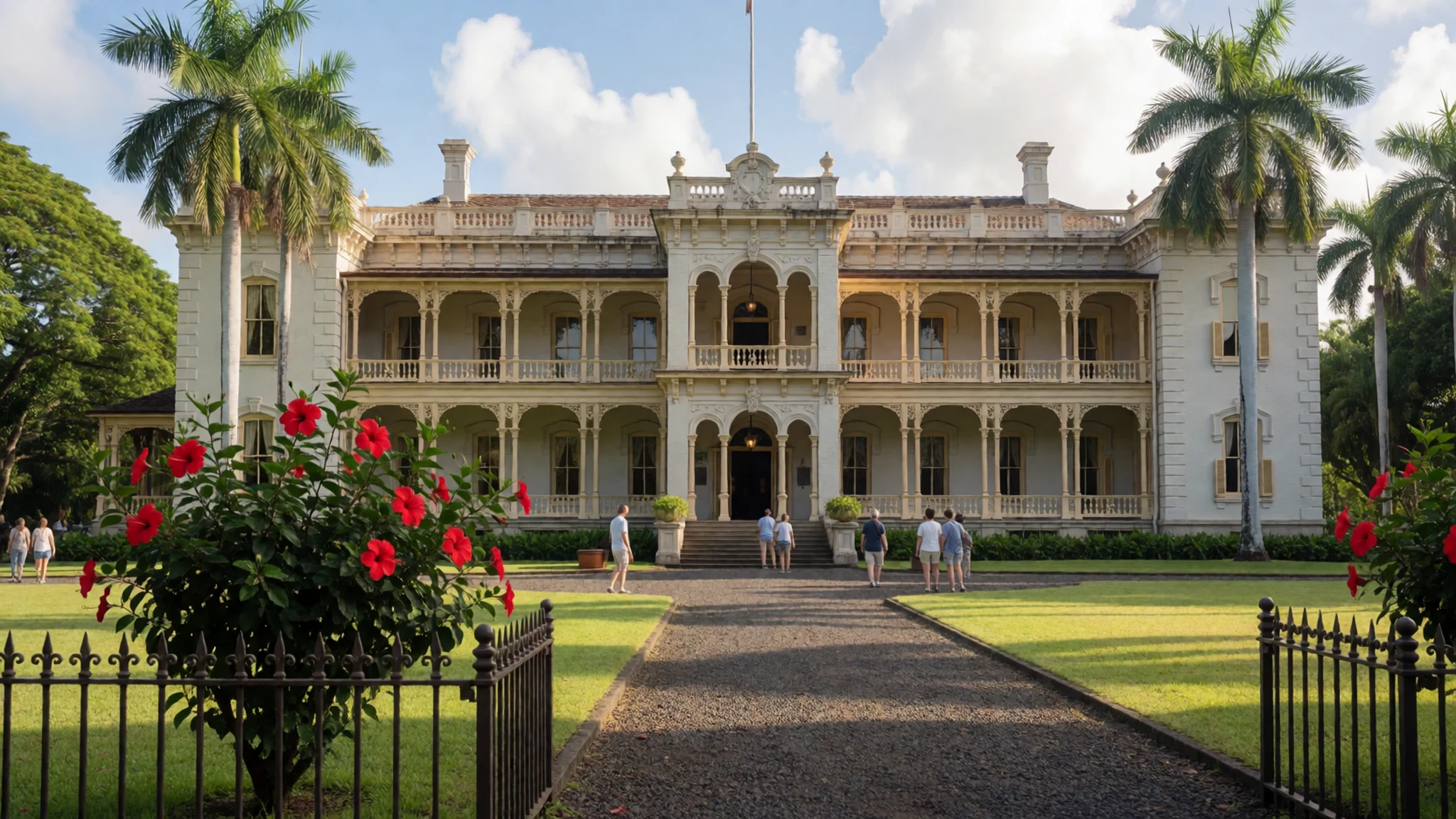
- Waikiki Beach — Waikiki
Waikiki Beach is the strip most people picture when they think of Honolulu: a long curve of pale sand with Diamond Head rising behind it. It is busy at midday. Swimming is easy in the calmer stretches, and outrigger canoes, catamarans and surf lessons fill the shoreline. Surf schools teach beginners here. For a quieter spot, walk further along the sand or arrive early, when the water is calm.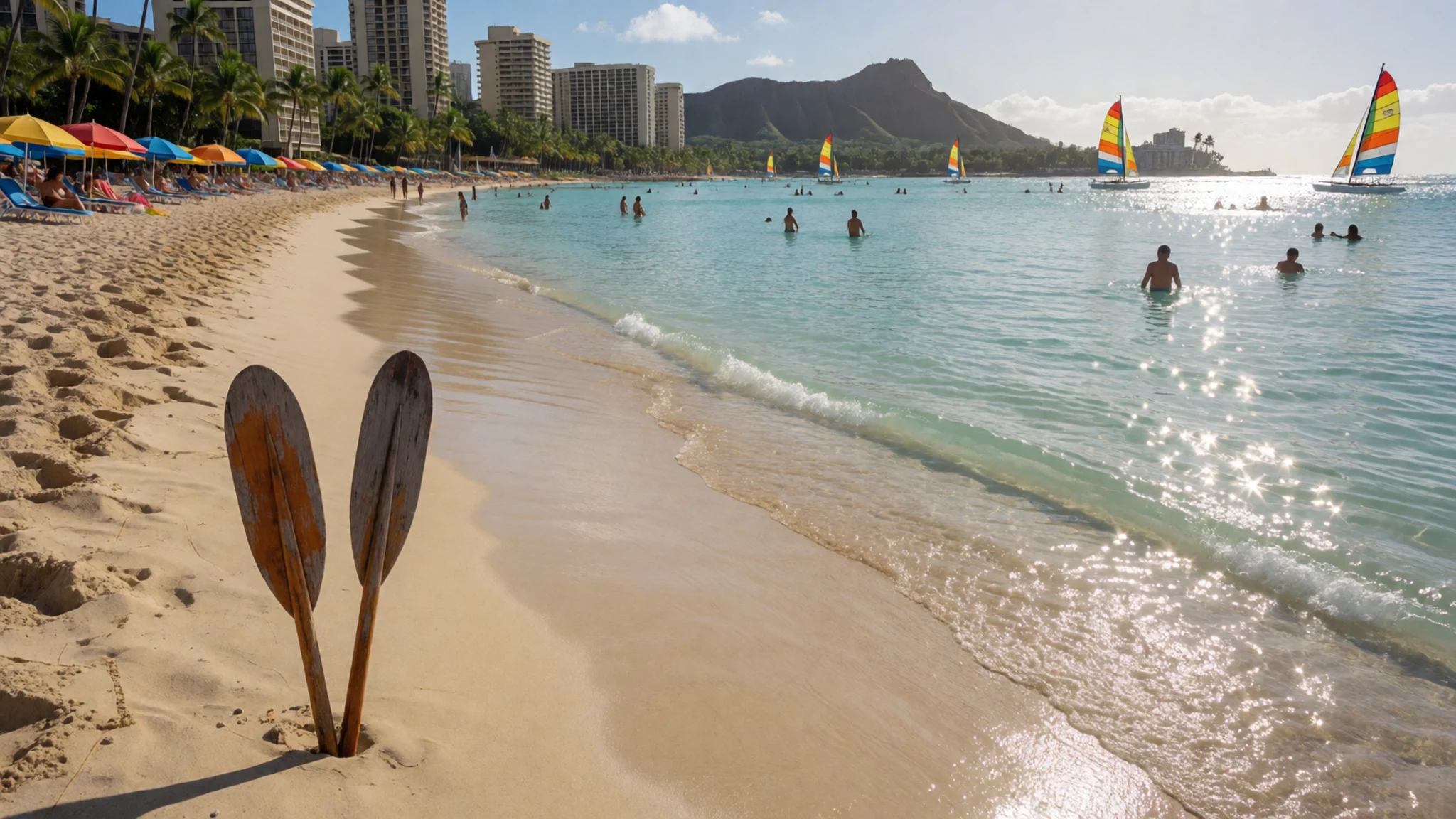
- Diamond Head — Diamond Head State Monument
Diamond Head is the volcanic crater that anchors the view from Waikiki, and its rim is a popular hike for visitors. The trail climbs through old military tunnels and stairs to a lookout over the coast. It is steep in places and there is little shade, so go early, carry water and wear closed shoes. Entry and timed booking rules change, so check the official site before you go.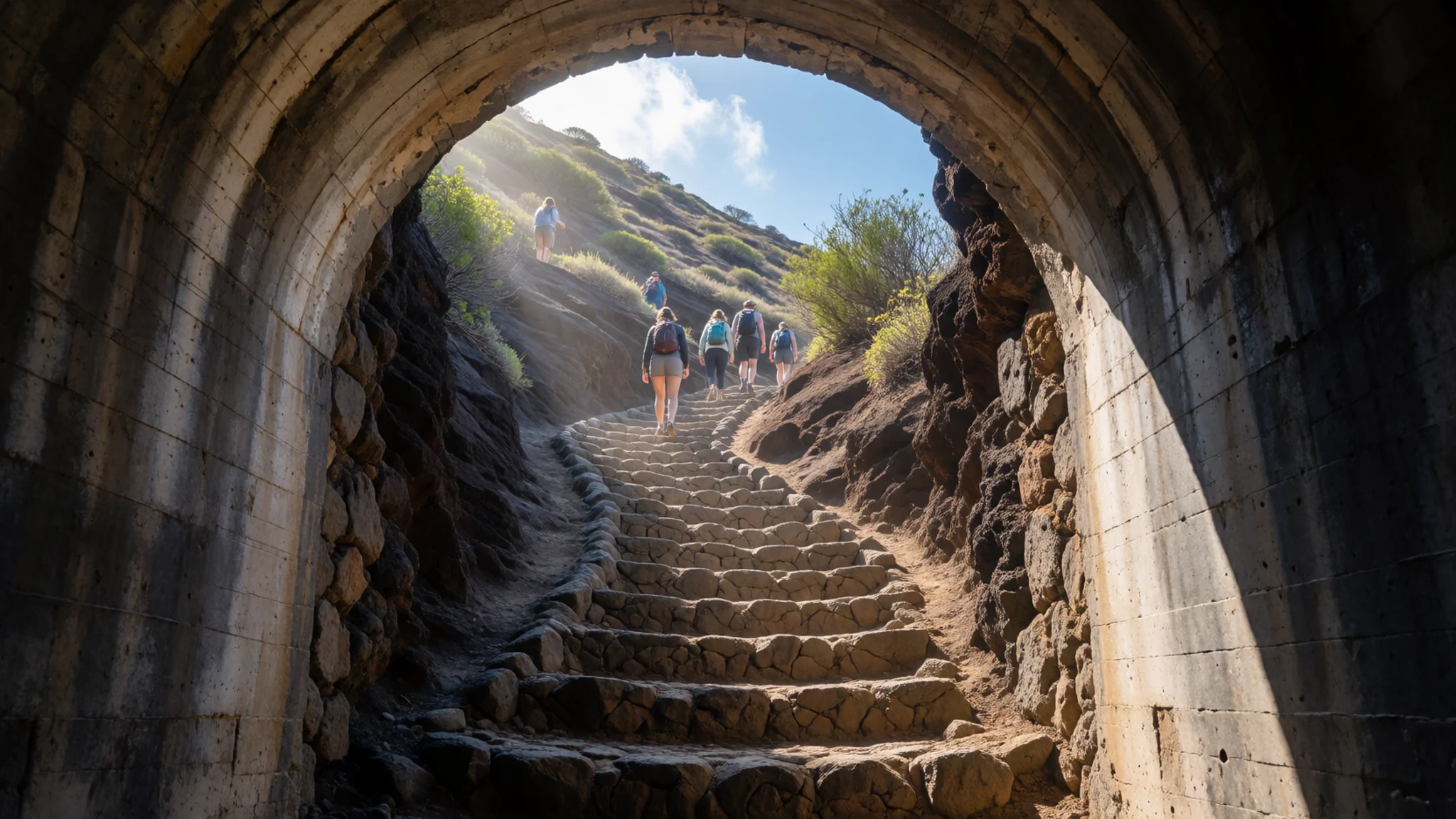
- Aliʻiōlani Hale — Downtown civic square
Aliʻiōlani Hale is a government building in downtown Honolulu, built to house the kingdom's administration. Its stately façade faces the civic square, and it remains a familiar landmark in the centre of town. A statue of Kamehameha I stands nearby, making the square an easy meeting point for a walking tour.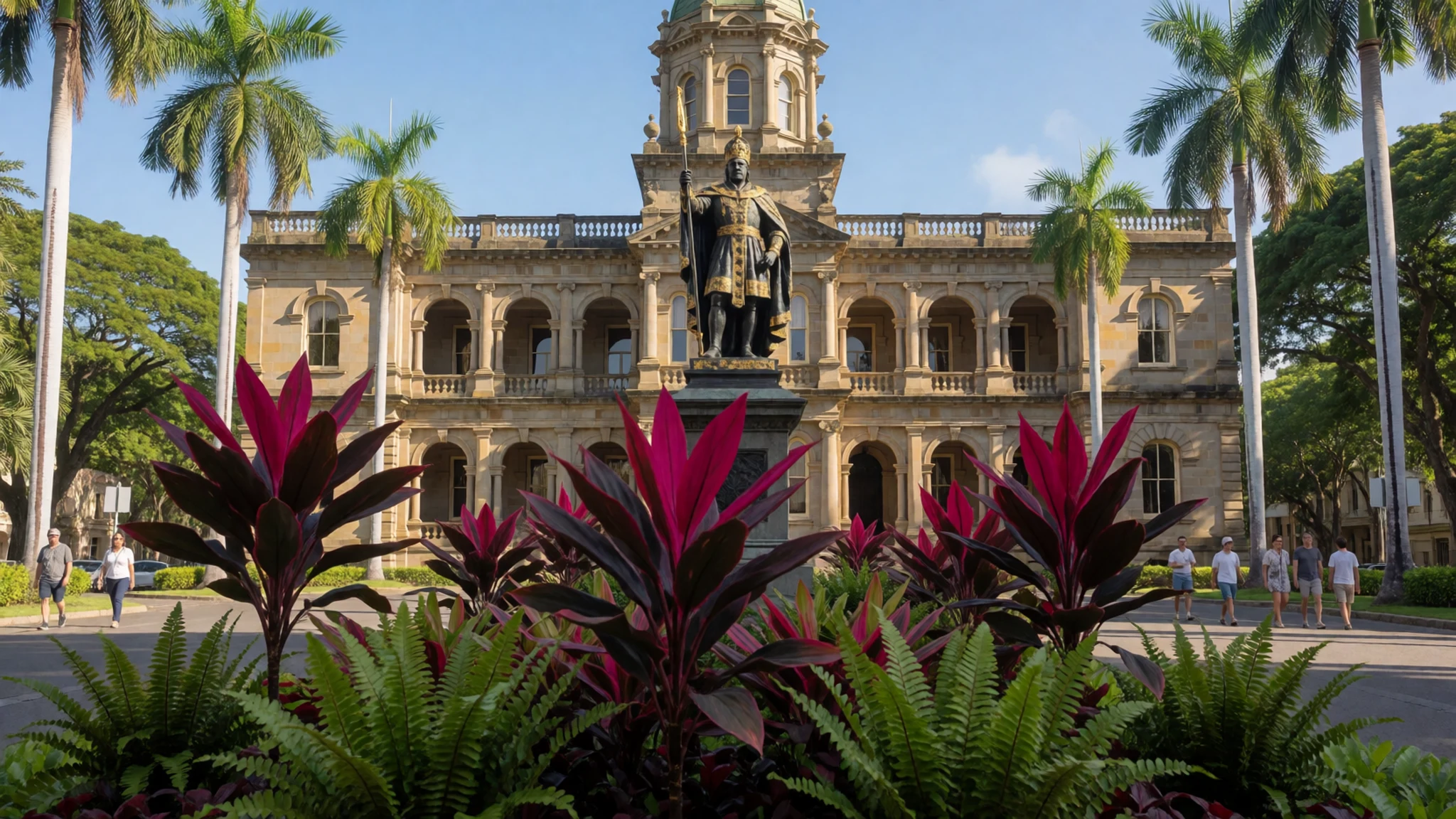
- Bishop Museum — Kalihi
The Bishop Museum is Honolulu's largest museum. It holds the state's largest natural history collection and what is considered the largest collection of Hawaiian and Pacific culture artefacts anywhere. Exhibits cover Pacific voyaging, feather work and natural history. Allow a half-day, and check the official site for opening hours.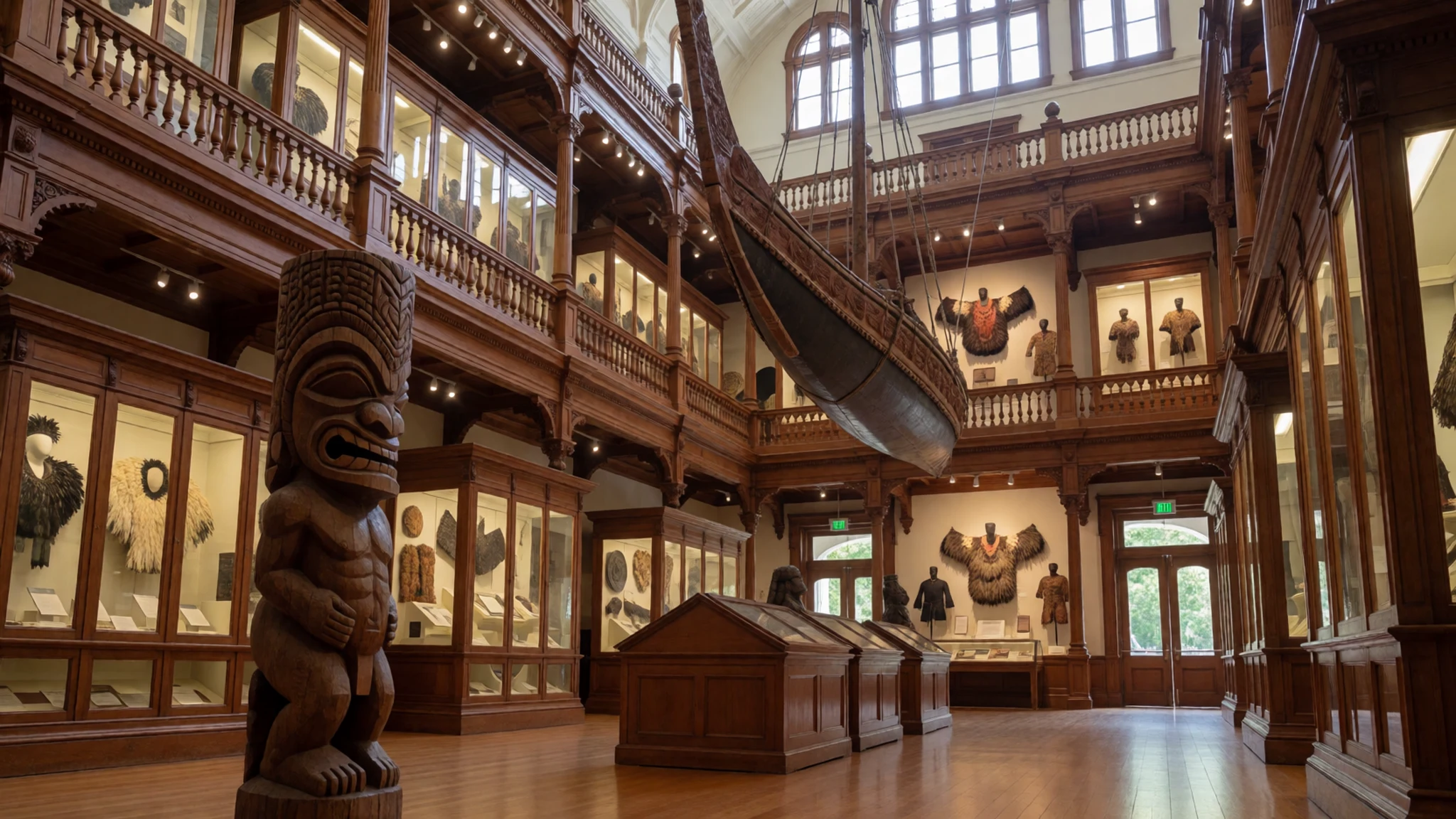
- Pearl Harbour — Pearl Harbour, west of the city
Pearl Harbour is a working US Navy base, home to the Pacific Fleet, and the site of the 1941 attack. Visitors reach the memorial over the sunken battleship USS Arizona by boat from the visitor centre. Tickets and timed entry can be limited, so check the official site ahead. Expect security checks, restrictions on bags and a quiet, reflective atmosphere.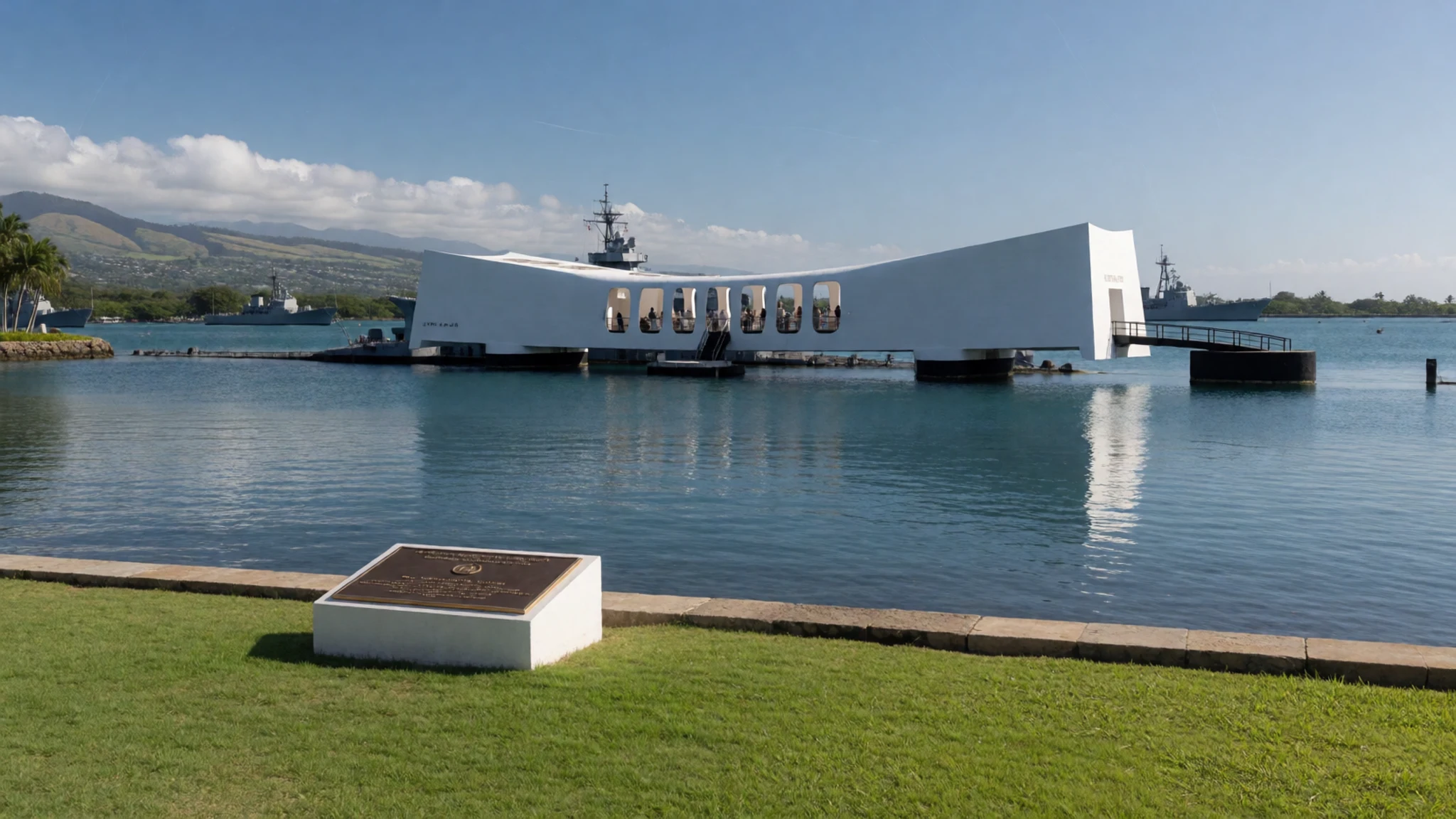
Culture
Honolulu blends Hawaiian tradition with the habits of a large American city. Hawaiian is an official language of the state, and place names often carry the ʻokina, a glottal stop, and the kahakō, a macron, so the spelling on a sign matters. The word aloha serves as greeting and farewell, and locals tend to be friendly but direct. Music is central to city life. The Honolulu Symphony, founded in 1900, is the second-oldest US symphony orchestra west of the Rocky Mountains, and the city has a strong tradition of Hawaiian music performed in theatres and at the Waikiki Shell. Museums such as the Bishop Museum present Native Hawaiian and Pacific history with care. Hula appears at festivals and hotel shows, and the dancers are usually trained within a formal lineage rather than performing for decoration. Daily life runs at a relaxed pace, with queues at popular eateries and weekend markets. Noise carries across open-air venues and beaches, and residents value quiet on their residential streets. Ask before photographing people taking part in ceremonies, and never remove sand, stones or shells from a heiau or beach site.
What to wear
Traditional Hawaiian dress was made from natural materials. Kapa, a bark cloth beaten from the wauke plant and often printed with patterns, was used for clothing and wraps, while feathers, shell and plant fibres made adornment. In the nineteenth century the mu'umu'u, a loose gown, became widespread, and the holoku, a long dress, grew out of styles introduced through missionary influence. Today the everyday look in Honolulu is far more relaxed. Locals wear aloha shirts with printed patterns, flip-flops, shorts and sundresses, and many people wear aloha shirts to the office on Fridays. Dress is informal almost everywhere, even in restaurants, though some evening events ask for smarter clothes. A visitor should pack light, breathable fabrics such as cotton or linen, a hat, sunglasses and a light layer for air-conditioned rooms. For Diamond Head and other hikes, wear closed shoes with grip. Cover shoulders and knees when entering churches or temples, and keep swimwear to the beach and its immediate area rather than town streets.
What to eat
- Poke — Grocery fish counters and the morning market by the harbour
Poke is cubes of raw fish, usually tuna, seasoned with soy, sesame oil and seaweed. It is sold by the scoop in grocery store fish counters and at the morning market by the harbour. Buy it chilled and eat it the same day, ideally with a bowl of rice.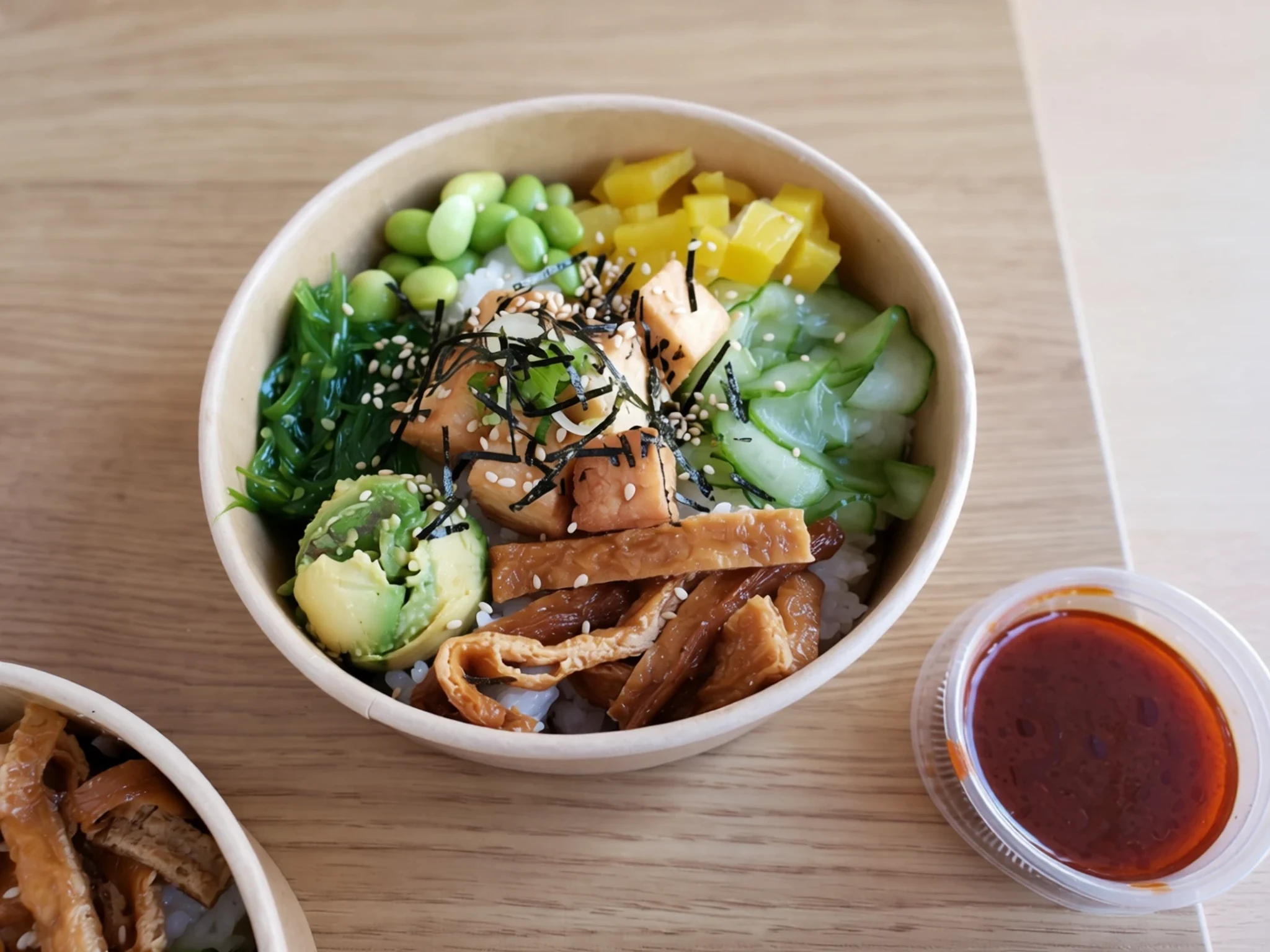
- Plate lunch — Lunch counters and roadside trucks around town
Plate lunch is a generous meal of rice, macaroni salad and a main such as teriyaki beef, kalua pork or fried fish. It grew from plantation-era cooking and remains the everyday lunch for many workers. Lunch counters and roadside trucks around town serve it quickly, often at lunchtime.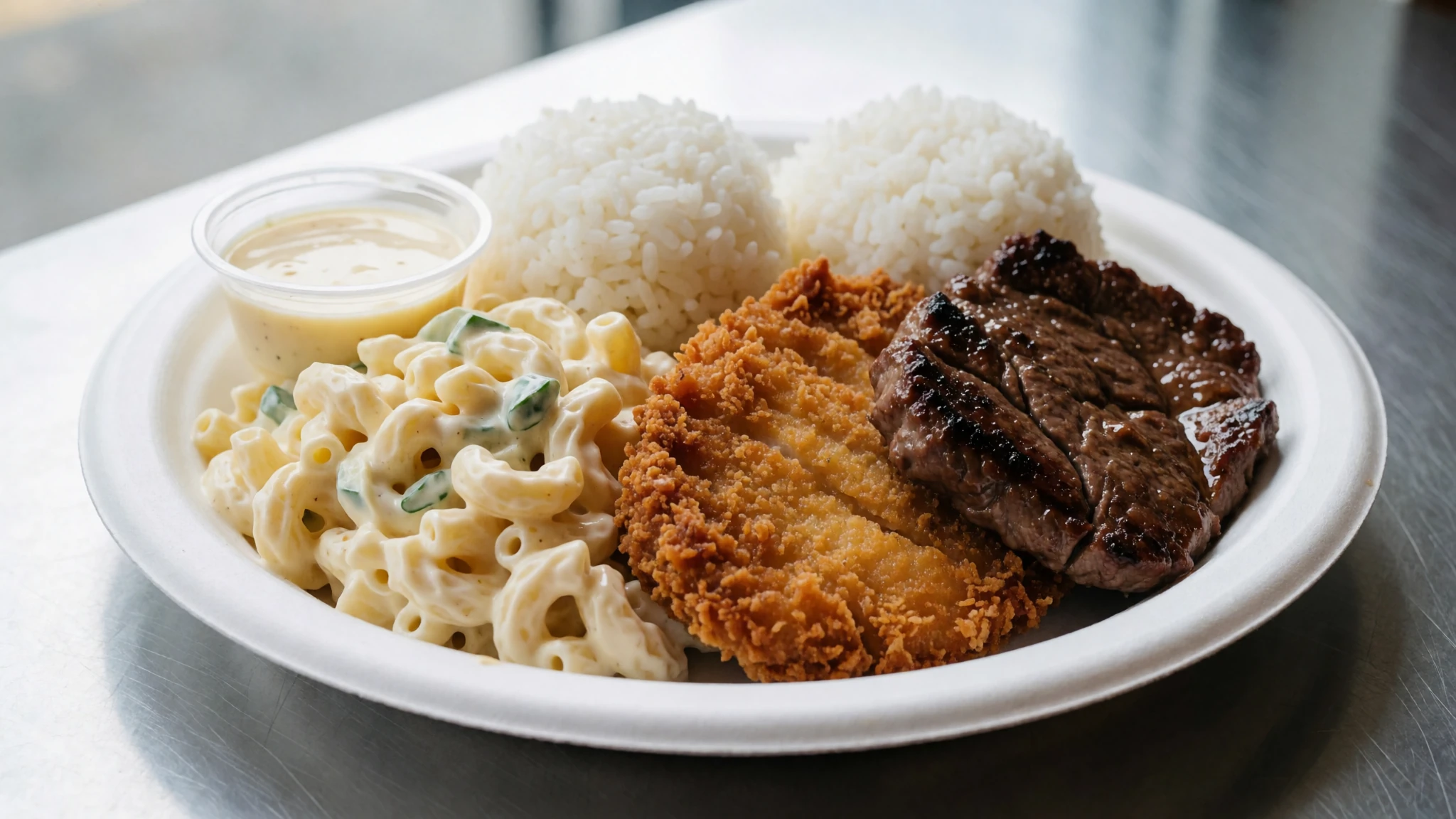
- Zippy's chili — Any Zippy's diner, especially late in the evening
Zippy's is an island diner chain, the local equivalent of a family-style American diner, and its chili is the signature dish. It is served over rice, over a burrito or over french fries. Many locals favour it late at night, and the outlets are open for long hours. - Shave ice — Beach-side stalls around Waikiki
Shave ice is finely shaved ice under flavoured syrup, sometimes topped with ice cream or azuki beans. It is a refreshing treat in the warm afternoons. Beach-side stalls around Waikiki and food trucks near the surf schools sell it in many flavours. - Loco moco — Diners and breakfast counters across town
Loco moco is a bowl of rice topped with a hamburger patty, a fried egg and brown gravy. It is a hearty breakfast or late-night dish, and it reflects the mix of local and Asian influences on the islands. Diners across town serve it at any hour.
Plan it
Best time. April, May and September bring warm, comfortable days, drier spells and somewhat lighter crowds. The summer months are warm and humid with busy beaches, and the winter months bring more showers.
How long. 2–3
Getting there. Fly into Honolulu's main airport. Route W city bus runs from the airport to downtown and Waikiki, using exact change. Airport Waikiki Express shuttles run to hotels. The Skyline light rail's Lelepaua station is a short walk from the terminals but serves only western Honolulu. Rental car companies operate from a consolidated facility within walking distance of Terminal 2.
Budget. high
Tips
- Carry exact change for the city bus, since there are no ticket machines
- Book Diamond Head and Pearl Harbour visits ahead and go early in the morning
- Carry water and sun protection for walks and beaches
- Expect heavy traffic around the harbour and plan longer journeys outside rush hour
- Book accommodation early for peak periods in Waikiki
Etiquette
- Keep to marked paths and do not remove sand, stones or shells from heiau or beach sites
- Ask before photographing people taking part in ceremonies
- Follow security rules at Pearl Harbour, including restrictions on bags
Nearby
Sources
- Wikidata Q18094 (CC0)
- Wikipedia (rev 1382450091) (CC BY-SA 4.0)
- Wikivoyage (rev 5351795) (CC BY-SA 4.0)
- Photo: Views from Diamond Head, Farragutful (CC BY-SA 4.0)
- Photo: Iolani Palace dressed up, Daniel Ramirez (CC BY 2.5)
- Photo: Aliʻiōlani Hale, Reweaver33 (CC BY-SA 4.0)
- Photo: First Hawaiian Center, Flip Flops Hawaii (CC BY-SA 2.0)
- Photo: Pearl Harbor Hawaii, Eric Tessmer (CC BY 2.5)
- Photo: Waikiki Beach (2024), Frank Schulenburg (CC BY-SA 4.0)
- Photo: Port d'Hanarourou, Louis Choris (Public domain)
- Photo: Honolulu Chinatown fire of 1900, unknown author (Public domain)


