Hohenzollern Castle
Hohenzollern Castle, Germany
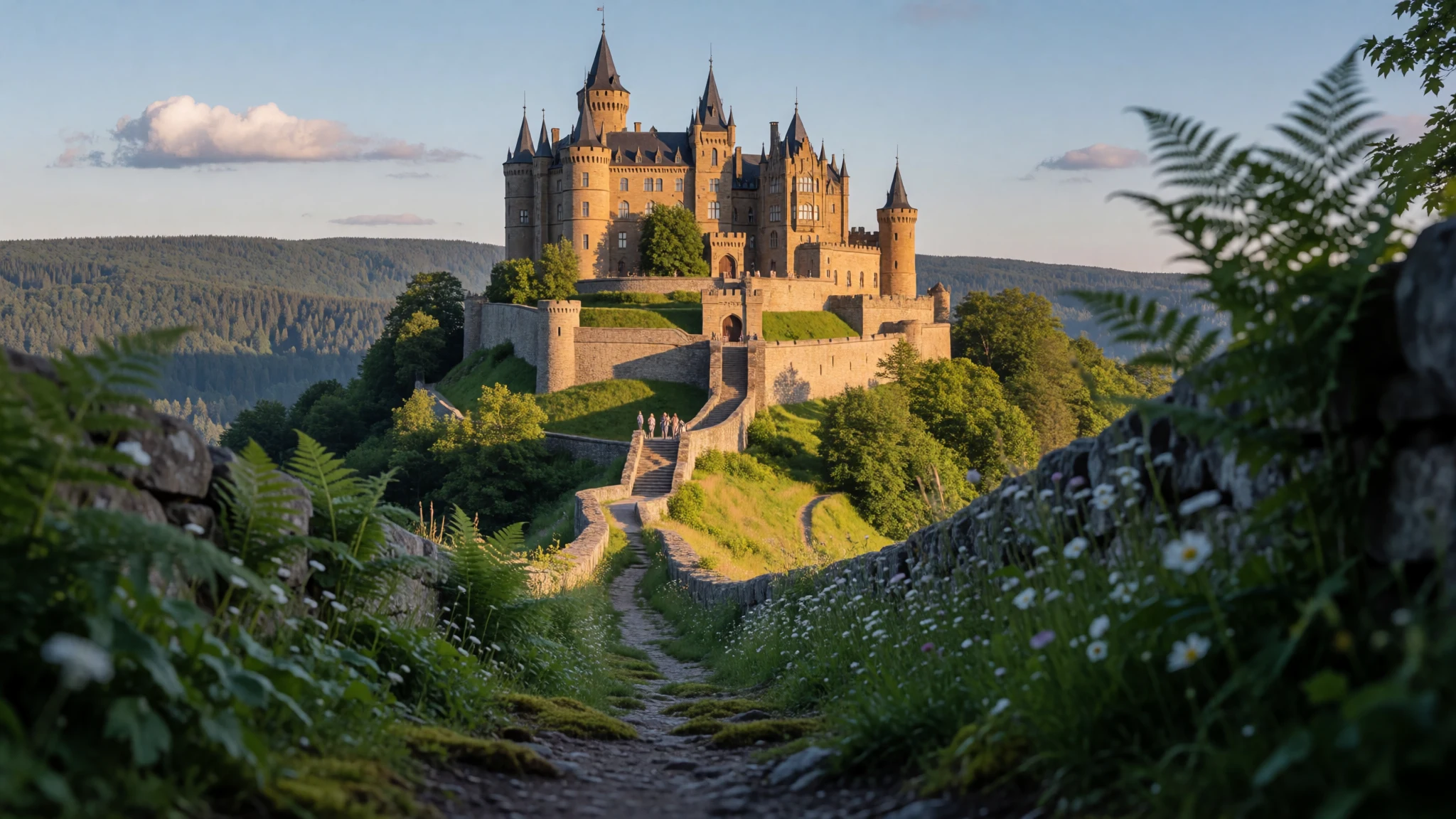
Hohenzollern Castle is a nineteenth-century Gothic Revival fortress on a lone hilltop, built to honour a dynasty, with views towards the Black Forest.
The place
Hohenzollern Castle crowns an isolated hill at 855 metres on the edge of the Swabian Jura, in the south-western German state of Baden-Württemberg. The town of Hechingen sits at its foot, and Stuttgart is about 50 kilometres to the north. Locals call the hill the Zoller, and it lends its name to the surrounding district, the Zollernalbkreis. Because nothing else rises close by, the silhouette shows from far across the farmland, and on clear days the Black Forest can be made out on the western horizon.
The fortress on top today is the third to stand on the spot, and it is a nineteenth-century creation rather than a medieval survivor. It was built as a family memorial for the House of Hohenzollern, the dynasty that produced Prussian kings and German emperors, although none of those emperors ever lived here. The look is theatrical on purpose: pointed towers, battlements, a long fortified approach and a skyline borrowed from English Gothic Revival and the châteaux of the Loire rather than from anything Swabian.
Inside, it works as a museum of Prussian history. The collection includes the crown of Wilhelm II, personal belongings of Frederick the Great and a run of dynastic portraits. Its purpose was commemoration more than defence, which is part of why it feels like a shrine to a dynasty rather than a lived-in home.
The setting does as much work as the rooms. The hilltop is exposed, the weather can turn quickly, and summer weekends bring coach parties and families from across the region. Opening arrangements and ticket types change, so check the official site, burg-hohenzollern.com, before planning the day.
Its story
Hohenzollern Castle has had three lives, and the first two ended badly. The original fortress went up around 1040, built by the Counts of Zollern. Even in the 1200s it had a glowing reputation in Swabia, but it was razed in 1423 after a long siege by the cities of the Swabian League.
A stronger second castle began in 1454. It sheltered the Catholic Swabian branch of the family through the Thirty Years' War, but Württemberg troops took it in 1634 and it then passed to the Habsburgs for about a century. French soldiers wintered there during the War of the Austrian Succession. After the last Austrian occupant left in 1798 it slid into ruin, and by the early nineteenth century only the Chapel of St Michael was still fit for use.
The third castle exists because of a sunset. In 1819 the young Prussian crown prince Frederick William, on his way to Italy, climbed the hill to see where his family began, and the evening light from the bastions stayed with him. In 1844, by then king, he wrote that he longed to see the place made habitable again. He hired Friedrich August Stüler, a pupil of Schinkel, and building ran from 1846 to 1867. The military engineer Moritz Karl Ernst von Prittwitz designed the imposing entrance, and the sculpture is by Gustav Willgohs.
Its closest cousin is Neuschwanstein in Bavaria: both are Romantic daydreams of medieval castle life, built in stone long after the Middle Ages. No Hohenzollern was living here regularly when it was finished. In 1945 the former Crown Prince Wilhelm made it a brief home.
What to see
- The Eagle Gate and fortified approach — Approach to the castle
The Eagle Gate (Adlertor) is the first big set piece, part of a stepped, fortified entrance designed by the engineer Prittwitz. Its carved inscriptions include the motto of the royal house order. The climb is steady, so allow time to stop, look back over the valley and let the crowds string out.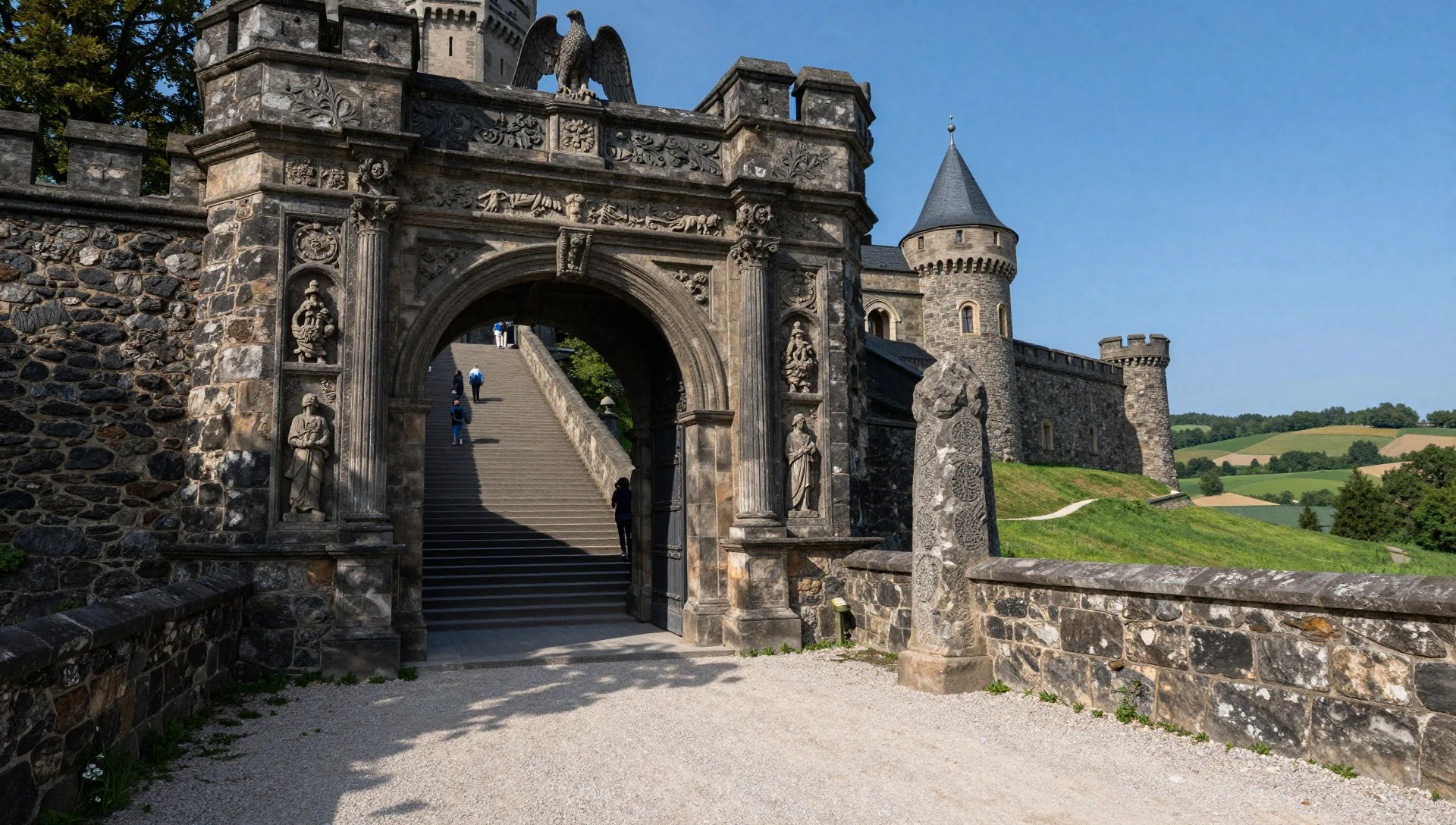
- The inner courtyard — Inside the walls
Beyond the gates, the inner courtyard shows the castle's character best: Gothic Revival towers and turrets wrapped around an open space where the scale feels almost stage-like. Sculpture by Gustav Willgohs appears around the buildings. Look up as much as ahead, because the roofline is the point.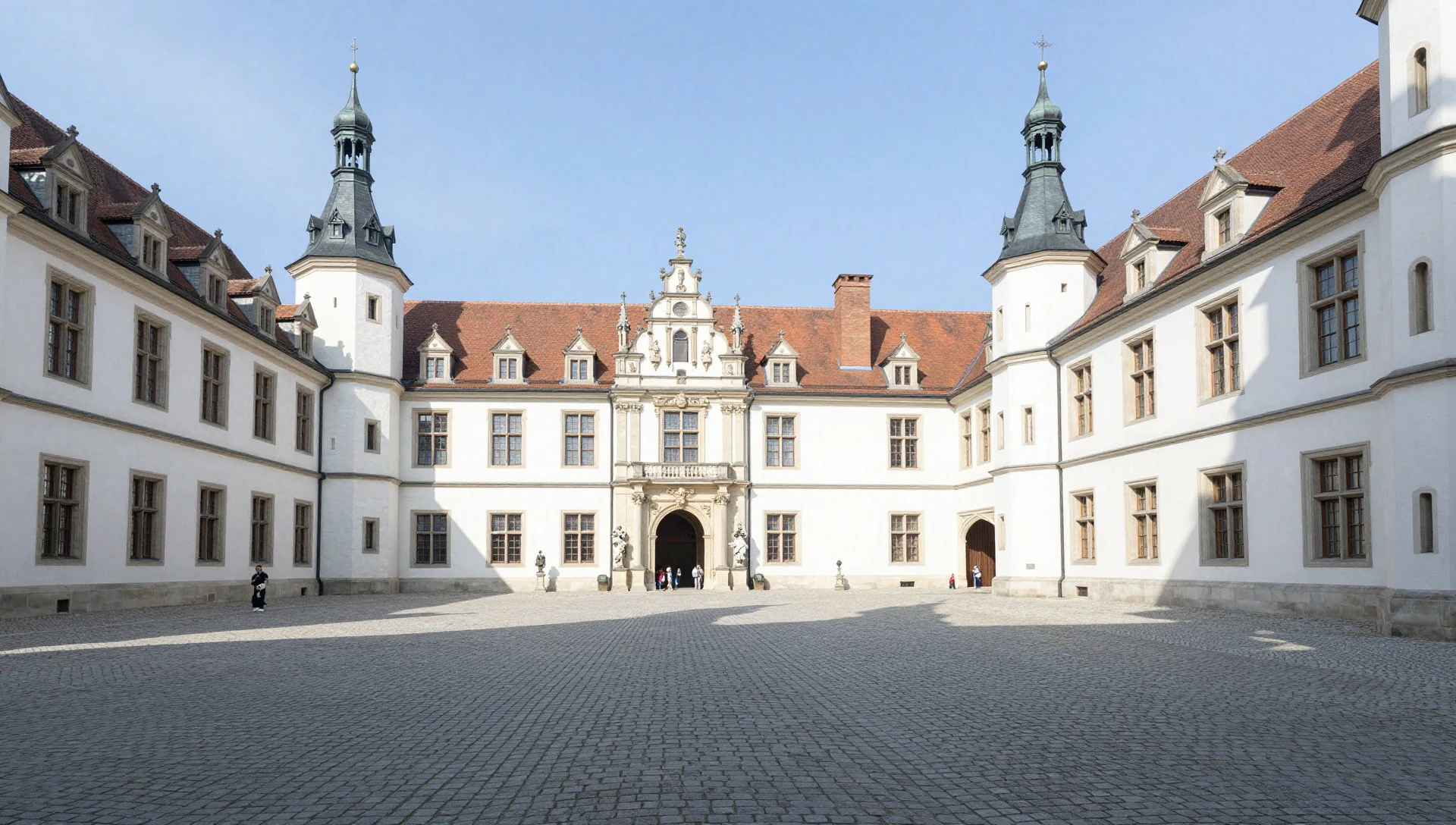
- The Prussian treasures — Museum rooms
Inside, the museum displays objects from Prussian history, including the crown of Wilhelm II and personal belongings of Frederick the Great, alongside portraits of the dynasty. What is on show can change, so treat any single item as a bonus rather than a promise, and check the official site before building a visit around one.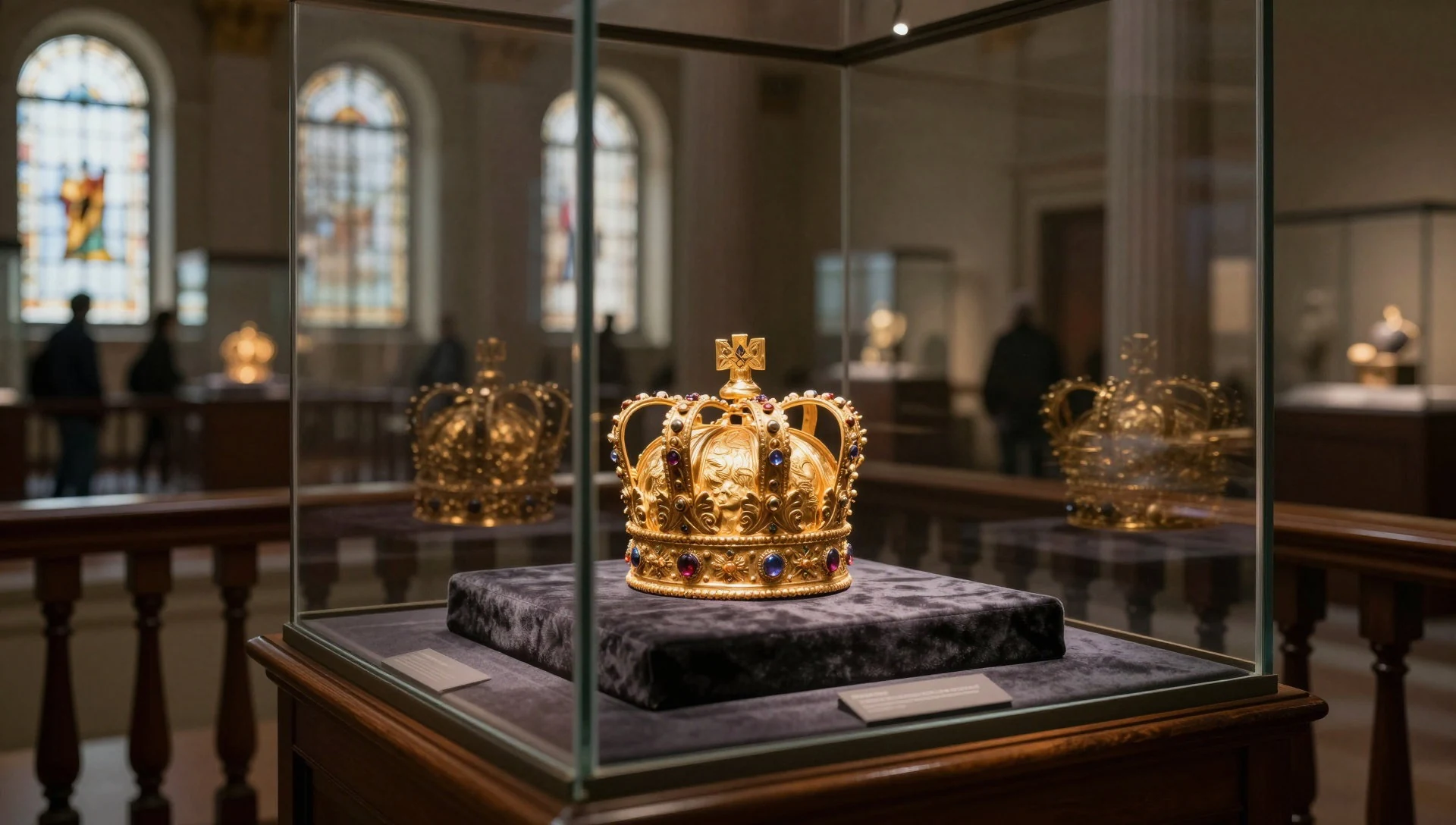
- The Chapel of St Michael — Inside the walls
The Chapel of St Michael is the thread back to the earlier castle: when the second fortress decayed, this was the one part still fit for use. Smaller and quieter than the grand halls, it makes a useful pause, and a reminder that the showpiece around it is a nineteenth-century rebuild.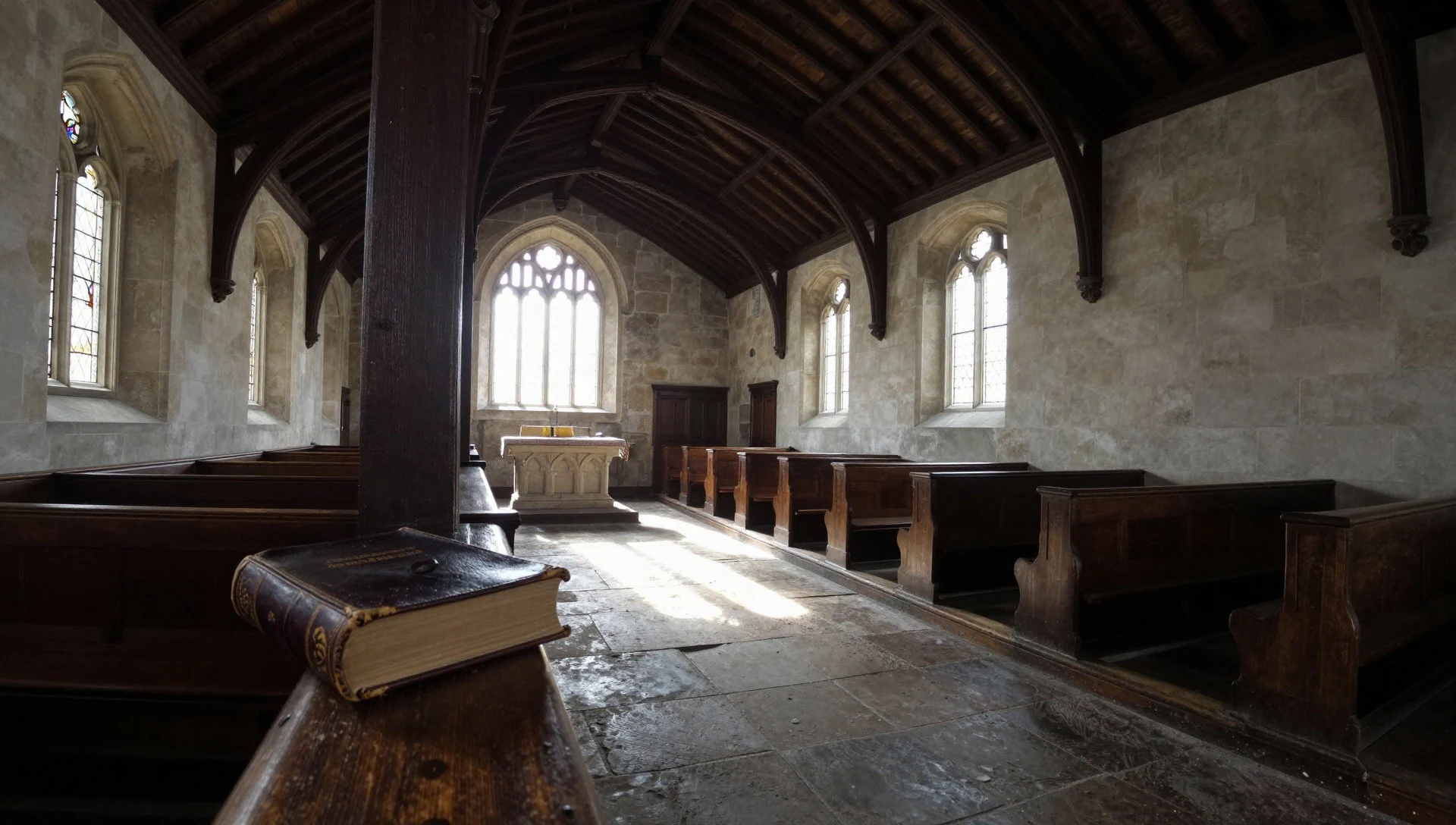
- The bastions and the Black Forest view — Castle ramparts
The bastions are where Frederick William IV remembered watching a sunset in 1819, and they remain a good place to see why he chose this hill. On a clear day the view runs west to the Black Forest. Late afternoon light is kind, though hazy summer days can flatten the distance.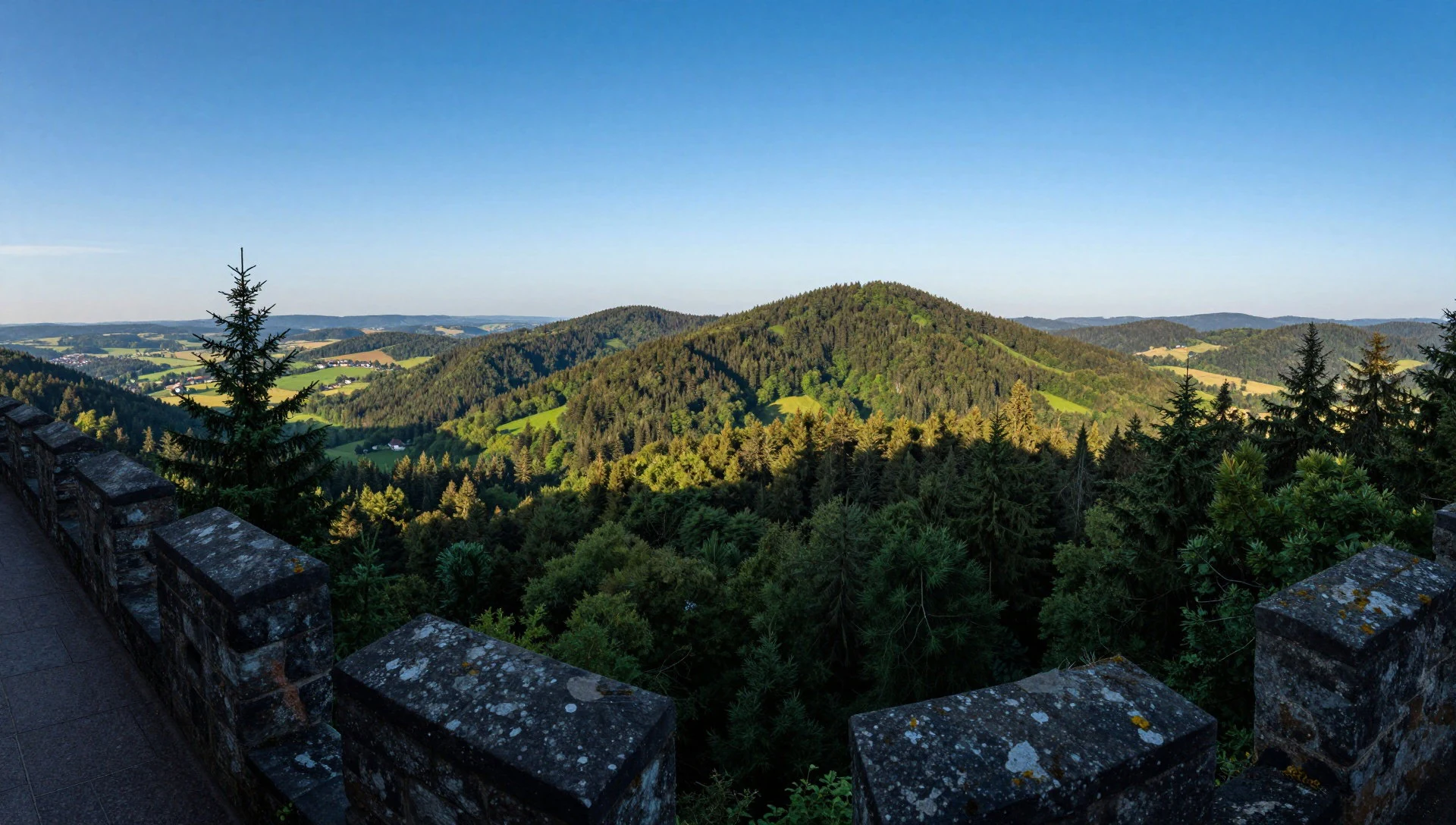
- The castle seen from below — Hechingen and the valley
From Hechingen or the fields around it, the castle reads as its builders intended: a pinnacled crown on an isolated hill. The roads at the foot of the hill give clean views, especially early or late in the day. It is worth a stop even if the queue at the top puts you off.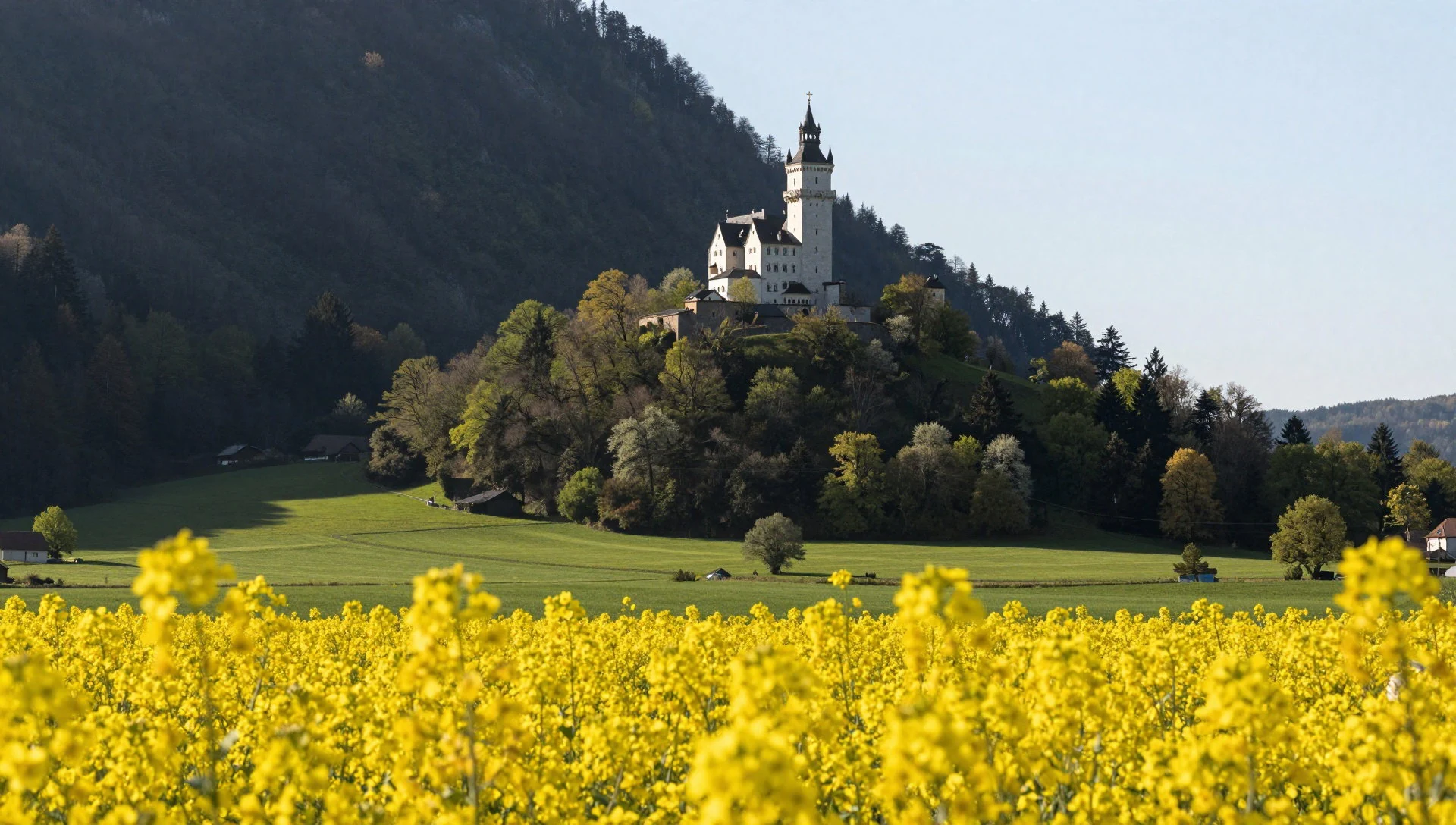
Culture
Hohenzollern Castle is best read as a piece of nineteenth-century memory-making. Its royal builder wanted a monument to his family's roots, and the style he chose, Gothic Revival with French touches, expressed a Romantic taste for an idealised Middle Ages. That taste shaped much of German culture in the period, from poetry and painting to the castle-building that also gave Bavaria its famous fairy-tale palace.
The family story is more tangled than the towers suggest. The Hohenzollerns split into branches over the centuries. The Swabian line, Catholic and rooted here, was the senior one, while the Franconian-Brandenburg line rose to rule Prussia and later the German Empire. The castle therefore sits between two histories, that of south-west Germany and that of Berlin. Visitors meet a dynastic tale told through objects and portraits, and it is worth reading it alongside the wider history of the German Empire.
For people in Hechingen and the Zollernalb district, the Zoller is a local landmark first and a royal one second. It is a familiar weekend outing, a backdrop to town life and a name stamped on the region. That local ownership of the hill is easy to miss if you only see it as a Prussian monument.
Be prepared for a visit that mixes grand architecture with real quiet. Follow the posted rules in the museum rooms, ask staff before photographing inside, and treat the chapel as a place of worship by keeping your voice low.
What to wear
Hohenzollern Castle stands in the Swabian Jura, where traditional dress, known as Tracht, varied from village to village and is now seen mainly on festival days. Across Swabian and wider south-German costume the common ingredients are wool and linen, dark bodices, aprons and white blouses for women, and waistcoats, felt hats and breeches for men. Details differed by parish and by whether the occasion was church, market or celebration, so no single pattern stands for the whole area.
Day to day, people here dress like most of south-west Germany: practical, layered and ready for weather, with hiking boots and waterproof jackets for weekends on the hill and neat but unfussy clothes in town. Tracht turns up at brass-band concerts, local festivals and weddings. The dirndl and lederhosen belong more to Bavaria than to Swabia, so a visitor wearing them would stand out rather than blend in.
A visitor should dress for the hill rather than the museum. At 855 metres the summit is exposed to wind, even in summer, so bring a windproof layer, and a hat for sun on clear days. The approach is steep, with cobbled and uneven stretches, so shoes with grip are better than sandals or smooth soles. There is no particular modesty issue, though covered shoulders are courteous in the chapel. In winter, warm layers and grippy soles matter on icy slopes, and rain gear is sensible year round.
What to eat
- Maultaschen — Traditional inns in Hechingen and nearby villages
Swabian filled pasta squares, usually stuffed with minced meat, spinach and onion, served in broth or sliced and fried with egg. Reliable comfort food after a windy hilltop. Look for them at village inns (Gasthäuser) in Hechingen and the villages below the hill.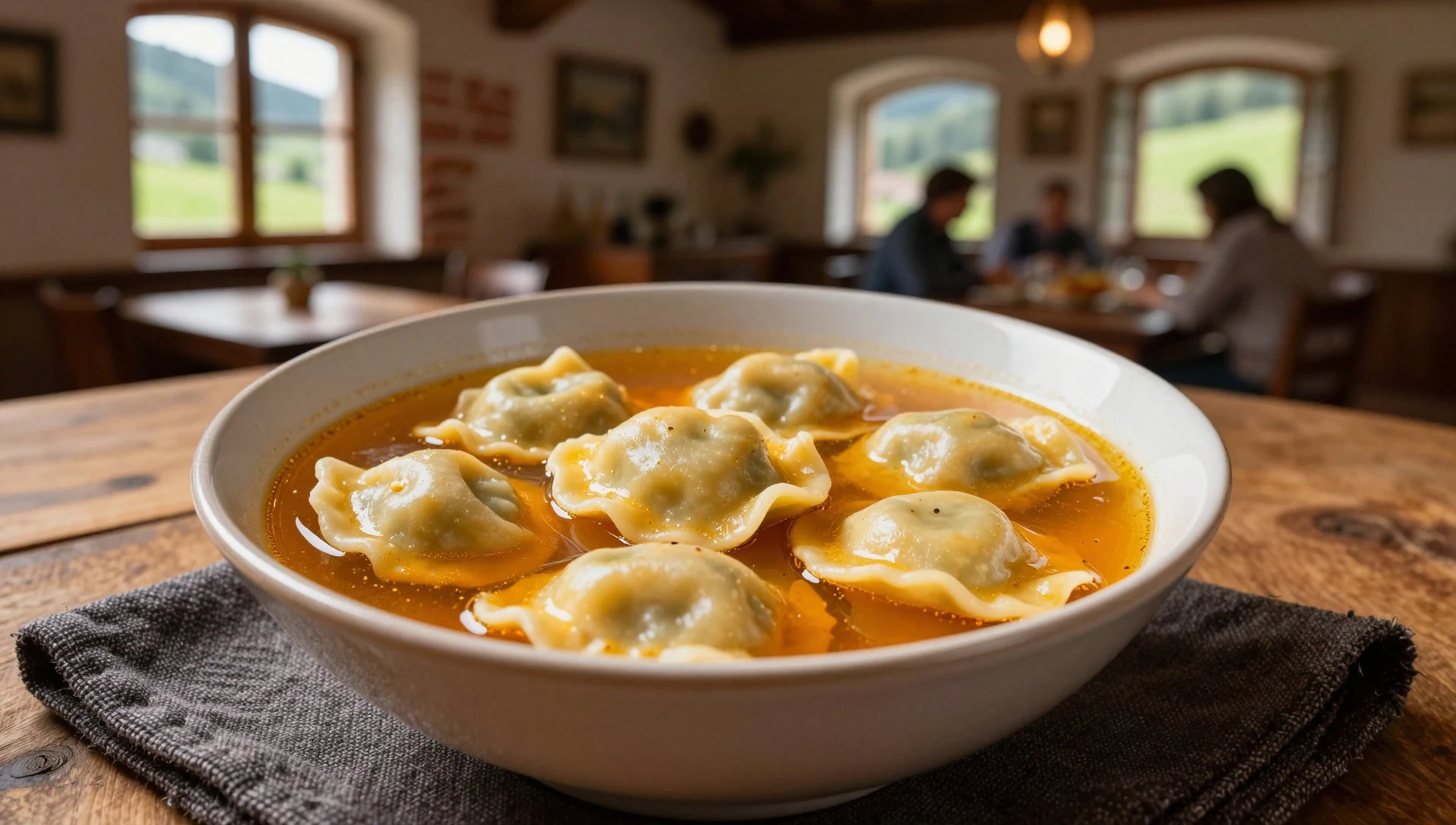
- Linsen mit Spätzle — Traditional inns, lunch menus
Lentils in a tangy, slightly vinegary sauce, served with soft egg noodles and a pair of sausages (Saitenwürstle). A staple of Swabian home cooking, it appears on lunch menus at traditional inns across the region.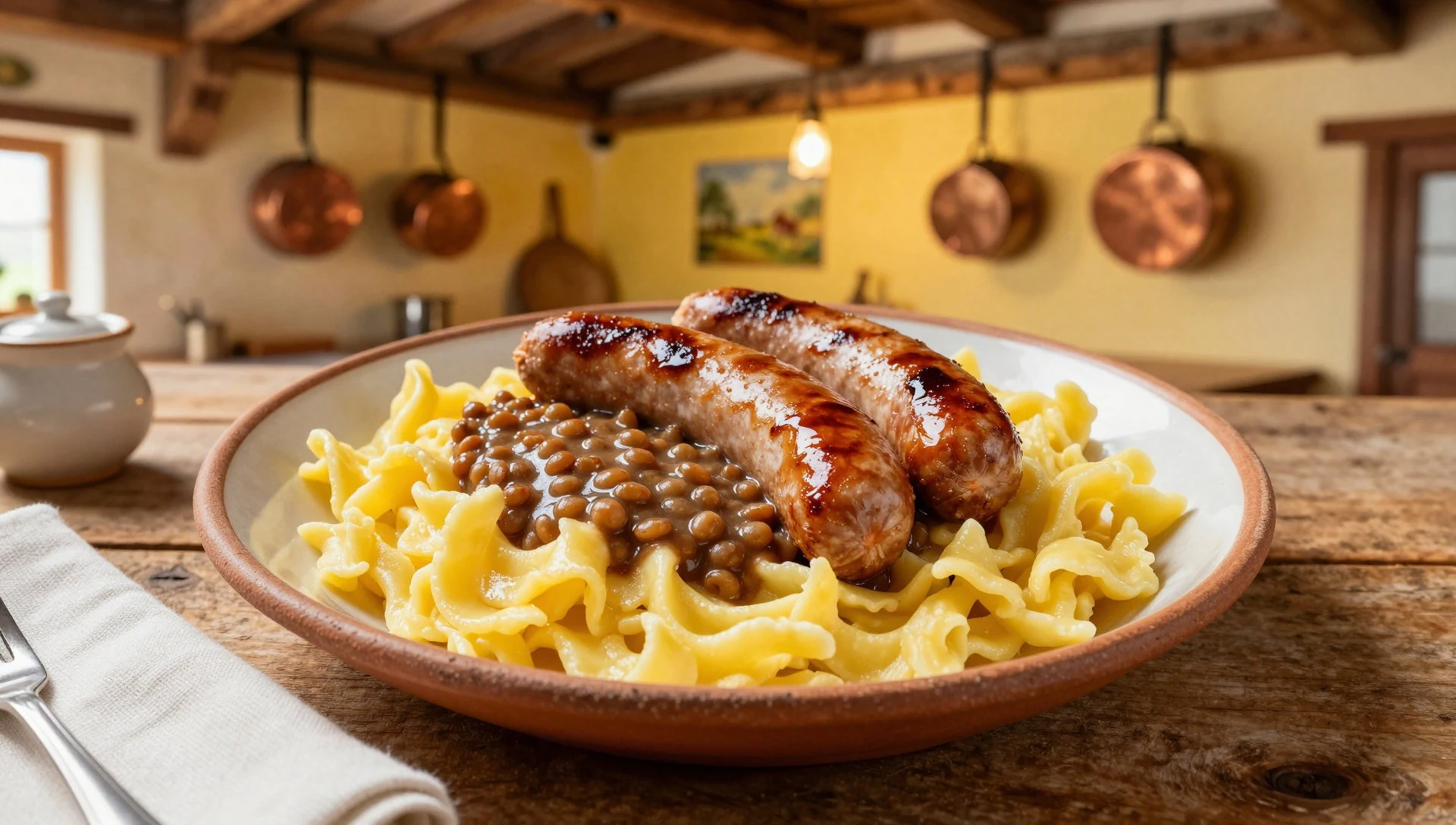
- Käsespätzle — Inns and cafés around the Swabian Jura
Egg noodles layered with grated cheese and topped with crisp fried onions, a baked comfort dish. It is filling and vegetarian, and widely served in inns and cafés around the Swabian Jura, often with a green salad on the side. - Zwiebelrostbraten — Traditional restaurants in Hechingen and nearby towns
Pan-fried beef steak under a heap of fried onions, with gravy and Spätzle or roast potatoes. This is the smart-dinner Swabian dish, found in traditional restaurants in Hechingen and nearby towns rather than at snack stands. - Dinnete — Local bakeries and village fairs
A thin, crisp Swabian flatbread topped with sour cream, onions and bacon, a close cousin of Flammkuchen. Look for it in local bakeries and at village fairs, where it is often eaten warm and shared around the table. - Laugenbrezel — Any bakery in Hechingen
The Swabian pretzel has a thick, soft belly and thin, crisp arms, with a dark, salty crust. Bakeries sell them from early morning, and one makes a sensible snack for the walk up the hill.
Plan it
Best time. May, September and October, when the walk up is comfortable and views are usually clearer; July and August are the hottest months, and summer weekends bring the biggest crowds. Winter can be cold and windy on an exposed hilltop, so check opening arrangements first.
How long. 1
Getting there. Fly to Stuttgart, then take a train towards Hechingen (the regional line via Tübingen serves the town; check Deutsche Bahn for connections). The last leg is the road or footpath up the hill; check the official site for any shuttle or parking arrangements.
Budget. mid
Tips
- Go early or on a weekday to avoid the weekend crowds
- Check the official site, burg-hohenzollern.com, for tickets, opening times and any advance-booking rules
- Carry a windproof layer and sturdy shoes, as the summit is exposed and the approach is steep
- Keep a little cash and a card for cafés and the villages below
- Fill a water bottle before the climb
Etiquette
- Ask staff before photographing inside the museum rooms and follow any signs
- Keep your voice low in the chapel
- Stay on marked paths on the hillside
Nearby
Sources
- Wikidata Q156457 (CC0)
- Wikipedia: Hohenzollern Castle (rev 1375954074) (CC BY-SA 4.0)
- Wikivoyage: Hohenzollern Castle (CC BY-SA 4.0)
- Burg Hohenzollern ak.jpg, A. Kniesel, via Wikimedia Commons (CC BY 3.0)
- Burg Hohenzollern mit Schwarzwald2-b.jpg, Zollernalb / Rainer Zenz, via Wikimedia Commons (CC BY 3.0)
- BurgHohenz-Turm.jpg, Der gestiefelte kater, via Wikimedia Commons (CC BY-SA 2.5)
- Hohenzollern32.JPG, Lugaresdelibro, via Wikimedia Commons (CC BY-SA 2.5)
- Aerial view of Hohenzollern Castle (2017), Olga Ernst, via Wikimedia Commons (CC BY-SA 4.0)
- Adlertor Hohenzollern Castle 2.JPG, böhringer friedrich, via Wikimedia Commons (CC BY-SA 2.5)
- BurgHohenzollernInnenhof02.jpg, Joachim Fenkes, via Wikimedia Commons (CC BY-SA 2.0)
- Oliver Mark - Georg Friedrich Prinz von Preußen, Burg Hohenzollern 2018.jpg, via Wikimedia Commons (CC BY-SA 4.0)


