Hogenakkal Falls
Hogenakkal Falls, India
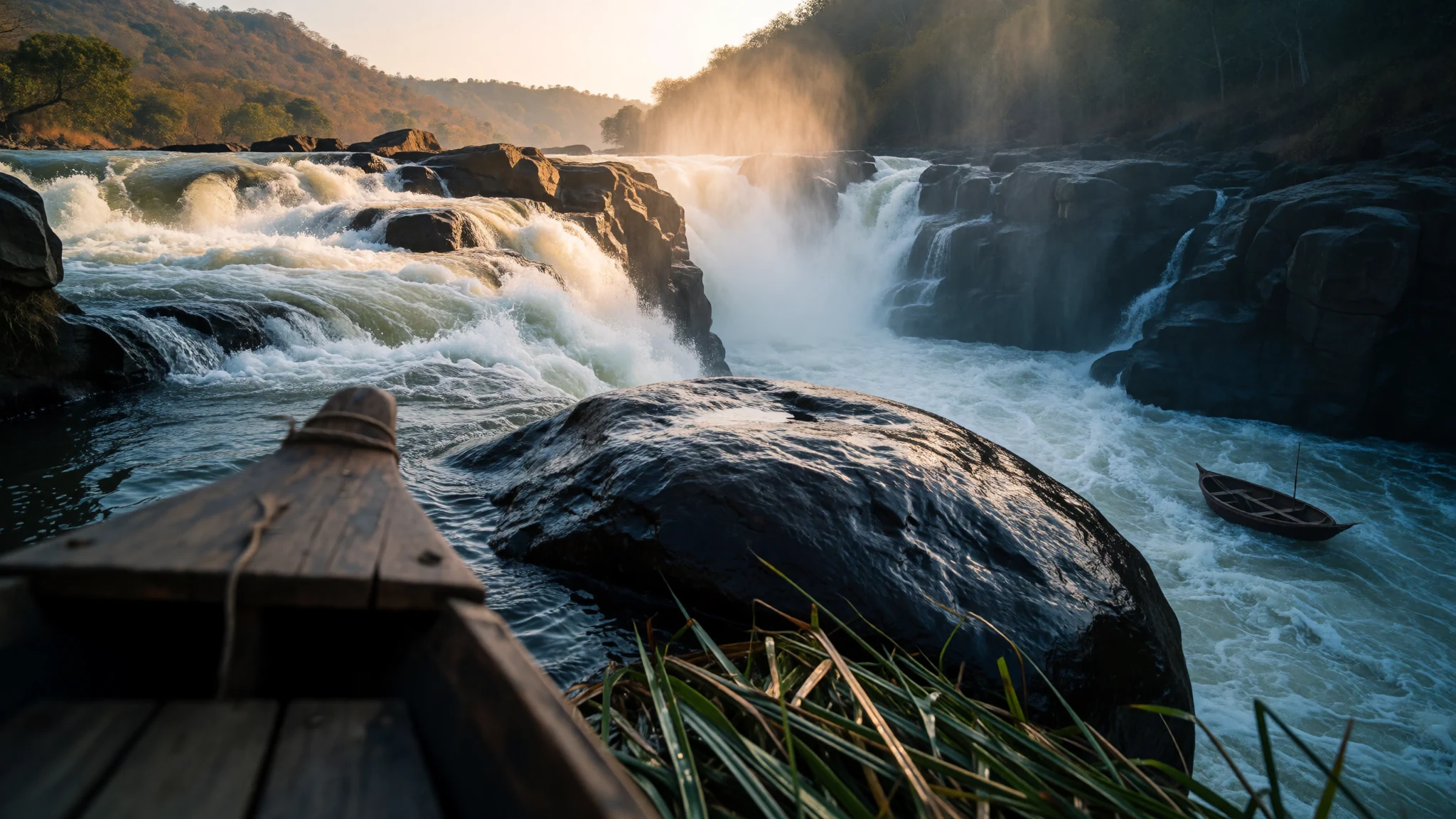
Hogenakkal Falls offers roaring cascades, ancient geological formations, and traditional coracle boat rides across the Kaveri river.
The place
Hogenakkal Falls sits on the Kaveri river where it forms a boundary between the Dharmapuri district of Tamil Nadu and the Chamrajnagar district of Karnataka in South India. The surrounding landscape is shaped by two magmatic dykes made of pyroxenite and interrupted by carbonatite rock formations. These dramatic geological features form deep gorges, swirling rapids, and multiple streams that plunge across the uneven riverbed. The local government has explored utilising the river flow here for drinking water supplies to nearby towns. Visitors arrive by road from nearby regional centres to witness the cascading torrents, especially when the river swells following seasonal rains. The destination draws travellers seeking raw river scenery, local boatmen navigating circular vessels through churning spray, and a rugged landscape quite distinct from the surrounding plains.
Its story
Hogenakkal Falls holds a deep historical presence documented in early Tamil Sangam literature, where the rushing cascade was known as Thalaineer aruvi and the surrounding territory was called Thalaineer Naadu. Ancient poetry anthologies such as Purananooru, Agananooru, and Kurunthogai contain references to this watercourse and to King Adiyaman Neduman Anji, who historically ruled the area. Generations of poets praised the roar of the river and the dramatic terrain carved by the currents. Beyond poetry, the geology beneath the site tells an immensely ancient story. The carbonatite rocks exposed here are recognized among the oldest of their kind in South Asia and rank among the most ancient geological formations found anywhere on Earth. This rare stone foundation has quietly endured for eras, predating modern continental shapes and anchoring the rushing river in a timeless, primeval stone matrix that geologists study with reverence.
What to see
- Main Falls Viewing Deck — Tamil Nadu side
Hogenakkal Falls features a primary vantage point where visitors can watch the powerful main torrents plunge into the gorge below. Mist fills the air as the Kaveri river smashes against ancient pyroxenite rock walls, creating an unforgettable spectacle of raw river power and turbulent white water.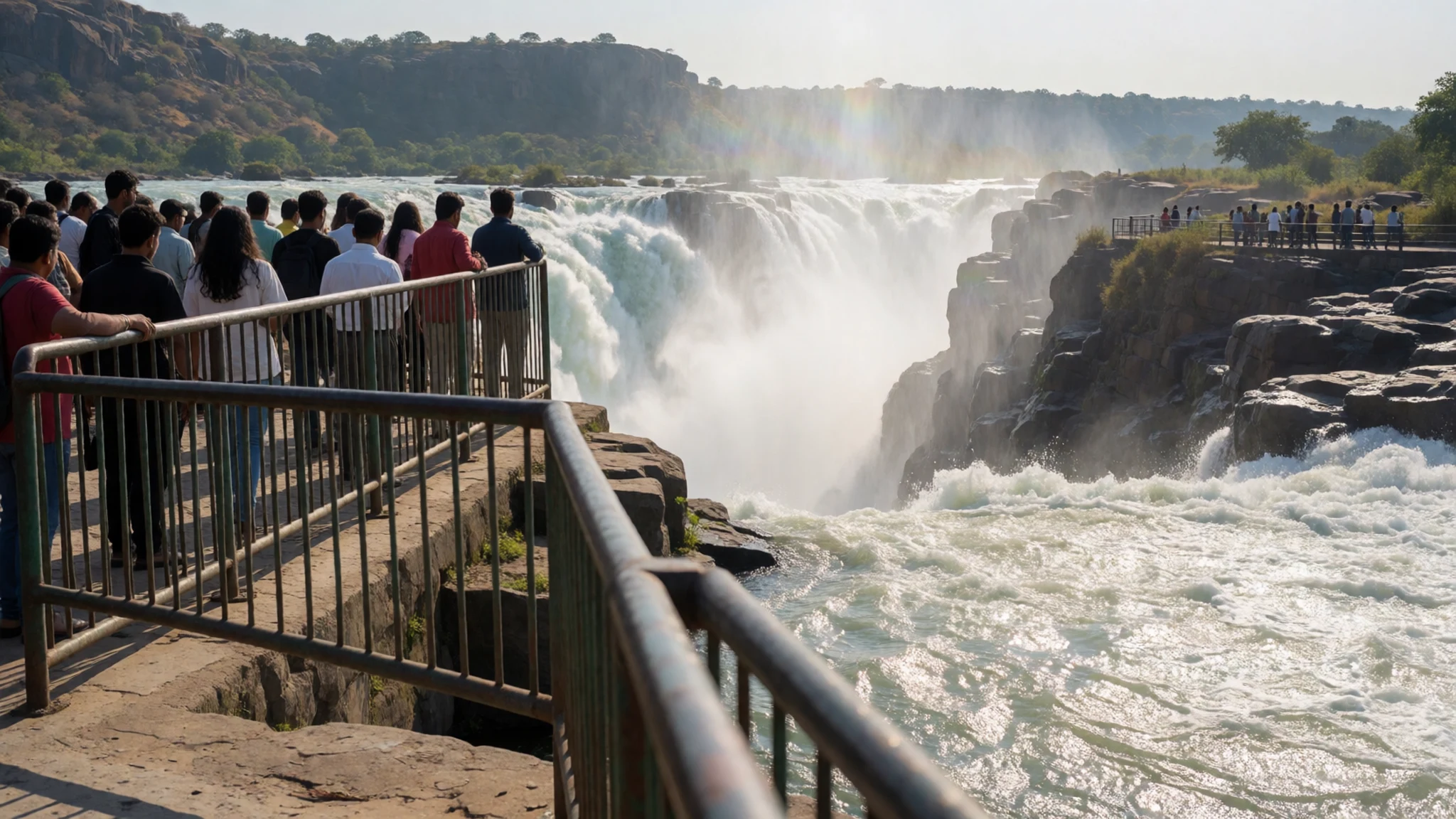
- Parisal Boating Ghat — River landing area
Hogenakkal Falls is famous for its fleet of traditional round wicker coracles known locally as parisals. Local boatmen expertly spin and paddle these circular vessels through swirling rapids and calm pools alike, giving travellers a thrilling perspective right beneath the towering rock faces.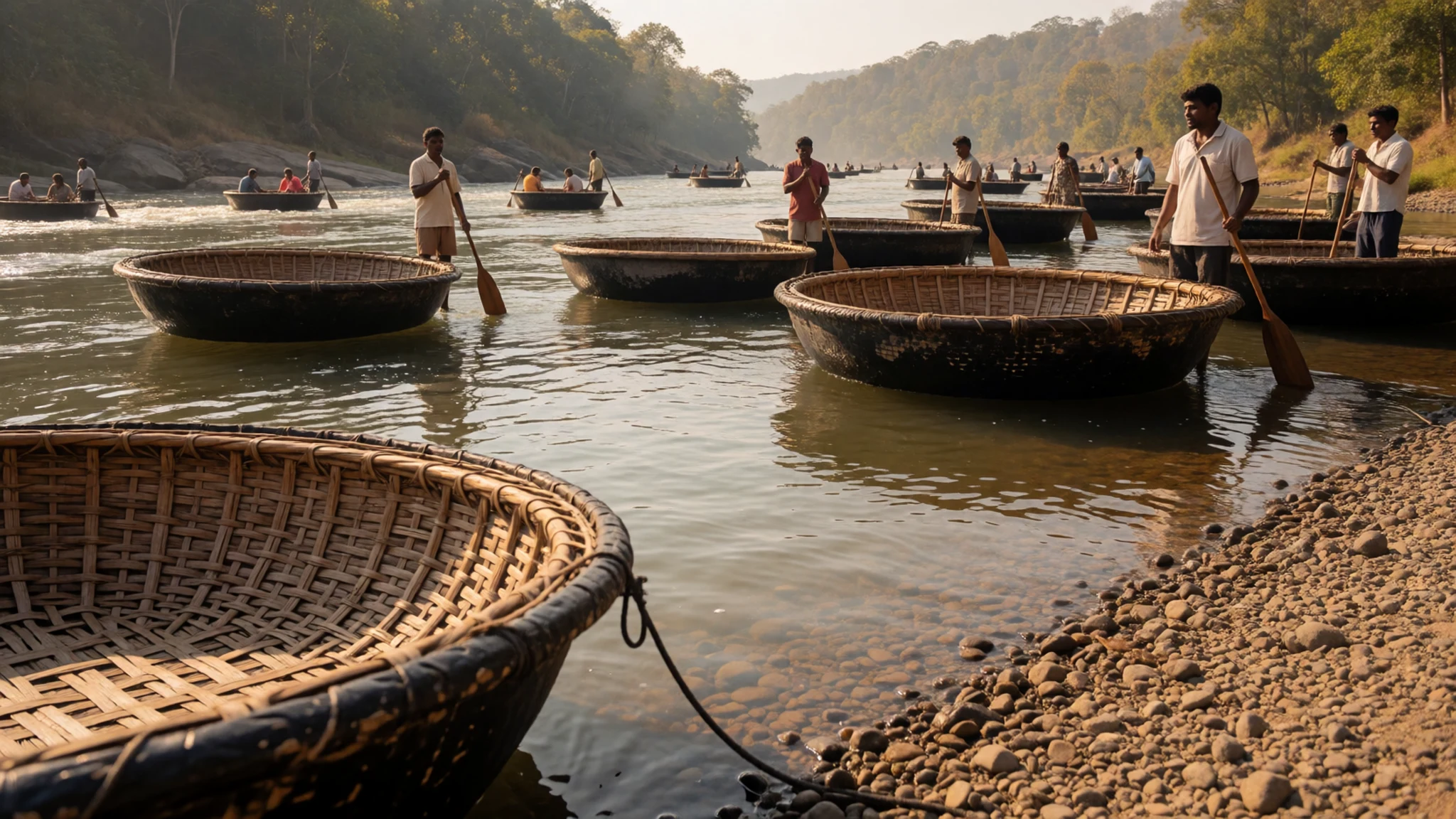
- Surrounding Mountain Slopes — Border uplands
Hogenakkal Falls is framed by rugged upland terrain and dry deciduous forest slopes that rise steeply from the riverbanks. Walking paths along these rocky elevations offer panoramic views over the winding river gorges, dark carbonatite rock outcrops, and the vast expanse of the valley.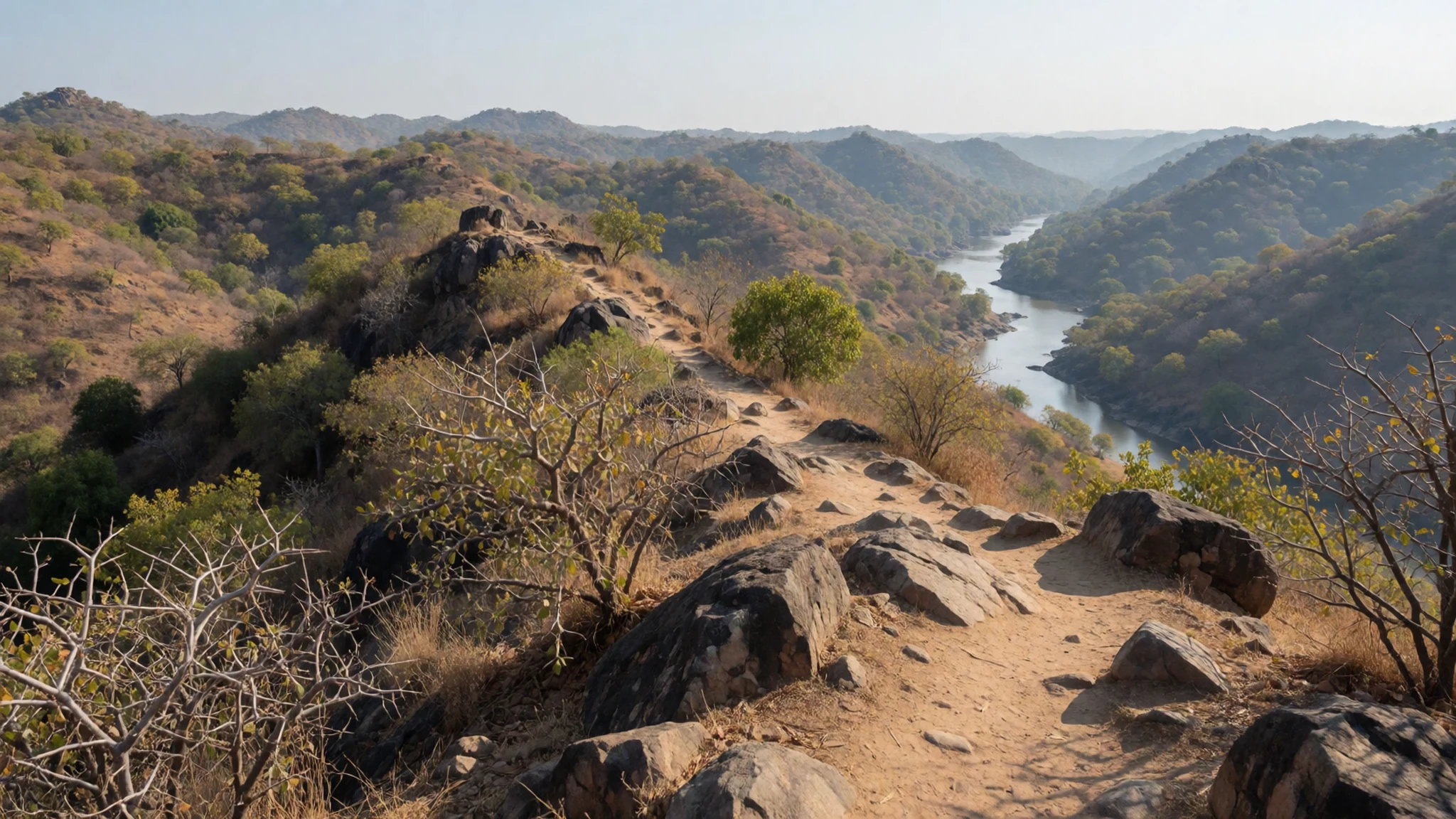
- Whirlpool Gorge — Lower river gorge
Hogenakkal Falls carves deep circular basins and whirlpool channels into the stone over millennia. These violent swirling waters have carved dramatic bowl-shaped depressions into the carbonatite mountainside, demonstrating the relentless erosive power of the Kaveri river over geological epochs.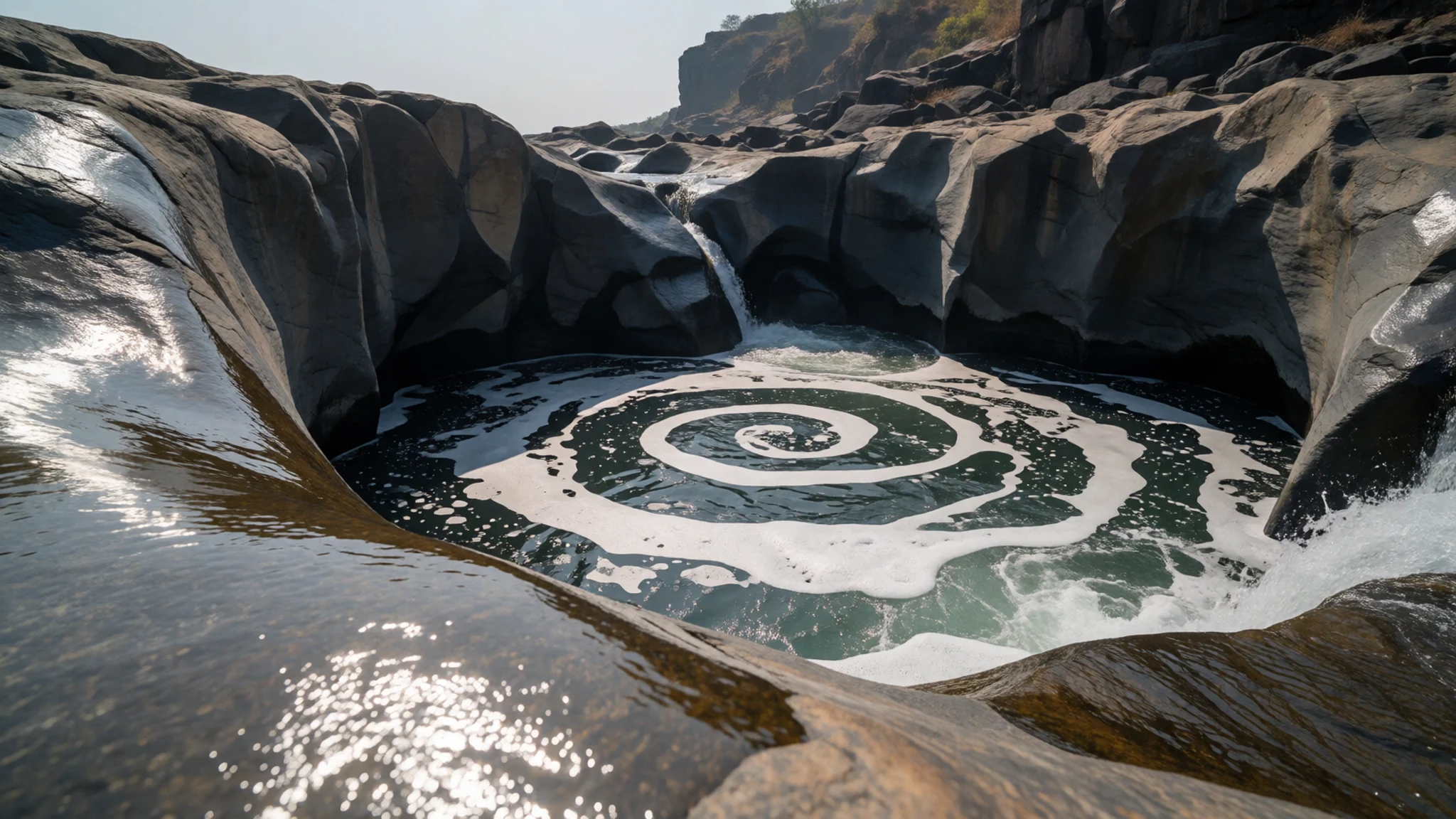
- Bathing and Massage Area — Lower bathing ghats
Hogenakkal Falls includes designated shallow river stretches where visitors gather for traditional herbal oil massages followed by bracing herbal baths in the flowing river streams, managed by local wellness practitioners who ply their trade along the rocky banks.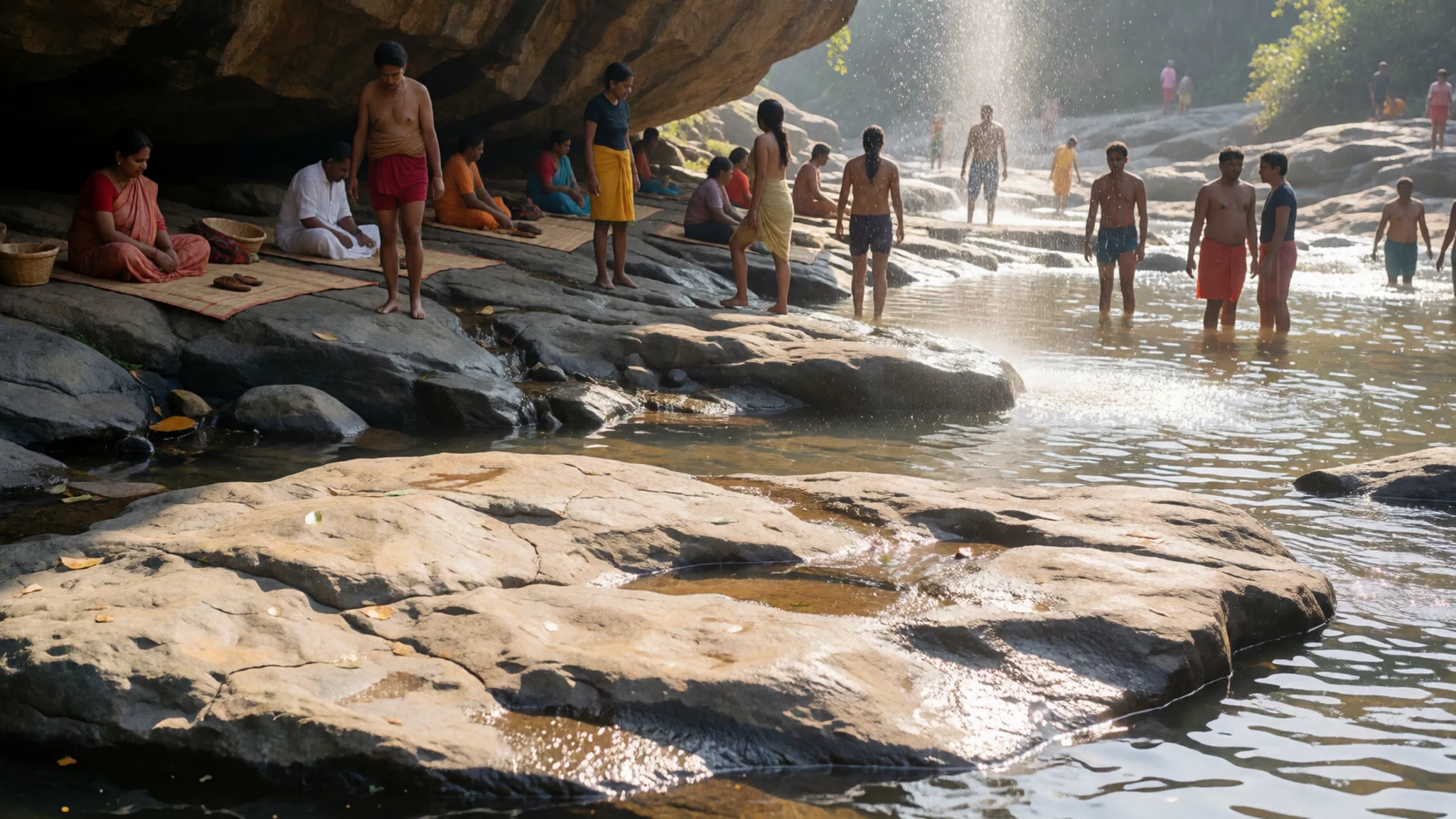
Culture
Hogenakkal Falls is deeply intertwined with the rural Tamil culture of Dharmapuri district, where local communities have lived alongside the Kaveri river for centuries. Traditional livelihoods here revolve around river fishing, operating coracle boats, and offering indigenous oil massages along the rocky banks. Tamil is the primary language spoken across the area, and local hospitality reflects the warm, straightforward nature of agrarian and riverine folk. Festivals connected to the Tamil calendar bring lively gatherings of pilgrims and picnickers to the water's edge. Visitors should always ask permission before photographing local boatmen, vendors, or families bathing in the river.
What to wear
Hogenakkal Falls sees locals wearing traditional attire suited for warm weather and physical labour by the water. Men commonly wear cotton dhotis or lungis paired with simple shirts, while women wear vibrant cotton sarees or traditional half-sarees woven in regional textile traditions. Modern daily wear across the area includes casual trousers and shirts for men, and comfortable kurtis or salwar kameez for women. Visitors exploring Hogenakkal Falls should pack light, breathable cotton clothing that dries quickly due to the humid river spray. Sturdy footwear with good grip is essential for walking safely on slippery, wet rocks and uneven stone paths around the gorge. Modest clothing that covers shoulders and knees is recommended out of respect for local rural customs.
What to eat
- Fried River Fish — Riverbank food stalls
Hogenakkal Falls vendors catch fresh fish straight from the Kaveri river, marinating them in fiery local spice pastes before deep-frying them crisp over open wood fires.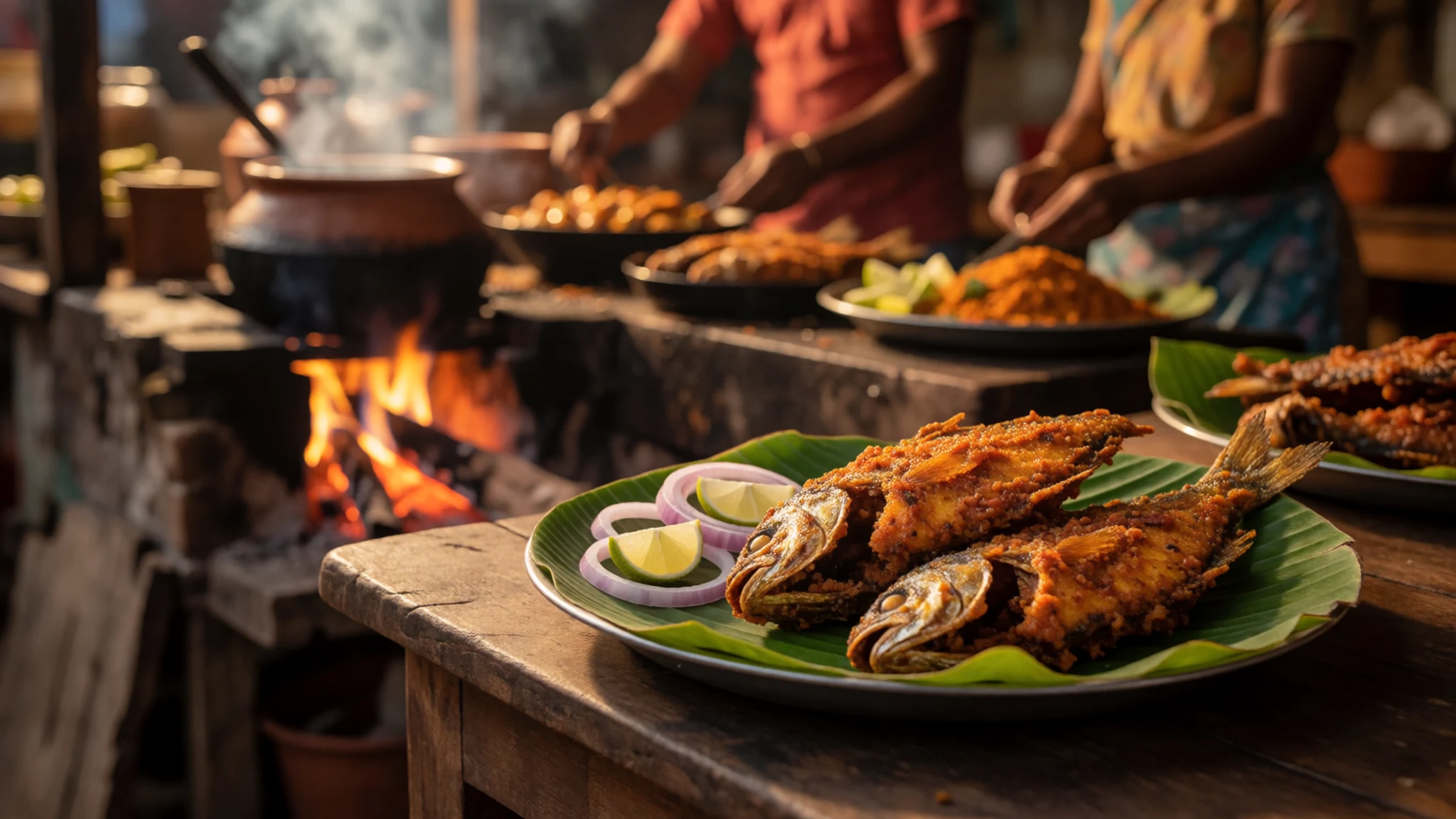
- Fresh Fish Curry with Rice — Local roadside eateries
Hogenakkal Falls cooking shacks prepare a tangy tamarind-and-tomato fish gravy served alongside steaming hot boiled rice, seasoned with traditional South Indian curry leaves and mustard seeds.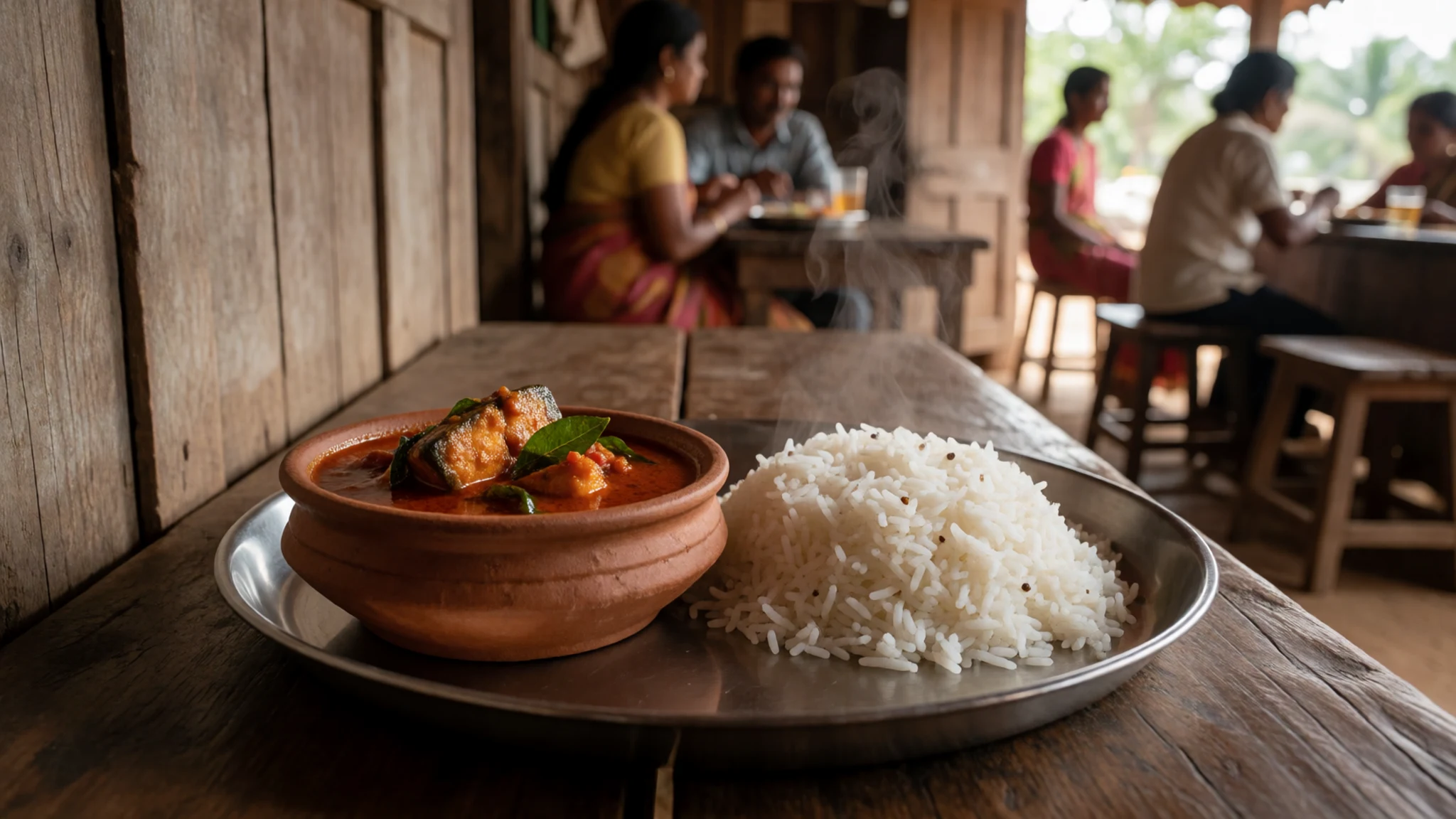
- Tender Coconut Water — Market pathways
Hogenakkal Falls pathways are lined with vendors chopping open chilled green coconuts, providing a refreshing and natural electrolyte-rich drink to beat the humid river heat. - Spicy Masala Sundal — Parking and entry plaza
Hogenakkal Falls snack sellers offer boiled chickpeas tossed with grated coconut, green chillies, and raw mango pieces, wrapped in paper cones for easy walking snacks. - Filter Coffee — Village tea shops
Hogenakkal Falls tea stalls serve traditional South Indian filter coffee brewed with freshly roasted coffee chicory blend and frothy boiled milk in stainless steel dabarah sets.
Plan it
Best time. August to December, soon after the monsoons when the Kaveri river is in full spate and the cascades are at their most powerful.
How long. 1–2
Getting there. Fly to Bengaluru or Chennai, travel by road to Dharmapuri district (46 km away), and take local transport or a taxi for the final leg to the falls.
Budget. low
Tips
- Arrive early in the morning to beat the weekend crowds and secure coracle tickets without long queues.
- Carry sufficient cash, as digital payment acceptance can be unreliable among local boatmen and small food stalls.
- Wear footwear with strong grip because the rocks near the water and bathing areas become extremely slippery.
- Protect electronic devices and cameras from heavy mist and spray near the base of the waterfall.
Etiquette
- Always ask permission before taking photographs of local boatmen, vendors, or people bathing in the river.
- Dispose of all plastic waste responsibly or carry it back with you to help protect the river environment.
Nearby
Sources
- Wikidata Q37729 (CC0)
- Wikipedia Hogenakkal Falls (CC-BY-SA 4.0)
- Wikivoyage Dharmapuri district (CC-BY-SA 4.0)