Hiroshima
Hiroshima, Japan
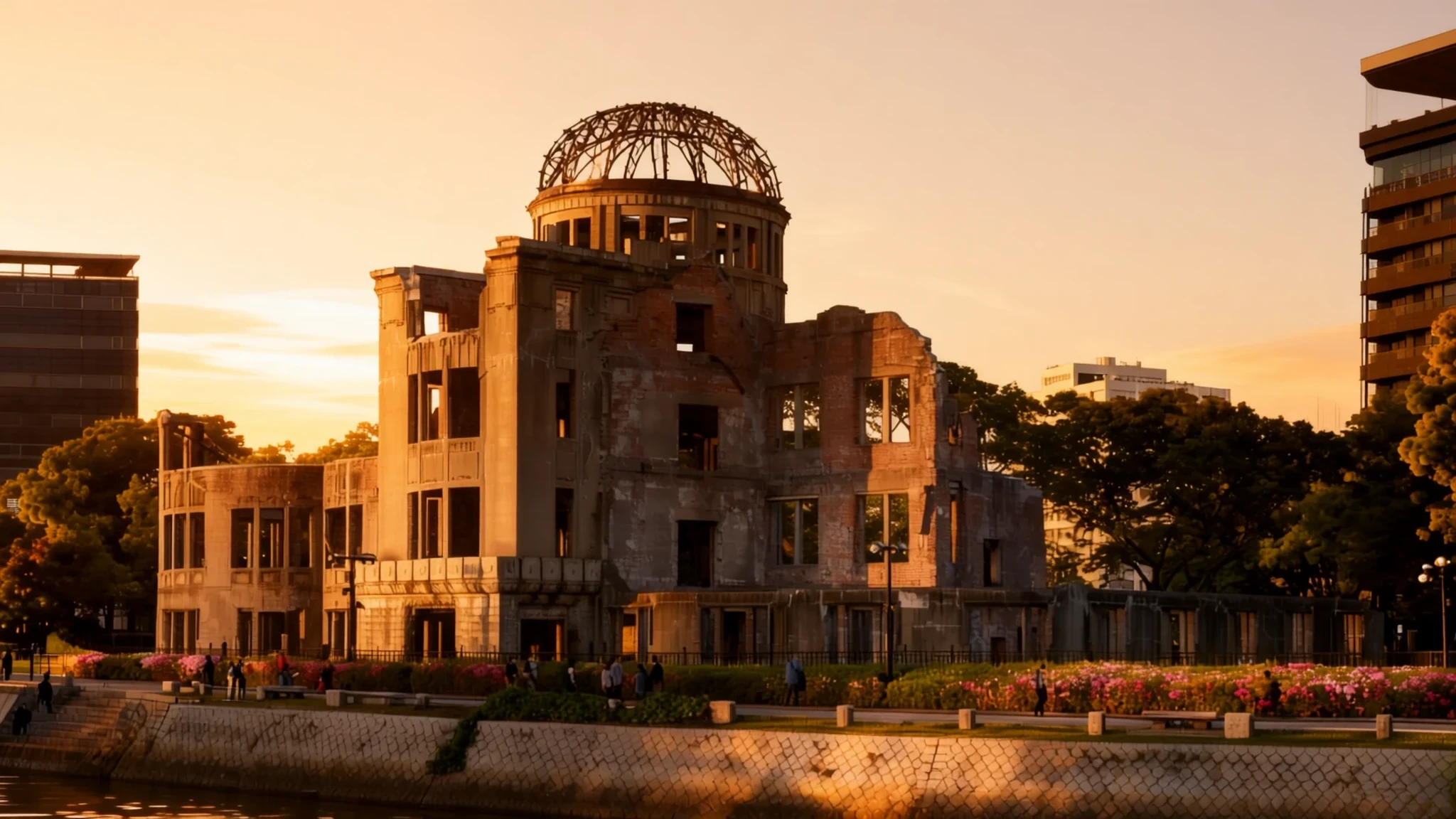
Hiroshima pairs a serious memorial district with a lively river city, a rebuilt castle and a distinctive local food culture.
The place
Hiroshima is the capital of Hiroshima Prefecture, set on the flat delta of the Ōta River where it opens onto the Seto Inland Sea. The city has about 1.2 million people, and its layout is easy to read: the river divides into channels, bridges cross them every few hundred metres, and the old castle grounds sit close to the modern centre. Trams, buses and the railway station make most districts reachable without a car.
The city's identity is shaped by one morning in 1945. The atomic bombing destroyed most of the built-up area, and what stands today is largely postwar reconstruction, with wide avenues and a rebuilt centre. Many visitors begin at Peace Memorial Park, a riverside zone of monuments, museums and memorial halls, where the surviving dome of the former industrial exhibition hall stands at its edge. Most of the park is open-air, so a hot afternoon there can feel long.
Beyond the memorial, Hiroshima is a working port and university city. Theatres, galleries and a professional symphony orchestra give the centre a steady cultural life, and the wider prefecture is known for its coastline, islands and shipyards. The food scene is strong and inexpensive, especially the okonomiyaki that shops across the city have made their own.
Its story
For centuries the land where the city now stands was a small fishing village on the shore of Hiroshima Bay. From the medieval period, its prosperity grew alongside a Zen Buddhist temple called Mitaki-dera, which tied the village economy to the temple and to a busier regional trade.
The modern city began in 1589, when the warlord Mōri Terumoto chose the river delta as the site for a castle. The name is usually translated as broad island. Terumoto backed the losing side at Sekigahara, and the Asano clan later governed the domain for more than two centuries, until the feudal system was dismantled. After the domains were abolished in 1871, Hiroshima became the capital of its prefecture.
The Meiji period brought factories, railways and a growing role in the army. Hiroshima served as a military base through several wars, and it gained formal city status in 1889. Its population and industry expanded steadily through the early twentieth century.
On 6 August 1945, an American bomber dropped an atomic bomb on the city. Most of Hiroshima was destroyed, and tens of thousands of people died from the blast and from the injuries and radiation that followed. The rebuilt city was planned around a memorial park, and its later history is shaped as much by remembrance and peace campaigning as by industry.
What to see
- A-Bomb Dome
The skeletal remains of the former industrial exhibition hall are the image most people associate with Hiroshima. The building was once a showpiece of local commerce before the bombing left its frame standing. It is kept as a reminder, and the surrounding riverside is a calm place to stand and look at it for a while.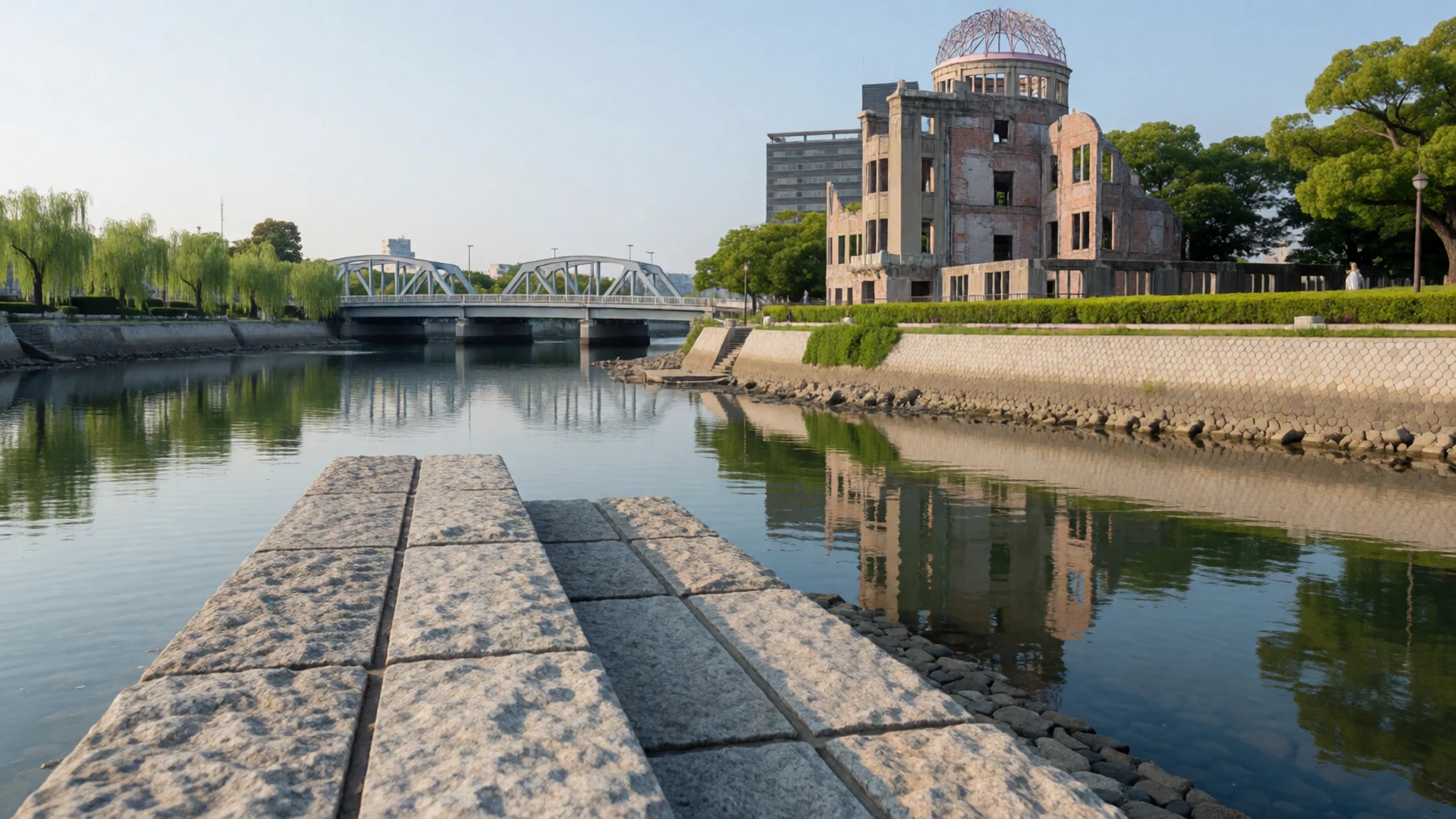
- Hypocenter marker
A plaque one block east of the Dome marks the point above which the bomb exploded. It is a small, unshowy marker set into the pavement, easy to walk past without noticing. Standing on it gives a sense of how close the surrounding streets were to the blast.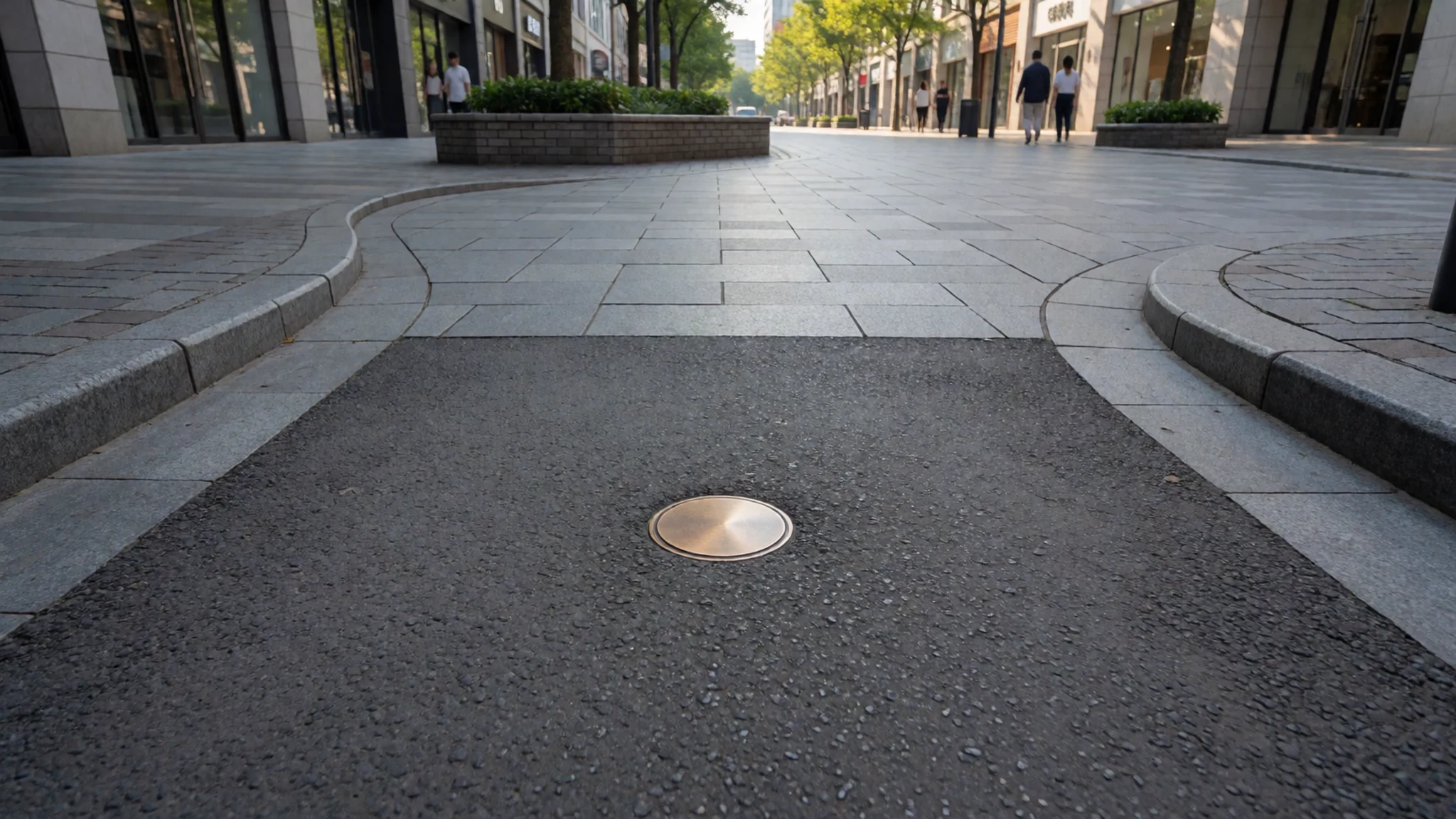
- Children's Peace Monument
This monument commemorates Sadako Sasaki, a young victim of the bombing whose story of folding paper cranes spread across Japan and beyond. Visitors and schoolchildren from across the country leave thousands of cranes folded from paper at its base, and the offerings are a constant presence there.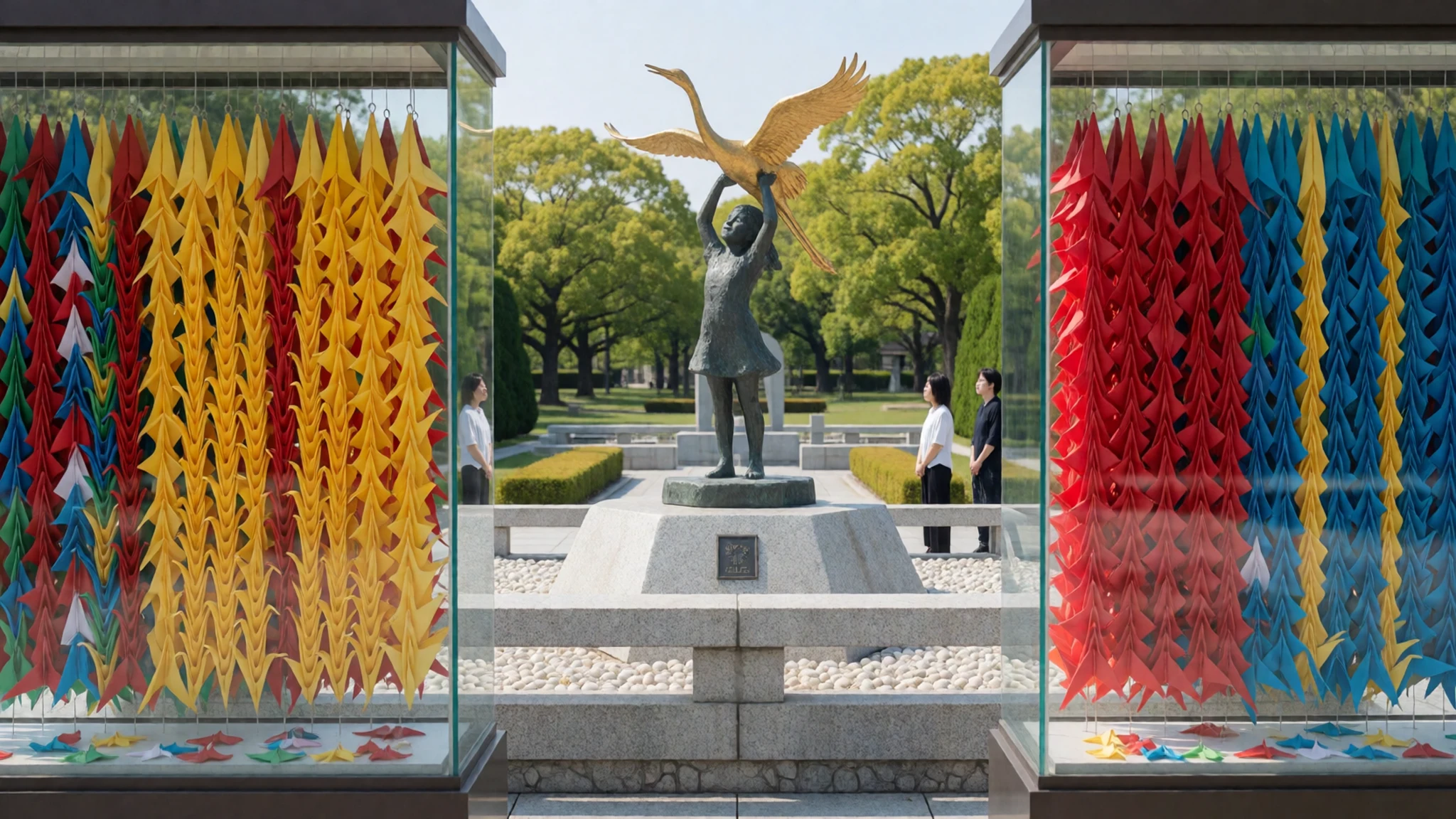
- Memorial Tower to the Mobilized Students
The tower honours students who were conscripted to work in munitions factories and were killed by the bomb. It is a quieter stop in the park, and it makes clear that the victims included many young people sent to war work rather than soldiers. Read the inscriptions if you can.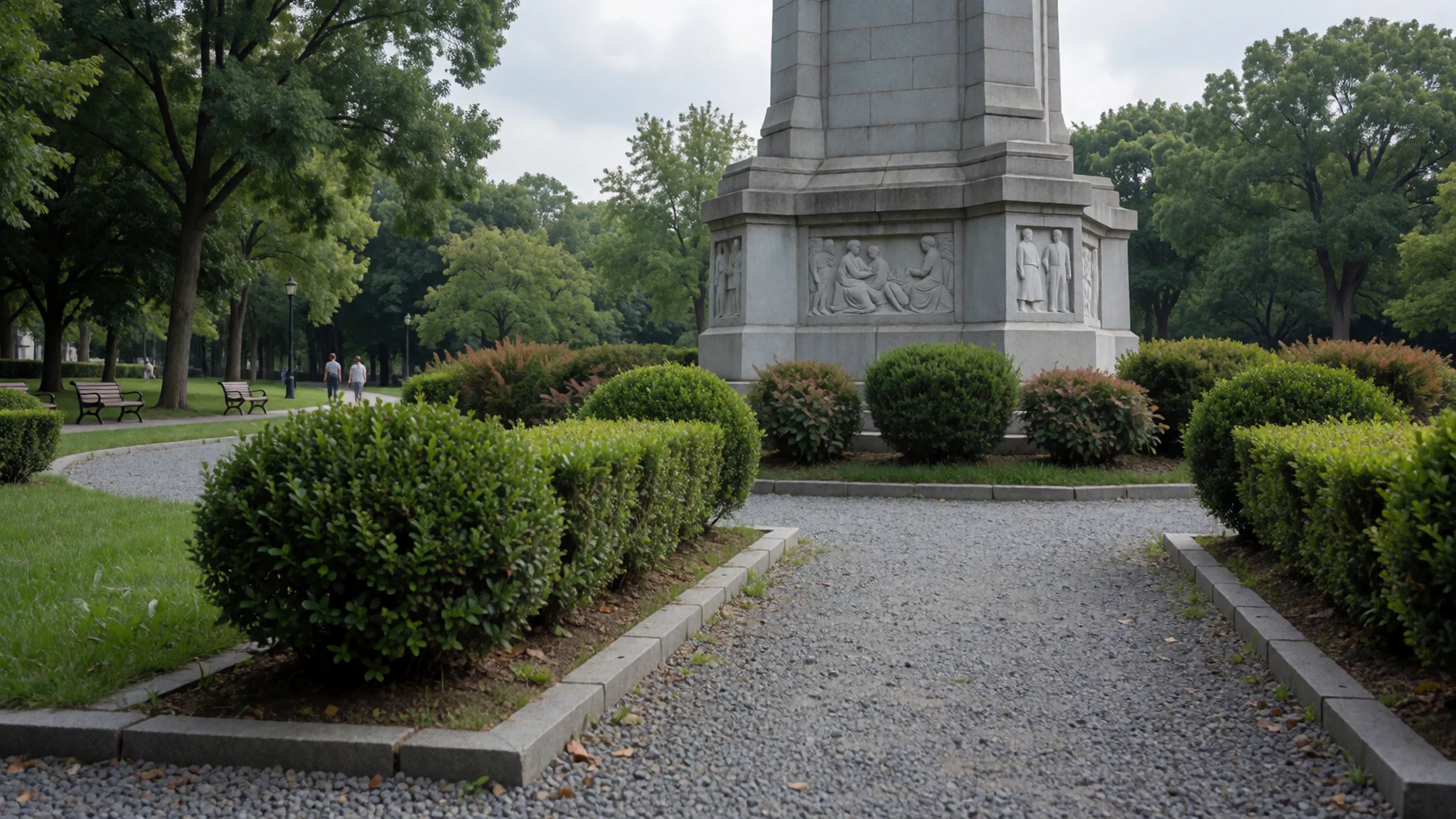
- Peace Memorial Hall
The memorial hall collects photographs and personal belongings of people who died in the blast. Its displays are sobering and carefully arranged, and the museum next door adds the wider history. Allow at least a couple of hours for the hall and the museum together, and expect the rooms to be busy at midday.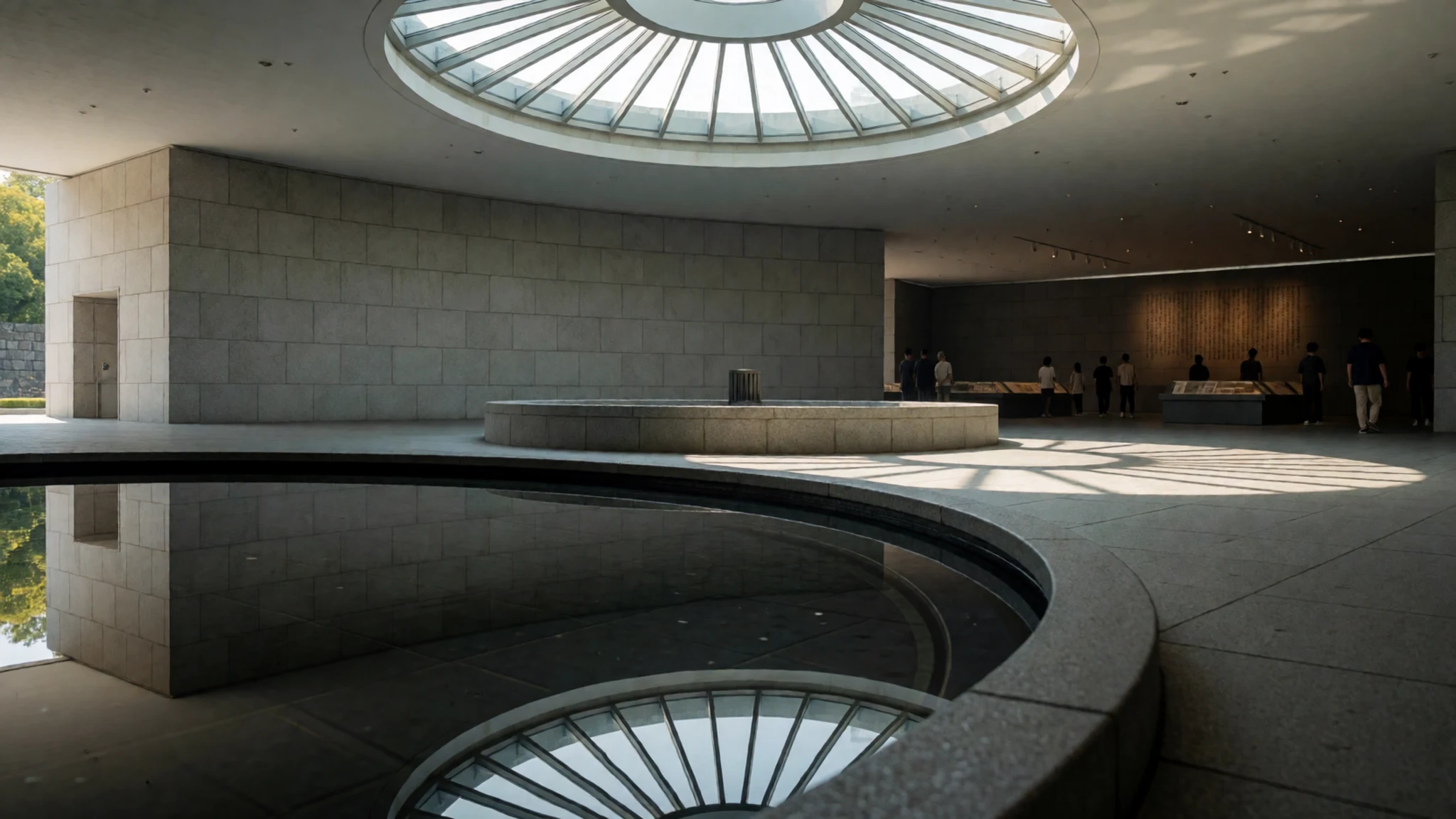
Culture
Hiroshima's cultural life is more than its memorial. The city has a professional symphony orchestra that performs at Wel City Hiroshima, and several museums of its own, including a large art museum with a strong collection of French painting from the nineteenth and twentieth centuries and a prefectural art museum near the Shukkei-en garden. Festivals include a flower festival and an international film festival, and the city once hosted a biennial animation festival.
The Peace Memorial Park draws visitors from around the world, and its annual commemoration on the anniversary of the bombing is a solemn event. Local people treat the park as a place of quiet remembrance, so the mood there is measured, and many families visit to pay respects. Lanterns are sometimes released on the river in the evenings, and that gathering is also taken seriously.
When you visit the memorial grounds, keep your voice low, do not climb on the monuments or sit on the memorial steps, and ask before photographing people who are praying or grieving.
What to wear
Traditional dress in Hiroshima is the same as elsewhere in Japan. The kimono is a long silk or synthetic robe worn wrapped and tied with a wide sash, and it is still worn for weddings, coming-of-age ceremonies and some formal occasions. The yukata is its lighter cotton cousin, worn in summer for festivals, fireworks and evenings out. Common textiles include silk for formal kimono, cotton for yukata, and woven patterns that vary by season.
In daily life, people in Hiroshima dress much as people do in Tokyo or Osaka: practical clothes, neat shoes, and layers that cope with humid summers and cool evenings. Office workers wear suits, students wear uniforms or casual clothing, and many people carry an umbrella in the rainy season. Kimono are usually worn for ceremonies rather than sightseeing.
For a visit, dress for heat and walking. Summers are hot and humid, so choose breathable cotton or linen and carry a hat. Comfortable closed shoes matter more than fashion, since you will be walking on paving stones, slopes and river paths. Modest clothing is appreciated at the memorial grounds, and a light layer helps when you enter air-conditioned museums.
What to eat
- Hiroshima-style okonomiyaki — any small okonomiyaki shop, especially the counters in back alleys near the station
Okonomiyaki here is layered rather than mixed: cabbage, noodles and batter are stacked on a griddle with pork or seafood, then finished with sauce. Shops often cook it in front of you on a hotplate, and the result is hearty and filling. It is a good first meal, especially at a counter where the cook works in view.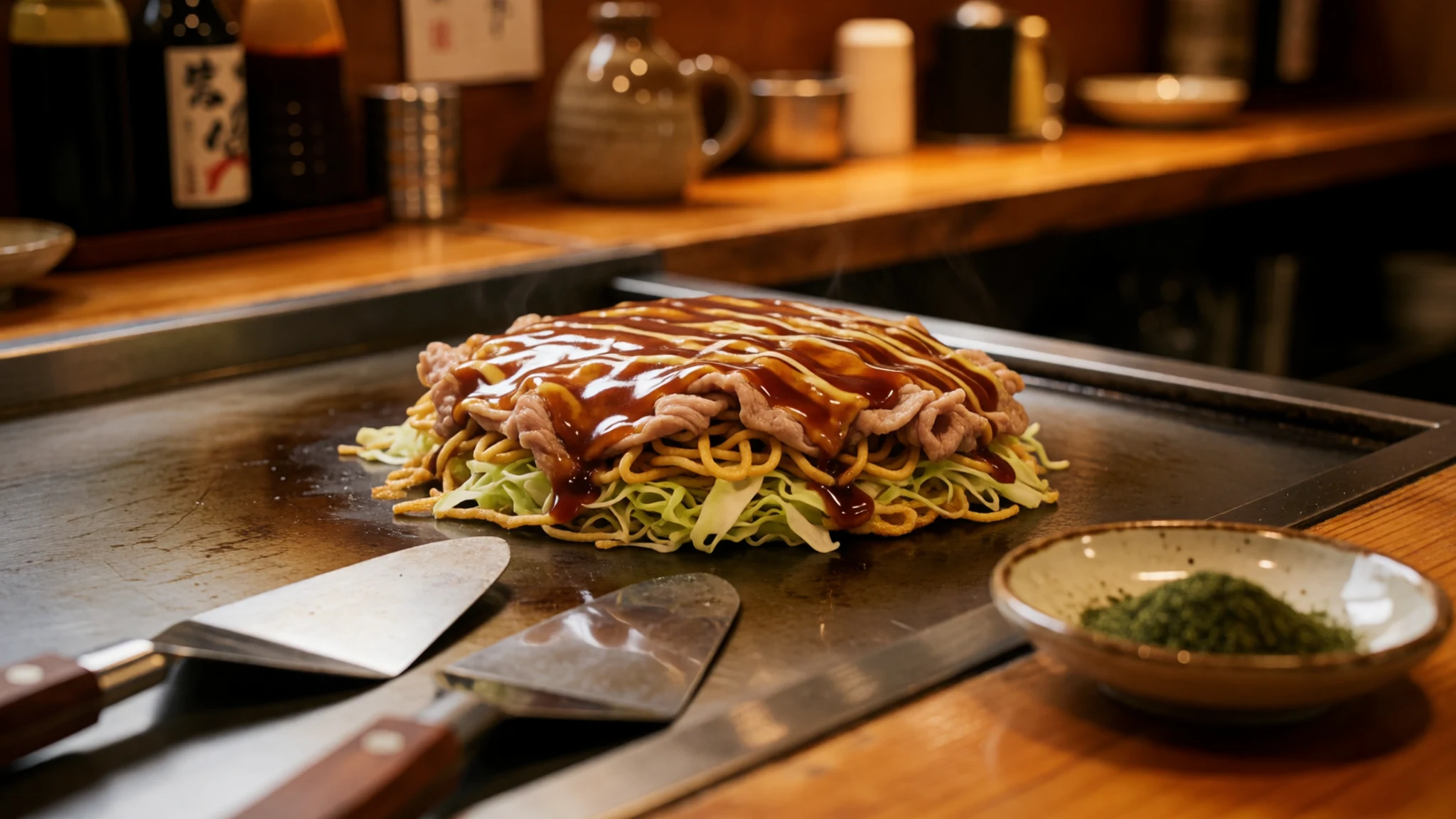
- Okonomi-mura — the multi-storey food hall in the city centre
This multi-storey building holds a large cluster of okonomiyaki shops, each with its own style and regulars. It is a lively place for a shared lunch, and it is easy to try several stalls in one visit. Expect queues at peak times and bring cash to be safe.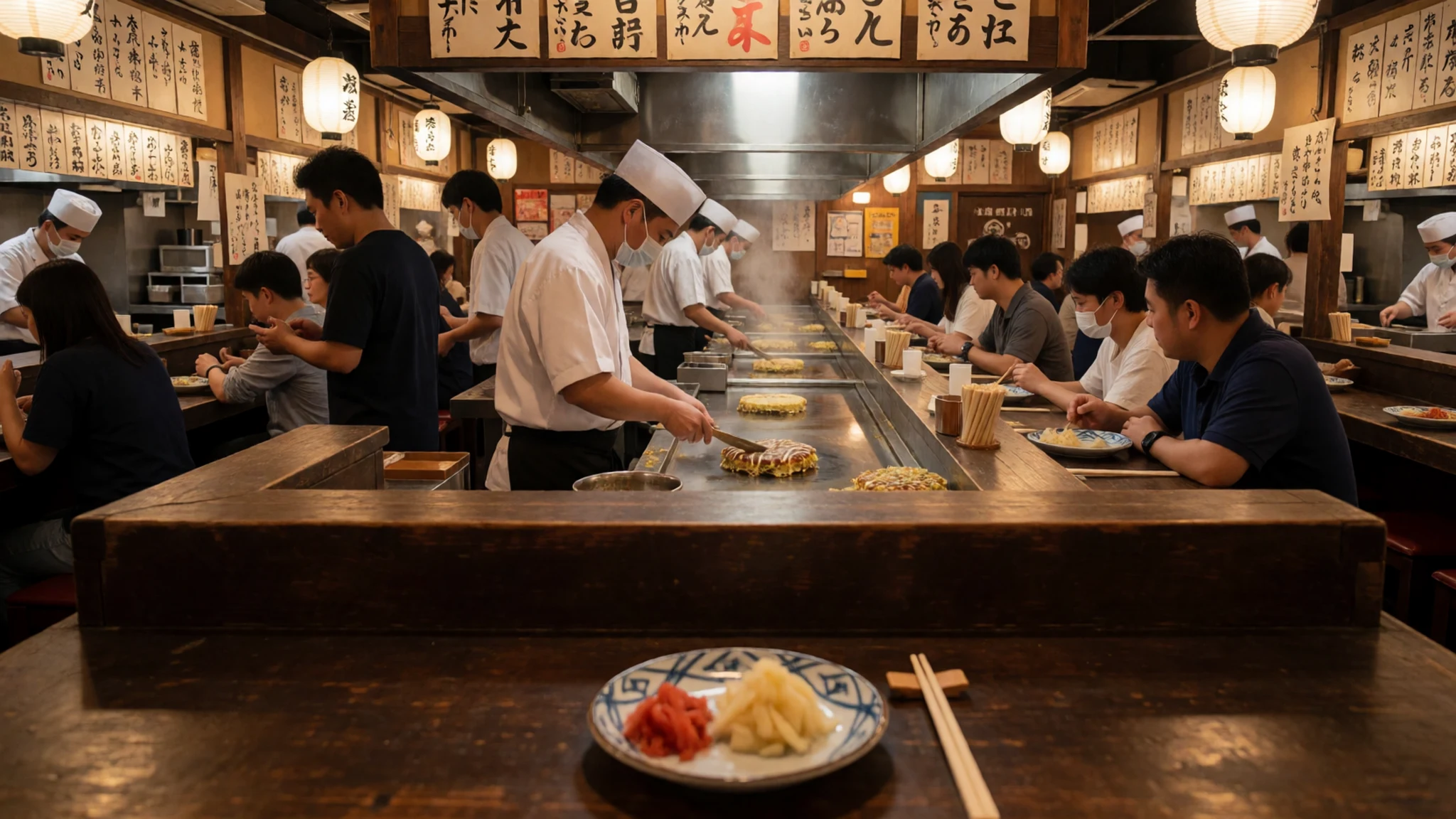
- Station-side back alleys — the narrow lanes beside the railway near Hiroshima Station
Tiny okonomiyaki counters tucked into narrow lanes near the railway tracks are where many locals eat. They seat only a handful of people, and the menus are simple. Walking the lanes after dark gives a good sense of everyday city life. - International plates — a central restaurant that mixes Indian, Thai and Vietnamese dishes with Japanese cooking
Restaurants in the centre serve a mix of dishes from several Asian countries, along with Tex-Mex food and vegetarian options. This is useful when the group has different tastes or someone avoids meat. Menus are often clearly labelled.
Plan it
Best time. March–April for cherry blossom and late October–November for autumn colour. June is the rainy season, and August is hot and humid, which matters when you are walking the open memorial park.
How long. 2–3
Getting there. Hiroshima has an airport with buses to JR Hiroshima Station, taking roughly an hour; check current timetables. The station sits on the Sanyo Shinkansen line, about half an hour from Okayama on the fastest trains and a little under four hours from Tokyo on the Nozomi.
Budget. mid
Tips
- Book Shinkansen seats ahead for weekends and holidays
- Visit the Peace Memorial Park early or late in the day, when it is cooler and quieter
- Carry some cash, since small okonomiyaki counters may not take cards
- Bring water and a hat, because much of the park is open to the sun
- Allow a full morning for the park and the museum together
Etiquette
- Speak quietly around the memorial halls and the Children's Peace Monument
- Ask before photographing people who are praying or grieving
- Remove shoes where a restaurant or temple shows a step up
Nearby
Sources
- Wikidata Q34664 (CC0)
- Wikipedia: Hiroshima (rev 1382050416) (CC BY-SA 4.0)
- Wikivoyage: Hiroshima (rev 5404104) (CC BY-SA 4.0)
- Photo: A northwest view of the Atomic Bomb Dome and Motoyasu River (DXR) (CC BY-SA 4.0)
- Photo: Hiroshima Castle entrance (Evelyn-rose) (CC0 1.0)
- Photo: Hiroshima Peace Memorial Park (Motokoka) (CC BY-SA 4.0)
- Photo: Takueichi Pond and Kokokyo Bridge, Shukkei-en (そらみみ) (CC BY-SA 4.0)
- Photo: 鯉城通り (warabi hatogaya) (CC BY 3.0)
- Photo: Lantern Floating Ceremony in Hiroshima (Freedom II Andres) (CC BY 2.5)
- Photo: Hiroshima Port Ujina Passenger Terminal (Aude) (CC BY-SA 2.0)
- Photo: Mitaki-dera Taho-to (大江万里) (Public domain)


