Herrenchiemsee
Herrenchiemsee, Germany
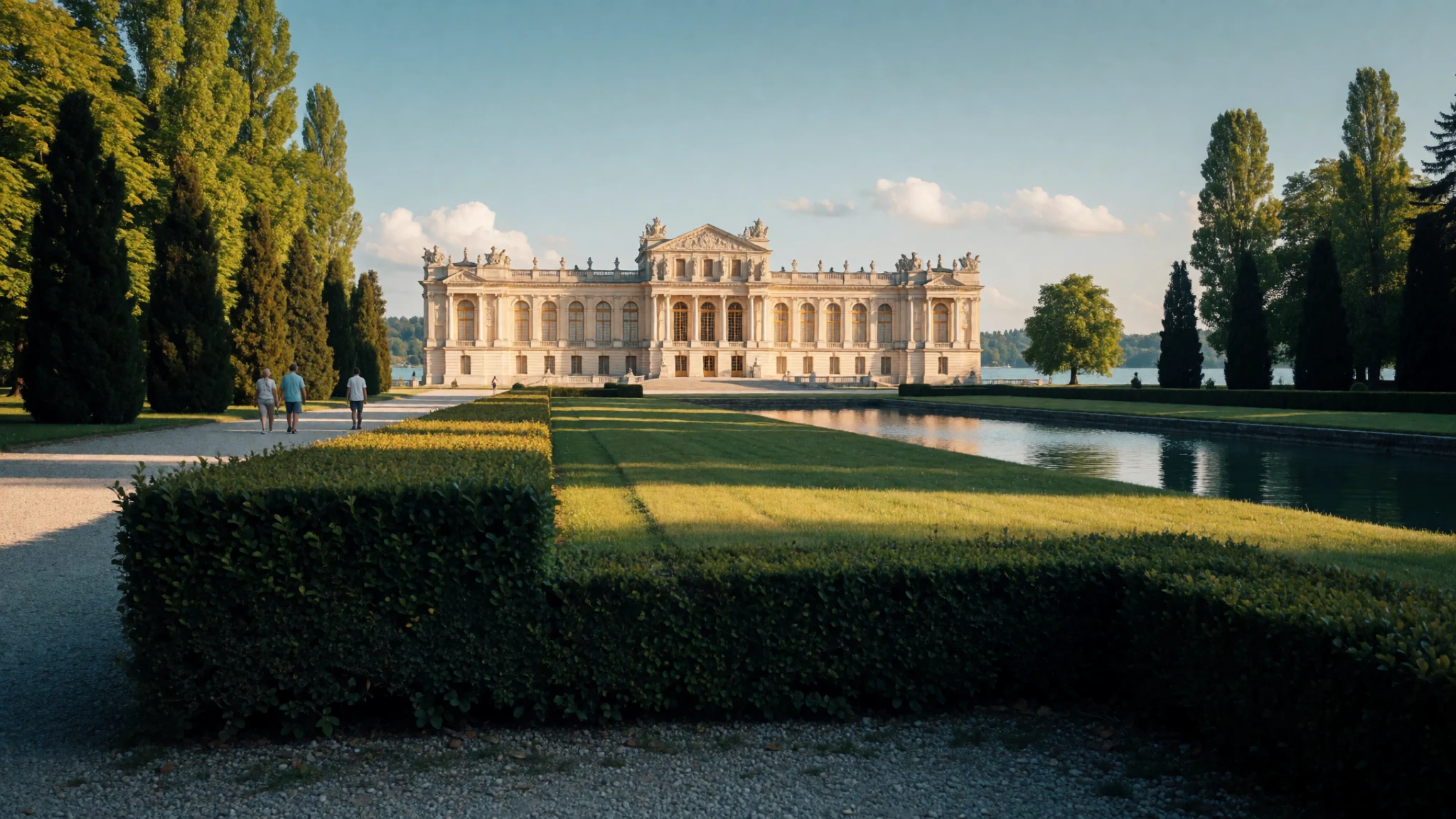
Herrenchiemsee is a Versailles-inspired royal palace on a wooded Bavarian lake island, reached only by boat, and it was never finished.
The place
Herrenchiemsee sits on Herreninsel, the biggest island in the Chiemsee, a lake in southern Bavaria that Wikidata describes as the state's largest. Munich lies about 60 km to the south-east, so the island works as a day trip, though it feels far from any city once the boat has left the shore. Two palaces stand here. The Old Palace occupies the buildings of a former Augustinian monastery, and the New Palace is a purpose-built royal residence modelled on Versailles, with a long garden axis of lawns, canals and fountains running away from its façade. The rest of the island is woodland and meadow, crossed by flat paths and edged by a shoreline walk. Two neighbours complete the municipality of Chiemsee: Frauenchiemsee, with its convent and fishing-village feel, and Krautinsel, which is uninhabited. The setting is Alpine foreland rather than mountain country, at an elevation of 528 m, although on clear days the Chiemgau Alps show along the southern horizon. The palaces are looked after by the Bavarian state administration for palaces, gardens and lakes, and the official site (https://www.herrenchiemsee.de/) is the place to check tour types, opening days and tickets. UNESCO added the site to its World Heritage list in 2025. Most of a visit is spent walking between the jetty, the palace and the lakeside, with guided tours pacing the indoor part of the day.
Its story
Herrenchiemsee owes its palace to King Ludwig II of Bavaria, who bought Herreninsel in 1873. The island had belonged to an Augustinian monastery, and Ludwig first converted those older buildings into a residence, now called the Old Palace. His real ambition came five years later. From 1878 he began the New Palace, a tribute to Versailles and to the French monarchy that had built it. Ludwig was less interested in a working court than in a private world of ceremony and splendour, and the plans reflect that: grand state rooms, a mirrored gallery and a bedchamber of extreme richness, set on an island where few outsiders could intrude. It became the largest of his building projects and also the last. Money, time and the king's own fate caught up with it, and he died before it was complete, so the palace was never finished. That unfinished state is part of its character today. Some parts are fully decorated, while others stop at bare brick and plain rooms, and guides are open about the contrast. Later, the Bavarian state took the buildings into its care and opened them to the public, and the palace became one of the region's major draws. In 2025 it joined the UNESCO World Heritage list, recognising a building that is both a copy and something entirely its own.
What to see
- New Palace (Neues Schloss) — Herreninsel, southern end of the garden axis
The New Palace is the reason for the trip: a pale, wide-fronted building facing a long garden axis. Entry is by guided tour, so the pace is set by the guide, and the finished rooms are crowded with gilding and painted ceilings. Book ahead in summer and check the official site for tour options.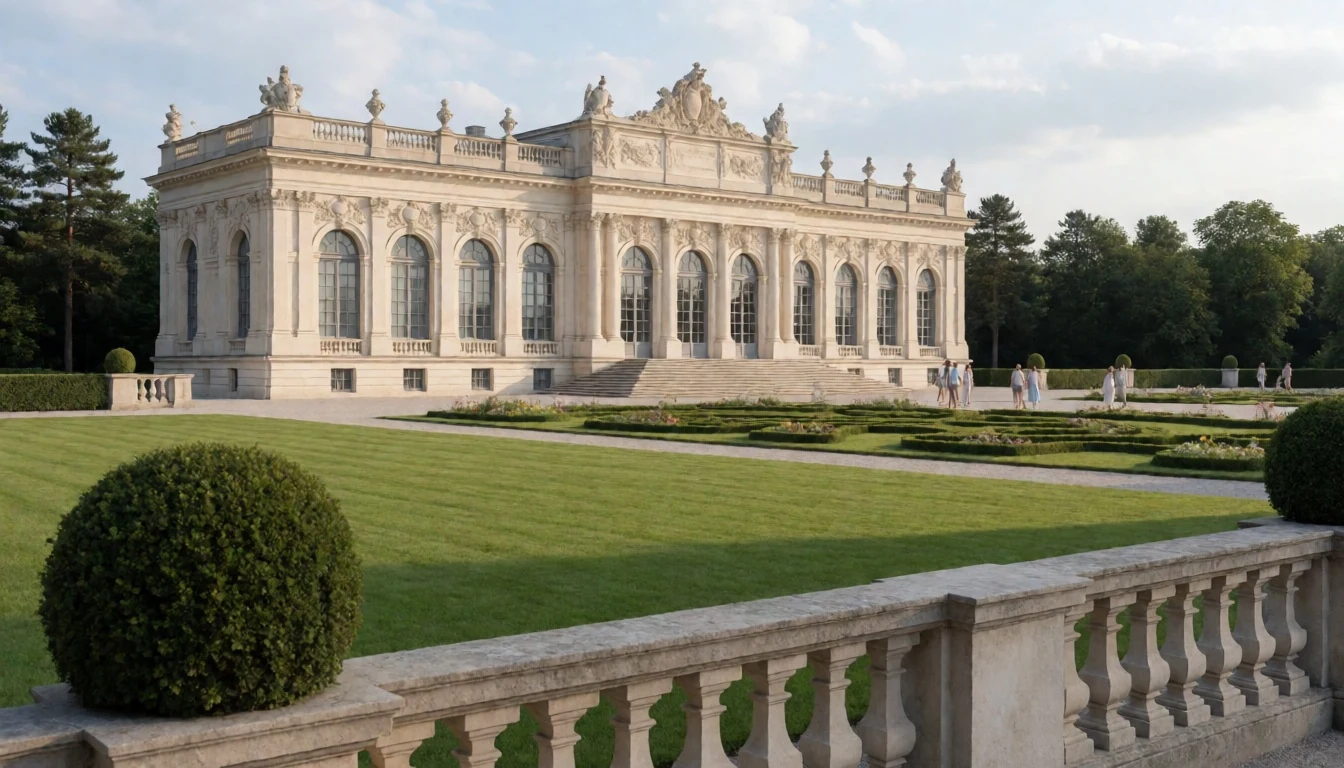
- Hall of Mirrors (Spiegelgalerie) — First floor of the New Palace
The long mirrored gallery inside the New Palace is the room visitors remember. Mirrors on one side face tall windows on the other, and the light shifts through the day. It is a copy in spirit of its French model, though the Bavarian version is its own work. Photography rules vary, so follow the signs.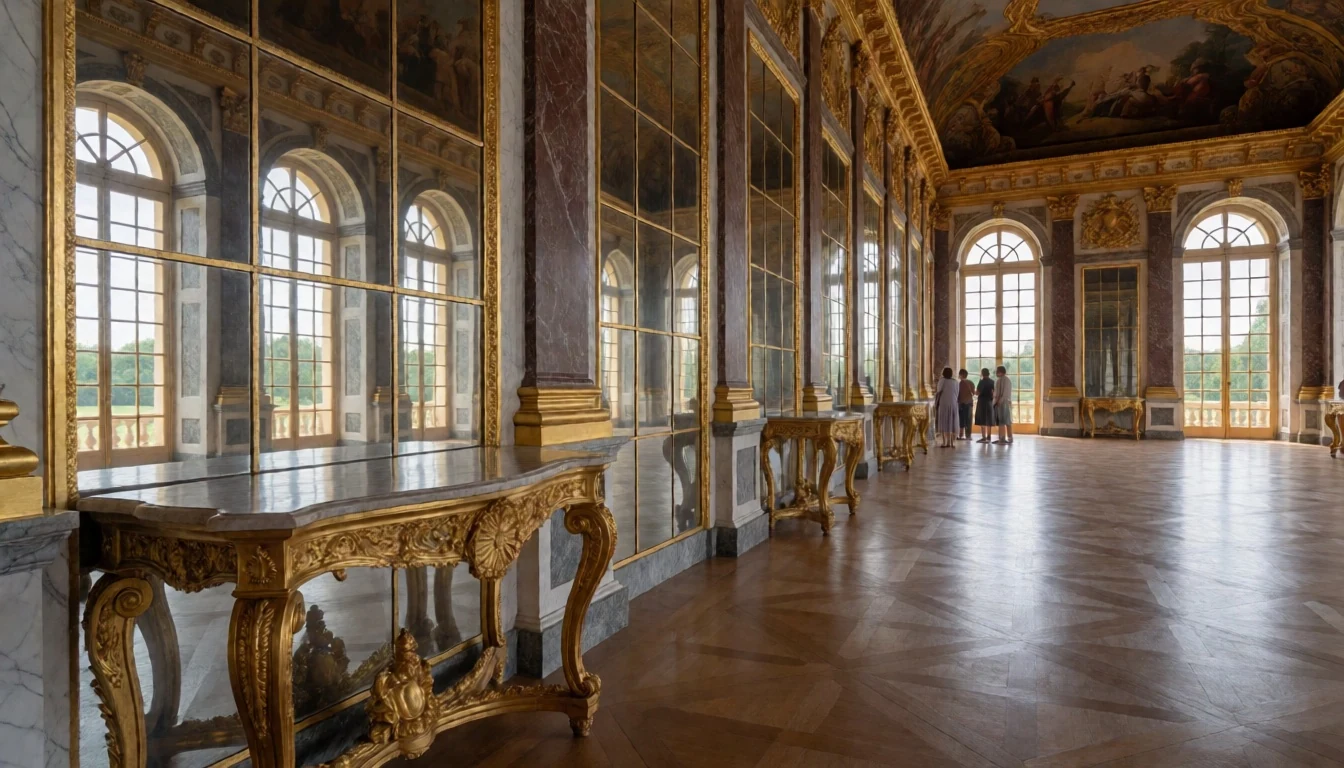
- Gardens and fountains — Park side, west of the New Palace
The park side of the New Palace opens onto formal lawns, a long canal and sculpted fountains. The water features run in the warmer part of the year, so check the official site if they matter to you. Even without them, the view back toward the palace is the best photograph on the island.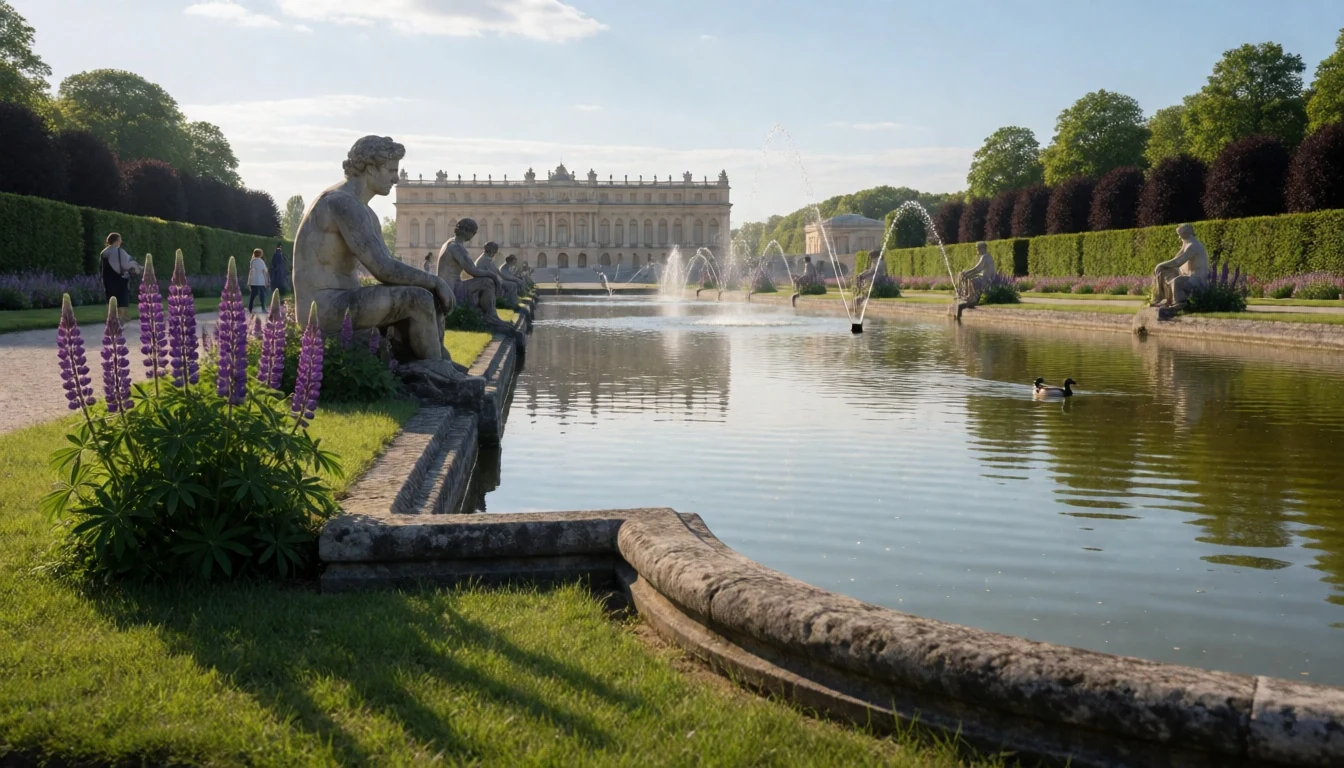
- Old Palace (Altes Schloss) — Northern end of Herreninsel, near the lakeside
The Old Palace is the former monastery that Ludwig adapted into his first residence on the island. It is quieter than the New Palace and gives the older, monastic side of the story. It also holds exhibits on the king himself, a useful counterweight to the grandeur nearby.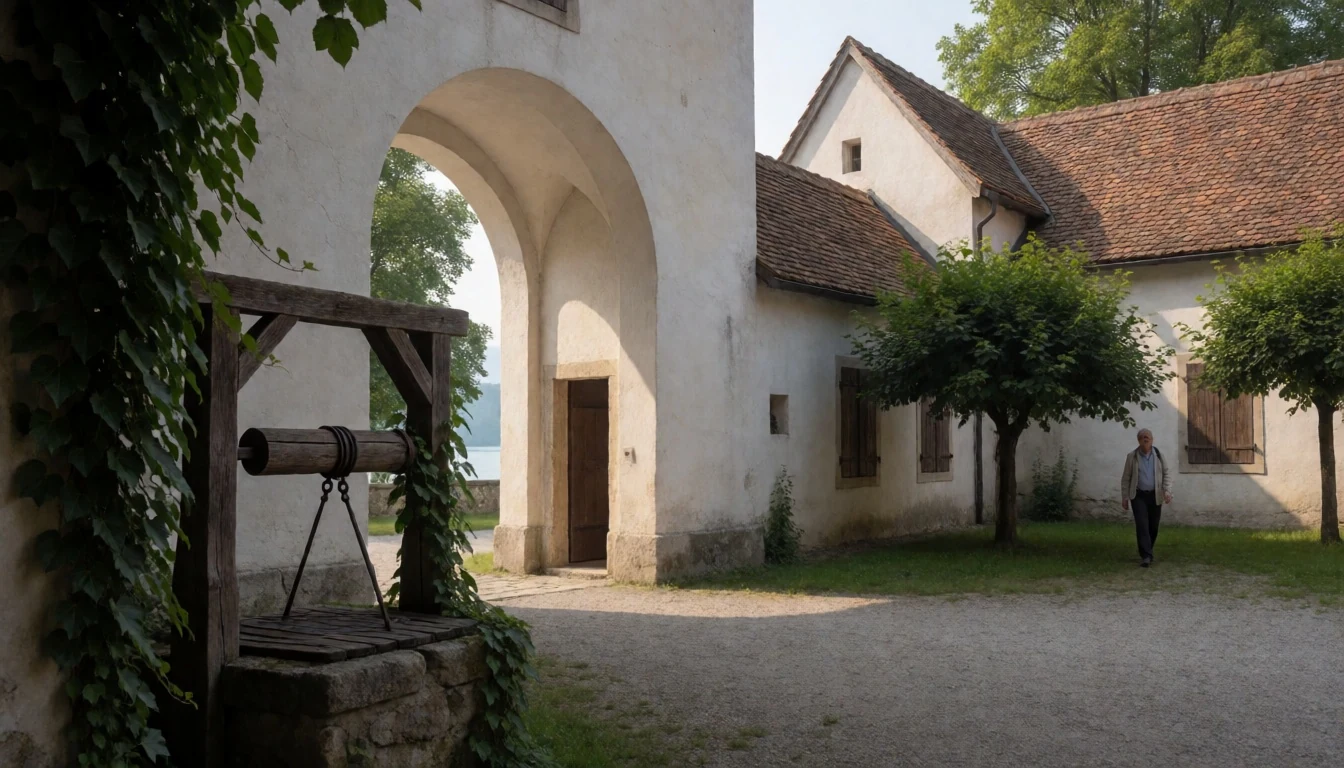
- Frauenchiemsee — Neighbouring island in the Chiemsee
Frauenchiemsee is the smaller inhabited island, a short boat hop from Herreninsel. It has a convent, a small village, fishing houses and slow lanes that can be walked end to end in a short time. It adds a gentler, non-royal counterpart to the day and is a good place to eat by the water.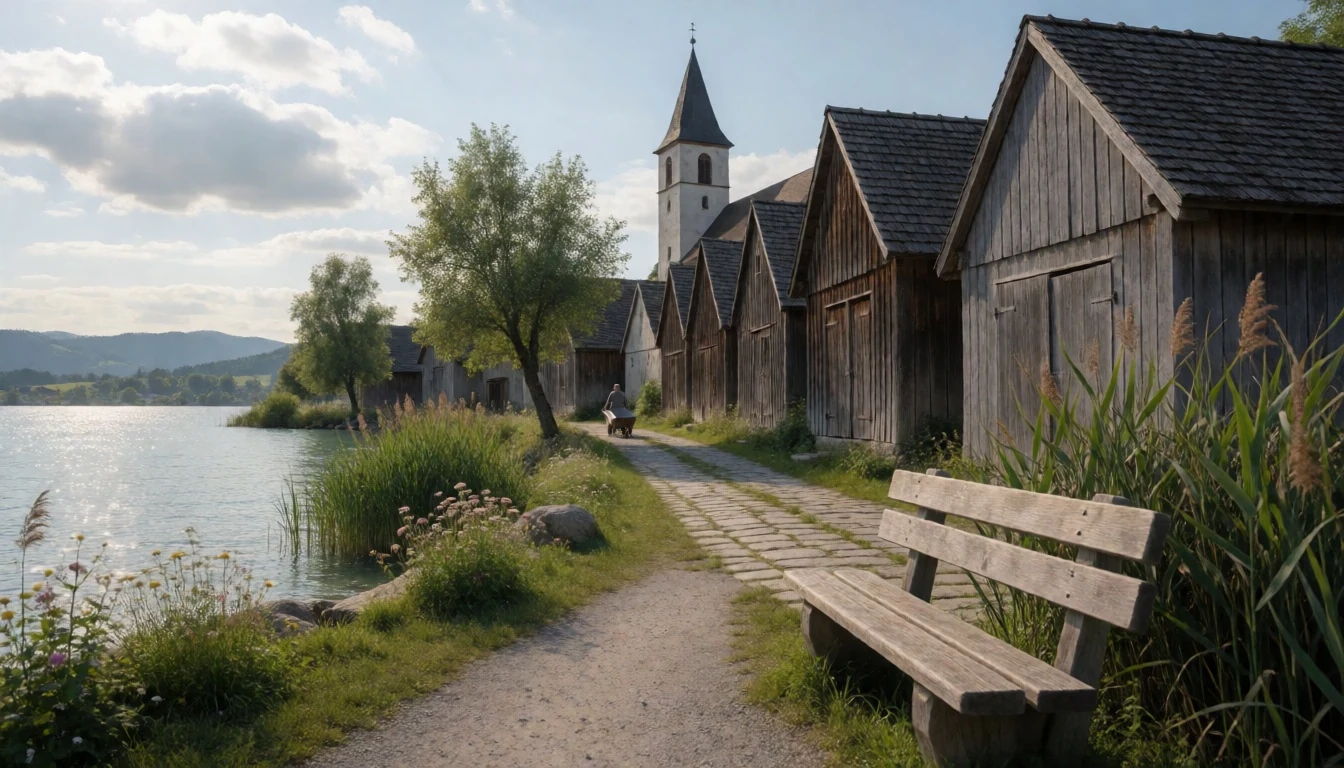
Culture
Herrenchiemsee carries the cultural weight of Bavaria's most famous king. Ludwig II is remembered in Bavaria as a dreamer who built palaces for himself rather than for a court, and local feeling about him is affectionate, sometimes protective. His portrait appears in shops and guidebooks across the region, and the palace itself is treated as a shrine to a particular, romantic idea of monarchy. The setting adds a second layer. The Chiemsee is a working lake, with fishing families, boat operators and small lakeside inns, and nearby Frauenchiemsee has a convent whose nuns have long been part of local life. Catholic traditions remain strong around the lake, with village feast days, processions and festivals such as the Maibaum, when villages raise a decorated maypole on May Day. Visitors see the grand architecture, but the day is also shaped by ordinary lake life: steam trains to the harbour, boats crossing at regular intervals, and picnics on the lawns. Tours are given in several languages, and guides tend to mix hard facts with the gentle gossip that surrounds the king. Do not touch the gilded furniture or walls, follow the guide's rules on photography, and keep to the marked route inside the palace.
What to wear
Traditional dress around Herrenchiemsee is Bavarian Tracht. Women wear the dirndl, a fitted bodice and full skirt, usually in cotton or linen with a separate apron, and sometimes in silk for festivals. Men wear Lederhosen, leather breeches often made from deerskin, with checked shirts, wool socks and a loden jacket, a felted wool that sheds rain. These outfits appear at village festivals, weddings, church days and the May Day Maibaum celebrations, rather than as everyday clothing. Day to day, locals dress as people do elsewhere in southern Germany: practical outdoor wear, walking shoes, light layers in summer and a waterproof jacket for lake breezes. Boat decks can be breezy even on warm days. For a visit, comfortable shoes matter more than anything else, since the walk from the jetty to the New Palace and around the gardens is on gravel and grass paths. Bring layers, a rain jacket in any season, sun protection in summer and a warm coat in winter. There is no formal dress code for the palaces, but covered shoulders are sensible if combining the trip with a church visit on Frauenchiemsee. Sandals are fine in summer, though fountains and lawns can leave paths damp.
What to eat
- Chiemsee fish — Lakeside inns and fish stalls, especially on Frauenchiemsee
Freshly smoked or pan-fried lake fish, such as whitefish or char, is the local speciality. It is served whole with potatoes or bread, often with a squeeze of lemon. Look for it at lakeside fish stalls and inns on Frauenchiemsee.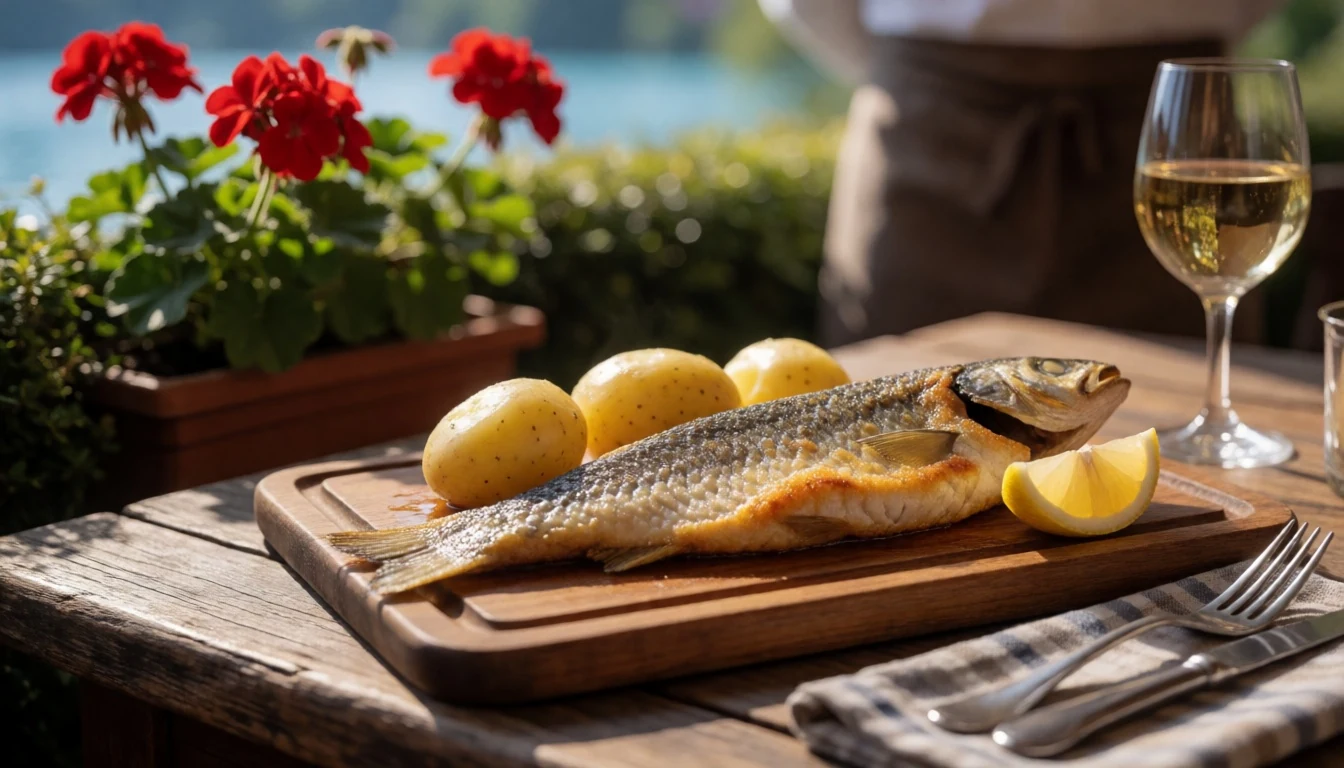
- Brotzeit — Beer garden or inn near the Herreninsel jetty
A Bavarian cold plate of bread, cured meats, cheese, radishes and pickles, eaten as a light meal with a beer or soft drink. It suits a day of walking and is easy to share between two.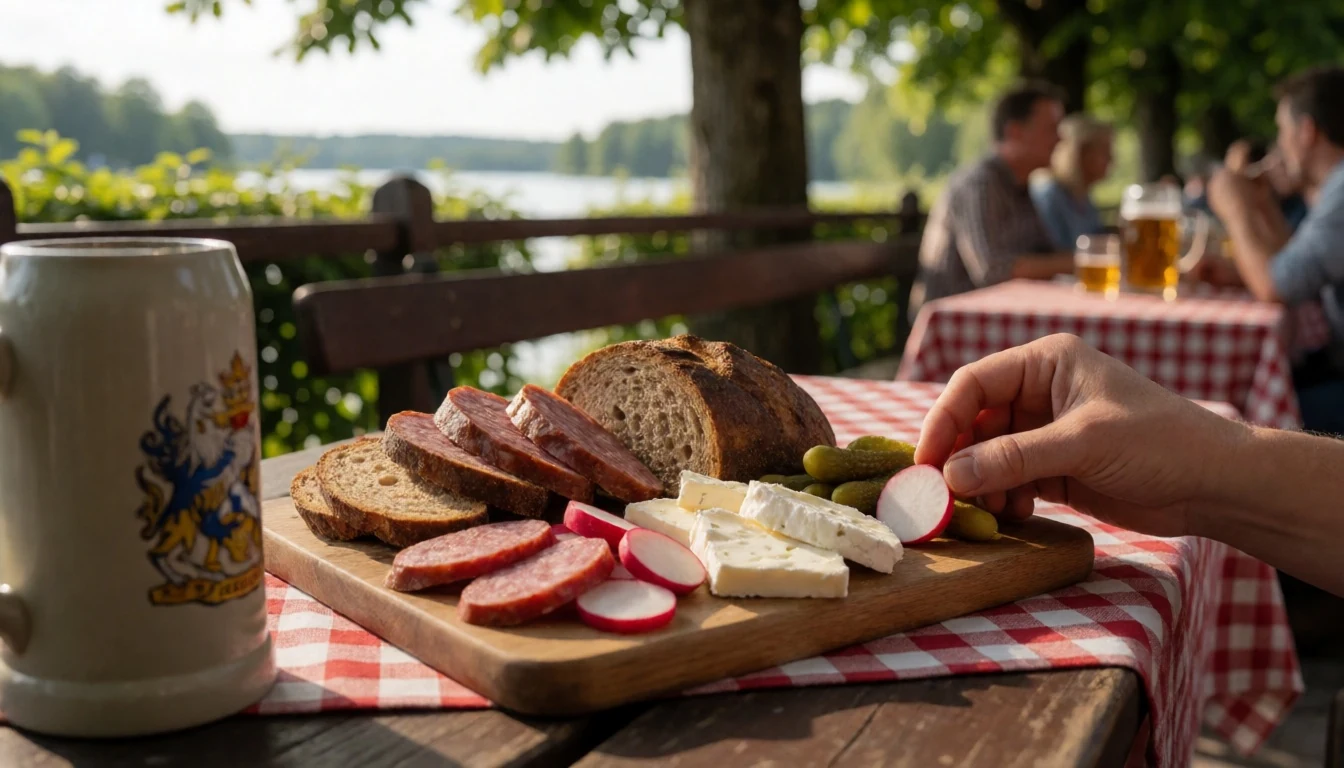
- Obatzda with pretzel — Beer gardens around the lake
A soft cheese spread made with Camembert, butter, paprika and onion, eaten with a large soft pretzel. It is salty, rich and well matched to a cold lager. Order it as a starter for the table. - Kaiserschmarrn — Café terraces and inns on the islands and the mainland shore
A torn-up, caramelised pancake dusted with sugar and served with fruit compote, often plum or apple. It is substantial enough to be a meal on its own after a long tour. - White asparagus (Spargel) — Restaurants around the lake in spring
In spring, white asparagus appears on menus across Bavaria, usually with boiled potatoes, hollandaise or ham. Restaurants run special asparagus menus for the short season, so it is worth planning a spring visit around it.
Plan it
Best time. May and September are the easiest months: mild weather, open gardens and fountains, and lake boats running regularly. June is the warmest month, with July and August close behind, and summer brings the most rain. Winter is quiet and cold, with reduced services, so check the official site.
How long. 1–2
Getting there. Fly to Munich Airport (MUC), then take a train toward Prien am Chiemsee on the Munich–Salzburg line. From Prien, a short lakeside steam railway runs to the harbour at Stock, where boats cross to Herreninsel. Salzburg (SZG) is a closer alternative for some routes.
Budget. mid
Tips
- Book guided-tour tickets ahead in summer and at weekends, and check the official site for current tour types
- Arrive early to avoid the busiest tour slots, and allow time for the walk from the jetty to the New Palace
- Carry a card and some cash, as small island kiosks and inns may not take every payment type
- Bring a waterproof jacket, as lake weather changes quickly
- Check boat times for the return crossing so that a late tour does not leave you stranded
Etiquette
- Follow the guide and the marked route inside the palace, and do not touch furniture or walls
- Keep to paths in the gardens and do not walk on the formal lawns or beds
- Keep voices down in the state rooms and during tours
Nearby
Sources
- Wikidata Q118618 (CC0)
- Wikipedia: Herrenchiemsee (rev 1381810525) (CC BY-SA 4.0)
- Wikivoyage: Upper Bavaria (rev 5399333) (CC BY-SA 4.0)
- Aerial image of the New Palace Herrenchiemsee, Carsten Steger (CC BY-SA 4.0)
- castle Herrenchiemsee, Michimaya (CC BY 3.0)
- Map of Herrenchiemsee, NordNordWest (CC BY-SA 3.0 de)
- Herrenchiemsee, neues Schloss, Bbb (CC BY-SA 1.0)
- Neues Schloss Herrenchiemsee, Spiegelgalerie, rjones0856 (CC BY 2.5)
- Louis II portrait, Gabriel Schachinger (Public domain)
- Herrenchiemsee Castle, Guido Radig (CC BY 3.0)
- View from the palace Herrenchiemsee to the East, Wikiuser100 (CC BY 3.0)


