Hermanus
Hermanus, South Africa
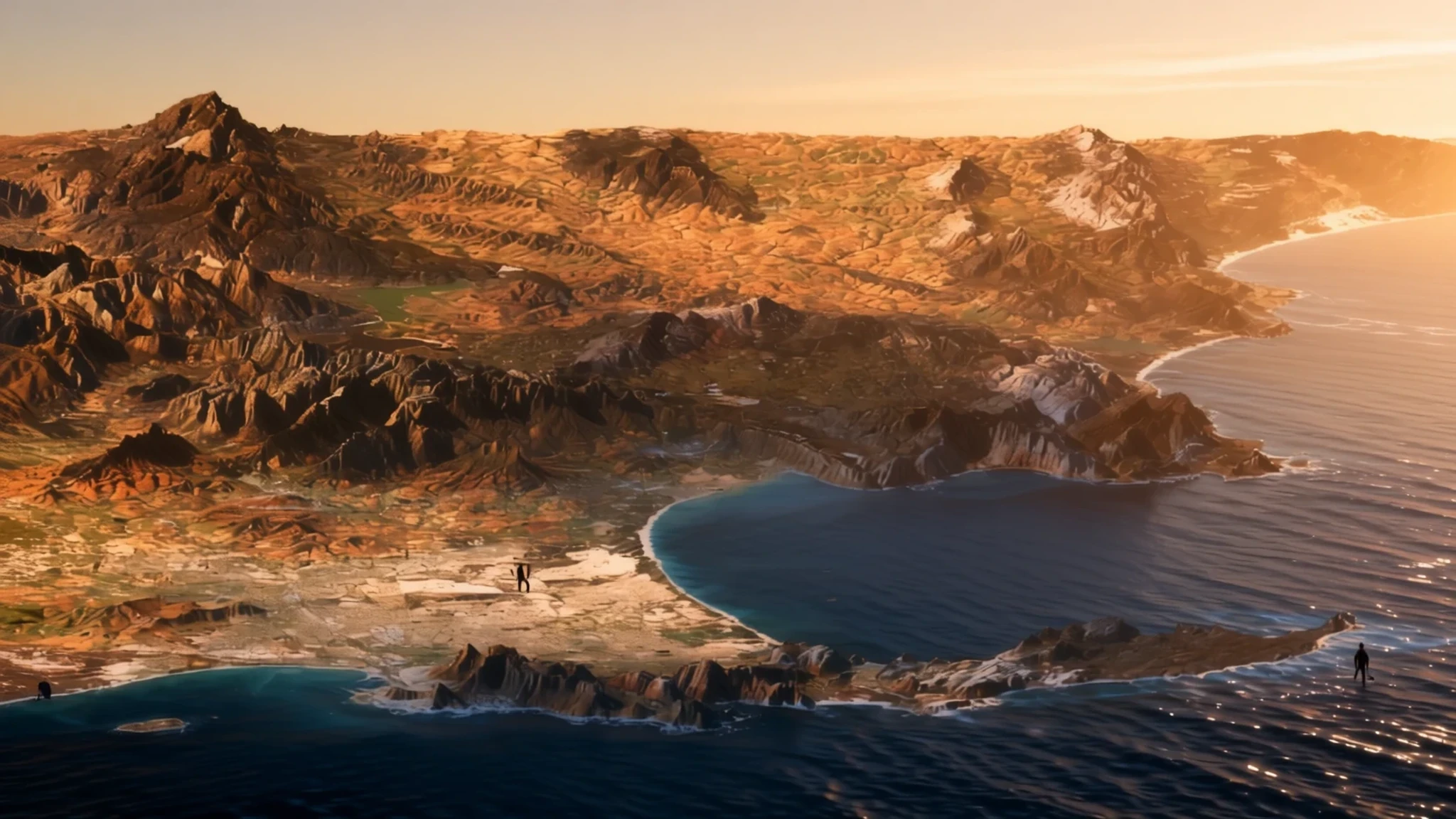
Come for the southern right whales that often come close to shore from June, and stay for the cliff-top walks above Walker Bay.
The place
Hermanus sits on the southern coast of the Western Cape, around Walker Bay, roughly 115 km south-east of Cape Town by road. The town is small enough to walk across in an afternoon, and locals still call it simply 'the village', a nickname that goes back to the founders' decision to keep it a fishing settlement rather than a commercial port. Its reputation rests on whales. From about June through to December, southern right whales come into the bay, and many can be seen from the shore without a boat. In the high season the seafront fills with visitors, so book accommodation early for school holidays and festival weekends, or go out in the early morning when the paths are quieter. The town has become a popular place to retire, and in recent years many wealthy South Africans have chosen to settle here. Beyond the centre, Sandbaai lies at the entrance to the Hemel-en-Aarde valley and is the fastest-growing part of greater Hermanus. Zwelihle, a residential area where many people live in informal shacks, is home to a large share of the town's workers. The coast gives you long beaches, walking paths and fynbos-covered hills behind the town. The climate is Mediterranean in character, and the bigger discomfort is often the wind rather than the heat: south-easterlies dominate in summer and north-westerlies in winter.
Its story
The name belongs to Hermanus Pieters, a Dutch teacher who reached Cape Town in 1815. Dutch-speaking farmers had recruited him because English was the only language used in government schools, and they wanted their children taught in Dutch. He settled in Caledon but taught across a wide area around it, including the Hemel-en-Aarde valley. He often spent time at a spring on the coast, where he fished and grazed his sheep, and the spot came to be known as his spring. He died before any village grew up there. Later, the postmaster shortened the long name to Hermanus, and the shorter form was in use from 1902. Hermanus was never planned as a resort. The founders chose not to lay a railway line, believing one would bring commerce and undo the quiet fishing village they wanted. The old station building still stands in town, a reminder of that choice. The fishing heritage remains visible in the harbour. The Second World War brought an unexpected link: the parents of Roger Bushell, leader of the escape from Stalag Luft III, retired to Hermanus after the war and are buried there. Bushell's name is among those on the town's war memorial. Through the twentieth century the town grew along the coast, first with holiday homes and then with retirees, and today its story is as much about keeping its scale as about its founder.
What to see
- Grotto Beach — West of the town centre
Grotto Beach, west of the town, offers a long strip of white sand, about 18 km in total, so even on busy days you can walk a little way and find space. It draws body-boarders and kite-surfers, who make the most of the wind. Go early for quieter water, pack water and a hat, and expect little shade on the open dunes.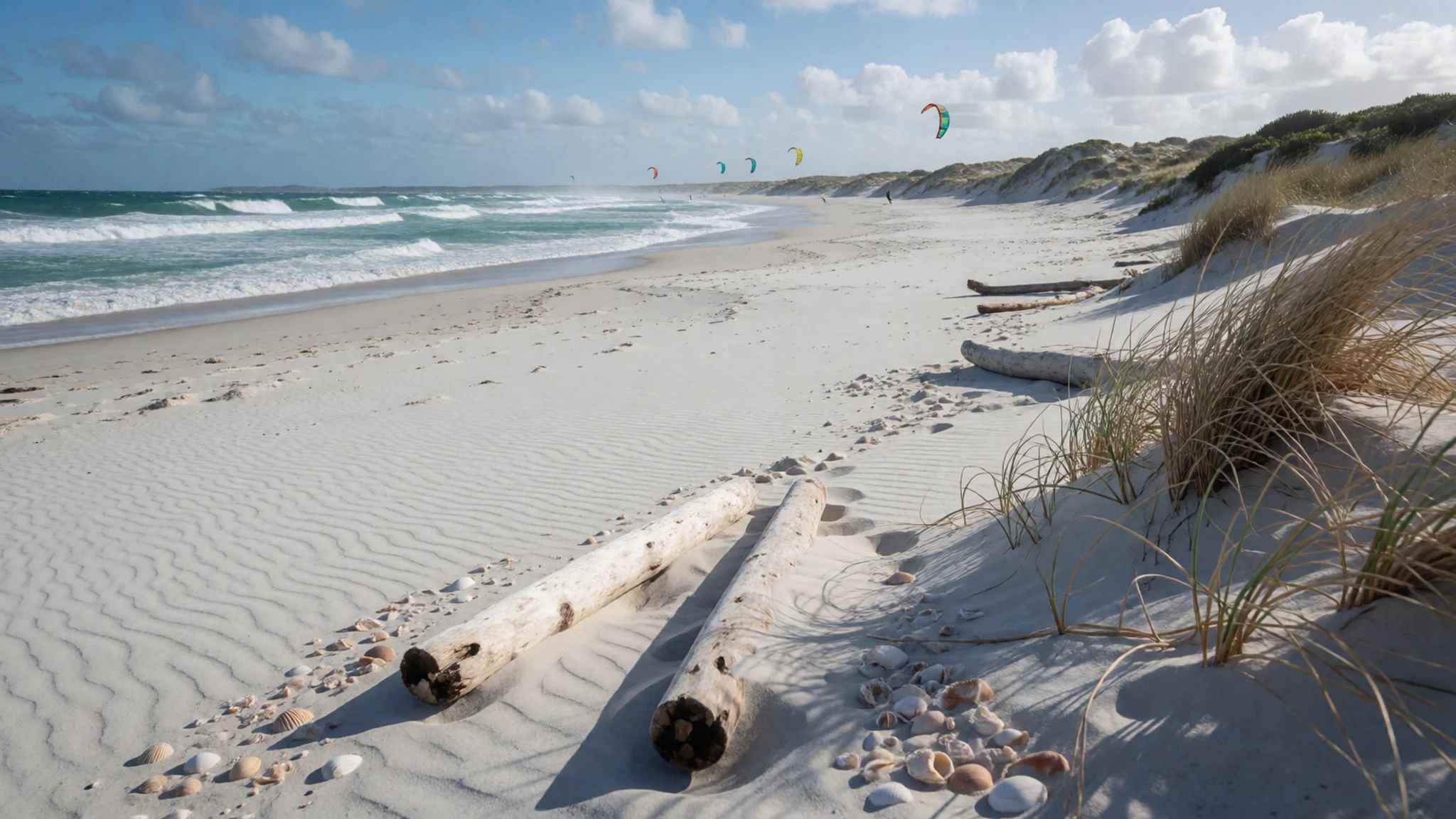
- Voelklip Beach — Town beachfront, east of the harbour
Voelklip Beach is the one many surfers and regular swimmers come back to. It is close to the town, so it fills up quickly in peak season and at weekends. Arrive early for a parking spot and a place on the sand, and check the lifeguard flags before you enter the water, since conditions change through the day. It is a good place to enjoy the coast without a long walk.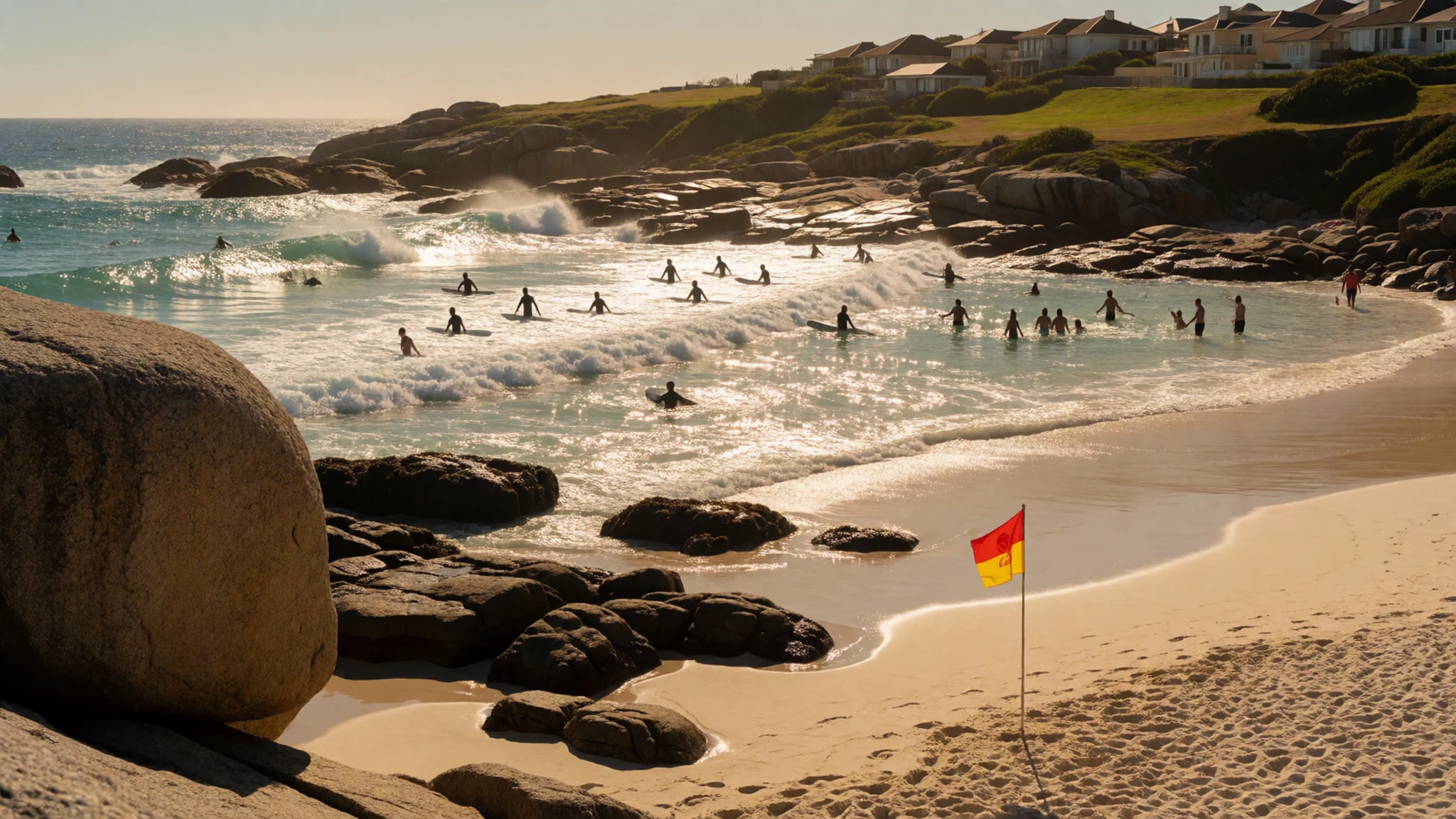
- The seafront cliff paths — Along the cliffs above the town
The seafront cliff paths wind for about 11 km, linking the town centre with beaches to the east. The walk is easy to break into pieces, so you can take a short stretch to a café or a bench overlooking the bay. In whale season, many visitors spot animals from the path without a boat. Wear closed shoes, as the rock can be slippery after rain.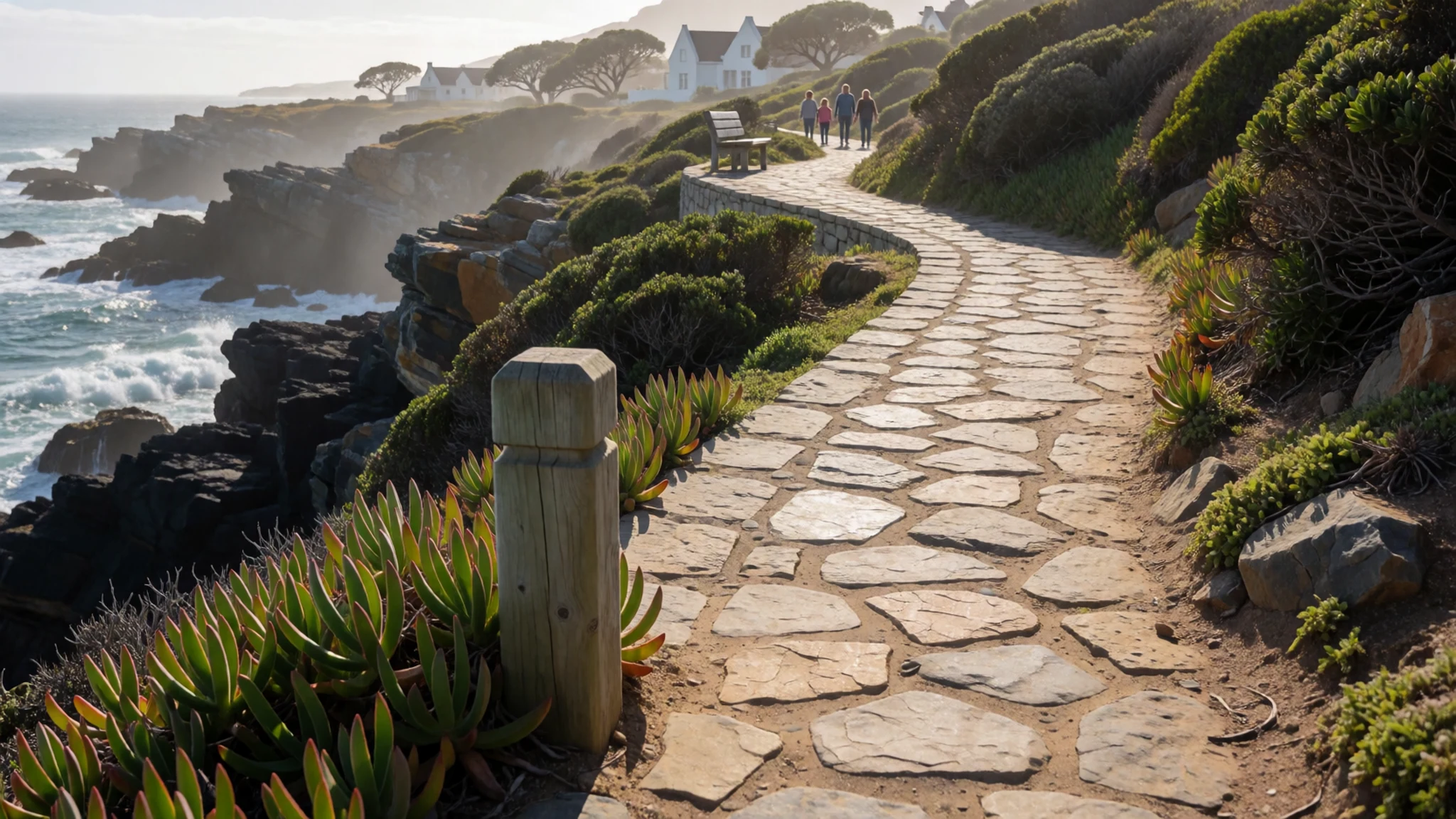
- Fernkloof Nature Reserve — Hills above the town
Fernkloof Nature Reserve sits just above the town and is home to the Hermanus Botanical Society. Its trails run through fynbos, the heathland found only in this part of the world, and the longer routes include a waterfall and overnight huts. Entry is free, though donations are welcome. Go in the cooler hours of the morning, carry water, and check the notice boards at the entrance for trail conditions.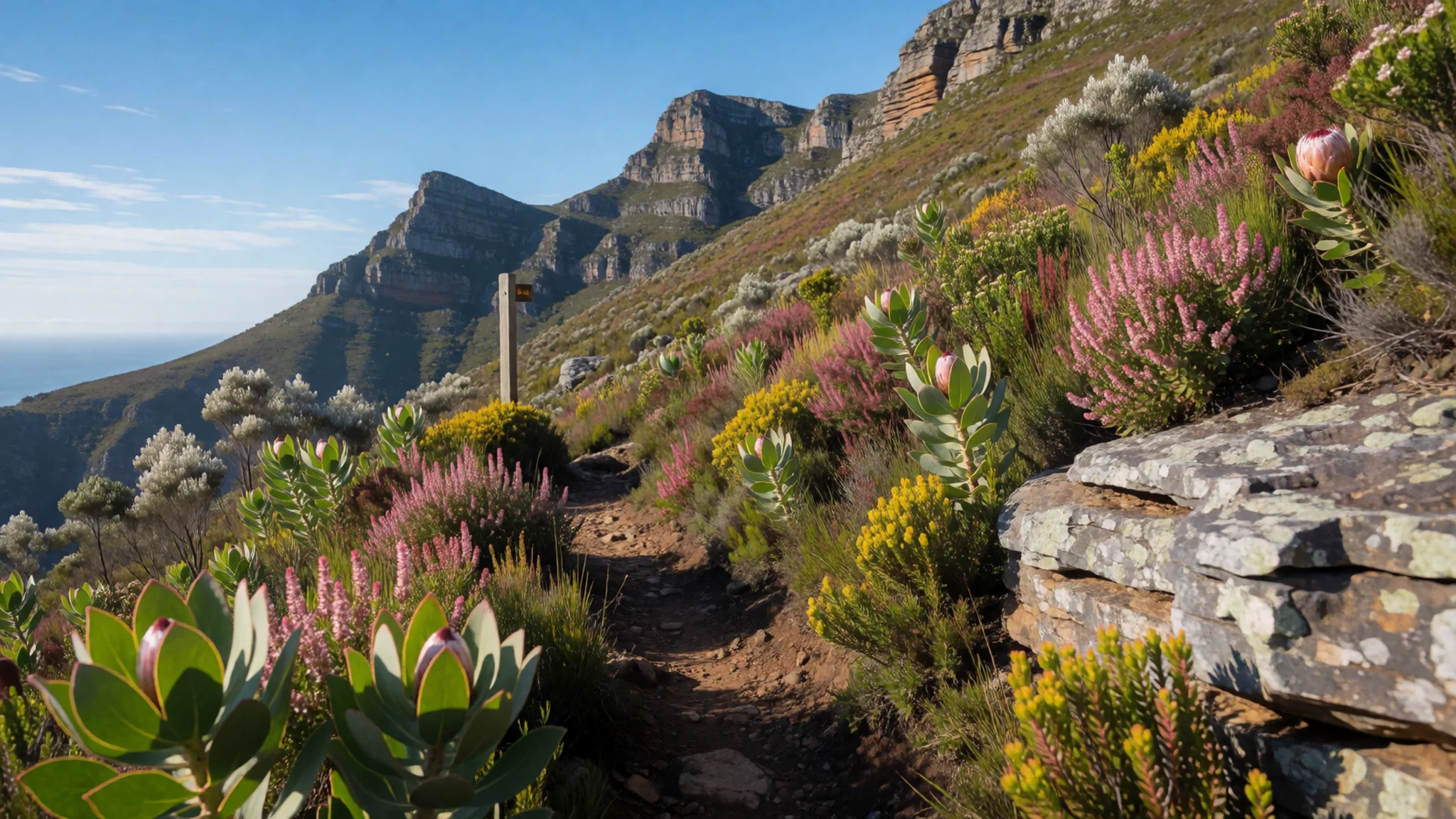
- The Old Harbour — Town harbour
The Old Harbour sits in the town's working waterfront, a short walk from the centre. Fishing boats still tie up here, and you can often watch catches being landed and sold. It is a relaxed place to see the village's fishing past up close. Keep clear of working gear and check before wandering onto the quays.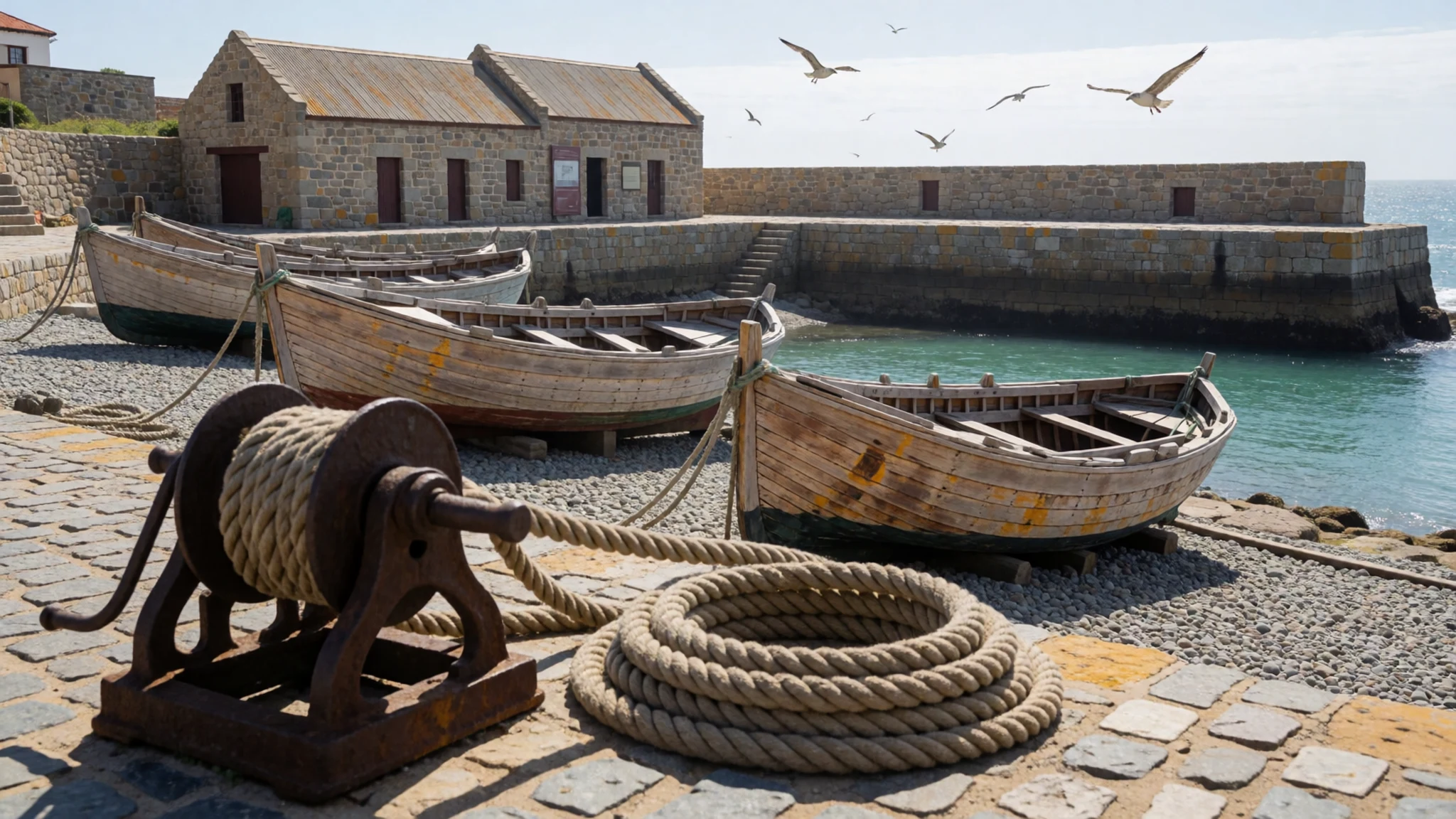
Culture
Hermanus is a small town with strong local routines, and much of its social life happens along the seafront, in the cafés and in the restaurants nearby. The whale crier, who has walked the downtown shores since 1992 blowing a horn when whales are sighted, is a tradition that visitors often gather around in season. Whale watching here is largely done from the cliffs and by boat, and tour operators take safety and distance seriously. Conversation is friendly and relaxed, and English is widely spoken, though you will hear Afrikaans at local events and several other languages around town. Many residents are retirees and long-term locals who value the quiet of the village, so late-night noise on residential streets is noticed. Festivals such as the whale festival and the Afrikaans music and theatre festival bring large crowds and sometimes their own rules about drinking. Ask before photographing people in Zwelihle or other residential areas, and follow boat operators' instructions around whales at all times.
What to wear
Hermanus does not have a dress tradition of its own that visitors will see every day, but the wider Western Cape has several. Cape Malay communities, many of them in and around Cape Town, have long been associated with brightly coloured, modest clothing and head coverings, and their culinary and musical traditions are part of the region's identity. Xhosa women across the Eastern and Western Cape are known for their beadwork, with patterned necklaces and bands that carry meaning, and for wrapped blankets worn at ceremonies. Among the Afrikaans community, traditional dress is seen mainly at festivals and cultural events rather than in daily life. What people actually wear now is mostly relaxed and practical: shorts, T-shirts, light jackets and sandals in summer, with warmer layers and closed shoes in winter. Visitors should pack a windproof jacket and a warm layer for the evenings, even in summer, because the wind can be sharp on the cliffs. Sun protection matters, as does sturdy footwear for rocky paths in Fernkloof and along the seafront. Modest dress is not required in the town, but a light cover-up is sensible when visiting Zwelihle or local community events, where people often dress more formally.
What to eat
- Umngqusho — Local restaurants and township eateries
Umngqusho is a traditional Xhosa dish of crushed maize cooked slowly with sugar beans, often served warm with butter or a rich sauce. It is a comforting, filling meal that shows the region's older food traditions. You will usually find it on the menu of local restaurants and at township eateries nearby.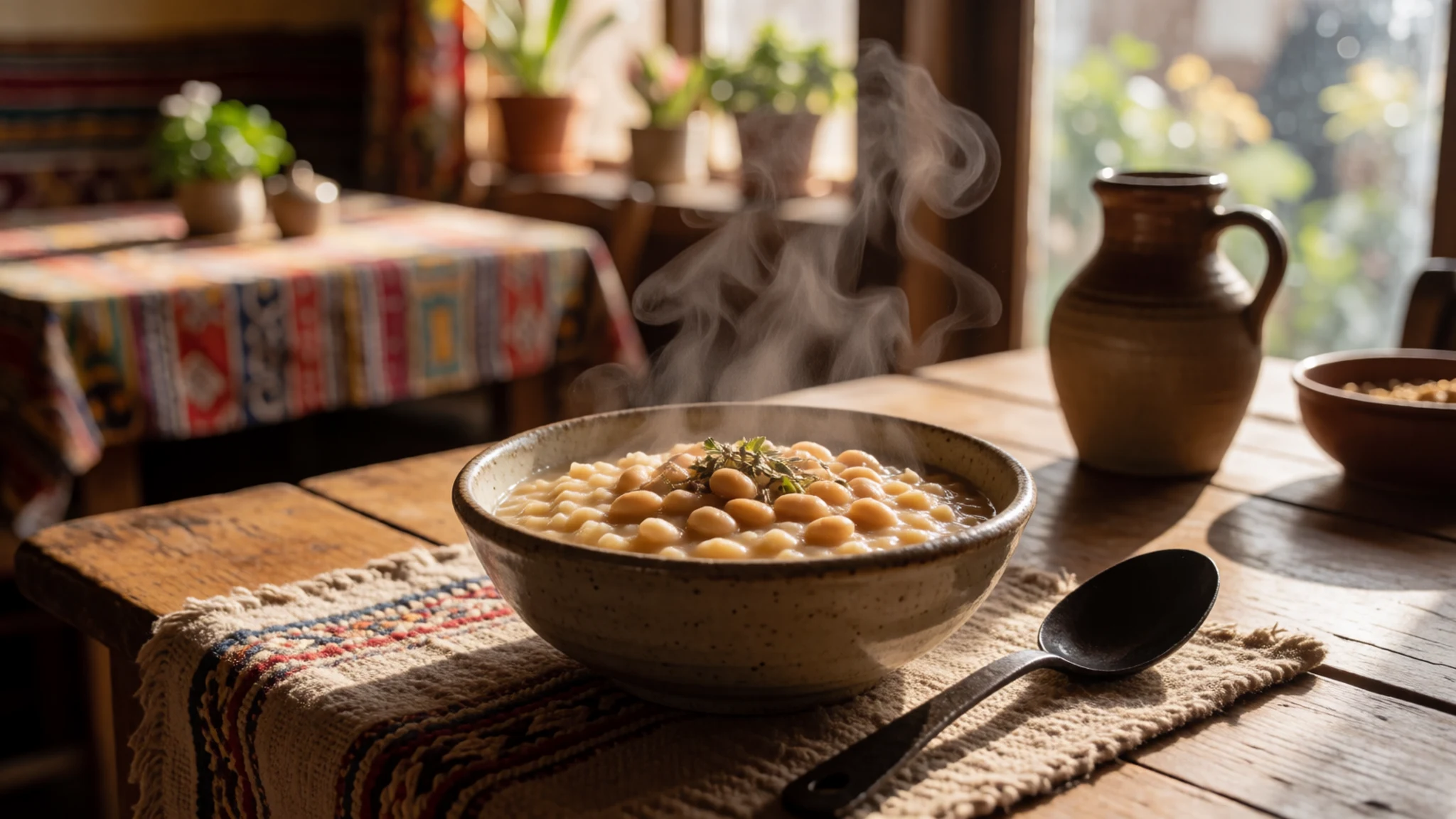
- Braai — Seafront grill houses and guesthouse gardens
A braai is the South African barbecue, and in Hermanus it is a weekend ritual. Expect boerewors sausage, chops and sometimes steak, cooked over wood or charcoal. Many guesthouses and holiday homes host braais, and you can find grills at casual eateries along the seafront.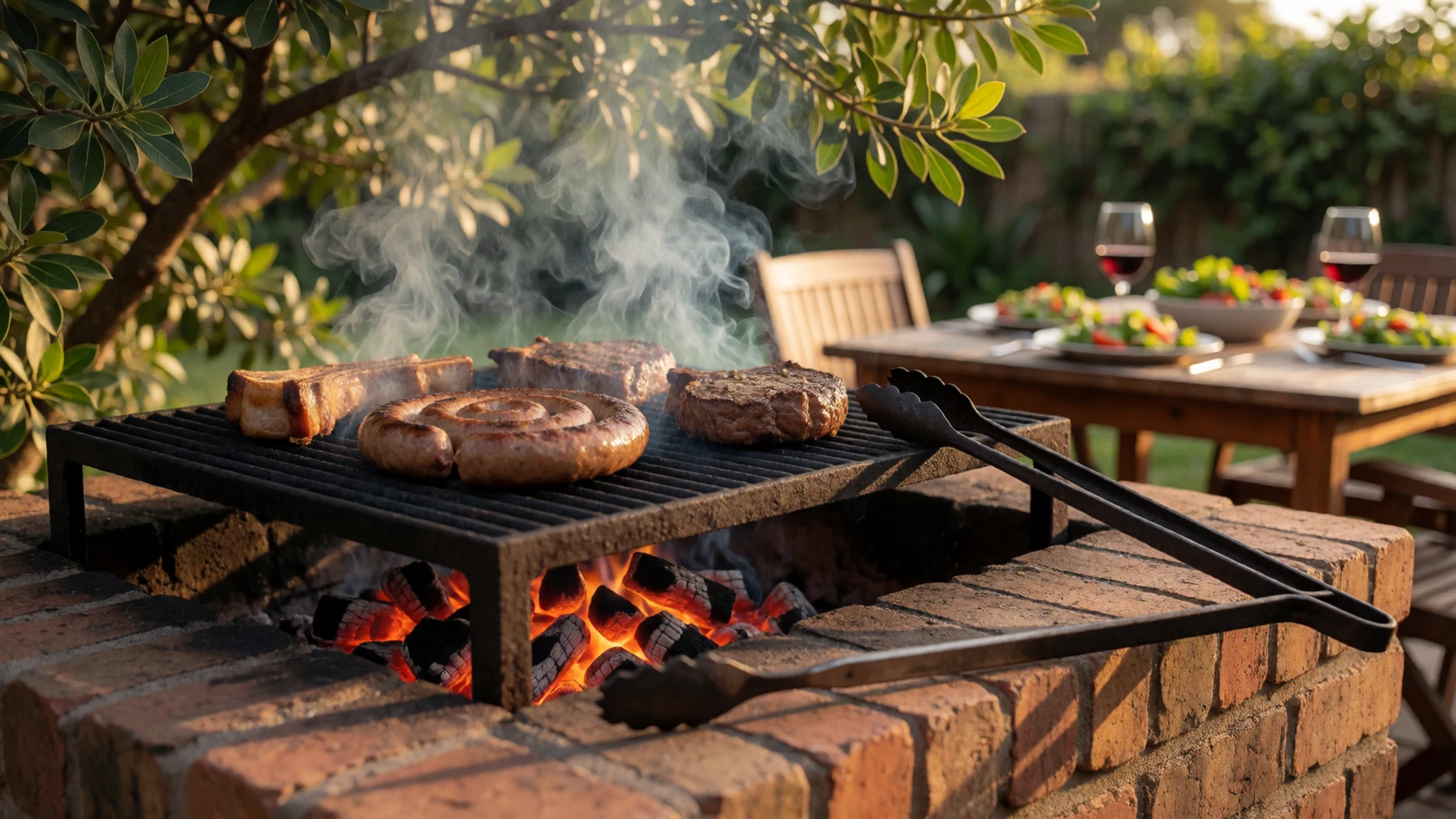
- Fresh line fish — The Old Harbour and fish eateries nearby
Line-caught fish from the local boats is a good choice for lunch, usually grilled or fried with chips and a simple salad. The fish is typically sold at the harbour and served in casual eateries nearby. Ask what came in that day, since the catch changes with the weather. - Local beer — Pubs and bars in the town centre
Beer is the drink of choice for many locals, particularly at weekends. Pubs and bars in the town centre serve a mix of South African lagers and craft brews, and the atmosphere is relaxed. It is a good way to end a day on the coast, especially after a whale-watching walk. - Potjiekos — Festivals, markets and outdoor events
Potjiekos is a slow-cooked stew made in a cast-iron pot over coals, with layers of meat and vegetables. It is traditionally a campfire dish shared with friends, and you are most likely to find it at festivals, markets or the outdoor events around the town.
Plan it
Best time. Plan for the southern whale season, roughly June to December, with the busiest weeks in late spring. Most of the rain falls in the winter months of June to August, so spring is drier. Summer is the windy season, with strong south-easterlies on many days.
How long. 2–3
Getting there. Fly into Cape Town International Airport, then drive about 115 km to Hermanus on the N2 and R43, or take the coastal R44 for a scenic route. A hired car or a shuttle is the usual last leg, since the town has no train service.
Budget. mid
Tips
- Book accommodation early for whale season and festival weekends
- Walk the cliff paths in the early morning, when the wind is lighter
- Carry water, a hat and a windproof layer, as the wind can be strong
- Carry some cash for small eateries and market stalls, and use cards elsewhere
- Check the official tourism site for current boat tour details before you go
Etiquette
- Keep a respectful distance from whales and follow your boat operator's instructions
- Ask before photographing people, especially in residential areas
- Keep noise down on residential streets in the evening
Nearby
Sources
- Wikidata Q1613480 (CC0)
- Wikipedia: Hermanus (CC BY-SA 4.0)
- Wikivoyage: Hermanus (CC BY-SA 4.0)
- Hermanus harbour (photo) (Public domain)
- Panoramic view of Hermanus (photo) (Public domain)
- Hermanus Old Harbour (photo) (CC BY-SA 4.0)
- Hermanus Coastline and City View (photo) (CC BY-SA 4.0)
- View of Hermanus and Grotto Beach from Rotary Way (photo) (CC BY-SA 4.0)
- Grotto Beach, Hermanus (photo) (CC BY-SA 4.0)
- Great white shark near Dyer Island (photo) (CC BY-SA 4.0)
- Hermanus new harbour (photo) (CC BY 3.0)


