Hawa Mahal
Hawa Mahal, India
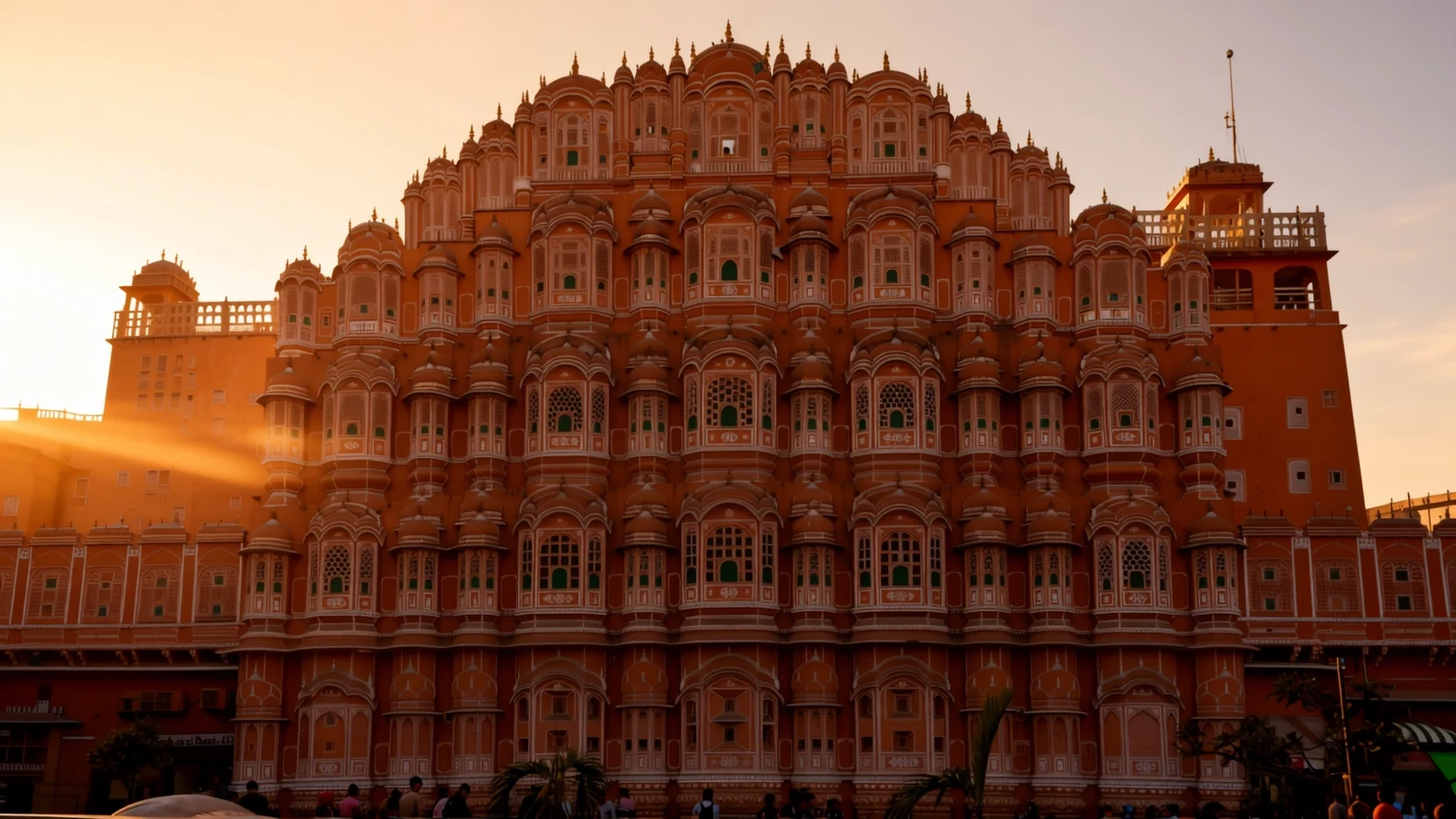
Hawa Mahal is a pink sandstone screen of 953 latticed windows in Jaipur, and it is worth seeing for the view from inside as much as the façade.
The place
Hawa Mahal stands on the edge of the City Palace in Jaipur, the capital of Rajasthan in north-western India. Its red and pink sandstone front is the image most people associate with the city, but the building works more like a screen than a room-filled palace. The street-facing wall rises five storeys and is broken into a dense honeycomb of small openings, 953 in all, each framed by carved stone lattice and tiny projecting balconies. Behind this showy face sits a much thinner structure, linked to the wider royal complex and its women's chambers, which is why the palace reads more like a stage set than a home.
The building was commissioned in 1799. The architect was Lal Chand Ustad, and the design borrowed its idea from an older palace at Khetri. Its exterior is less about grandeur than about watching. The lattices let royal ladies look down on the processions, markets and festivals below without being seen from the street.
The same openings do practical work. Air moves through the perforated walls and keeps the rooms cooler, a useful feature in a city that gets very hot in summer. The street side turns out to be the back of the palace, which surprises many first-time visitors. The whole structure was designed to be experienced from within the city, not admired from a distance.
Its story
Hawa Mahal was built in 1799 by Maharaja Sawai Pratap Singh, a Rajput ruler and grandson of Sawai Jai Singh, the founder of Jaipur. The maharaja was reportedly impressed by the unusual form of Khetri Mahal, another palace, and wanted something similar for his own city. The result was a commission for a grand but unusually light building, designed by Lal Chand Ustad.
The palace's purpose was never to host large public events inside. Its lattices allowed women of the court to take part in street life while staying out of sight, watching festivals and everyday bustle from a safe height. In that sense the building captures a particular social arrangement of its era, where privacy and visibility were carefully balanced.
Over the following two centuries the palace was adapted and cared for by successive administrations. By the early twenty-first century it needed substantial work. Renovation began in 2006, after a gap of around fifty years without major repairs, and was supported by corporate backers. The Unit Trust of India adopted the monument to help maintain it, a sign of how Jaipur's historic buildings have increasingly relied on partnerships to survive.
What to see
- Inside Hawa Mahal — Hawa Mahal, Badi Chaupar, old city
Climb the narrow internal passages to reach the upper levels, where the lattice screens frame the streets below. Each opening is small, so the views come in fragments: a slice of a market here, a glimpse of rooftops there. The light through the stone is the best part of the visit, and it is at its softest in the morning.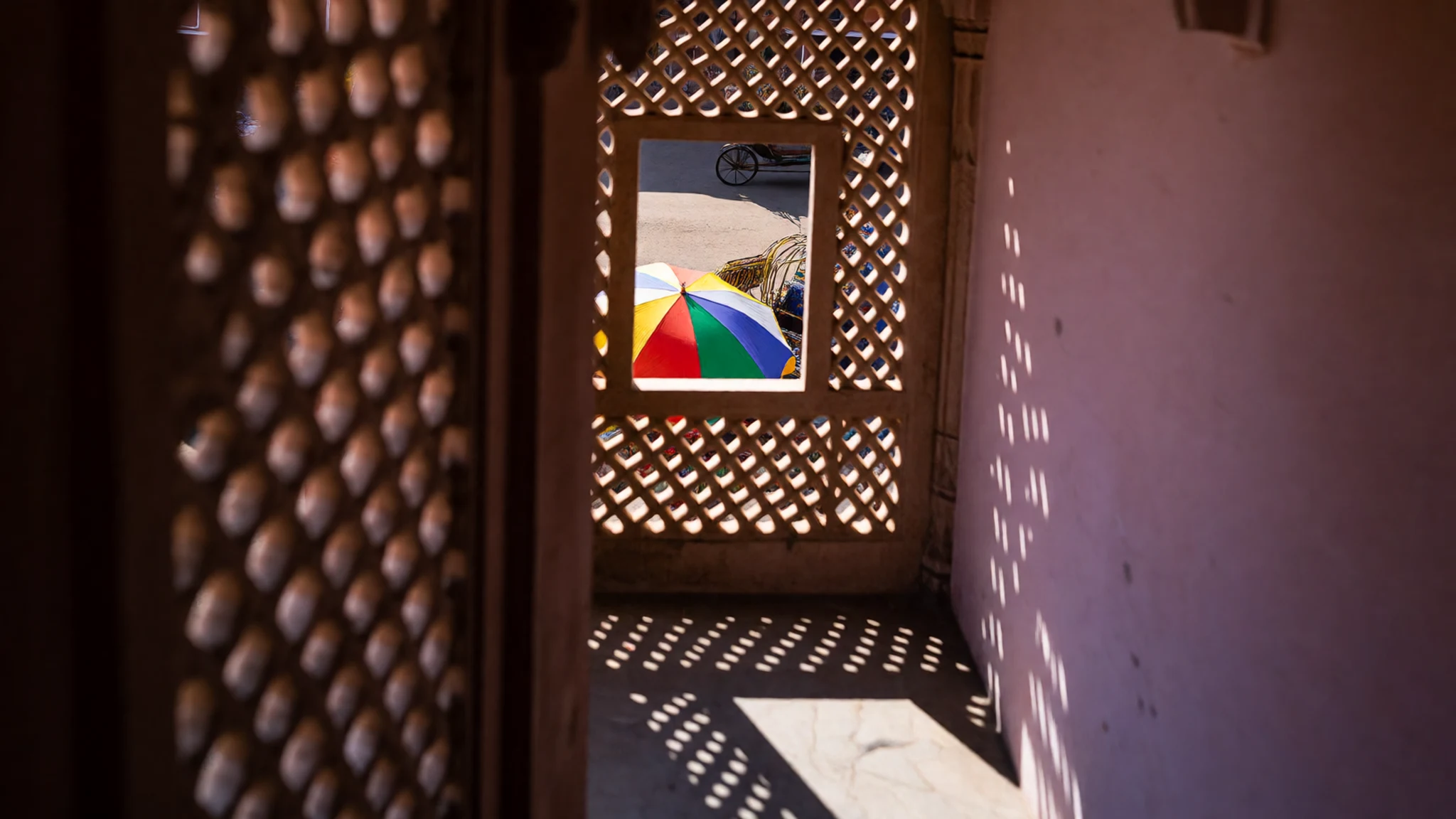
- City Palace — City Palace complex, old city
The royal residence the palace belongs to still houses a museum of costumes, weapons and manuscripts. Its courtyards and gateways show the layered architecture of the Rajput and Mughal periods. Allow a couple of hours, since the galleries and courtyards are spread across a large area.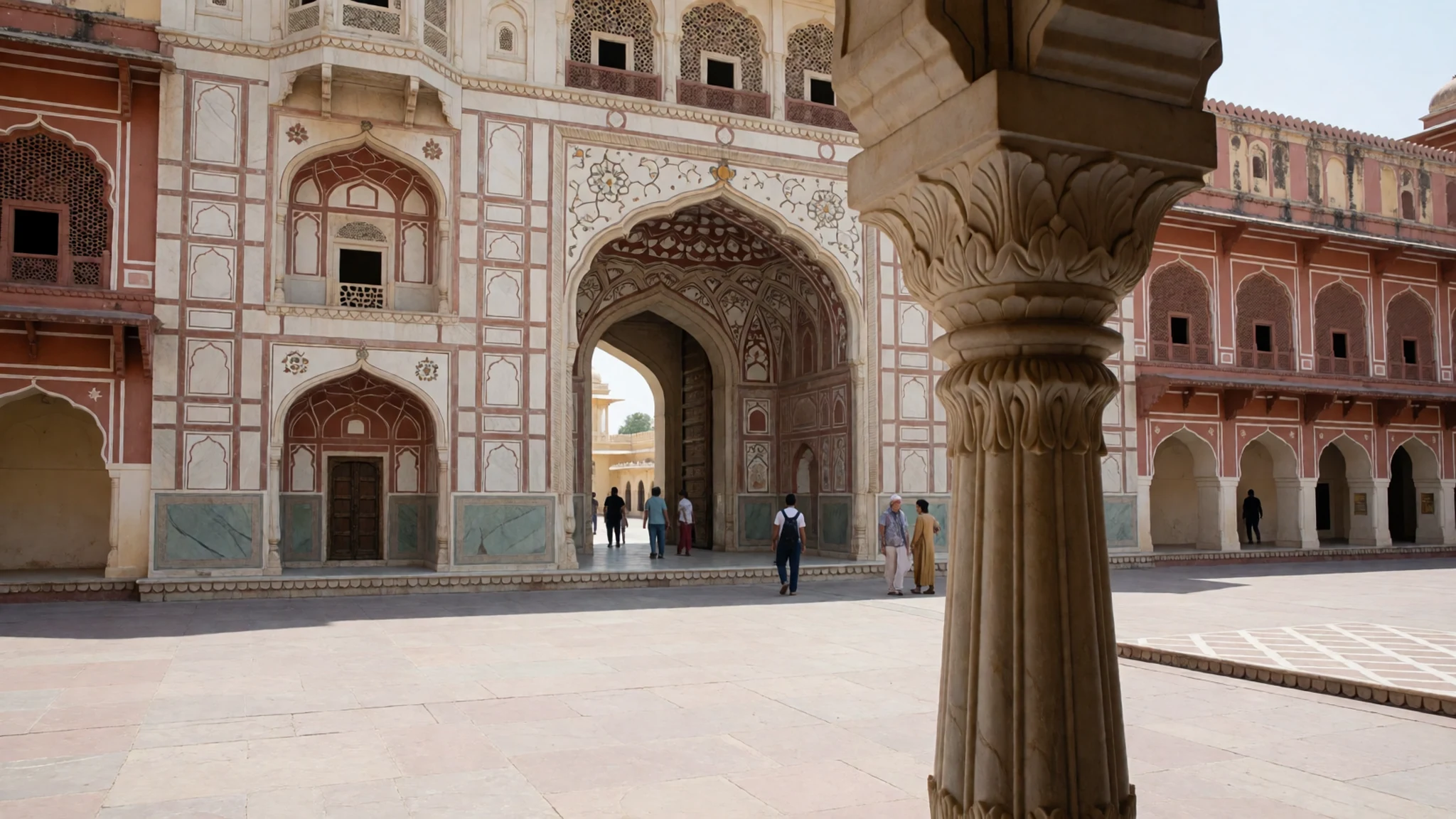
- Jantar Mantar — Jantar Mantar, next to Hawa Mahal
This open-air observatory sits just across the road from Hawa Mahal and holds large stone instruments for measuring time and the movement of the sun and stars. The Samrat Yantra, the giant sundial, is the most striking piece. Go in the morning, when it is cooler and the shadows are sharp.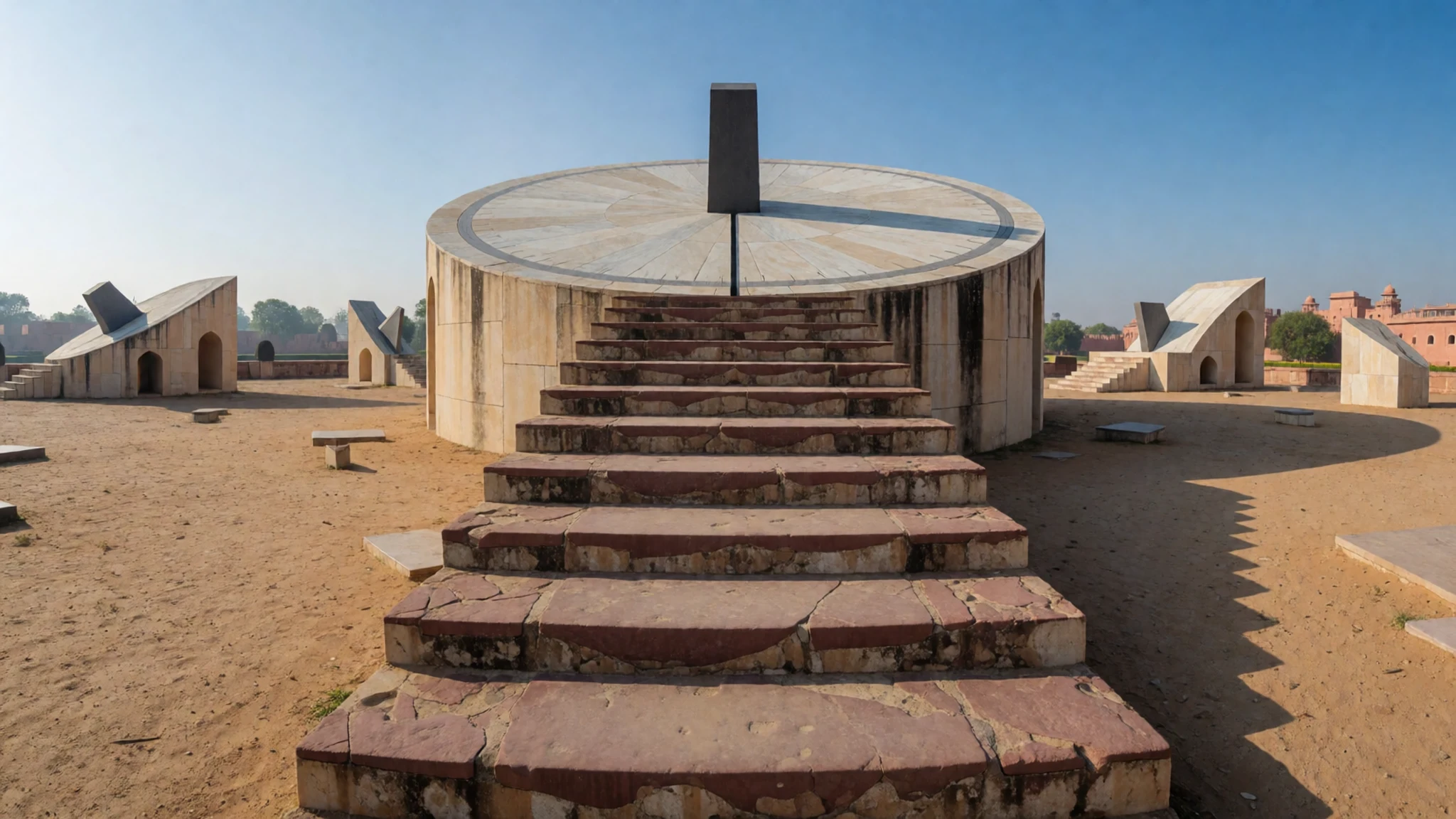
- Johari Bazaar — Johari Bazaar, old city
This lively market street is known for jewellery, textiles and sweets. Shops stock lac bangles, block-printed fabric and sugary specialities. It is busiest in the late afternoon, so it suits a slow wander after the palace has quietened down.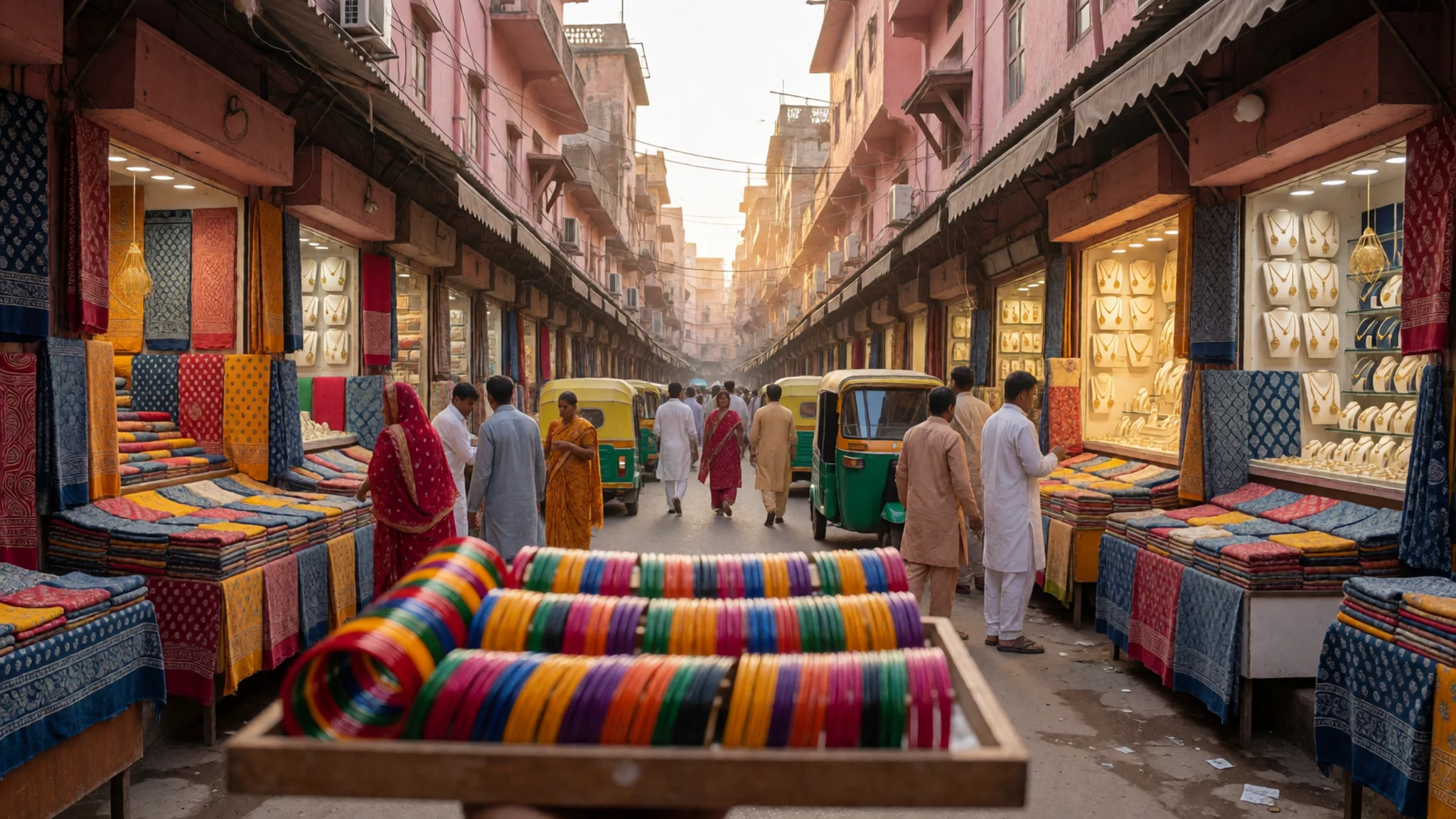
- Nahargarh Fort — Nahargarh ridge, north of the old city
Perched on a ridge north of the old city, this fort gives the broadest view of Jaipur's pink-walled skyline. The climb is steep, so take water and go in the early morning or near sunset. The rooftops and palaces below look different from up here.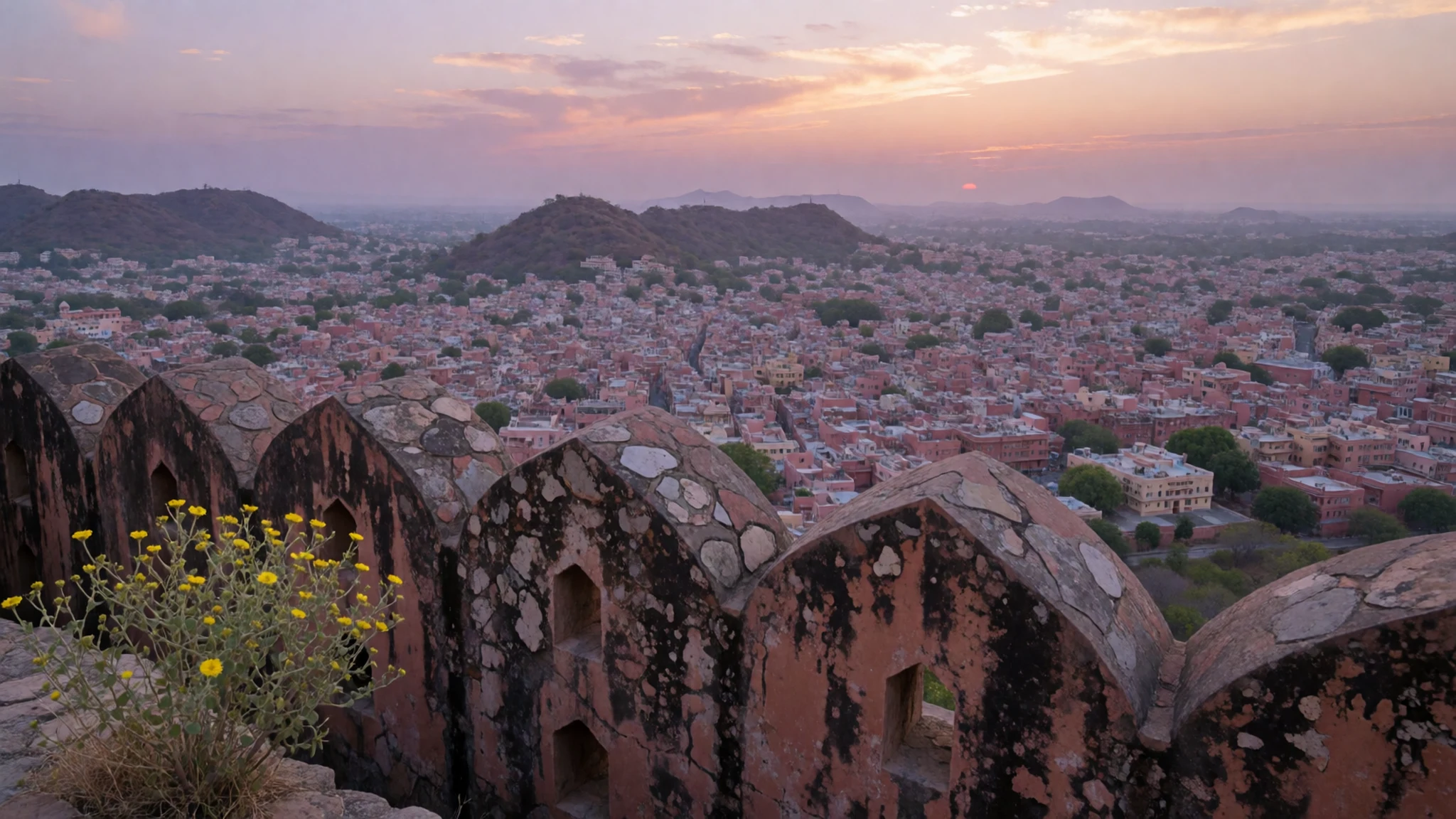
- Albert Hall Museum — Ram Niwas Gardens, south of the old city
The city's main museum sits in a garden setting near the Ram Niwas gardens. Its collections cover Rajasthani art, textiles, sculpture and ethnographic objects. It makes a good indoor break in the hottest part of the day.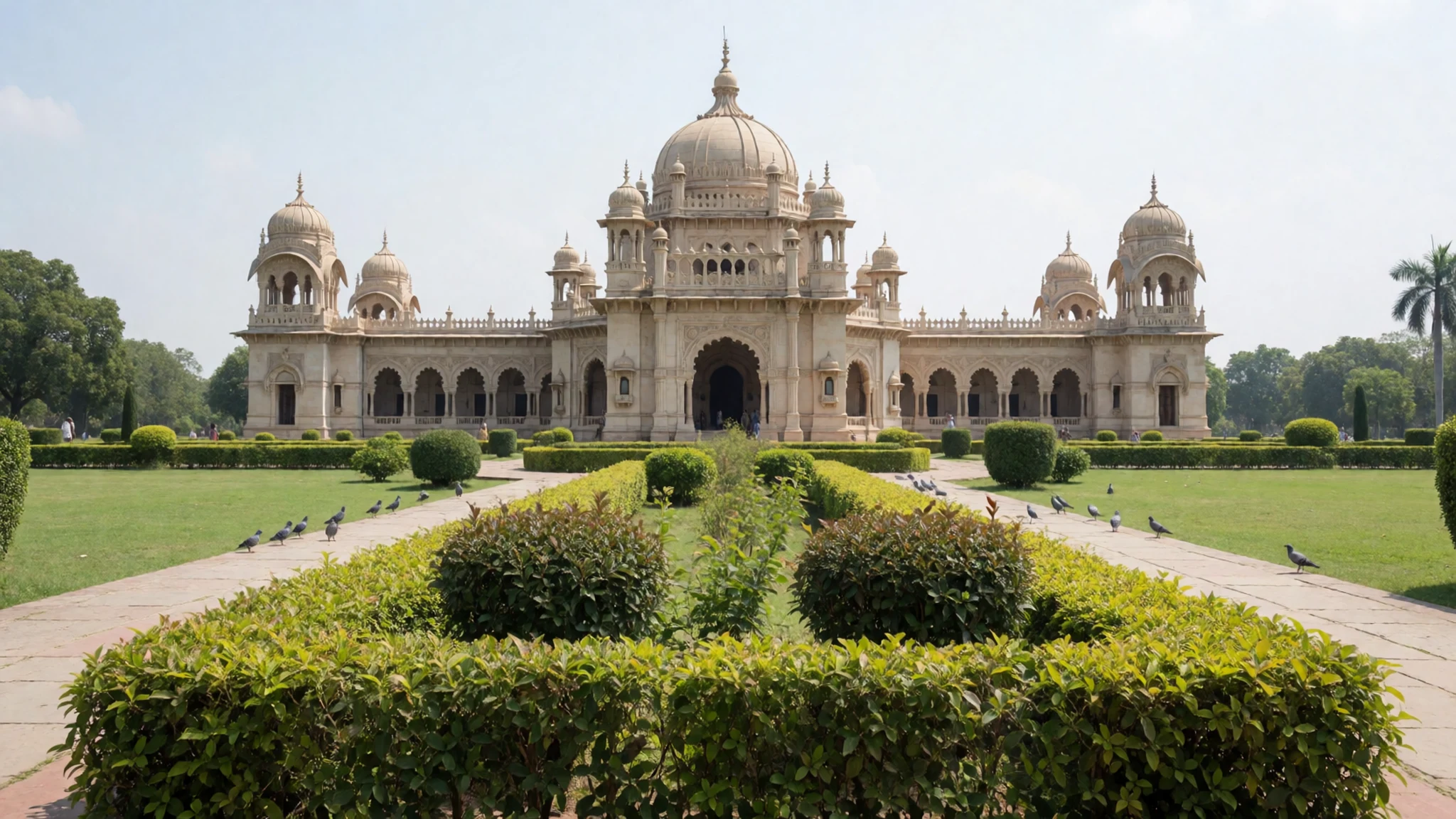
Culture
Hawa Mahal is a working monument in a living city, and its history is tied to the way royal households watched public life. Rajput and Mughal traditions shaped the palace's design, and Jaipur's residents still treat its older quarters as places of daily religious and commercial life. Many visitors arrive expecting a quiet museum, but the streets around the palace are busy with traders, pilgrims and families.
The interior is narrow and steep in places, so move carefully and let groups pass on the stairs. Photography is generally fine, but ask before photographing women or families, since the palace was built around privacy and many people still value it. Keep voices low when you reach the upper windows, where other visitors are often looking out at the street.
When you enter a temple or shrine nearby, remove your shoes at the threshold and wait for guidance from the attendants before taking photographs.
What to wear
Hawa Mahal's surroundings have long been part of Rajasthan's clothing culture, where traditional dress is still visible in the old city. Rajasthani women have traditionally worn the ghagra, a full pleated skirt, with a fitted choli blouse and a long odhni scarf. Tie-dye bandhani, lehariya waves of colour and block-printed cotton are the regional textiles most associated with the state. Men often wore the safa, a wrapped turban, with an angrakha tunic in older days.
Today, most people in Jaipur wear a mix of styles. Kurtas, salwar kameez and saris sit alongside jeans, shirts and school uniforms. The older generation is more likely to wear traditional dress, especially for weddings and festivals, while younger people choose modern clothes for everyday life.
For a visit to Hawa Mahal, light cotton or linen that covers shoulders and knees is comfortable and respectful. A thin scarf is useful for the sun and for covering your head if you enter a temple nearby. Choose closed, well-cushioned shoes, since the palace stairs and the uneven stone paths of the old city demand grip and comfort. A hat and sunglasses help in the open courtyards.
What to eat
- Dal baati churma — traditional Rajasthani eateries around the old city
This Rajasthani classic pairs lentil dal with baked wheat balls called baati, crushed with ghee, and a sweet crumbled churma. Rich and filling, it is served at celebrations and at traditional eateries. The best versions are dense, buttery and served hot from the oven.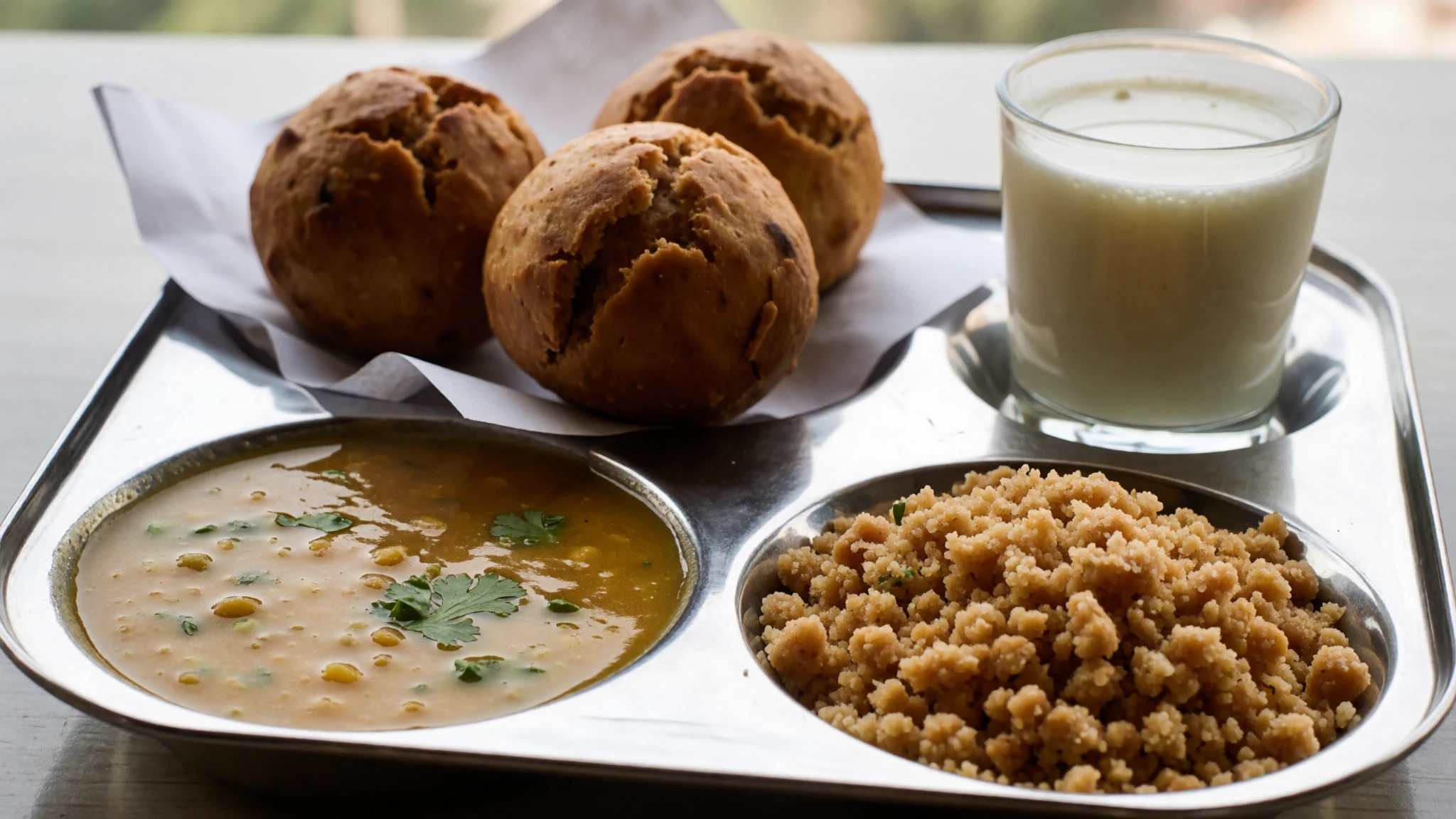
- Pyaaz kachori — the morning sweet and snack shops around Johari Bazaar
These flaky fried pastries are stuffed with a spiced onion filling and often served with a tangy chutney. They make a quick breakfast or snack, eaten warm from the pan. Mornings are the best time to find them freshly made.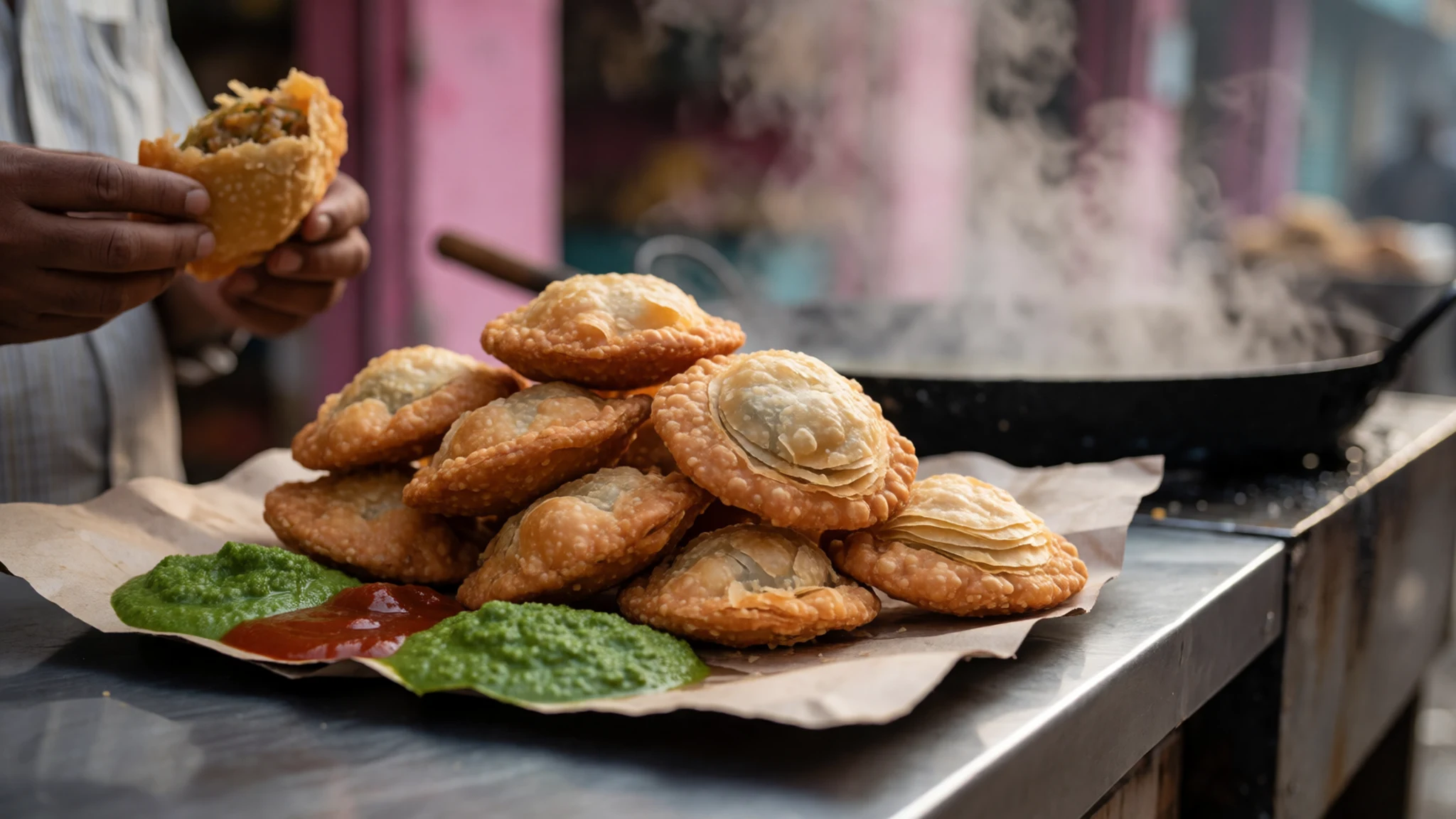
- Laal maas — family-run non-vegetarian restaurants in the old city
This is a fiery mutton curry with red chillies and yoghurt, traditionally cooked in a Rajasthani style. It is a dish for strong appetites, usually served with roti or rice. Ask for the spice level at the table. - Mirchi bada — street stalls near the bazaars and the palace gates
A large green chilli is dipped in gram flour batter, fried and served with a crisp coating. The heat is sharp but usually balanced by the crunch. Street carts offer it cheaply, often with fresh chutney. - Ghevar — sweet shops in Johari Bazaar, especially during festivals
This disc-shaped sweet is made from a honeycomb-like batter soaked in sugar syrup and often topped with cream or nuts. It is linked to festivals and is most common in the weeks around celebrations. Sweet shops usually sell it in small portions.
Plan it
Best time. December and January, with highs of about 31–32°C and little rain, are the only comfortable months for sightseeing on foot. April to June gets very hot, and July to September brings monsoon rain and humidity.
How long. 1–2
Getting there. Jaipur International Airport is the nearest airport, with taxis and app rides into the old city. Jaipur Junction is the main railway station and connects well with Delhi and other major cities.
Budget. low
Tips
- Arrive at the palace early, before the coaches and tour groups
- Carry cash for small shops, snacks and auto-rickshaws
- Drink plenty of water and wear a hat, especially between late morning and mid-afternoon
- Combine the palace with Jantar Mantar and the City Palace on the same walk
- Check the official site for current entry arrangements before you go
Etiquette
- Dress modestly, covering shoulders and knees
- Ask permission before photographing women or families
- Keep voices down in the narrow upper rooms
Nearby
Sources
- Wikidata Q836531 (CC0)
- Wikipedia: Hawa Mahal (rev 1375536043) (CC BY-SA 4.0)
- Wikivoyage: Jaipur Division (rev 5221093) (CC BY-SA 4.0)
- East facade of Hawa Mahal, Jaipur (img 01), Chainwit. (CC BY-SA 4.0)
- East facade of Hawa Mahal, Jaipur (img 03), Chainwit. (CC BY-SA 4.0)
- Lights of the Hawa Mahal Under Mars, Marco Carrasco (CC BY-SA 4.0)
- Inside Hawa Mahal, looking east, Chainwit. (CC BY-SA 4.0)
- Top 2 Stories of Hawa Mahal, Sameer Goyal (CC BY 3.0)
- Hawa Mahal inside (2022-07), Chainwit. (CC BY-SA 4.0)
- Hawa-mahal from window, Sameer Goyal (CC BY-SA 2.0)
- Hawa Mahal on a stormy afternoon, Ziaur Rahman (CC BY 3.0)


