Haut-Koenigsbourg Castle
Haut-Koenigsbourg Castle, France
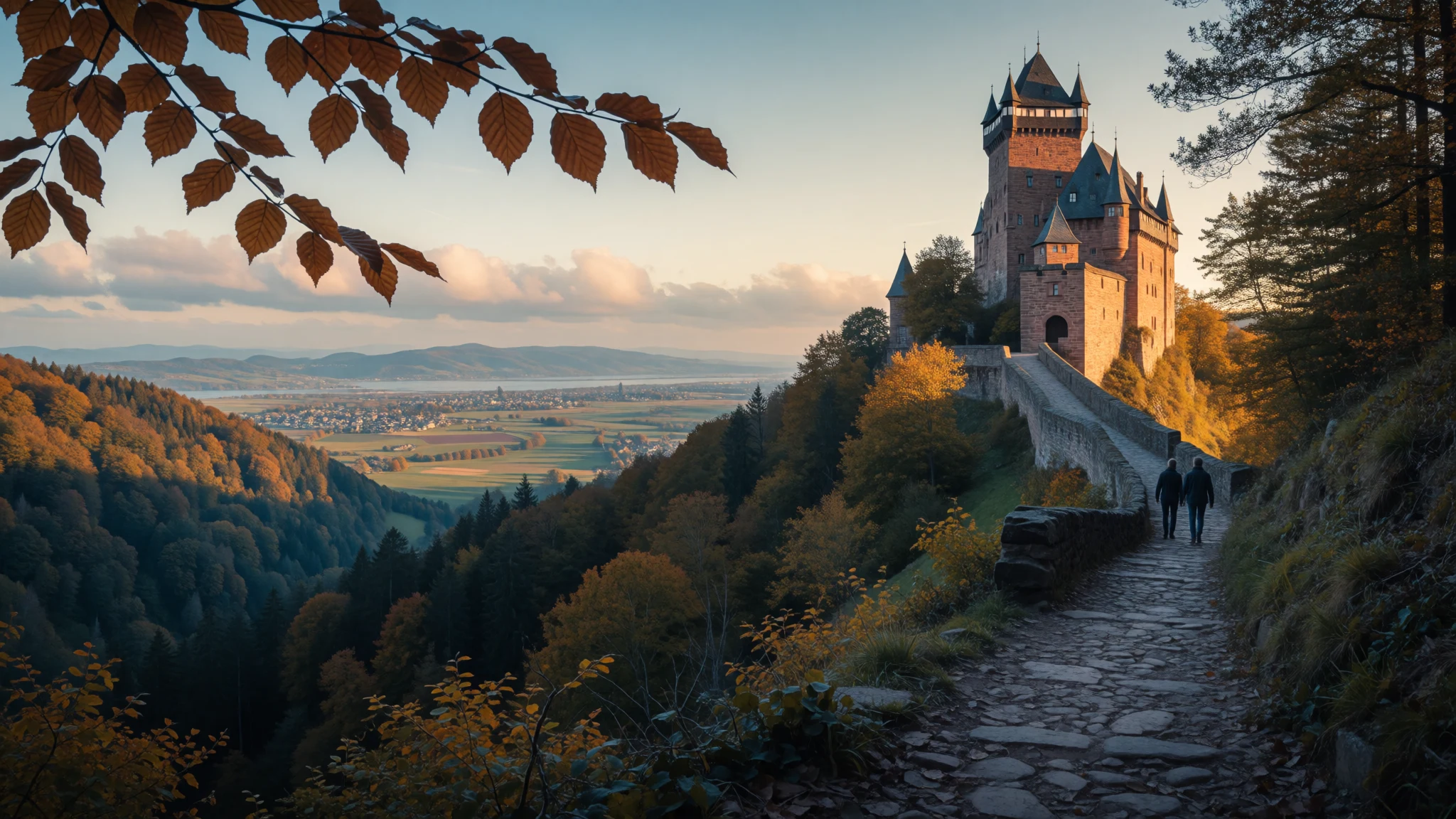
Haut-Koenigsbourg Castle is a medieval fortress on a rocky spur above the Alsace plain, rebuilt at a German emperor's order.
The place
Haut-Koenigsbourg Castle stands in the commune of Orschwiller, in the Bas-Rhin part of Alsace, on a rocky spur of the Vosges just west of the town of Sélestat. The site is about 755 m above sea level and looks straight out over the Upper Rhine plain, which explains why so many rulers wanted it: whoever held the spur could watch the valley road and the farmland beyond. The walls are reddish sandstone, and from the plain the castle reads as a long, crowded roofline of towers, gables and ramparts pressed onto the ridge.
What stands today is largely a reconstruction. The ruin was rebuilt in the early twentieth century for the German emperor Wilhelm II, with the architect Bodo Ebhardt working from the surviving walls, archives and comparison with other castles of the period. For decades French opinion treated the result as a fairy-tale pastiche. More recent historians are kinder, seeing it as an imperfect but serious restoration and a record of how Wilhelm imagined the Middle Ages.
The castle draws more than 500,000 visitors a year, so busy days are the norm in summer and on holiday weekends. Just below it sits the ruin of the Château de l'Oedenbourg, also called Petit-Koenigsbourg, a protected monument in its own right. Wikidata dates the castle's founding to 1114, though the documentary record of the first fortress is murkier than that. It is owned today by the Bas-Rhin département. Opening days and ticketing change through the year, so check the official site, https://www.haut-koenigsbourg.fr/.
Its story
Haut-Koenigsbourg Castle has been built, burned and abandoned more than once. The sandstone cliff it stands on appears in a deed of Charlemagne from 774, when it belonged to a church foundation and carried a monastery. Nobody knows exactly when the first castle went up, but by 1147 monks were complaining to the French king that a Hohenstaufen duke had put a fortress on their land without right. That family went on to hold the German crown, and by 1192 the place was being called the King's Castle.
Control then passed to the dukes of Lorraine and to local knightly families. When the Hohenstein lords let robber barons shelter there, neighbouring powers lost patience: the castle was occupied in 1454, and in 1462 an alliance of Colmar, Strasbourg and Basel set it on fire. The Habsburgs then granted the ruins to the Counts of Thierstein, who rebuilt with defences designed for artillery. When the last Thierstein died in 1517, the castle returned to the Habsburgs.
Its working life ended in 1633, during the Thirty Years' War, when Swedish forces besieged it for 52 days, then burned and looted it. For centuries the ruin sat under forest, and poets and artists found it romantic. It was listed as a monument in 1862 and bought by Sélestat three years later. After the Franco-Prussian War, Alsace joined the German Empire, and in 1899 the townspeople handed what remained to Wilhelm II, who commissioned the rebuilding. France took the castle after the First World War under the Treaty of Versailles, and the Bas-Rhin département has owned it since 2007.
What to see
- Main entrance and gateway — Castle approach
Most visits begin at the main gate, where the restored defences show the architect's method: new stonework built on old footings, guided by archives and comparison with other castles. It is also where summer queues gather, so arriving early helps. Beyond the gate the courtyards open out and the layers of rebuilding become easy to read.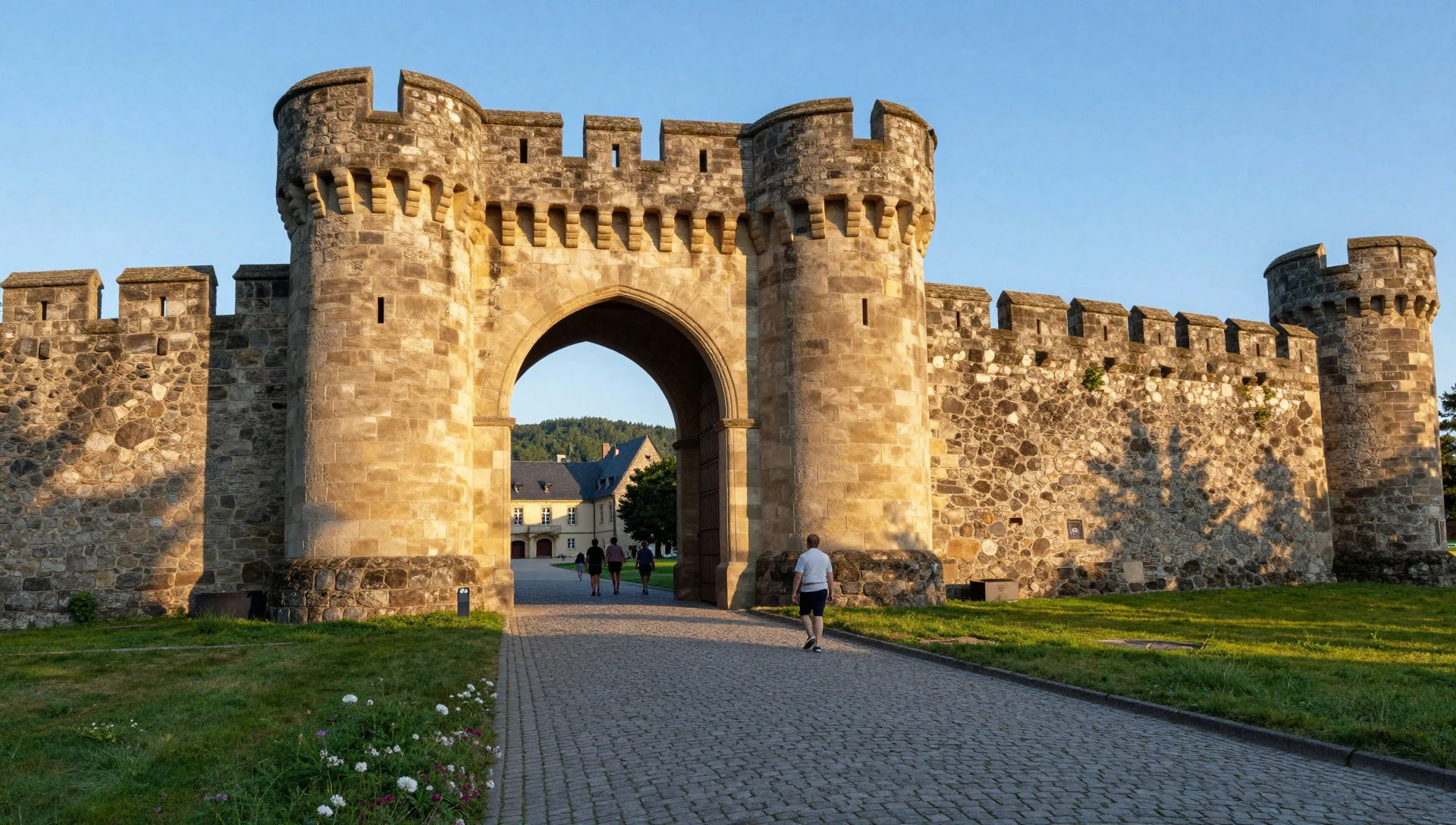
- Ramparts and terraces — Outer walls
Walking the walls explains why the castle exists: the outlook runs across the Upper Rhine plain and its farmland. Summer haze can flatten the view, while clear days after rain show the pattern of fields and villages. Take care on steps and uneven stone, especially when the surfaces are wet.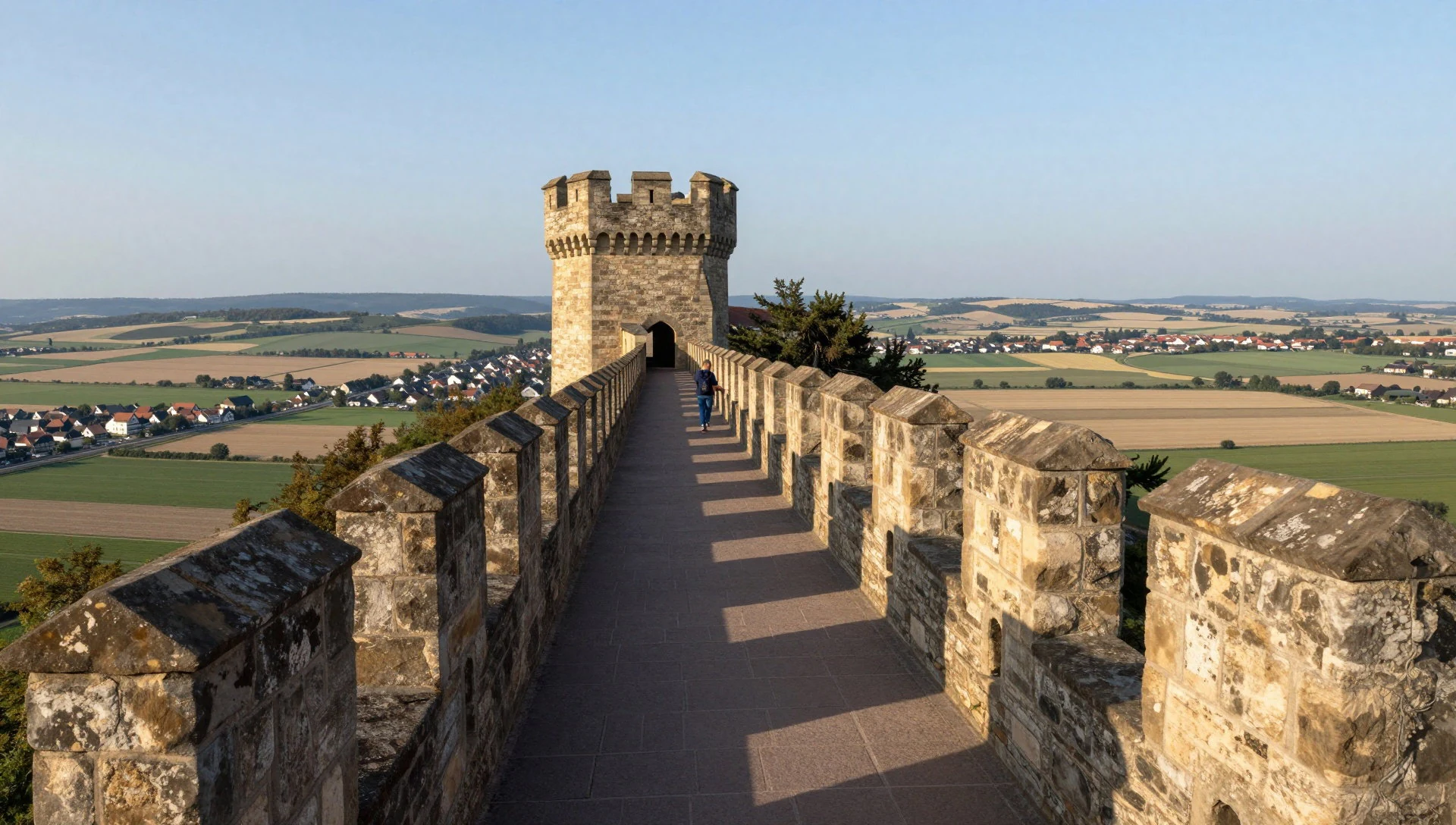
- The restored interior rooms — Inside the castle
Much of the rebuilding concerned how an imagined medieval residence should look, so the rooms tell you as much about early twentieth-century taste as about the Middle Ages. Compare the finished interiors with the plain stone of the outer walls. Which rooms are open varies, so check the official site before you go.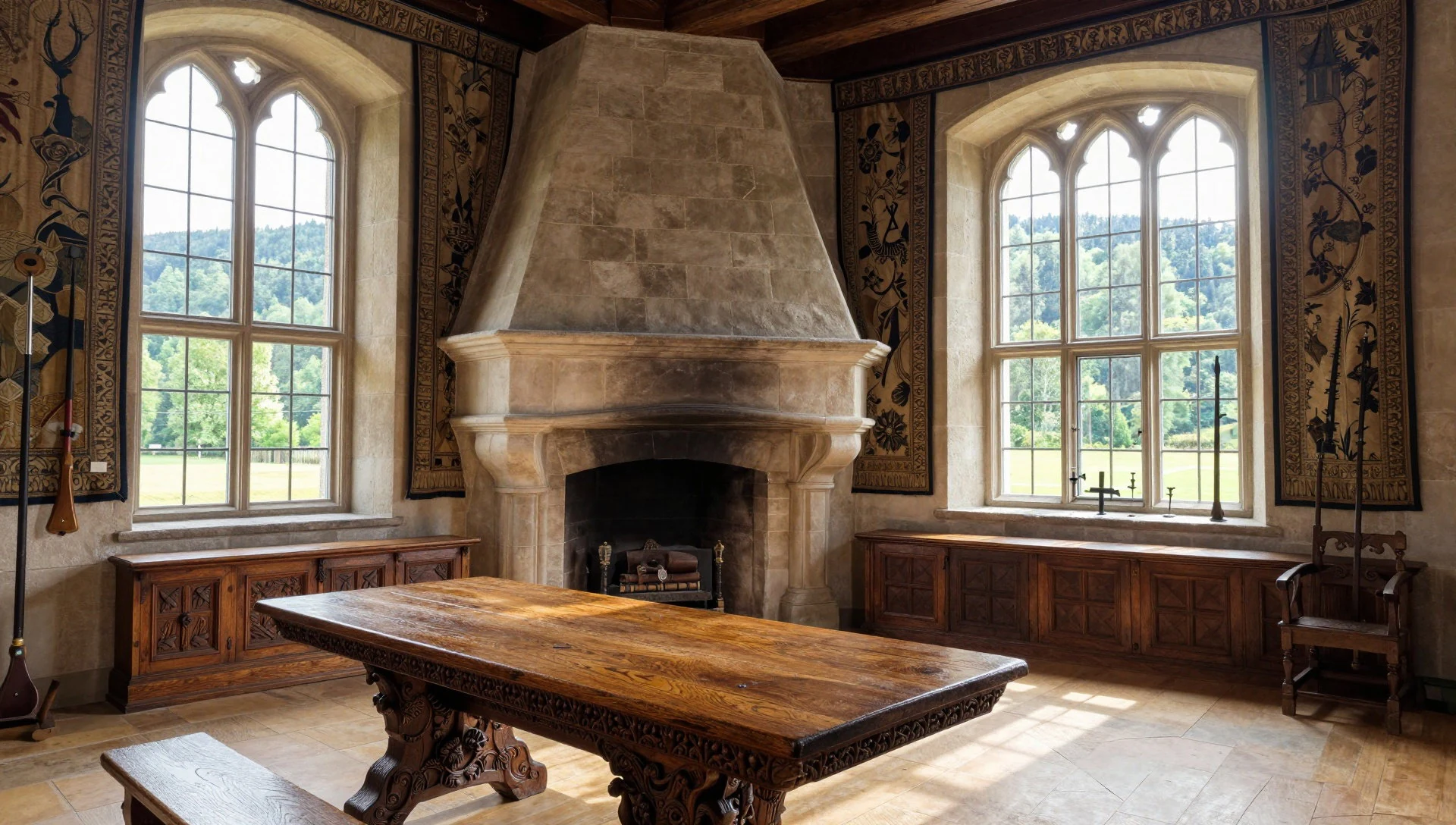
- Château de l'Oedenbourg (Petit-Koenigsbourg) — Just below the main castle
This smaller ruin sits below its famous neighbour and deserves attention in its own right as a historic site. Construction is believed to have begun in the thirteenth century. Seen after the main castle, it gives a useful contrast between a heavily reconstructed site and a ruin left as the centuries made it.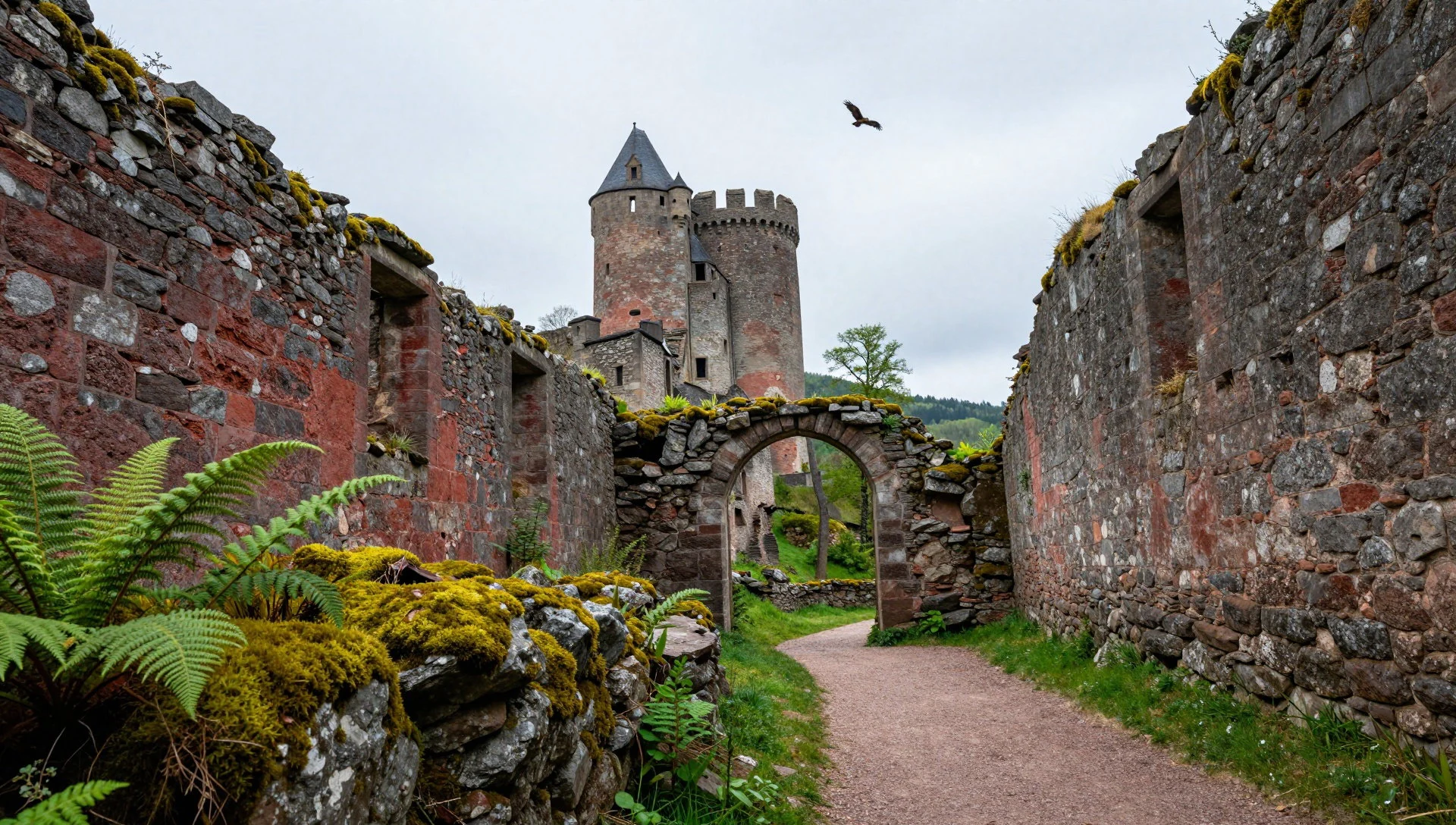
- The wooded ridge and the view of the castle — Vosges slopes around Orschwiller
Forest covered the ruin for centuries after the Swedish siege, and the wooded Vosges slopes still frame the castle today. An 1851 drawing shows it as a broken shell among trees, the sight that drew earlier poets and artists. Looking back at the roofline from the approach gives a sense of the transformation.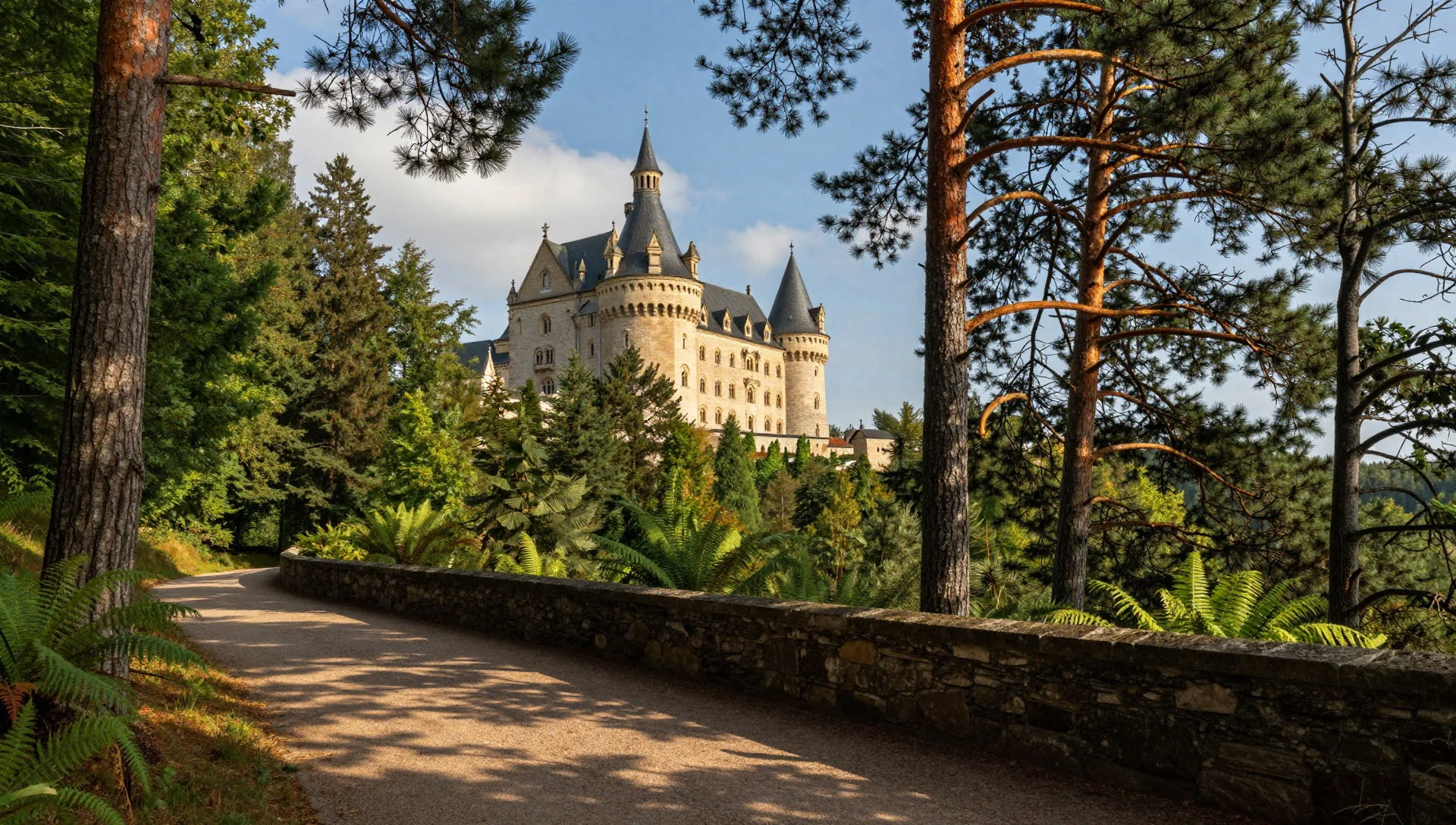
Culture
Haut-Koenigsbourg Castle sits where French and German histories overlap, and its culture is largely an argument about memory. The site passed through Hohenstaufen, Lorraine, Habsburg and local noble hands long before modern borders existed. After the war of 1870 to 1871, Alsace became part of the German Empire, and Wilhelm II took up the ruin as a showpiece of his romantic idea of an imperial medieval past. After the First World War France took the castle over, and for many years it was fashionable in French circles to dismiss it as a German fantasy in the manner of Neuschwanstein.
That judgement has softened. The architect Bodo Ebhardt studied the surviving walls, archives and comparable fortresses before rebuilding, so historians now treat the castle as an imperfect reconstruction and also as evidence of early twentieth-century attitudes to the past. Its German name, Hohkönigsburg, is a reminder that Alsace has lived in both languages.
The castle has a screen history too: parts of Jean Renoir's 1937 film La Grande Illusion were shot here. Today the Bas-Rhin département owns it and presents it as a heritage site, so the mood is closer to a museum on a hill than a living village.
Stay on the marked routes, keep hands off historic fittings and stonework, and ask staff before using a tripod or flash indoors.
What to wear
Haut-Koenigsbourg Castle sits in Alsace, where traditional dress survives mainly as festival costume. The classic women's outfit pairs a white linen blouse with a laced bodice, a full wool or cotton skirt, an apron and, most recognisably, a large black silk bow worn on the head. Men's versions use a dark waistcoat, a white shirt and a hat. These clothes appear at folk festivals, dance groups and village celebrations rather than on ordinary days. Alsace is also known for kelsch, a bold checked cloth of linen or cotton, now mostly seen in table linen and bedding.
Day to day, people in the villages around the castle dress much like the rest of northern France: practical layers, jeans, light jackets, and walking shoes in the countryside. Smart-casual is normal for a restaurant meal after a day out.
For a visit, dress for a hillside. The castle stands about 755 m up and is often cooler and breezier than the plain below, so a spare layer makes sense even in summer, and a waterproof in spring and autumn. There is no religious dress code, as the rooms are museum spaces. Wear shoes with good grip, because the approach, steps, ramps and stone floors are uneven and can be slippery when wet. In winter, add gloves and a hat, as stone interiors hold the cold.
What to eat
- Tarte flambée (flammekueche) — Village restaurants, winstubs and farm inns in the Vosges foothills
A very thin, crisp base spread with crème fraîche, onions and bacon pieces, baked hot and eaten with the fingers or a knife and fork. Look for it at village restaurants and winstubs, the wood-panelled Alsatian taverns, and at farm inns in the foothills.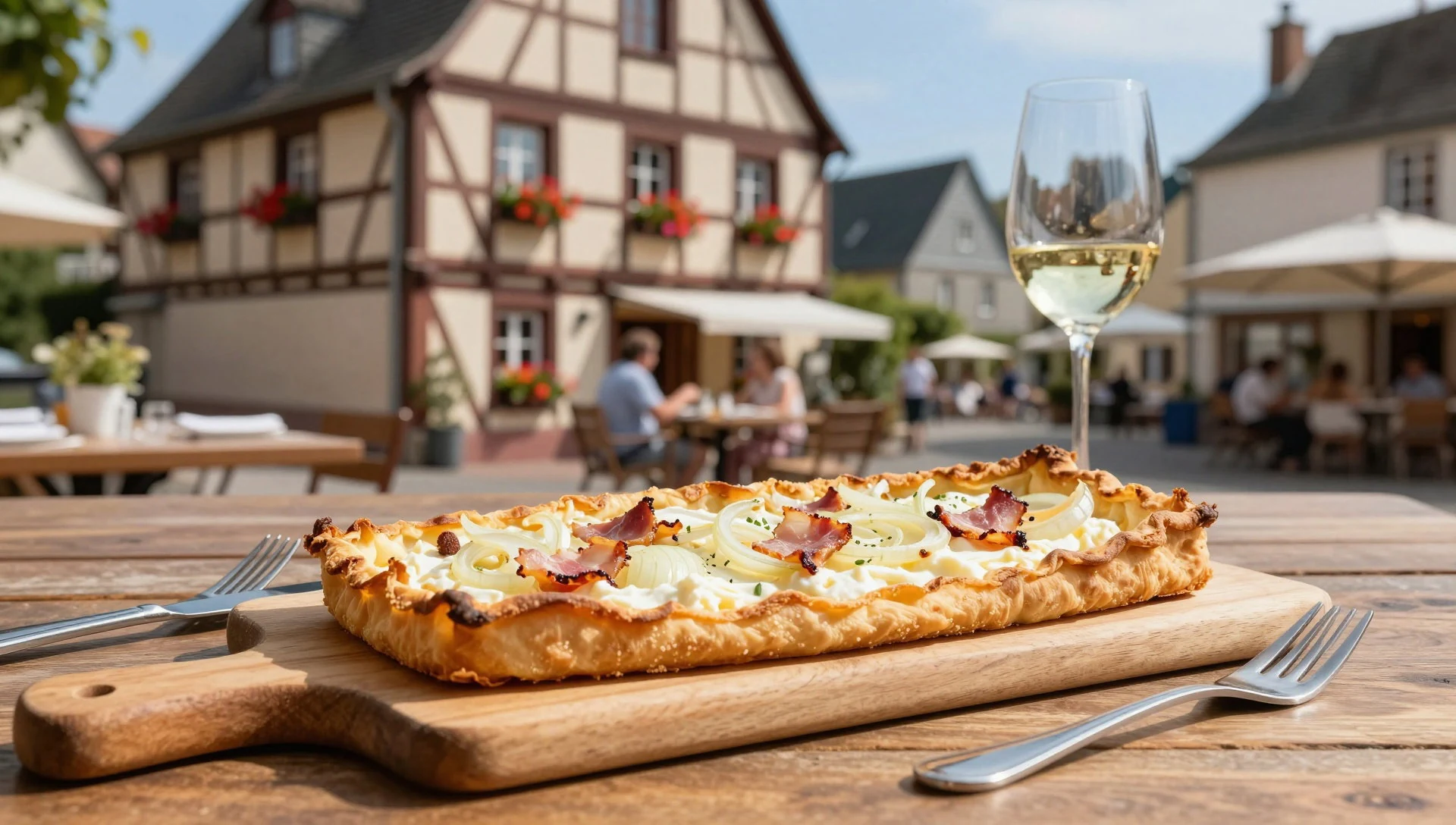
- Choucroute garnie — Traditional restaurants and winstubs in Sélestat and the wine villages
Fermented cabbage heated with sausages, smoked pork and potatoes, a hearty plate for cooler days. It is on the menu at most traditional restaurants and winstubs in the town and the surrounding wine villages.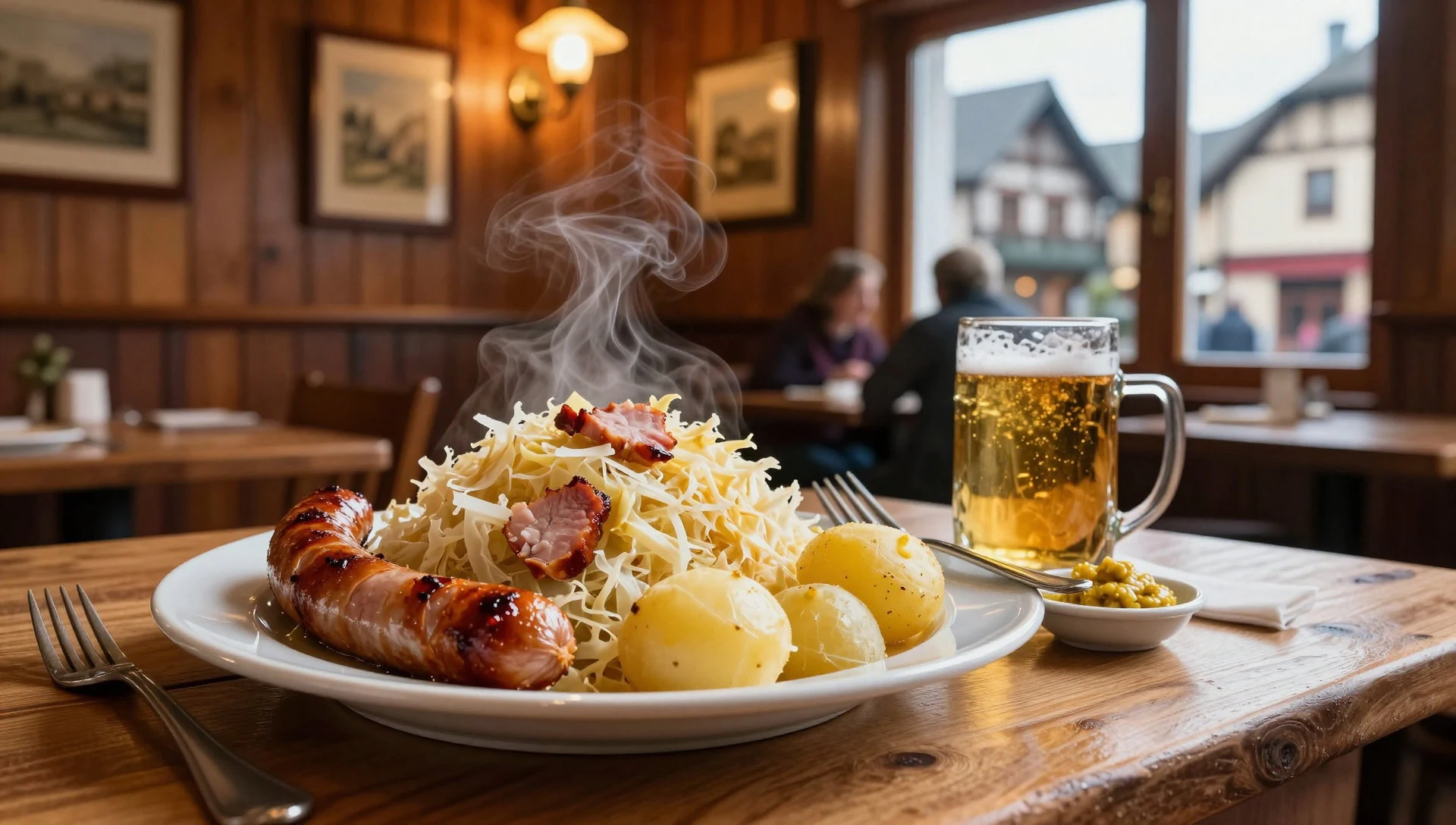
- Baeckeoffe — Family-run village restaurants
A slow-baked casserole of mixed meats and sliced potatoes cooked in white wine, traditionally in a ceramic dish. Order it at a family-run village restaurant and allow for a long, unhurried lunch. - Munster cheese — Local markets and cheese shops in Sélestat and nearby villages
A soft, pungent washed-rind cheese from the Vosges valleys, often served with boiled potatoes or cumin. Buy it at local markets and cheese shops, or find it on a restaurant cheese board. - Kougelhopf — Any Alsace bakery
A ring-shaped yeasted cake baked in a decorated ceramic mould, often with raisins and almonds. Any Alsace bakery sells it, and it suits breakfast or an afternoon coffee after a morning at the castle.
Plan it
Best time. April and October are the most comfortable months, with highs near 27°C, nights near freezing and green or turning woods; May, June and September are already hot, July–August is warmest and busiest, and winter can be cold and misty on a 755 m ridge, so check conditions first.
How long. 1
Getting there. Strasbourg is the nearest large rail hub, with an airport serving it, and Basel-Mulhouse is the other main option. Take a train to Sélestat, then a taxi or hire car for the last stretch up to Orschwiller and the castle. Check locally for any seasonal bus or shuttle.
Budget. mid
Tips
- Check the official site (https://www.haut-koenigsbourg.fr/) for opening days, tickets and any advance booking
- Arrive at opening time or on a weekday outside school holidays to avoid the crowds
- Wear shoes with grip and bring a spare layer, as the ridge is breezier than the plain
- Carry a card and some cash, and bring water, since the climb and walking can be tiring
- Combine the castle with a lunch in Sélestat or a nearby wine village
Etiquette
- Stay on marked routes and do not touch historic fittings or stonework
- Ask staff before using a tripod or flash indoors
- Keep voices low in the interior rooms where guided groups pass
Nearby
Sources
- Wikidata Q1552366 (CC0)
- Wikipedia: Château du Haut-Koenigsbourg (rev 1341320582) (CC BY-SA 4.0)
- Wikivoyage: Alsace (CC BY-SA 4.0)
- Photo: Aerial view of Haut-Koenigsbourg (Wrtalya) (CC BY-SA 2.5)
- Photo: Haut-Koenigsbourg Castle, Orschwiller (Gzen92) (CC BY-SA 4.0)
- Photo: Haut-Koenigsburg in 1851 (Le Seq) (Public domain)
- Photo: Main entrance of the castle (Tangopaso) (Public domain)
- Photo: Château du Haut-Koenigsbourg 1979 (1) (Jean-Pol Grandmont) (CC BY 4.0)
- Photo: Château du Haut-Koenigsbourg 1979 (2) (Jean-Pol Grandmont) (CC BY 4.0)
- Photo: Château du Haut-Koenigsbourg 1979 (3) (Jean-Pol Grandmont) (CC BY 4.0)
- Photo: Château du Haut-Koenigsbourg Jul 1979 (Jean-Pol Grandmont) (CC BY 4.0)


