Harbin
Harbin, People's Republic of China
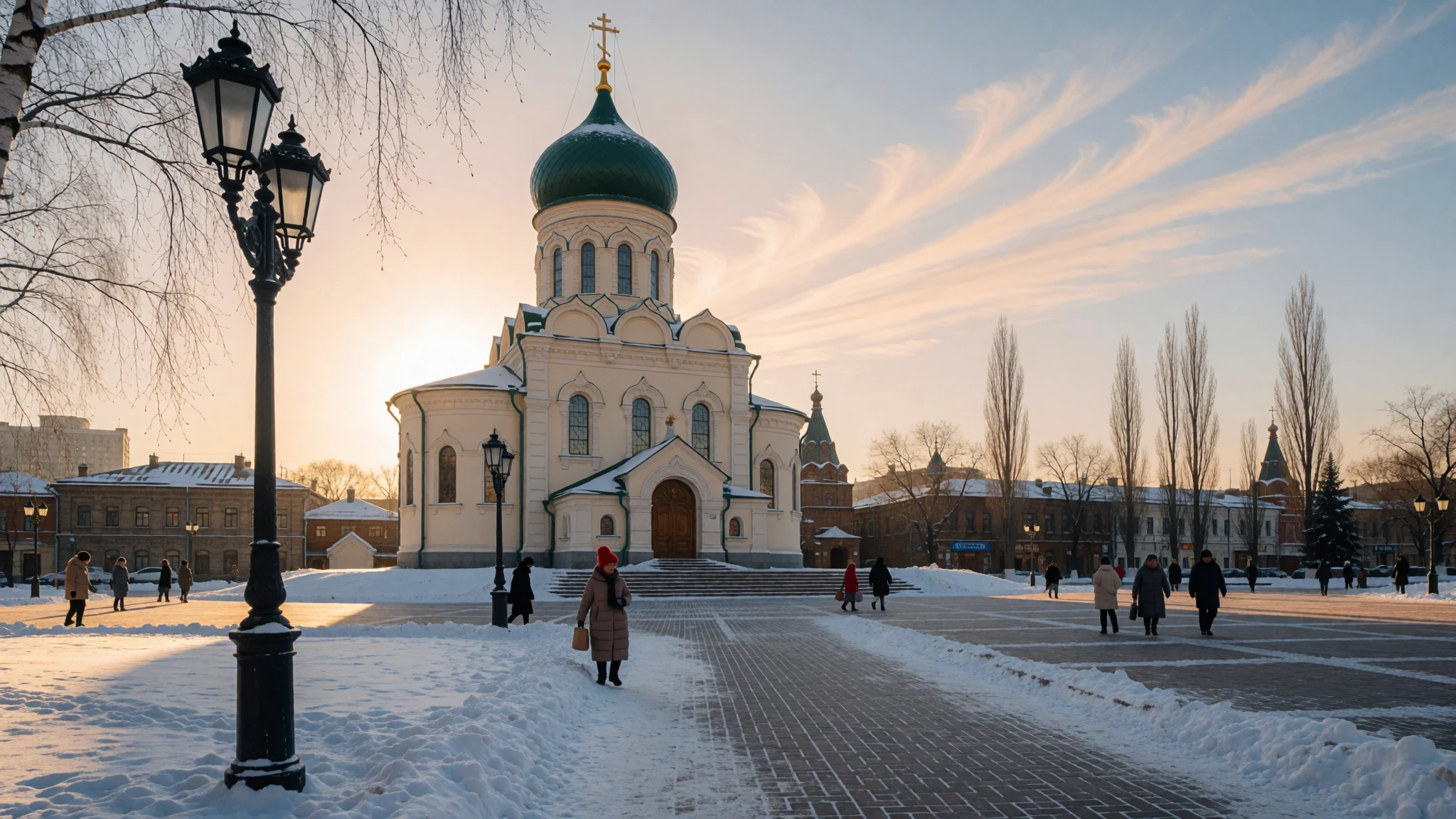
Harbin is a Chinese city built by a Russian railway, where domed churches, smoked sausage and winter ice sculpture sit alongside northern Chinese cooking.
The place
Harbin is the capital of Heilongjiang province in China's far northeast, a metropolitan area of about 10 million people on a flat plain roughly 150 metres above sea level, beside the Songhua River. It does not feel like most Chinese cities. The old centre has Russian-built streets, domed churches and ornate façades, and the food mixes northern Chinese cooking with sausage, bread and pastries from the Russian tradition. The reason is the city's age: it was founded in 1898, when the Russian-built Chinese Eastern Railway arrived and a small fishing settlement became a rail town filled largely with migrants from the Russian Empire. The name has several explanations. The city government links it to a Jurchen word for swan, while other sources point to a Manchu phrase about drying fishing nets. Today Harbin works as a regional hub for government, industry, universities and transport across the northeast. Its newer districts are towers, ring roads and shopping malls, while the historic quarter is a compact area near the river that can be covered on foot. Winter defines the reputation. Ice lanterns, snow sculpture and frozen-river activities draw crowds, and the cold is serious enough that sensible travellers plan around it. Summer is gentler, with long riverside evenings, parks and outdoor beer drinking, and far fewer tourists. Culturally the place rests on three layers, Han Chinese, Manchu and Russian, and all three show in the street names, the buildings and the menus. Harbin suits a short stop on a northeast China route, and it rewards anyone curious about how a railway can create a city.
Its story
Harbin's recorded past reaches well before the railway. People lived in the area from the late Stone Age, and in the early twelfth century the Jurchen Wanyan clan, from the Ashi River valley, rose to rule. Their leader Aguda became the first emperor of the Jin dynasty and set up his Upper Capital in what is now Acheng district of Harbin. His successor laid out a larger planned city modelled on the Northern Song capital at Kaifeng, though on a smaller scale. The glory was short. In 1153 a later emperor moved the court to Yanjing, today's Beijing, and a few years afterwards had the old palaces demolished. A following ruler revived the site as a secondary capital, and archaeologists have since excavated its ruins a short way from Acheng's centre. Between those eras the place was largely a rural river district of fishing villages. The modern city began in 1898, when Russia built the Chinese Eastern Railway across Manchuria and chose this crossing of the Songhua as a junction. Engineers, traders, clerks and refugees from the Russian Empire arrived in great numbers, and for a time they made up most of the population. Over the following decades the city passed through the Chinese Empire, the Republic of China and Japanese-backed Manchukuo before joining the People's Republic of China. What visitors see in the old quarter today is largely a layer left behind by that railway boom.
What to see
- Zhongyang Dajie — Daoli district, old quarter
A pedestrian street paved with cobblestones, running through the old quarter towards the river. It keeps the look of the early twentieth century, when merchants from many countries traded here. Bakeries, ice lolly kiosks and cafés fill the ground floors, and it is busiest on winter evenings and summer weekends.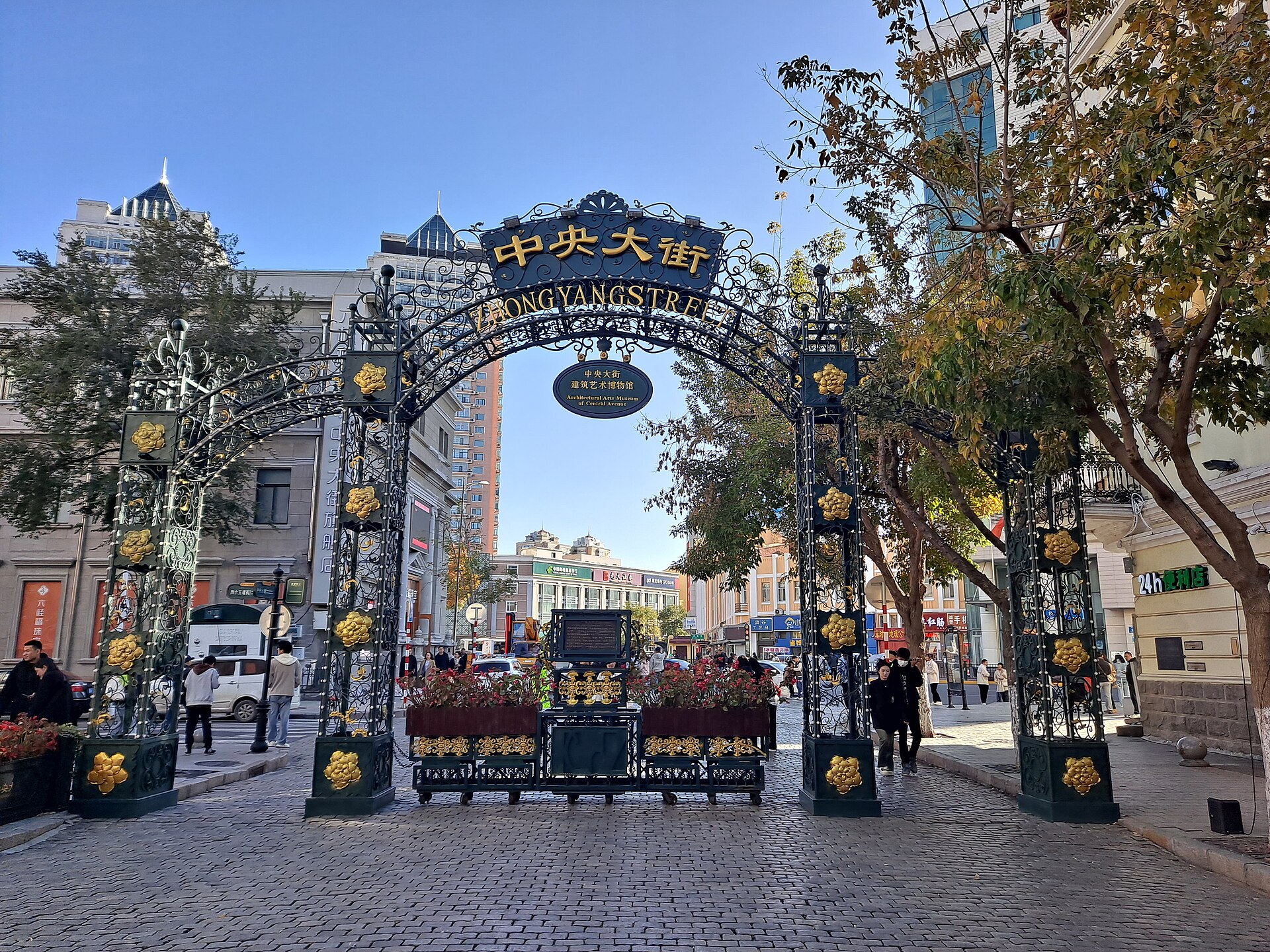
- St Sophia Cathedral — Daoli district, near Zhongyang Dajie
One of the few Orthodox churches still standing in Harbin, its dome and brickwork recall the Russian community that built the railway city. Check the official site for current opening and renovation status, as scaffolding has been a feature of recent visits. The square outside is pleasant for a slow look.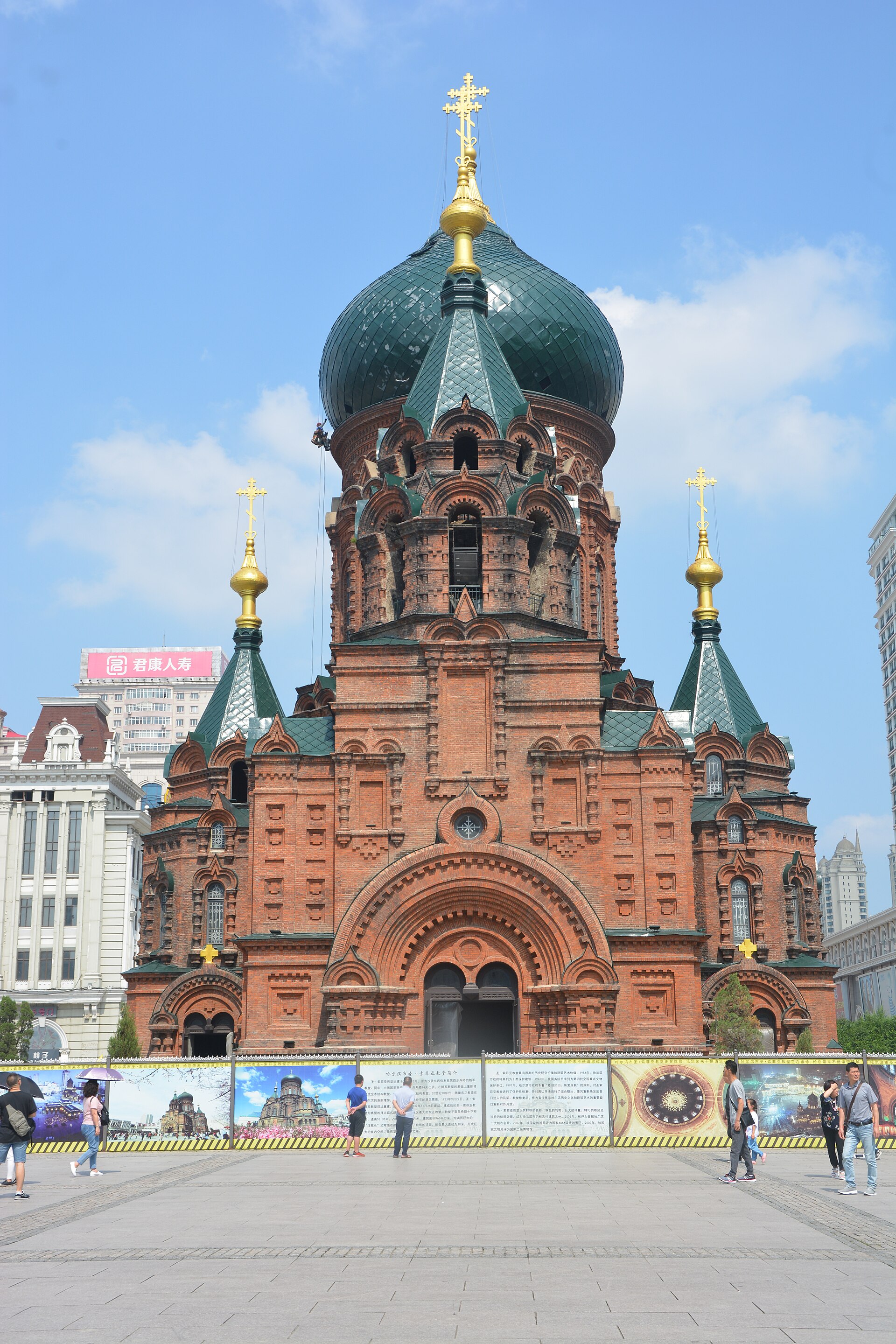
- The Russian-era old quarter — Daoli district, west of Zhongyang Dajie
West of Zhongyang Dajie, the side streets keep many buildings from around 1900, with carved cornices, arched windows and painted façades. Some are shops or offices, some are faded and some restored. It rewards wandering without a plan, ideally in daylight and with a warm drink close by. - Songhua River Railway Bridge — Songhua River waterfront
Built in 1900 as the first crossing of the Songhua at Harbin, this iron bridge carried trains for more than a century. Since a new bridge opened nearby in 2016 it has been open to walkers, with views of the river and skyline. Wrap up well in winter, as the wind off the water bites. - Harbin Ice and Snow World — Songbei district, north bank of the Songhua River
A seasonal park of huge buildings, towers and slides carved from ice and snow, lit in colour after dark. It operates only in the cold months, so check the official site for dates and tickets, and expect large crowds at weekends and holidays. Late afternoon gives dusk light and slightly thinner queues.
Culture
Harbin's local culture is built on Han Chinese traditions, mixed with Manchu influence and a strong Russian layer left by the railway years. You can hear that blend in the city's music, taste it in the food and see it in the architecture, where onion domes stand a few streets from Chinese-style shopfronts. Music is a real point of pride here: the city was named a UNESCO City of Music in 2010, and concerts, street performers and amateur singers in parks are part of ordinary life, especially in summer. Winter brings its own customs. Locals treat the cold as a season to enjoy rather than endure, with skating, ice fishing, sledding and eating outdoors all part of the routine, and ice and snow festivals are a source of civic identity. Northeastern people have a reputation across China for being direct, humorous and generous, and a visitor who tries a few phrases of Mandarin or shows curiosity about the Russian past is usually met warmly. The city's religious life is quieter than its history suggests, and most historic churches now function mainly as heritage sites rather than as places of daily worship. Dining is social, with shared dishes, beer and loud conversation, and tables often stay busy late into the evening. When photographing ice sculptors, street performers or strangers, ask first, and keep your voice low inside churches and other religious buildings.
What to wear
Harbin's traditional dress draws on Manchu and northern Chinese habits shaped by a harsh climate. The Manchu long robe, the ancestor of the qipao, was usually made of silk or cotton and worn belted for riding. Heavy quilted cotton coats, fur-lined hats and padded boots were the practical northern answer to winter, and furs have long been traded in the region. The Russian community added its own touches, including fur hats with ear flaps and heavy wool coats. These are mostly costume or festival wear now. On an ordinary day, people dress for the weather first: long down jackets, thermal layers, scarves, thick gloves and warm hats in winter, often in bright colours that stand out against the snow. In summer, dress is casual and light, with shorts, T-shirts and sandals common, though evenings can turn cool. Visitors in winter should treat clothing as equipment. Bring thermal underlayers, a windproof insulated outer coat, a hat that covers the ears, a scarf or face covering, liner gloves under warm mittens, and waterproof insulated boots with good grip for packed ice. Cameras and phones lose battery fast in the cold, so keep them inside a pocket. In summer, pack light clothes, a rain layer and a sun hat. No special dress code applies in the city, but covered shoulders and knees are polite in any religious building.
What to eat
- Guo bao rou — Northeastern Chinese restaurants across the city centre
Crisp sweet-and-sour pork cut into bite-sized pieces, coated in potato-starch batter and deep-fried, then tossed in a glossy sauce. It began in the early twentieth century and remains the dish locals recommend first to newcomers. - Harbin smoked sausage — Delicatessens and food shops around Zhongyang Dajie
A Russian-influenced sausage with a smoky, garlicky flavour, sold sliced or by the length and eaten cold as a snack or with beer. Shops in the old quarter stock it, and it makes an easy gift to carry home. - Russian-style bread — Bakeries along Zhongyang Dajie and in the old quarter
Dense, slightly sour loaves and sweet filled pastries reflect the city's Russian roots. Bakeries sell them fresh, and a roll with a hot drink makes a simple breakfast before walking the old streets in the cold. - Grilled skewers and kǎomántou — Street stalls and night food streets
Meat on sticks is sold across the city. Ask for grilled steamed buns (烤馒头, kǎomántou) alongside, and finish with egg-and-tomato soup. It is cheap, smoky, hands-on eating that suits late evenings and cold weather. - Ice lolly — Kiosks along Zhongyang Dajie
The ice lolly is an icon of Harbin, and eating one outdoors in winter is a local joke that visitors happily join. Vendors sell them from kiosks, and the freezing air keeps them from melting. - Candied haws — Street vendors in the old quarter and near festival sites
Hawthorn fruit threaded on sticks and coated in a sweet sauce, a tart-and-sticky snack common in northern China. Winter crowds love it as a walking treat, and the sharp fruit balances the sugar well.
Plan it
Best time. January–February for ice and snow festivals, when the cold is severe and the city is busiest; June–September for mild to warm weather, long evenings and thinner crowds.
How long. 2–3
Getting there. Harbin's airport has shuttle bus lines into the city, including one to Harbin Railway Station. The city has several train stations, so confirm which one your train uses before travelling. For the last leg, taxis and the metro cover the centre.
Budget. mid
Tips
- Book winter festival trips and rooms well ahead, as January and February are busy and prices rise
- Visit Zhongyang Dajie early in the morning or on a weekday to avoid the heaviest crowds
- Carry some cash and a working mobile payment app, as small stalls often prefer them
- Keep phone and camera batteries warm inside your coat during winter
- Check the official city site, https://www.harbin.gov.cn/, for festival dates and opening times
Etiquette
- Ask before photographing performers, sculptors or strangers
- Keep your voice low in churches and heritage buildings
- Queue patiently at attractions and ticket counters in busy winter periods
Nearby
Sources
- Wikidata Q42956 (CC0)
- Wikipedia: Harbin (rev 1384515905) (CC BY-SA 4.0)
- Wikivoyage: Harbin (rev 5424410) (CC BY-SA 4.0)
- 26941-Harbin, xiquinhosilva (CC BY 2.5)
- 26935-Harbin, xiquinhosilva (CC BY 2.5)
- Central Street, Harbin, EditQ (CC BY-SA 4.0)
- Saint Sophia Cathedral, Harbin, Jonashtand (CC BY-SA 4.0)
- Taiyang Island 26403-Harbin, xiquinhosilva (CC BY 2.5)
- John Pannell, Siberia 2008 (CC BY 2.5)
- Photo by Xundaogong, xue siyang (CC BY 3.0)
- Xiangjiang Park, EditQ (CC BY-SA 4.0)


