Hakodate
Hakodate, Japan
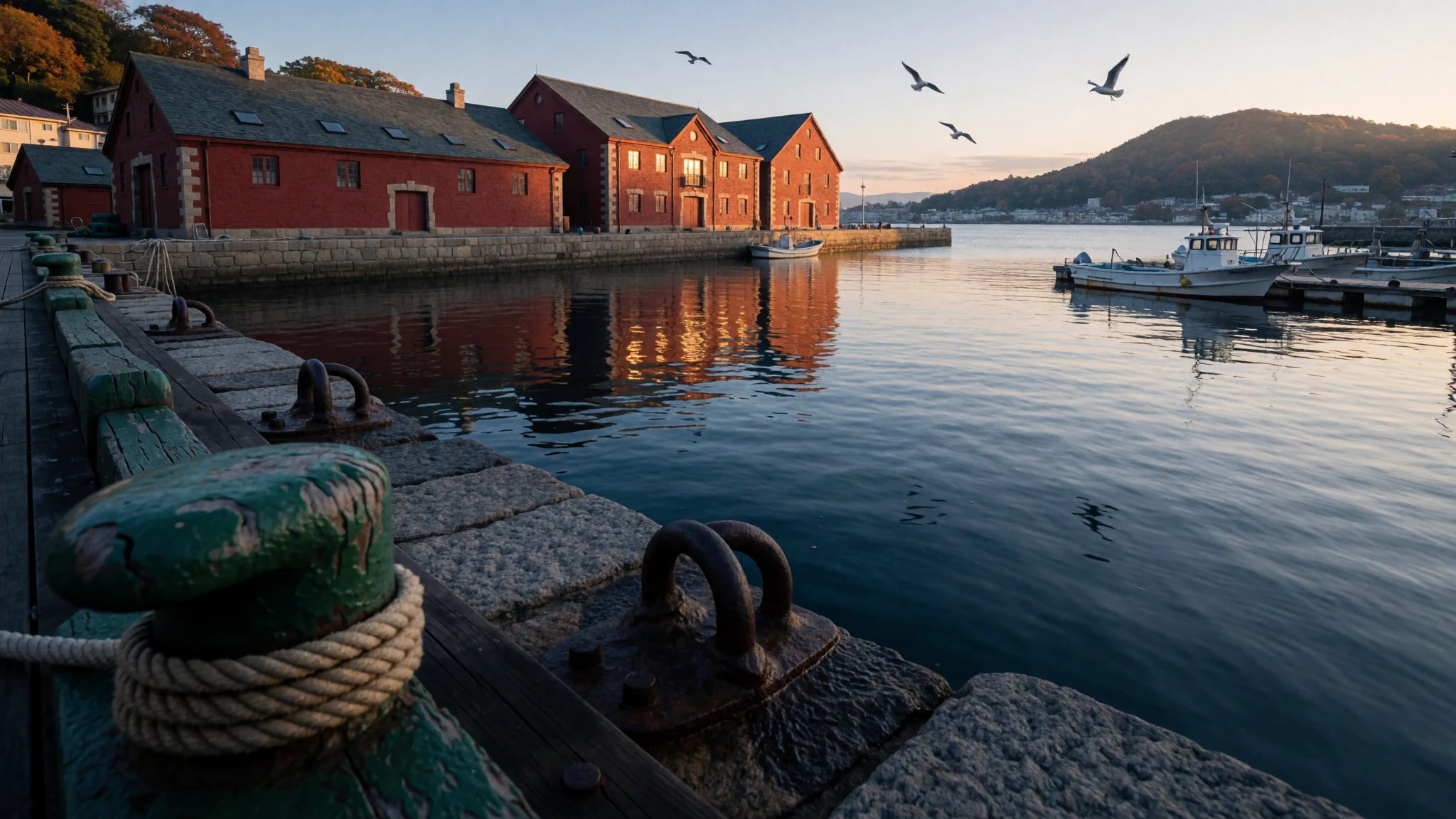
Hakodate combines a harbour of old brick warehouses, a star-shaped fort and a hilltop view that rewards a clear evening.
The place
Hakodate sits at the tip of the Kameda Peninsula on Hokkaido, the northernmost of Japan's main islands, and serves as the capital of Oshima Subprefecture. The city spreads along a narrow sandbar that formed between an old volcanic hill, Mount Hakodate, and the mainland, so the streets run between two bays with the hill rising at one end. Its population is a little over a quarter of a million, which keeps it small enough to cross on foot or by tram in a day, yet it feels more like a port than a provincial town.
The character comes from the harbour. Warehouses in brick and timber line the waterfront, many converted into restaurants and shops, and the older merchant quarter climbs gently up from the water. Winter is long and snowy, so the city has a quieter, more hunkered-down feel from December to March. Summer is the hottest and wettest season, with highs near 30 °C from July to September, though the sea air keeps evenings cooler. Most visitors come for the night view from the hill, the squid and seafood, and the mix of Japanese and Western architecture that has survived the port's long history. Time for wandering without a fixed plan pays off here, since many of the best meals turn up on a side street near the market.
Its story
Hakodate was among the first Japanese ports opened to foreign trade, in 1854, under the treaty signed at Kanagawa. That turn made it the most important port in northern Japan for a generation, and a foreign settlement grew up with merchants, consuls and new buildings alongside older Japanese streets. Before that, the Ainu, the indigenous people of Hokkaido, had lived around these bays for a long time. The name may come from an Ainu phrase meaning 'shallow fort', although a Japanese reading that points to a building or box is also offered.
The modern town traces back to a manor house built in 1454 by the Kono family in the fishing village of Usukeshi, a name drawn from the Ainu word for bay. Conflict in the area in the years that followed drove the family out for a time, and the district remained a contested frontier where armed merchants controlled trade until the Meiji period brought it firmly into the Japanese state.
The Boshin War left its mark. In 1869 the Hakodate area saw the final battles of the Ezo Republic, the short-lived government set up by former shogunate forces. Its headquarters was the star-shaped fort of Goryokaku, completed in 1864 as Japan's first Western-style fortress. The Great Fire of 1934 is another turning point in the city's history, and the rebuilding that followed explains why today's centre mixes surviving warehouses with later blocks.
What to see
- Mount Hakodate — Mount Hakodate
The hill that gives the city its sea-facing outlook, reached by a hiking trail, a cable car or the road. In clear weather the summit offers a wide view over both bays and the sandbar. Locals rank its night view among the best in the world, and after dark the lights of the harbour and the town below are worth the trip. Go up in the early evening so you can see the sunset before the lights come on.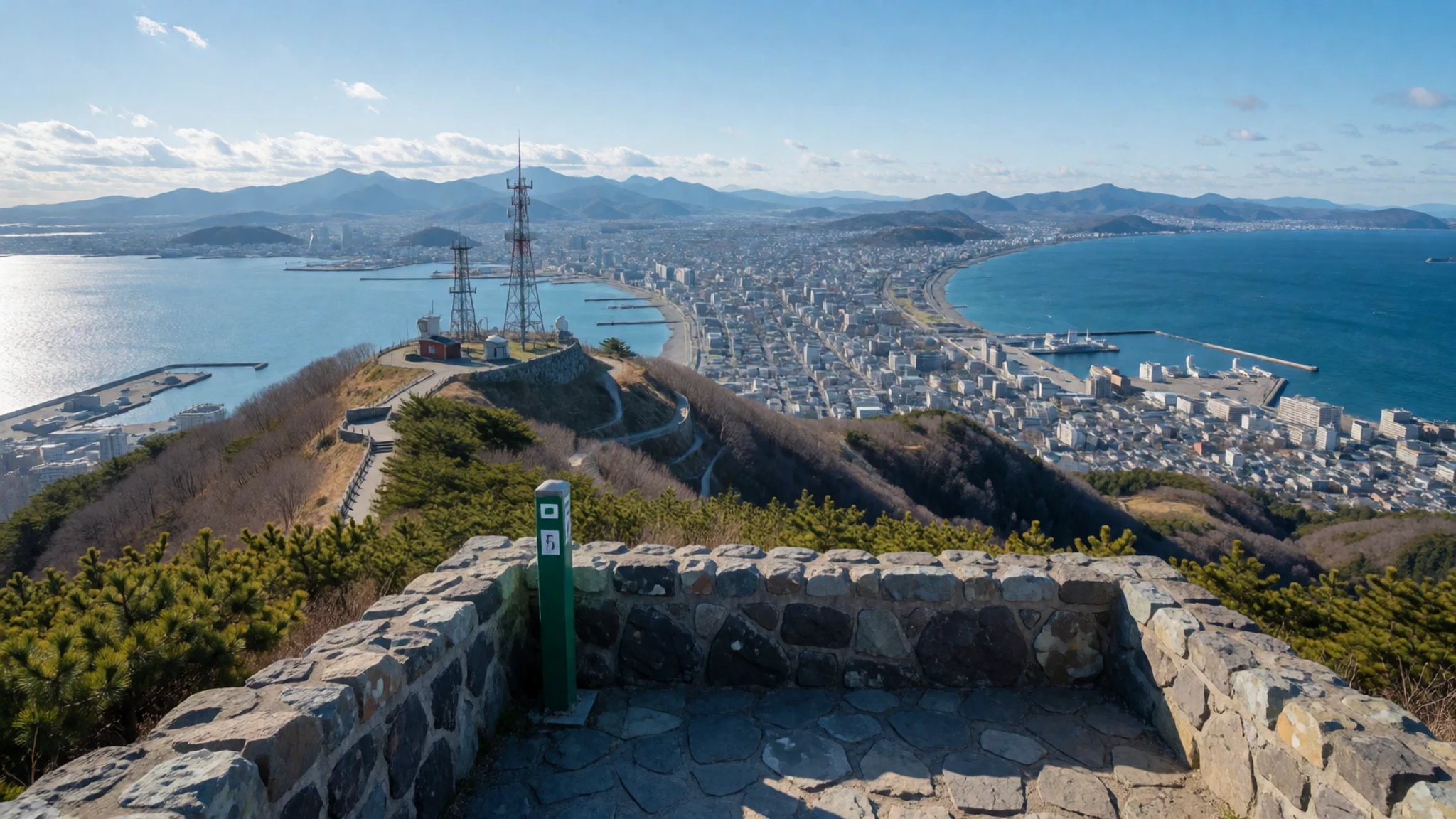
- Fort Goryokaku — Goryokaku, south of the city centre
A star-shaped fort completed in 1864 as Japan's first Western-style fortress. Its geometric earthworks are easiest to appreciate from above or from the tower, and the grounds include a park that is popular in spring. The fort served as the headquarters of the Ezo Republic at the end of the civil war, so the site carries real historical weight. Walking the outer path gives a good sense of the design.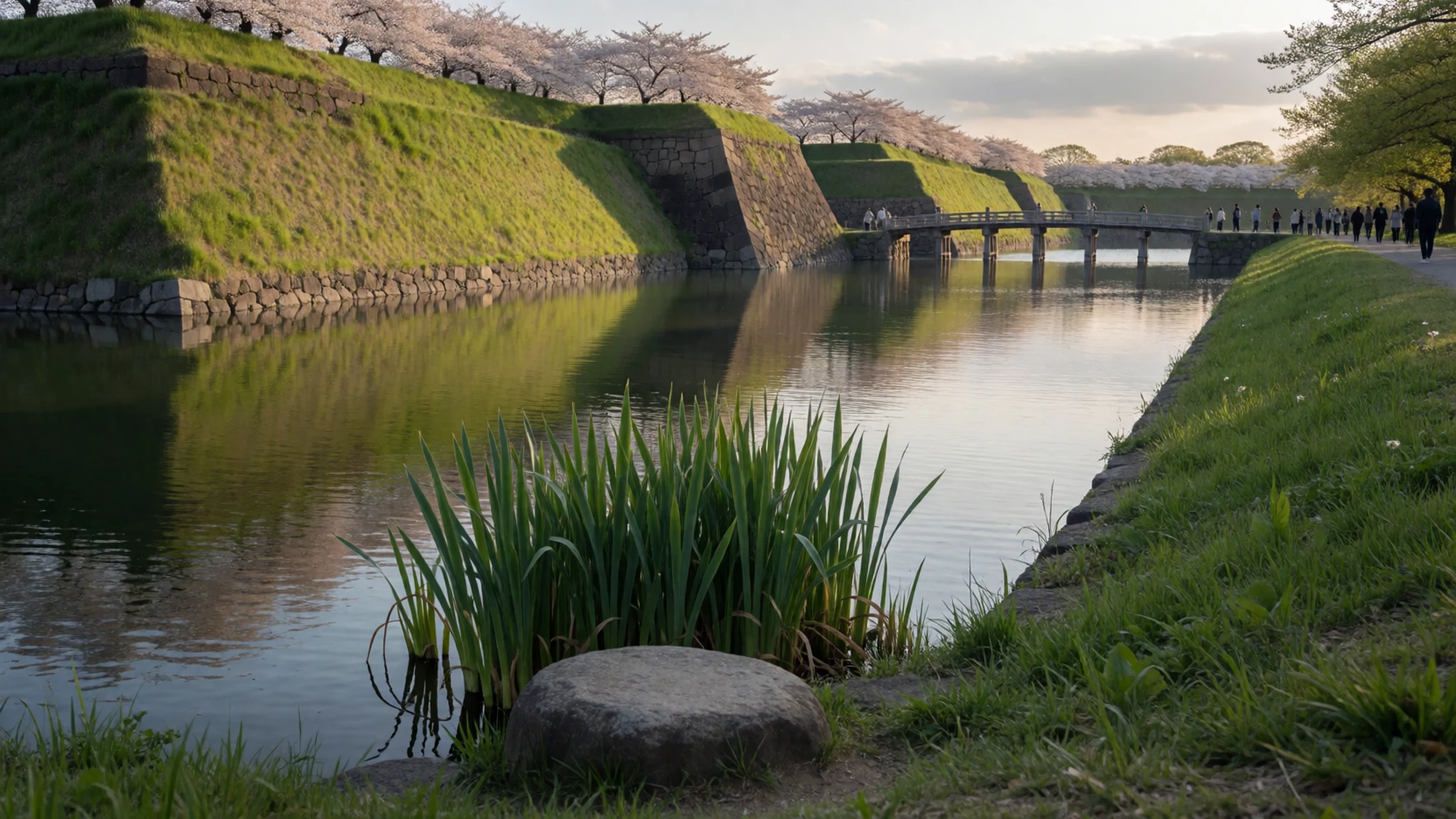
- Goryokaku Tower — Goryokaku, beside the fort
A viewing tower beside the fort with a platform 90 metres up, from which the star shape of the fortifications is clear. Inside, dioramas explain the Enomoto and Ezo Republic period and the fort's part in the city's history. It is a useful way to understand the layout before walking the grounds. Check the official site for hours and fees before going, since these can change.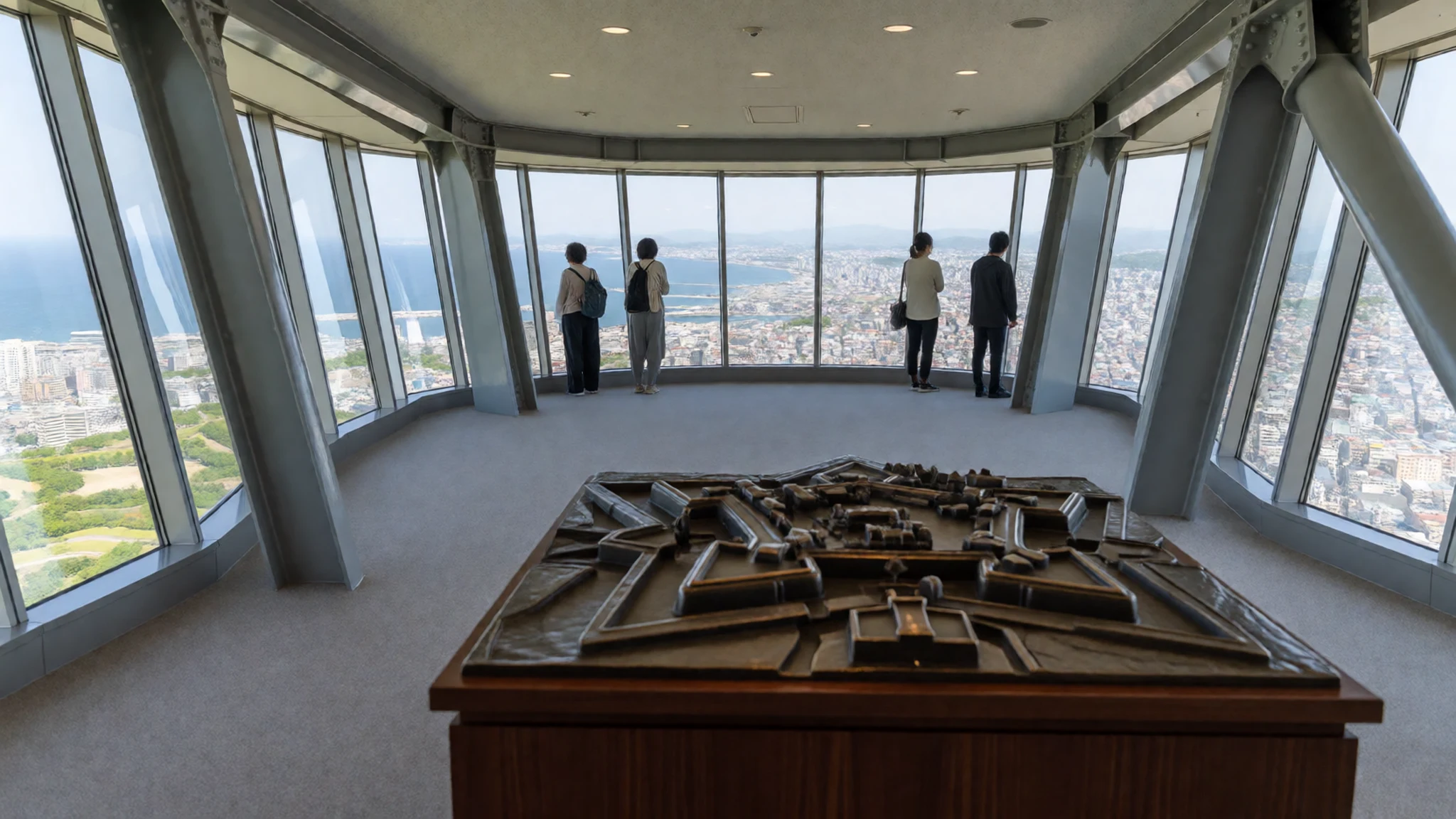
- Motomachi — Motomachi, on the hill's lower slopes
The historic district on the slopes below Mount Hakodate, where lanes of older houses, churches and merchant residences climb towards the hill. Many of its buildings reflect the port's trading years, and the mix of timber and stone façades gives the area a distinct character. Walking here is best in the morning, when the streets are quiet and the light is good for photographs. Small cafés along the lanes make an easy pause.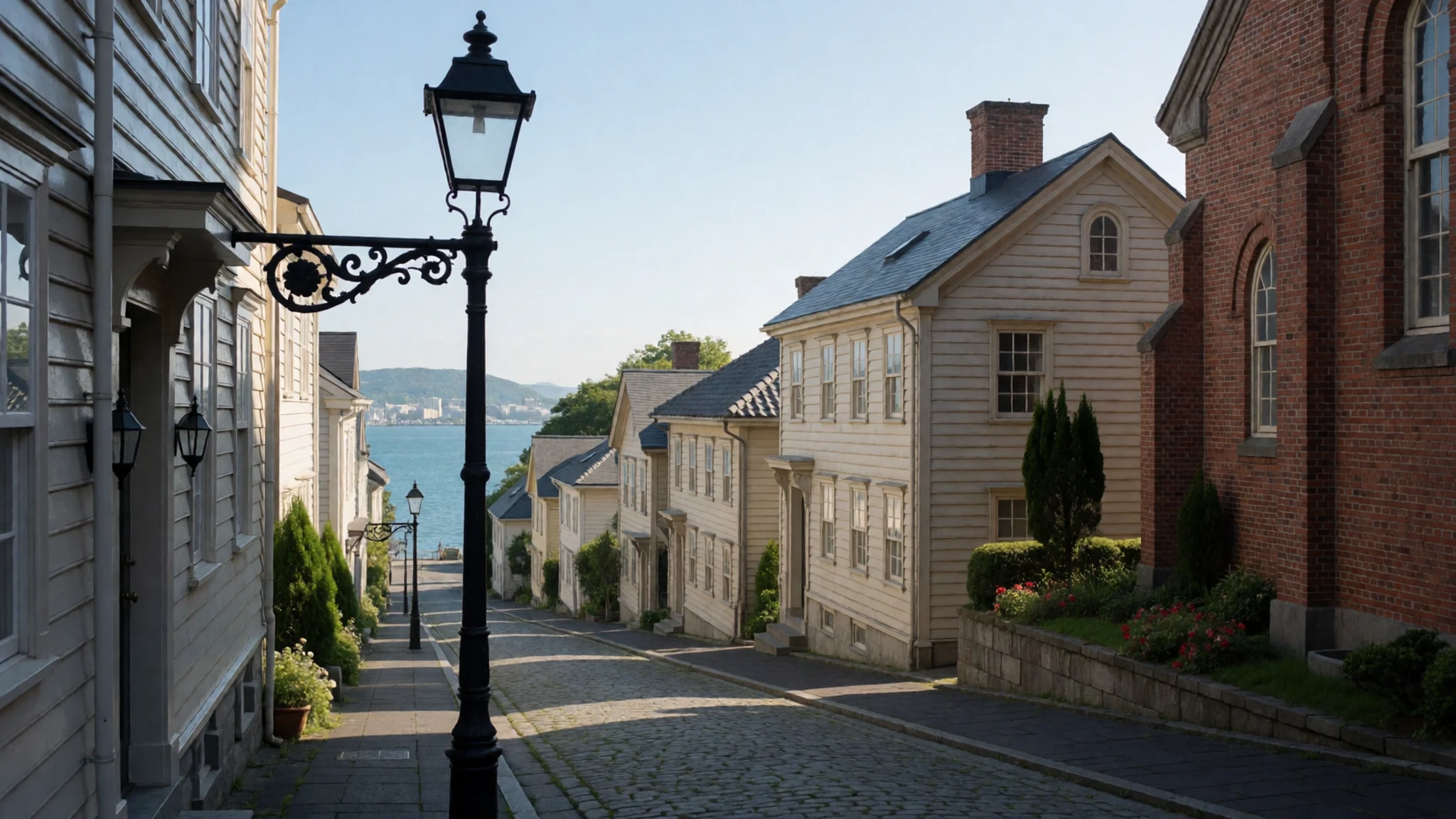
- Kanemori Red Brick Warehouse — Akarenga district, by the harbour
A red brick warehouse built in 1869 on the waterfront, now converted into shops and restaurants around a courtyard. It sits at the heart of the Akarenga district, named for its red brick. One of the buildings houses a German-style beer hall, and the setting by the water is pleasant in the evening. The warehouses show how the port's nineteenth-century architecture is still used today.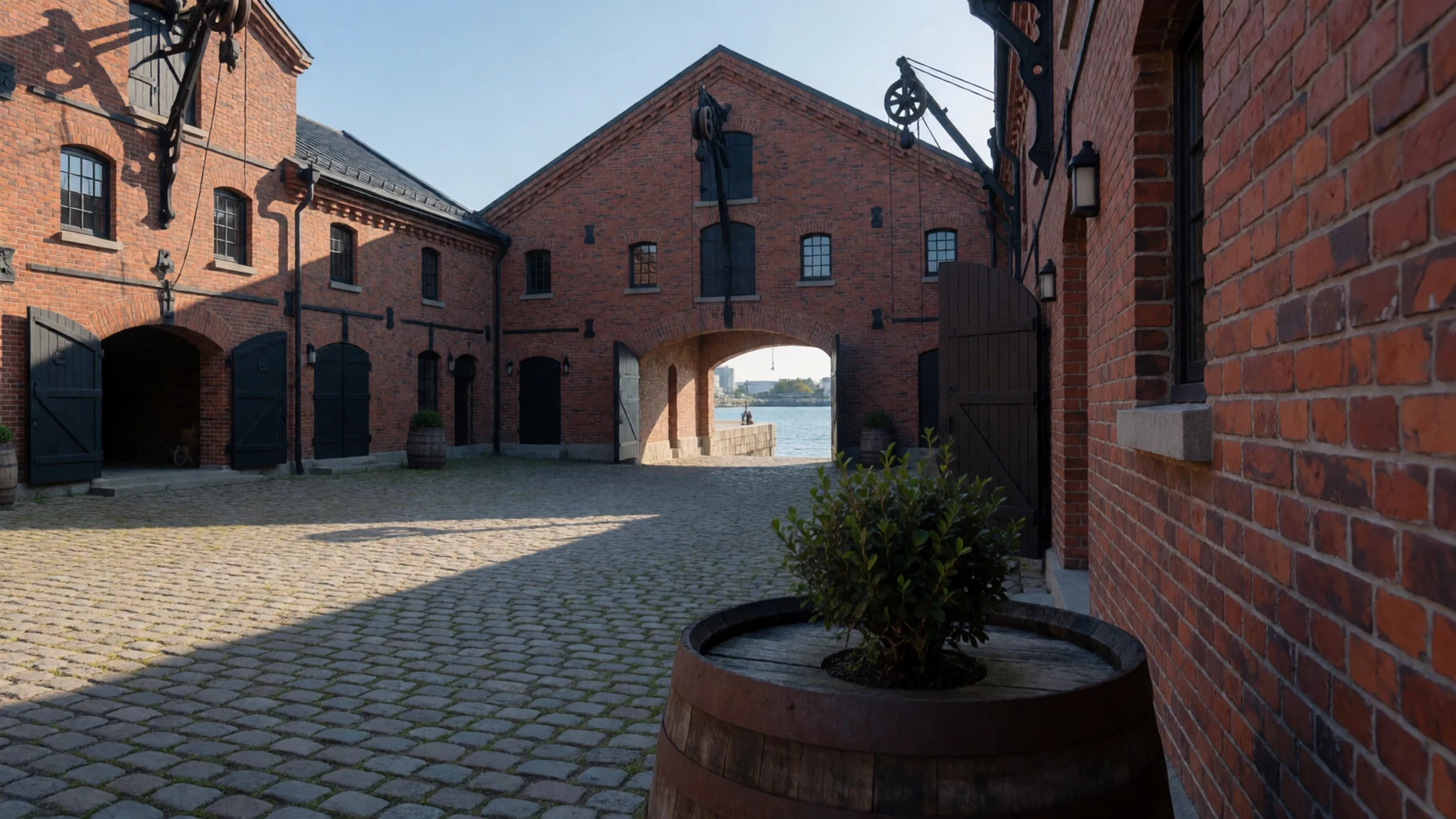
Culture
Hakodate is a port city where Buddhist temples, a long foreign-trade history and modern city life sit close together. Koryu-ji, the oldest Buddhist temple in the region, stands in the Funami-cho district and belongs to the Soto school. It was built in 1633, badly damaged in the Boshin War and moved to its present site in 1879, and its main building dates from 1900. Temple life here is quiet and local, with most worshippers coming from nearby neighbourhoods.
Food is central to daily life. Seafood is eaten at every level, from fresh sushi to home-cooked fish, and the city's fish is the squid, which appears in many forms. Salt ramen is a point of local pride, and people often have a favourite shop they will defend with some seriousness. Each August the Hakodate Port Festival fills the harbour with crowds, floats and music.
Public life is orderly. Queues are normal at popular restaurants and the morning market, and people wait their turn without fuss. Conversation on trains and buses is kept low, and phones are set to silent. Photographs of people at festivals or in the market should be taken only with permission, and small shops often expect a short exchange before a picture is taken.
At Koryu-ji and other temples, keep your voice low, follow any posted rules on photography and leave the main hall free for worshippers.
What to wear
Hakodate sits in Hokkaido, where traditional dress is closely linked to the Ainu, the island's indigenous people. Ainu garments were traditionally made from cloth woven from plant fibres, including elm bark, and from cotton obtained through trade. Pieces were decorated with appliqué and embroidery in geometric patterns that signalled family and regional identity. These garments are seen today mainly at cultural events, in museum displays and in the work of Ainu communities rather than on everyday streets.
On the streets, dress is practical and layered. In winter that means down jackets, knitwear, hats, gloves and waterproof boots, while in summer light shirts and cardigans cover the sea breeze. Young people in the central streets dress much as they do in Tokyo, and the kimono is reserved for weddings, coming-of-age days and some festivals.
For a visit, pack for the season. In winter, bring a warm waterproof coat and boots with good grip, since snow and ice can cover the pavements. Summer evenings can be cool by the sea, so a light layer is useful. Temples such as Koryu-ji are visited in ordinary, modest clothes, and a shawl or cardigan helps if you plan to step inside. Hill walks on Mount Hakodate need walking shoes with a firm sole.
What to eat
- Fresh seafood and squid — The morning market near the harbour
Hakodate is known for seafood, and squid is the city's fish. The morning market near the harbour is the place to eat it, either as sashimi or in sushi, and many small counters among the stalls serve different preparations. Ask what came in that day, and expect the counters to be busy in the early hours.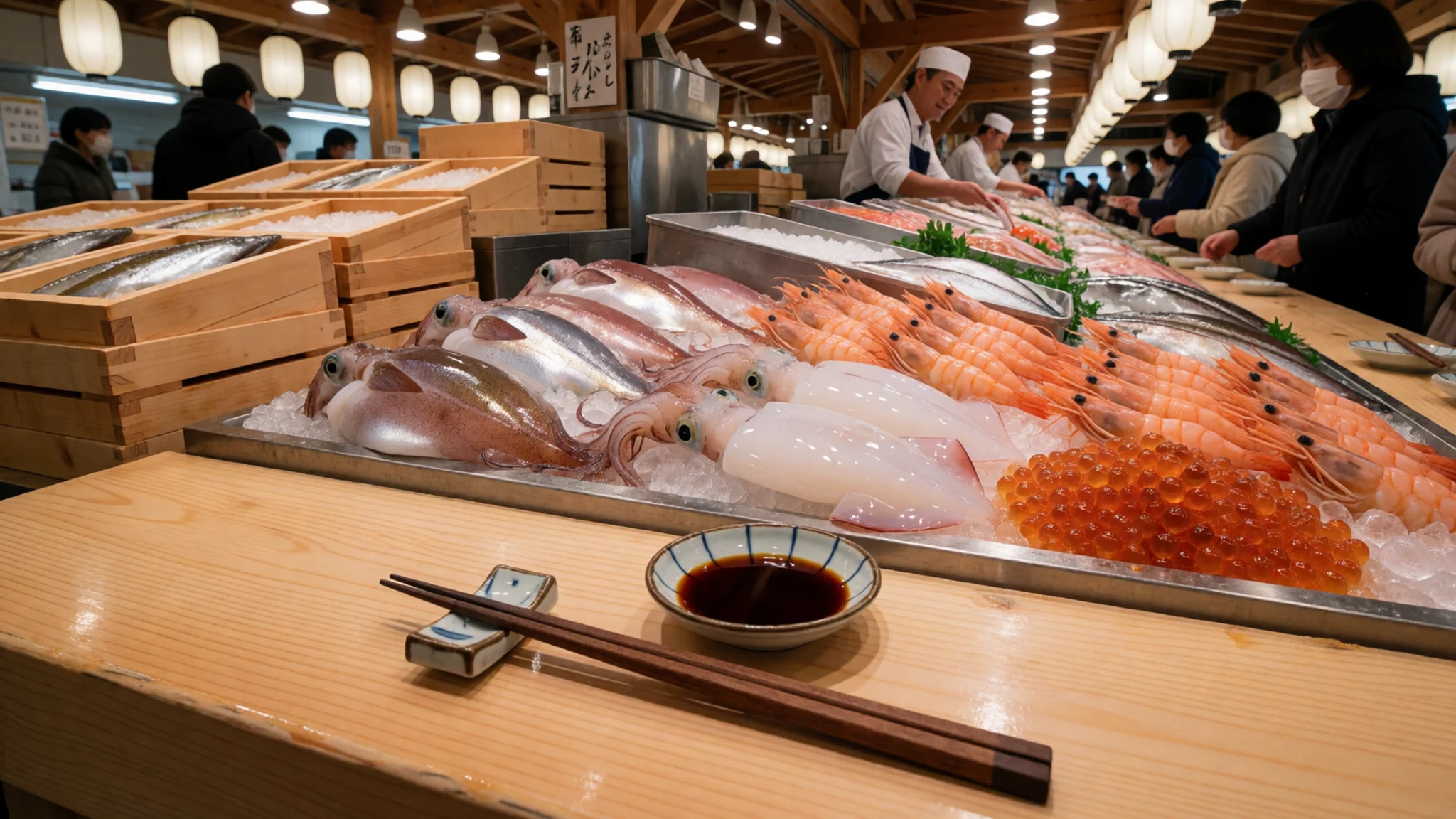
- Hakodate salt ramen — Ramen shops across the central streets
The city's signature noodle dish has a pale, clear broth seasoned with plenty of salt and built from chicken, pork bone, vegetables, fish or seaweed in varying combinations. Bowls are usually simple, and locals often compare shops with real care. Look for it in ramen shops across the central streets.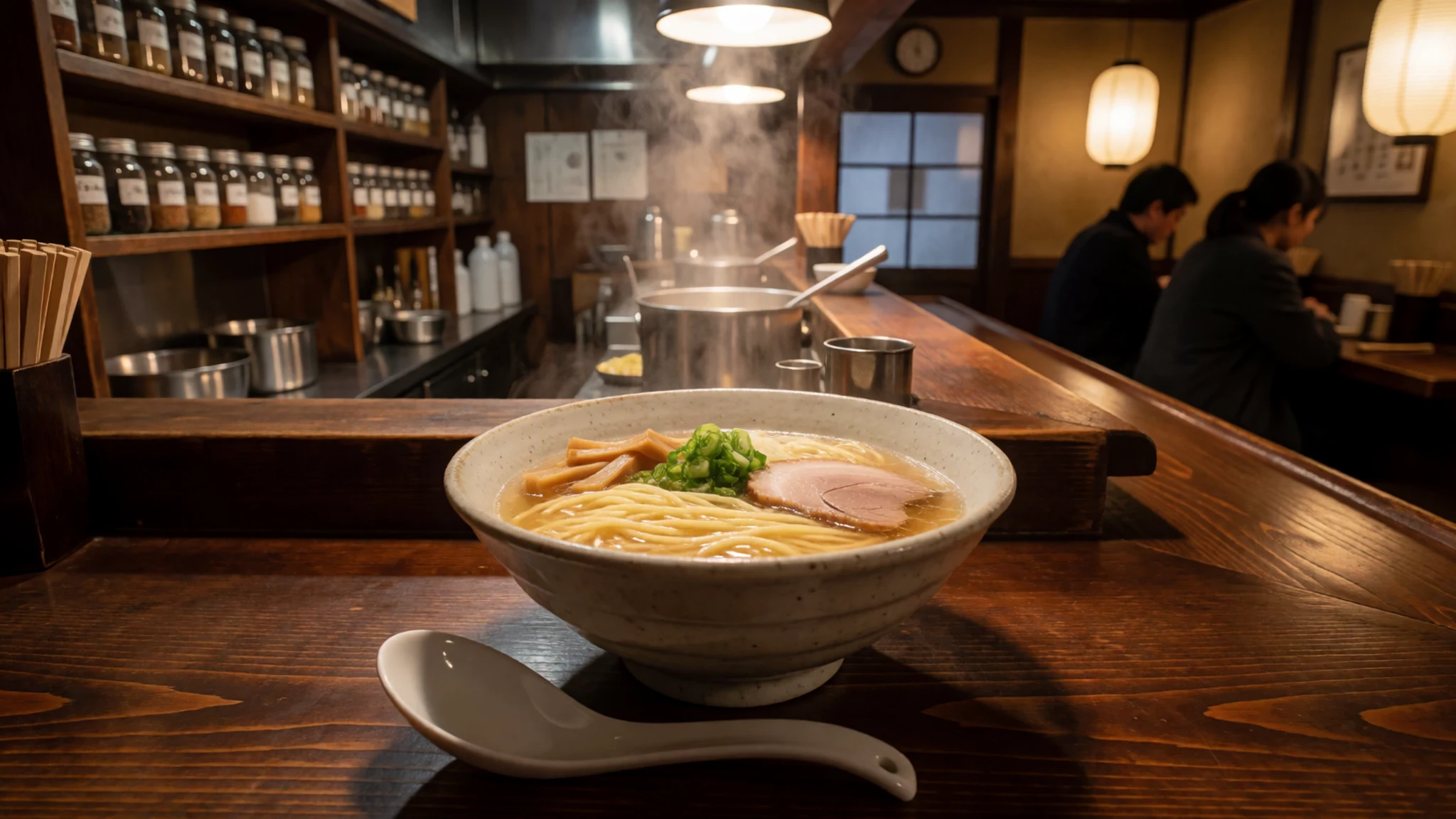
- Soup curry — Soup curry shops around the city centre
A spiced curry served as a thin soup, often with vegetables and chicken over rice. Hokkaido has many soup curry specialists, and a small chain has outlets in Hakodate as well as across the island. It makes a good lunch stop in the centre, with a wide range of spice levels on offer. - Hakodate burgers — Outlets in the central streets
A hamburger chain that is exclusive to Hakodate and popular with local people for its reasonable prices. Its outlets are easy to find in the central streets, and a burger makes a quick, cheap meal between sights. It is an everyday local habit, which makes a useful contrast to the seafood. - Sweet rolls and bakery cakes — Bakeries in the central streets and by the waterfront
Bakeries in the central streets and near the waterfront sell sweet rolls and cakes, and they are a good choice for a midday snack. A box of cakes or rolls also makes a practical gift to take home. Buy them in the morning, when the selection is widest.
Plan it
Best time. Late spring and October suit a visit best: May and June are warm without being hot, and October is cooler and drier than the peak summer months. Winter is snowy and cold, which suits visitors who enjoy snow scenes but makes hill walks harder.
How long. 2–3
Getting there. Fly into Hakodate Airport, which is a short ride from the centre, or travel by rail from elsewhere in Hokkaido to JR Hakodate Station; the last leg into town is by tram or bus.
Budget. mid
Tips
- Take the cable car, bus or trail up Mount Hakodate for the night view, and check the timing for the return on the day.
- Visit the morning market early, when the seafood is freshest and the stalls are busiest.
- Carry cash for smaller ramen shops and market stalls, and check whether a restaurant accepts cards before ordering.
- Book accommodation well ahead for winter weekends and for the Port Festival in August.
- Dress in layers and pack waterproof shoes, especially in snow season.
Etiquette
- Queue quietly at popular counters and follow the order you were given.
- Ask permission before photographing people at festivals or in the market.
- Keep voices low on trains and buses.
Nearby
Sources
- Wikidata Q26418 (CC0)
- Wikipedia, Hakodate (rev 1377372149) (CC BY-SA 4.0)
- Wikivoyage, Hakodate (rev 5403564) (CC BY-SA 4.0)
- View from Mt. Hakodate, 27 April 2016, ::::=UT=:::: (CC BY 3.0)
- View of Hakodate from Snow Peak, Wilhelm Heine (Public domain)
- Port of Hakodate Map (奥州箱館之図), unknown author (Public domain)
- The naval battle of Hakodate, ILN Staff (Public domain)
- A view of the Hakodate Foreign Settlement, c. 1880, AbeBooks (CC BY-SA 4.0)
- Port of Hakodate, 1897, Ogawa Kazumasa (Public domain)
- Hakodate Goryokaku Panorama 1, Keihin nike (CC BY 3.0)
- Kanemori Red Brick Warehouse, 663highland (CC BY 3.0)


