Hadrian's Villa
Hadrian's Villa, Italy
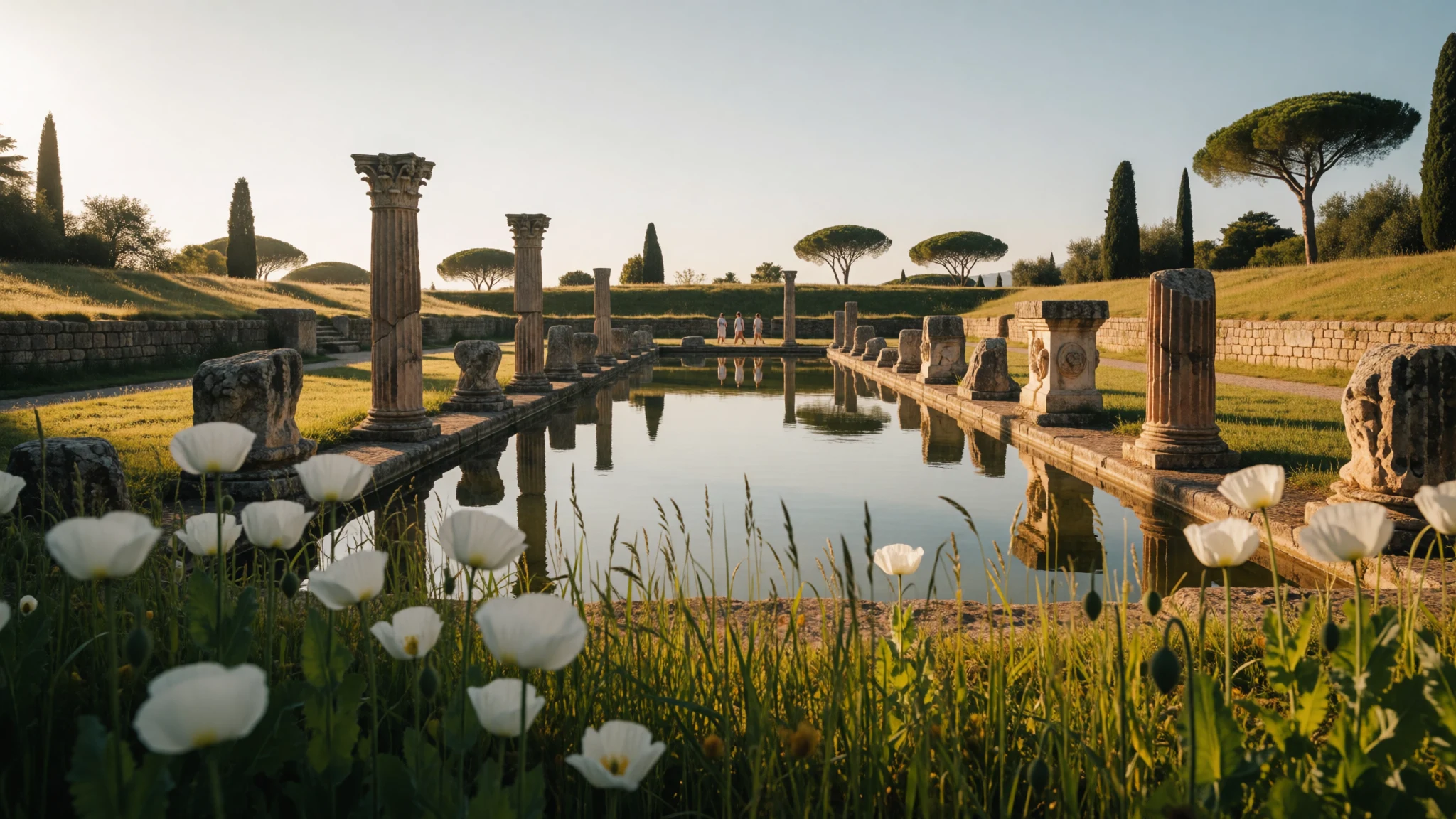
Hadrian's Villa is a vast Roman palace landscape where ruined architecture, terraces and water features still feel arranged for living.
The place
Hadrian's Villa (Italian: Villa Adriana; Latin: Villa Hadriana) sits just outside Tivoli, close to Rome in Italy, and it’s best thought of as an archaeological complex rather than a single “thing” to see. The remains belong to an imperial palace built in the early 2nd century and now form part of a UNESCO World Heritage Site.
What makes the visit click is the layout. The grounds are organised on artificial terraces at different heights, like a series of outdoor rooms stacked across the slope. Walk long enough and it becomes clear that paths, sightlines, gardens and buildings were planned together. Water basins and fountains—often described as nymphaea—punctuate the green spaces, adding a cooling, theatrical rhythm to the ruins.
The architecture is also where the place earns its reputation. Many structures use curved forms and bold geometry, with extensive use of concrete behind the scenes. You’ll notice how different wings feel like separate “worlds”: an imperial residence mood one moment, then something that reads more like showpiece engineering or ceremonial space.
Operationally, it’s an extensive site with more than one route through it, so comfort matters. In busy seasons there can be crowding around the most recognisable features; in heat, the open terraces can feel exposed. A sensible day here is paced—slow enough to look, fast enough to escape the midday sun.
Its story
Hadrian's Villa grew out of earlier villas on the same ground and the ambitions of an emperor who travelled widely across the empire. Construction began around the start of his reign, with the earliest building activity getting underway soon after his time in Rome.
The villa wasn’t only a residence; it also had an administrative life. Documentation places Hadrian at the site in the mid-120s, and later on he used it more regularly as an official base. Expansion continued during years when he was away, too, so completed buildings could be admired on his return. Even with that long timeline, the reality is that he couldn’t have lived there constantly; the palace also had to host activity and visitors, implying ongoing staff and support on site.
After Hadrian, the villa stayed important through later emperors, with additions and decorative elements reflecting changing tastes. Restoration work is associated with Diocletian in the later Roman period, helping preserve parts of the complex’s character even as the centuries moved on.
Today, the most striking “story” you can feel is unfinishedness and layered time: much of the site remains unexcavated, and what has been uncovered shows how Roman design could be both practical and theatrical. Walking its terraces, it’s easier to understand why the villa became a reference point for later architects and why its ruins still look deliberately composed.
What to see
- Villa Adriana (main complex) — Villa Hadriana complex, Tivoli outskirts
Hadrian's Villa stretches across terraces in a broad palace landscape where ruins, gardens and water features are laid out as a connected whole. Because so much remains excavated only partially, the best moments are often found by wandering between viewpoints.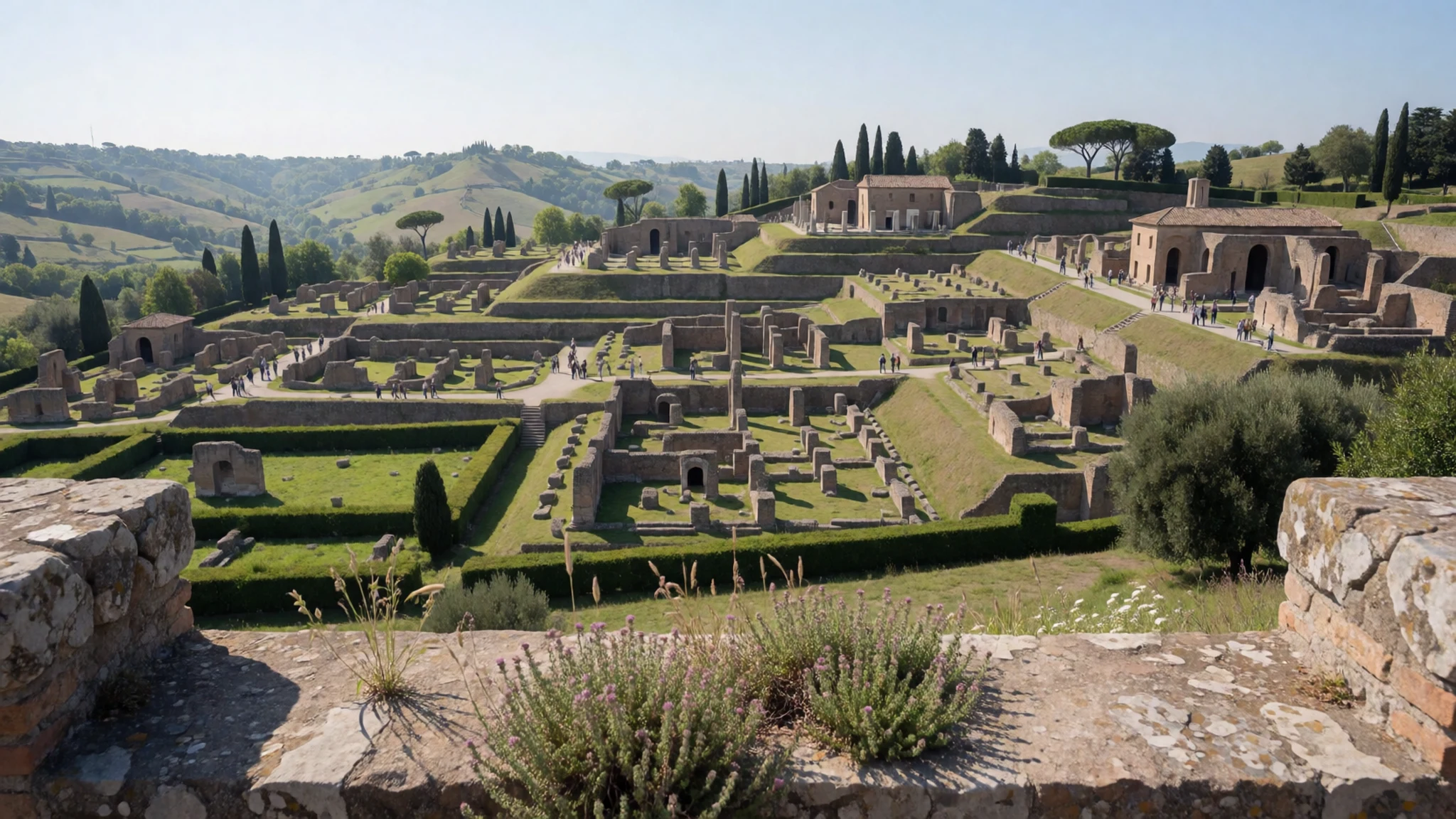
- Imperator's Palace (Palazzo imperiale) — Imperial zone within the Villa Hadriana grounds
Imperator's Palace within Hadrian's Villa reads like the political heart of the complex. Expect recognisable monumental planning and imperial-scale spaces, plus the feeling that the building’s form was meant to impress as much through movement and framing as through any single room.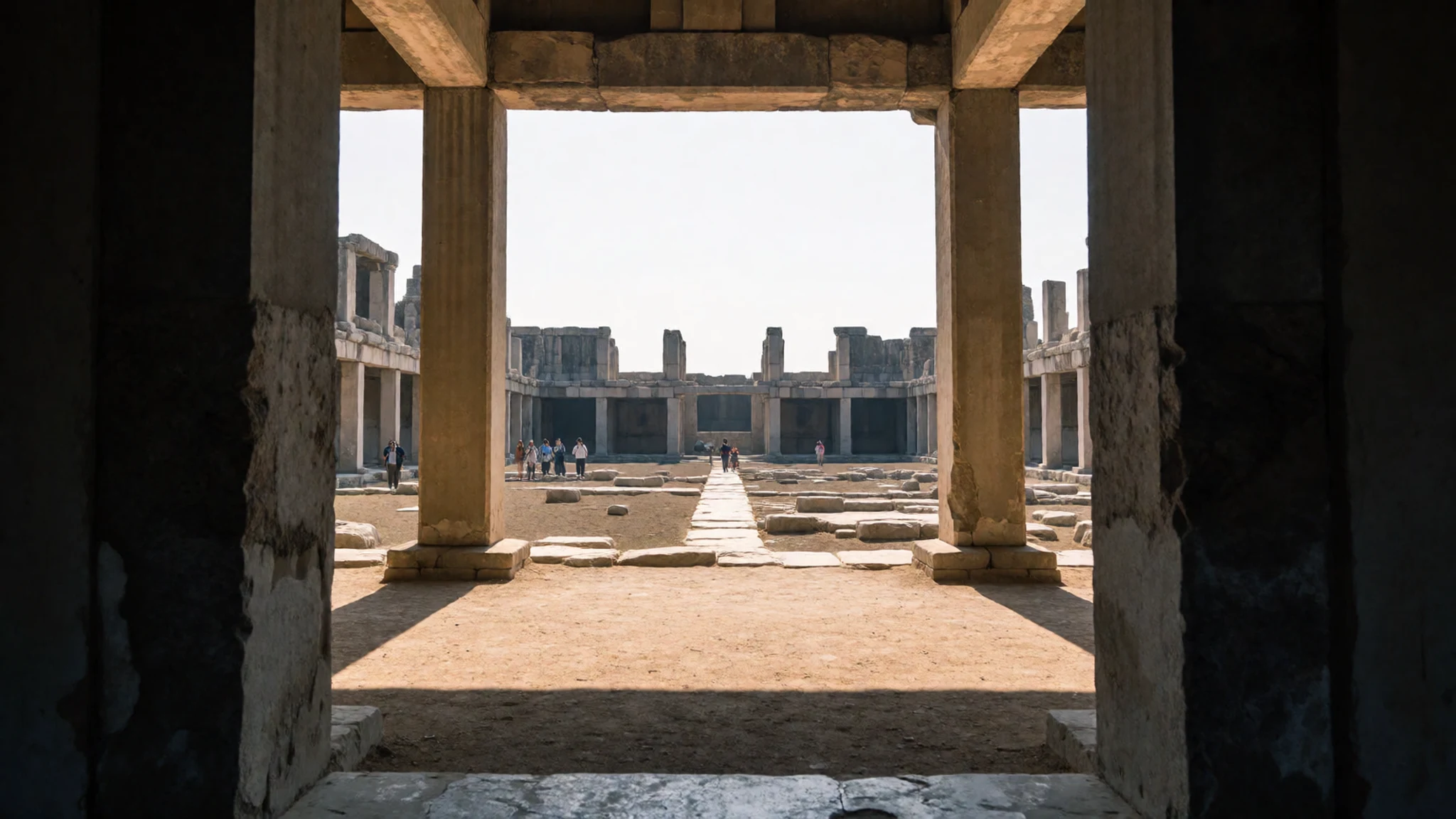
- Les grands thermes (great baths) — Thermal sector at Villa Hadriana
The great baths complex is where the villa’s engineering language becomes obvious. Roman bathing spaces were designed for flow—warming, cooling and circulation—so even in ruins you can sense how visitors moved through stages of the day, not just around a pool.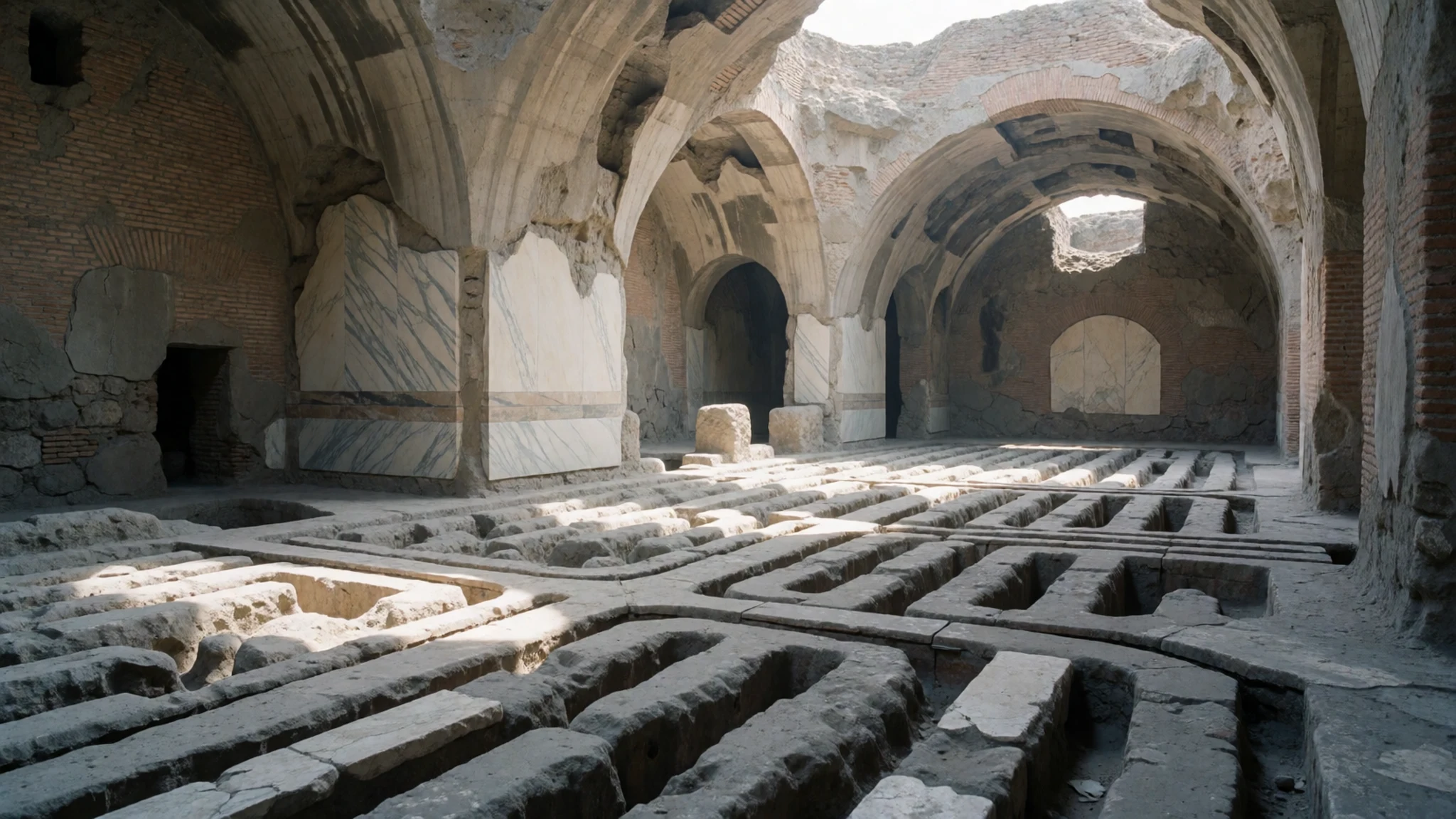
- Mosaic Floor of peristyle (republican villa area) — Republican villa area within the site
In the republican villa area, mosaic surfaces and decorative floors give you a close-up view of how earlier domestic life could be lavish. Look for patterns and the way flooring helps define spaces, turning architecture into something tactile.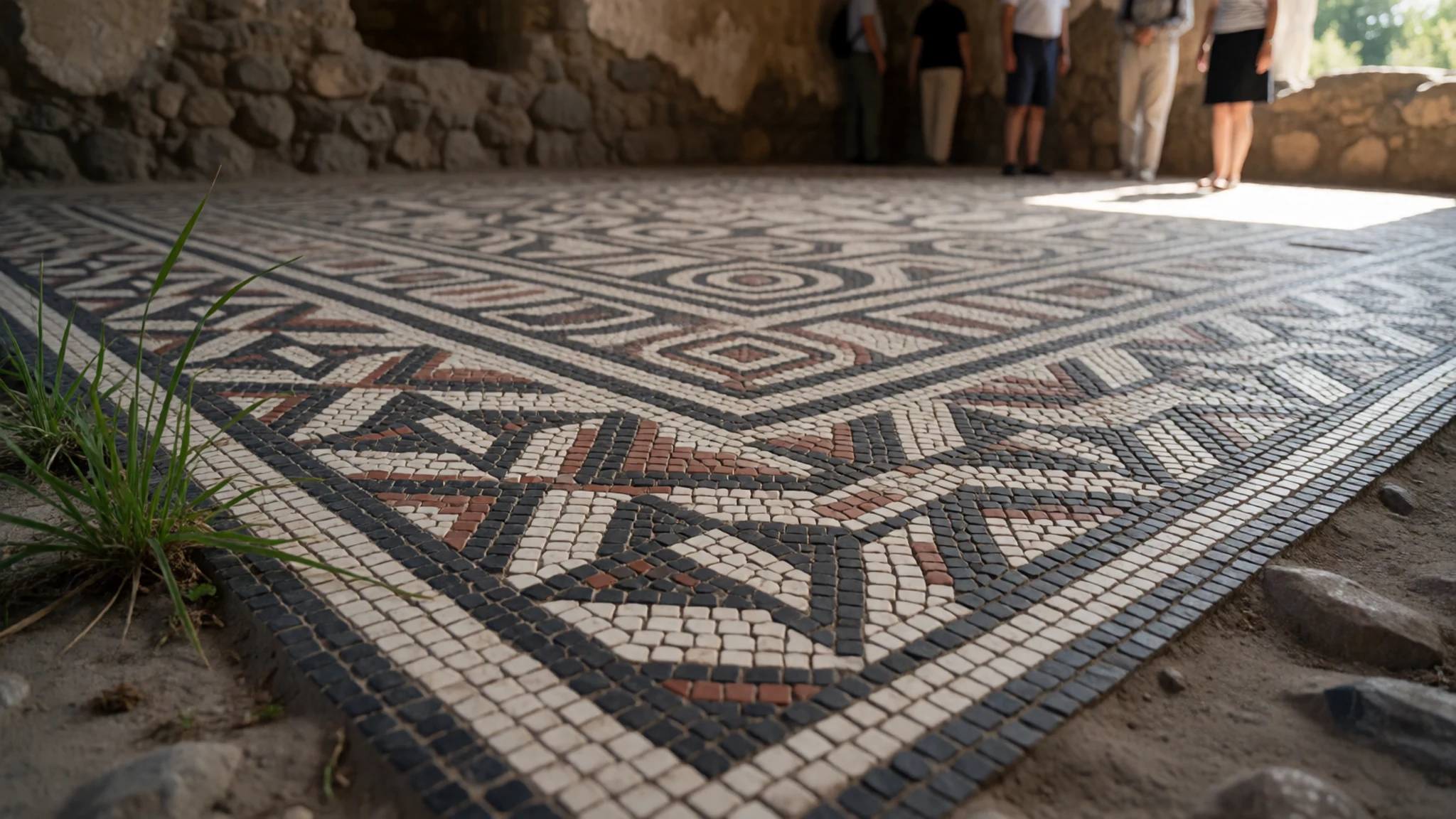
- Mosaic: pair of Centaurs fighting cats of Pray (Altes Museum) — Mosaic display area related to the villa’s collection
A striking mosaic panel of centaurs and cats adds myth and drama to the villa’s story. These floor artworks show the Roman taste for lively figures and bold composition, and they feel especially vivid when you see them at a slow walking pace.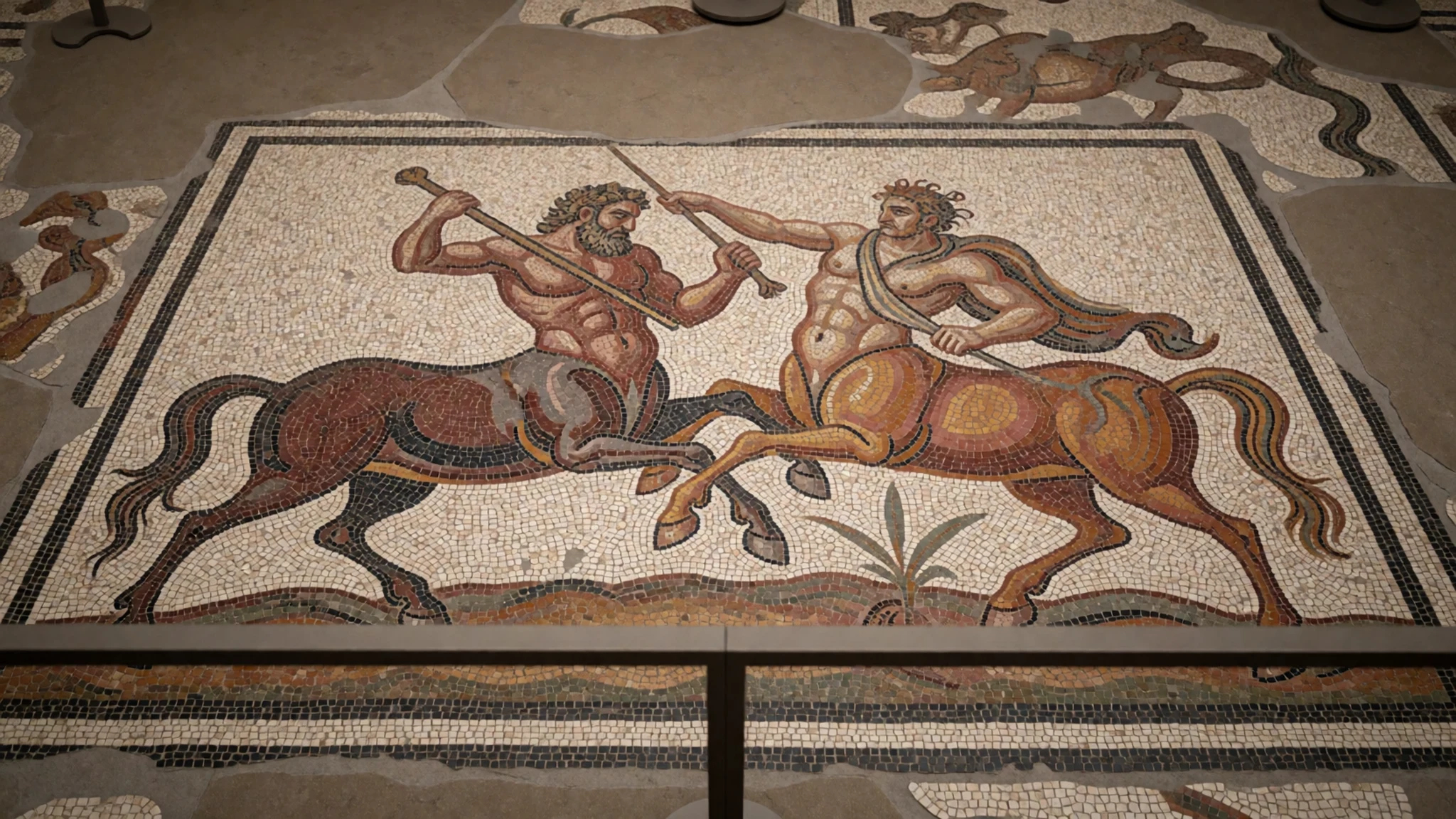
Culture
Hadrian's Villa is an archaeological park, and part of respecting the place is accepting its scale: paths can be long, shaded spots limited, and surfaces uneven where excavation has exposed stone and soil. The most common crowd pinch-points are near the most recognisable areas, so going a little earlier or later can make a noticeable difference to how long you get to look at mosaics and architectural details.
Because the grounds include open terraces, heat management matters. In summer, midday light and sun can make the ruins feel bleached and tiring; in shoulder seasons, the breeze can keep things comfortable but the walk still adds up.
Photography is usually part of the experience, but keep it considerate: avoid standing in the middle of walkways for long shots, and keep bags and tripods tidy so other visitors can pass. If there are signs about access to specific edges or partially excavated areas, those restrictions are there for a reason—don’t cross barriers.
Visitor etiquette: Keep to marked paths, avoid blocking walkways with photos, and take extra care on uneven ground.
What to wear
At Hadrian's Villa, the traditional dress story is Roman in spirit, but visitors are wearing modern comfort. The site’s grounds include terraces and exposed stretches, so the practical expectation is breathable clothing, comfortable walking shoes with grip, and a light layer for shade.
For those dressing up for the vibe, Roman-inspired looks tend to work best when they’re made for walking: a tunic-style top, a lightweight scarf, and simple sandals or trainers with decent soles. Avoid anything that will trip on uneven surfaces or snag on low railings.
In summer, the open terraces can feel hot, so think moisture-wicking fabrics and a hat; in cooler months, long sleeves and a warm outer layer help because the walk is continuous. If planning to linger near mosaics and indoor-style viewing areas, a small bag for water and wipes is handy.
Religious modesty isn’t the main factor here, but archaeological sites still benefit from respectful, non-distracting dressing, especially where families are around. The key is to arrive ready to walk for hours, not to dress for a photo and then rush through.
What to eat
- Roman-style takeaway pizza — Tivoli town centre and nearby casual food streets
For a quick bite around Hadrian's Villa and Tivoli, look for Roman-style pizza by the slice. It’s an easy lunch to grab, eat on the move, and still keep the afternoon itinerary flowing.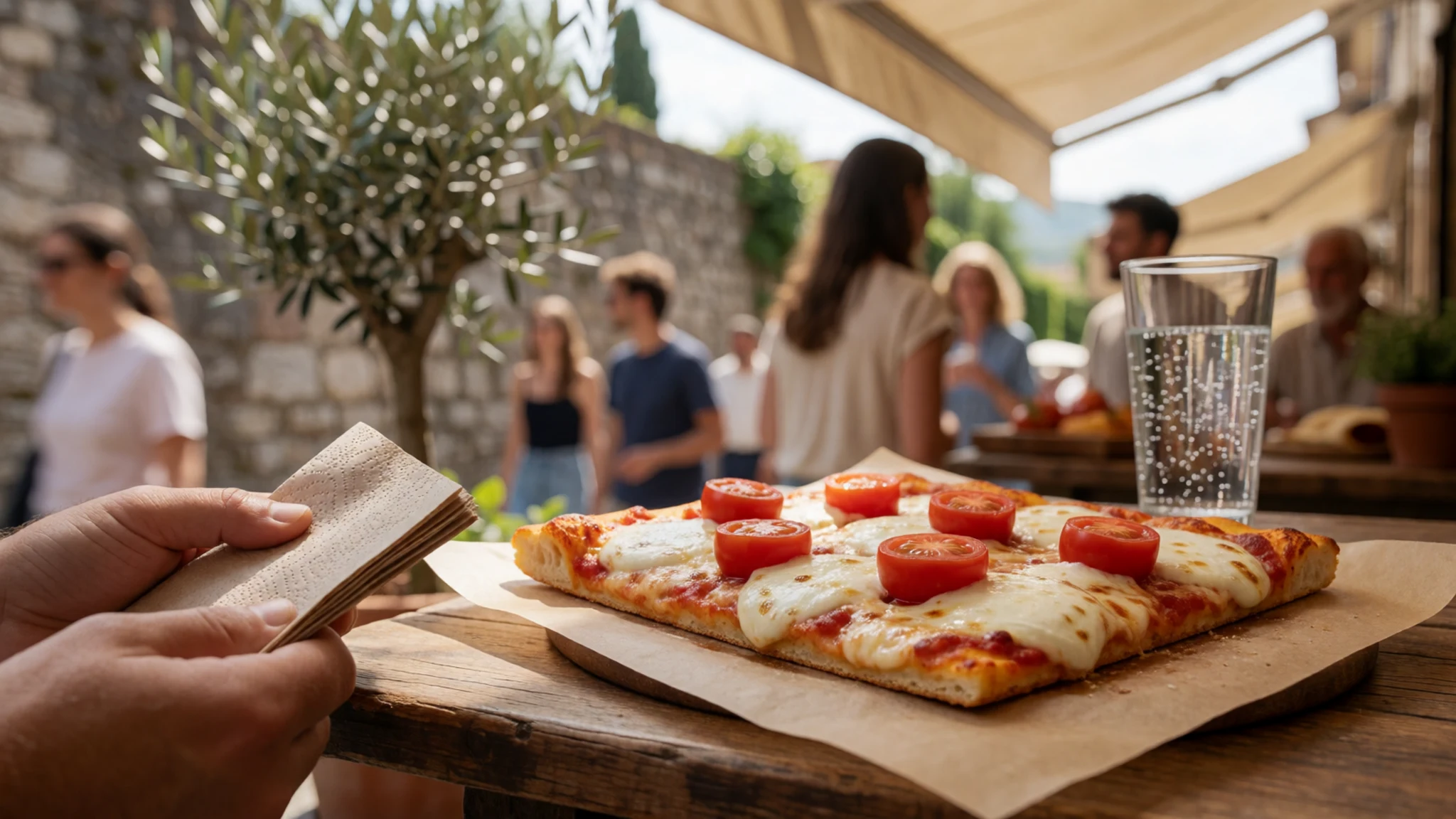
- Gelato — Any gelateria around Tivoli’s main walking areas
Gelato is the simplest heat-coping option after a long walk on open terraces. Choose a spot in Tivoli with a steady flow of locals, then go for a small cone so there’s time to cool down and continue exploring.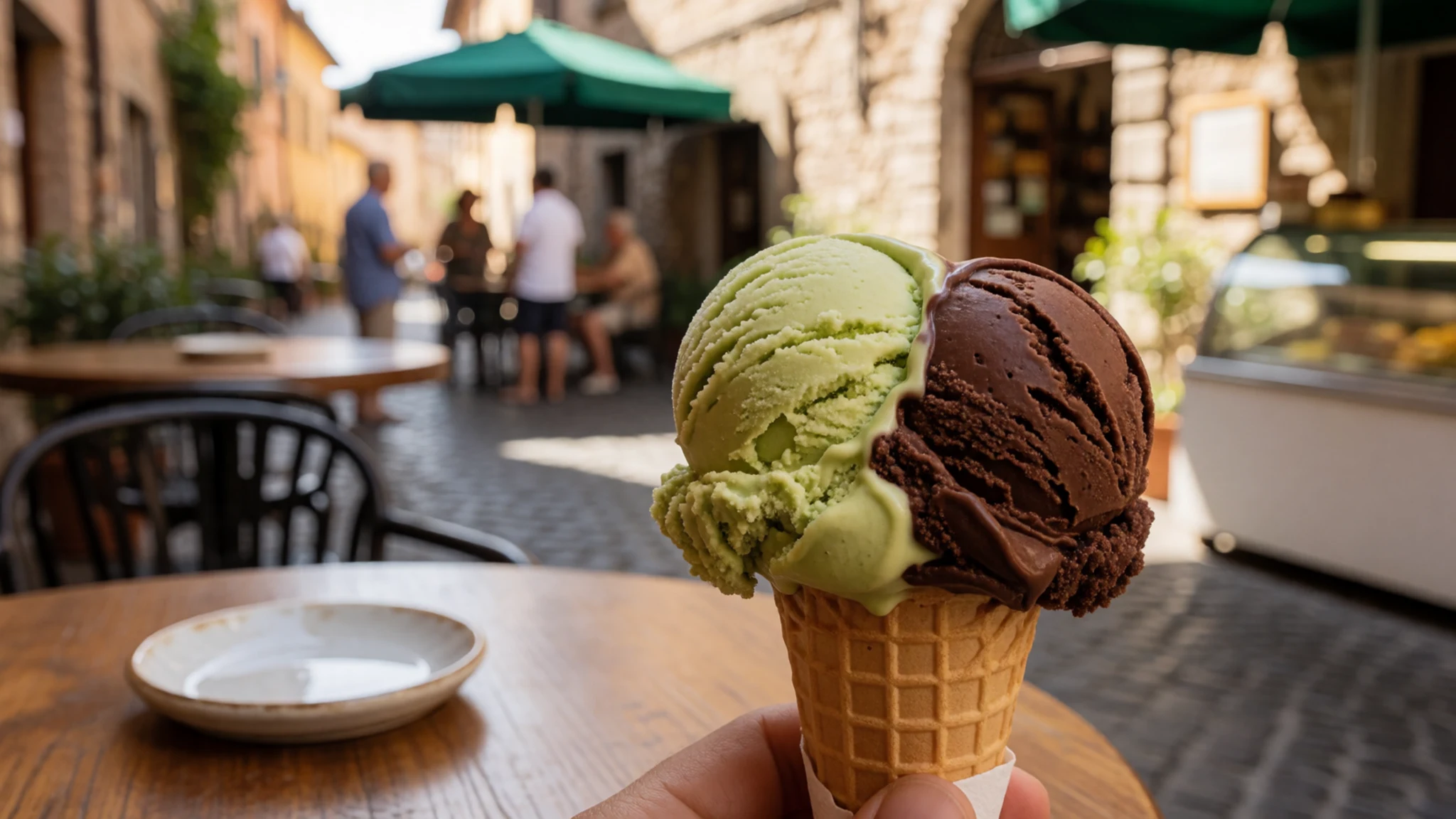
- Market snacks — Tivoli markets and stall areas
The snack approach works well here: grab something bite-sized for a mid-visit pause rather than committing to a long sit-down meal. Market-style stalls and takeaways are useful for keeping energy up between terrace sections. - Quick coffee stop — Cafés around Tivoli’s central lanes
Between walking blocks, a short coffee break helps reset fatigue. Look for a café that’s properly set up for takeaway, especially if the weather turns or crowds build and you want a calm moment.
Plan it
Best time. June–August are the hottest months, with July and August feeling most intense on open terraces; October is often the wettest period to plan around, while May and September are usually the most comfortable for daytime walking. Winter can still feel sharp across exposed ground.
How long. 3–4
Getting there. From Roma Tiburtina you can take train services to Tivoli in just over an hour, then walk or use local transport for the final approach to Hadrian's Villa. Buses also run from Ponte Mammolo metro station on Rome’s Line B and stop near the villa; by car, a route via the Autostrada A24 towards L'Aquila uses an exit for Tivoli soon after the main toll station.
Budget. mid
Tips
- Plan for a slow pace: the villa is spread across terraces, so build in time between major clusters of ruins.
- If crowds build, shift the order of your route—start with less busy areas and save the most famous bits for later.
- Carry water and a hat; open terraces can feel exposed in warmer months.
- When driving, don’t come back the way you went on a weekend evening, as toll queues can become very congested.
Etiquette
- Stay on marked paths, especially around excavation edges and uneven ground.
- Avoid stopping in walkways for long photo shoots—let others pass.
- Heed any access restrictions posted on-site.
Nearby
Sources
- Wikidata Q272777 (CC0)
- Wikipedia (rev 1381271209) (CC BY-SA 4.0)
- Wikivoyage (rev 5387468) (CC BY-SA 4.0)
- Photo photos/01-villa-hadriana-villa-adriana-tivoli-1000-03.jpg (CC BY-SA 4.0)
- Photo photos/02-maquette-2-va.jpg (CC BY-SA 1.0)
- Photo photos/03-villa-hadriana-map.jpg (Public domain)
- Photo photos/04-hadrian-s-villa-tivoli-38088664402.jpg (CC BY-SA 2.0)
- Photo photos/05-les-grands-thermes-villa-adriana-tivoli-5888636563.jpg (CC BY 2.5)
- Photo photos/06-palazzo-imperiale-1.jpg (Public domain)
- Photo photos/07-mosaic-floor-of-peristyle-republican-villa.jpg (CC BY-SA 4.0)
- Photo photos/08-0130-kentaurenpaar-im-kampf-mit-raubkatzen-altes-museum-anag.jpg (CC BY 3.0)


