Gyeongju
Gyeongju, South Korea
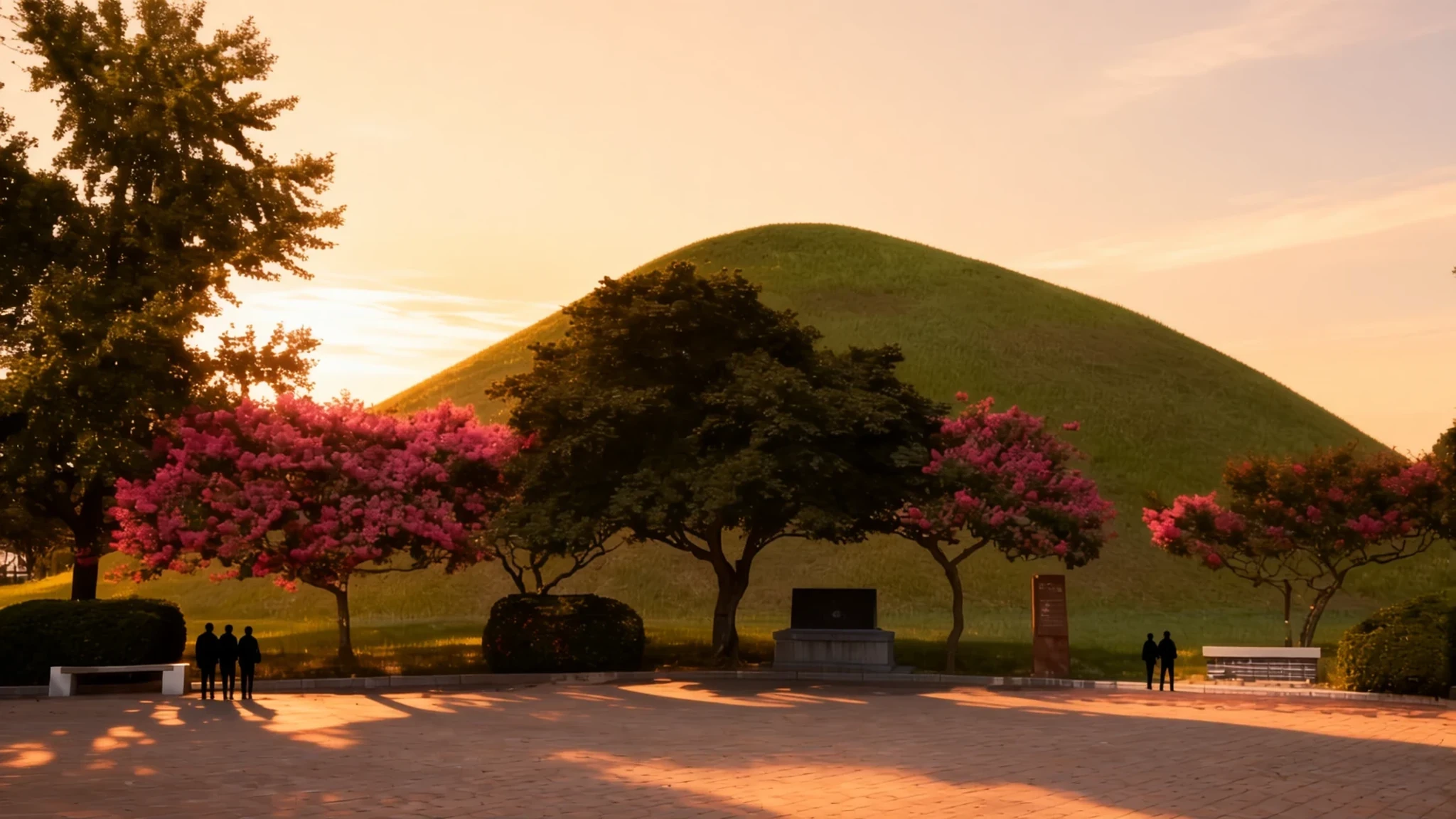
Gyeongju was Silla's capital for close to a thousand years, and its tombs, temples and palace ponds still stand inside the city.
The place
Gyeongju sits in the far south-east corner of North Gyeongsang Province, a short distance inland from the Sea of Japan. The city covers about 1,324 square kilometres and has a population of roughly a quarter of a million, so it feels more like a provincial town than a metropolis. Low hills, outliers of the Taebaek range, ring the plain, and rice fields fill the gaps between them. Seoul is about 370 km away, while Daegu lies 55 km to the west, which makes Gyeongju a natural stop on a southern circuit.
The city's appeal rests on its past. For close to a thousand years it was the capital of the Silla kingdom, and its streets were laid out around palaces, Buddhist temples and royal burial grounds. The historic centre is compact enough to cover on foot in a long day, though the main sights are spread across several districts. Grassy tomb mounds rise beside housing blocks, a stone observatory stands on an open lawn, and a palace pond reflects the stone foundations of pavilions that burned long ago. People often call Gyeongju an open-air museum, and the label holds up: much of the heritage sits in the ground and on the street rather than behind glass.
Modern life runs alongside it. Boats still work from the harbour at Gampo, markets sell local fruit and snacks, and traditional restaurants serve set meals in old wooden buildings. Guesthouses and small hotels are scattered through the town, and intercity buses make day trips from Busan, Daegu or Pohang practical. The result is a place where a morning among royal tombs can be followed by a plate of barley rice and a slow walk back through the market.
Its story
The city's early history is bound up with the Silla kingdom, which it served as capital. According to Korean chronicles, six small villages in the Gyeongju area joined under a leader named Bak Hyeokgeose in 57 BCE, and the new polity took the name Saro-guk before later becoming Silla. During the Silla period the city went by several names: Sŏrabŏl, a word that later came to mean capital city in Korean, Gyerim, meaning rooster's forest, and Geumseong, the city of gold or impregnable fortress.
After Silla brought much of the peninsula under its control by 668, Gyeongju became the centre of court life, politics and culture. The royal family, the aristocracy and a large share of the kingdom's elite lived within its walls. Foreign accounts described the city's wealth in extravagant terms, and a ninth-century geographical work reported its prosperity as far away as Persia. The Samguk yusa gives a peak figure of 178,936 households, which points to a total population of almost one million.
The kingdom came to an end in 935, and the palace pavilions had already burned and fallen into the pond that year. The old capital gradually shrank into a provincial town, but its ancient monuments survived because the ground kept them. Tombs were left standing as grassy mounds, and temple pagodas remained in the fields. Modern Gyeongju has grown around that past, and its burial mounds and palace sites now anchor its sense of identity.
What to see
- Daerungwon Tumuli Park — central Gyeongju
Daerungwon is the main attraction of the historic core, a park of around thirty burial mounds from the Silla period. The grassy domes are large and rounded, and the paths between them make a relaxed walk. Several tombs have been excavated, and their finds are displayed in local museums, so the park works well alongside an afternoon indoors. Mornings are quieter and the light is soft.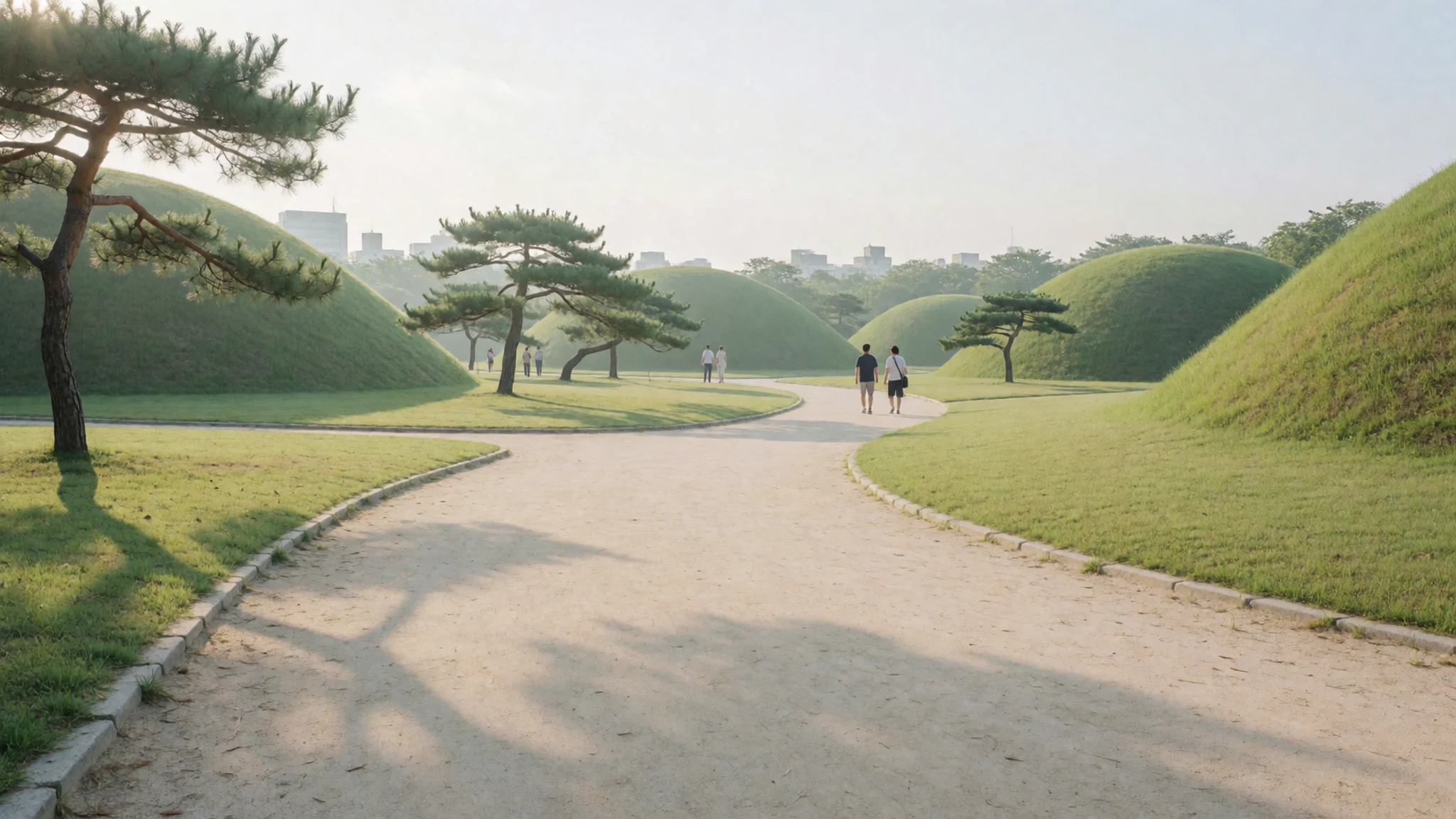
- Cheomseongdae Observatory — central Gyeongju, near Wolji Pond
Cheomseongdae is the oldest existing observatory in the Far East, built during the reign of Queen Seondeok in 634. It is a tall, bottle-shaped structure of stone standing on an open lawn. Historians still debate exactly how it was used, but it was most likely for watching the sky and keeping records. The site is small and easy to combine with the nearby palace grounds.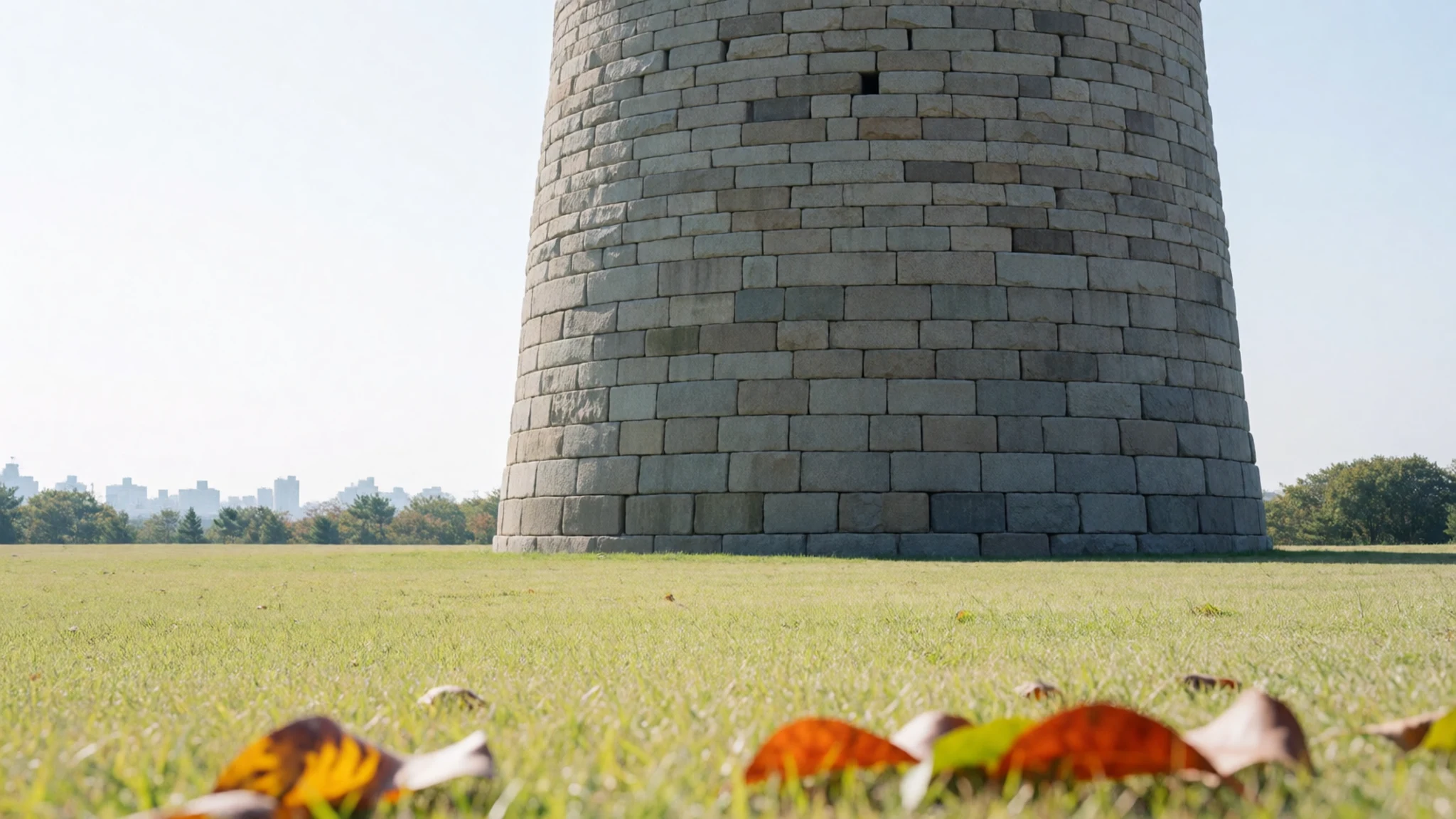
- Bunhwangsa Temple — eastern edge of the old town
Bunhwangsa holds the only pagoda built during the reign of Queen Seondeok, dating from 634, and it is Korea's oldest pagoda. Unusually for the period, it was built with bricks rather than stone, which sets it apart from later towers. The temple grounds are quieter than the royal sites, and the pagoda shows how Silla builders worked with a different material.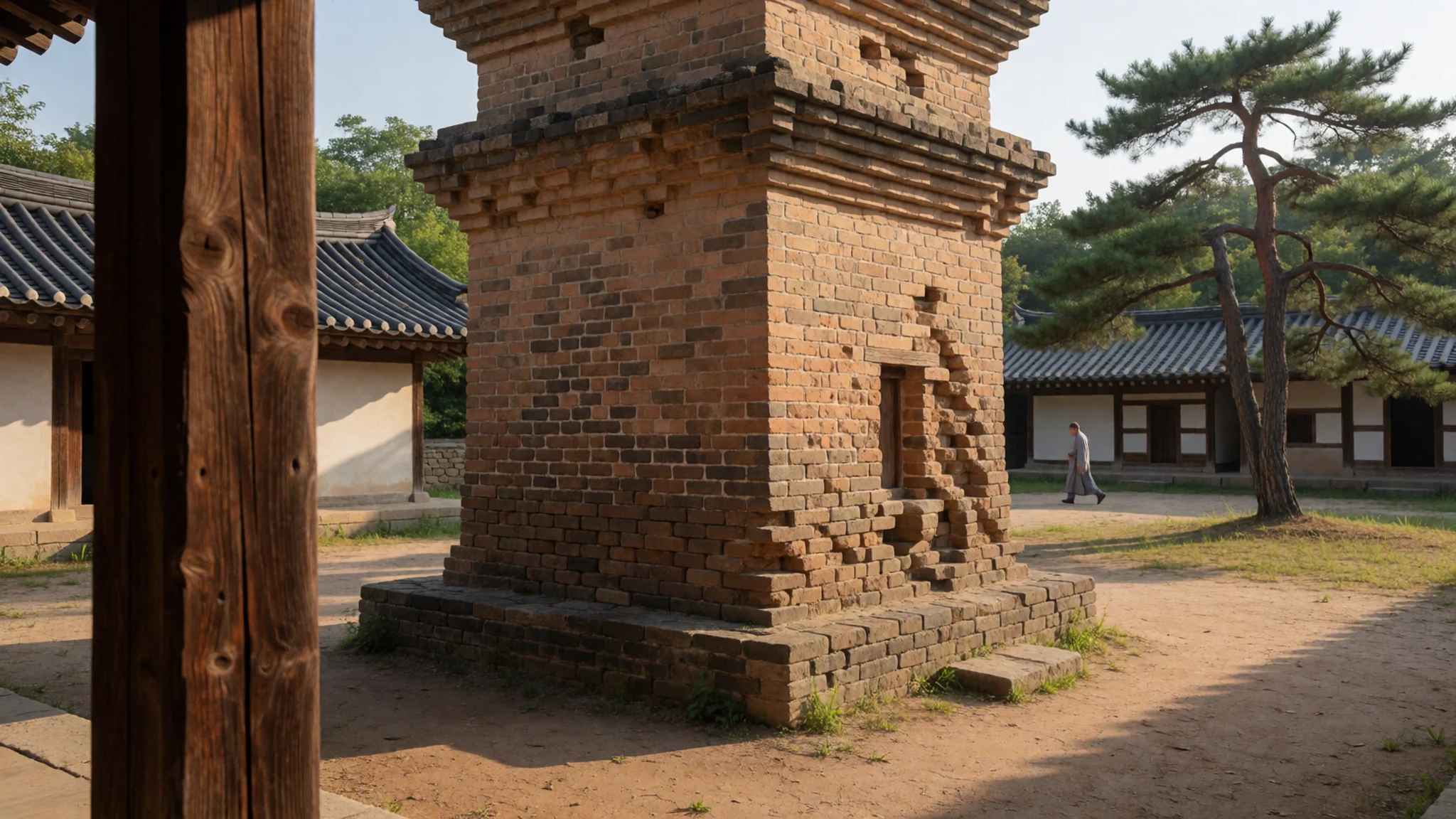
- Nodong-ri and Noseori Grave Parks — north of the historic centre
Two neighbouring parks hold a dense cluster of burial mounds. Noseori, the western park, has fourteen graves of different sizes, several named after the finds made inside them. These tombs draw fewer visitors than Daerungwon, which makes them a calm place to see how the mounds were arranged across the plain. Signage is sparse, so a map is useful.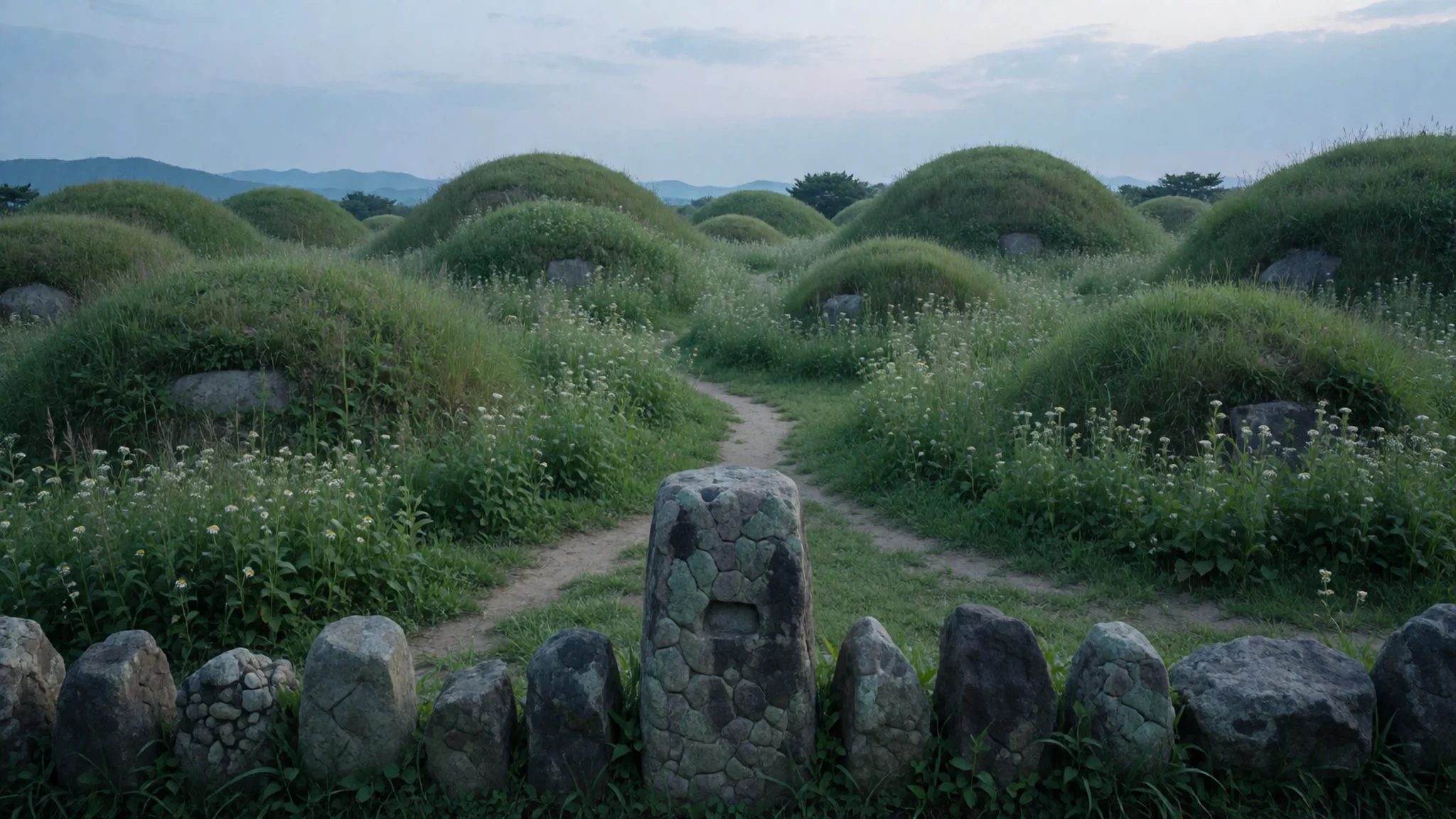
- Donggung Palace and Wolji Pond — central Gyeongju
Wolji is an artificial pond, known in the past as Anapji, created by King Munmu in 674. The pavilions on its banks burned in 935 and fell into the water, and the pond edges still show how the buildings were set out. Donggung Palace sits beside it and gives a sense of the scale of the royal compound. Together they make a good late-afternoon walk, when the water reflects the light.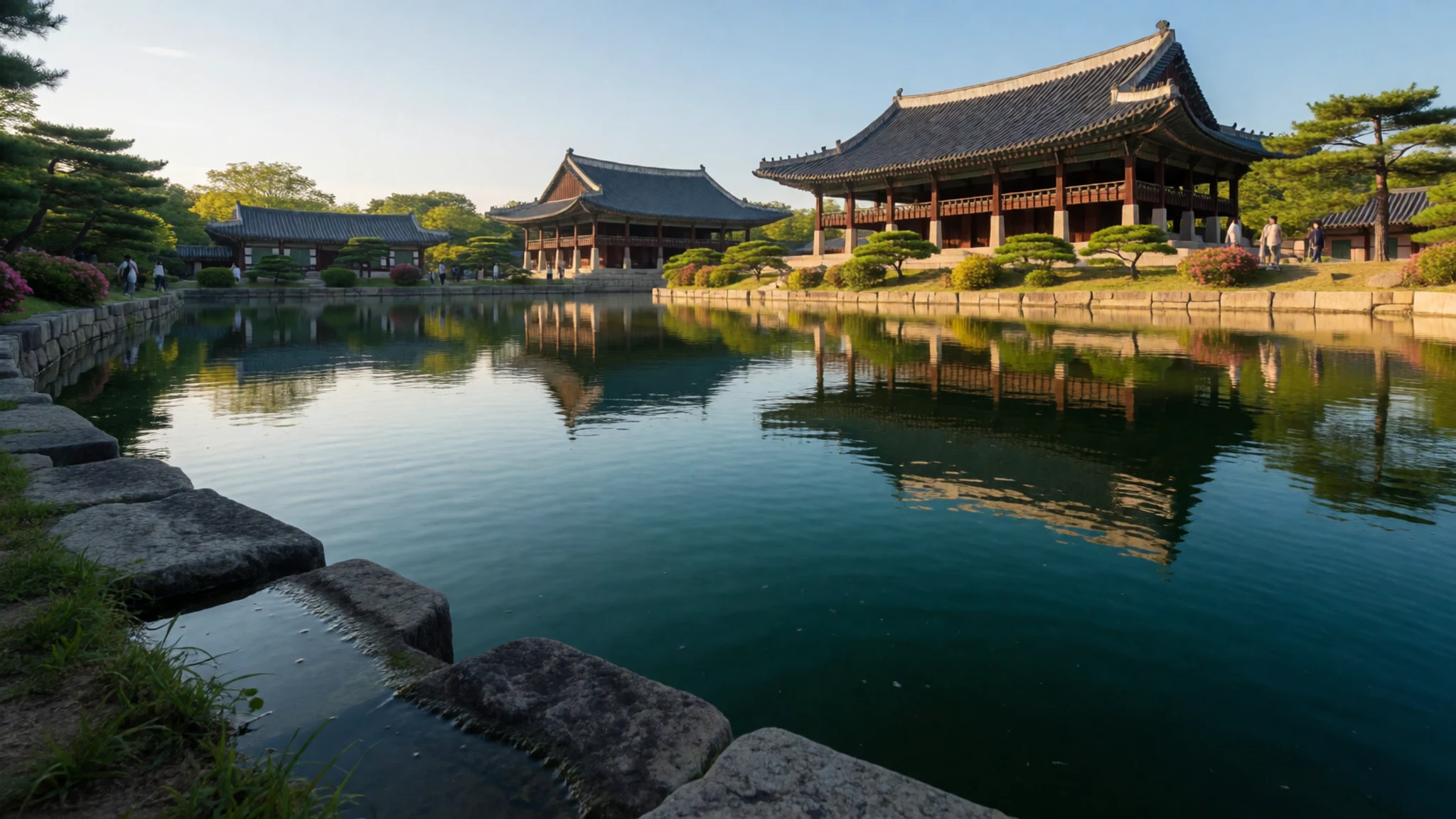
Culture
Gyeongju is the main place in South Korea to see the material record of the Silla kingdom, which ruled much of the peninsula from its capital here. The city holds 31 National Treasures, and the Gyeongju National Museum displays 16,333 artefacts, so the collections give a detailed picture of the period. Relics fall into four broad groups: burial mounds and their contents, Buddhist temples and objects, fortresses and palace grounds, and older timber architecture. Older still are prehistoric finds, including Mumun pottery excavated in villages around the city and dolmens in outlying districts. The heritage sits comfortably beside daily life, where local people shop at morning markets, eat in family restaurants and walk their dogs past the tomb parks. Remove your shoes before stepping onto a wooden floor in any temple or traditional building, and wait for the staff signal where one is given.
What to wear
Traditional dress in Gyeongju is the hanbok, the Korean costume of the Joseon period and of older times. Women wear a short jacket called jeogori over a full wraparound skirt, or chima, while men wear loose trousers, baji, under a jacket. Silk, ramie and cotton were the usual cloths, with silk reserved for the wealthy, and bright colours marked rank and occasion. Silla-period gold ornaments found in the tombs hint at elaborate court dress. Today most people in Gyeongju dress much as they do in Seoul, in jeans, knitwear and sports jackets, and hanbok is kept for festivals, weddings and the occasional photograph at the palace.
For visitors, the climate and the sites set the rules. Layers work best, because spring and autumn days can warm and cool quickly, and summer is humid. Shoes matter more than anything: the tomb parks and palace grounds involve gravel and grass paths, and shoes come off at temples. Modest clothing that covers shoulders and knees is sensible at religious sites. Lightweight trousers or a simple dress suit most days, with a light jacket for the evenings.
What to eat
- Hwangnam ppang — the original bakery in central Gyeongju
Hwangnam ppang is the city's signature pastry, first made at the bakery in 1939 and still baked there today. Its soft golden shell makes a good snack between temples. Buy a box fresh from the counter, since the queue can grow at busy times of day.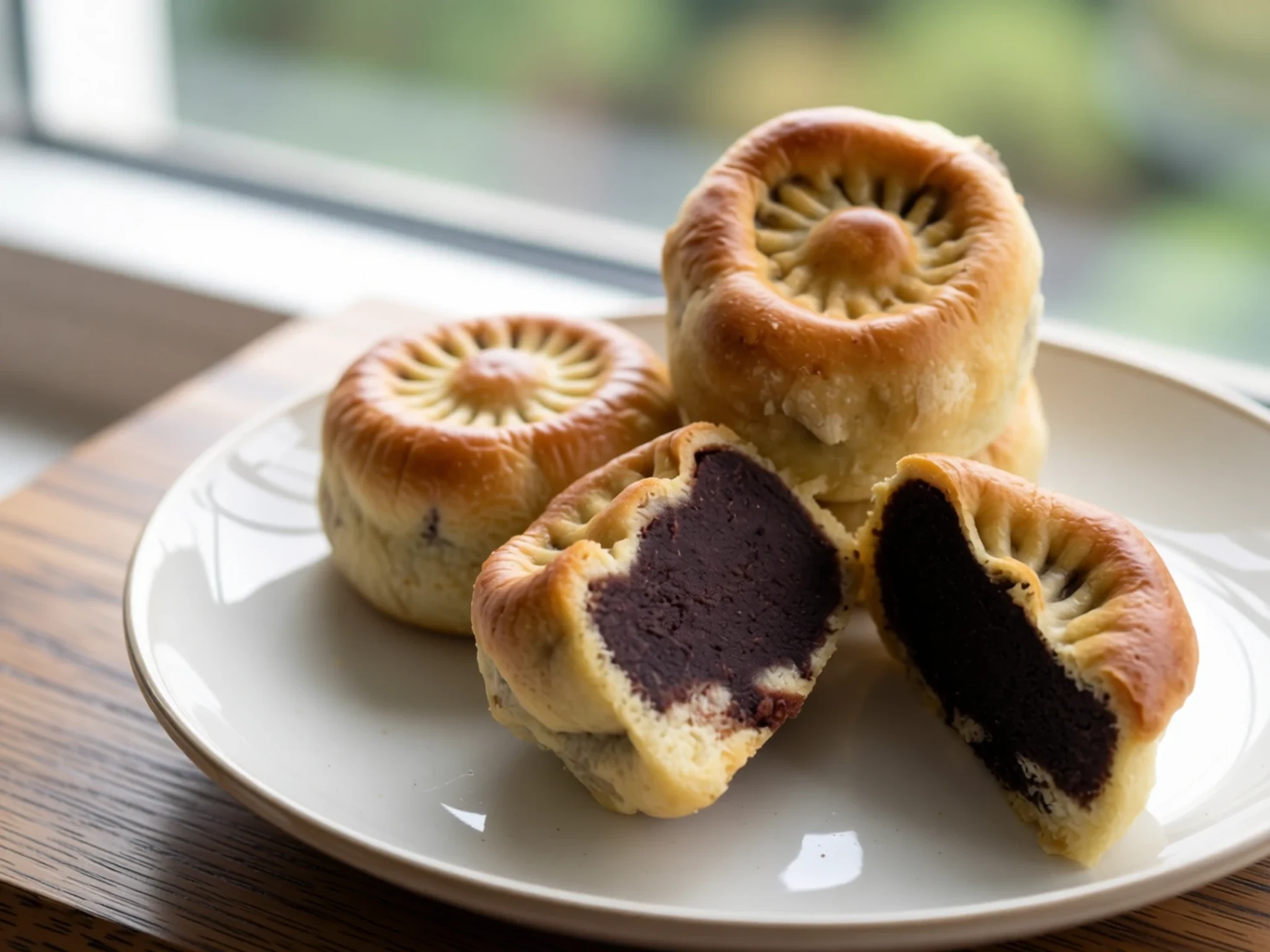
- Barley rice set meal — traditional restaurants in wooden houses near the historic core
Barley rice, a grain-rich rice, is the speciality of many traditional restaurants here, served with a spread of small side dishes. It has a nutty, chewy texture that suits the simple vegetables and braised dishes. Eating in a building with wooden beams makes the meal feel like part of the old town.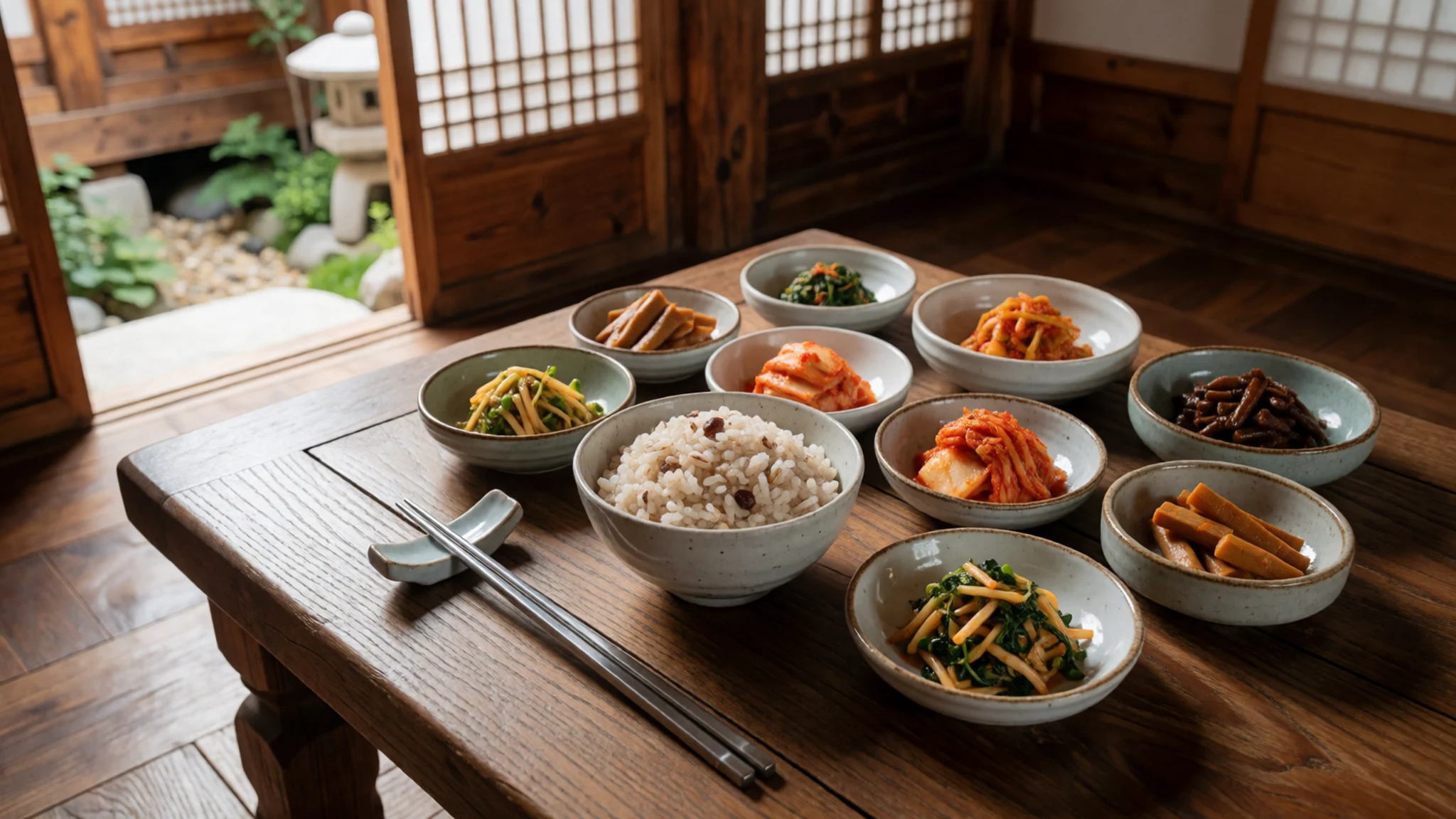
- Bibim ssambap — Korean home-style eateries across the old town
Bibim ssambap is rice mixed with vegetables and chilli paste, served with lettuce leaves for wrapping. The leaves let the mixture be eaten in neat parcels. Gyeongju kitchens serve it with a range of banchan, and milder versions are easy to request. - Fresh seafood from Gampo — eateries near Gampo harbour
Gampo harbour on the east coast is the place for grilled catch and simple raw fish, sold according to the day's landings. Eateries near the water serve plain plates with sides. Lunchtime is usually busiest, when the boats have just come in and stalls are at their freshest. - Market fruit and snacks — Seongdong market, Gyeongju
Seongdong market brings together fruit stalls, snack vendors and dried goods. Seasonal fruit is stacked in neat piles, and small stalls sell fried, sweet and savoury bites. It is a relaxed, low-cost way to eat lightly, and mornings are best, when stock is at its fullest.
Plan it
Best time. Spring and autumn are the most comfortable seasons for walking the open sites. Summer can be hot and humid, and winter is cold, so the shoulder seasons suit the tomb parks best.
How long. 2–3
Getting there. Busan Gimhae International Airport, then an express bus of about an hour. From Seoul, take the KTX to Singyeongju station and then a bus into town, or an intercity bus of about four hours from Seoul.
Budget. low
Tips
- Start at the tomb parks early, before the midday heat builds
- Group Donggung Palace, Wolji Pond and Cheomseongdae into one afternoon
- Check bus times at the Intercity Bus Terminal before travelling, as frequencies vary
- Carry cash for market stalls and small snack vendors
- Wear comfortable shoes, since many paths are gravel or grass
Etiquette
- Keep to marked paths around the tumuli and do not climb the mounds
- Lower your voice in temple grounds and keep phones on silent
- Ask before photographing market traders or older residents
Nearby
Sources
- Wikidata Q42097 (CC0)
- Wikipedia, Gyeongju (rev 1377369570) (CC BY-SA 4.0)
- Wikivoyage, Gyeongju (rev 5403552) (CC BY-SA 4.0)
- Photo: Seokguram Grotto (eimoberg) (CC BY 2.5)
- Photo: Gyeongju City Hall (User:85 At) (CC BY-SA 1.0)
- Photo: Gyeongju bread (Pachinee Buathong) (CC BY-SA 2.0)
- Photo: Bibim ssambap and banchan (Jinho Jung) (CC BY 3.0)
- Photo: Gyeongju Citizens' Athletics Festival (Grete Howard) (CC BY 3.0)
- Photo: Gampo port (Pachinee Buathong) (CC BY-SA 2.0)
- Photo: Rice paddy field (riNux) (CC BY-SA 2.0)
- Photo: Seongdong market fruit shop (riNux) (CC BY-SA 2.0)


