Gwangju
Gwangju, South Korea
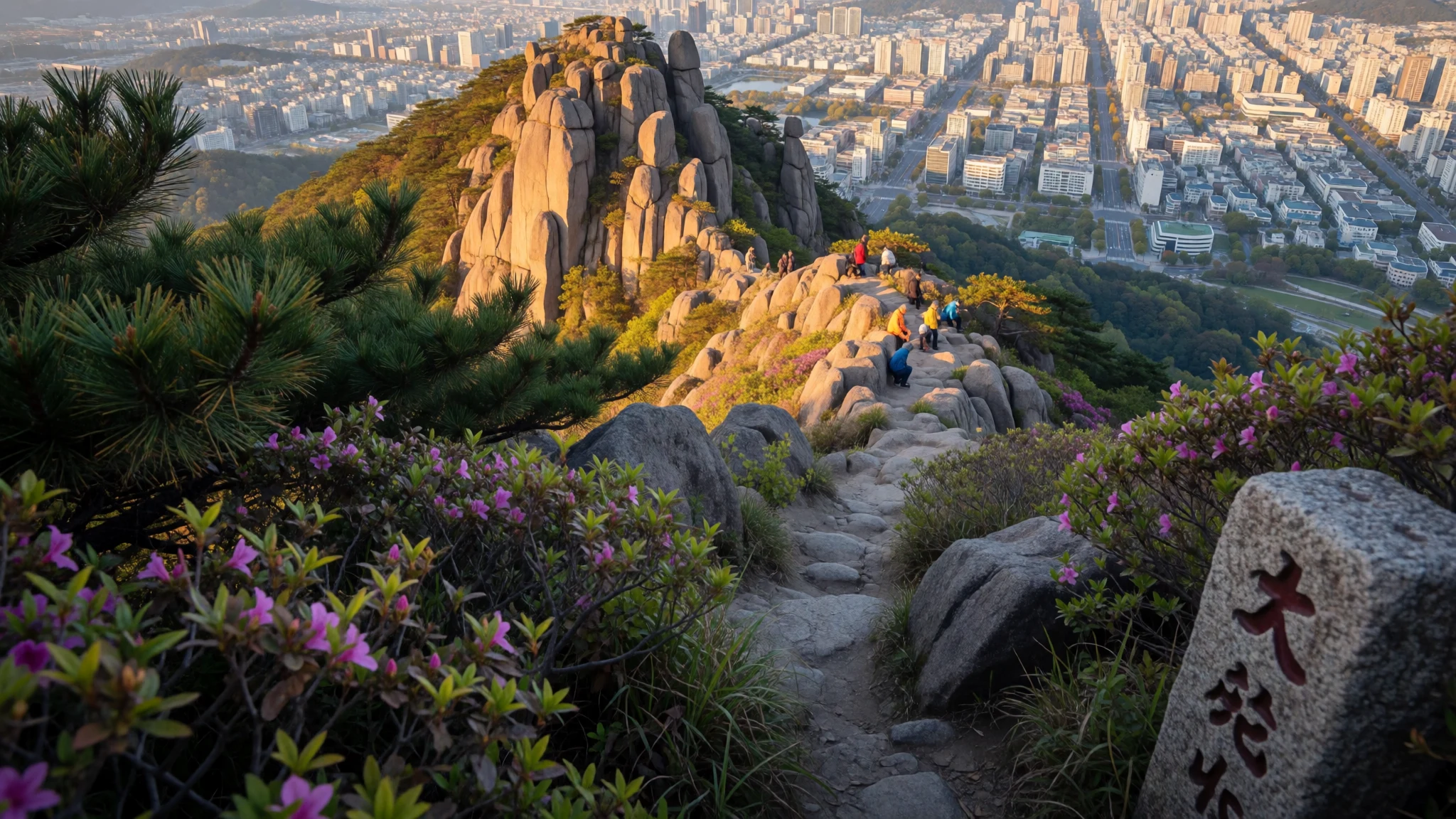
Gwangju offers world-class contemporary art spaces, dramatic mountain trails, and a culinary tradition celebrated across the country as the breadbasket of South Korea.
The place
Gwangju is located in the southwestern corner of the Korean peninsula, sitting in the heart of the agricultural Jeolla region. Home to a population of about 1.4 million people, it operates as a major metropolitan centre known for having exceptionally clean streets, wide modern boulevards, and one of the largest pedestrian dining and entertainment districts in the country. The name itself translates from local characters as the province of light, reflecting its historical role as a regional capital. Unlike the dense vertical sprawl found in other metropolitan areas, Gwangju feels remarkably open, framed closely by rolling hills and the prominent wooded slopes of Mudeungsan Mountain rising along its eastern edge. Visitors find a city that balances heavy industrial growth with an immense devotion to the arts, contemporary design, and communal dining culture. The regional climate brings four distinct seasons with significant summer rainfall, shaping an atmosphere where outdoor life shifts dynamically from spring cherry blossoms to vibrant autumn foliage on the surrounding peaks. While public transport relies heavily on modern bus networks and subway lines, walking remains the best way to absorb the neighbourhood alleys, roadside tea houses, and independent galleries tucked into the central districts.
Its story
Gwangju carries a deep history stretching back to antiquity, when it served as an administrative heartland during the Three Kingdoms period under Baekje rule. Centuries later, the city became a crucible for national resistance during the Japanese colonial era. On October 30, 1929, a confrontation between Korean and Japanese students at nearby Naju Station ignited the Gwangju Student Independence Movement, which officially launched on November 3 and swiftly spread defiance across the entire country. Modern industrialisation arrived later with the construction of cotton textile mills, rice processing plants, and dedicated manufacturing zones that accelerated the city's growth in automobile production and urban development. However, the most profound chapter in modern memory occurred in May 1980, when citizens launched massive peaceful demonstrations against military rule. The subsequent violent crackdown by elite military forces sparked an armed civilian uprising that lasted nine days, leaving an indelible scar on the community. Today, this turbulent path toward democracy is meticulously preserved in public archives, monuments, and annual commemorations that define the civic pride of local residents and shape the modern cultural identity of the entire nation.
What to see
- Asia Culture Center — Downtown Gwangju
This vast national art complex serves as a primary hub for contemporary exhibitions, theatrical performances, and creative design. Most of the sprawling architectural facilities are cleverly built underground to preserve the surrounding streetscape, offering visitors expansive interactive galleries, public plazas, and cutting-edge multimedia installations right in the heart of downtown. - Art Street — Central district
Spanning approximately three quiet blocks near the city centre, this pedestrian alleyway is lined with independent studios, creative workshops, and carefully decorated store windows. Painters, ceramicists, and antique dealers display their works directly to passersby, creating an intimate space to browse traditional crafts and purchase unique artworks away from the main traffic corridors. - Jeungsimsa Temple — Mudeungsan foothills
Nestled peacefully at the western foot of Mudeungsan Mountain, this historic Buddhist sanctuary offers a quiet escape into wooded nature. Visitors can easily walk the paved forest path up to the temple grounds, where ancient stone structures, quiet courtyards, and centuries-old cultural artifacts are preserved beneath towering trees and flowing mountain streams. - Mt. Mudeungsan Pillar-Shaped Joint Cliff — Mudeungsan National Park
These striking geological formations feature massive vertical stone columns created by ancient volcanic activity during the Cretaceous period of the Mesozoic era. An accessible overlook trail rewards hikers with panoramic views of these dramatic natural rock geometries standing proudly against the ridge high above the sprawling metropolitan basin below. - May 18 Archives — Central district
Housed in a historically significant building, this dedicated repository systematically collects, preserves, and displays photographs, documents, and video records detailing the democratic uprising. Permanent exhibits provide a sobering, comprehensive look at the events of May 1980, honouring the civilian movement that secured recognition in UNESCO's Memory of the World register.
Culture
Gwangju maintains a fierce civic pride rooted in its rich artistic heritage, historical struggles for democracy, and an unmatched culinary tradition. Residents are fiercely welcoming to curious travellers, though conversations often touch upon the city's poignant modern history and vibrant contemporary arts scene. Social interactions place a strong emphasis on mutual respect, generational courtesy, and sharing abundant meals together in lively neighbourhood establishments. Traditional etiquette remains important when visiting temples, historic schools, and memorial sites, where quiet contemplation and modest attire are expected. Tipping is not practiced in restaurants or taxis, as service is considered an intrinsic part of hospitality. When entering traditional dining rooms, guesthouses, or temples, always remove your shoes at the designated raised entryway and place them neatly on the provided shelves. Remove your shoes before stepping onto raised indoor wooden or heated flooring surfaces.
What to wear
Traditional Korean dress, known as hanbok, is no longer worn for daily activities in Gwangju but remains an essential part of cultural heritage reserved for major national holidays, milestone family celebrations, and traditional wedding ceremonies. Handcrafted from light silk or ramie fabrics with vibrant dyed colours, hanbok emphasizes graceful flowing lines and traditional silhouettes. In daily contemporary life, residents dress in modern, practical urban styles that lean toward clean tailoring and current global fashion trends, with younger crowds favouring streetwear and contemporary Korean labels found throughout the central shopping districts. For visitors exploring the city, comfortable walking shoes are absolute necessities due to the hilly terrain around the mountain trails and the expansive layout of cultural complexes. Casual clothing is widely accepted everywhere, but modest garments covering shoulders and knees are strongly recommended when visiting sacred Buddhist temples or historical Confucian institutions out of respect for local customs.
What to eat
- Songjeong Tteokgalbi — Songjeong-ri station area
A legendary local specialty consisting of minced beef short rib meat that is seasoned, shaped onto flat bone ribs, and grilled over charcoal until tender and smoky. Find this dish along the dedicated alley near Songjeong-ri subway station. - Ori-tang — Duck stew alley
A rich, comforting duck stew simmered with a thick paste made from ground perilla seeds, wild chives, and garlic, creating a deeply savory broth that is difficult to find elsewhere in the country. Look for specialized eateries along the dedicated duck street. - Sangchu-Twigim — Local street markets
A casual street food concept unique to the city where various deep-fried vegetables and snacks are wrapped inside fresh lettuce leaves and dipped in a tangy soy sauce blend. Try this at traditional open-air street markets across town. - Yuk-jeon — Downtown dining houses
Thinly sliced premium beef coated lightly in wheat flour, dipped in a rich beaten egg wash, and gently seared on a hot griddle just until cooked through. Enjoy these delicate savoury pancakes at traditional dining houses near the downtown art district. - Samgyeopsal — Main commercial districts
Thick slices of pork belly grilled directly at the table and wrapped in crisp lettuce leaves with garlic, fermented soybean paste, and spicy green onion salad. Popular franchise locations specializing in this classic Korean barbecue operate throughout the main commercial districts.
Plan it
Best time. March to April for spring cherry blossoms and mild weather, or October to November for vibrant autumn foliage; June brings the heavy summer rainy season.
How long. 3
Getting there. Take the high-speed KTX or SRT train from Seoul to Gwangju, which takes between one and a half to three hours; direct long-distance buses also run from major airports.
Budget. mid
Tips
- Wear sturdy walking shoes when exploring mountain trails and sprawling cultural complexes
- Carry some cash for small purchases at traditional street markets and antique shops
- Use the efficient city bus network to navigate easily between major sights
- Book high-speed train tickets in advance during peak spring and autumn holiday weekends
- Check official websites for operating hours before visiting museums and memorial archives
Etiquette
- Remove your shoes whenever you see a raised step and slippers waiting at an entrance
- Maintain a respectful, quiet demeanor when touring memorial halls and sacred temple grounds
- Do not take photographs of military installations or restricted airport zones
Nearby
Sources
- Wikidata Q41283 (CC0)
- Wikipedia Gwangju (CC BY-SA 4.0)
- Wikivoyage Gwangju (CC BY-SA 4.0)
- Photo 01 (CC BY-SA 4.0)
- Photo 02 (CC BY 3.0)

