Gundeshapur
Gundeshapur, Iran
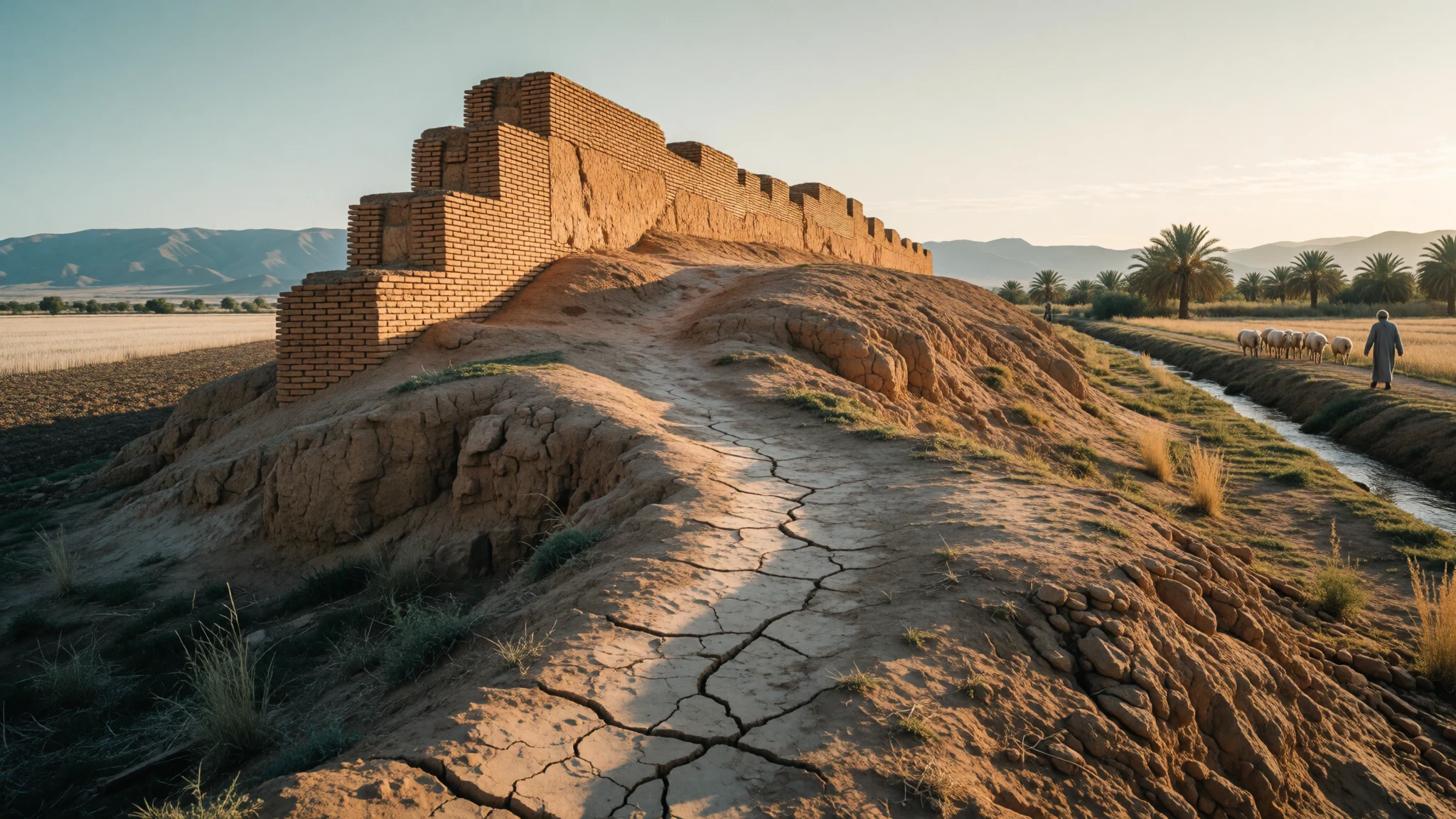
Gundeshapur is a quiet field of Sasanian ruins in Khuzestan, where a famous centre of medicine and learning once stood.
The place
Gundeshapur lies on the flat plain of Khuzestan in south-western Iran. The ruins are south of the village of Jandi Shapur, about 14 km south-east of Dezful on the road towards Shushtar. The site sits at 91 m above sea level, where the Zagros foothills give way to river lowlands and farmland. Fields now cover much of what were once streets and courtyards.
It helps to know what this place is not. There is no restored gateway, no ticketed palace and no crowd. What survives is a wide spread of low mounds, eroded brick and open ground, and it rewards people who enjoy reading a landscape more than those who want standing monuments. Iran treats it as a national heritage site.
The name appears in many forms. English writers use Gundeshapur, Gondishapur or Jundishapur; modern Persian says Gondišâpur (گندیشاپور); the Middle Persian form was Weh-Andiōk-Šābuhr. Local signs and maps may use yet another spelling, so ask for Jandi Shapur in Dezful and people will usually know it.
Dezful is the practical base. It is a real working town with eateries, a bazaar and a railway station, while the site itself has little in the way of services. Summers on this plain are fiercely hot and dry, winters are mild, and the light in the cooler months is soft and good for photographs. A visit is short, an hour or two on foot, and it fits well into a wider loop that takes in Susa and Shushtar.
Its story
Gundeshapur was founded in 271 under the Sasanian king Shapur I, who gave the city his name. It was planned as a royal foundation in the empire's south-west, and tradition holds that captives from the wars with Rome helped build it. Historians treat that detail with some caution, but the city clearly grew into an important Sasanian centre.
Its fame rests on learning. The city had a hospital where physicians trained, and a library, and it drew scholars of several faiths and languages. Syriac-speaking Christian doctors were prominent, and later accounts say Greek, Persian and Indian medical ideas were discussed and translated here. How formal the so-called academy really was is debated, and the claims sometimes made for it as a university are better read as tradition than as proven fact. What is solid is the city's reputation for medicine.
The Sasanian kings valued the place enough to mint coins there. A silver coin of Khosrow I carries the city's mint mark, a small piece of evidence that it mattered to the state.
The Muslim conquest did not end the city. It surrendered in 638 and went on as a significant town under Islamic rule. In 879 the Saffarid founder Ya'qub ibn al-Layth al-Saffar died while living here, and his tomb became a notable landmark. Over the following centuries, power and scholarship drifted towards other cities, especially Baghdad, and Gundeshapur slowly emptied. The ruins are what that long fade left behind.
What to see
- The ruin field at Jandi Shapur — South of Jandi Shapur village, near Dezful
The main attraction is the site itself: wide, open ground with raised mounds and traces of brick walls south of the village. Little is reconstructed, so it works best as a slow walk with a map of the Sasanian city in mind. Go early, bring water and wear a hat.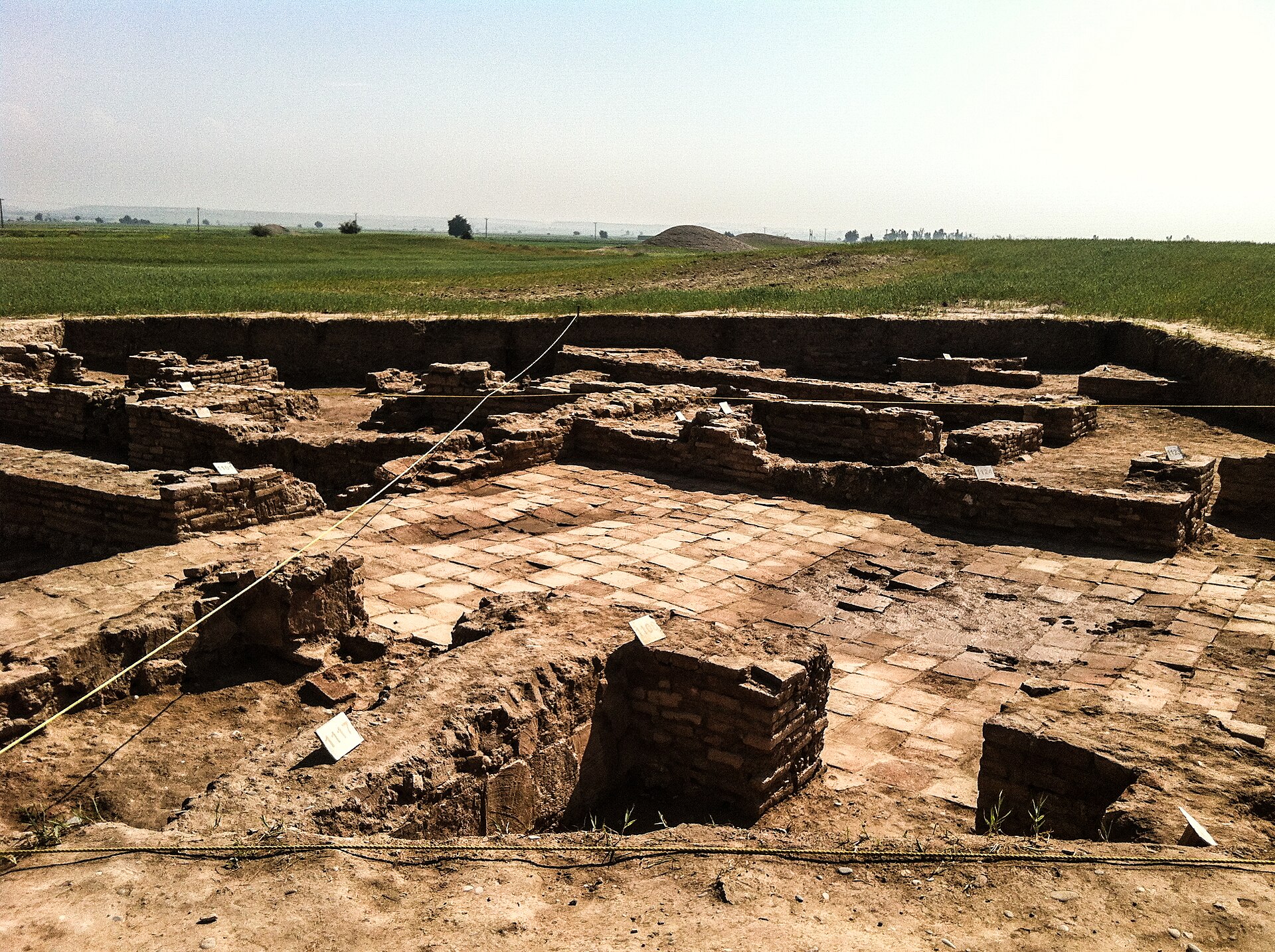
- Walking the mounds — Gundeshapur archaeological site
Away from the road the ground rises and falls in gentle humps, each hiding buried structures. Look for brick fragments, ploughed edges and the line of the old plain. Stay on established tracks, keep off exposed walls and leave anything you find where it lies, as the site is protected.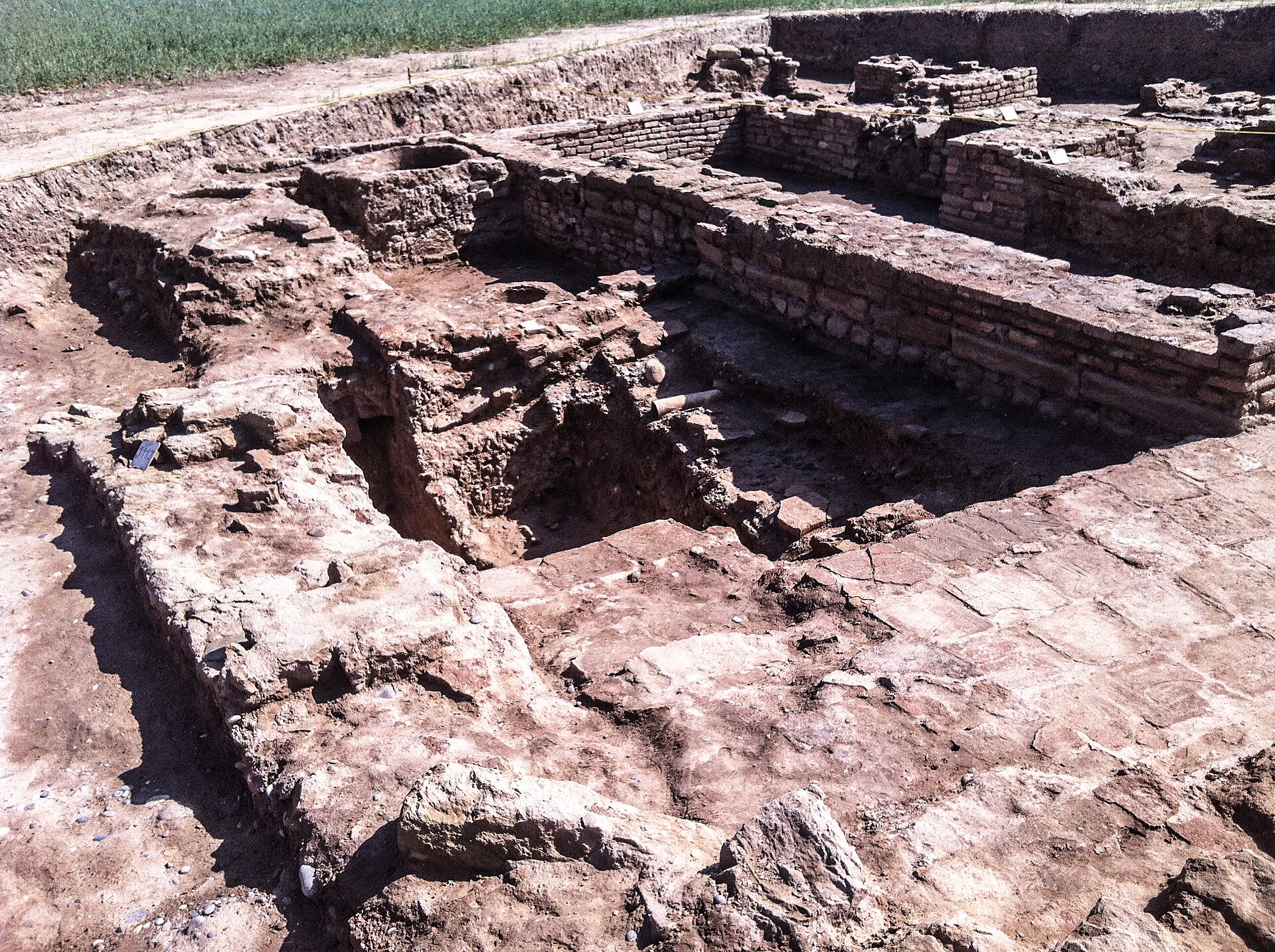
- Sasanian coin of Khosrow I — Image of a coin from the city's mint
A silver coin of Khosrow I bears the mint mark of Weh-Andiōk-Šābuhr, the city's Middle Persian name. It is a reminder that Gundeshapur was a working royal city with a treasury, not only a school. Museums in the region and beyond hold similar Sasanian coins.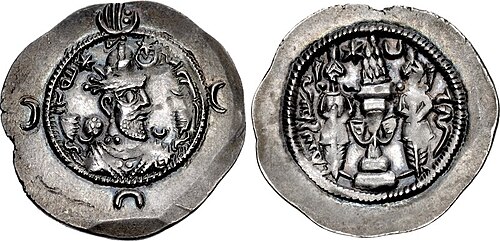
- Susa — Shush, west of Dezful
Susa is a much older and more layered site, with the Achaemenid palace area, a museum and castle, the shrine associated with Daniel, and the mound of Haft-Teppeh. It gives the wider story of Khuzestan and pairs well with Gundeshapur on a longer day trip. - Shushtar — South-east of Gundeshapur, along the Karun river
Shushtar is known for its ancient water works: watermills, dams, bridges and tunnels, with an old town of bazaar lanes, houses and a castle. It is the most rewarding stop nearby for anyone interested in engineering, and it is reachable by the road that passes Gundeshapur.
Culture
Gundeshapur sits in Khuzestan, a province where Persian-speaking, Arab, Lur and Bakhtiari communities live side by side. Dezful, the nearest town, is conservative and devout, with a strong Shia calendar. Around Muharram, black banners appear and processions fill the streets, and the mood is solemn and public.
The local relationship with the ruins is matter-of-fact. For many Iranians the site stands for a pre-Islamic past of scholarship and medicine, and the name is used for schools and hospitals. Guides may talk about it with pride, though the details of its history are told in different ways, so it is worth asking where a claim comes from.
Hospitality is part of the culture. Expect invitations to tea, and expect a polite back-and-forth known as taarof, in which offers are refused once or twice before being accepted. Meeting it with warmth and a few Persian phrases goes a long way. Public life follows Iran's rules on dress and behaviour, and alcohol is not available.
Heat shapes the day. People rest in the afternoon, shops reopen in the evening, and the best time for walking outdoors is early morning. Shared meals, strong sweet tea and dates are the common way of welcoming guests.
Ask before photographing people, and in particular women, and do not film or photograph anything that looks like a military or government building on the road to the site.
What to wear
Dress around Gundeshapur reflects the mix of communities in Khuzestan. Bakhtiari and Lur men traditionally wear the black felt cap and the heavy woollen coat known as the chukha, made for cold hills and migration between pastures. Women in those communities wear long, layered skirts and bright patterned tunics with scarves. Arab communities on the plain favour the long white dishdasha for men with a headcloth, and flowing black abayas for women. Wool, cotton and felt are the main materials, and traditional pieces mostly appear at weddings, festivals and religious gatherings.
Day to day, most people in Dezful wear modern clothes shaped by Iranian rules. Women wear a headscarf and a long, loose coat or tunic known as a manteau, often in dark colours but sometimes brighter. Men wear trousers and shirts, rarely shorts. Older people and rural families are more likely to keep traditional dress.
Visitors should follow the same modest norms. Women are expected to cover their hair with a scarf and wear loose clothes that cover arms and legs. Men should avoid shorts and sleeveless tops. Choose light cotton or linen, because the plain is very hot for much of the year, and add a wide-brimmed hat and sunglasses for a ruin site with almost no shade. Sturdy closed shoes suit the uneven, dusty ground, and a light layer helps on cool winter mornings.
What to eat
- Dizi (abgoosht) — Traditional eateries in Dezful's old town
A slow-cooked lamb stew with chickpeas and beans, served with the broth poured out first and the solids mashed afterwards, eaten with flatbread and raw herbs. It is filling and plain, a good lunch before or after a morning on the plain. - Ghalieh mahi — Riverside eateries along the Karun and in Shushtar
A southern fish stew with herbs, garlic and tamarind, spicy and sour in a way that reflects the Gulf coast. It is typically served with rice, and it is worth asking what the day's fish is. - Kebab with fresh flatbread — Grill houses near the bazaar in Dezful
Minced lamb or chicken kebab grilled over charcoal, served with rice or bread, grilled tomato and sumac. Simple and widely available, it is the safest choice when time or language is short. - Fesenjan — Family-run eateries in Dezful and Ahvaz
A dark, sweet-sour stew of ground walnuts and pomegranate molasses, usually with chicken, served over rice. It is rich, so share it, and expect cooks to vary the sweetness according to their own family's habit. - Dates with tea — Bazaar stalls and tea houses across Khuzestan
Khuzestan is date country, and soft fresh dates are offered with strong black tea almost everywhere. Buy a packet from a bazaar stall for the road, and drink the tea sweet if offered it that way.
Plan it
Best time. November to March, when days are mild and walking the open ruins is comfortable. Summers on the Khuzestan plain are extremely hot and dry, so avoid midday visits from late spring to early autumn.
How long. 1
Getting there. Dezful is on the north–south mainline from Tehran via Qom and Ahvaz, with several trains a day, including overnight services. Abadan Airport is the nearest airport named for the area. From Dezful, take a taxi or hired car along the Shushtar road to Jandi Shapur village, about 14 km away, then on to the ruins.
Budget. low
Tips
- Go early in the morning, before the heat and the glare
- Carry plenty of water and a sun hat, as there is little shade or shelter at the site
- Arrange a driver in Dezful for the round trip, and ask them to wait
- Carry cash in rials, as foreign cards often do not work in Iran
- Combine the visit with Susa and Shushtar if you have a second day
Etiquette
- Dress modestly: women should cover their hair and wear loose clothing with long sleeves
- Stay on paths, keep off exposed walls and take nothing from the ground
- Ask before photographing local people
Nearby
Sources
- Wikidata Q1302971 (CC0)
- Wikipedia: Gundeshapur (rev 1378385931) (CC BY-SA 4.0)
- Wikivoyage: Khuzestan (rev 5279713) (CC BY-SA 4.0)
- Ancient City of Gandhi Shapour 02, Alireza.heydear (CC BY-SA 4.0)
- Ancient City of Gandhi Shapour 01, Alireza.heydear (CC BY-SA 4.0)
- Ancient City of Gandhi Shapour 03, Alireza.heydear (CC BY-SA 4.0)
- Ancient City of Gandhi Shapour 04, Alireza.heydear (CC BY-SA 4.0)
- Khosrow I Anushirvan, Gundeshapur mint, Classical Numismatic Group (CC BY 3.0)


