Gulmarg
Gulmarg, India
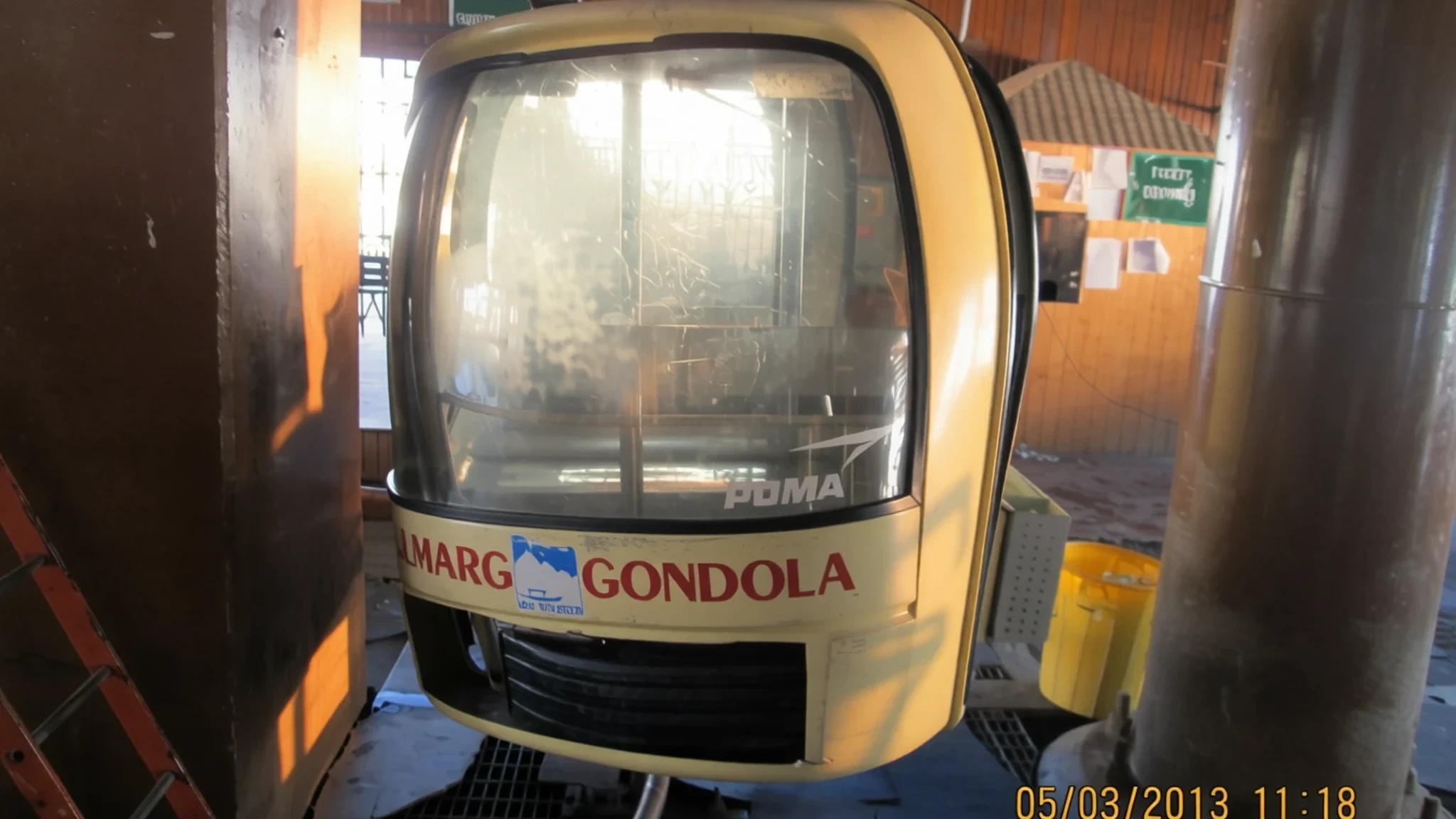
Go for alpine meadows and the gondola ride above the Kashmir Valley, but come prepared for cold, crowds and a slow road.
The place
Gulmarg sits in the Pir Panjal range of the Western Himalayas, inside the boundaries of the Gulmarg Wildlife Sanctuary, in the Indian-administered part of Kashmir. Gulmarg is run by a notified area committee, a local administrative body, and sits in Baramulla district within the Union Territory of Jammu and Kashmir. It is also close to the Line of Control, which divides land held by India from land held by Pakistan. At roughly 2,690 metres, it is high enough that summer evenings stay cool and winter brings deep snow that lingers for months.
The town is compact. Hotels, guesthouses and small eateries cluster around the gondola station and the bus stand, and the open meadow spreads out from there. Most visitors come for the views across the valley and the chance to climb toward the high ridges by cable car. In summer the meadow fills with wildflowers and the conifers reach down to the edges of the town. In winter the same ground becomes a ski slope, and the streets feel quieter.
Practical points matter here. The road from Srinagar is long and winding, and the last stretch from Tangmarg is narrow. Weekends bring more people up the hill, so weekday visits usually feel calmer. Bring warm layers even in summer, because the temperature drops quickly after the sun leaves the meadow and the weather can change within an hour. Cash is useful for small purchases, since many stalls and guides do not take cards.
Its story
Local people knew the place as Gaurimarg, the path of the goddess Gauri, until Yousuf Shah Chak, who ruled Kashmir in the late sixteenth century, gave it the name it carries now. Under the Mughals, the emperor Jahangir came to the meadow and gathered wild flowering plants to take back to his gardens, which gives the town a link to the great garden tradition of the subcontinent.
The British Raj made Gulmarg a summer and recreational retreat. Civil servants hunted game in the surrounding forest and played golf, and three golf courses were laid out on the meadow. In 1927 the British founded a ski club and held two skiing events a year, at Christmas and at Easter. The archaeologist Marc Aurel Stein also explored the area in the late nineteenth century.
After British rule ended, Gulmarg belonged to the princely state of Kashmir and Jammu, ruled by the Dogra king Hari Singh. He acceded to India in October 1947. Within weeks the area was swept into the India–Pakistan war of 1947–1948. Pakistan-backed tribal fighters came through the Haji Pir pass and took Gulmarg briefly, before Indian Army counterattacks, led by the 1st Sikh Regiment near Srinagar, retook the town. In 1948 the army set up the High Altitude Warfare School here.
The Indian government promoted the town as a tourist and winter sports destination in the 1960s. Insurgency in the 1990s hurt visitor numbers badly, and tourism recovered only in the twenty-first century. The gondola, built in several phases from the late 1990s, has become the town's main attraction.
What to see
- Gulmarg Gondola — Gulmarg, at the edge of the town
The gondola is the main draw and the easiest way up the mountain. It is a two-stage high altitude cable car: the first stage runs from Gulmarg to Kongdori, and the second climbs to a shoulder of Apharwat Peak. It was built in several phases from the late 1990s and the line was finished in 2004. Expect queues on busy days, and check the day's operating status at the base before you set out.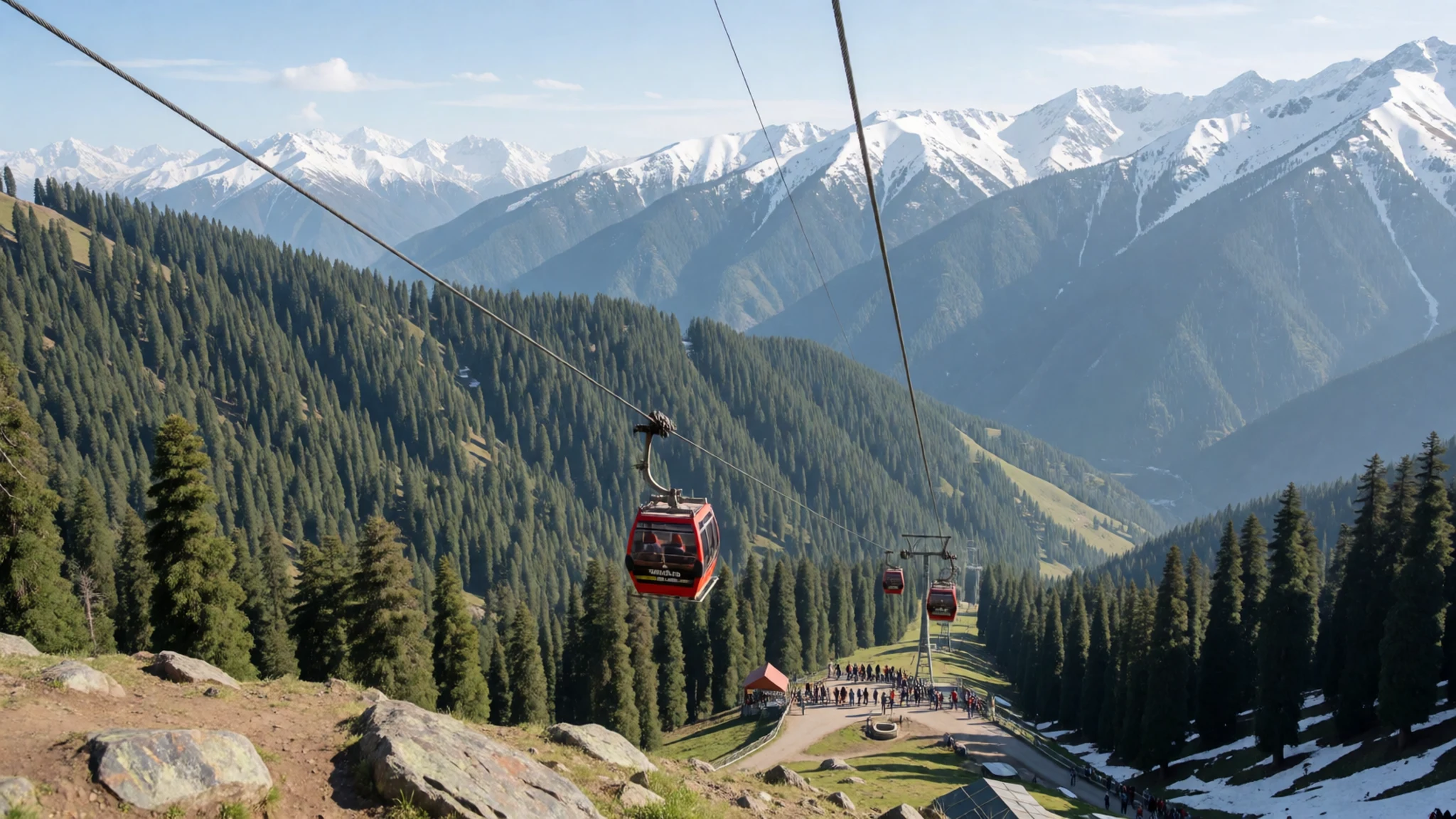
- Alpather Lake — Apharwat foothills, above Gulmarg
Alpather Lake is a frozen lake at about 4,390 metres, lying at the foot of the twin Apharwat peaks. Reaching it means a demanding walk at altitude, and it is much harder than the gondola suggests. Start early in the day, carry more water than you think you need, and turn back if you feel dizzy or short of breath. Conditions change quickly up there, so ask locals about the path before you go.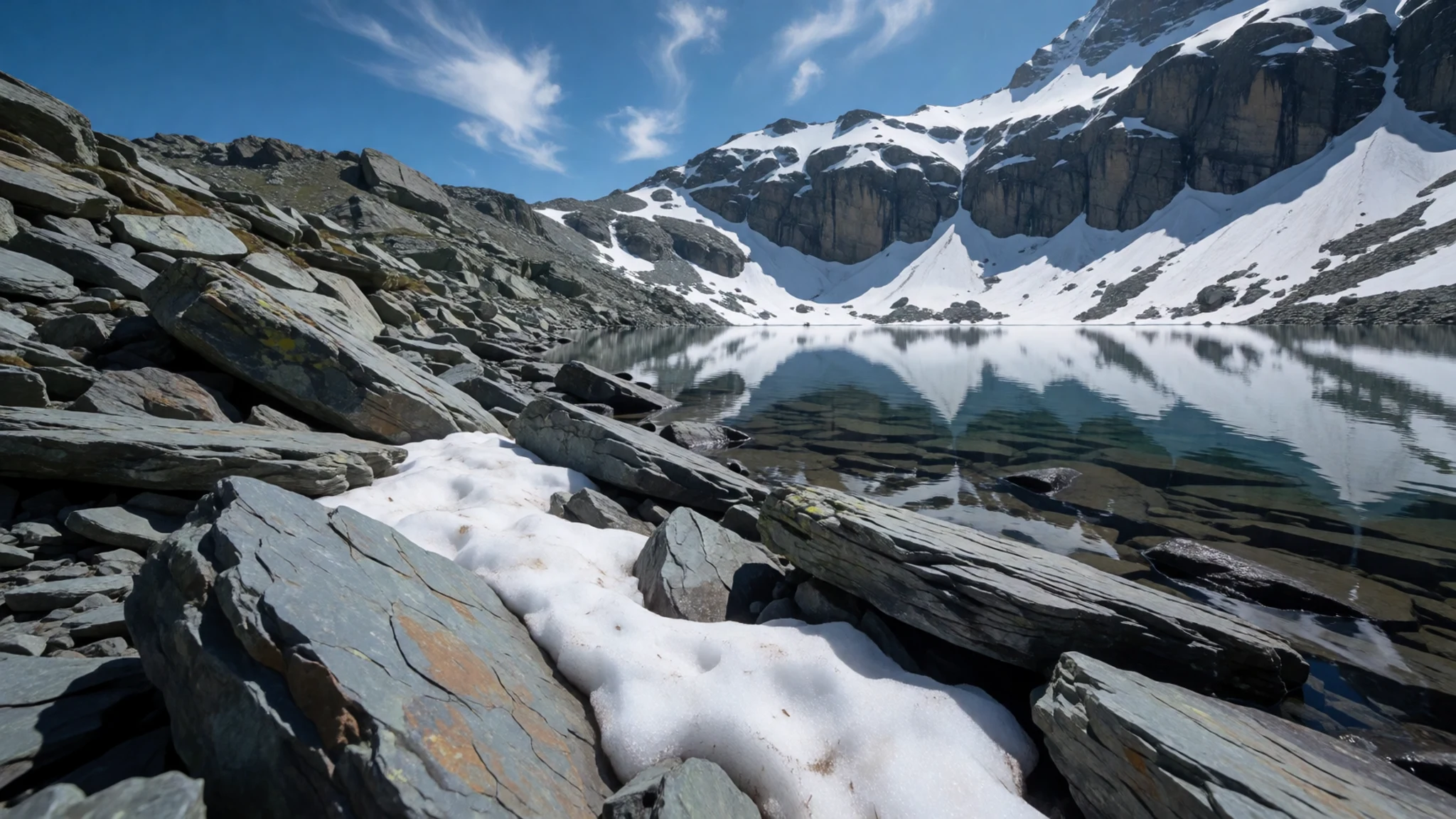
- Baba Reshi Shrine — Northern edge of Gulmarg
This shrine holds the grave of the Sufi saint Baba Payam uddin Reshi. The original structure dates to 1840, although it has been altered over the years. It is an active place of devotion rather than a viewpoint, so keep your voice low and dress modestly. Remove your shoes before you enter the sacred area and follow the example of people praying there.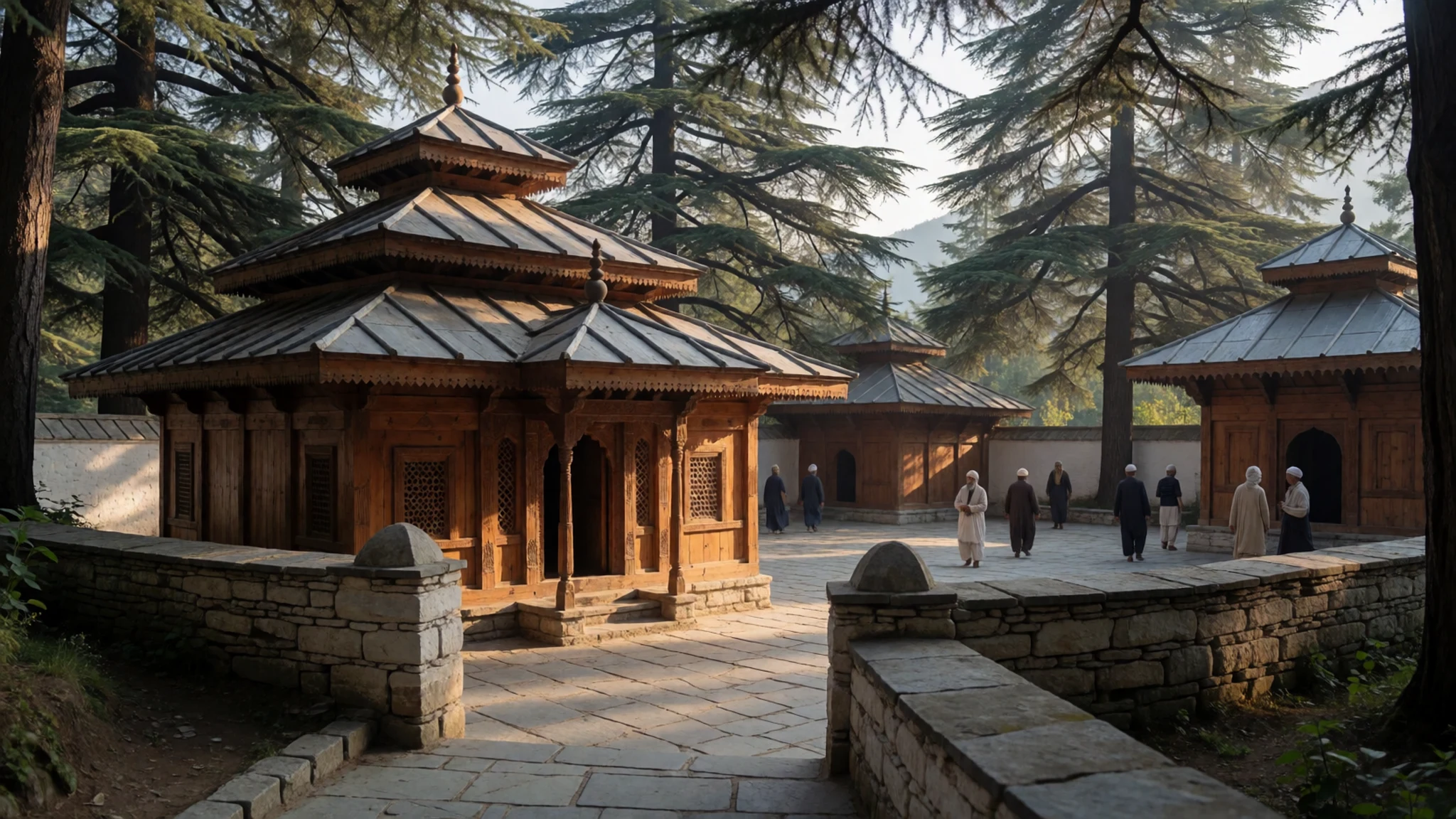
- Maharani Temple — A hillock above the town centre
This Shiva temple stands on a small hillock and can be seen from most parts of the town. It was built in 1915 by Mohini Bai Sisodhia, wife of the last king of Kashmir, Hari Singh. The walk up is short but steep, and the view back over the meadow is the main reward. Remove your shoes at the entrance and keep quiet while worshippers are praying.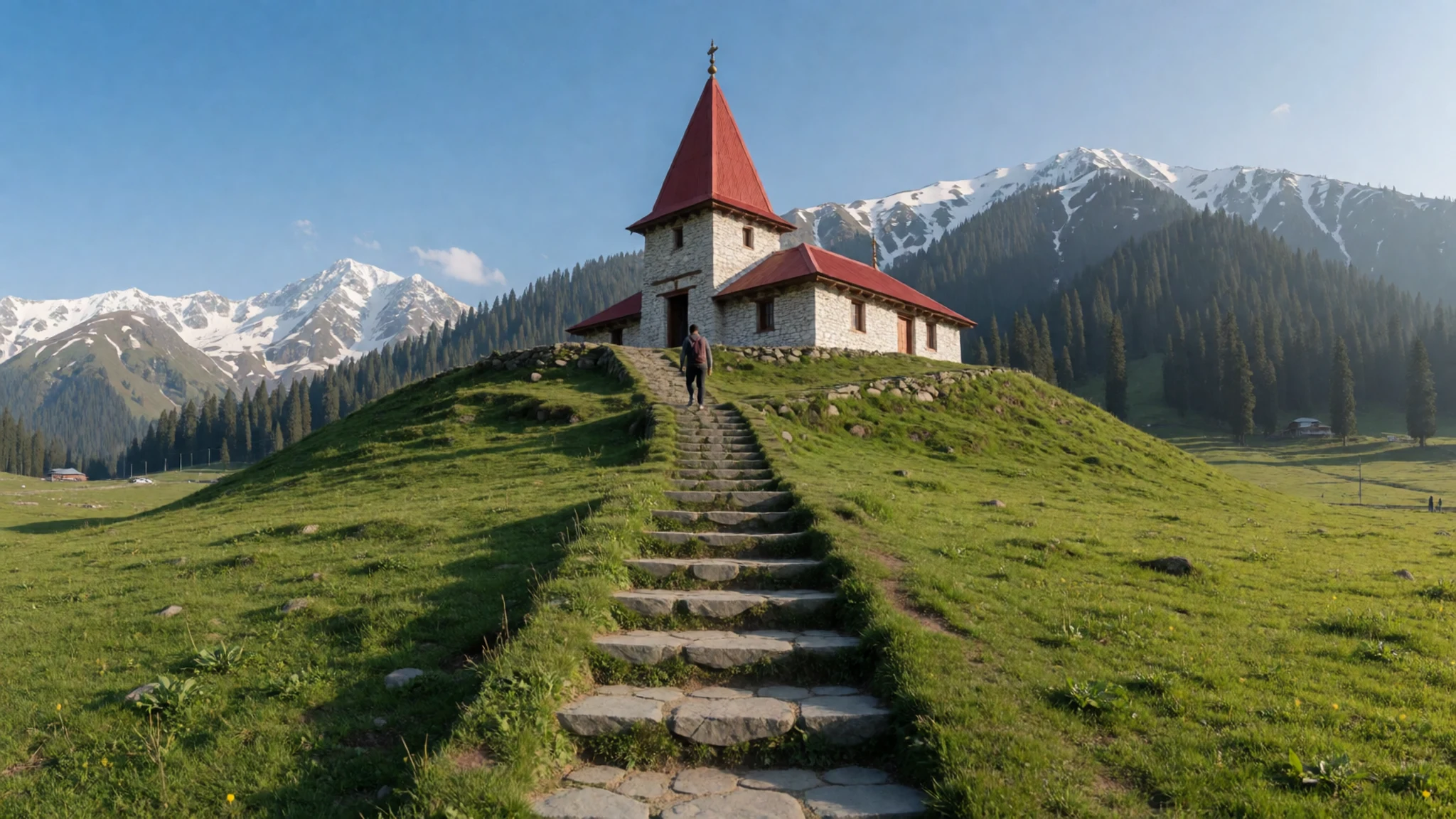
- Gulmarg Golf Club — The western part of the meadow
The golf course dates from the British period and began as a six-hole layout in 1890. Wikivoyage describes it as the highest golf course in the world, which is a claim worth checking with the club itself. Walkers can enjoy the open greens and the views of the surrounding peaks. Check access and any charges directly with the club, as these can change.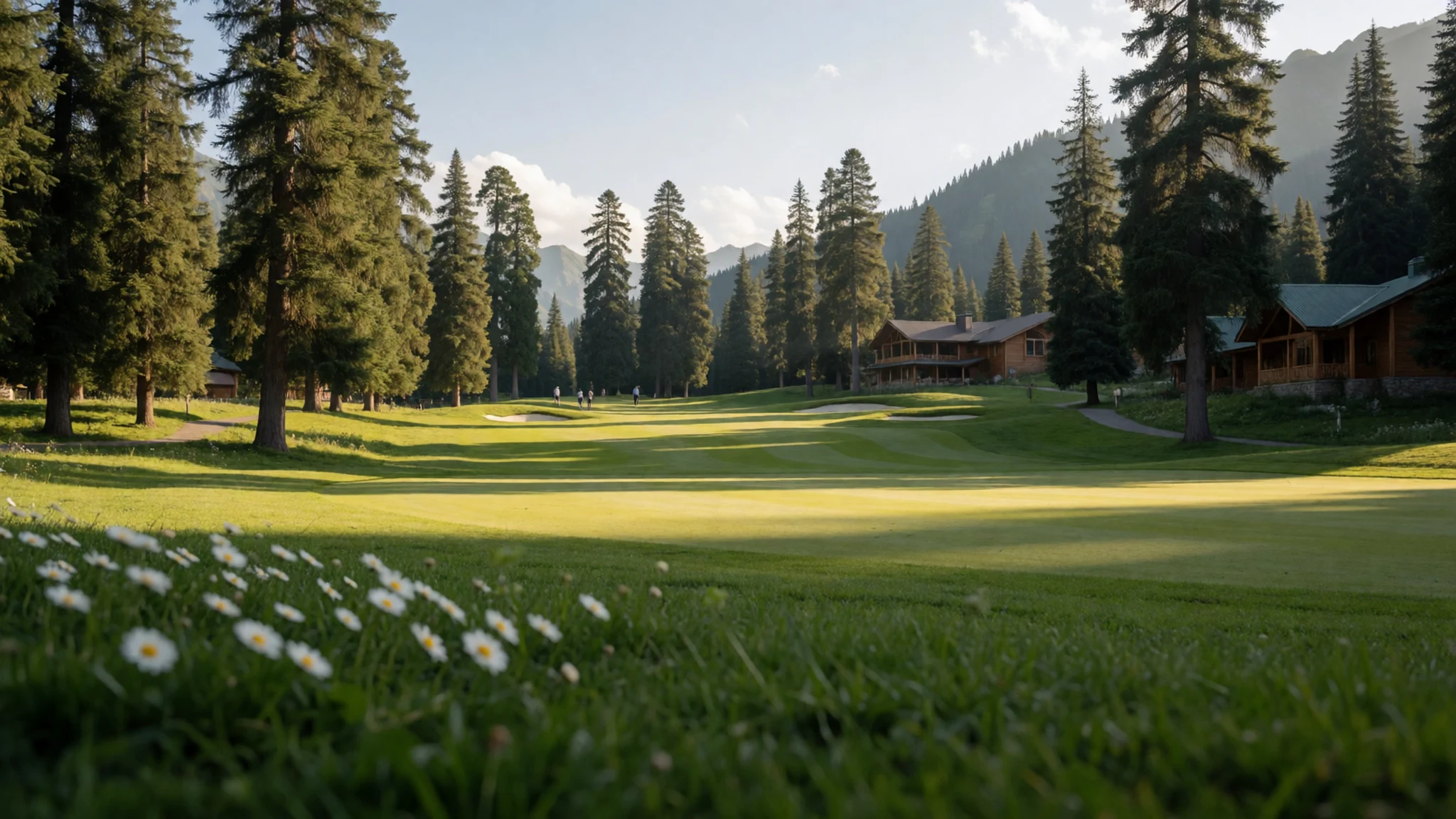
- St Mary's Church — The Valley of Shepherds, a short walk from the centre
St Mary's stands in the Valley of Shepherds, a short walk from the centre. The brick building is topped with a green metal roof, which looks striking against the pines. It is a quiet, simple place, so visit with a soft voice and avoid photographing people inside. If a service is under way, step back and wait until it finishes.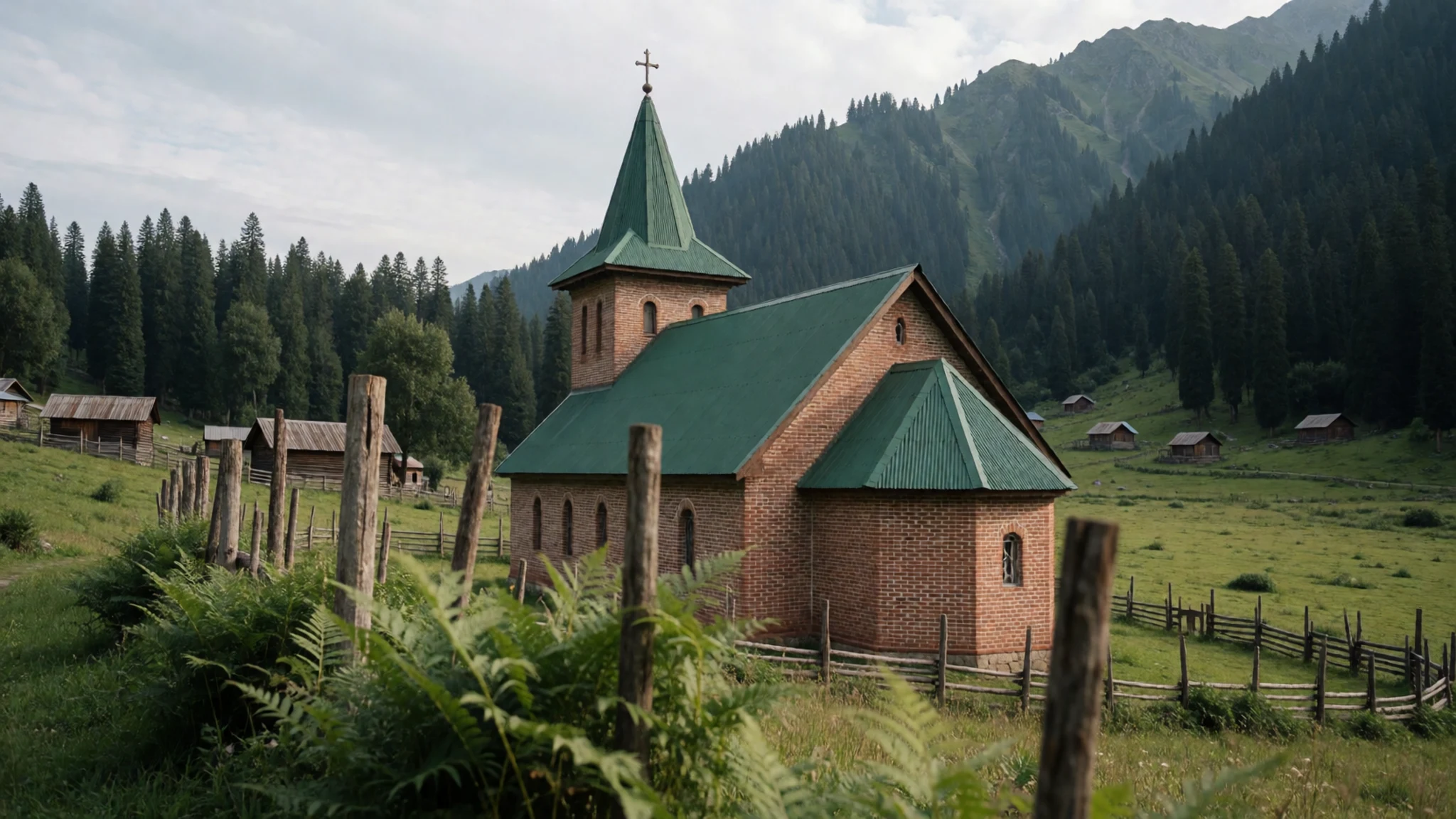
Culture
Kashmir's population is largely Muslim, and Gulmarg's religious life reflects the valley's mix of Sufi shrines, Hindu temples and a Christian church. Religious sites are where visitors are most likely to notice local customs. The Baba Reshi shrine is a working place of prayer, and the Maharani Temple is an active Shiva temple. Both ask for quiet and covered shoulders, and many worshippers remove their shoes before stepping onto carpeted areas.
Kashmiri hospitality is famously warm, and tea is often offered freely in homes and guesthouses. Accept it gracefully, and do not expect to pay for every cup offered in a family home. Ask before photographing people, especially women and children, and avoid pointing a camera at religious ceremonies. Security is visible on the roads in this region. Keep your identity documents with you when travelling by road, and be patient at informal checkpoints, which are part of the journey here.
Remove your shoes before entering any shrine or temple, and cover your head at the Baba Reshi shrine.
What to wear
Traditional dress in Kashmir is built for cold. The pheran is a long, loose woollen tunic worn over other clothes, and people often carry a kangri, a small firepot of clay and charcoal, tucked beneath it for warmth. Men and women both wore the pheran through winter, and it is still common in the valley towns. The textile tradition to look for is embroidery. Kashida, a fine thread embroidery, decorates shawls and caps, and woven wool and pashmina shawls are sold in shops across the region.
What people wear now is mixed. Many residents dress in jackets, jeans and trainers, adding a pheran or a woollen cap when the weather turns. Women often wear a headscarf, which is common though not universal. Young people and visiting skiers wear technical outerwear, so the full range from traditional to ski gear can appear on the same street.
For a visit, dress in layers. Pack a warm fleece or down jacket, a waterproof shell, a hat, gloves and thermal base layers, even in summer, because evenings are cold. Wear sturdy waterproof boots with good grip for muddy and snowy paths. For religious sites, choose long trousers or a long skirt with sleeves that cover the shoulders, and carry a scarf so you can cover your head.
What to eat
- Wazwan — Restaurants on the road down to Tangmarg, or in Srinagar, by advance order
A multi-course Kashmiri feast of meat dishes, traditionally cooked by a team of specialist chefs and shared from large platters. It is a celebration meal rather than a quick lunch, so order ahead and ask the restaurant whether it can prepare it on the day you plan to visit.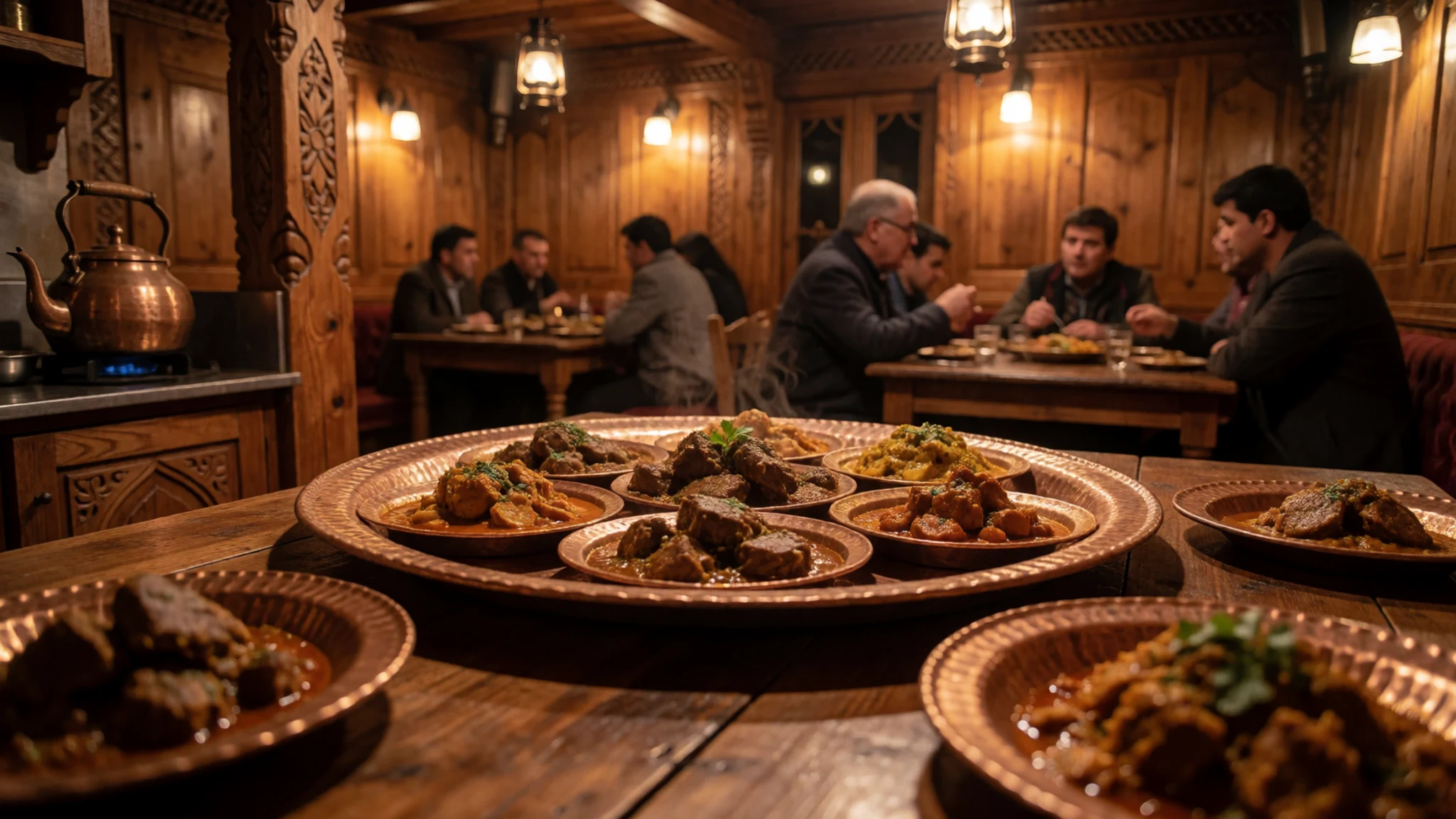
- Kahwa — Tea stalls by the bus stand and the resort restaurants
Green tea steeped with cardamom, saffron and cinnamon, with little sugar. Served hot in small cups, it is the warming drink of the valley and a good way to end a cold afternoon.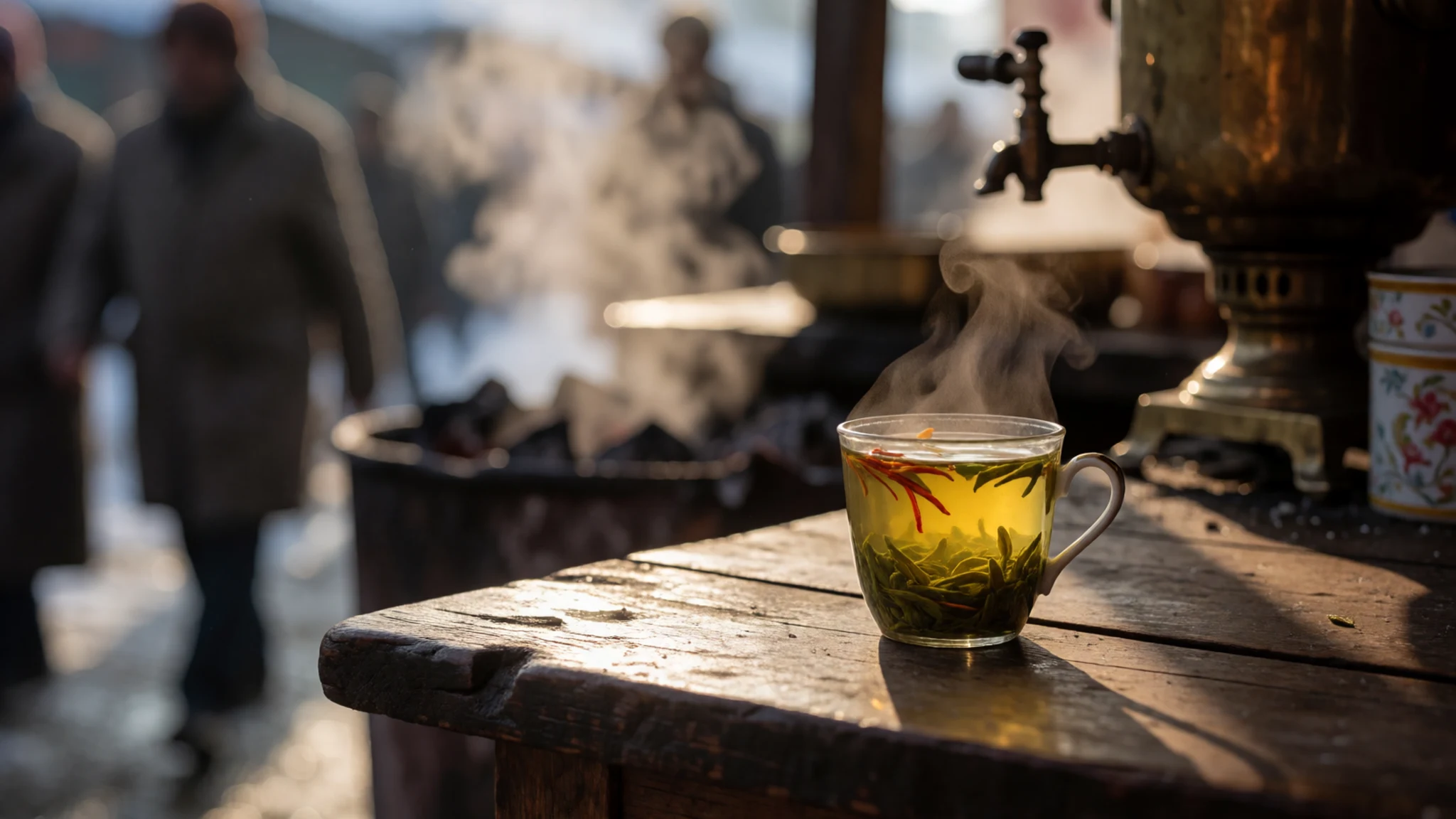
- Noon chai — Bakeries and tea stalls in the town centre
A salty pink tea made with milk, bicarbonate of soda and green tea, whisked and sometimes topped with pistachio. Locals say the soda aids digestion, and it is often eaten with flatbread for breakfast. - Rogan josh — Indian restaurants in the resort area of Gulmarg
Lamb braised in a deep red sauce of Kashmiri chillies, ginger and yoghurt. The chilli gives colour more than fire, so it is milder than many Indian curries. Ask whether the kitchen makes it in the Kashmiri style. - Dal and roti at a dhaba — A roadside dhaba near the bus station
Yellow lentils tempered with cumin, garlic and onion, scooped up with fresh roti from a tandoor. It is simple, filling and vegetarian, which suits many visitors after a long day on the slopes or the paths.
Plan it
Best time. June to September for open meadows, wildflowers and the gondola in fair weather; December to March for skiing, though the road is slippery and temperatures fall below zero.
How long. 2–3
Getting there. Reach Srinagar, the summer capital of Jammu and Kashmir, then drive or take a bus for about 1.5 hours. Local buses run as far as Tangmarg, and from there mini coaches or taxis climb to Gulmarg.
Budget. mid
Tips
- Start early on the trails and at the gondola, when the air is clearer and the crowds are smaller
- Carry cash for small purchases, guides and taxi fares, and agree the price before you set off
- Carry water and sun cream; the altitude makes walks harder than they look
- Pack warm layers and a waterproof jacket even in summer
- Allow a full day for the road from Srinagar, which is slow near Tangmarg
Etiquette
- Ask before photographing people, especially women and children
- Remove shoes at shrines and temples, and cover your head at the Baba Reshi shrine
- Keep your papers with you and be patient at informal checkpoints
Nearby
Sources
- Wikidata Q1025272 (CC0)
- Wikipedia: Gulmarg (rev 1376751851) (CC BY-SA 4.0)
- Wikivoyage: Gulmarg (rev 5335964) (CC BY-SA 4.0)
- Gulmarg - Jannat on Earth, Vikas Panwar (CC BY-SA 4.0)
- Flora of Gulmarg Wildlife Sanctuary, Tanujdogra (CC BY-SA 4.0)
- Ancient Temple, Gulmarg, Anurag Kumar (CC BY-SA 4.0)
- Gulmarg gondola, Arup1981 (CC BY-SA 4.0)
- Gulmarg-Gondala, Vikas Yadav (Public domain)
- Gulmarg - Kashmir 2, Vikas Panwar (CC BY-SA 4.0)
- Apharwat Peak Gulmarg, Malikjavid (CC BY-SA 4.0)
- Maharaja Hari Singh Palace, Gulmarg 01, Deepank Ranka (CC BY-SA 4.0)


