Guadalupe Monastery
Guadalupe Monastery, Spain
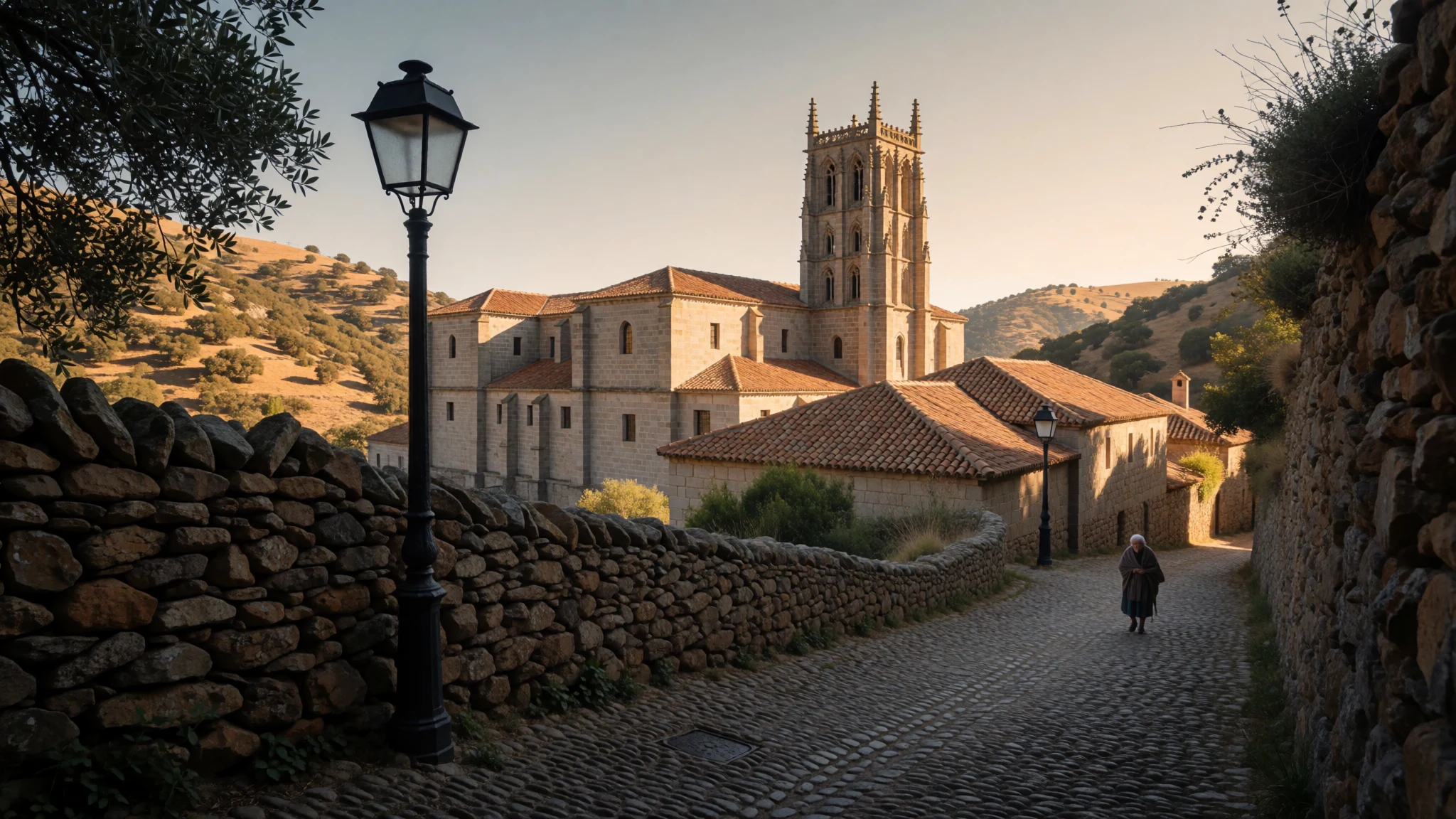
Guadalupe Monastery rises above a small Extremadura town, a royal pilgrimage church whose story runs from a shepherd's find to Columbus's thanks.
The place
Guadalupe Monastery stands in the small town of Guadalupe, in Extremadura, western Spain, at the foot of the eastern side of the Sierra de las Villuercas. The surrounding hills are dry and rolling, and the monastery's stone bulk rises above the town's roofs, with lanes bending uphill to the Plaza de Guadalupe in front of it. Formally it is the Royal Monastery of Saint Mary of Guadalupe, a Roman Catholic foundation, and UNESCO lists it as a World Heritage Site. Wikidata also files it as an art collection, which suits a place that has gathered paintings, church fittings and cloisters over many centuries. It is not one building from one moment. A mudéjar cloister, built in the style where Christian patrons used Islamic-influenced brickwork and tile, sits beside a Gothic cloister that once served as the infirmary and now forms part of the monastery's guesthouse. The church is still a working sanctuary, so the atmosphere is closer to a pilgrimage centre than a museum. Extremadura has very hot, dry summers with long droughts and mild winters, and that shapes the visit: the cooler months or the early part of the day are kinder. Spanish is the everyday language, and much of the explanation on site is likely to be in Spanish, so a translation app helps. The town is small, with few other attractions, so the monastery sets the pace of the day. Weekends and religious festivals bring more pilgrims and day-trippers than a quiet weekday.
Its story
Guadalupe Monastery grew out of a legend. Beside the Guadalupe River, a shepherd called Gil Cordero, from Cáceres, is said to have come across a statue of the Virgin in the late 13th century, one that local people had supposedly concealed in 714 as Moorish armies advanced. A chapel was raised on the spot. King Alfonso XI visited it more than once and, after his victory at the Battle of Río Salado, credited the Virgin's intercession. He raised the church to a royal sanctuary and paid for a large rebuilding, and the monastery proper took shape in the 14th century. In 1389 the Hieronymite order took charge and chose Guadalupe as its main base, with building continuing under its first prior. Royalty kept coming. Henry IV of Castile was buried here in 1474 beside his mother, and on 21 April 1486 Ferdinand II of Aragon issued a ruling at the monastery that freed Catalan remensa peasants from the harshest customs binding them to their lords. The monastery is tied to the Americas as well. Columbus made his first pilgrimage here after 1492 to give thanks, and the Caribbean island of Guadeloupe carries the shrine's name. Even after the same order founded El Escorial, much nearer Madrid, Guadalupe kept its royal patronage. That era ended when Spain confiscated its monasteries in 1835. Franciscans revived the community in the last century, and in 1955 Pope Pius XII named the shrine a minor basilica.
What to see
- The mudéjar cloister — Inside the monastery, Guadalupe
The mudéjar cloister is the monastery's showpiece courtyard: tiers of brick arches around a small ornamental fountain at the centre. Its brickwork shows the Islamic-influenced craft that Christian builders in Spain adopted. Visits are arranged by the monastery, so check the official site for how access works, and go on a weekday morning if possible.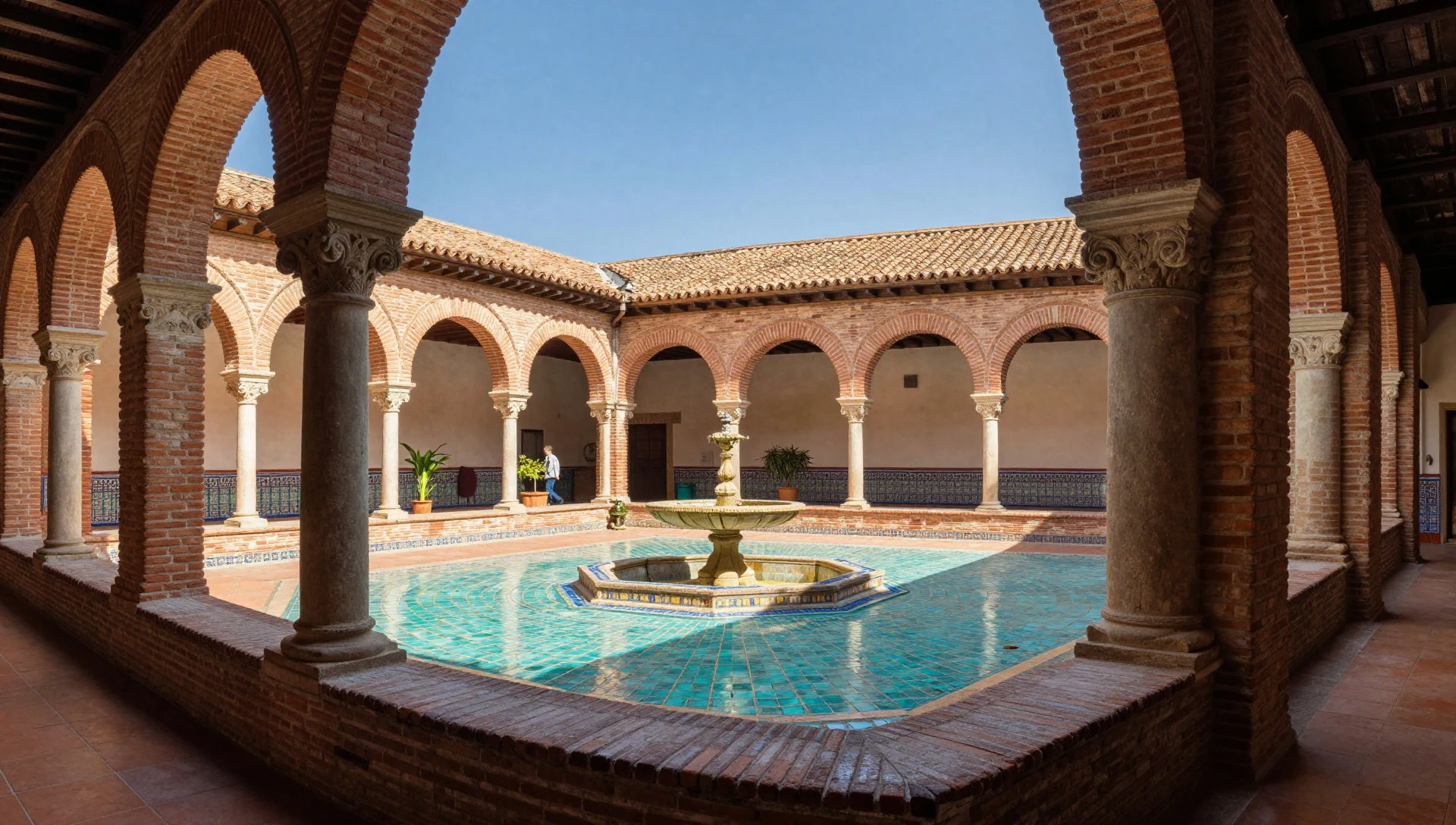
- Plaza de Guadalupe — Town centre, Guadalupe
The town square lies directly in front of the monastery and is the best place to take in its full mass, with the church rising behind the rooftops. Cafés and shops line the edges. It is where processions gather on festival days and where most visitors rest between the church and the cloisters.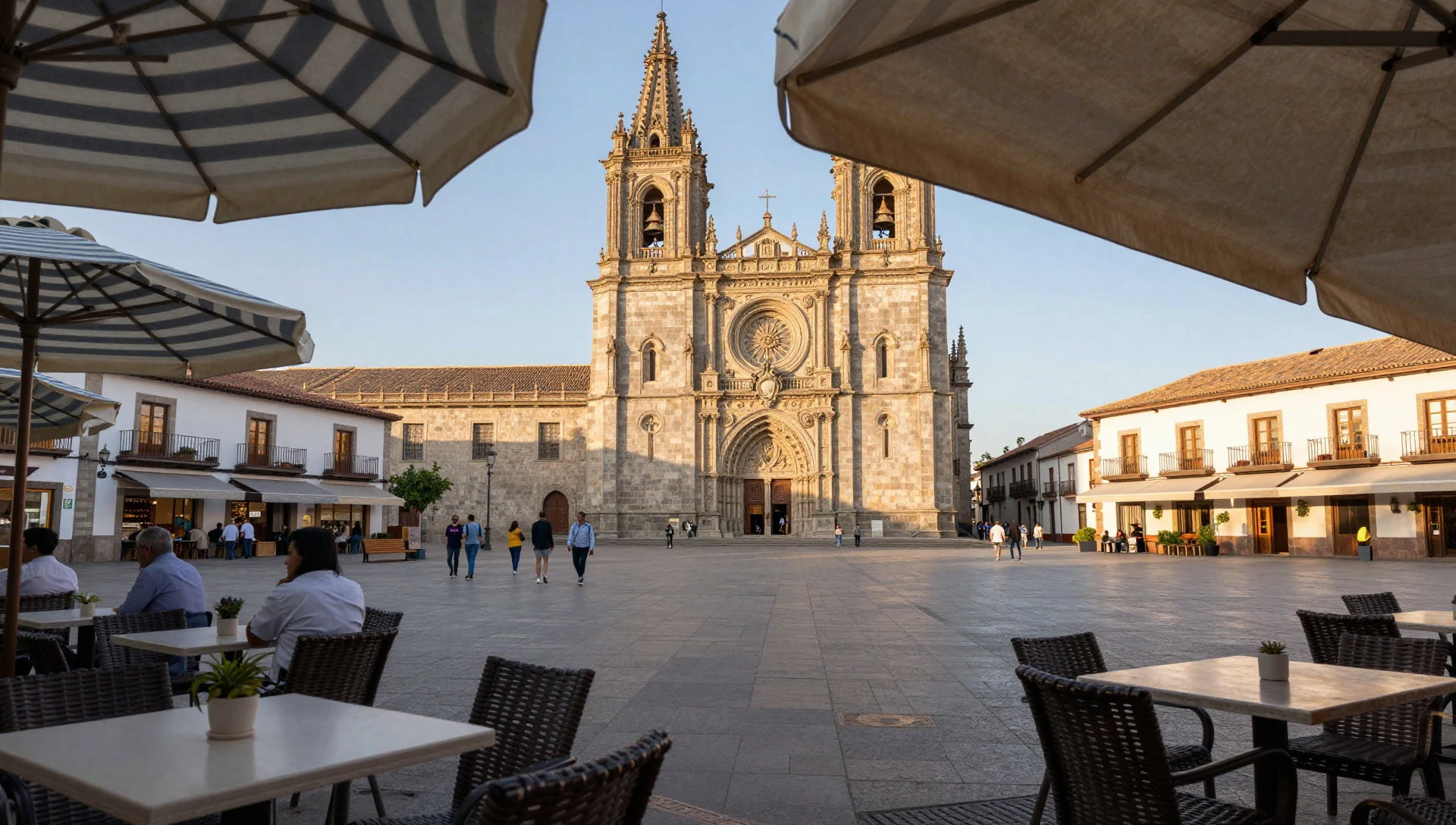
- The Gothic cloister — Monastery complex, Guadalupe
Also called the infirmary cloister, this quieter Gothic courtyard now forms part of the monastery's guesthouse. It is a reminder that Guadalupe has long looked after travellers and the sick as well as pilgrims. Access depends on guesthouse use, so ask at the monastery before wandering in.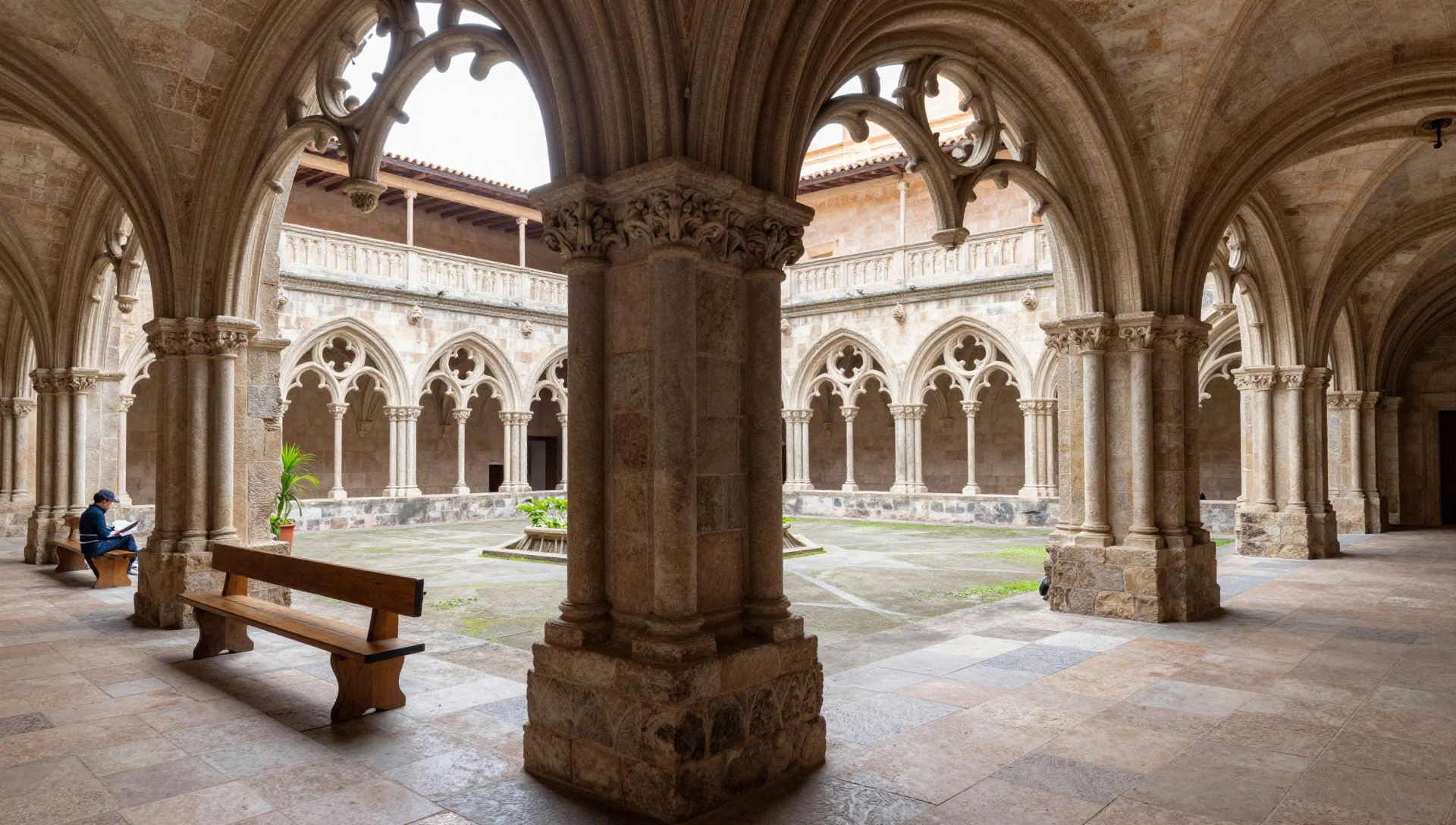
- La Ruta de Isabel la Católica — Cañamero to Guadalupe
This marked walking trail covers about 17 km from the village of Cañamero, reachable by bus, down into Guadalupe. It passes lakes and hills and takes roughly half a day. Arriving on foot gives the town and monastery a pilgrim's approach. Carry water, and avoid it in summer heat.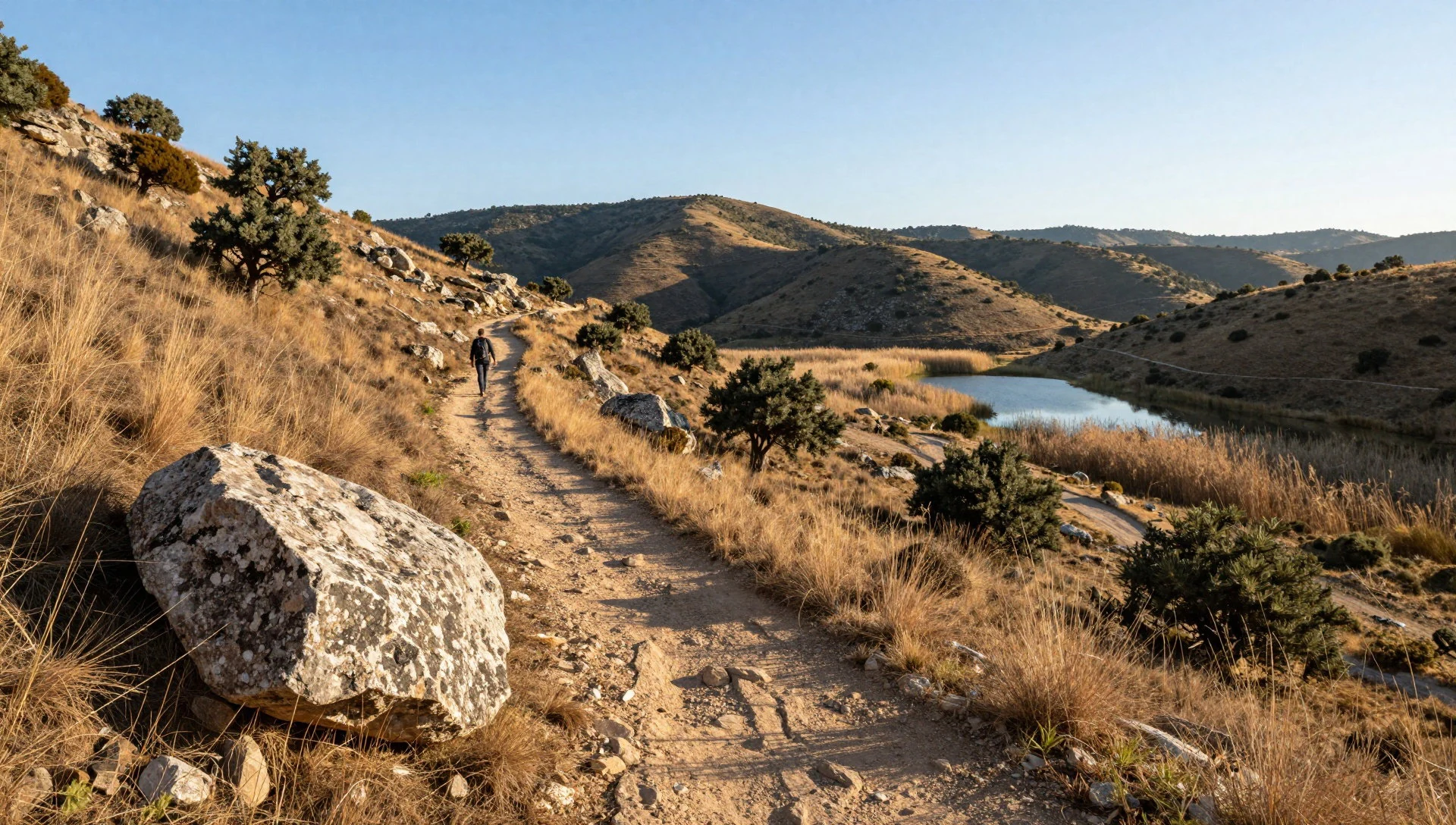
- Monfragüe National Park — Extremadura, a day trip from Guadalupe
Monfragüe is a longer outing into wilder Extremadura, with cliffs, rivers and forest, plus eagles and rare vultures overhead. A castle sits on a hilltop above the park and gives a view of the region's history. It suits a day away from the monastery, ideally with a car and binoculars.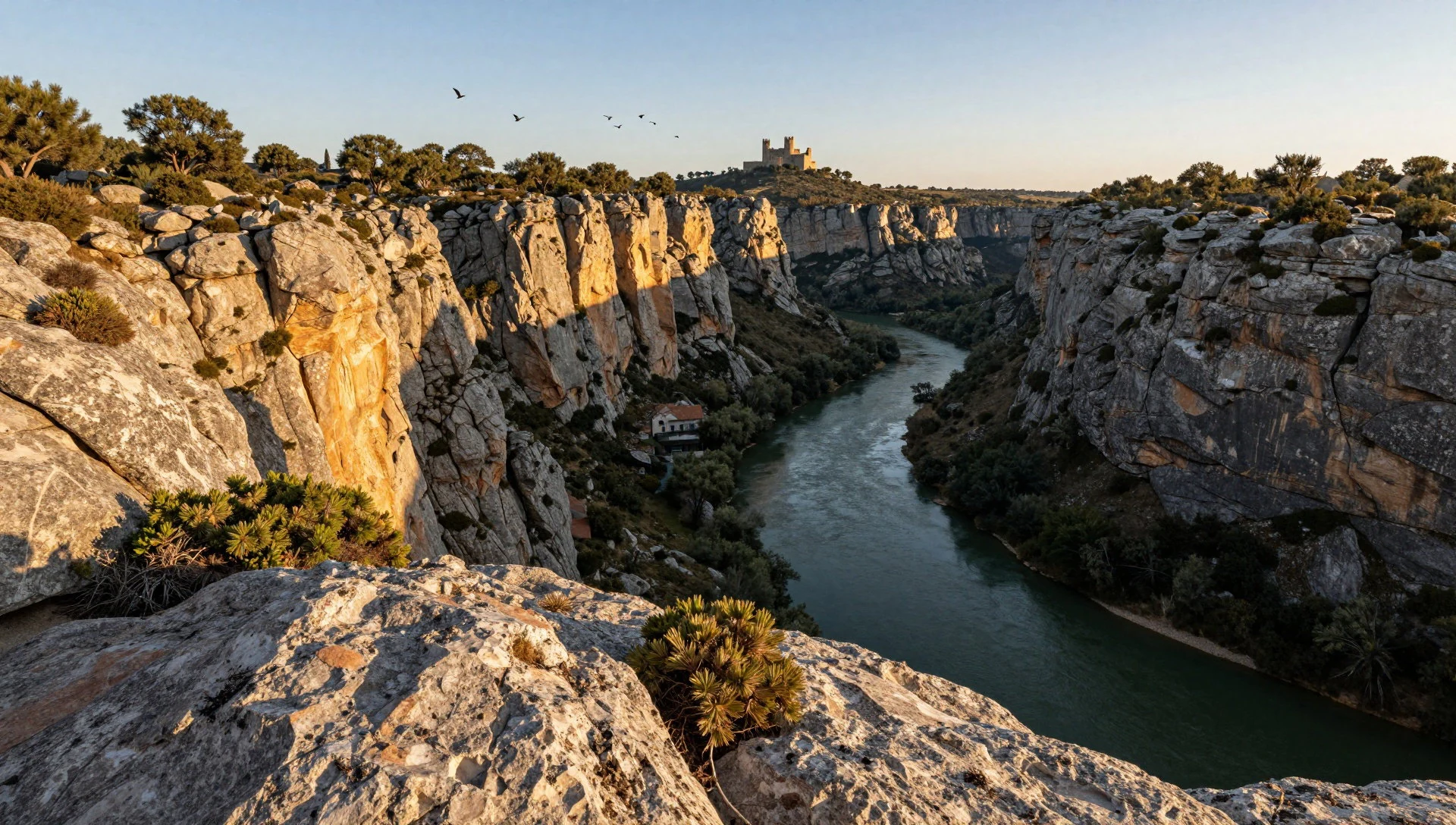
Culture
Guadalupe Monastery is a living pilgrimage site, so its culture is religious first. Pilgrims have come to the shrine of the Virgin since the legend of Gil Cordero's find, and the Franciscan community that runs the monastery today carries on a tradition begun by the Hieronymite monks. The shrine's name travelled with Spanish explorers: it is why a Caribbean island is called Guadeloupe, and why Columbus came here to give thanks. The town's calendar follows the church's, so festival days fill the Plaza de Guadalupe with processions and families, while ordinary weekdays are quiet. Spanish is the only official language of the region, and locals speak it in a local dialect group known as Castúo; a few words of greeting are always welcome. Hospitality is part of the monastery's old purpose, and the Gothic cloister still works as a guesthouse. Meals in Extremadura follow Spanish rhythm, with lunch in the mid-afternoon and dinner late in the evening, so eating at British or Indian hours can mean waiting for kitchens to open. Pork, cheese and wine from the region are part of how the town celebrates, and festivals are loud, sociable and family-centred. Dress modestly, keep your voice low, and do not photograph worshippers or use a flash inside the church without asking first.
What to wear
Guadalupe and the wider Extremadura region have a rural dress tradition built on wool, linen and sturdy cloth, shaped by shepherding and farming. Festival costume for women typically means full skirts, embroidered aprons and shawls; nearby Lagartera, in Toledo province, is known for colourful embroidery on linen, and pieces like these appear at fiestas and in local museums. Men's traditional clothing was practical: wool jackets, felt hats and capes against cold hill nights. Today the traditional outfits come out mainly for processions, pilgrimages and folk events. Everyday dress in the town is casual and neat: jeans or light trousers, shirts, and, among older residents, darker and more formal clothes for church. Families dress up for festival days. Visitors should plan for heat and for the church. In summer, wear light cotton or linen, a hat, sunscreen and sunglasses, and carry water. In winter and early spring, bring a warm layer, since the hills can be cool in the mornings and evenings. Inside the monastery church, cover shoulders and knees, and carry a scarf or light shirt to put on. The town's streets are steep and often cobbled, and the walking trail from Cañamero is rough in places, so flat, closed, grippy shoes are far better than sandals or heels.
What to eat
- Migas extremeñas — Traditional restaurants and taverns around the Plaza de Guadalupe
Migas is the dish locals call Extremadura's own: fried breadcrumbs seasoned with garlic and the smoky paprika of La Vera, often served with pork. It is hearty, rustic food that suits a cool day. Ask for it in the town's traditional restaurants around the Plaza.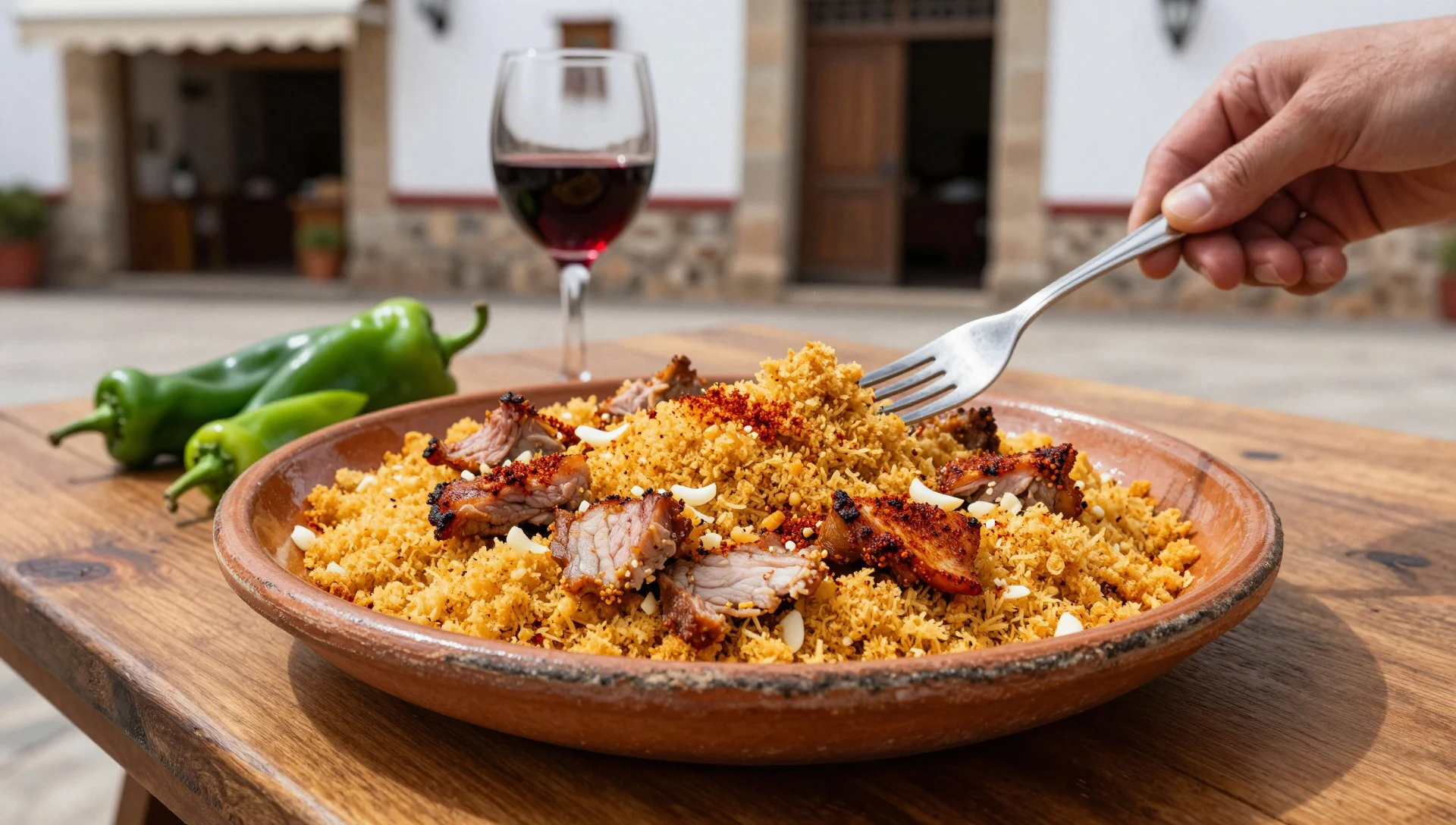
- Iberian ham and sausages — Bars, delicatessens and food shops in town
Extremadura is known for Iberian pork, from pigs that feed on acorns in the pasture. Expect ham, chorizo and other cured sausages, sliced thin and eaten with bread or as a tapa. Buy a small packet from a local deli to carry on a walk.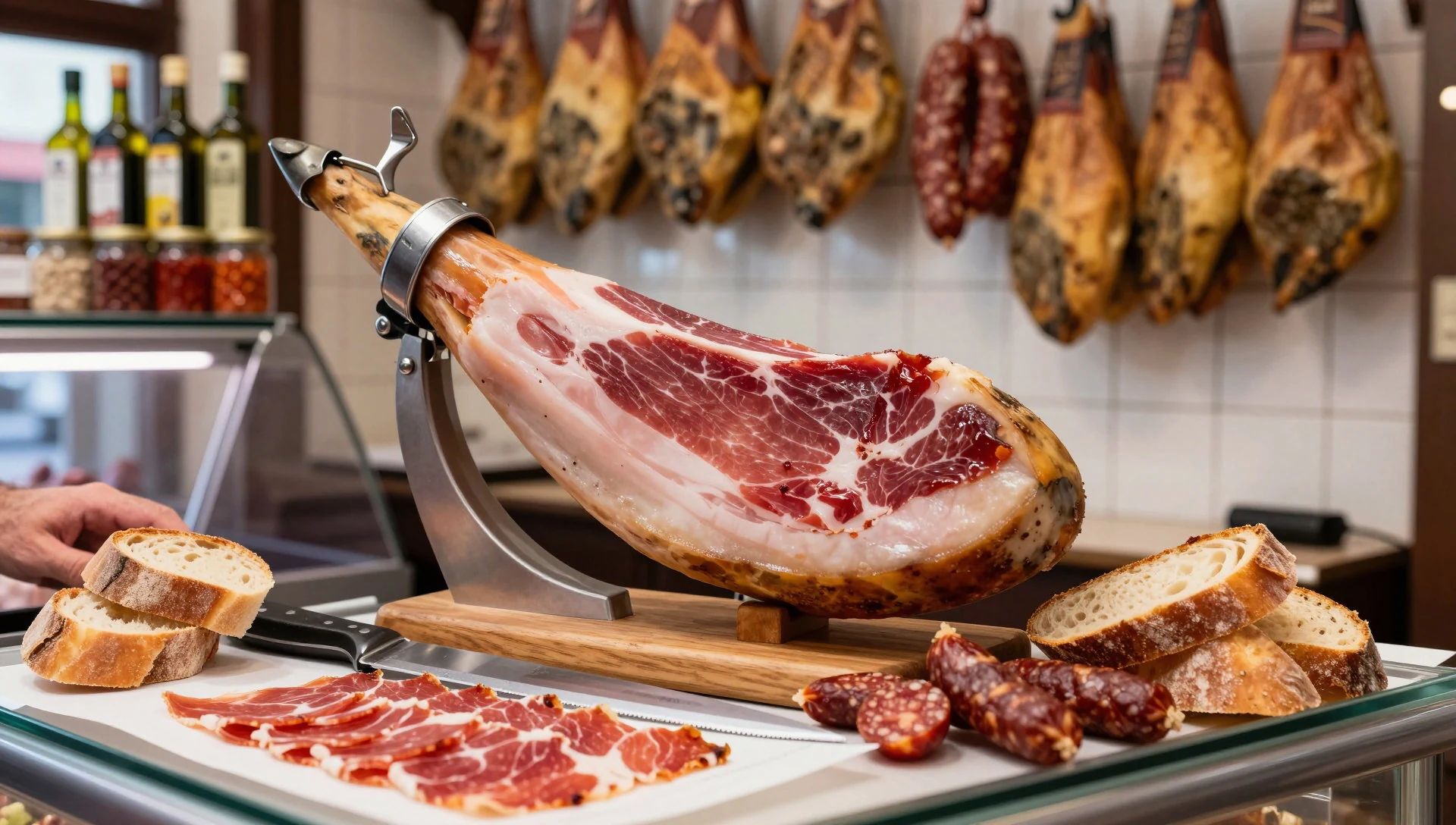
- Lamb or goat stew — Family-run restaurants serving regional cooking
Goat and lamb are central to the regional table, slow-cooked in stews that vary from village to village. The meat is tender and richly flavoured with paprika and herbs. It is a filling lunch after a morning at the monastery, so share a portion if the day is hot. - Torta del Casar — Cheese counters and restaurants serving regional produce
This soft, creamy sheep's-milk cheese is a regional speciality, traditionally eaten by cutting off the top and scooping it out with bread. The flavour is strong and slightly tangy. Look for it on cheese boards in local restaurants or at shops selling regional produce. - Local wine and pitarra — Taverns, wine shops and restaurants around the town
Quality wines from the Ribera del Guadiana area are widely sold in the region, while pitarra is a homemade wine that can be rougher. Try a glass of the former with lunch. Cherries from the Jerte valley, in season, are a sweet finish.
Plan it
Best time. March–April and November are the most comfortable months, with milder temperatures for walking and sightseeing. Summers in Extremadura are very hot and dry, so July and August suit only early-morning visits, while winters are mild but can feel cool in the hills.
How long. 1–2
Getting there. Guadalupe has no airport or railway station of its own. Most visitors fly into Madrid or Lisbon, then continue by hire car or regional bus; check current timetables, as services to small towns can be infrequent. The last leg is a road into the hills, and on foot the walking trail from Cañamero ends at the town.
Budget. low
Tips
- Check the official site (http://www.monasterioguadalupe.com) for visiting arrangements before travelling
- Arrive early on a weekday for a quieter cloister and cooler weather
- Book accommodation ahead if your trip falls on a weekend or festival
- Carry water and sun protection in the warmer months, and some cash for small bars and shops
- Wear flat, sturdy shoes for the steep cobbled lanes and any walking trail
Etiquette
- Cover shoulders and knees inside the church and keep your voice low
- Ask before photographing worshippers, and avoid flash
- Respect services and festival processions by keeping out of the way
Nearby
Sources
- Wikidata Q750248 (CC0)
- Wikipedia: Monastery of Saint Mary of Guadalupe (rev 1366882550) (CC BY-SA 4.0)
- Wikivoyage: Extremadura (rev 5387214) (CC BY-SA 4.0)
- Photo: Claustro mudéjar en el Monasterio de Guadalupe (Jörn Wendland) (Public domain)
- Photo: Plaza de Guadalupe, Agosto 2012 (Francisco Leonardo Dominguez Revilla) (CC BY 3.0)
- Photo: Fuente del claustro mudéjar (Aeronavegante) (CC BY-SA 3.0 es)
- Photo: Claustro gótico (Aeronavegante) (CC BY-SA 3.0 es)
- Photo: Coronación de la Virgen (El Greco) (Public domain)
- Photo: Fuente ornamental en el claustro (L. Vadillo - MaLéPhotoSpain) (CC BY-SA 4.0)


