Guadalajara
Guadalajara, Mexico
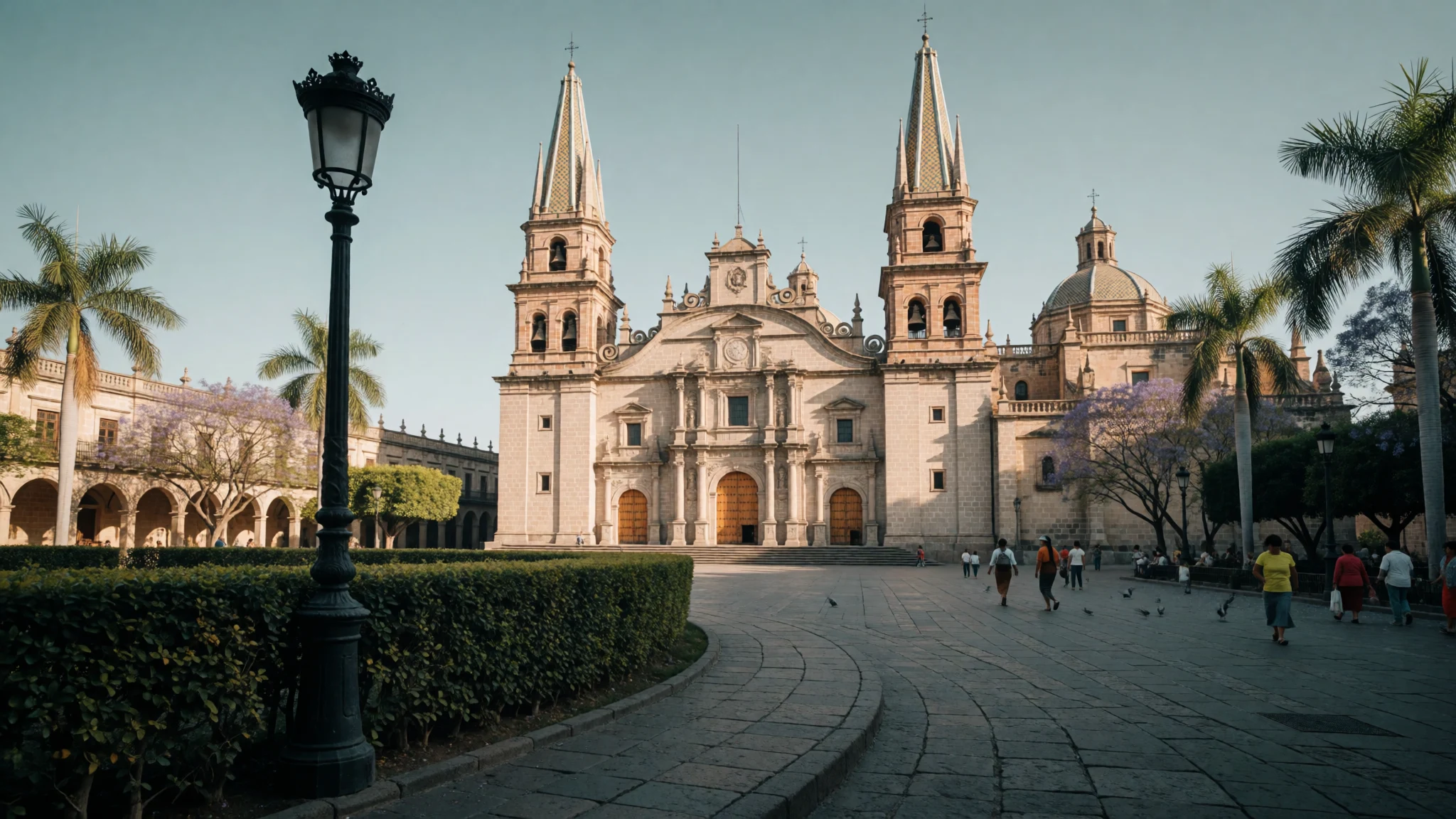
Guadalajara is a lived-in colonial city of plazas, Orozco murals and Jalisco's birria, where everyday Mexican life comes before sightseeing.
The place
Guadalajara is the capital of Jalisco, in western Mexico, a city of about 1.4 million people standing at 1,536 m above sea level. The metropolitan area is far bigger, and the sprawl is real: the centre is only one part of an urban region that runs into neighbouring towns such as Tlaquepaque, Zapopan and Tonalá. Within Mexico the city counts as a hub for business, technology, the arts and tourism, and its residents are known as Tapatíos.
The historic centre is where visitors spend most of their time, and it is easy to follow on foot. Four plazas are laid out in the shape of a cross around the cathedral, so a loop between them makes a natural first morning. Around them stand colonial churches, theatres, museums and galleries, with the Hospicio Cabañas, now the Cabañas Cultural Institute, a short walk to the east.
The altitude matters. At 1,536 m, Guadalajara has drier air and cooler nights than the coast, though afternoons can still be hot, and rain falls mainly in the summer months. Traffic is heavy outside the centre; the light-rail and bus network, plus taxis and ride apps, cover the gaps.
Guadalajara suits travellers who like cities for their daily rhythm: a morning in a gallery, a long lunch, an evening in a plaza with music playing. It is less a checklist of monuments than a place to settle into for a few days, and it also works as a base for trips into the rest of Jalisco.
Its story
Guadalajara has a restless founding story: the city was set up at several sites before it settled where it stands today. The first attempt, in 1532, was led by Cristóbal de Oñate, a Basque conquistador acting for Nuño Beltrán de Guzmán, on a spot now in Nochistlán, Zacatecas. The aim was to hold newly conquered land against peoples the Spanish saw as hostile, but the settlement had no dependable water and did not last. It moved to a place near Tonalá in 1533, then to Tlacotán a few years later. During these moves the Spanish crown granted the town the coat of arms it still uses. The final move was to the Atemajac Valley, and Wikidata dates the city's foundation to 1542.
The central part of that valley had no earlier settlements, though peoples such as the Tonallan and Tetlán lived to the east and others around its edges. Resistance to the colonisers was serious. During the Mixtón War, from 1540 to 1542, the Caxcan, Portecuex and Zacateco peoples fought the Spanish under the command of Tenamaxtli, and the new city took shape in the shadow of that conflict.
Later, nearby villages including Mezquitán, Analco and Mexicaltzingo were absorbed into the Atemajac site in 1669. That is why the historic centre is really the merger of several older communities, even though the tidy grid of plazas hides the patchwork.
What to see
- Cathedral and the Cross of Plazas — Centro Histórico
Guadalajara's cathedral stands at the middle of four plazas arranged as a cross, so it is the natural starting point for a walk. Circling the square shows how the colonial centre is organised. Visit by day for the architectural detail, then return after dark, when the façade is lit and the plazas fill with families and musicians.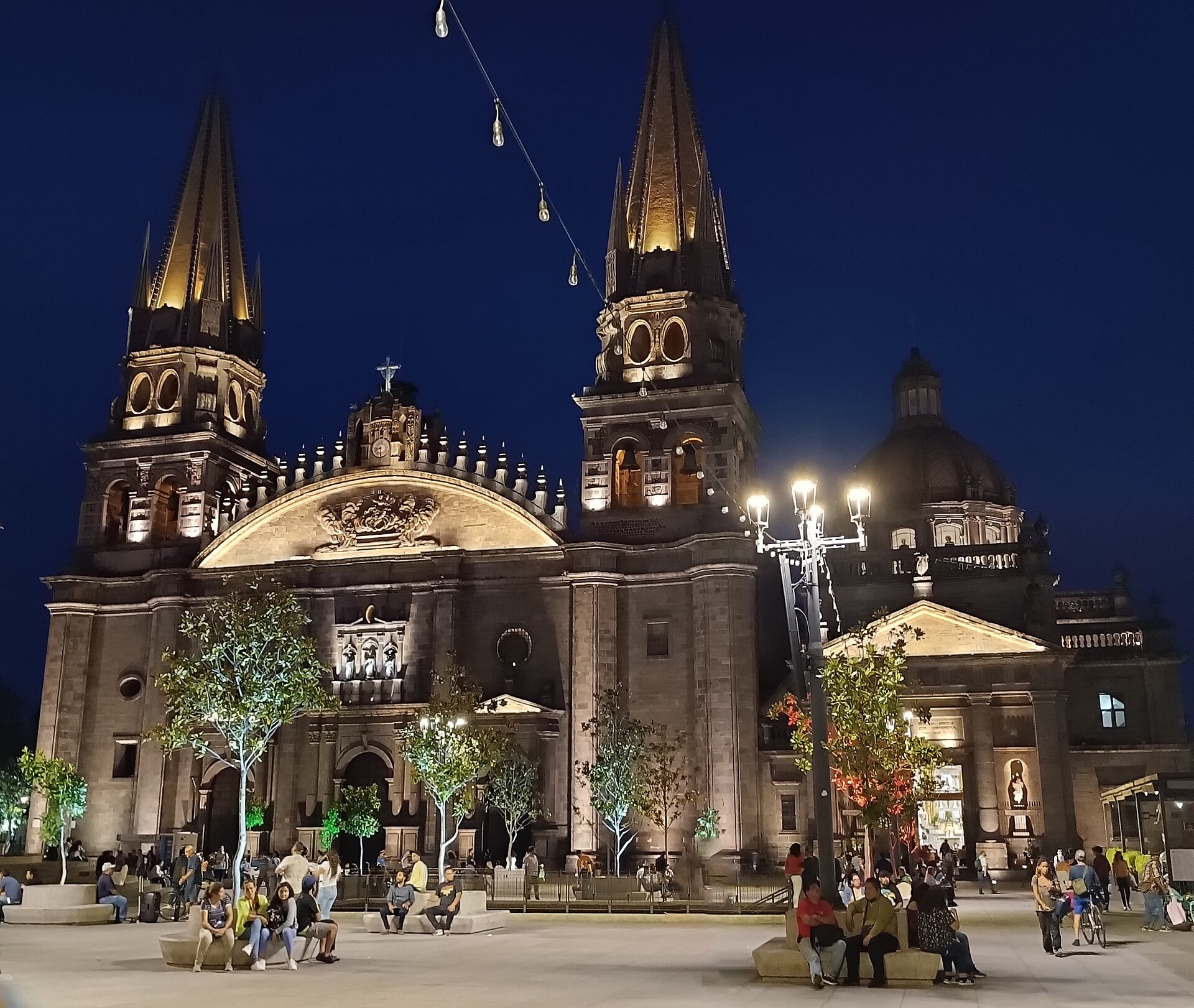
- Teatro Degollado — Centro Histórico
The Degollado Theatre is the city's historic opera and concert house, set beside the cathedral plazas. Its neoclassical front is easy to admire from outside, and an evening performance is the best reason to go in. Check the official programme before travelling, because tickets and visiting arrangements change.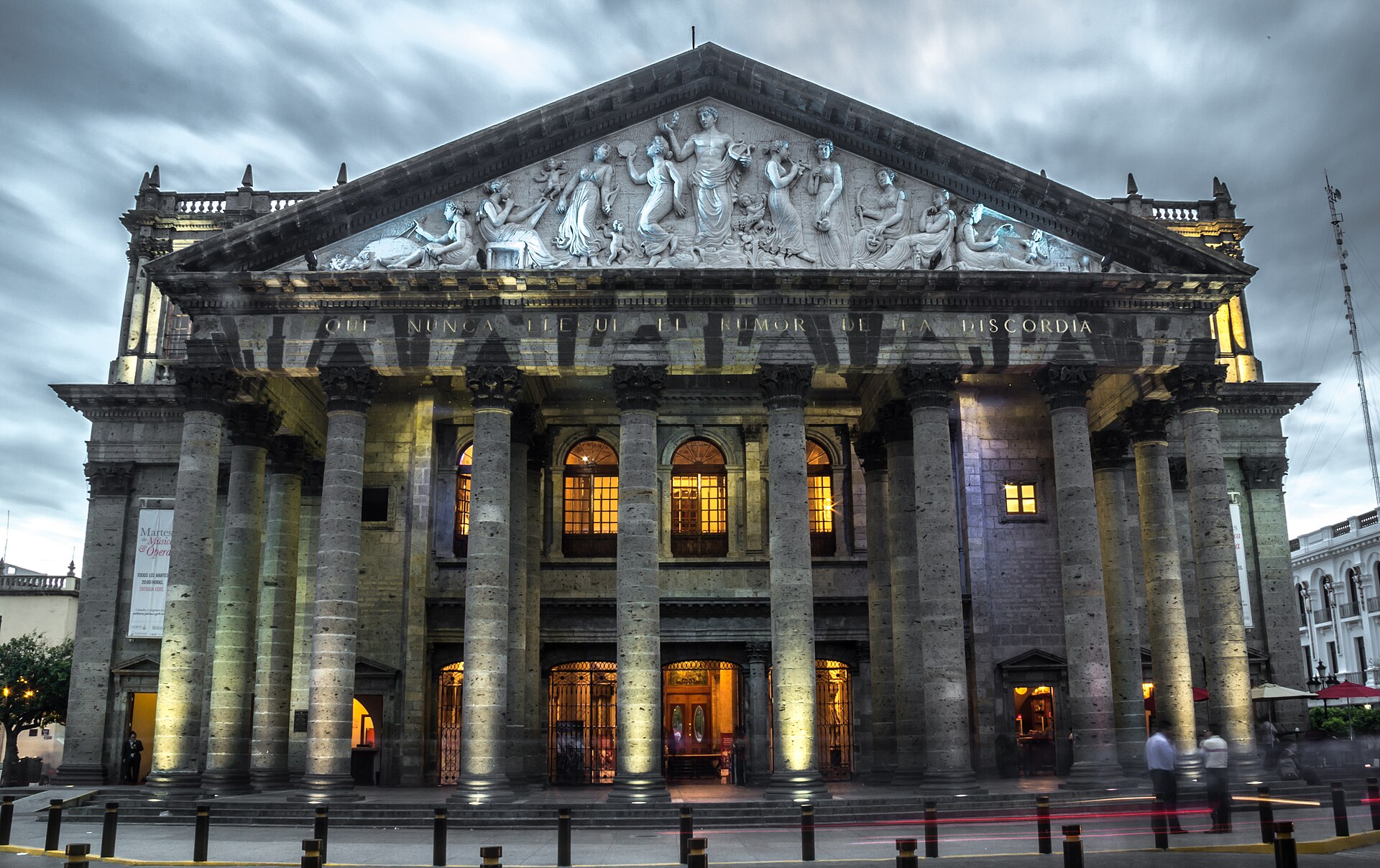
- Cabañas Cultural Institute — East of Plaza de la Liberación
The Cabañas Cultural Institute, a UNESCO World Heritage site east of Plaza de la Liberación, is an art centre where José Clemente Orozco's frescoes are the main draw. Allow unhurried time, since the murals reward slow looking and the long, low complex is easy to wander. Check the official site for current opening arrangements.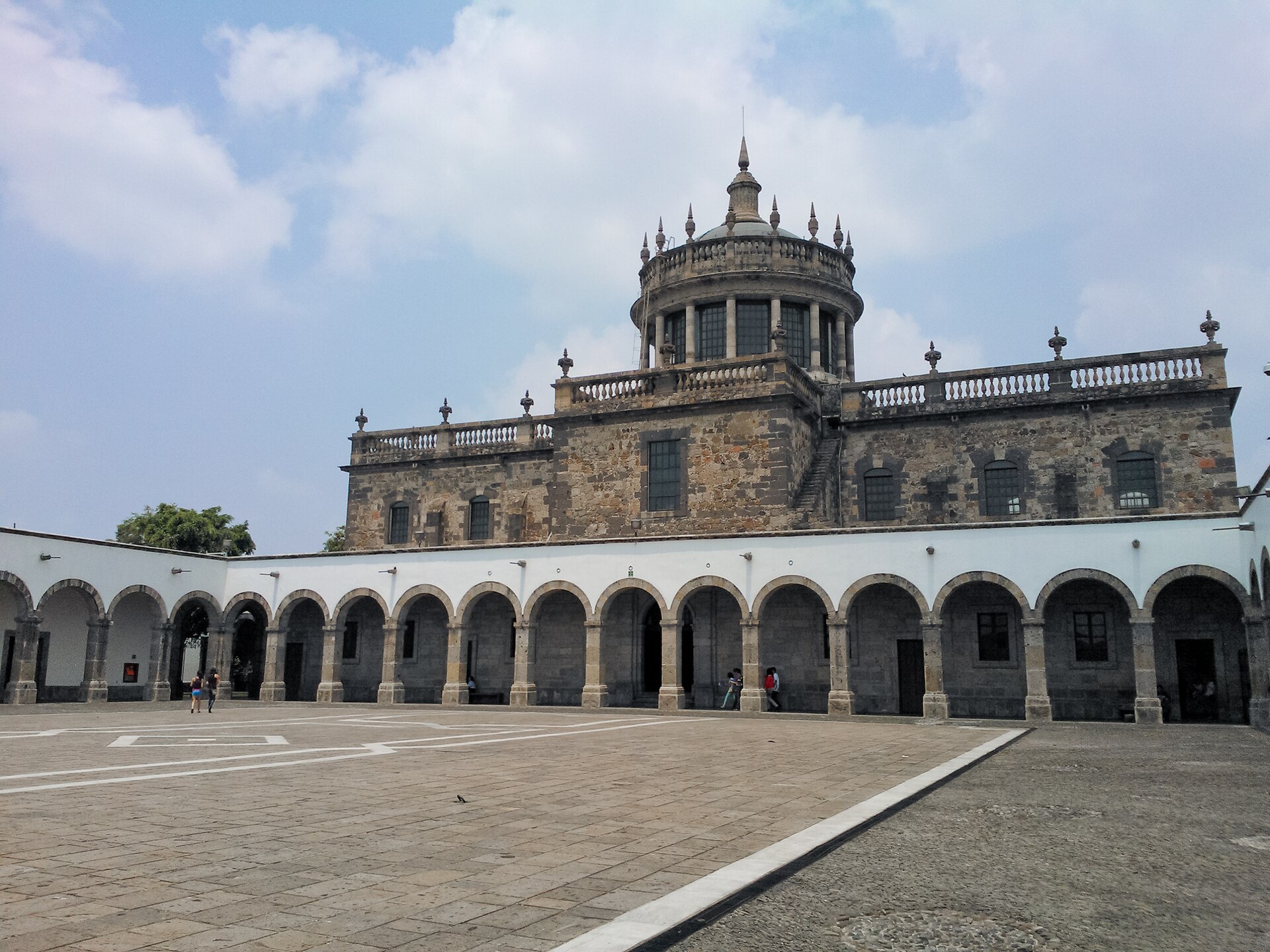
- Templo Expiatorio — Western districts
The Templo Expiatorio is a neo-Gothic church whose spires rise above the western districts, a sharp contrast with the colonial centre. Construction began in the nineteenth century. It is still a working place of worship, so visits are best outside services, and the exterior looks good in late afternoon light.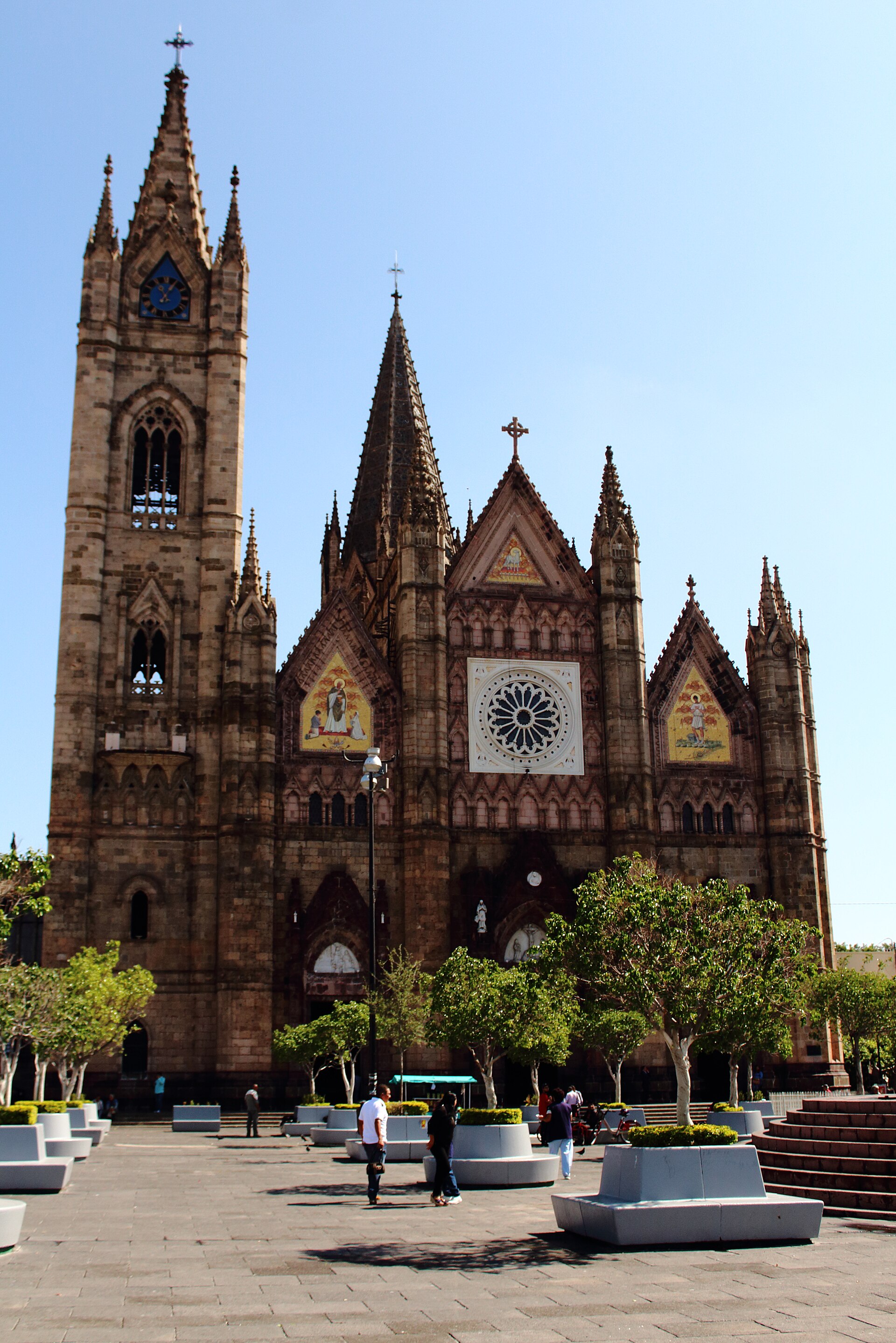
- Belén Cemetery museum — North of the Centro Histórico
The Belén Cemetery dates from 1786 and has been turned into a museum. Its displays mix local ghost stories with a wider picture of Tapatío attitudes to death and memory. It sits north of the centre, so it pairs well with a morning in the historic core before lunch.
Culture
Guadalajara's cultural life is busy and mostly public. The historic centre packs museums, theatres, galleries, libraries and concert halls into a walkable area, and exhibitions and events draw visitors from across Latin America and from the south-western United States. The architecture tells its own story: colonial churches and civic buildings blend indigenous craft traditions with Spanish forms, then later French and Italian influences.
Art here is closely tied to murals. Orozco's work is a point of civic pride, and the city treats painting as part of public life, not something kept behind glass. Music matters too. Jalisco is closely associated with mariachi, which turns up in plazas and at family celebrations. Tapatíos are proud of their city, and conversation about food, football and local history is an easy way in.
Daily life moves at a relaxed pace. Meals are long, Sundays belong to families in the plazas, and religious festivals shape the calendar. Catholic practice remains visible everywhere, from small street shrines to full churches at weekends.
Greet staff and shopkeepers with a 'buenos días' or 'buenas tardes' before asking for anything, and keep your voice low and your camera away during services in churches.
What to wear
Guadalajara's best-known traditional dress belongs to Jalisco's charro and mariachi culture. The charro suit is a short jacket and fitted trousers, usually in wool or leather, decorated with embroidery or metal buttons and worn with a wide-brimmed sombrero. It appears at charreadas, mariachi performances, weddings and national celebrations. Folk dance costume for women features wide, ribbon-trimmed cotton skirts in bright colours. Embroidered and beaded work by the Wixárika (Huichol) people of the region is sold in craft shops and makes a good keepsake.
In daily life, Tapatíos dress much like people in other Mexican cities: jeans, light shirts, trainers, and smarter outfits for office work and evenings out. Football shirts are common on match days, and young people in the creative neighbourhoods favour a relaxed, slightly artsy look. Traditional dress is mainly seen at festivals, performances and family occasions.
A visitor should pack for a high-altitude, sunny city. Light layers work best, with a sun hat, sunglasses and a jacket for cool evenings. Comfortable closed shoes are important for uneven pavements and cobbles. Churches expect covered shoulders and knees, so carry a light scarf or shirt. In the rainy summer months, a compact rain jacket or umbrella is more useful than heavy clothing.
What to eat
- Birria de borrego — Las Nueve Esquinas, Centro Histórico
Lamb birria is the Jalisco dish most visitors come for: slow-cooked, spiced meat served in its broth or tucked into tacos. Look in the old Nueve Esquinas quarter of the Centro Histórico, where several birrerías specialise in it, and expect queues at weekends. - Torta ahogada — Casual torta stalls and family eateries across the city
The torta ahogada is a crusty bread roll stuffed with pork and drowned in a tomato sauce, with a fiery chilli sauce on the side. Ask for the mild version first. Try it at a casual torta stall or family eatery in the city's neighbourhoods. - Carne en su jugo — Traditional local eateries
Carne en su jugo is a stew of beef and bacon in a light broth with beans, usually topped with onion, coriander and lime. It is a lunchtime staple at traditional local eateries and suits a cool evening just as well. - Tacos from the taquería grill — Taquerías in the Centro Histórico and Americana district
Taquerías around the Centro Histórico and the western Americana district grill meat to order, with tortillas, salsas and onions at the counter. Vegan taco counters have also appeared in the centre, so meat-free eaters have options. Choose a place where the grill is busy. - Tejuino — Street carts and markets
Tejuino is a cold, lightly fermented maize drink served with lime, salt and a scoop of shaved ice, sold from street carts on hot afternoons. It is sweet, sour and slightly sharp, so try a small cup first.
Plan it
Best time. November to March for dry, sunny days and cool evenings. April and May get hot, and June to September is the rainy season, with heavy afternoon downpours.
How long. 3–4
Getting there. Fly into Guadalajara International Airport, then take a taxi or ride app to the Centro Histórico. Long-distance buses arrive at the Central de Autobuses in Tlaquepaque, from where the MiTren light-rail line runs to the centre.
Budget. mid
Tips
- Do the plazas and cathedral early in the morning, before the midday heat and the crowds
- Carry some cash for markets, street food and small eateries, and cards for larger places
- At 1,536 m the sun is strong, so bring sunscreen and a water bottle
- Check the official city website (https://guadalajara.gob.mx/) and each museum's own site for current opening arrangements
- Use official taxis or ride apps at night, and keep to well-lit streets
Etiquette
- Cover shoulders and knees in churches, and avoid photographing worshippers during services
- Greet staff with a short 'buenos días' or 'buenas tardes' before asking for anything
- Ask before photographing people, especially performers and street vendors
Nearby
Sources
- Wikidata Q9022 (CC0)
- Wikipedia: Guadalajara (rev 1383122980) (CC BY-SA 4.0)
- Wikivoyage: Guadalajara (rev 5403306) (CC BY-SA 4.0)
- Photo: Guadalajara, Jalisco, México — Isacdaavid (CC BY-SA 4.0)
- Photo: Templo Expiatorio — Adrián Cerón (CC BY-SA 4.0)
- Photo: Arcos Guadalajara — Ivan Alfonso Guerrero Esparza (CC BY-SA 4.0)
- Photo: Minerva statue — Tyrv (CC BY-SA 4.0)
- Photo: Instituto Cabañas — Leonardo Muñoz (CC BY-SA 4.0)
- Photo: Catedral de Guadalajara en la noche — Alejan98 (CC0 1.0)
- Photo: Teatro Degollado — Aurora Uribe Flores (CC BY-SA 4.0)
- Photo: Rotonda de los Jaliscienses Ilustres — Carlos E. Sáinz (CC BY-SA 2.5)


