Grand Palace
Grand Palace, Thailand
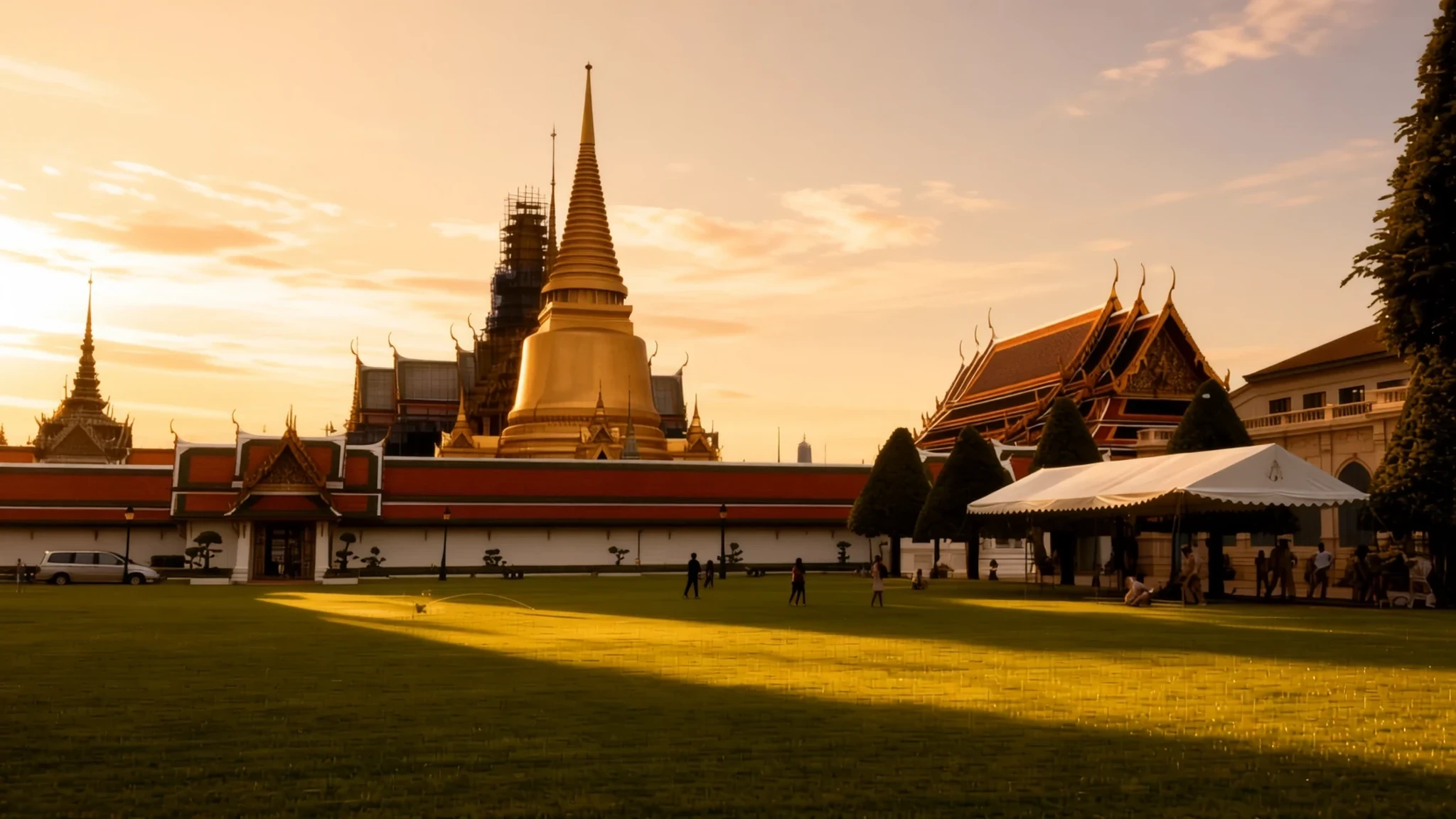
Bangkok's old royal heart, where Thailand's kings have lived since 1782, and where gilded halls and the Emerald Buddha still draw crowds.
The place
The Grand Palace is a walled complex of buildings in the centre of Bangkok, on the east bank of the Chao Phraya River. It has served as the official residence of the Kings of Siam, and later of Thailand, since 1782, when the court moved across the river into the new capital. Until 1925 the king, the royal household and the government all worked from within its walls. Later monarchs chose other residences, most notably Dusit Palace, but the Grand Palace remains in use for official events, and several royal ceremonies and state functions are still held inside its grounds each year.
The palace is one of the most popular attractions in Thailand, with over eight million visitors a year, so the crowds are real even on a weekday. The compound is organised around several courtyards, and the busiest is the one holding the Temple of the Emerald Buddha, a royal temple set within the walls. Expect the grounds to be full from late morning, especially on weekends and public holidays, and expect a lot of walking in heat that rarely eases before the sun goes down.
Taxis and tuk-tuks drop visitors on the road outside, where tickets are bought and dress is checked before entry. Time spent in the covered galleries and under the shade of the courtyard trees is the most comfortable way to see the site. The complex feels more like an open-air museum than a living house, and that is much of its appeal.
Its story
The Grand Palace was begun on 6 May 1782 on the orders of King Phutthayotfa Chulalok, known as Rama I, the founder of the Chakri dynasty that still reigns. He had taken the crown from King Taksin of Thonburi and wanted a capital of his own. He moved the seat of power from Thonburi, on the west bank of the river, to the eastern side at Bangkok. To give the new city a defensible and practical shape, canals were cut along the east side, turning the site into an artificial island called Rattanakosin.
The palace stood on the western edge of that island, between Wat Pho to the south and Wat Mahathat to the north, with the river on its west side. The land had previously been home to a Chinese community, whom the king moved to an area outside the city walls. That settlement is now Bangkok's Chinatown.
Materials and money were short, so the first palace was built almost entirely of timber, enclosed by a simple palisade of logs. On 10 June 1782 the king crossed the river from Thonburi and took up permanent residence. Later reigns replaced and extended the early structures, with particular growth under King Chulalongkorn, Rama V. By 1925 the royal family and government had settled elsewhere, and the compound took on the ceremonial role it holds today. The story of the site is one of a young dynasty choosing a new capital in a hurry, then slowly building permanence on top of improvisation.
What to see
- Temple of the Emerald Buddha (Wat Phra Kaew) — Inner royal temple compound, inside the palace walls
The Temple of the Emerald Buddha, known in Thai as Wat Phra Kaew, sits inside the palace walls and is the busiest part of the site. The small figure it houses is carved from green stone rather than emerald, and it is dressed in robes that change with the seasons. Look up at the gilded roofs and guardian figures. Arrive early, before the heat and tour groups.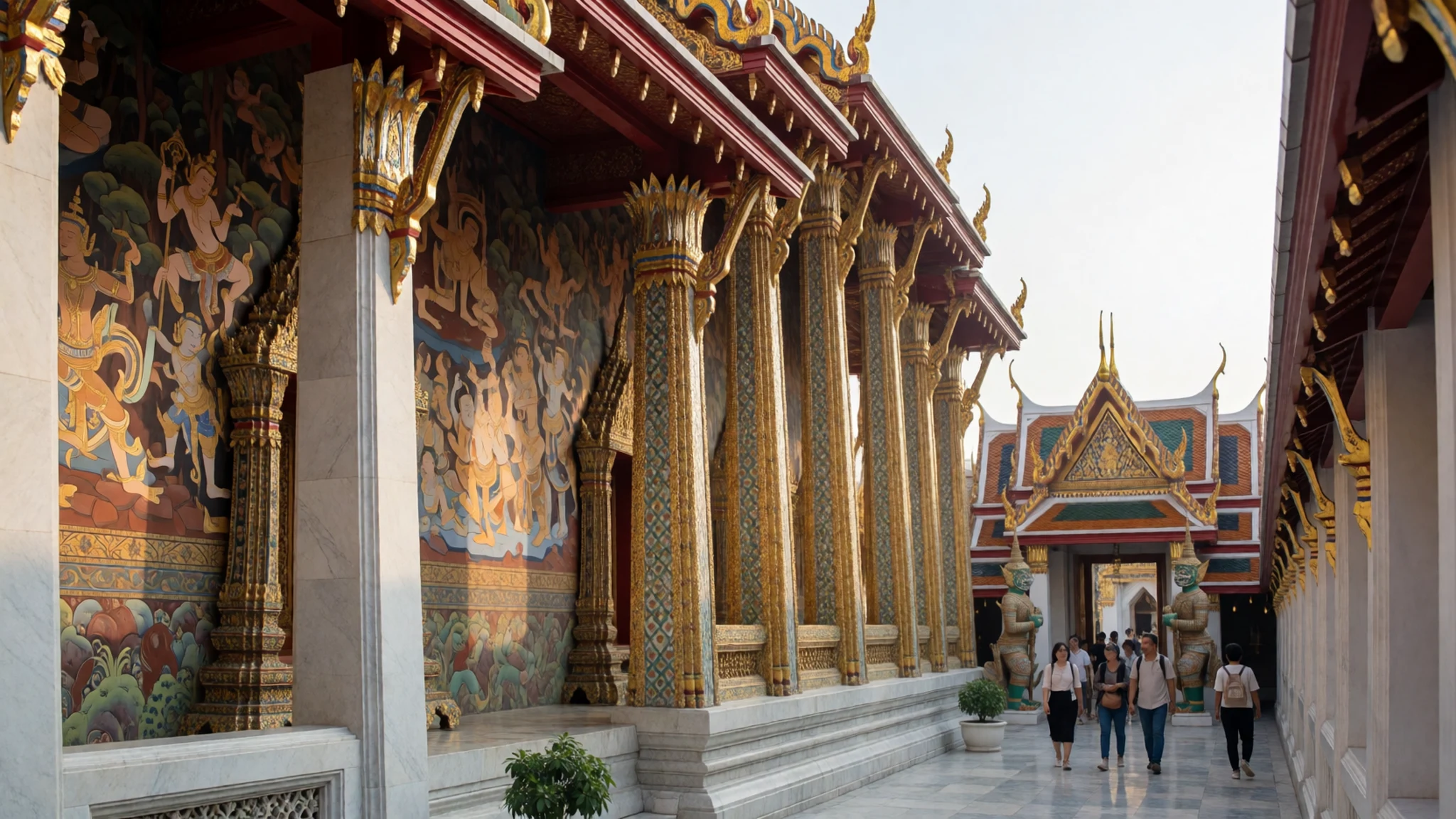
- Amarin Winichai Throne Hall — Central compound, the throne hall area
Amarin Winichai is a throne hall used for formal audiences and state occasions within the palace. Its tall, layered roof and open approach give a sense of how ceremony was staged here. Visitors are generally able to see the hall from outside, and it makes a useful spot to pause and picture the court at work. Photograph it from the courtyard edge rather than blocking the walkways.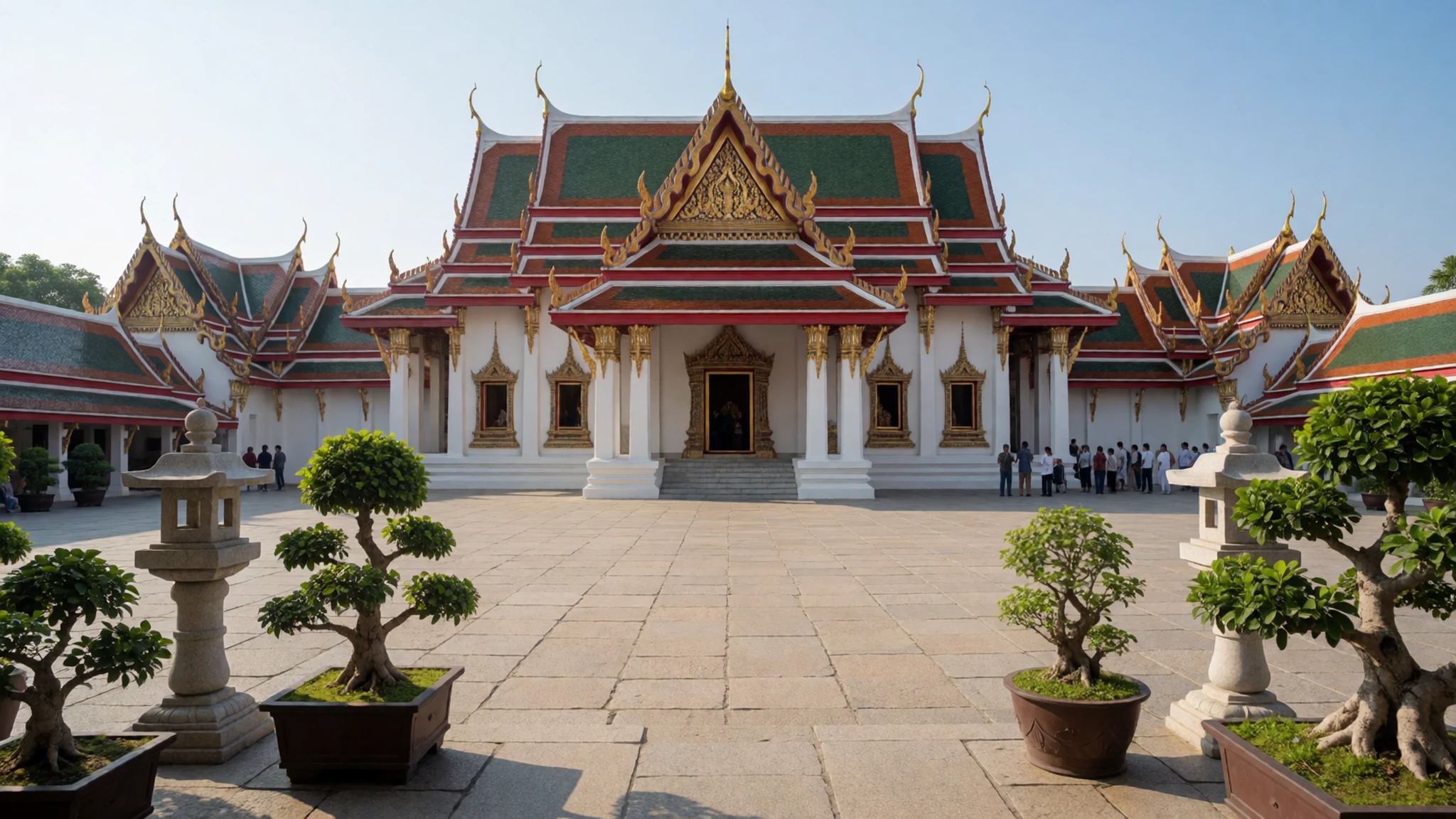
- Chief Residence — Central compound, close to the throne halls
The Chief Residence stands among the palace buildings and shows the mixed architectural styles that built up over successive reigns. Its European-influenced façade contrasts with the traditional Thai roofs nearby, which is one of the clearest ways to read the palace's history. Take time over the proportions and the shuttered windows. The building is best appreciated from outside, as access varies.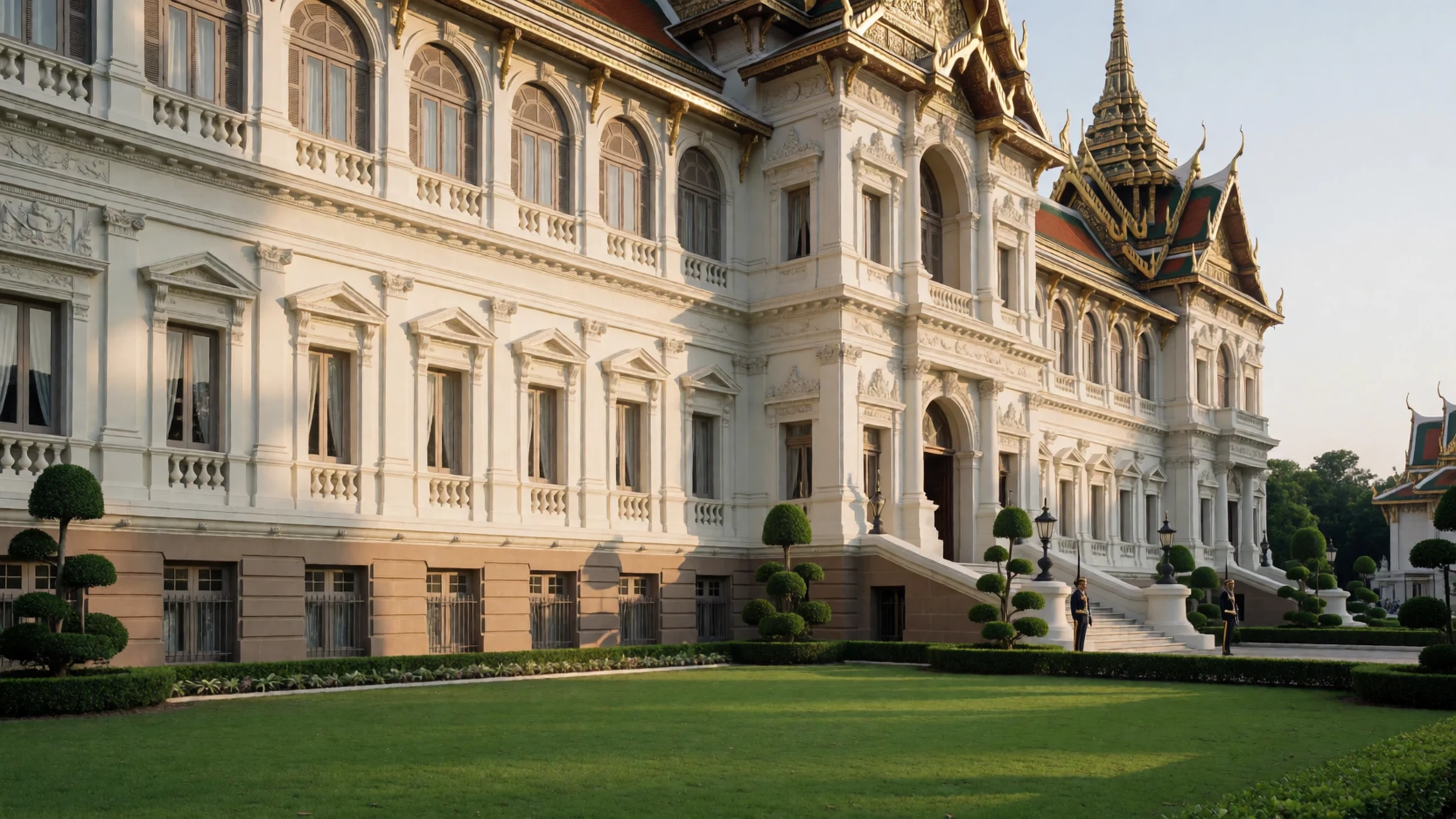
- Nitasrattanakosin Exhibition Hall and palace model — Nitasrattanakosin district, a short walk from the palace
The exhibition hall near the palace holds a large model of the Grand Palace, which is the easiest way to understand how the complex fits together. The model shows the courts, halls and walls in relation to one another, and it helps with orientation before walking the grounds. Plan a short visit before or after the palace, and check current opening arrangements on the official site.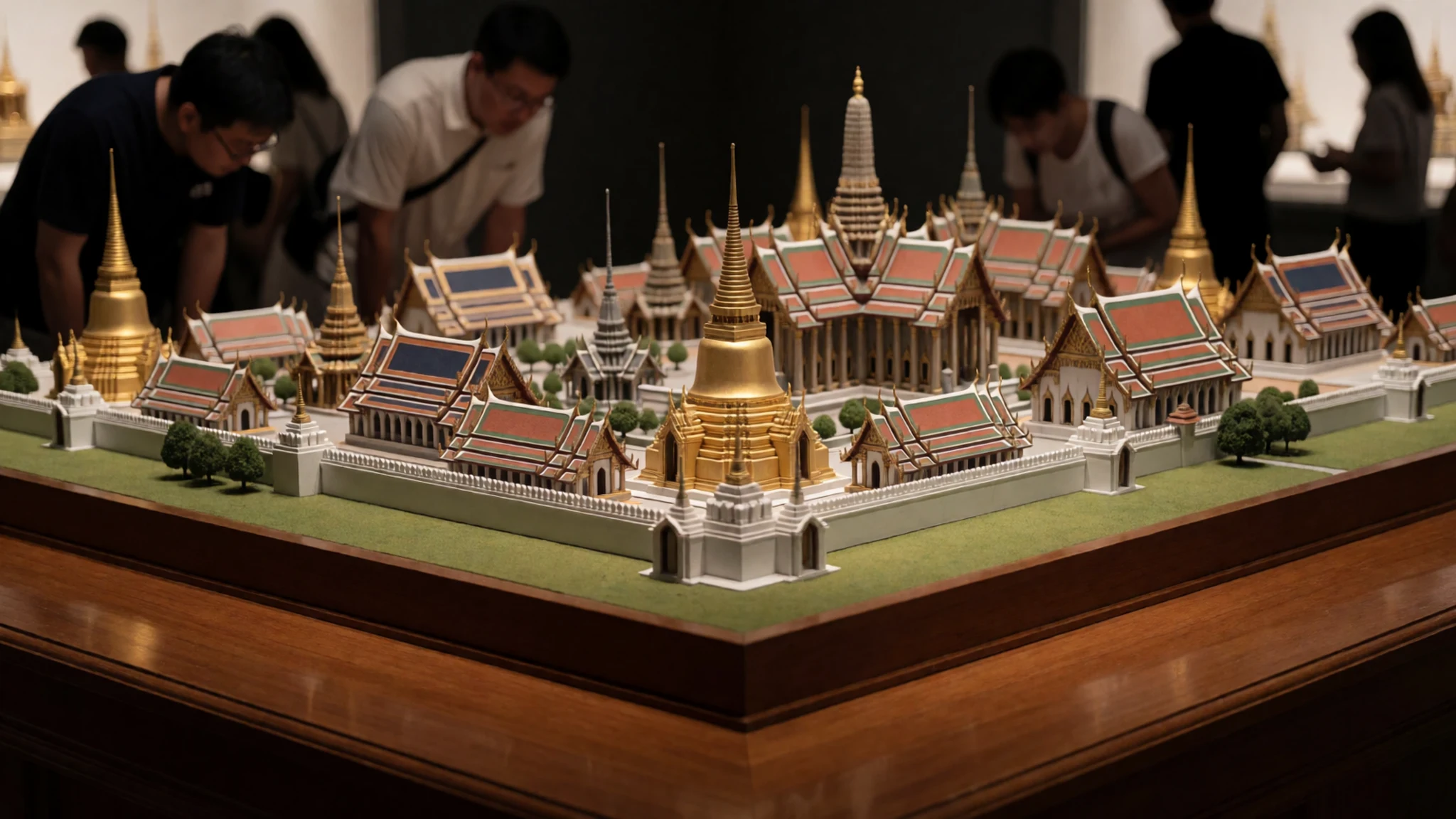
- Royal guards at the gates and guard houses — Outer courts and main gate guard houses
Sentries from the royal guard stand at the gates and in the guard houses, and their smart uniforms and formal drill are part of the scene. Their presence is a reminder that this is still a working royal compound, not only a museum. Keep your distance, do not pose in a way that blocks their posts, and follow any instructions given at the gates.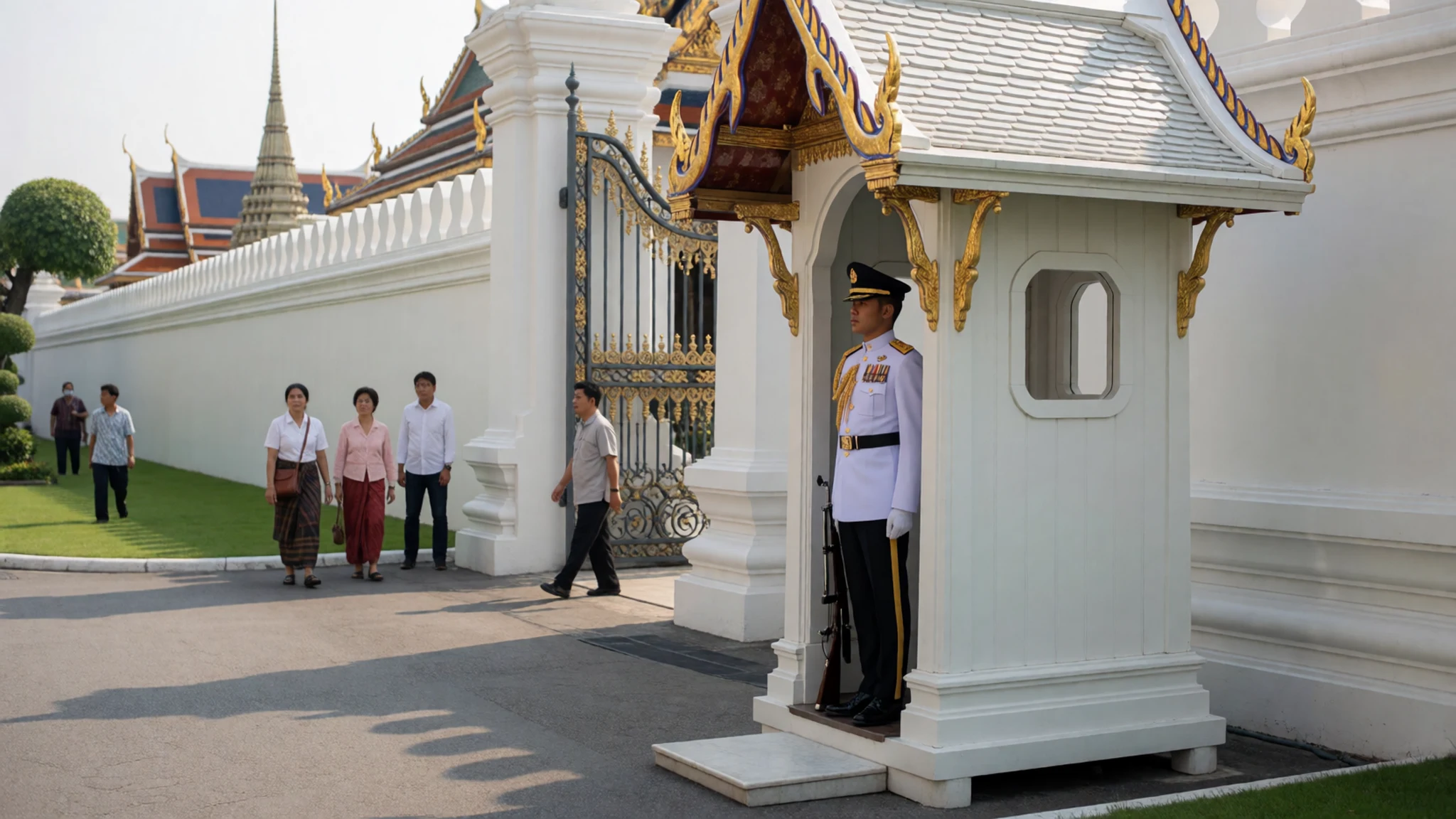
Culture
The Grand Palace is a working royal compound as well as a monument, and staff and Thai visitors treat it that way. The monarchy is held in high regard, so conversation about the royal family should be courteous, and mocking remarks about them can bring legal trouble. Portraits of the king and royal family appear around the grounds and deserve the same care as any image of authority. Inside the Temple of the Emerald Buddha, worshippers keep their voices low, do not climb on platforms or touch the walls, and sit with their feet tucked away from the images. Monks and people at prayer deserve space, so stepping aside is better than crowding them for a photograph. Photography is usually permitted in the grounds, but asking before photographing anyone at prayer or in a ceremony is the courteous approach. Strict dress rules are enforced at the gates. Remove your footwear before entering any shrine hall, and never point your feet at a Buddha image.
What to wear
Traditional Thai dress for women is the chut Thai, a fitted blouse worn with a long wrapped skirt called a phasin, often in silk or cotton woven with patterns such as the ikat-style mudmee. A sabai, a long shoulder cloth, completes the outfit at formal events. The men's equivalent is a long-sleeved shirt with a sarong-style lower garment and, on court occasions, a jacket. Royal and court dress uses rich brocade and gold-thread weaving, and these outfits appear at ceremonies, state functions and weddings rather than in daily life. Within the palace precincts, the formal dress is seen mainly on staff at official events, while most people in Bangkok wear ordinary Western-style clothes, with office and school uniforms common during the week. Visitors should choose light, loose cotton or linen, long trousers or a skirt below the knee, and sleeves that cover the shoulders. Closed shoes or sandals that slip on and off easily suit both the walking on stone and the frequent footwear removal at shrine halls. Shorts, sleeveless tops and very short skirts are the items most likely to be turned away at the gate, and the current dress rules are on the official site.
What to eat
- Boat noodles (kuay teow reua) — Street carts and simple eateries in the lanes by the Chao Phraya riverside
Small bowls of rich, dark broth thickened with pork blood and seasoned with pepper and herbs, served with thin rice noodles and sliced pork. The bowls are small, so trying several is easy and typical. Vendors work from carts and simple tables along the river lanes near the old town.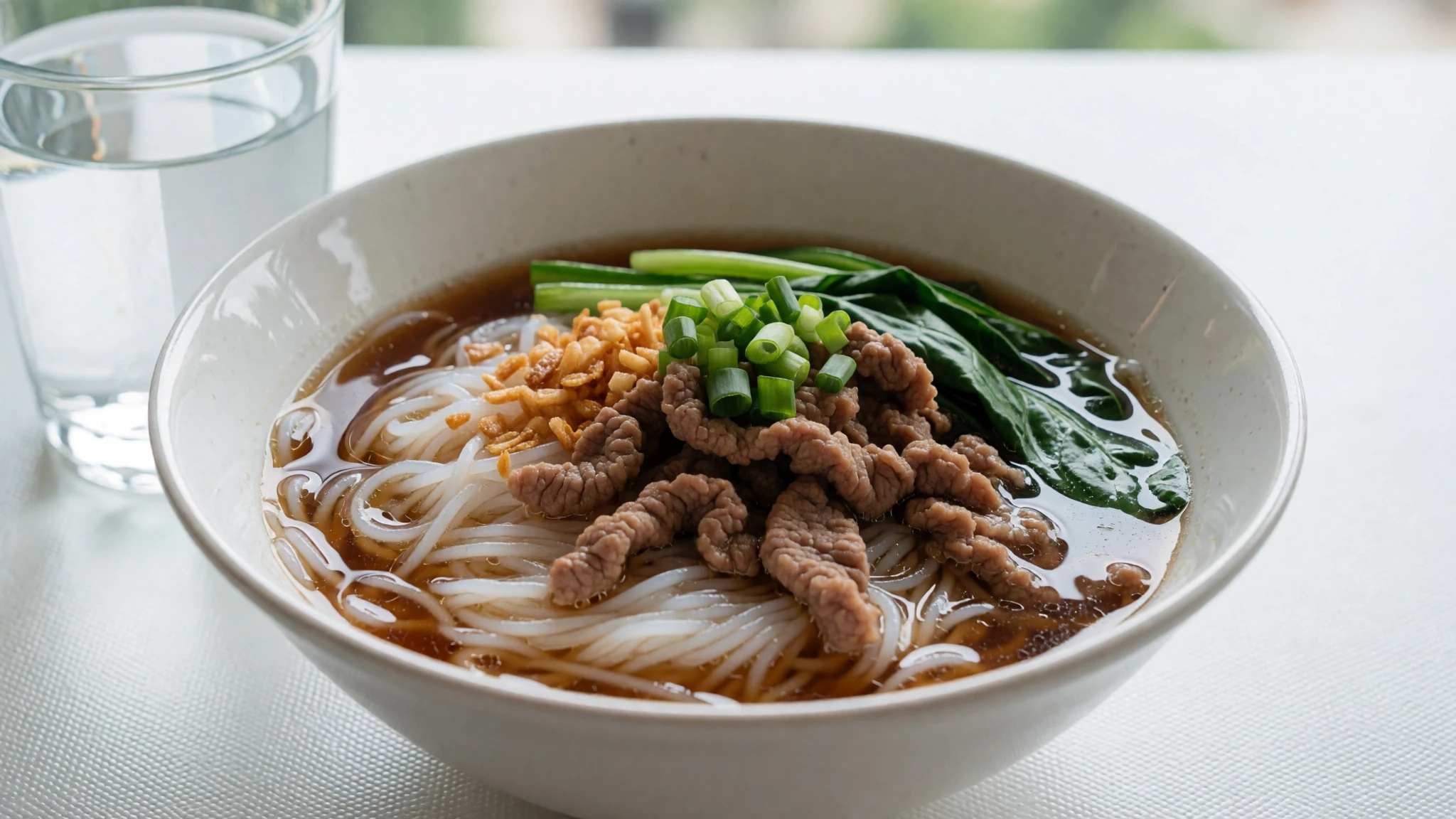
- Pad krapow moo (basil pork with rice) — Any lunchtime street stall in the old town, especially near the palace
Minced pork stir-fried with holy basil, chilli and garlic, served over jasmine rice and usually topped with a fried egg. It is a lunchtime staple, cheap and quick, and it tells you more about everyday Bangkok cooking than any set menu.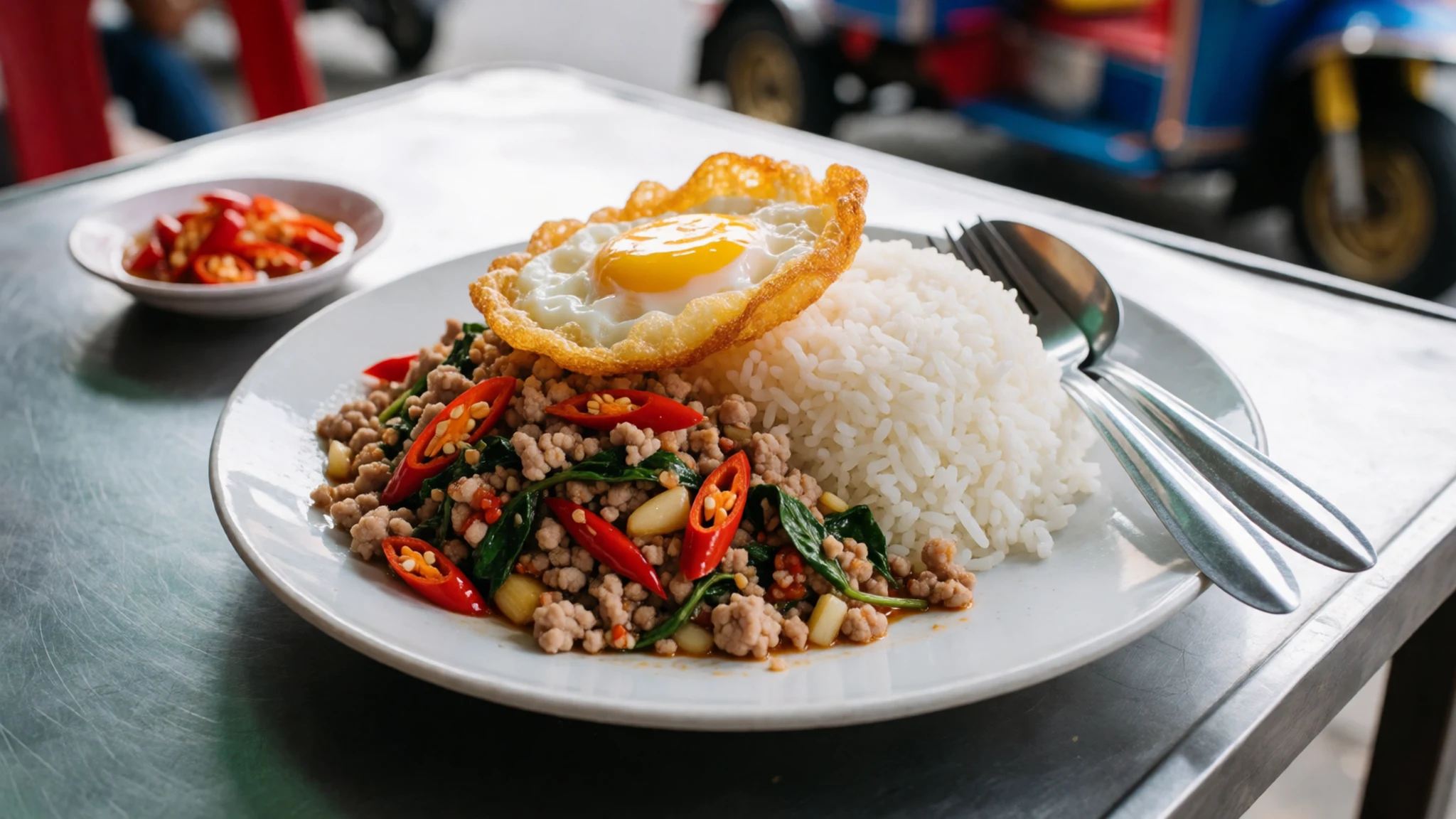
- Tom yum goong (hot and sour prawn soup) — Dinner cruises on the Chao Phraya, served from the riverside piers
A clear, sharp soup built on lemongrass, galangal, lime leaves and chilli, with prawns in the broth. It is a common feature of the set dinners served on rice-barge cruises along the river, where the meal is usually accompanied by live music.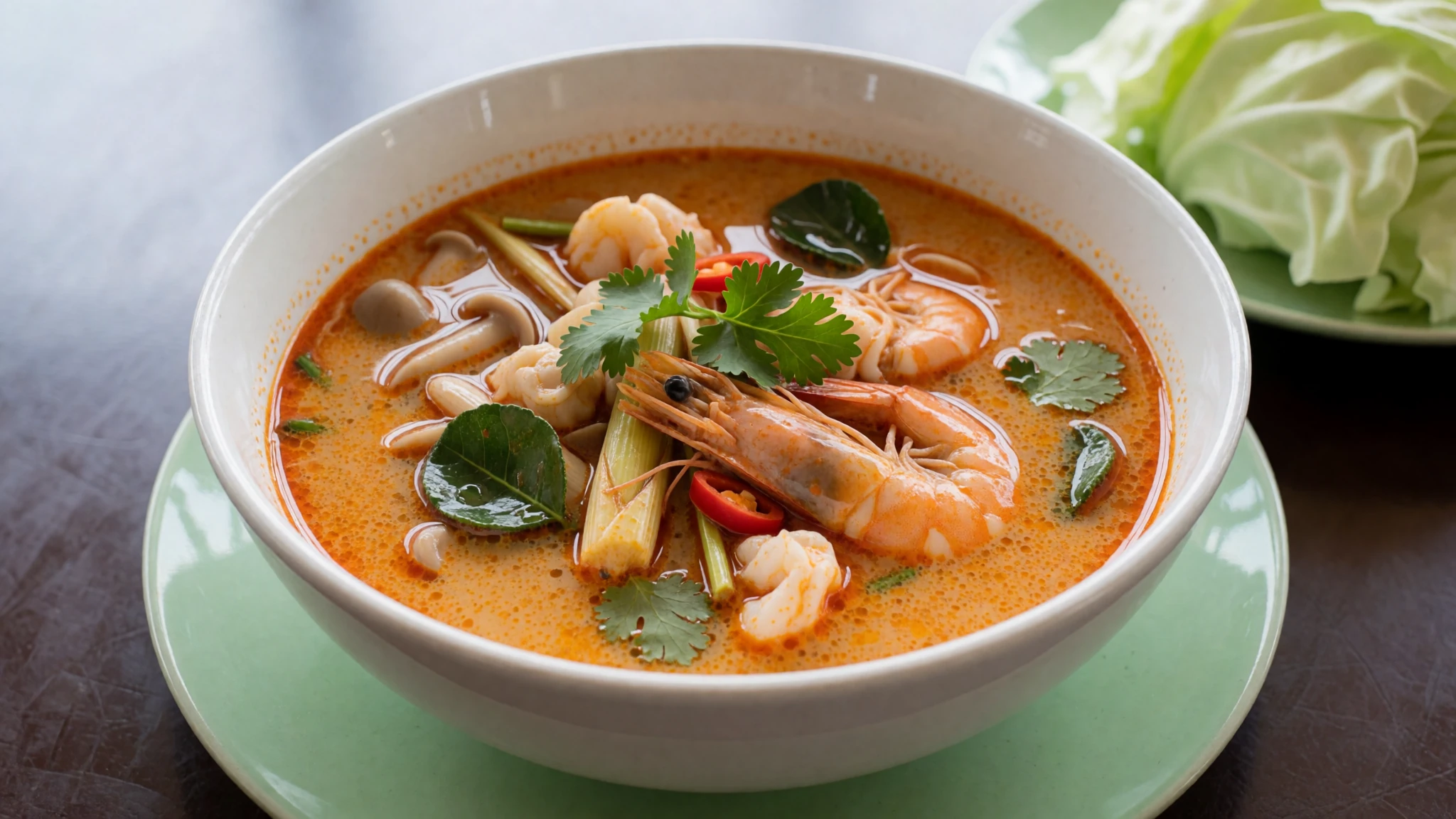
- Som tam (green papaya salad) — The morning market by the river, and stalls in the Rattanakosin lanes
Shredded green papaya pounded with chilli, lime, garlic, dried shrimp and palm sugar, with peanuts on top. The balance of sour, salty and sweet is the point. It is best eaten early in the day at a market stall, where the vendor will adjust the heat if asked. - Mango sticky rice — Dessert carts and small shops in the Rattanakosin lanes
Sweet glutinous rice soaked in coconut milk, served with ripe mango slices and sometimes a sprinkle of toasted mung beans. It is sold from dessert carts and small shops in the lanes near the palace, and is a good way to finish a long walk in the heat.
Plan it
Best time. November to February, when Bangkok is cooler and drier and the heat is most manageable for a long day outdoors. March to May is hot, with April the hottest month, and May to October is the rainy season, peaking in September.
How long. 1–2
Getting there. Suvarnabhumi Airport (BKK) is the main international airport, and the city ride from either airport can take an hour or more in traffic. Take the Airport Rail Link into the city, then a taxi or tuk-tuk to the palace. The last leg is short, and the river is a pleasant alternative when the roads are busy.
Budget. mid
Tips
- Arrive early in the day, before the heat and tour groups build up
- Check the official site for current opening arrangements and ticket options before you travel
- Carry cash for tuk-tuk fares and small purchases, and agree a fare before you set off
- Bring a hat, sunscreen and water, since much of the site is open and the walking is long
- Pair the palace with a river boat ride, which is cooler than the streets and gives a different view
Etiquette
- Dress in long trousers or a long skirt with covered shoulders and closed footwear
- Remove shoes before entering shrine halls and do not point your feet at Buddha images
- Keep voices low and give monks and people at prayer plenty of room
Nearby
Sources
- Wikidata Q873769 (CC0)
- Wikipedia: Grand Palace (rev 1365293763) (CC BY-SA 4.0)
- Wikivoyage: Bangkok (rev 5394392) (CC BY-SA 4.0)
- Photo 01-0005574.jpg, Preecha.MJ (CC BY-SA 4.0)
- Photo 02-0005574-wat-phra-kaew-006.jpg, Preecha.MJ (CC BY-SA 4.0)
- Photo 03-grand-palace-dress-code.jpg, Sodacan (CC BY 3.0)
- Photo 04-model-of-grand-palace.jpg, ScorpianPK (CC BY 3.0)
- Photo 05-wat-phra-kaew-guards-photo-don-ramey-logan.jpg, Don Ramey Logan (CC BY 3.0)
- Photo 06-temple-of-the-emerald-buddha-2012.jpg, Sodacan (CC BY 3.0)
- Photo 07-chief-residence-of-the-grand-palace.jpg, Gisling (CC BY-SA 2.0)
- Photo 08-amarin-winichai.jpg, Sodacan (CC BY 3.0)


