Gračanica Monastery
Gračanica Monastery, Kosovo
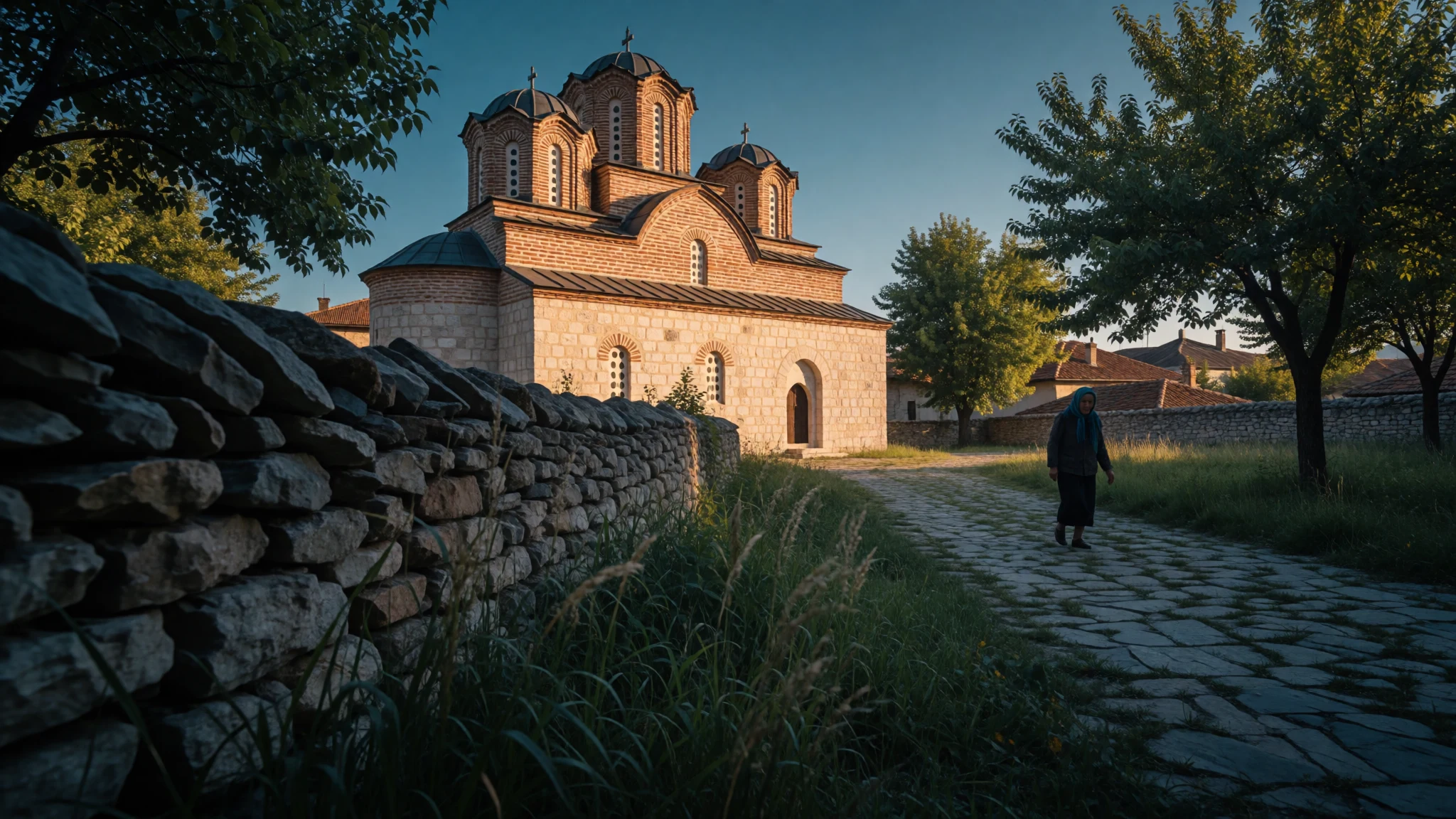
A fourteenth-century Serbian Orthodox church in Kosovo, still used for worship, with painted walls and a king's portrait, an easy half-day from Pristina.
The place
Gračanica Monastery (Манастир Грачаница; Albanian Manastiri i Graçanicës) stands on the edge of the town of Gračanica, a Serbian enclave in Kosovo just outside Pristina. It sits on the Kosovo field, on the left bank of the Gračanka, a small river that runs into the Sitnica, and the name comes from a Slavic word for a fortified settlement. This is a working Serbian Orthodox monastery, not a museum, and of the old monastic compound only the church survives. The building is made of brick and stone in a Byzantine-influenced style, compact rather than vast, with domes rising in stages above a lower body so that it reads as a cluster of shapes rather than one block. Around it the town is ordinary and busy, with shops, cafés and traffic along the main road, so a medieval church sits inside a living neighbourhood rather than behind a wall of tourism. The monastery is listed by UNESCO as part of Medieval Monuments in Kosovo, a group that also takes in other Serbian Orthodox churches and monasteries in the territory. Names matter here: Serbian speakers say Gračanica, Albanian speakers say Graçanicë, and both appear on signs and maps. The setting is flat farmland and suburb rather than mountain scenery, and the church rewards close attention to its details more than a view from afar. Pristina is near enough that most people treat it as a half-day trip.
Its story
Gračanica Monastery was founded by the Serbian king Stefan Milutin. Wikidata dates the foundation to 1315, though some sources place the building work a few years later. The church replaced an older one dedicated to the Holy Virgin on the same spot, at the centre of the diocese of Lipljan. Milutin recorded on the south wall that he had found the old church in a sorry state and rebuilt it from its foundations, adding paintings and decoration inside and out. When the Serbian Church was later raised to a patriarchate, the bishop of Lipljan received the honorary rank of metropolitan, and his successors were known as metropolitans of Lipljan or Gračanica. A narthex and tower were added a few decades after the church itself, to shelter the frescoes on the west front. Ottoman attacks damaged the narthex several times, the tower burned, and a fire destroyed a rich collection of manuscripts and precious objects. The narthex was rebuilt, and the monastery suffered again around the time of the Battle of Kosovo. Under early Ottoman rule it kept part of its land, including vineyards, fields and pastures, and remained a centre of learning and art; under Metropolitan Nikanor, several icons were painted for the altar screen. That cycle of damage, repair and renewal is why the church reads as a building kept alive by the communities around it, not as a single moment preserved.
What to see
- The church exterior — Gračanica town
The church is the main reason to come. Its stepped domes and courses of brick and stone are best seen from the courtyard, walking slowly round so that the proportions come clear. Early light flatters the stonework, and trees soften the busy town beyond the gate. Allow time to stand and look before going in.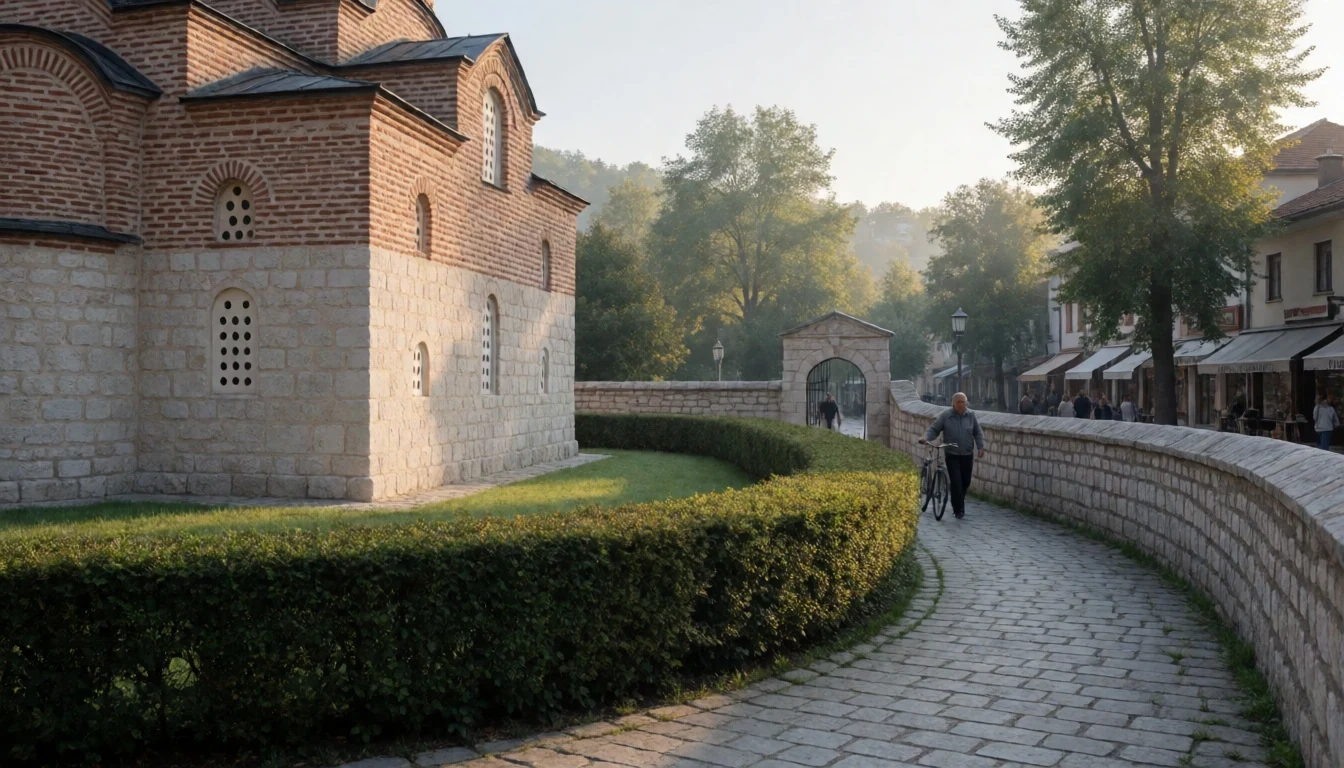
- The frescoes inside — Inside the church
Inside, painted walls cover almost every surface. Look for the portrait of King Milutin, shown as the church's founder and patron, a standard medieval way of tying a ruler to the building he restored. Eyes need a few minutes to adjust to the dim light, and the colours repay patience, especially when candles are lit.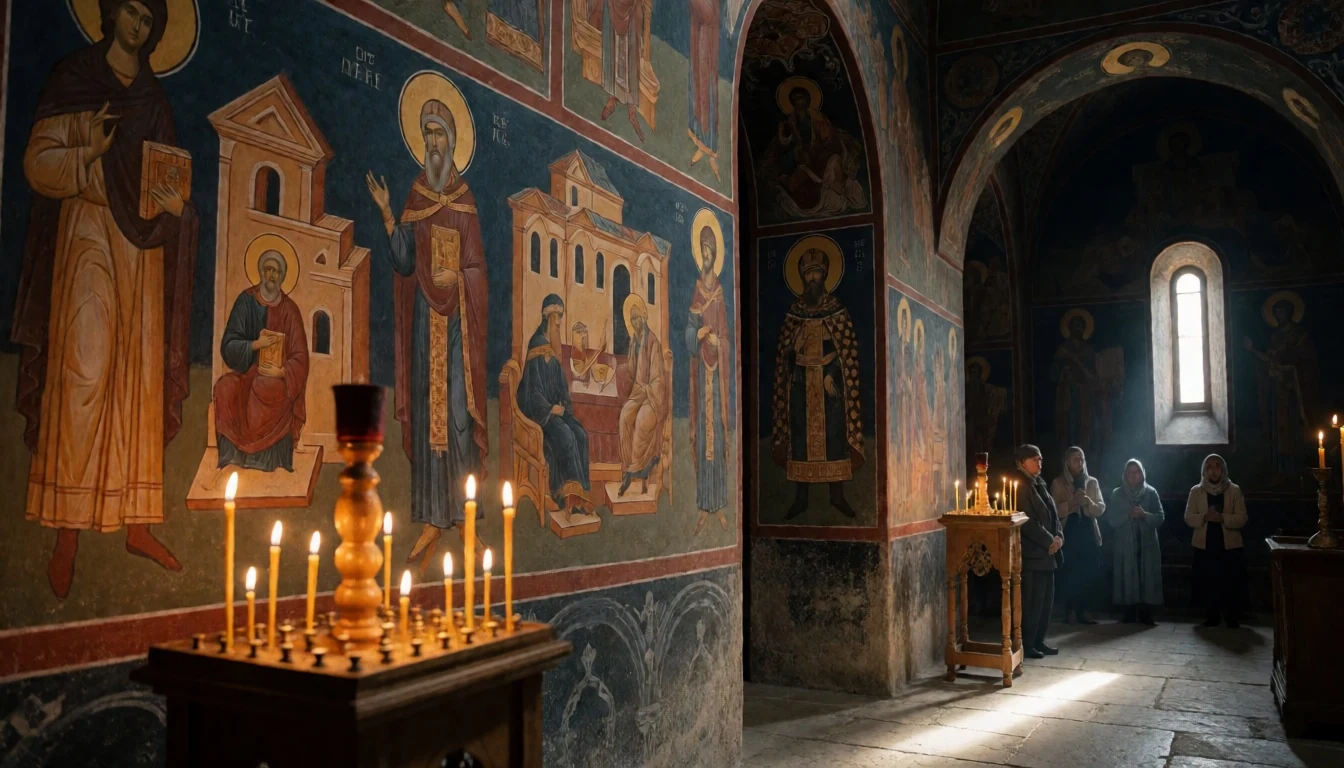
- The narthex and tower — West side of the church
The narthex and tower were added later to protect the frescoes on the west front, and they carry the history of fire and rebuilding after Ottoman attacks. Look at the masonry for changes in texture and colour that hint at repairs. An early twentieth-century photograph of the monastery makes a good comparison for the view today.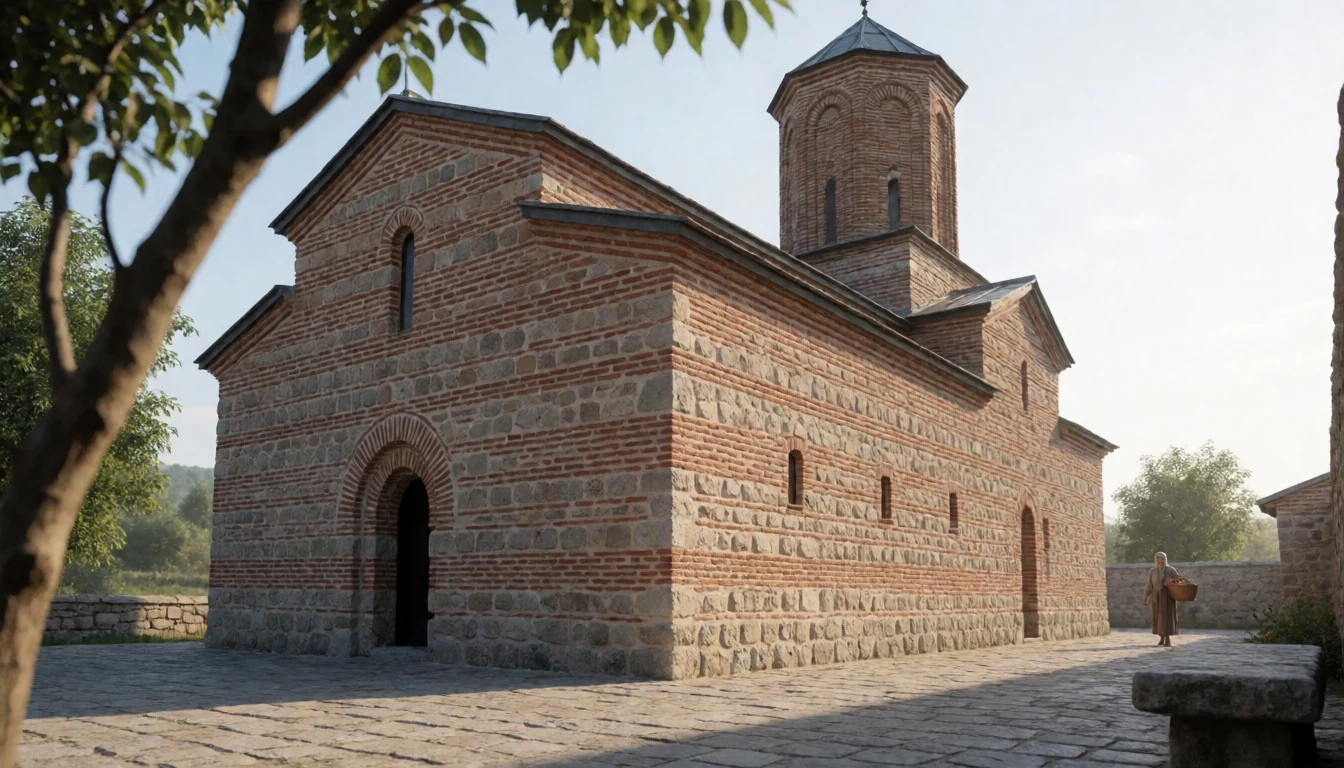
- Ulpiana Archaeological Park — Near Gračanica
Ulpiana is a multi-layered archaeological site that grew after the Romans took over the region of Dardania. It lies a short drive from the monastery and is quiet, open ground rather than a polished attraction, so it suits people who like ruins and a sense of old layers. Ask locally about access before setting out.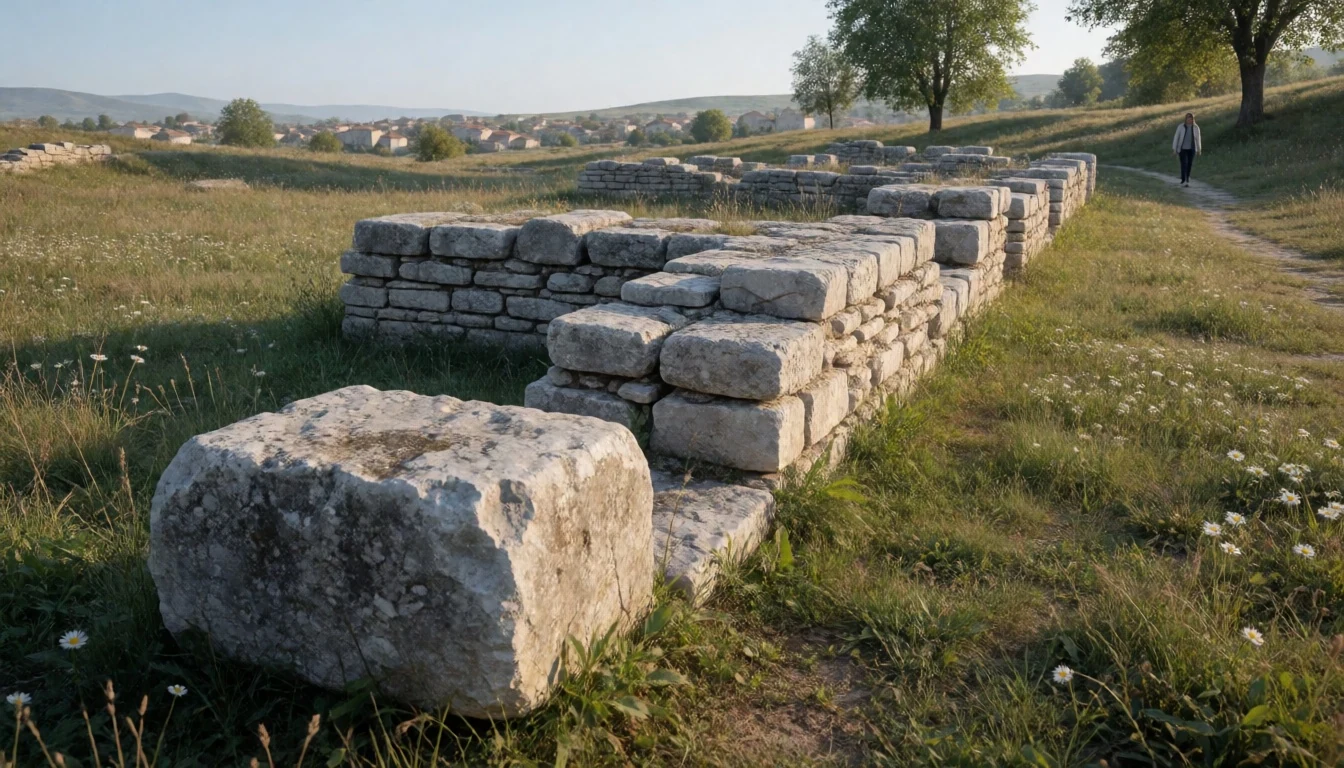
- Badovac Lake — East of Gračanica
Badovac Lake lies east of the town and offers countryside views, a walk on the shore and a long lunch afterwards at a nearby grill restaurant. It needs a car or taxi to reach. Weekday mornings are likely to be calmer than summer weekends, when local families head out for the day.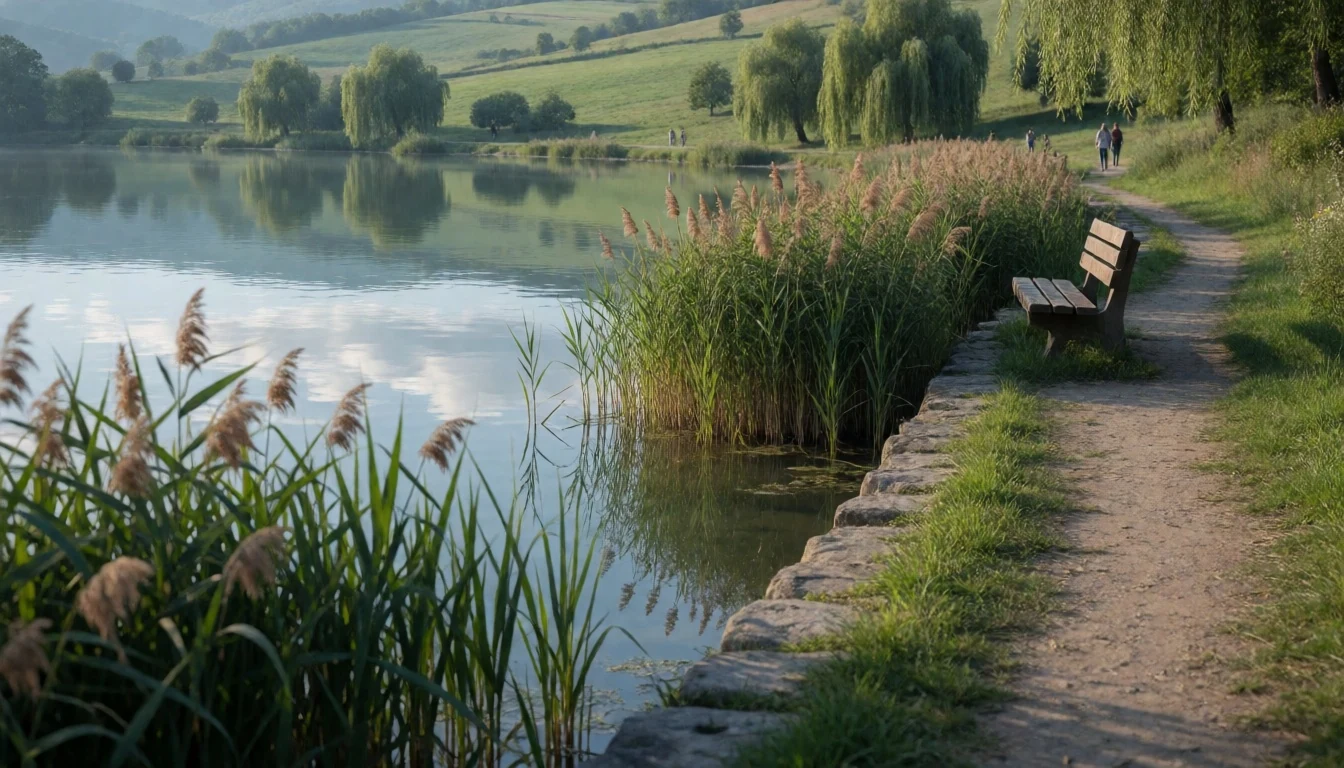
- The main road through Gračanica — Gračanica town centre
The road from the town centre to the monastery gate is a short, plain walk past bakeries, cafés and shops, where Serbian is the language most often heard. It is worth doing on foot, as it shows how the monastery fits into everyday life rather than standing apart from it.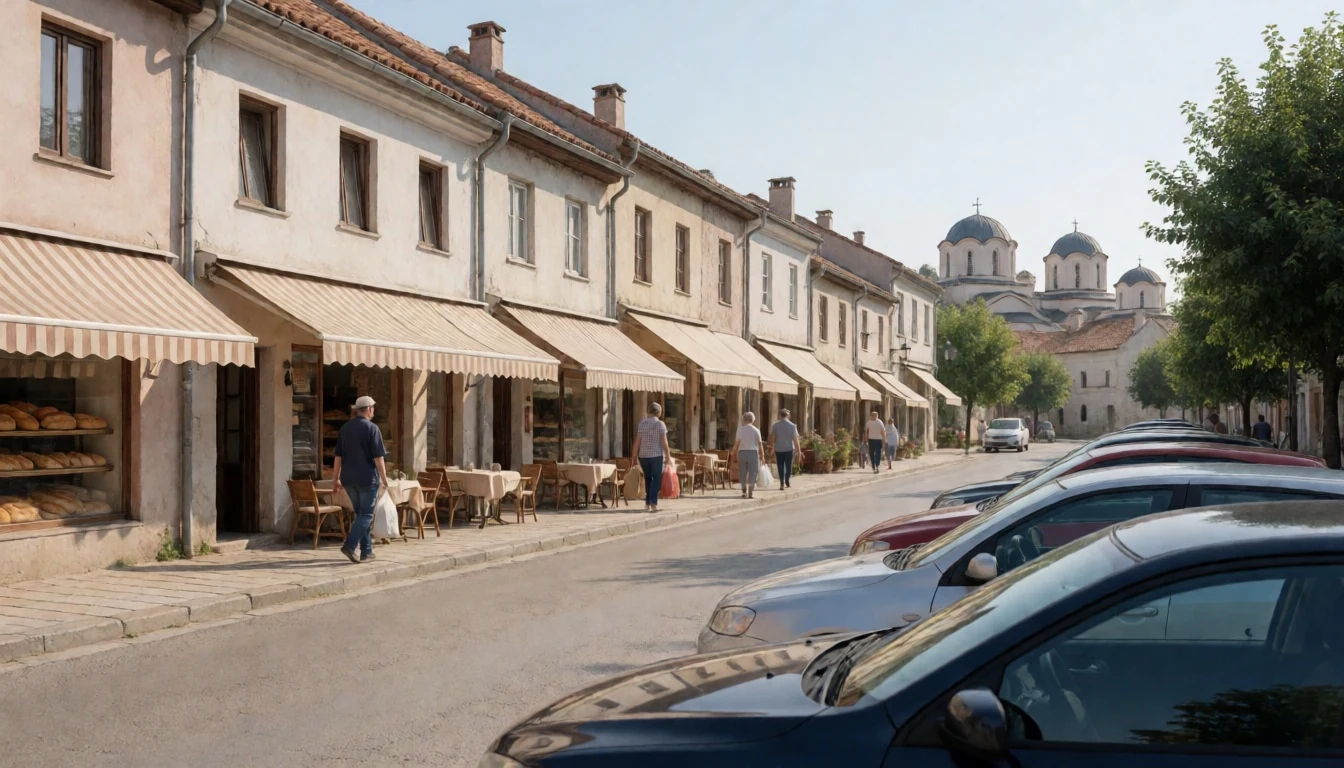
Culture
Gračanica Monastery is both a medieval monument and a place of daily worship, and the two roles shape a visit. The community around it is mostly Serbian Orthodox, living in an enclave in a territory where most people are Albanian, and the monastery carries deep meaning for people who see it as part of their heritage. Services follow the Orthodox calendar, with candles lit before icons, chanting, and the sign of the cross made from right to left. The founder's portrait, in which King Milutin appears as the church's patron, reflects the medieval link between rulers and faith. Painters have been drawn here too: the Serbian artist Nadežda Petrović painted the monastery among Kosovo peonies in the early twentieth century, and the picture still stands as a symbol of the place. Politics around Kosovo are sensitive, and the town and monastery carry names in two languages. Visitors do best by being curious and quiet, and letting people offer their own views rather than asking for them. A monk or guide may be willing to explain what the frescoes show, especially outside service hours. Cover your shoulders and knees, keep your voice low, and ask before photographing inside the church or any monk or worshipper.
What to wear
Fashion around Gračanica Monastery mixes old folk dress, ordinary European clothing and the more careful dress used in church. Traditional Serbian costume in this region has typically meant white linen or cotton blouses with embroidered cuffs and collars, woollen waistcoats, woven aprons and belts, and leather sandals called opanci. Albanian traditional dress in Kosovo has its own wool and felt pieces, including the white felt cap known as a plis, and embroidered waistcoats. These outfits are mostly worn for weddings, folk festivals and church feast days, and are more often seen in museums, photographs and performances than on the street. Day to day, people in Gračanica and Pristina wear what any European town would: jeans, shirts, jackets and trainers, with smarter clothes for Sundays and holidays. For a visitor, the monastery asks for modest dress: shoulders and knees covered, hats off for men inside, and a light scarf for women who wish to cover their hair, as many worshippers do. Summer can be hot while the church interior stays cool, so a thin layer helps; winters are cold, so bring a proper coat. Footwear should be flat and comfortable for the courtyard and the town pavements, and easy to stand in through a long service.
What to eat
- Roast pork chop (kotlet) — Grill restaurants on the main road through Gračanica
A plate of pork chop is a typical lunch in Gračanica, grilled or fried and served with chips, bread and salad. Look for it at the grill restaurants along the main road through town, where portions are generous and the mood is relaxed.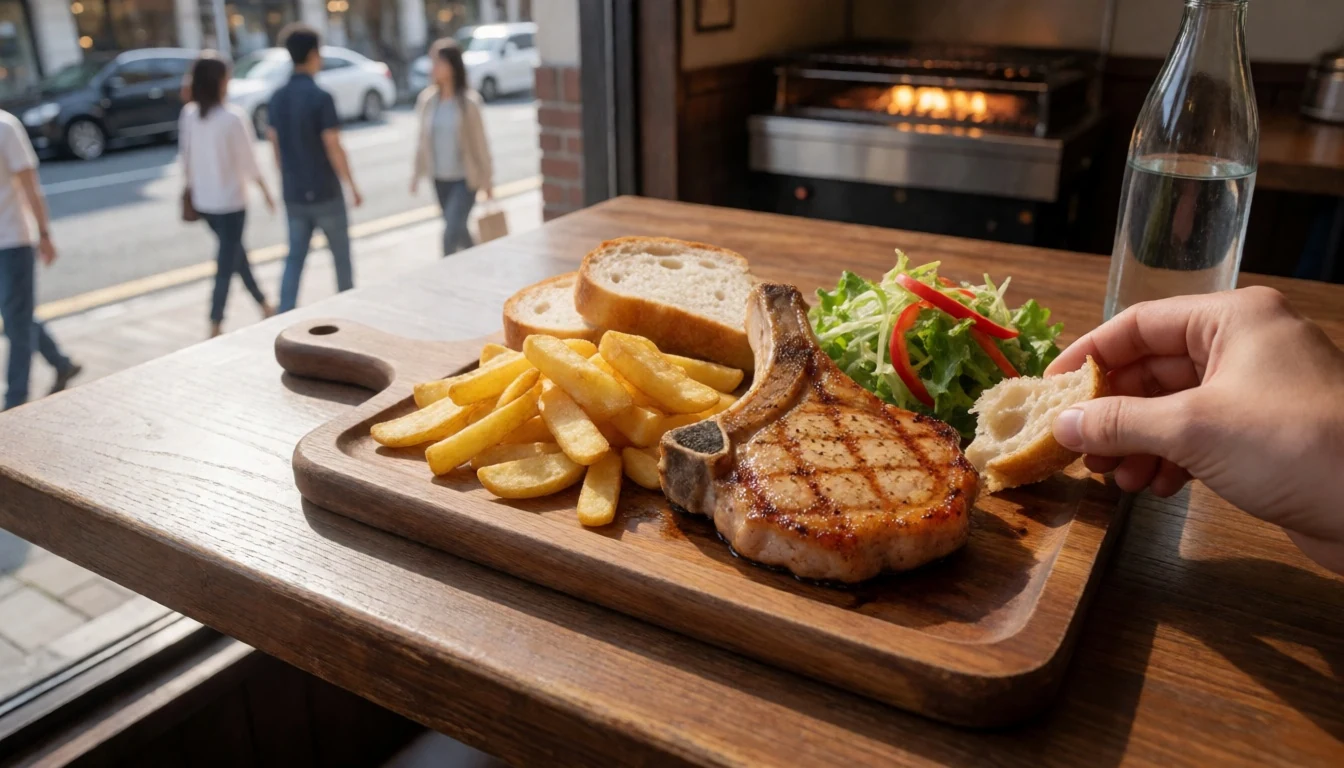
- Ćevapi (qebapa) — Any grill house in Gračanica or Pristina
Small grilled minced-meat sausages, served in flatbread or with chopped onion and kajmak, a soft dairy spread. Albanian speakers call them qebapa. Any grill house in town will have them, and they make a quick, filling stop before or after the monastery.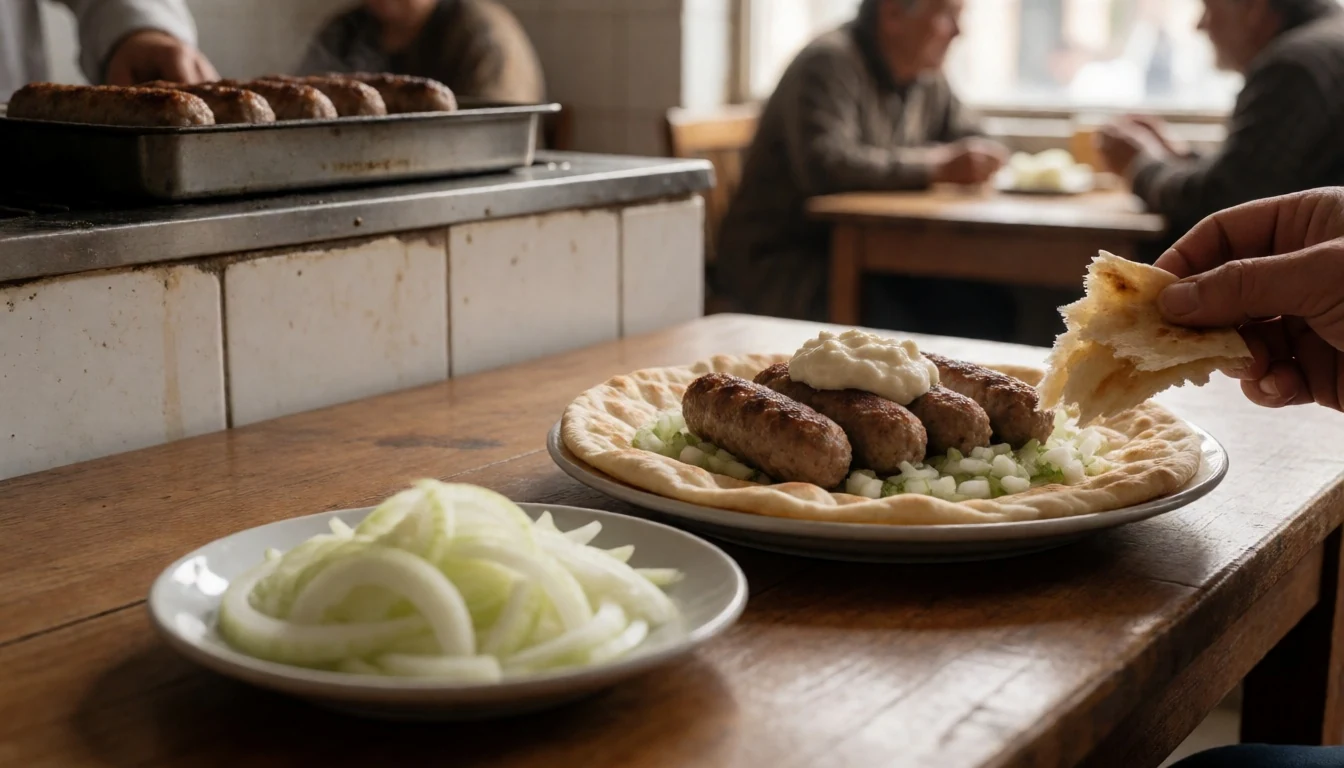
- Burek (byrek) — Bakeries near the bus stops and main street
Layered flaky pastry filled with cheese or meat, eaten warm and often for breakfast with plain yoghurt. Bakeries near the bus stops and on the main street have the freshest trays early in the morning, which suits a visit that begins with the monastery. - Grilled steak by the lake — Restaurants near Badovac Lake
The restaurants near Badovac Lake, east of the town, are known for grilled meat, and a slow lunch there fits well with a walk by the water. Ask for the day's grill with a simple salad and bread, and expect a leisurely pace. - Local craft beer — Cafés and restaurants in Gračanica
A craft brewery sits on the western approach to Gračanica from Pristina, and its beer turns up in cafés and restaurants around town. Drinkers can ask for it by the bottle with a meal; check the brewery's own details if you want to visit.
Plan it
Best time. April, May and October, when days are mild and walking around the town is easy. June to September can be hot, with July the hottest, and winters are cold, so dress warmly. Orthodox feast days bring larger crowds to services.
How long. 1
Getting there. Fly into Pristina airport; the monastery lies on the road out of Pristina towards Gjilan. A metered taxi from the city is the simplest last leg. Local buses on the Gjilan route and city lines also stop in Gračanica; check the Trafiku Urban app or website for current timetables, then follow the main road to the monastery gate.
Budget. low
Tips
- Check the official site, http://www.manastirgracanica.rs, for visiting hours and service times before you go.
- Carry small euro notes and coins for candles, bus fares and cafés.
- Go on a weekday morning for a quieter church, and avoid service times if you want to look at the frescoes.
- Carry water in summer, as there is little shade in the courtyard.
- Pair the visit with Ulpiana or a meal in town; GuideKS can put you in touch with a local guide.
Etiquette
- Cover shoulders and knees, and men should take off hats inside the church.
- Keep your voice low and do not walk in front of worshippers during services.
- Ask before photographing people, monks or the inside of the church.
Nearby
Sources
- Wikidata Q1137661 (CC0)
- Wikipedia: Gračanica Monastery (rev 1379078640) (CC BY-SA 4.0)
- Wikivoyage: Gračanica (Kosovo) (rev 5403144) (CC BY-SA 4.0)
- Photo: Gračanica Monastery, 2010 — Quinn Dombrowski (CC BY-SA 2.0)
- Photo: Gračanica Monastery, 2013 — Sasa Micic (CC BY 3.0)
- Photo: fresco of King Milutin — Unknown Serbian painter (Public domain)
- Painting: Kosovski božuri – Gračanica — Nadežda Petrović (Public domain)
- Photo: Meister von Gracanica (II) (Public domain)
- Photo: Monastery of Gračanica — Auguste Léon (Public domain)
- Photo: Gračanica — Quinn Dombrowski (CC BY-SA 2.0)
- Photo: Interior of the monastery — Ardianlumi (CC BY-SA 4.0)


