Gol Gumbaz
Gol Gumbaz, India
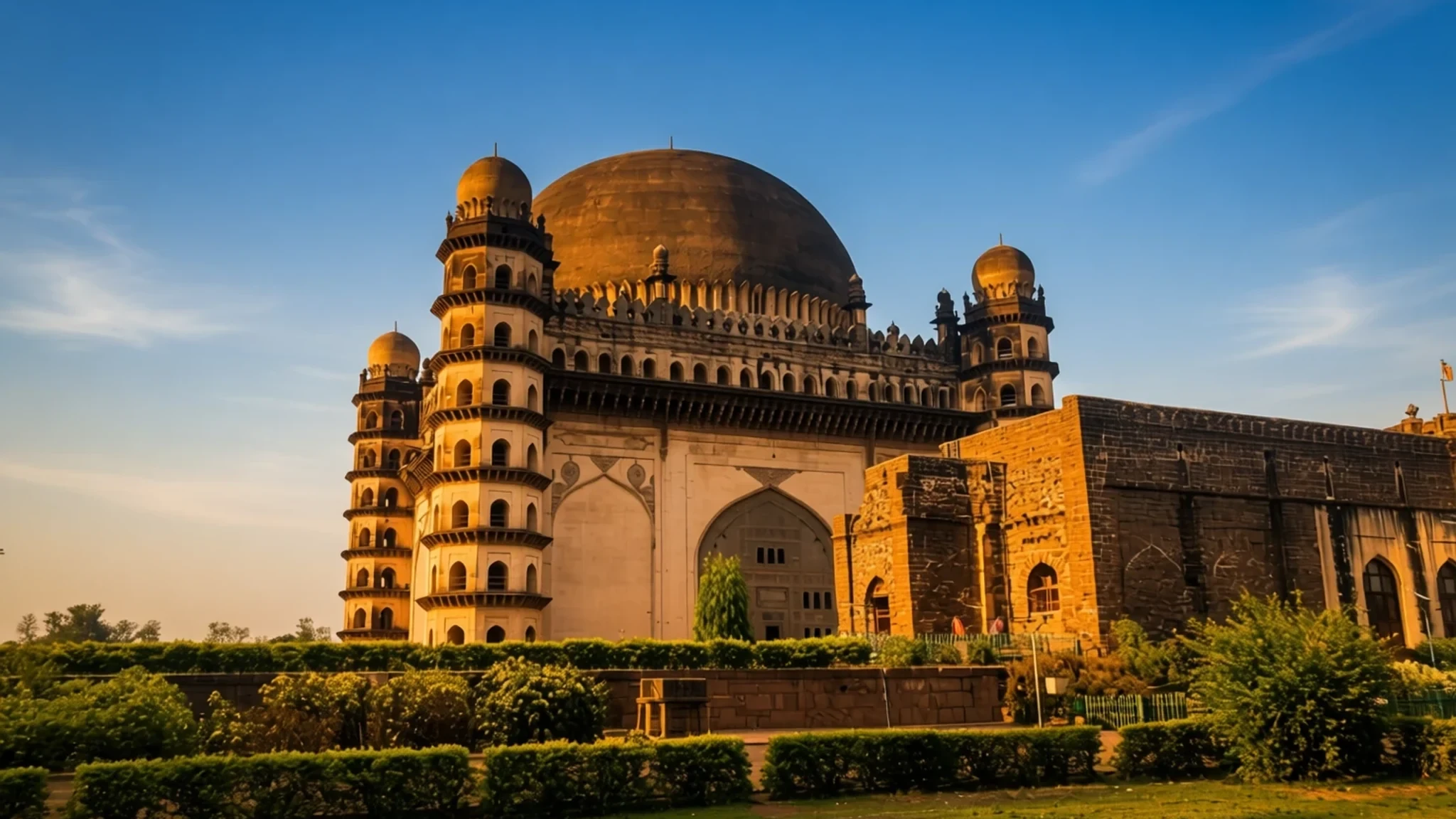
A 44 m dome over a dark basalt tomb in Bijapur, with a whispering gallery that rewards the walk up and a sultan's story worth hearing.
The place
Gol Gumbaz stands in Bijapur, a city in northern Karnataka, and its name means roughly 'round dome'. The mausoleum is built of dark basalt, a stone that gives the walls a heavy, shadowed look compared with the pale marble of later Mughal tombs. Inside lies Mohammad Adil Shah, seventh ruler of the Bijapur Sultanate, alongside the graves of two wives, a mistress, a daughter and a grandson. The central dome, with an external diameter of 44 m, is the reason the building is famous. It rises over the main chamber without pillars beneath it, which places it among the largest medieval domes of its time. The design draws on Persian, Mughal and local Deccan traditions. Four basalt walls carry octagonal towers at the corners, the exposed surfaces were finished with plaster, and much of the decoration was left incomplete when work stopped. Beyond the tomb, the complex includes a mosque, a dargah and a naqqar khana beside a charbagh garden, so a visit covers more than one building. The site works best on foot and in the cooler hours, since the stone and open courtyards can feel hot by afternoon. Expect it to be calmer outside the busiest weeks, and to fill quickly at peak times.
Its story
Gol Gumbaz was begun in the years after 1627, when Mohammad Adil Shah succeeded his father, Ibrahim Adil Shah II, on the throne of Bijapur. Ibrahim had been a generous patron of the arts and had commissioned a mausoleum and prayer hall on the edge of the city, the Ibrahim Rauza, which his wife Taj Sultana completed. Mohammad wanted his own tomb to be grander than Ibrahim's, so he brought architects and engineers from several regions of the subcontinent and hired local workers for the decoration. Territory peaked during his rule. In 1636 he made peace with the Mughal emperor Shah Jahan, who had just conquered the Ahmednagar Sultanate, and he sent raids south into Tamilakam with generals such as Ranadulla Khan and Shahaji Bhonsle. Building ran in three stages: a foundation and raised platform, then four basalt walls with octagonal minarets at the corners, and finally the great central dome of brick bedded in layers of lime mortar. Plaster later covered the façade and inner walls. The chief architect is unrecorded, though historians suspect Malik Yaqut, an Abyssinian architect who oversaw the Jamiya Masjid, shaped the design. An inscription says Mohammad had soil from Karbala placed in the central vault. Work stopped at his death in 1656, leaving some decoration unfinished. The tomb was opened to the public in 1892, and after independence the Archaeological Survey of India took over its care in 1962.
What to see
- The tomb chamber — Bijapur city centre
Beneath the dome lies the chamber holding Mohammad Adil Shah's tomb, with the graves of his wives, mistress, daughter and grandson grouped around it. The walls are plastered rather than carved, and daylight comes in dimly, so give your eyes a minute to adjust. Stand back from the central tombs and look up at the curve of the dome, which is why most people come.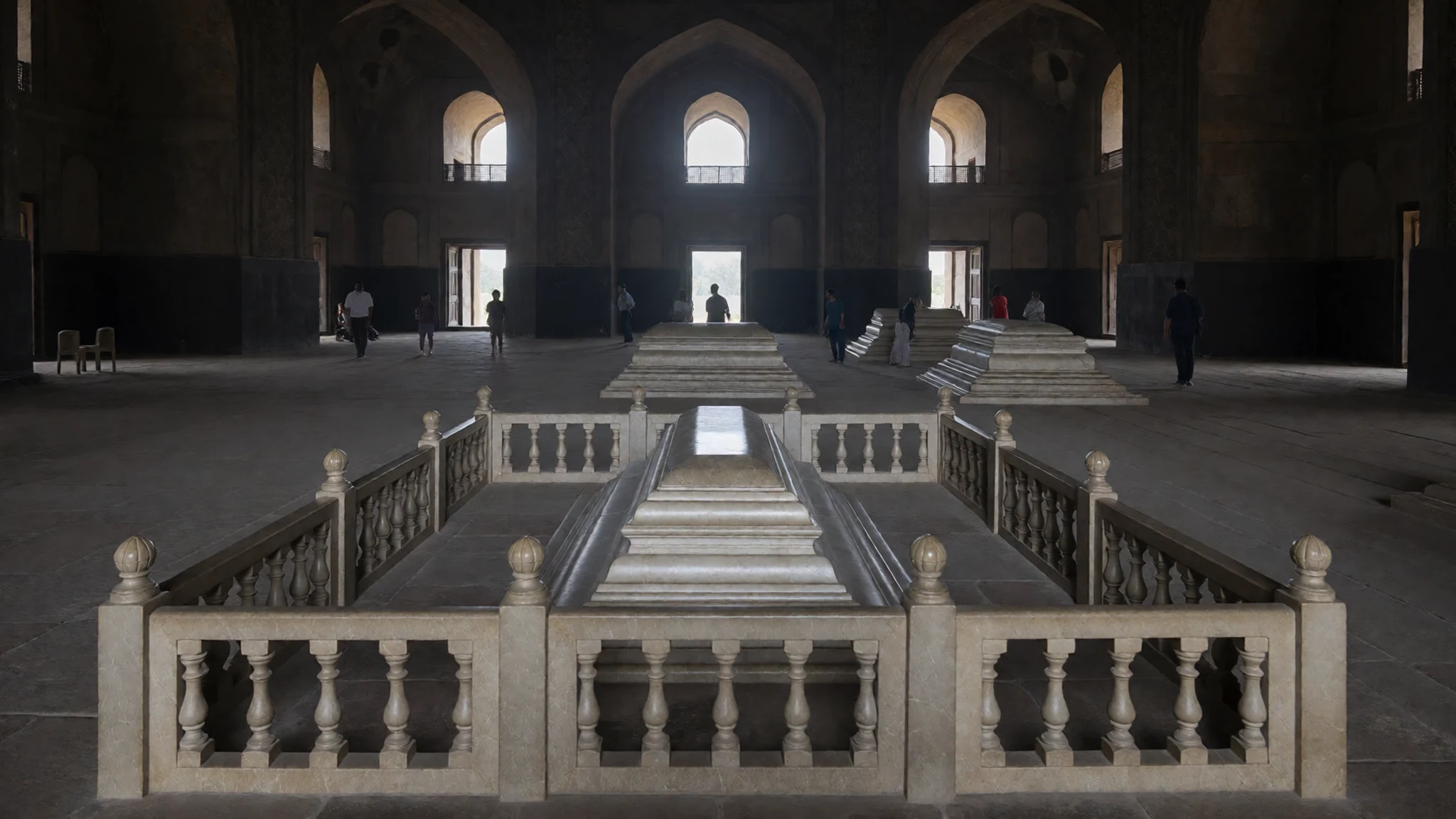
- The whispering gallery — Within the main dome
The whispering gallery runs around the inside of the dome, high above the floor. Speak softly against the wall and a friend on the far side can hear you clearly. Try it with a companion standing opposite. Expect a queue at busy times, and check the entry arrangements on the official site before you go.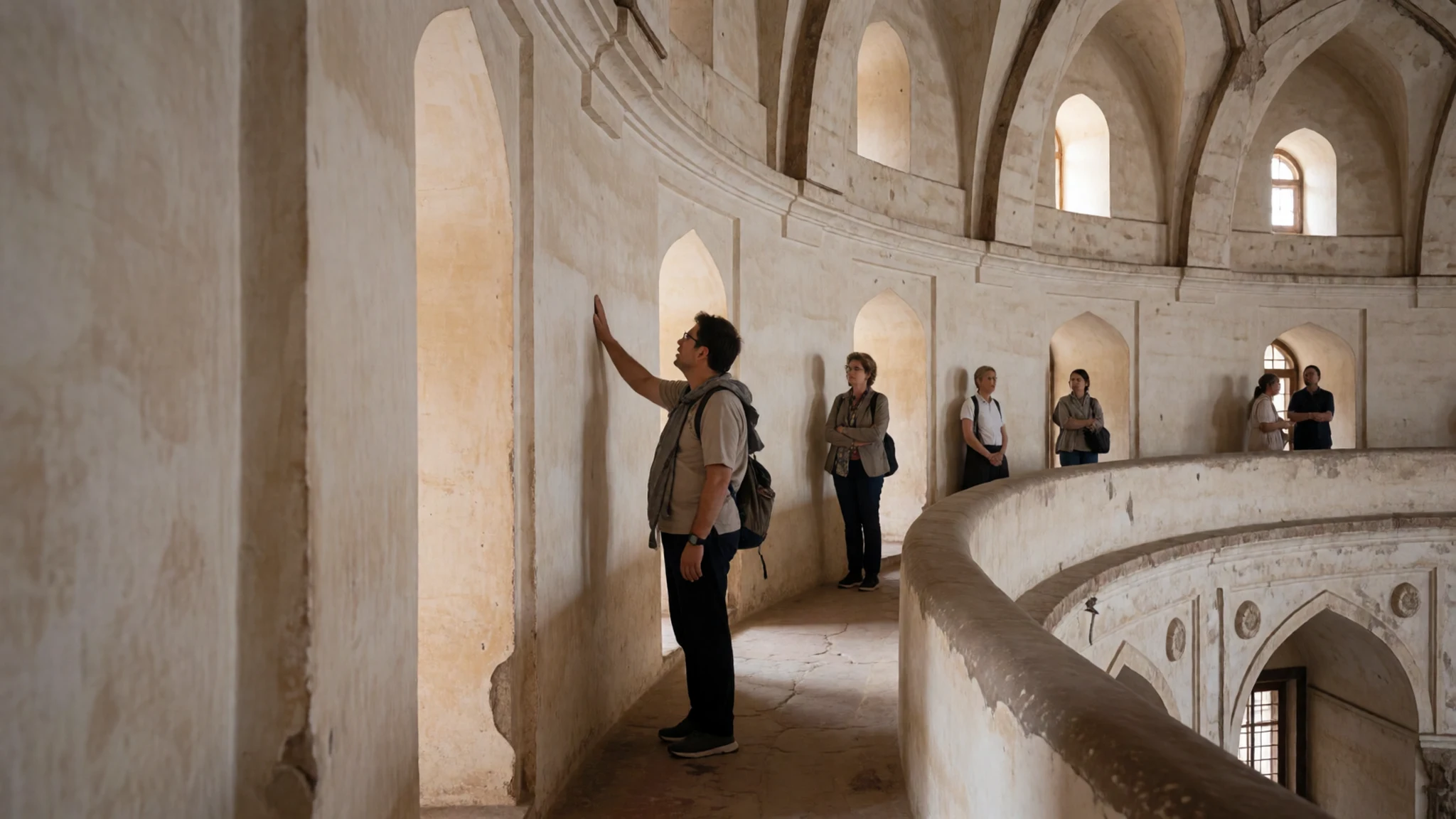
- The naqqar khana and charbagh garden — Gol Gumbaz complex grounds
The naqqar khana, the drum house where ceremonial music was once played, stands within the wider complex, beside a charbagh garden laid out in the traditional four-part Persian pattern. Walk the garden paths slowly to see how the buildings frame the tomb. The formal layout gives the site a calm rhythm, so save some time before you climb to the dome.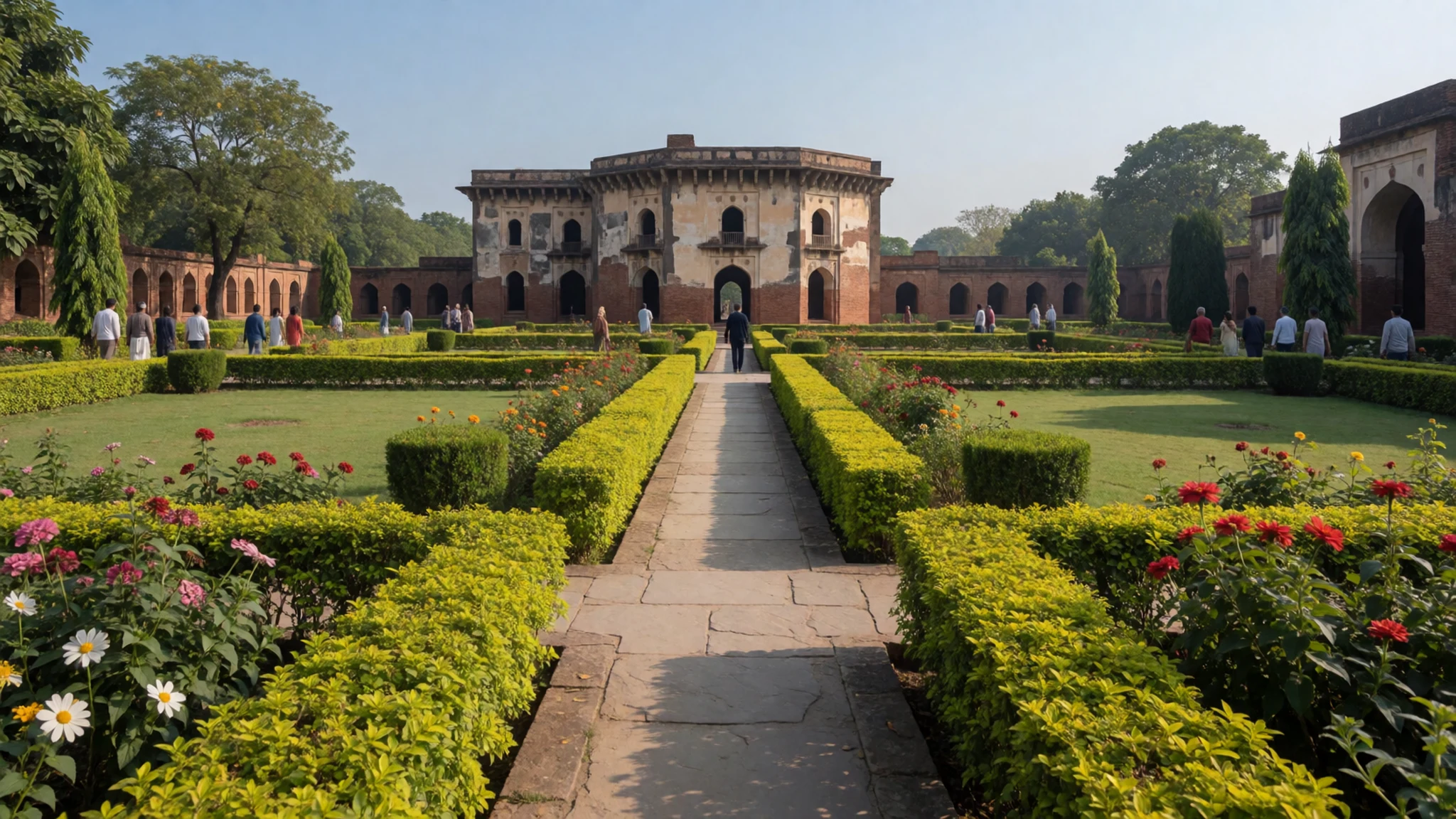
- The mosque and dargah — Gol Gumbaz complex grounds
Within the complex stand a mosque and a dargah, the shrine of a holy figure, both built in the same Indo-Persian style as the tomb. They are used for worship, so treat them as working religious spaces. Dress modestly, remove shoes where asked, and keep voices low during prayer times, especially at midday.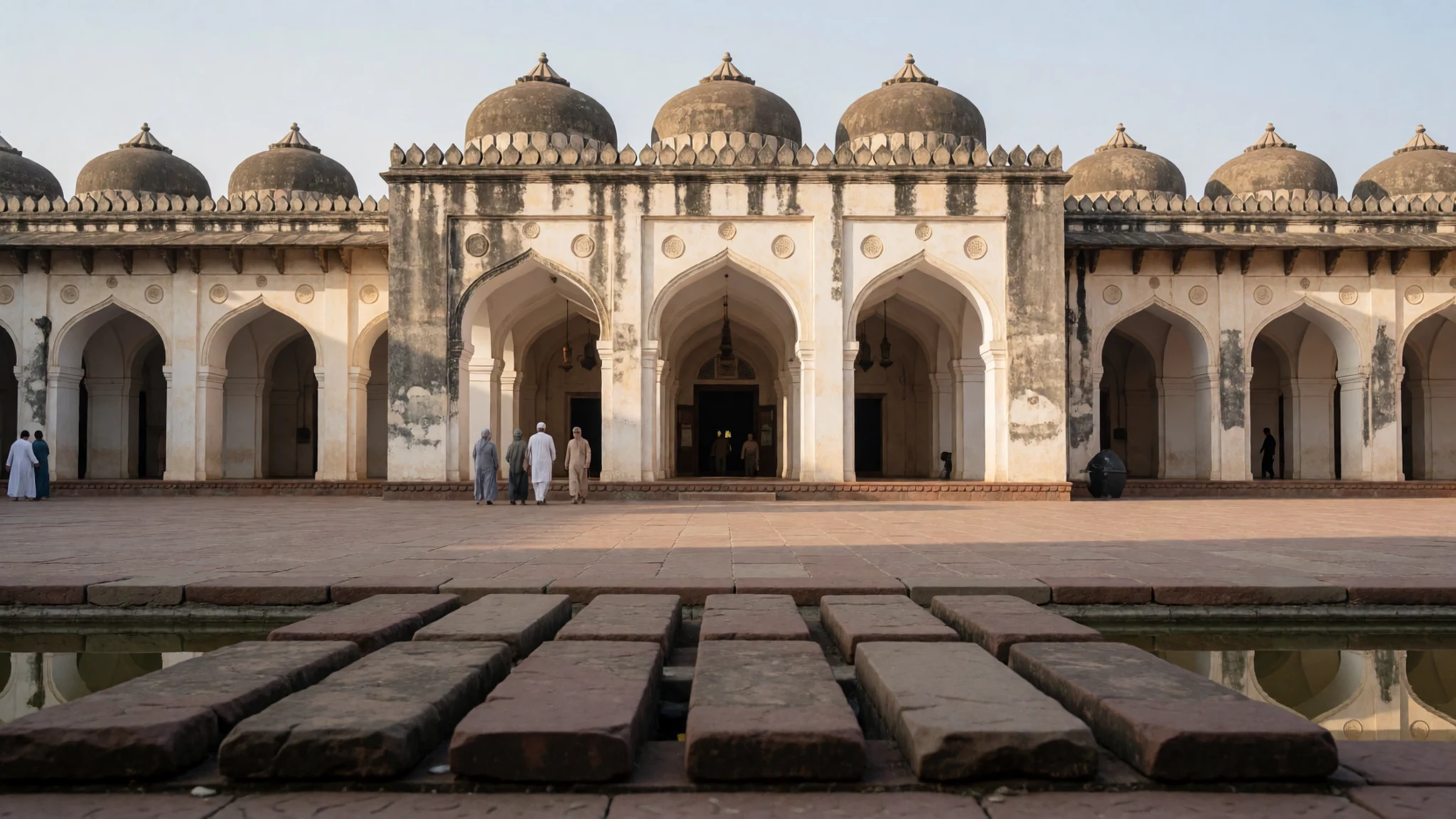
- Ibrahim Rauza — Outskirts of Bijapur
Ibrahim Rauza lies on the outskirts of Bijapur and was commissioned by Ibrahim Adil Shah II, the father of Mohammad. His wife Taj Sultana completed it, and art historians prize its stone carving and calligraphy. Seeing it alongside Gol Gumbaz lets you compare two generations of the same dynasty's building.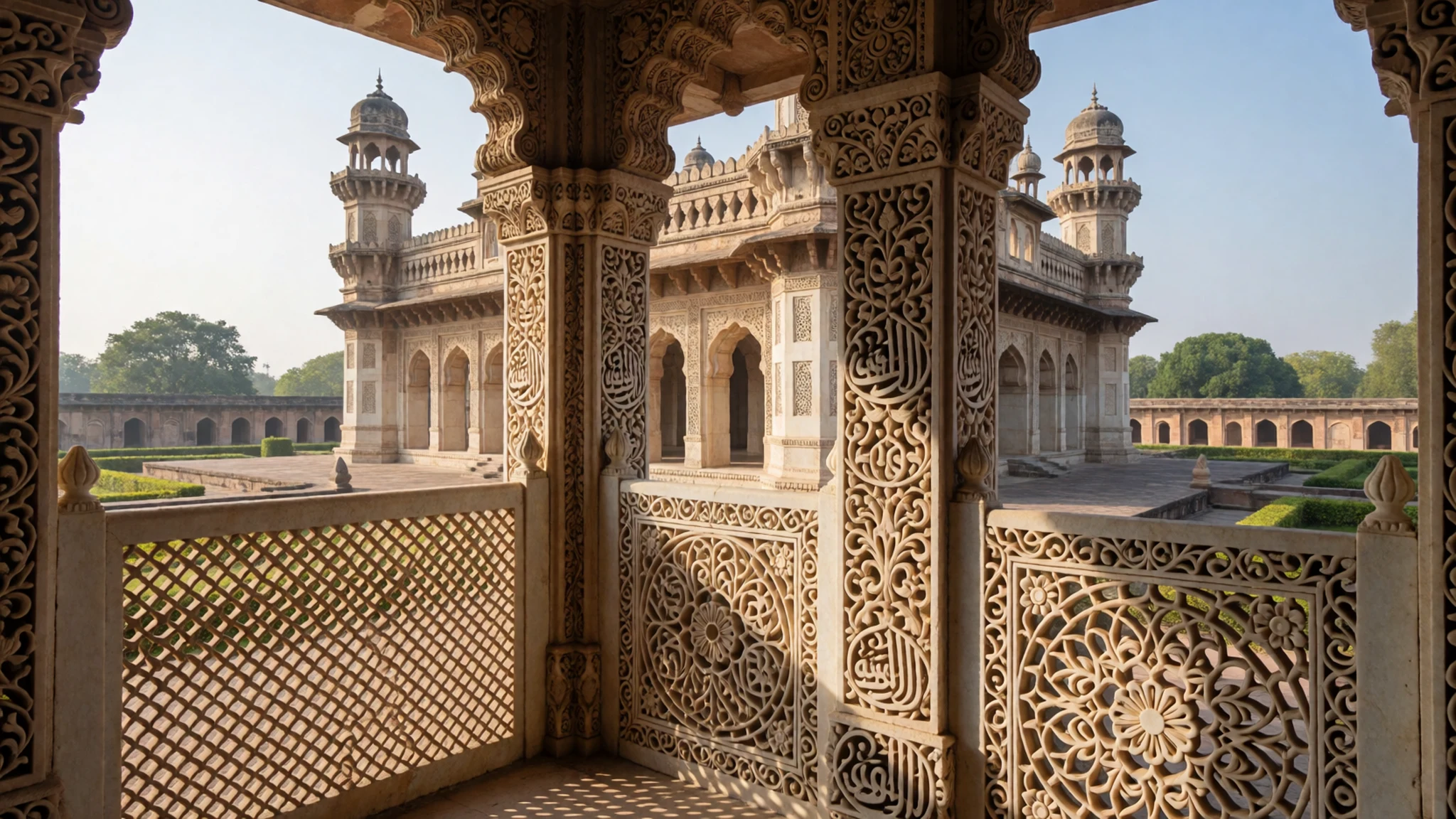
Culture
Gol Gumbaz is both a monument and a place of worship, because the mosque and dargah inside the complex are used by people who come to pray as well as by sightseers. Most visitors spend their time in the tomb chamber, the gallery and the garden, and the atmosphere is that of a busy heritage site rather than a closed shrine. Local families come at weekends and holidays, when the lawns fill and the sound under the dome grows louder. Some visitors come to pay respects at the graves, and that quiet deserves to be respected. Public displays of affection are best avoided, as in most towns in this part of India. Dress modestly, with shoulders and knees covered, because the dargah is a religious site. Ask before photographing people at prayer or families gathered at the tombs, and keep off the masonry and the low walls. Keep your voice down inside the chamber, where others come to pray.
What to wear
Gol Gumbaz sits in a region where cotton and silk weaving has long shaped everyday and festive dress. The Ilkal sari, woven in the nearby town of Ilkal, is known for its cotton and silk with contrasting borders, and it is still worn for festivals and weddings. Men traditionally wear a dhoti or a long kurta, and Muslim women in Bijapur often wear a salwar kameez or a burqa, while many younger women choose western clothes. Today the streets show a mix of shirts and trousers, jeans, kurtas and saris side by side. For a visit, choose loose cotton that covers the shoulders and knees, since the sun is strong and the sites are religious places. Carry a light scarf to cover your hair at the dargah and mosque when asked. Wear shoes that are easy to slip off, and sturdy closed footwear for the uneven floors and steps of the complex.
What to eat
- Jolada rotti — Simple eateries in the old town
A thick flatbread made from jowar, or sorghum, flour, pressed by hand and cooked on a hot griddle. It is the everyday staple of the region, usually eaten with a spicy vegetable or dal and a little chutney. Order it fresh at a simple eatery near the town centre.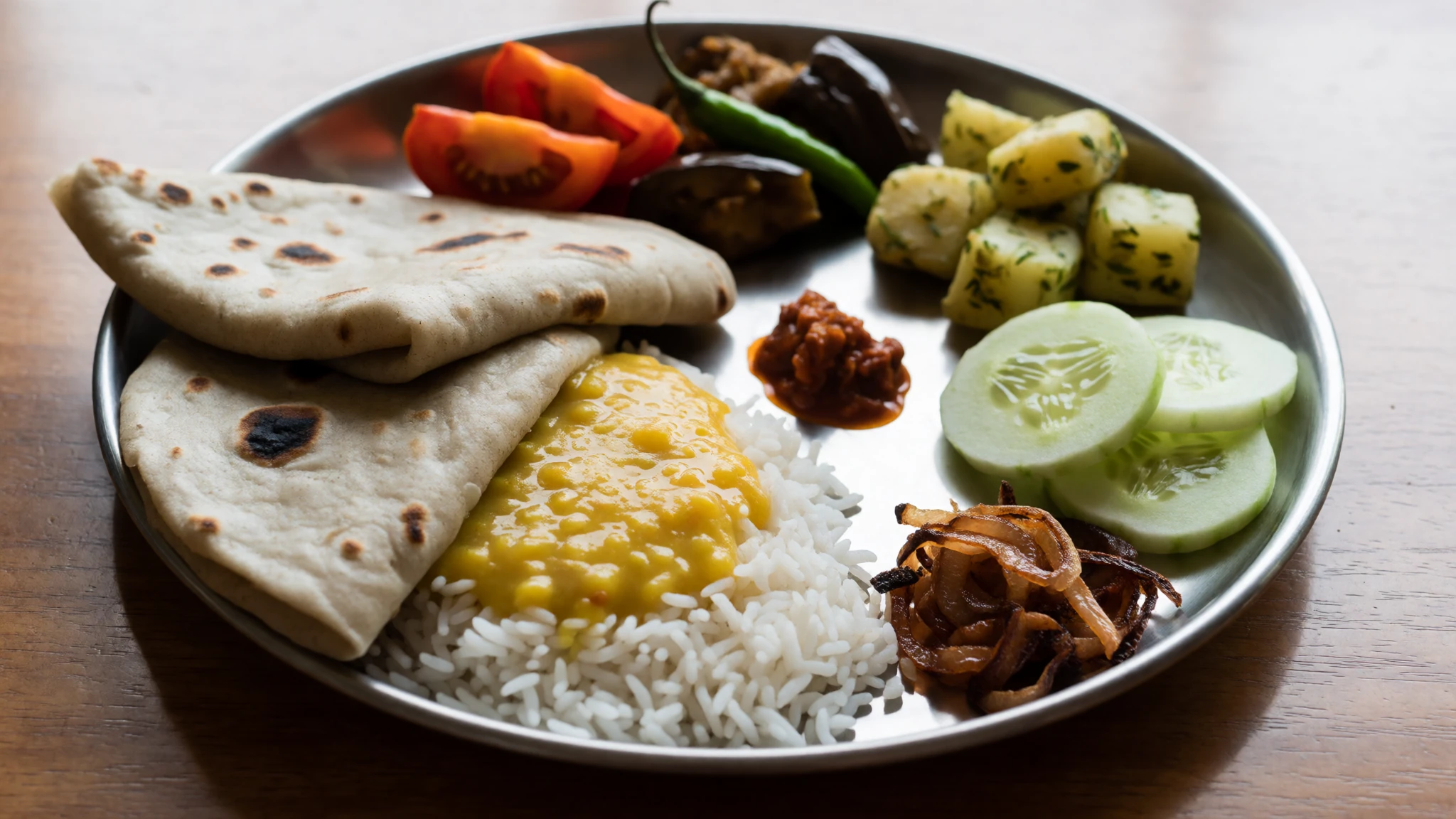
- Ennegai — Lunch eateries across the town
Ennegai is a stuffed brinjal dish, with small aubergines slit and filled with a ground spice and peanut paste, then simmered until tender. Its sauce is rich and slightly sweet, and it is usually served with rice or rotti. Look for it on the menus of simple Karnataka eateries.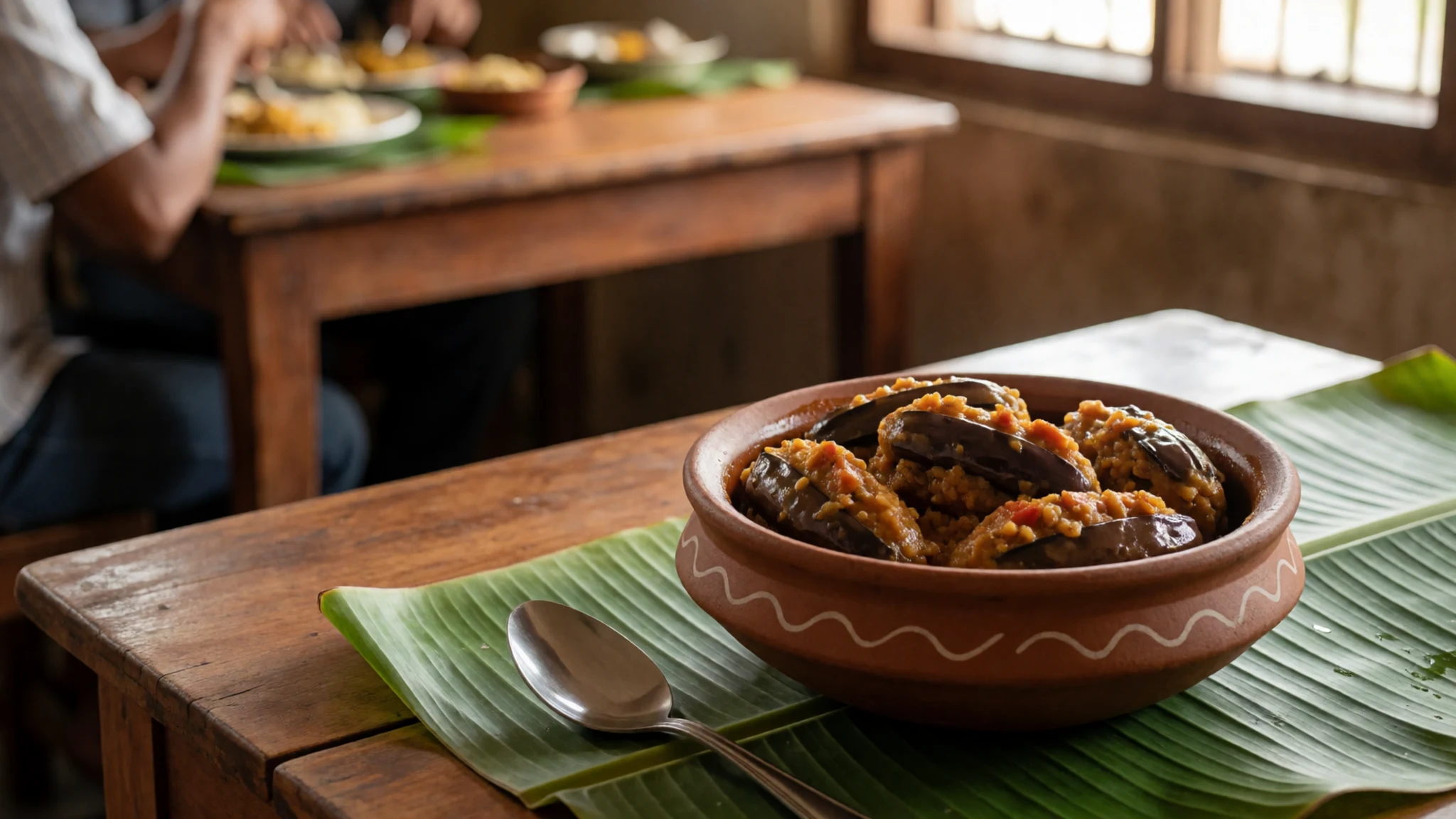
- Mirchi bajji — Street carts near the bus stand
Long green chillies dipped in chickpea-flour batter and fried until crisp, a snack sold hot from street carts. The heat is sharp and the batter light. Eat them with tea in the late afternoon, and treat the first bite with care.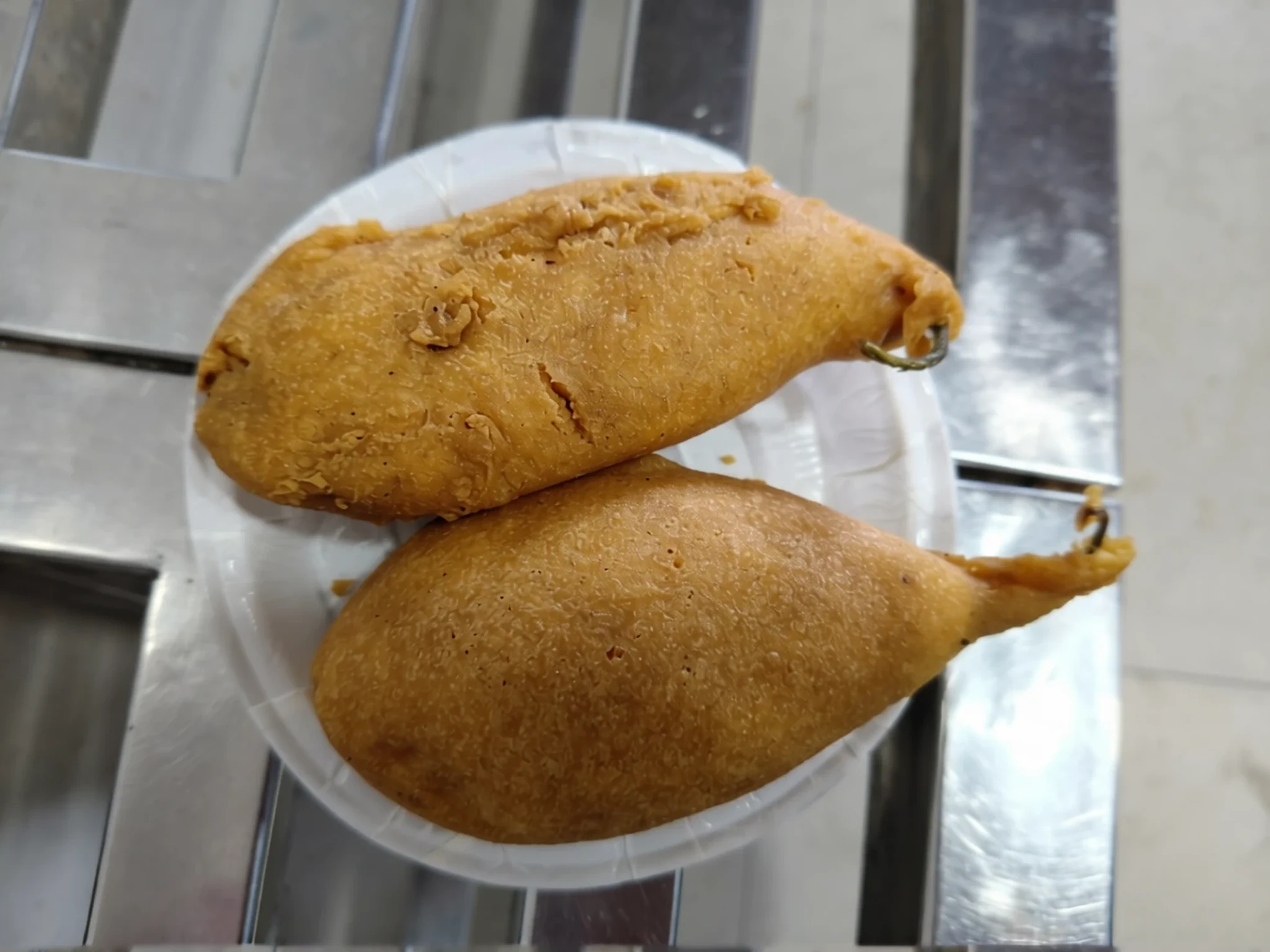
- Kadlebele usli — Evening snack stalls in the market lanes
Chickpeas soaked, boiled and then tempered with mustard seeds, curry leaves and grated coconut, a dry, crumbly sauté that makes a good snack or side. It is sold as a simple street dish in the evenings. - Obbattu — Sweet shops in the old town, especially around festivals
A sweet stuffed flatbread, made with a thin wrapper of wheat or maida around a filling of chana dal and jaggery, cooked on a griddle with ghee. It is a festival sweet, so look for it at sweet shops during local celebrations.
Plan it
Best time. November to February is the dry season, with little rain and cooler mornings, though afternoons still reach 35 to 40 °C, so keep long walks to early hours; March to May turns hot, and heat above 40 °C makes midday visits hard going.
How long. 1–2
Getting there. Hubballi has the nearest airport with regular flights, though schedules are limited; continue by road, or by train to Bijapur station, which has its own rail connection.
Budget. low
Tips
- Visit early in the morning or late in the afternoon to avoid midday heat
- December and January bring the heaviest crowds, so expect queues at weekends and holidays
- Carry water, as shade is limited across the open courtyards
- Check the Archaeological Survey of India site for current entry arrangements, since daily caps have been used before
- Bring small change for entry and any camera fees
Etiquette
- Dress modestly, with shoulders and knees covered, especially near the dargah
- Remove shoes where asked, particularly at the mosque and dargah
- Ask before photographing people at prayer or families at the graves
Nearby
Sources
- Wikidata Q192295 (CC0)
- Wikipedia, Gol Gumbaz (rev 1381290525) (CC BY-SA 4.0)
- Wikivoyage, Bijapur (rev 4642506) (CC BY-SA 4.0)
- Photo 01-gol-gumbaj2.jpg, Meesanjay (CC BY 3.0)
- Photo 02-gol-gumbaz-4-bijapur-karnataka.jpg, Mukul Banerjee (CC BY 3.0)
- Photo 03-adil-shah-s-tomb-inside-gol-gumbaz-bijapur-karnataka.jpg, Mukul Banerjee (CC BY 3.0)
- Photo 04-gol-gumbaz-bijapur-karnataka.jpg, HPNadig (CC BY 3.0)
- Photo 05-dome-gol-gumbaz2.jpg, Santoshsmalagi (CC BY 3.0)
- Photo 06-patience.jpg, Trollpande (CC BY 3.0)
- Photo 07-gol-gumbaz-badami-197.jpg, Krishna mojamdar (CC BY-SA 4.0)
- Photo 08-a-view-of-whispering-gallery-gol-gumbaz.jpg, Santoshsmalagi (CC BY 3.0)


