Gokarna, Karnataka
Gokarna, Karnataka, India
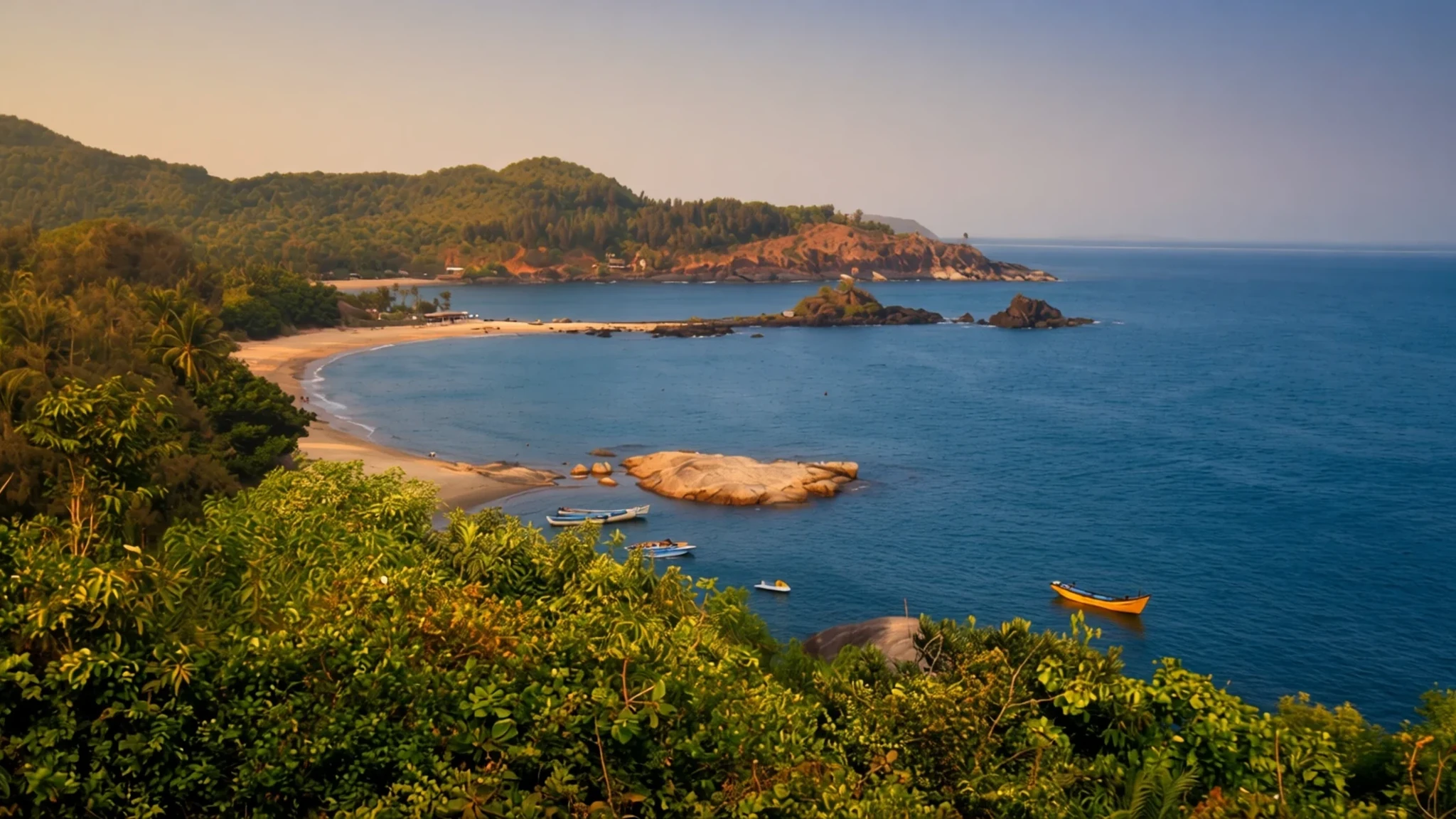
A small temple town on the Karnataka coast, where pilgrims and beach-goers share the same lanes and the same slow pace.
The place
Gokarna is a temple town on the Arabian Sea in Uttara Kannada district, Karnataka, and it runs on two rhythms at once. Mornings and evenings belong to pilgrims walking between shrines, and the rest of the day often belongs to travellers who have drifted south to its beaches. The town sits between the Gangavalli and Aghanashini rivers, which both reach the sea close by, so the landscape moves between wet paddy fields, palm groves and low hills.
The town is centred on the KSRTC bus stand, while the Mahabaleshwar Temple complex, dedicated to Shiva, lies at the western end near the beach. A shrine to Ganesha stands a short walk away and is traditionally visited first. Nearby, a temple to the goddess Bhadrakali adds another layer of worship, all within a town small enough to cover on foot in an afternoon.
The beaches are the reason many people come now. Om Beach and Kudle Beach are the best known, with bamboo huts, cafés and an unhurried atmosphere. The town itself is quieter than the coast, and it is worth treating the two as separate moods within one trip.
Getting in takes some planning. The nearest railway station, Gokarna Road, is some distance from town, and the usual final leg is a bus or taxi from there.
Its story
Gokarna has been a sacred centre on India's western coast for a very long time. Its name appears in the Mahabharata, and the Sanskrit poet Kalidasa describes a king paying respects to the lord of Gokarna on his way to the southern ocean. Scholars read such references as early evidence that the site mattered as a major centre of Shiva worship, not just a local shrine.
Religious texts add their own stories. Puranic traditions count Gokarna among the places where people can attain liberation, and link it to a stretch of coast said to have been claimed from the sea by the sage Parashurama. Such legends are part of why pilgrims still treat the town as a threshold rather than a stop.
The temple complex grew through royal patronage. The Kadamba dynasty, an early southern power, is credited with the first structure at the Mahabaleshwar Temple, traditionally attributed to the dynasty's founder. Later, rulers of the Vijayanagara Empire donated land and extended the buildings over the following centuries, so the complex reflects several eras of building rather than a single plan.
Geography shaped the story as much as politics did. The coast here has many small inlets and rivers, and the sea still defines daily life. Fishing, boat traffic and the monsoon rains set the town's rhythm, and the beaches that draw visitors today form a much more recent layer on top of that older world.
What to see
- Mahabaleshwar Temple — Western end of the town, near the beach
The Mahabaleshwar Temple is the town's main shrine, dedicated to Shiva, and one of the largest in Gokarna. It sits at the western end of town, close to the beach, so you can finish a visit with the sea in view. Remove your shoes at the threshold and expect a steady flow of pilgrims, especially in the early morning when the rituals are busiest. Ask at the entrance what is permitted before you go further in.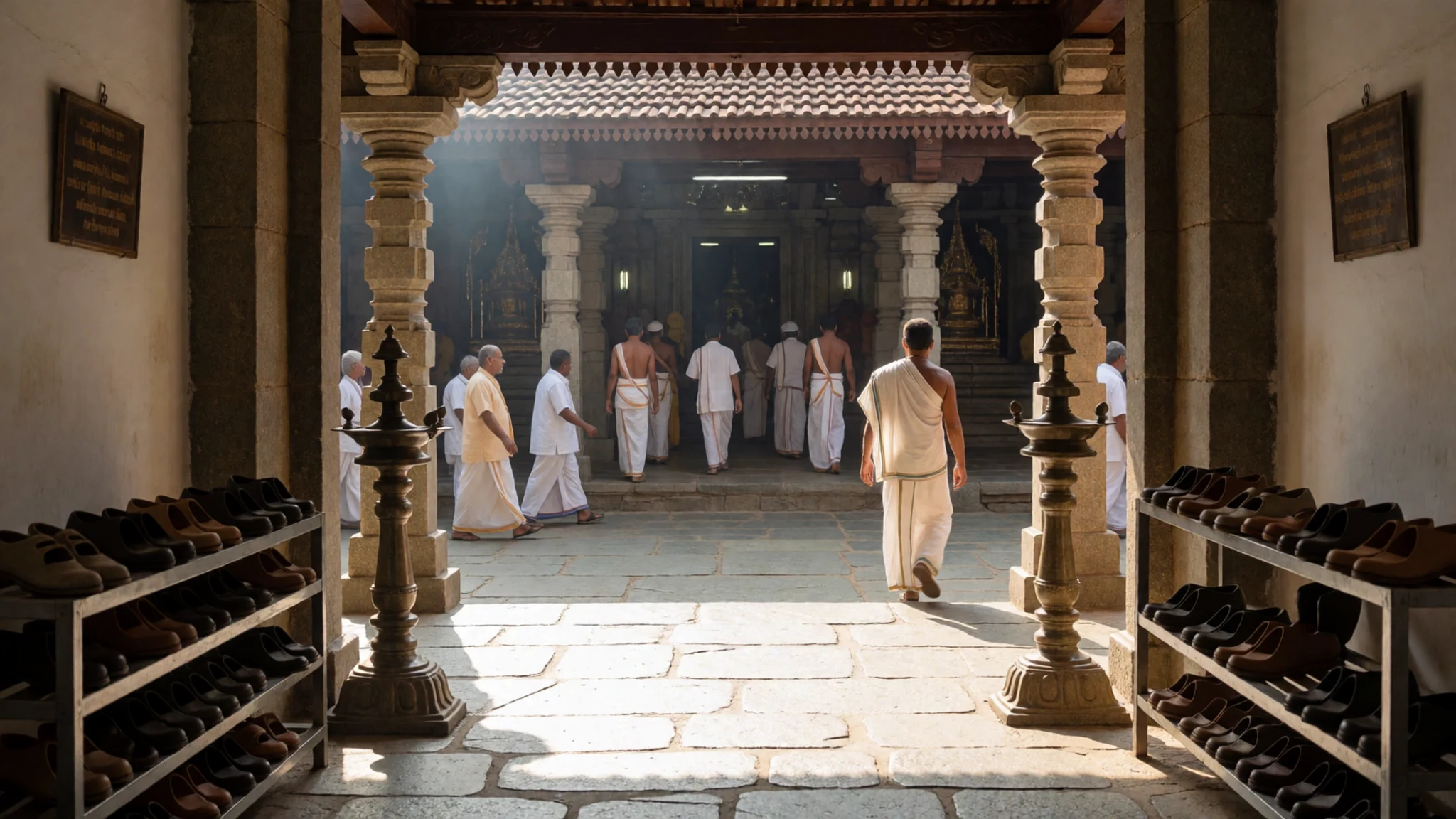
- Maha Ganapati Temple — Beside the Mahabaleshwar Temple, in the town centre
The Maha Ganapati Temple stands a few metres from the Shiva shrine and is dedicated to Ganesha. Local tradition ties it to a story in which Ganesha helped secure the atma linga brought from Ravana, which is why devotees begin here. Visiting Ganesha first and then Shiva is simply the custom, and it makes a relaxed walk between the two shrines.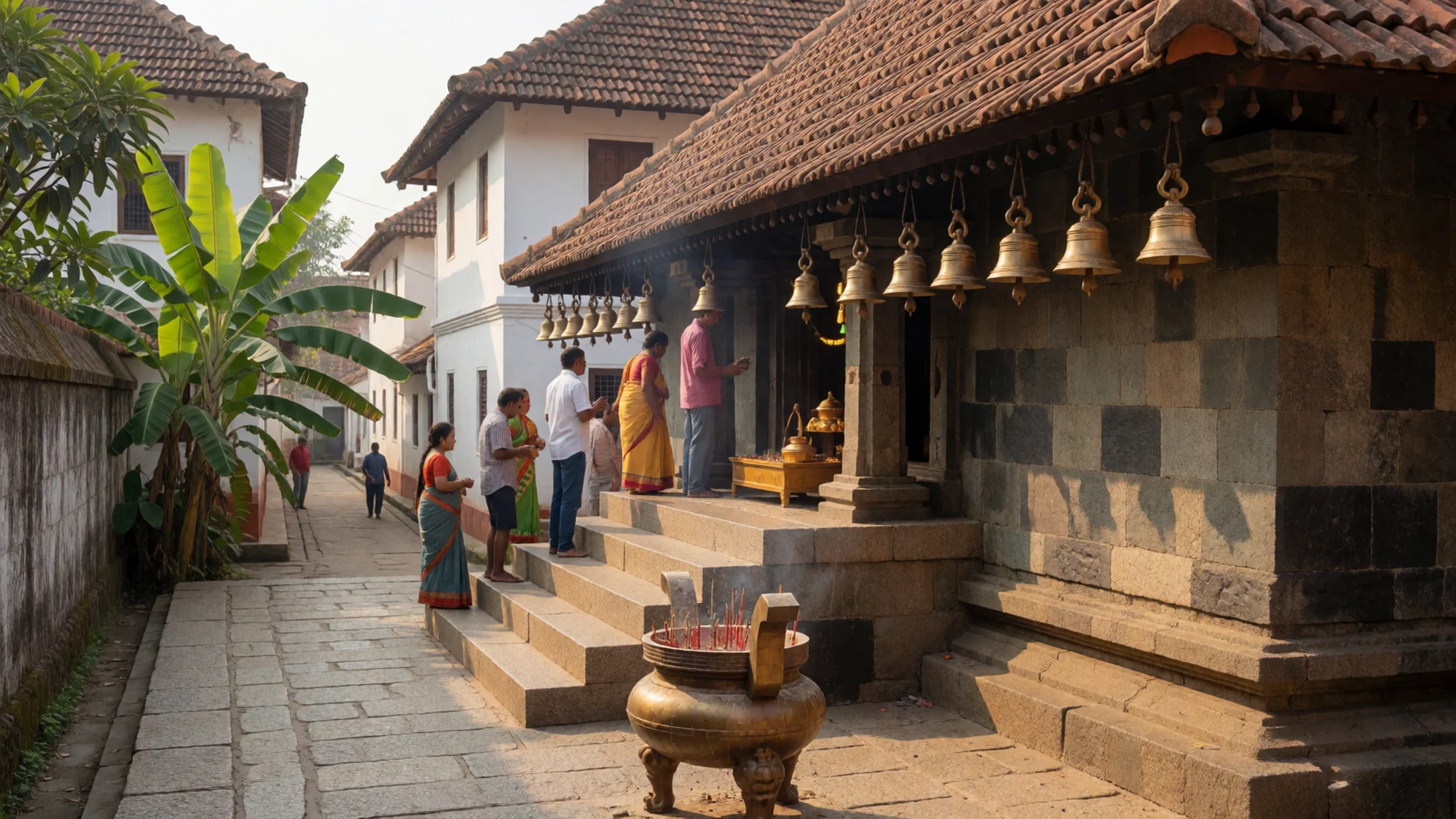
- Om Beach and Kudle Beach — South of the town, on the coast
Om Beach and Kudle Beach are the two beaches most travellers reach first, each a short ride south of the town. Om is busier and has the more polished cottages and cafés, while Kudle is more laid back, with simple bamboo huts. Prices rise in peak season. Swim only where locals advise, because the currents can be strong, and treat speedboat touts offering dolphin sightings with caution.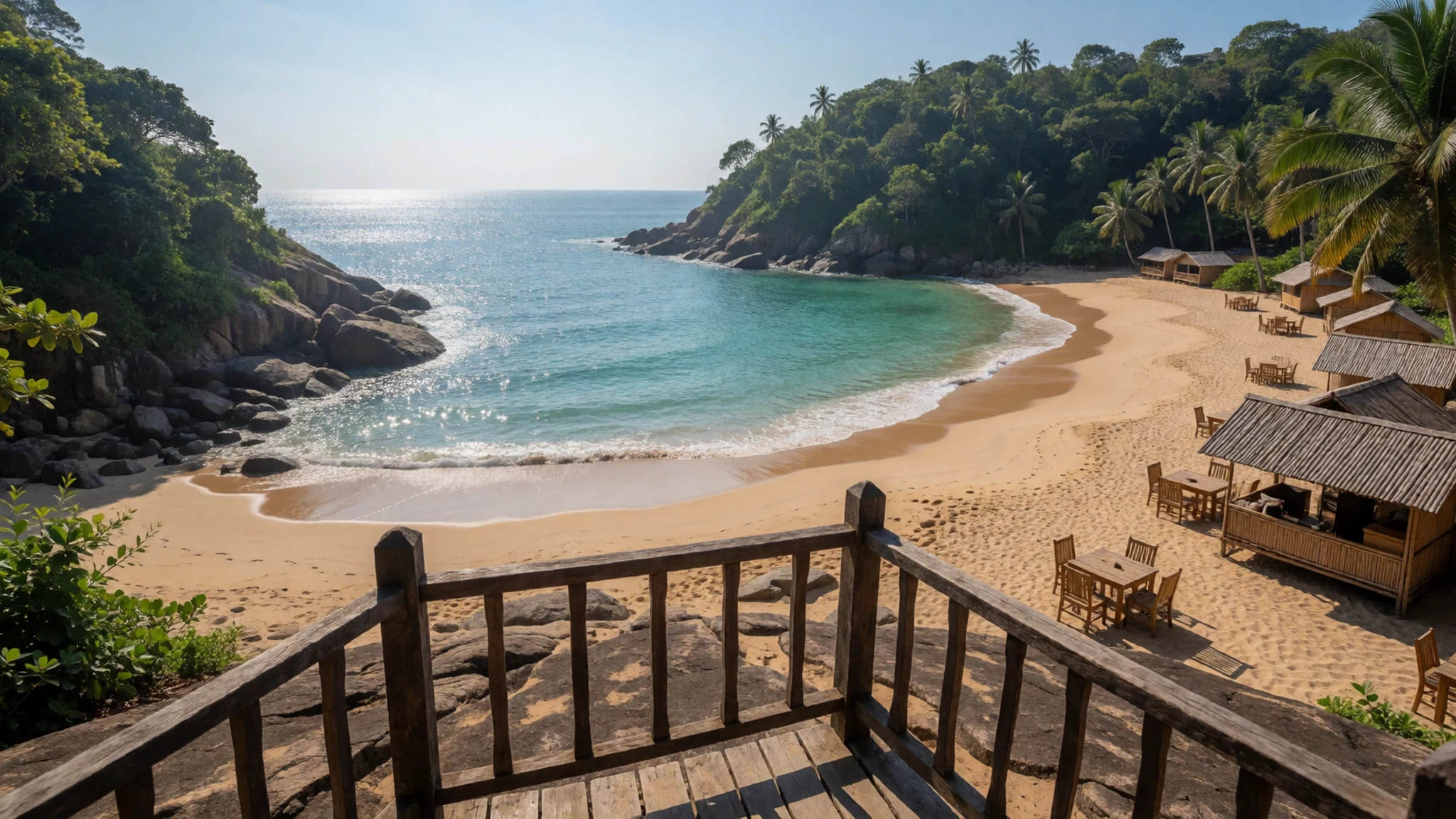
- Vibhuti Falls — Inland, near Yana and Sirsi in the Western Ghats
Vibhuti Falls lies inland near the village of Yana, in the Western Ghats, and makes a good half-day outing from the coast. The water flow depends heavily on the season, and the surrounding forest feels very different from the beaches. The roads near the falls are best covered with a local driver. Carry water and sun protection for the walk in.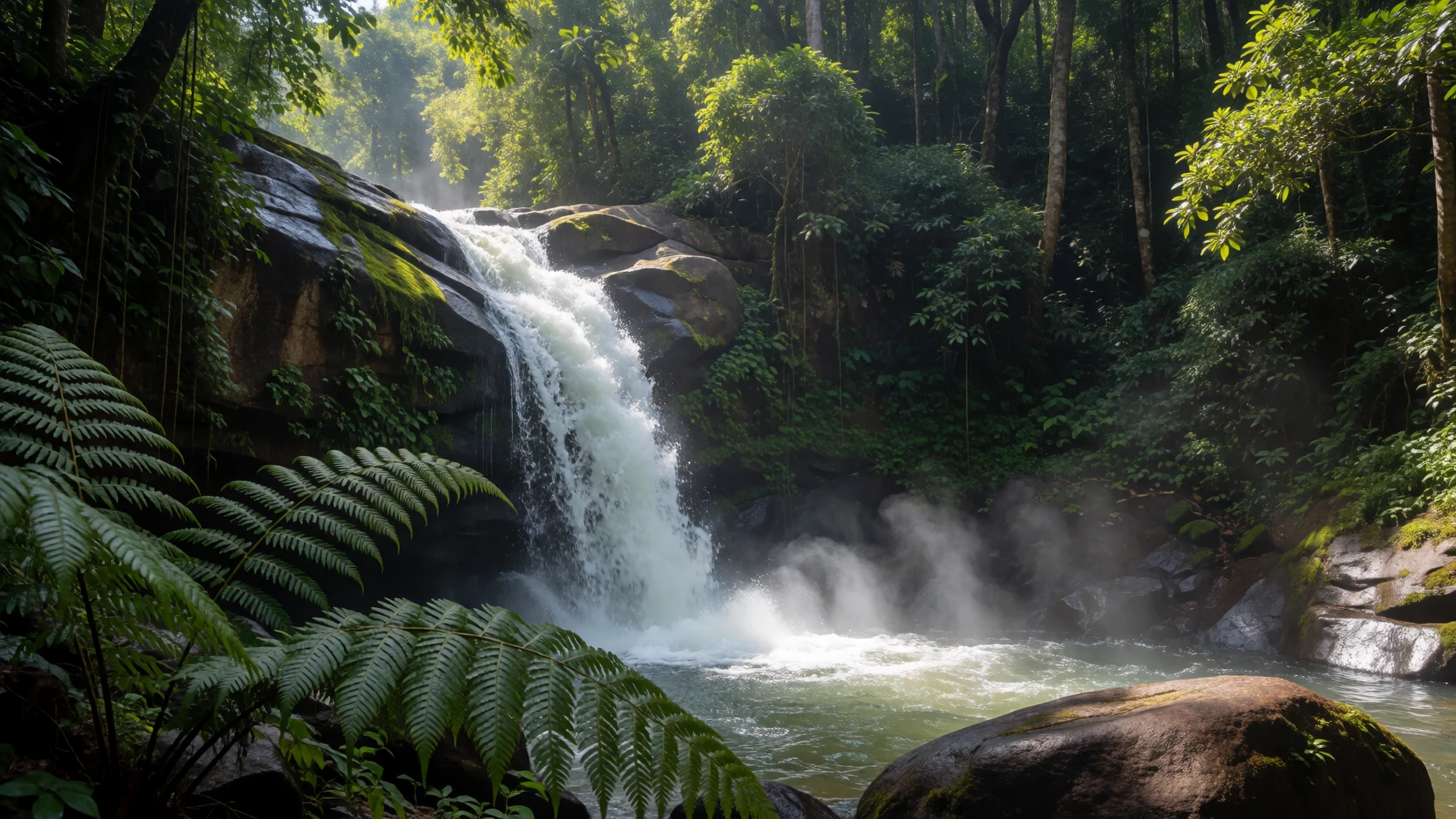
- Shivaratri festival — Across the town, February–March
If you can time it, Shivaratri in February or March brings thousands of pilgrims into the town. The streets fill, rooms sell out and the temples run late into the night. It is a striking sight, but it is crowded and hot, so book transport and a bed well in advance and keep an eye on your belongings in the crush.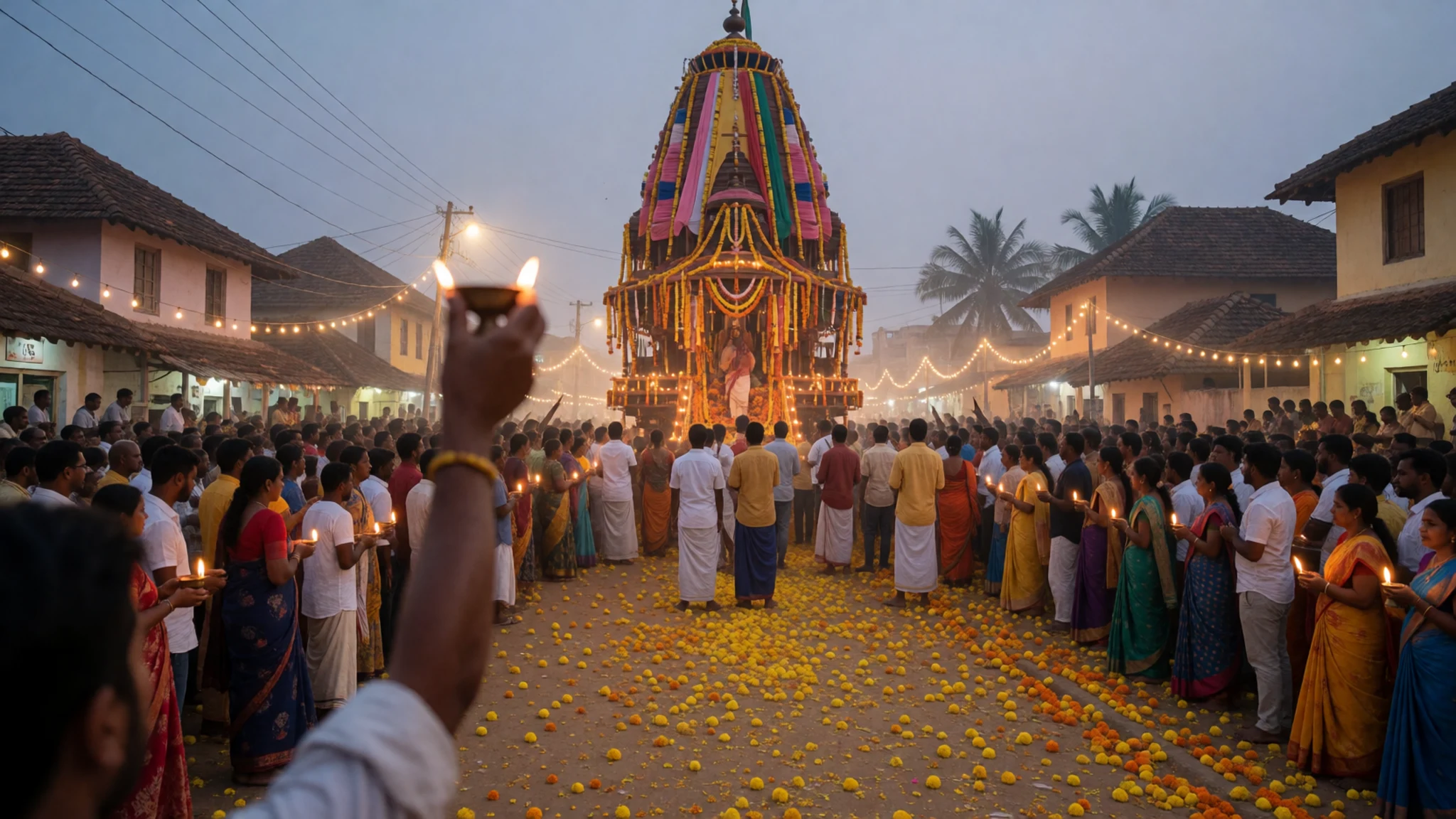
Culture
Gokarna is a pilgrimage town first, and its day follows temple hours, puja and procession. Many residents are observant and conservative, so it helps to keep your voice low around shrines and in the older lanes. Visitors who stay on the beaches tend to be more relaxed, but local norms do not change once you leave the sand.
Cannabis is often visible around sadhus, and it can be tempting to assume it is tolerated for everyone. It is not. Local people report foreigners to the police, and the consequences can become serious quickly. Alcohol is best kept to guesthouse or beach premises rather than the town. Some restaurants and police have an informal understanding not to hassle locals, but that does not extend to visitors.
Around the temples, expect to remove your footwear and to ask before entering inner areas. Photographs of worshippers, especially during a ritual, should be taken only with permission. Dress modestly, with shoulders and knees covered, when you go inside.
Remove your shoes before stepping onto any temple threshold, and keep your voice low once you are inside.
What to wear
Gokarna's traditional dress follows the wider pattern of Karnataka. Many women wear the sari, often in cotton for everyday use and in silk for festivals and weddings. In temple settings a simpler cotton sari or a salwar kameez is common. Men often wear a dhoti or lungi with a plain shirt, and the dhoti is the traditional choice at temples. Textiles vary by occasion, with plain cotton for daily wear and richer silk for ceremonies.
Day to day, people here dress much as they would in other coastal towns in India. Men commonly wear trousers or jeans with cotton shirts. Women mix saris, salwar kameez and western clothes, with more modest styles in the older parts of town. Beachwear is seen mainly on the sand and at beach cafés, not in the town centre.
For a visitor, lightweight cotton or linen works best in the heat and humidity. Cover your shoulders and knees at temples, and choose clothes you can slip on and off easily, since you will remove footwear often. Sandals with a good grip suit both the lanes and the sand, while closed shoes become a nuisance. A light scarf is useful for covering your shoulders at shrines.
What to eat
- Idli and upma — A local pai eatery in the town centre (not the similarly named Pai Restaurant)
Idli and upma are the everyday breakfast of the town, and the best versions here are light and fresh. Idli are steamed rice cakes served with coconut chutney and sambar, while upma is a savoury semolina dish flavoured with mustard seeds and curry leaves. Go early, when the batch is freshest.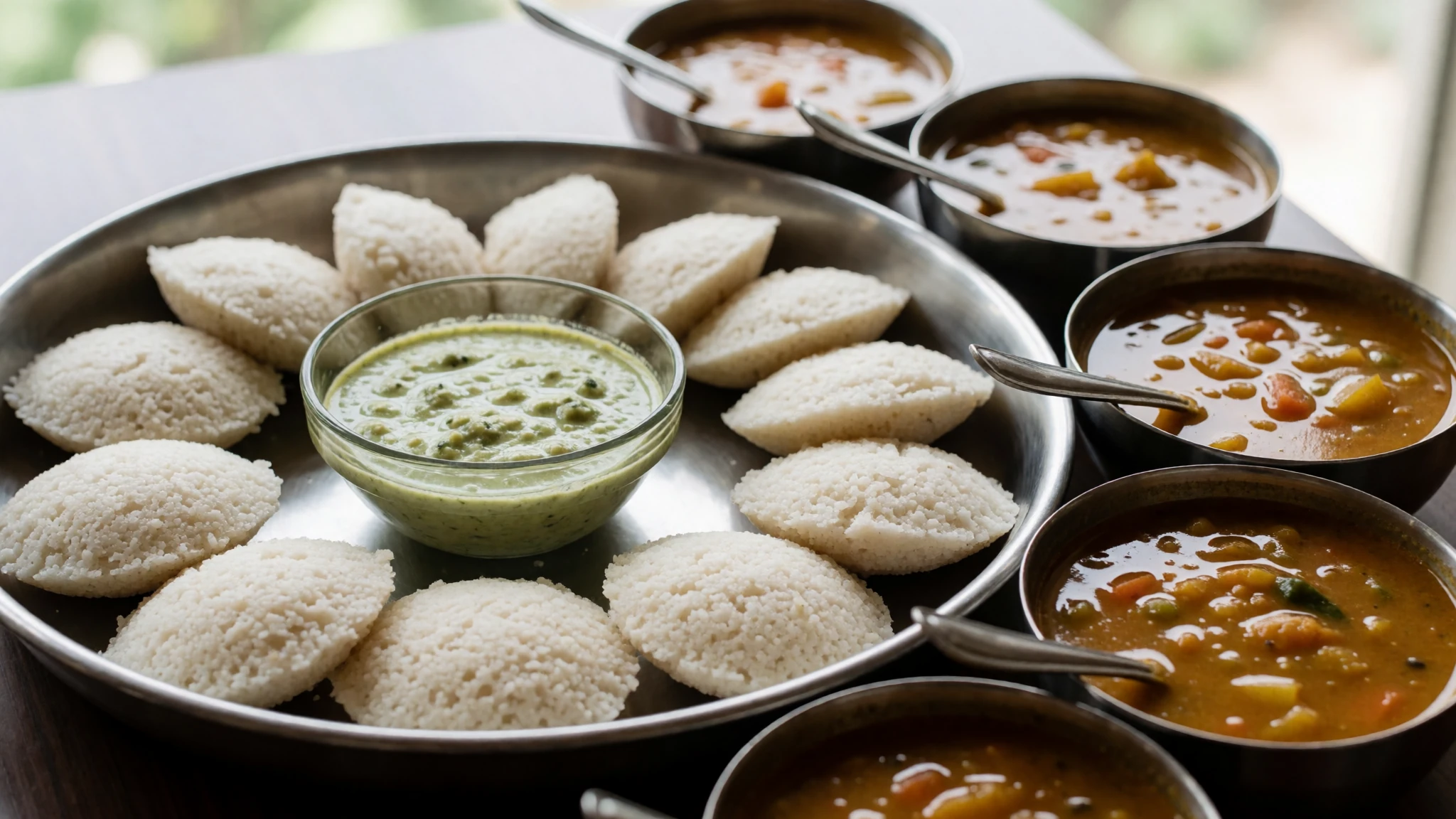
- Thali — Nearby eateries on the right side just before the archway to the main street
A thali is a set meal of rice, dal, vegetables, yoghurt and pickle served on a metal plate. In Gokarna the all-you-can-eat version is excellent value. Go at lunch or dinner, when the kitchen is busy and refills come fast. Drink bottled water rather than tap water with your meal.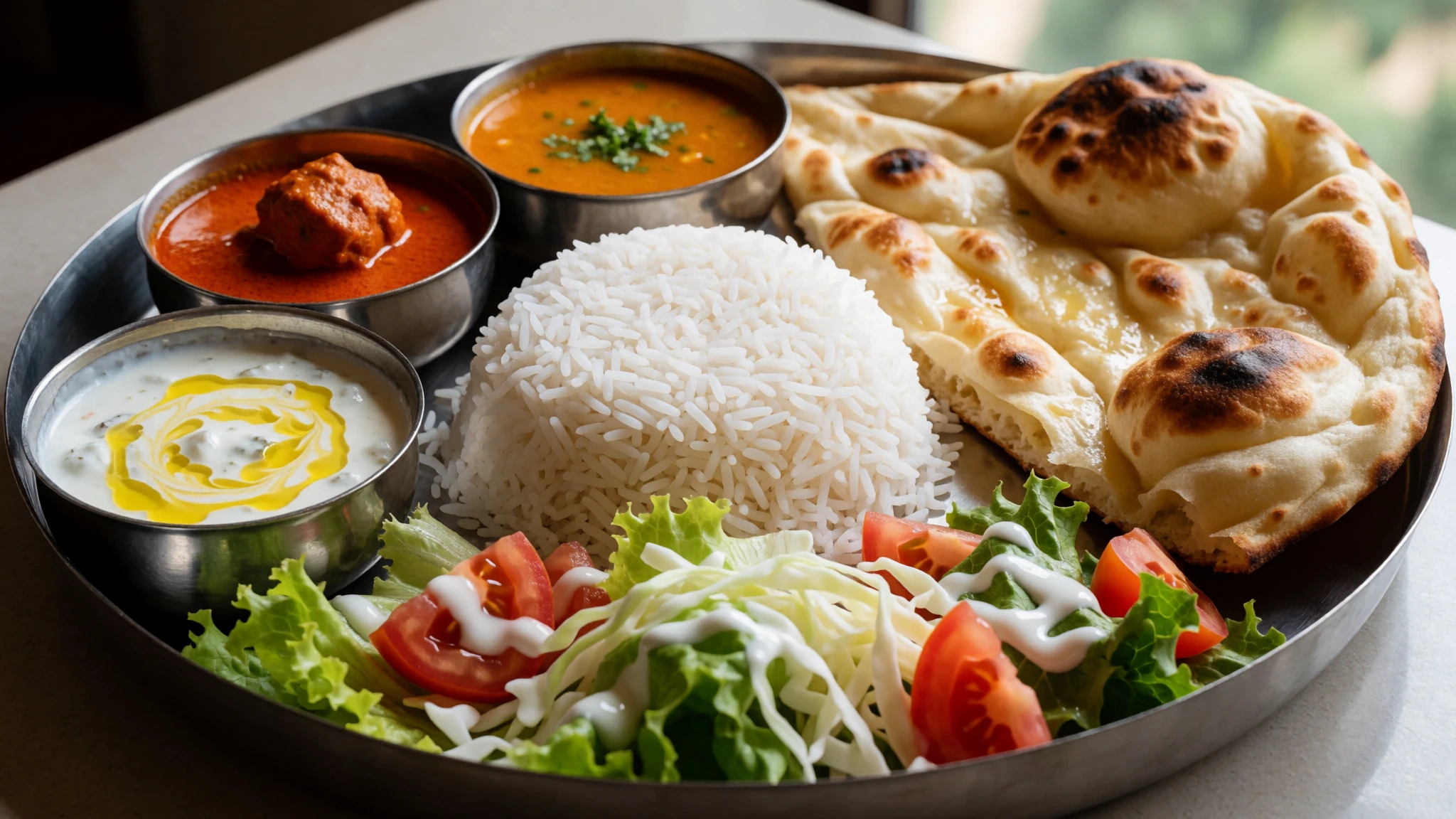
- Fried pies and bhel puri — Street stalls in the town centre, especially in the evening
Little fried pies filled with spiced vegetables are a common street snack, and bhel puri is a crisp mix of puffed rice, chopped onion, tomato and chutney. Both are cheap and quick, and both taste best freshly made. Choose a stall with a steady queue, since good turnover keeps the food hot.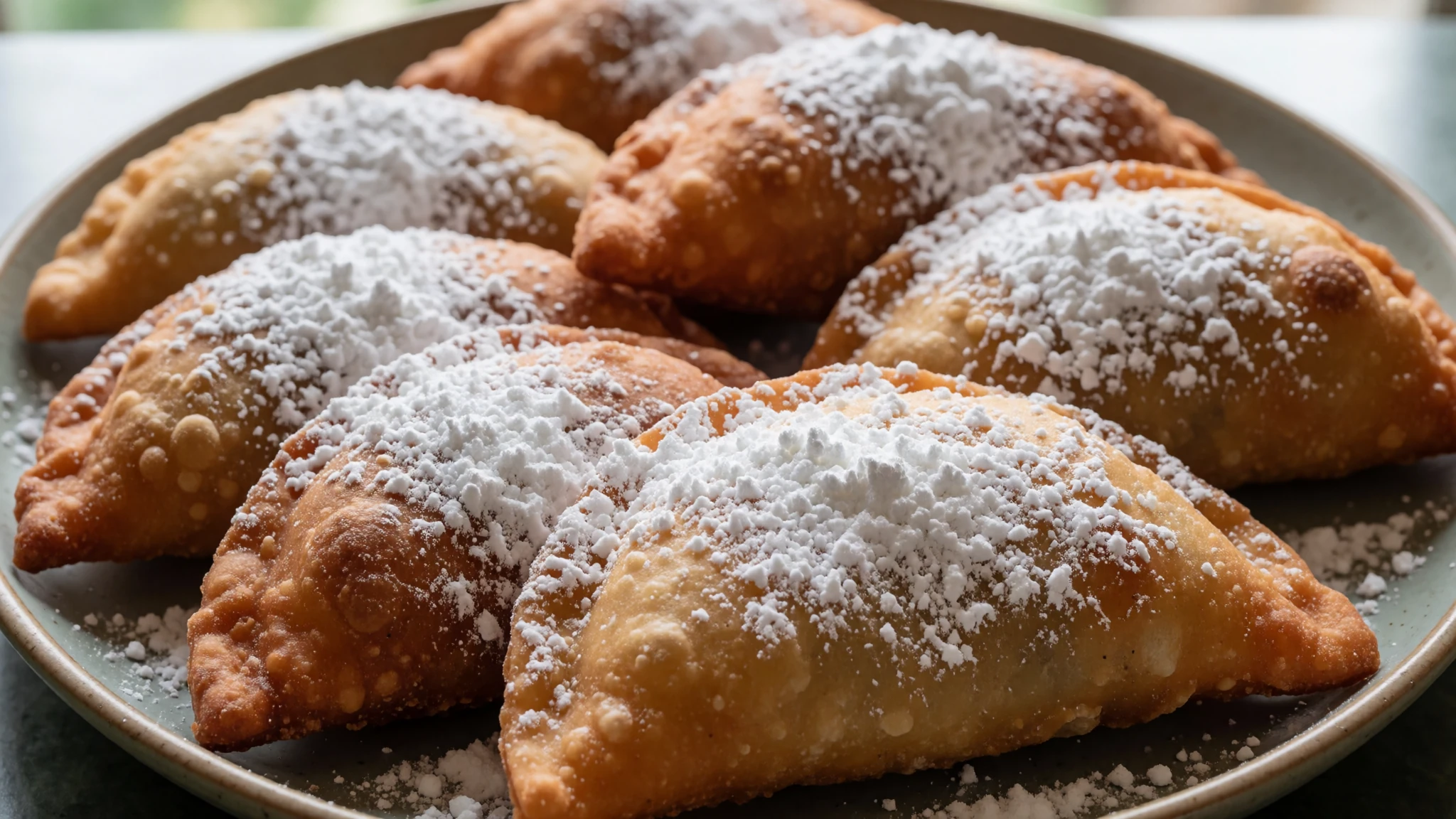
- Fresh juice, lassi and ice cream — Shree Shakti Cold Drinks and Restaurant, an established eatery in town
This long-running café is known for fresh fruit juice, thick lassi and ice cream, which are welcome after a hot beach or temple walk. Its Indian dishes are also reliable. It is a good place to sit in the shade and let the heat pass. - Beach café snacks and seafood — Beach cafés at Om Beach and Kudle Beach
The cafés along Om and Kudle beaches serve fried fish, prawn dishes, salads and simple snacks, often with cold beer. Coastal fish is fresh here, and the setting is much of the appeal. Ask what came in that day and check the menu prices before you order, since beach prices vary.
Plan it
Best time. November to February is the most comfortable dry season for beaches and walking, with December to February almost rain-free. February and March bring the Shivaratri festival, with big crowds and heat. June to September is the monsoon, when heavy rain and rough seas limit swimming and some roads.
How long. 2–3
Getting there. Gokarna Road station is on the Konkan Railway, and the last leg into town is a short bus or taxi ride. Trains run along the coast from Mumbai, Goa and Mangalore, and overnight buses run from Bengaluru.
Budget. mid
Tips
- Book Konkan Railway trains well ahead, especially around festival periods
- Start the temples before the midday heat and the crowds
- Carry cash for small eateries and local buses, as cards are not always accepted
- Drink bottled water and keep a supply for beach days
- Ask locally about swimming before entering the sea, because currents can be strong
- Be wary of speedboat dolphin trips, as sightings are not guaranteed
Etiquette
- Remove your shoes before entering any temple, and ask before going further in
- Keep alcohol to guesthouse or beach premises rather than the town
- Do not smoke cannabis, as police will act
Nearby
Sources
- Wikidata Q1025271 (CC0)
- Wikipedia: Gokarna, Karnataka (CC BY-SA 4.0)
- Wikivoyage: Gokarna (CC BY-SA 4.0)
- Gokarna street view, Uleli (CC BY 3.0)
- Gokarna, Aleksriis (CC BY-SA 4.0)
- Vibhuti Falls, SachinRM (CC BY-SA 4.0)
- Honnavar boating, Agent Yantrika (CC0 1.0)
- Glazing Rays on Rabindranath Tagore Beach, Karwar, OmWiki101 (CC BY-SA 4.0)
- Bonnet Macaque Eating Banana, Augustus Binu (CC BY 3.0)
- Wild boar, Vinayaraj (CC BY-SA 4.0)
- Syrian Jackal, Jan Ebr and Ivana Ebrová (CC BY 4.0)


