Gobi Desert
Gobi Desert, People's Republic of China
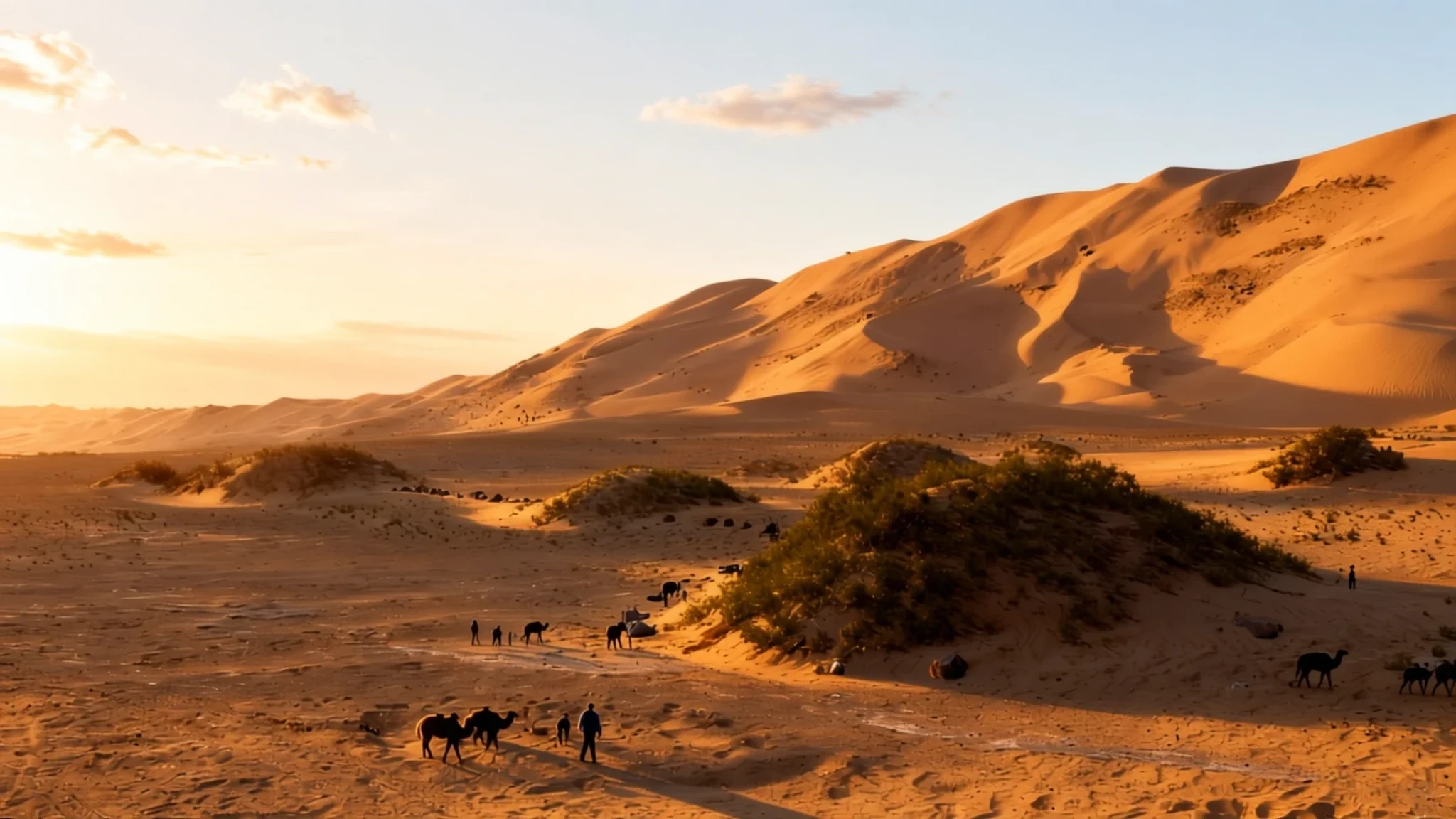
Go for the sheer scale of bare rock, dunes and open sky, and for the chance to see herding life that has changed little in generations.
The place
The Gobi is a vast cold desert and grassland region spanning southern Mongolia and northern China. Plenty of it has no dunes at all, just exposed rock and gravel, and the sandy stretches people picture are concentrated in a few places. By area it is the sixth-largest desert on Earth, covering about 1.3 million square kilometres, and it runs roughly 1,600 kilometres from southwest to northeast.
The name comes from Mongolian, where gov' means dryland, a word used for any waterless country on the plateau. Chinese speakers borrowed a related term, gebi, for the rocky semi-deserts rather than the sandy ones.
Most of the Gobi sits high, with its Mongolian part at around 1,547 metres above sea level. That height, together with the region's northern position, keeps it cold for much of the year. Rainfall is very low and most of it arrives in summer. Winds carry dust across the basins, and temperatures swing sharply, with winters falling to minus 40 degrees and summers climbing close to 45. Day and night can differ by as much as 35 degrees.
For visitors the appeal is space and strangeness: canyons, red cliffs, sand ridges that hum under the wind, and herding families moving with their animals across ground their ancestors used. Distances are long, roads are rough and services are thin, so a trip here is a journey rather than a quick stop. Plan around water, fuel and weather, and accept that much of the reward is simply being somewhere very large and very quiet.
Its story
Very little is known about the first people to live in the Gobi. Researchers have proposed a simple three-part sequence for the early use of its oases, labelled Oasis I, Oasis II and Oasis III. The first phase lines up with the Mesolithic, when people began using oases, leaving small stone tools and thin pottery tempered with plant matter. The second, matching the Neolithic, shows heavier use: stone adzes and axes, and pots decorated with impressions of cord and fabric.
Around the time of that second phase the region became wetter. Lakes in the western Gobi reached their highest levels, and meadow grassland grew around their shores, with shrubby woodland possibly present by at least one lake. The green interval did not last. The land dried out again, and the desert pushed back across the steppe.
The third phase matches the Bronze Age. Its people made arrowheads, knives and blades, worked copper, and wore beads of bone. Herder burials from this period survive, along with bronze knives of the Karasuk type. Carved standing stones known as Mongolian deer stones also appear in the wider region, and they record the presence of later pastoral groups.
The desert's long story is one of layers. Read together, they show a landscape that has swung between grassland and sand many times, and people who have adapted by moving with the water and the grazing rather than fixing themselves in one place.
What to see
- Bayanzag (the Flaming Cliffs) — South Gobi, Mongolia
Bayanzag, known as the Flaming Cliffs, is a set of soft red and orange sandstone bluffs in the south of the Gobi. The colour deepens in low light, so plan to arrive near sunrise or in the last hour of afternoon light. The cliffs are crumbly, so keep to the paths and away from the base of the faces. Bring a windproof layer even in summer.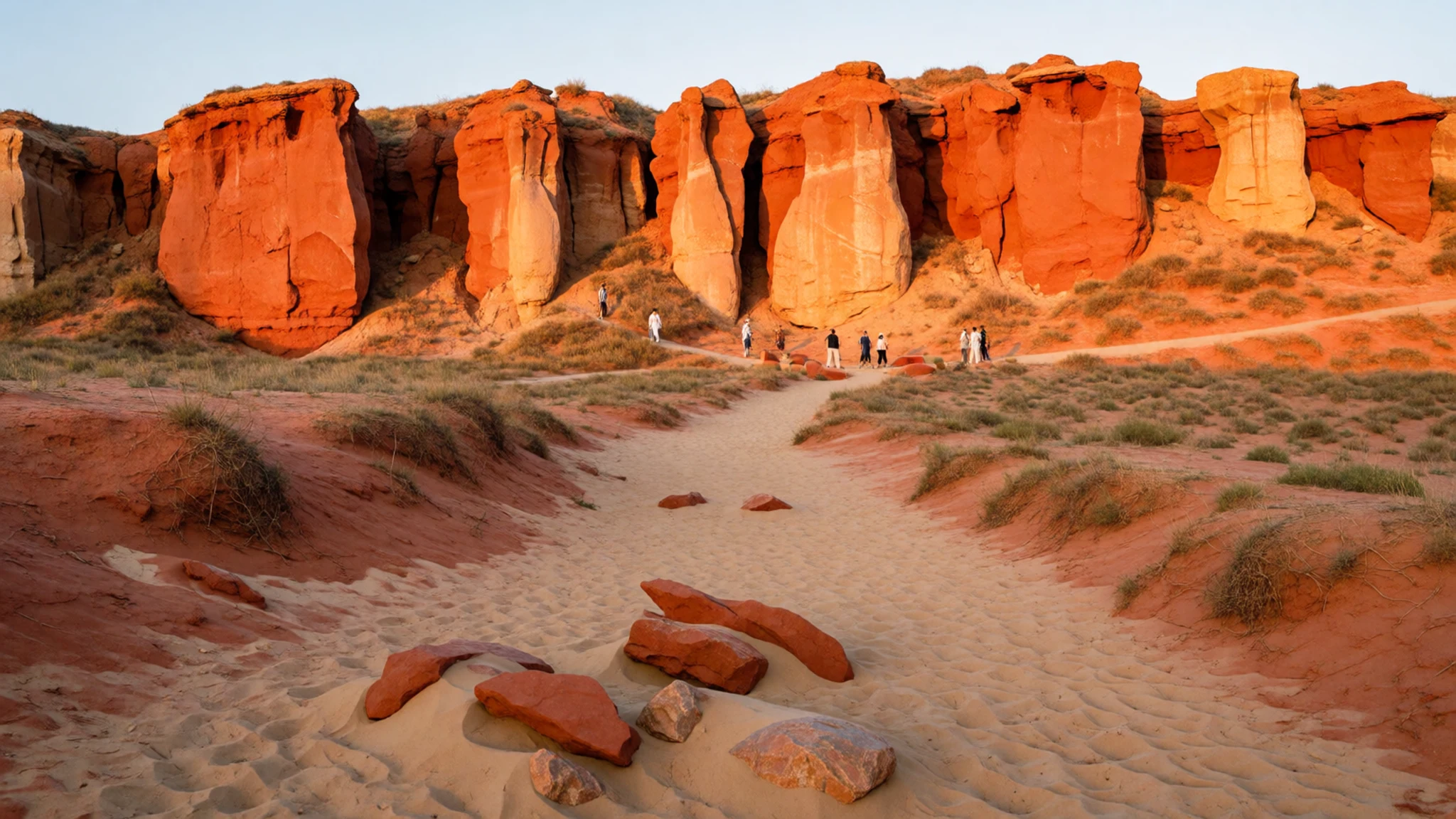
- Khongoryn Els (the singing dunes) — South Gobi, near Gobi Gurvansaikhan National Park
Khongoryn Els is a long run of high sand dunes in the south Gobi. Its sand is said to sing or boom when it slides down the slopes, a sound easiest to hear on a still day. Climbing the steep faces is tiring, so go slowly, carry water, and wear a scarf against blowing sand.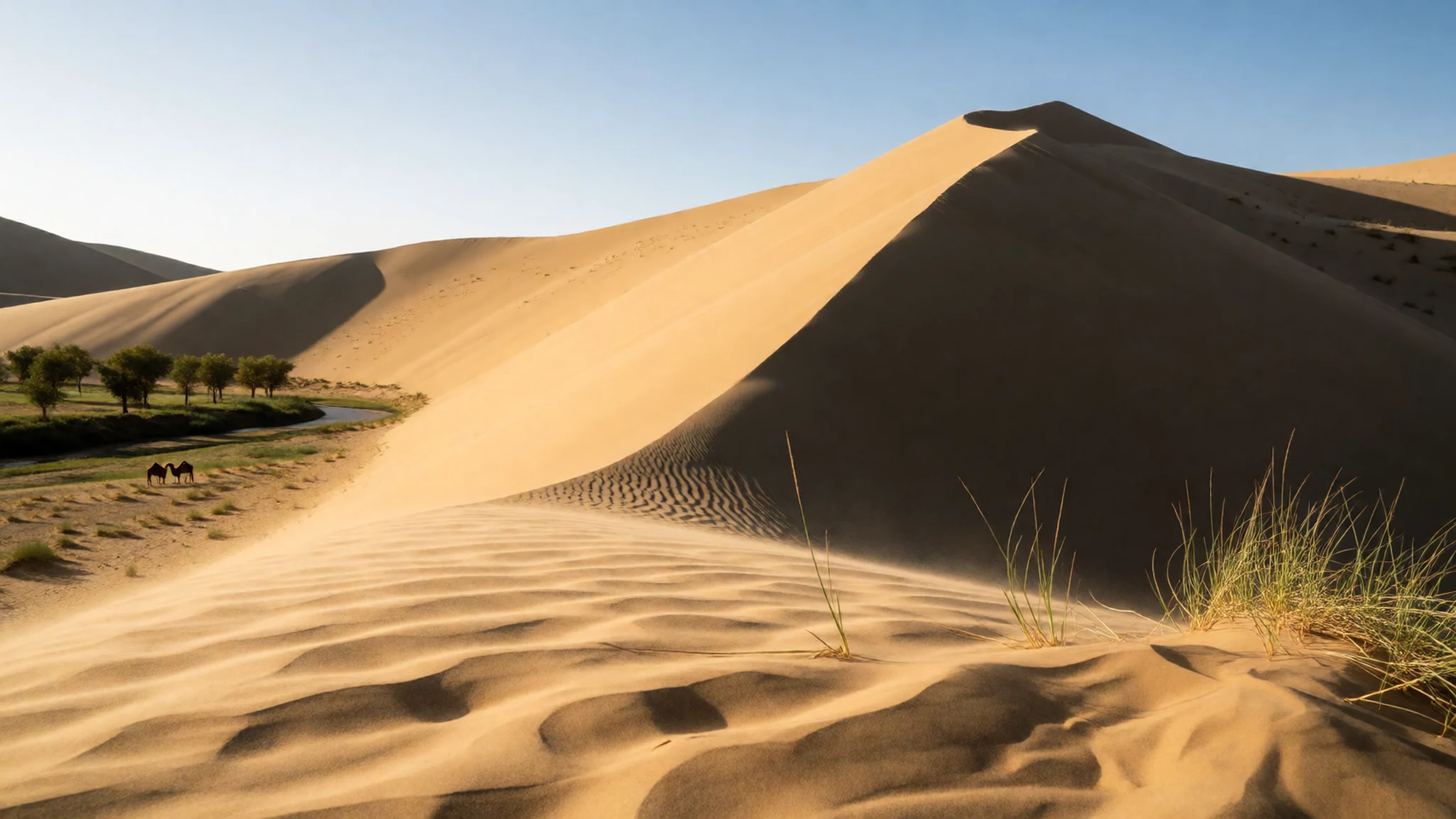
- The ice canyon — Southern Gobi, reached from the national park area
The ice canyon is a narrow gorge where ice can linger in shaded hollows, even when the surrounding desert is warm. Access is on foot along a rough track, and the path can be slippery where meltwater freezes overnight. Wear proper boots, go with a local guide if you can, and check conditions locally before you set off, since they change from year to year.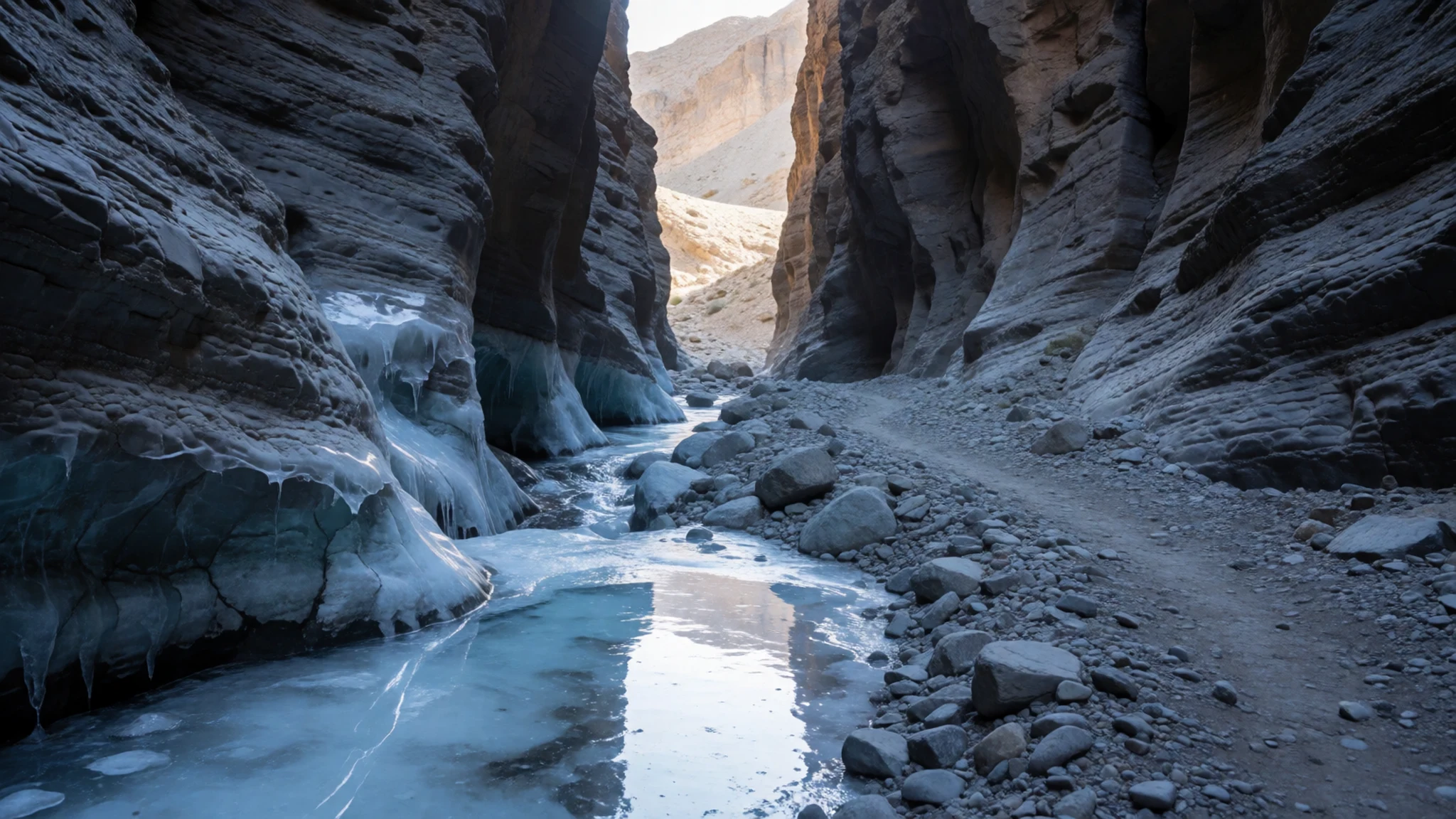
- Elsen Tasarkhai — Southern Mongolia, Gobi
Elsen Tasarkhai is another sand dune area in southern Mongolia, often visited as a stop on a longer loop. The dunes are a good place to watch the light shift across the sand and to feel how quickly the air cools after sunset. Carry more water than you think you need, and tell your driver where you plan to stop.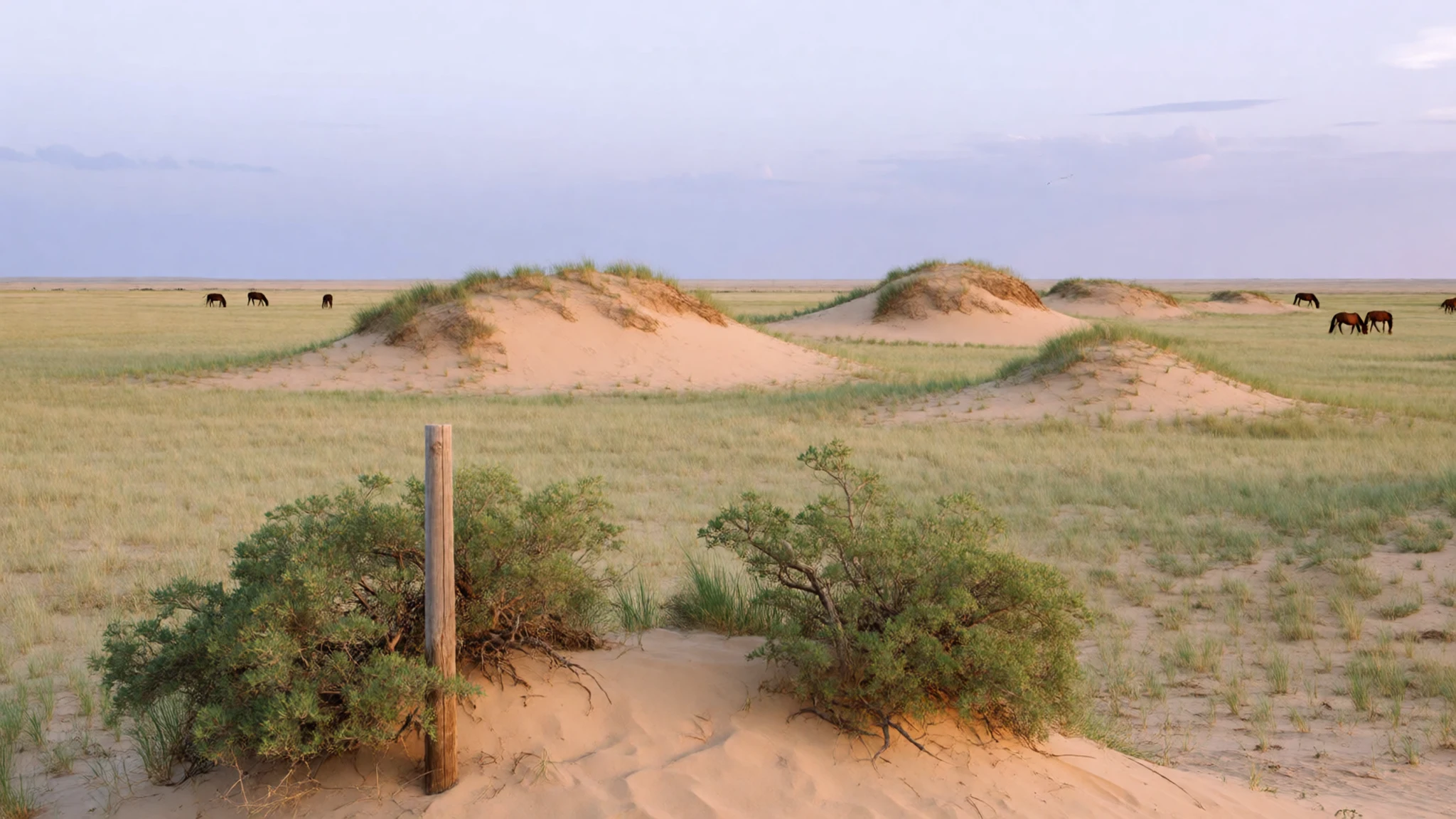
- Remains of the Great Wall — North-west China, desert edge
Sections of the Great Wall of China run along the desert edge in the north-west of the country, where crumbling earthen and stone walls rise from the gravel. They are a reminder that the Gobi has long marked a frontier. Stay on the marked paths and avoid climbing on fragile sections, which are easily damaged.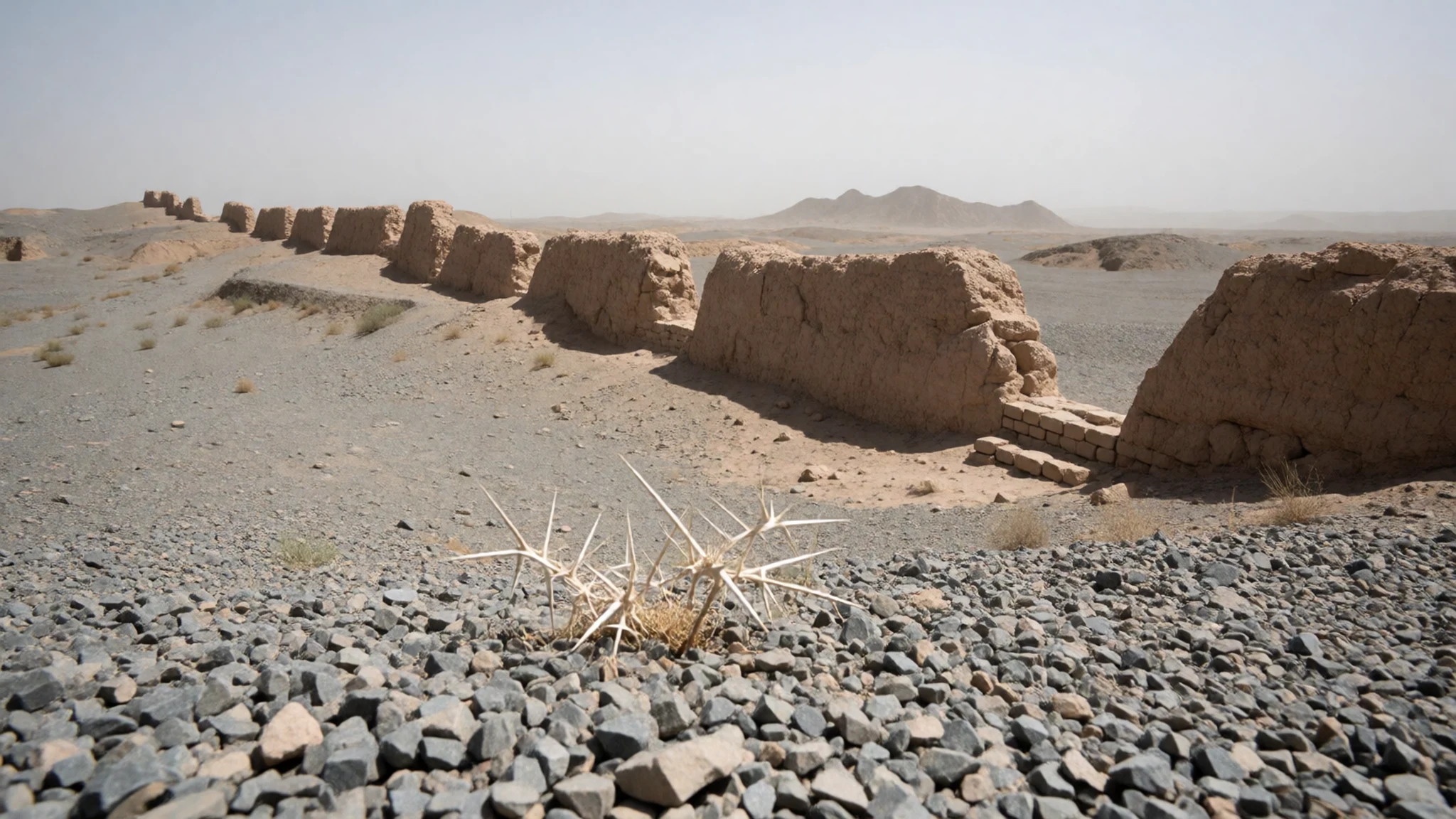
Culture
Herding families across the Mongolian Gobi still live in felt gers and move with their livestock through the seasons. Hospitality is central to life here: a stranger arriving at a ger is expected to be offered tea and food, and refusing outright can seem unkind. People in these districts are generally private about their homes, and many have had visitors treat them as scenery. Monasteries and small shrines are active places of worship, where people walk around stupas and cairns in a clockwise direction and quiet voices are the norm. Dogs guard the camps and can be alarming, so approach slowly and let the family greet you first. Photography needs care: ask before photographing a herder, a child or the inside of a ger, and accept a refusal gracefully.
What to wear
The traditional dress of the Mongolian Gobi is the del, a long wool or silk robe with a high collar, fastened at the side and secured with a wide sash. Richer examples use silk and brocade, while herders favour thick wool and felt that hold warmth through cold nights. Boots with upturned toes, made of leather and felt, were built for riding and walking on stony ground. Hats with wide brims and fur-lined caps appear in winter. In towns and at the modern herding camps, people now mix these with trainers, down jackets and jeans, and the del is worn mainly at festivals, weddings and Naadam-style events. For a visitor, layers matter most: a windproof outer shell, a warm fleece, and a hat and sunscreen for the strong midday sun. Closed walking shoes or sturdy boots suit the stony paths and the dunes, which fill sandals quickly. Keep shoulders and knees covered at monasteries and when visiting a family, and bring a warm sleeping layer for nights in a ger or on an open camp.
What to eat
- Camel meat — Local eateries in district towns and herder family homes
Camel meat turns up in local eateries and family kitchens across the south. Most visitors find it pleasant rather than remarkable, with a plain, rich flavour suited to stews. Ask for it at an eatery in a district town, where it usually arrives with bread or noodles.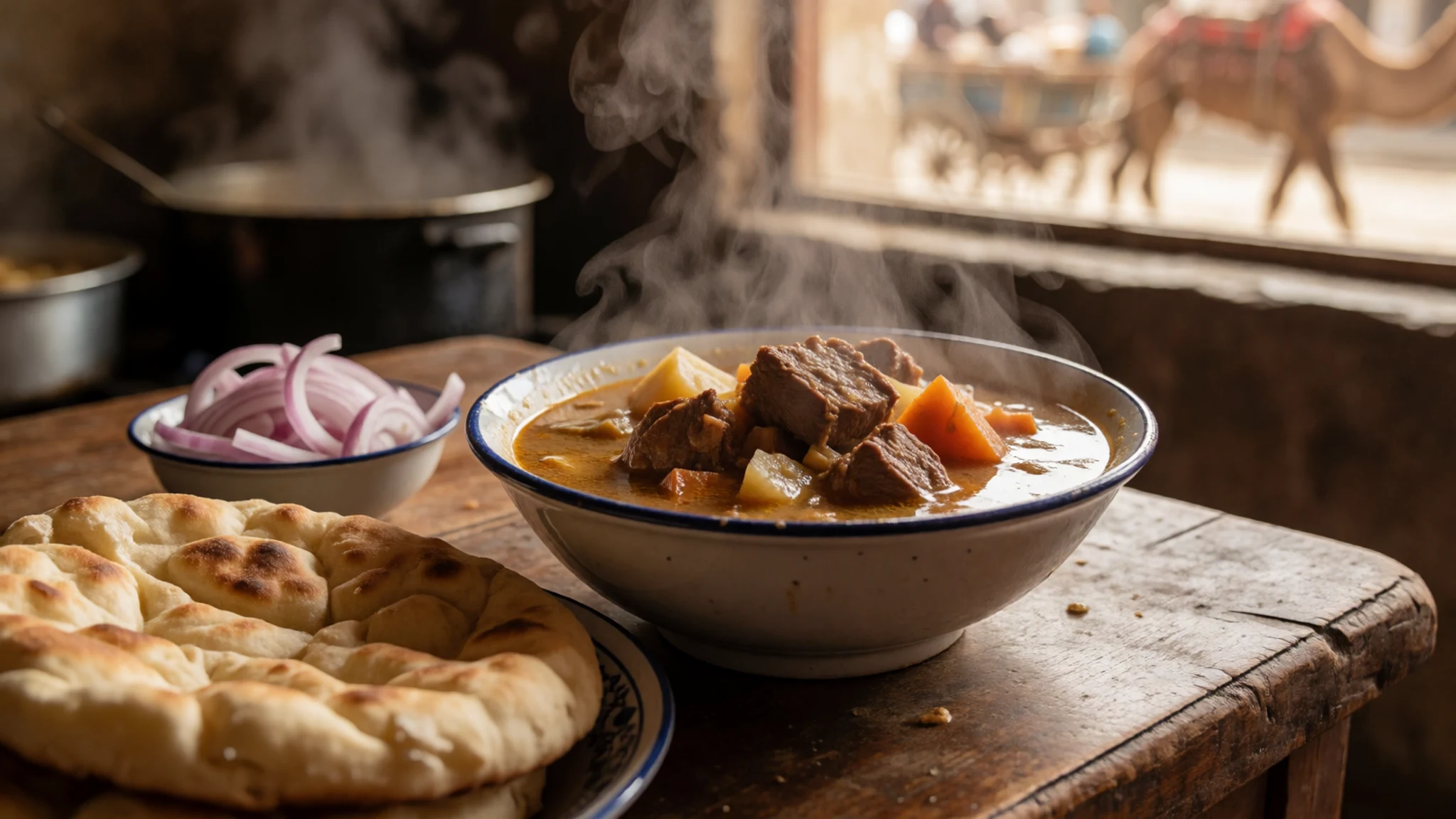
- Camel milk — Family homes and herder camps
Camel milk is often fermented into a sour, drinkable form that tastes sharper than cow's milk. It is an acquired taste, not unpleasant but not sweet, and it can have a mild alcoholic kick. Try a small cup first, since it can upset some stomachs.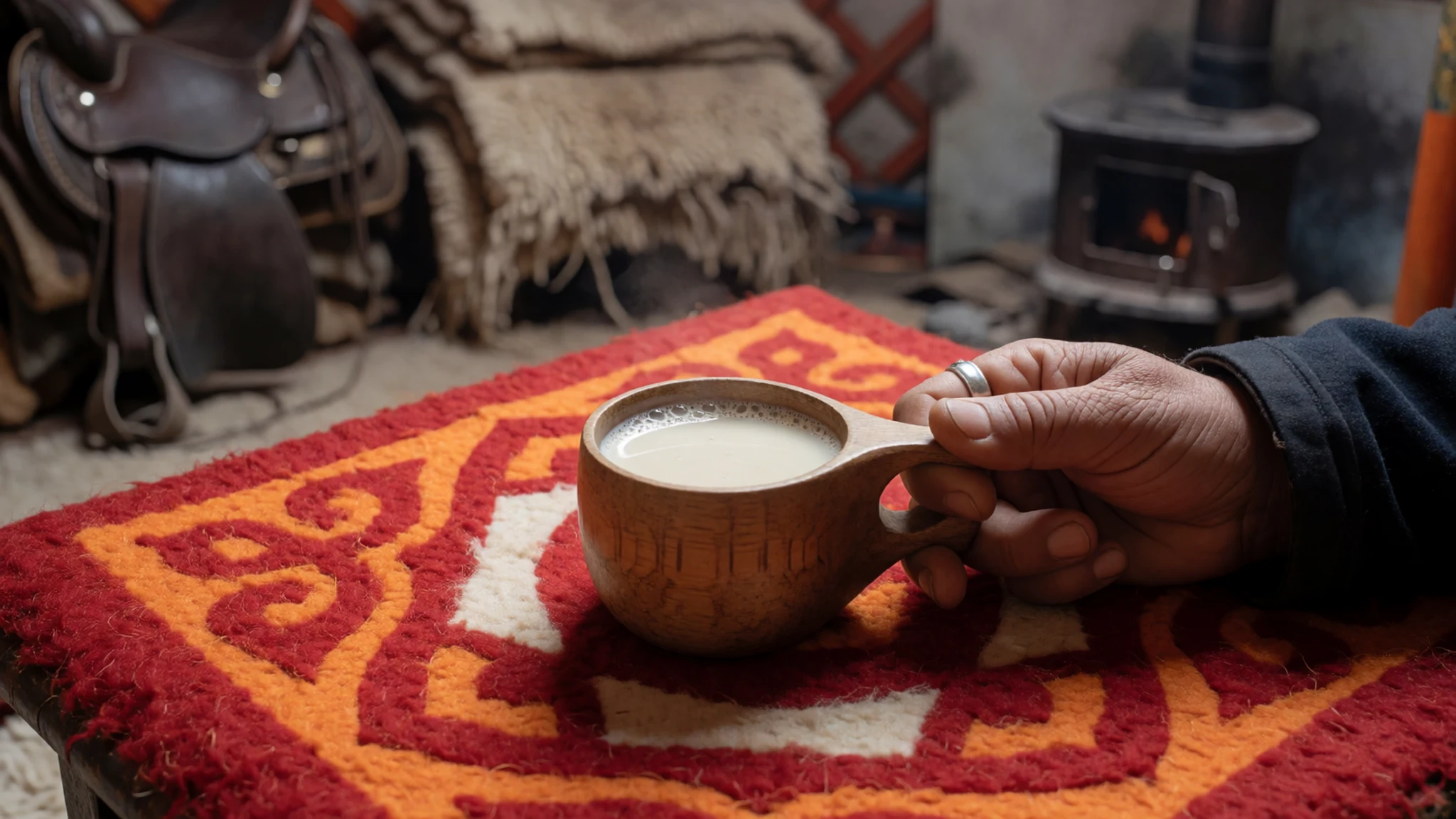
- Suutei tsai (milk tea) — Almost every eatery in the south, and herder camps
Suutei tsai, salty milk tea, is the everyday drink in Mongolian homes and in most eateries. Made with brick tea, milk, water and a pinch of salt, it is thin, warming and often served with a little butter or millet. Accept a cup when offered; it is a welcome.
- Buuz — Town eateries and the morning market
Buuz are steamed dumplings packed with minced meat and onion. Find them in town eateries and at the morning market, where they are sold hot. Eat them with your hands and a dab of chilli sauce if the stall offers it.
Plan it
Best time. September is the most comfortable month, with warm days near 34 °C, cold but manageable nights and less wind than in spring. Late spring is often windy and dusty, and June can be very hot, so avoid those weeks if you can. Most rain falls in summer, bringing heat and the odd storm, while winter brings deep cold and snow on the dunes.
How long. a week
Getting there. Fly from Ulaanbaatar to Dalanzadgad or Bayanhongor on a domestic flight, or take a bus from the capital. Sainshand is reached by the Trans-Mongolian railway, and most trips finish with a local driver and vehicle.
Budget. mid
Tips
- Book your driver, vehicle and guide in Ulaanbaatar before you travel
- Carry more water than you think you need, and check fuel before every leg
- Pack torches, spare batteries, food and warm layers in case of breakdowns
- Start walks at canyons and dunes early to avoid midday heat
- Bring cash, as card payments are unreliable in remote districts
Etiquette
- Ask before photographing herders, children or the inside of a ger
- Walk clockwise around cairns and stupas
- Accept offered tea with your right hand
Nearby
Sources
- Wikidata Q42070 (CC0)
- Wikipedia: Gobi Desert (rev 1381470741) (CC BY-SA 4.0)
- Wikivoyage: Gobi (rev 5250587) (CC BY-SA 4.0)
- Photo: Mongolia (35427009881), Christopher Michel (CC BY 2.5)
- Photo: Gobi Desert, unknown author (CC BY 3.0)
- Photo: Gobi Desert and Taklamakan Desert map, TheDrive (CC BY-SA 4.0)
- Photo: Bayanzag, unknown author (CC BY-SA 2.0)
- Photo: Bajandsag, Arabsalam (CC BY-SA 4.0)
- Photo: Khongoryn Els sand dunes, Zoharby (CC BY 3.0)
- Photo: Great Wall remains in the Gobi, Leon Petrosyan (CC BY 3.0)
- Photo: Camels in Gobi Desert, Bernard Gagnon (CC0 1.0)


