Goa
Goa, India
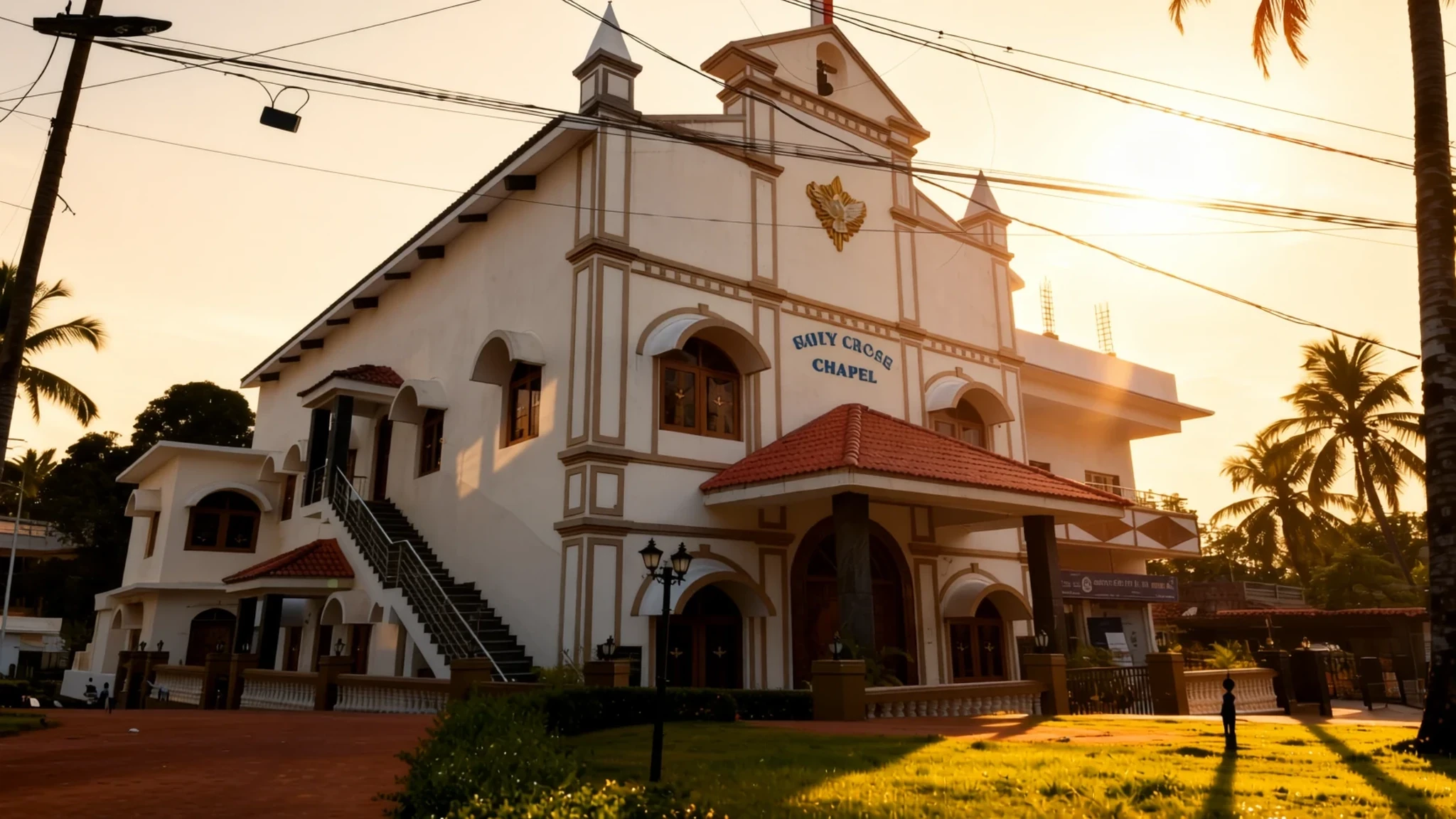
Goa offers a rare coastal blend of Konkan landscapes, Portuguese heritage architecture, and relaxed seaside living along the Arabian Sea.
The place
Goa sits on India's southwestern shore in the Konkan area, divided from the inland Deccan plateau by the steep Western Ghats. Bordered by Maharashtra to the north and Karnataka to the east and south, its entire western edge meets the warm waters of the Arabian Sea. It stands as India's smallest state by area, holding a population of about 1.5 million people spread across coastal stretches, fertile river basins, and wooded hills. Panaji serves as the administrative capital, positioned along the banks of the Mandovi River, while Vasco da Gama functions as the largest urban settlement by population. The state's geography creates distinct microclimates, where sea breezes temper the tropical heat, and monsoon rains turn the inland forests lush and green. Konkani serves as the official language, spoken widely across towns and villages alongside Marathi and English. The landscape transitions smoothly from wide sandy stretches and rocky headwaters to winding estuaries where traditional wooden canoes navigate mangrove channels. Life here moves to a calmer rhythm than the rest of the subcontinent, shaped profoundly by centuries of maritime trade, colonial administration, and a shared coastal heritage that draws travellers seeking a different facet of Indian culture.
Its story
The historical layers of Goa stretch back far beyond colonial settlement, evidenced by prehistoric rock art engravings found across the region. Ancient petroglyphs discovered near the west-flowing Kushavati river at Usgalimal and in Kajur depict animals and geometric designs on laterite platforms, pointing to early human presence thousands of years ago. Paleolithic tools and stone implements found in river basins confirm continuous occupation through successive eras. The modern historical identity, however, was fundamentally shaped by the arrival of Portuguese explorers in the early sixteenth century. Seeking control of lucrative spice routes, naval forces conquered the territory, establishing it as the core of Portuguese India and the capital of their eastern empire. For over four centuries, the territory remained under European administration, creating a unique synthesis of administrative structures, religious architecture, and social customs that set it apart from neighbouring regions. The ancient City of Goa, once a grand Asian trading metropolis, gradually faded in importance during the nineteenth century due to disease outbreaks, leaving behind the magnificent stone monuments of Old Goa. The colonial era finally ended when the territory was integrated into the Indian Union, and it formally attained full statehood.
What to see
- Fontainhas, Panaji — Panaji
This historic Latin quarter in Panaji preserves narrow winding streets lined with traditional houses painted in vibrant pastel shades of blue, yellow, and red. Overhanging balconies, oyster-shell windows, and intimate neighbourhood courtyards reflect centuries of domestic Portuguese architectural influence preserved carefully by local residents.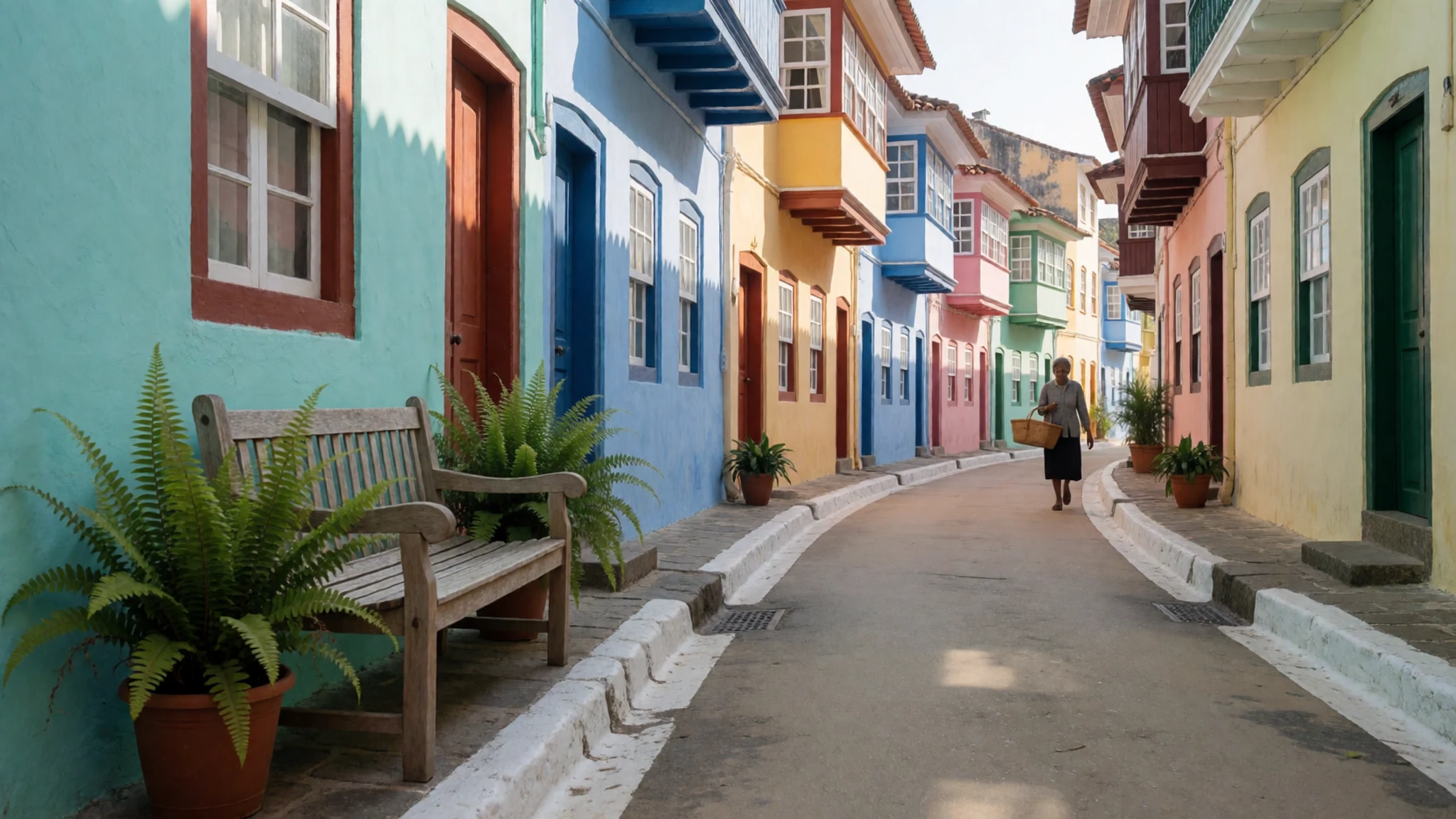
- Churches and Convents of Old Goa — Old Goa
The abandoned remnants of the ancient capital feature monumental religious structures built during the height of the empire. Massive late-sixteenth and seventeenth-century churches display intricate woodwork, gilded altars, and European masonry adapted to the tropical climate, standing quietly amidst shaded lawns and ruined convent cloisters.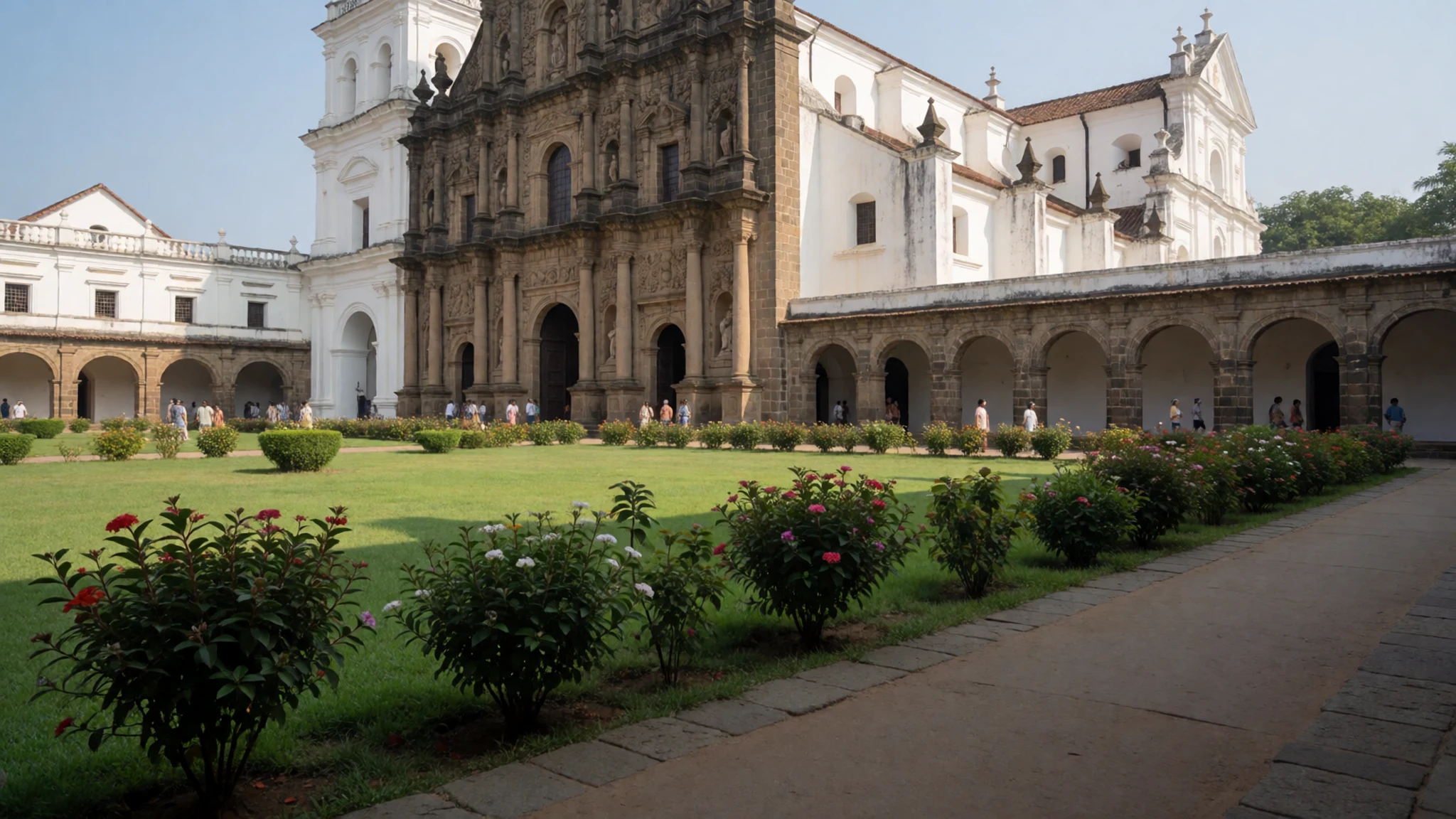
- Mangueshi Temple — Ponda
Situated in Ponda district, this prominent shrine dedicated to an incarnation of Lord Shiva displays traditional Konkan temple architecture. The complex features an elegant multi-tiered lamp tower, a sacred water tank at the entrance, and pillared halls that host regular musical gatherings and traditional rituals.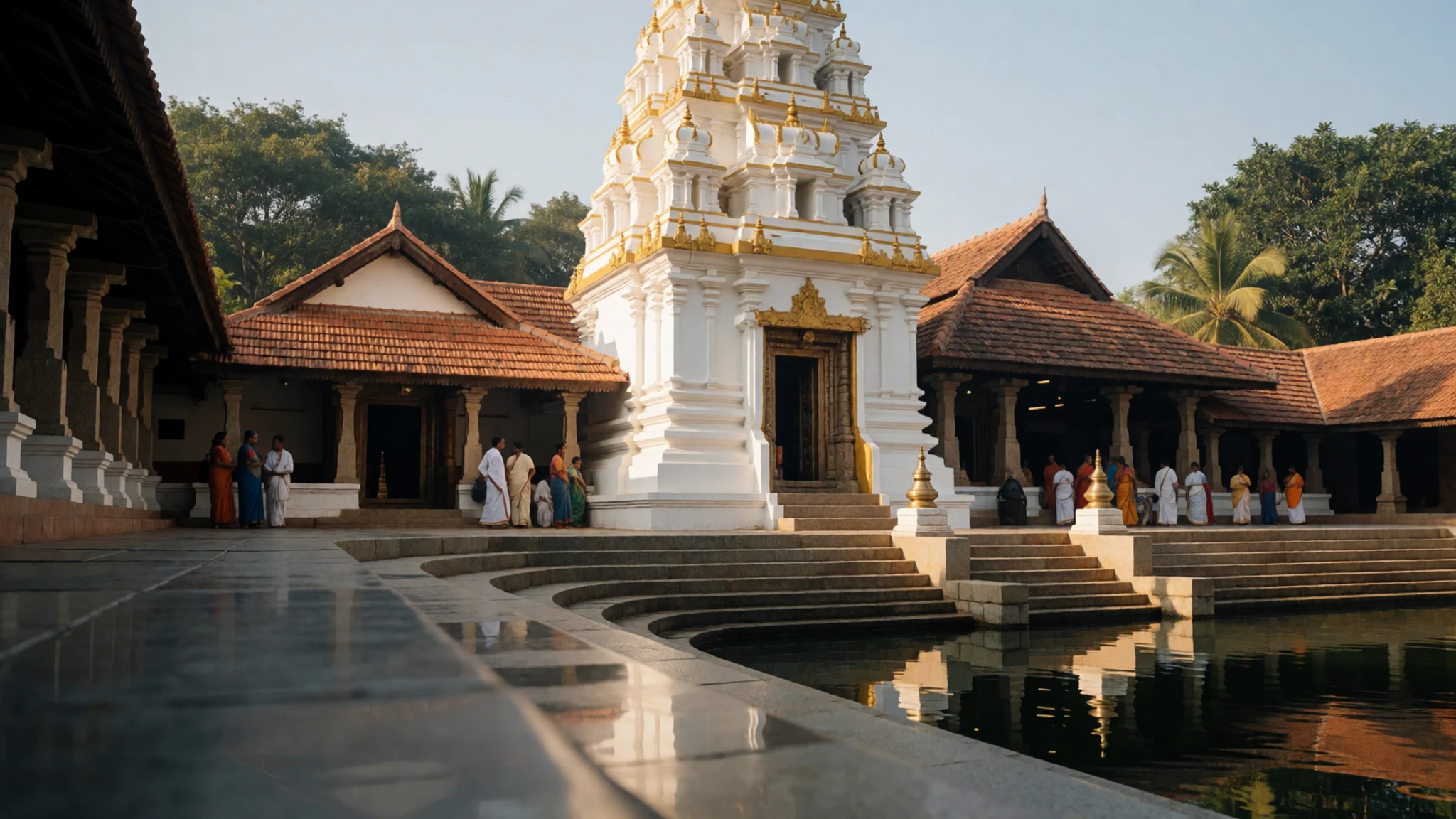
- Naval Aviation Museum — Vasco da Gama
Located near Vasco da Gama, this expansive outdoor and indoor facility traces the history of Indian naval aviation. Visitors can inspect vintage aircraft, decommissioned helicopters, maritime patrol engines, authentic pilot uniforms, and historical photographs detailing naval operations across coastal waters.
- Dudhsagar Falls — Western Ghats
Plunging down the steep forested slopes of the Western Ghats, this tiered waterfall creates a dramatic cascade resembling streams of milk. Surrounded by dense deciduous forest within wildlife sanctuary boundaries, the falls can be reached via forest trails or viewed from passing railway bridges.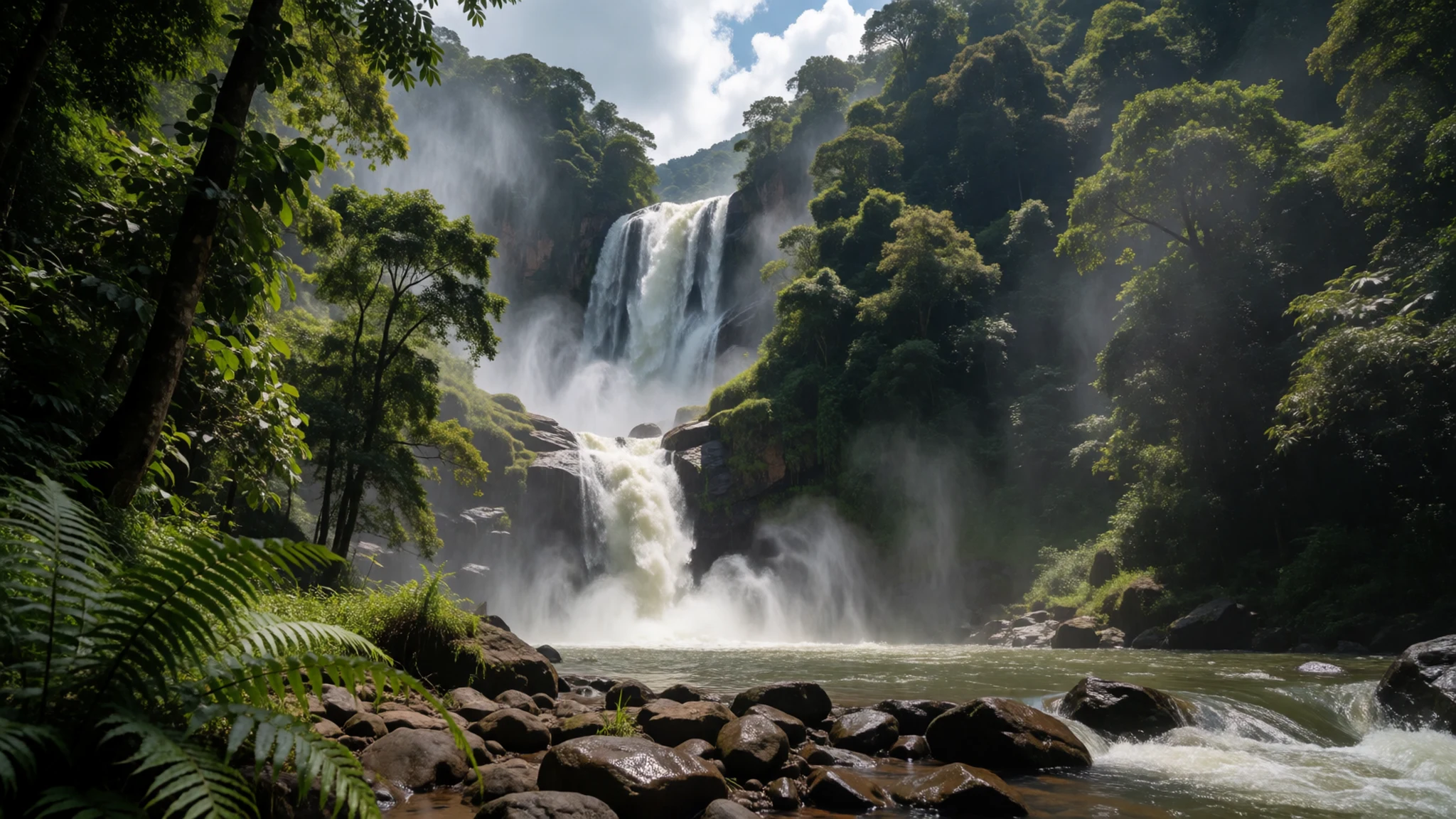
Culture
Goan culture is a distinct amalgamation of eastern traditions and western influences inherited from over four centuries of European administration. This fusion is visible across daily life, from architecture and language to joyous community celebrations. Prominent local festivals include Christmas, Easter, and the vibrant pre-Lenten Carnival, alongside traditional Hindu celebrations such as Diwali, Shigmo, and Chavoth, which are celebrated with community music and folk dances. Western musical instruments like the violin, guitar, and trumpet are deeply woven into local acoustic traditions, accompanying folk songs and festive gatherings across villages. Traditional arts, pottery, and coastal crafts continue to thrive in rural workshops, supported by a welcoming local community that values hospitality and shared celebrations. Always remove your footwear before entering a temple, mosque, or the interior of a traditional home.
What to wear
Traditional attire historically reflected European royal and administrative styles combined with regional Indian tailoring, though modern daily dress is casual and practical. Locals typically wear comfortable cotton garments suited to the humid coastal climate, with younger generations adopting contemporary western clothing styles for daily work and leisure. Traditional ceremonial events still see older generations wearing formal garments, while festive occasions call for vibrant attire reflecting local textile heritage. For visitors, lightweight, breathable cotton or linen fabrics are essential to stay comfortable through warm afternoons and humid days. Modest clothing covering shoulders and knees is recommended when visiting rural villages, markets, and religious sites such as temples and old churches. Comfortable sandals or walking shoes are ideal for navigating uneven laterite pathways, sandy shores, and narrow historic streets.
What to eat
- Goan Fish Curry Rice — Beach shacks and local coastal eateries
The foundational daily meal of the region, combining boiled white rice with a spiced coconut and tamarind gravy, typically served with freshly caught fried fish and local vegetable pickles. Found in simple beach shacks and family-run coastal eateries.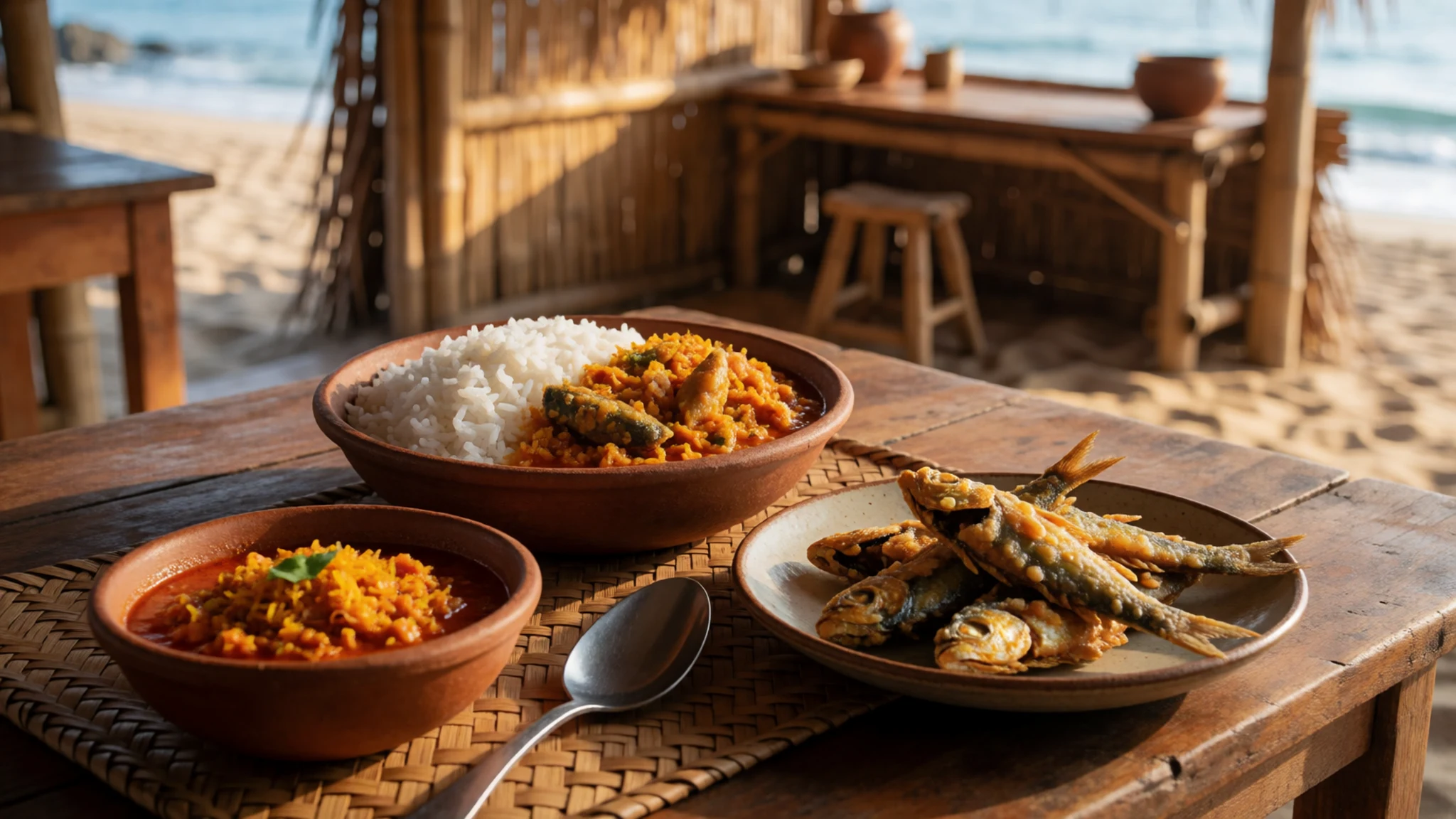
- Prawn Balchão — Traditional village taverns and coastal restaurants
A fiery and tangy seafood dish featuring prawns preserved in a rich, dark red paste made from dried chillies, spices, vinegar, and toddy vinegar, showcasing distinct Portuguese culinary heritage. Available in traditional taverns and coastal restaurants.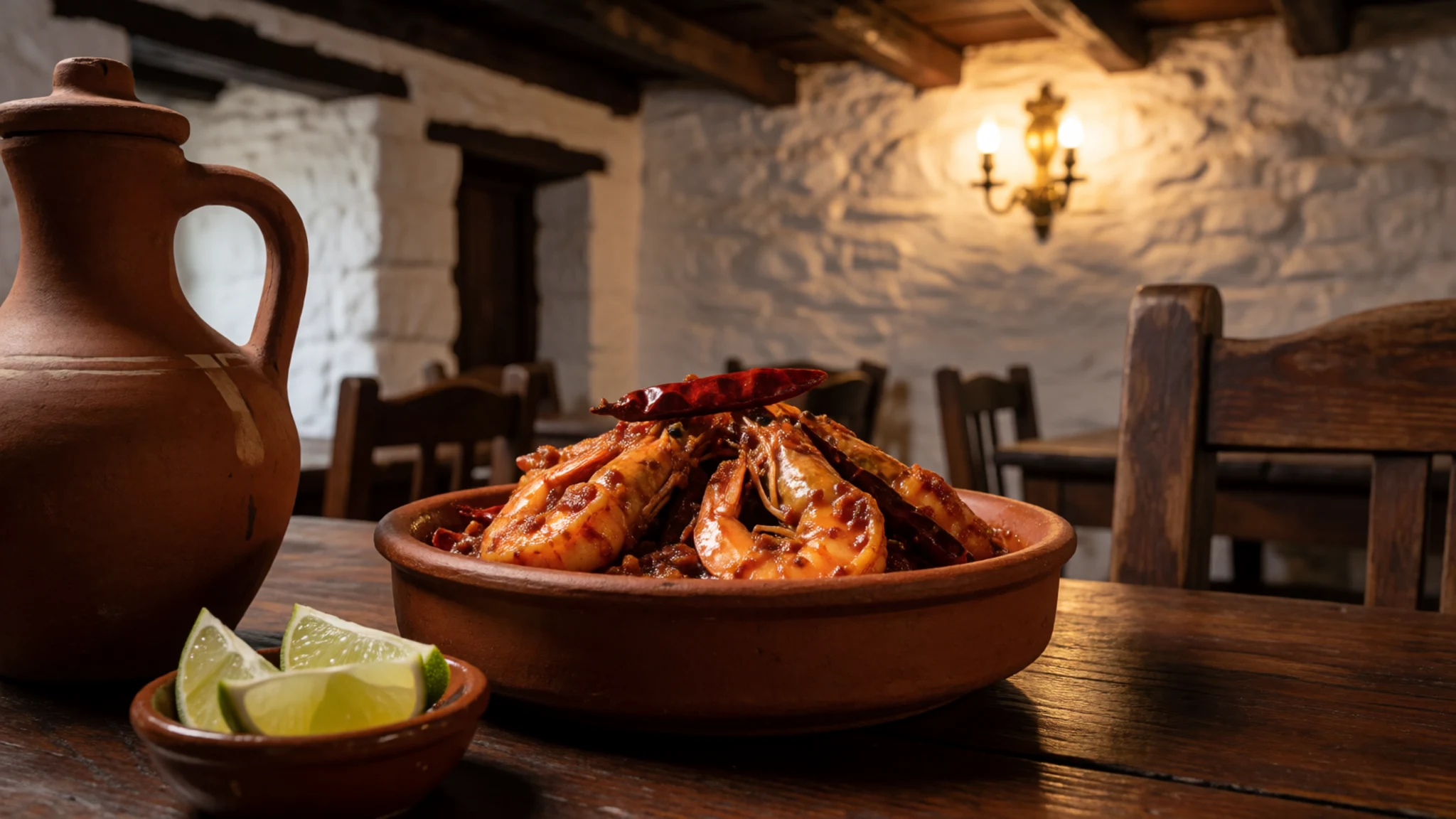
- Xacuti — Neighbourhood eateries and family dining rooms
A complex, aromatic curry prepared with chicken or lamb cooked in a roasted paste of grated coconut, white poppy seeds, dried red chillies, and various indigenous spices. Served across neighbourhood eateries and festive home kitchens.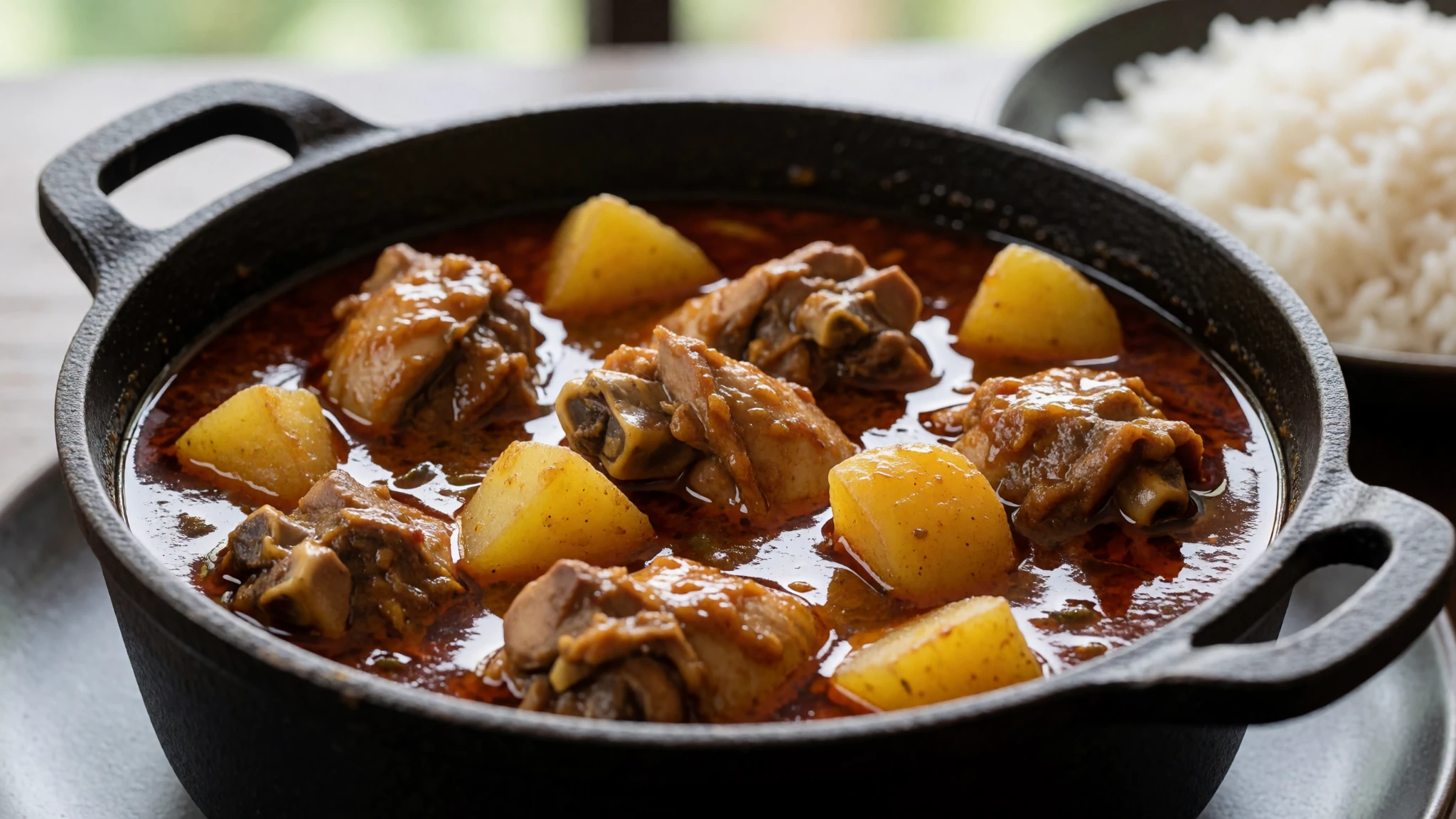
- Cafreal — Casual roadside cafes and local canteens
Tender chicken pieces marinated in a vibrant green paste of coriander leaves, green chillies, garlic, ginger, and lime juice before being pan-fried or grilled. Commonly served with potato wedges and fresh salad at casual roadside cafes. - Bebinca — Traditional village bakeries and heritage hotels
A traditional multi-layered dessert made from egg yolks, coconut milk, sugar, and flour, baked slowly layer by layer to create a rich, dense pudding. Traditionally made at home and served at select heritage hotels.
Plan it
Best time. November to March offers dry, sunny weather with hot daytime highs of around 33 to 36 °C, while the monsoon months from June to September bring heavy rainfall and lush landscapes.
How long. 4–5
Getting there. Fly into Dabolim Airport, then take a pre-paid yellow taxi from the designated booth outside the main terminal building to your destination.
Budget. mid
Tips
- Book beachside accommodation well in advance if visiting during December and New Year festivities.
- Use authorised pre-paid taxi booths at the airport to ensure fair and transparent transport rates.
- Carry cash in smaller denominations for village markets, local buses, and small family eateries.
- Drink bottled or filtered water and stay hydrated during humid afternoon explorations.
Etiquette
- Remove shoes and sandals before stepping inside Hindu temples or traditional residential shrines.
- Dress modestly with covered shoulders and knees when visiting churches, temples, and rural villages.
- Ask permission before photographing local residents or artisans during daily work.
Nearby
Sources
- Wikidata Q1171 (CC0)
- Wikipedia (rev 1381402525) (CC BY-SA 4.0)
- Wikivoyage (rev 5407841) (CC BY-SA 4.0)
- Photo 01-the-terekhol-river-and-querim-beach-panoramic-view-goa-india.jpg (CC BY 4.0)
- Photo 02-beachfun.jpg (CC BY-SA 4.0)
- Photo 03-road-along-vasco-da-gama-residence-in-fontainhas-panaji.jpg (CC BY-SA 4.0)
- Photo 04-closeup-shot-of-immaculate-conception-church-panaji.jpg (CC BY-SA 4.0)
- Photo 05-mangueshi-temple-goa.jpg (CC BY-SA 4.0)
- Photo 06-old-goa-church-01.jpg (CC BY 3.0)
- Photo 07-dudhsagar-falls-triplet.jpg (CC BY 3.0)
- Photo 08-talukas-of-goa.png (CC0 1.0)


