Glasgow
Glasgow, United Kingdom
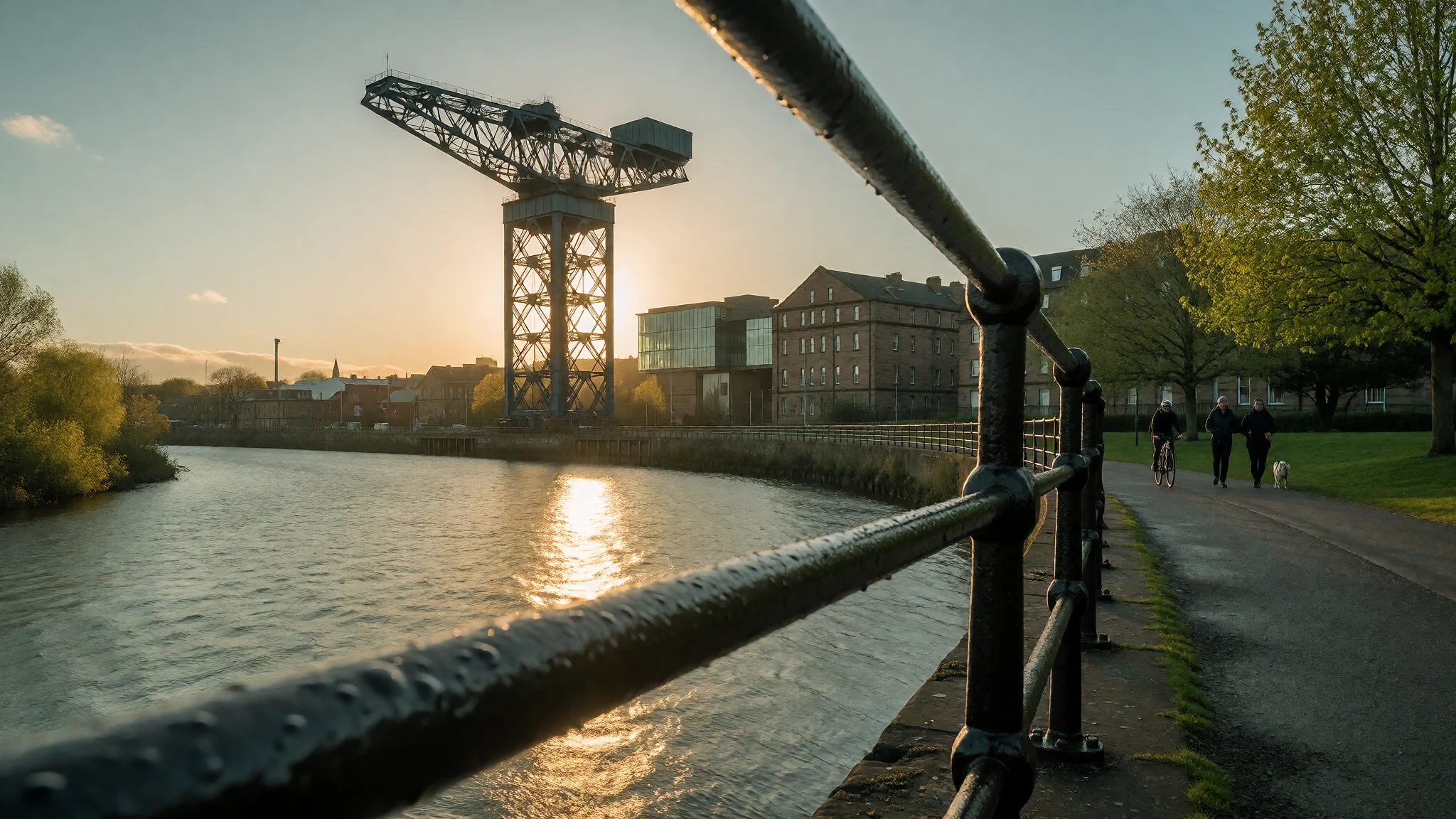
Glasgow is a big, friendly Clyde-side city of Victorian sandstone, serious museums, live music and a medieval cathedral still at its heart.
The place
Glasgow sits on the River Clyde in west central Scotland. It is the most populous city in the country, with about 636,000 residents inside the city boundary. The wider urban area holds more than a million people, so it feels less like a single town and more like the hub of a whole region. Visitors tend to meet a working city rather than a preserved one: grids of Victorian sandstone streets, tenement blocks, parks, university buildings and old shipyard land along the water. The centre is flat and easy to cross on foot around George Square, the West End rises over gentle hills around the university and Kelvingrove, and the medieval core lies to the east near the cathedral. The Clyde was the city's road to the world, and it explains much of what was built here, from grand merchants' architecture to the cranes left standing on the banks. For much of the Victorian and Edwardian eras Glasgow was called the second city of the empire, and the confidence of that age still shows in the stonework. Today it is known for its universities, finance, shopping, music, art and fashion. Rain falls at any time of year, humour is dry, and the city rewards wandering between districts far more than ticking off a single centre.
Its story
Glasgow's story begins with a saint and a stream. Tradition says Mungo, a Christian missionary, founded a church in the 6th century beside the Molendinar Burn, on the spot where the cathedral now stands, and a religious settlement gathered around it. Over the following centuries the place grew under the kingdoms of Strathclyde and then Scotland. A fair was established in 1190, and a bridge over the Clyde is recorded from around 1285, close to today's Victoria Bridge. As the lowest point where the river could be crossed, it made the town a natural meeting place for travellers and traders. Earlier still, Romans had built outposts nearby along the Antonine Wall, and carved altars from their forts are kept today in the Hunterian Museum. The University of Glasgow was founded beside the cathedral in 1451, and in 1492 the bishopric became an archdiocese, which raised both the town's standing and its landed wealth. That church-and-learning start matters, because the later boom was built on top of it. From a modest rural settlement the city grew into the largest seaport in Scotland, and the shipping, trade and industry of the Clyde made the Victorian city rich. Its sandstone grandeur is the residue of that wealth, and the painters and photographers who recorded the busy river left a vivid picture of how that world looked.
What to see
- Glasgow Cathedral — High Street, East End
Glasgow Cathedral, in the old eastern part of the city, is a medieval Gothic church dedicated to St Mungo, the patron saint, who is buried in the crypt. Work began in 1197 and the building was reworked in the following century. Allow time for the lower church, where the stonework is dim and the sense of age is strongest.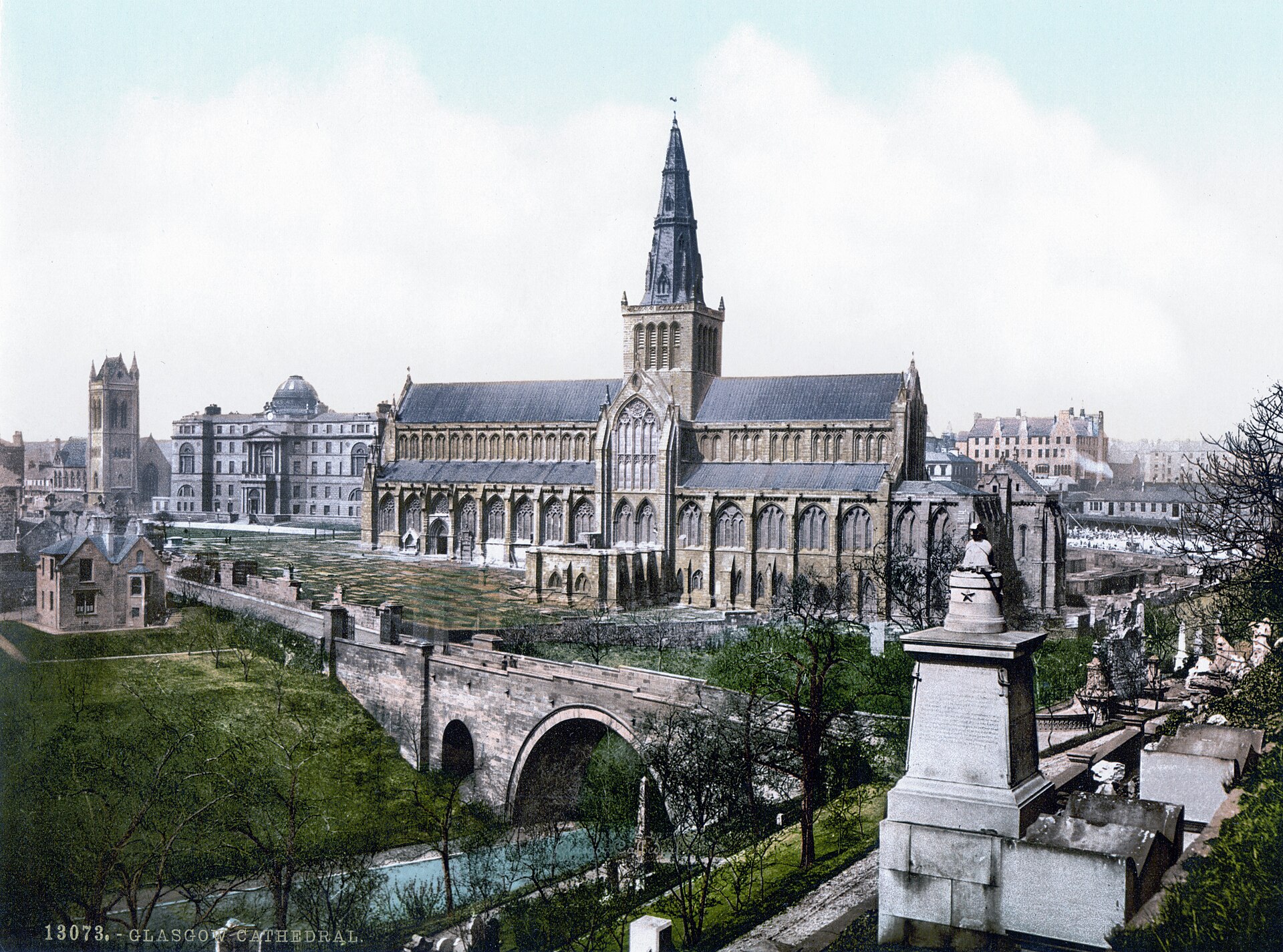
- Glasgow Necropolis — Behind the cathedral, East End
The Glasgow Necropolis is a hillside cemetery behind the cathedral, crowded with Victorian monuments raised by wealthy merchants and topped by a statue of John Knox. Paths are steep and can be slippery after rain, but the climb rewards with views back over the cathedral and the city. Go on a clear morning for the best light. - Provand's Lordship — Cathedral precinct, East End
Provand's Lordship, near the cathedral, was built in 1471 and is the city's oldest surviving house, fitted out to show domestic life around 1700. It is small, so it suits a short visit combined with the cathedral and the neighbouring St Mungo's Museum of Religious Life and Art. - George Square and the City Chambers — City centre
George Square marks the centre of the city, a paved public square ringed by statues and Victorian civic buildings. The City Chambers on its east side is the showpiece, with a lavish marble interior; check the council website for tour arrangements. Come here first to get your bearings, then fan out on foot.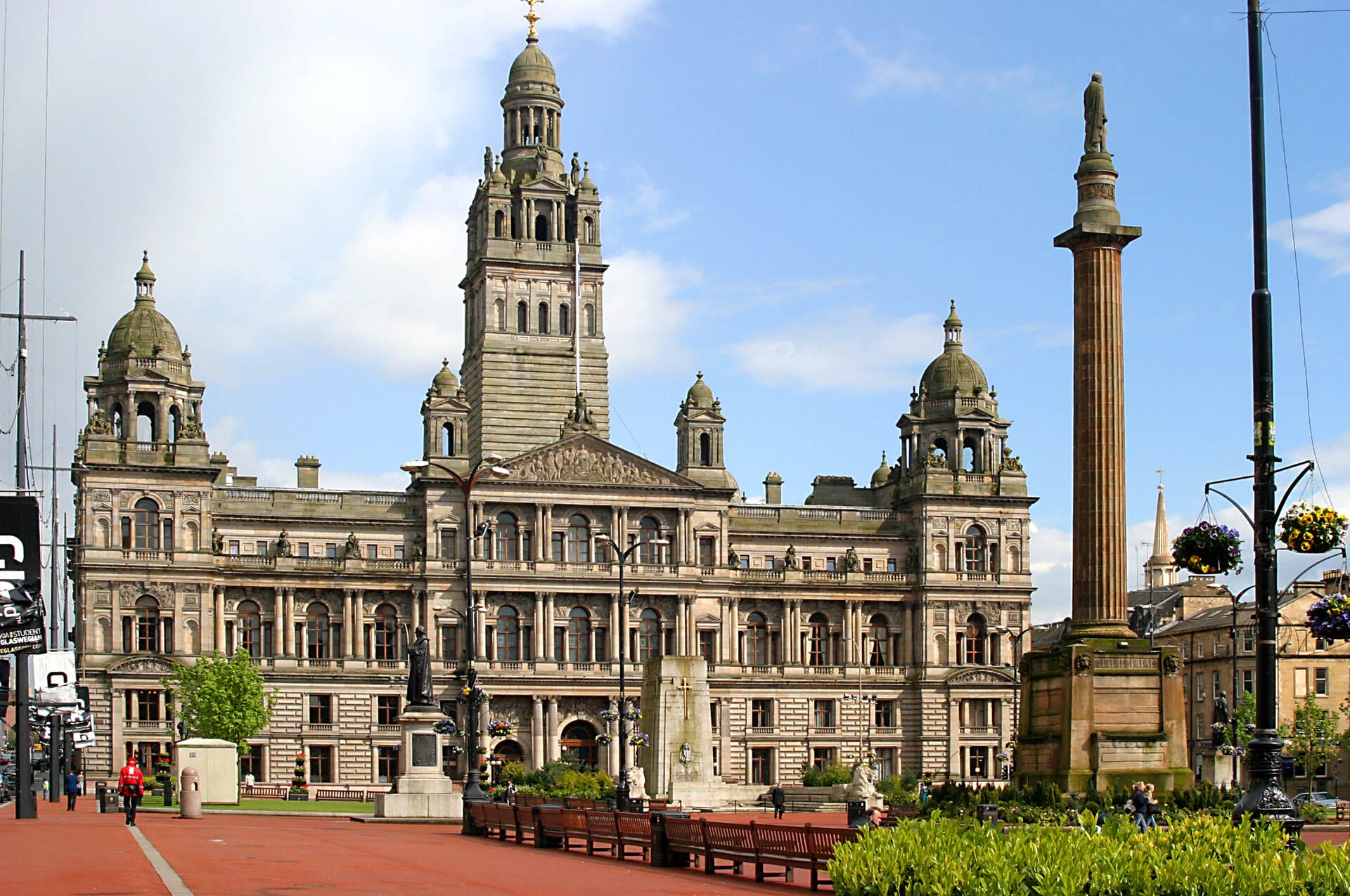
- Kelvingrove Art Gallery and Museum — Kelvingrove Park, West End
Kelvingrove stands at the edge of the park of the same name, a red sandstone building housing art and natural history collections. It suits a rainy day, and the park and the nearby university make an easy half-day in the West End. Check the official site for current opening arrangements before setting out.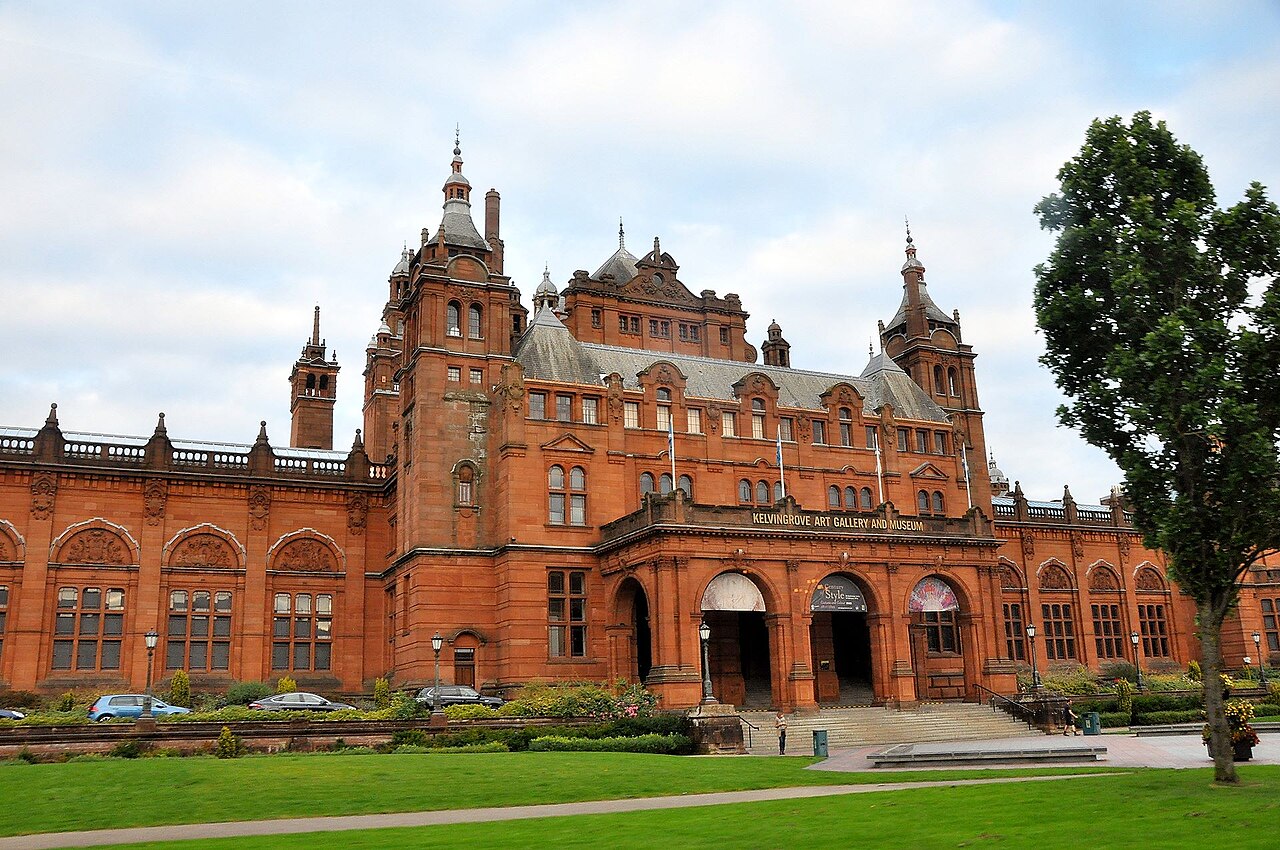
- Finnieston Crane — Finnieston, River Clyde
The Finnieston Crane stands on the north bank of the Clyde, a surviving piece of the heavy engineering that once loaded cargo onto ships. It is best seen from the riverside walkway, and the neighbourhood around it now holds bars, eateries and music venues, making it a good place to end a day.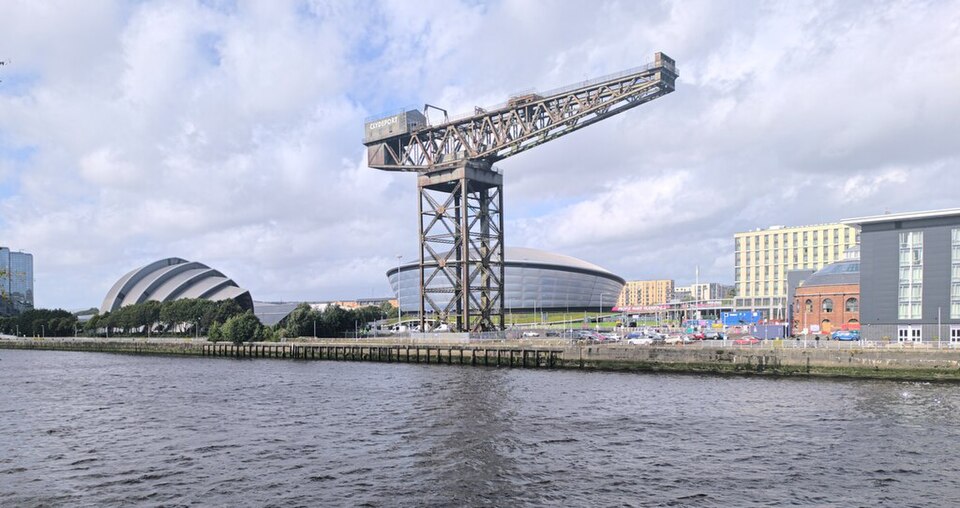
Culture
Glasgow has a cultural life that runs from football terraces to opera, ballet, curling and gallery-going, and the city enjoys all of it loudly. In 1990 it held the title of European Capital of Culture, which helped turn a reputation for heavy industry into one for museums, music and design. The universities add a student crowd that keeps pubs and gig venues busy. Reading is taken seriously too: the Mitchell Library is a major public reference library, and the University of Glasgow's library traces its beginnings to the 15th century. Football matters here more than outsiders often expect, and loyalties to particular clubs can run deep, so it is wise to let locals start any conversation about teams. Humour is dry and quick, and strangers often chat at bus stops or in pub queues. The Glaswegian accent and vocabulary can be hard to follow at first, and people are usually happy to repeat themselves. Religion has a long history in the city, from the medieval cathedral to the museum of religious life, and its mark can be seen in old churches and street names. At the cathedral and in the Necropolis, keep your voice low and stay on the paths, as both are places of worship and burial.
What to wear
Glasgow is a lowland city, but Scotland's traditional dress is part of its wardrobe on special days. The best known is tartan, a woollen cloth woven in coloured check patterns called setts, made up into kilts, sashes and scarves. A kilt is pleated wool, worn with a sporran, a tweed or tailored jacket and sturdy shoes, mainly at weddings, formal dinners, ceilidhs, Burns suppers and football internationals. Everyday dress is practical and unfussy: dark coats, jeans, trainers and layers, with club shirts and scarves on match days. The city has a long reputation for style, and the West End and the city-centre shopping streets show a confident, smart-casual look with plenty of independent labels. For visitors the main concern is weather. Bring a proper waterproof jacket, a warm layer even in summer, and comfortable shoes with grip, since pavements are often wet and the cathedral and Necropolis involve slopes and uneven stone. An umbrella is of limited use in wind. No special dress code applies at the cathedral, though covering shoulders and removing hats inside is a courteous choice. For evenings out, smart-casual is fine almost everywhere.
What to eat
- Full Scottish breakfast — Neighbourhood cafes across the city
A cooked breakfast with square Lorne sausage, bacon, eggs, black pudding and a potato scone, usually with tea. It is generous and a good base for a day of walking. Look for it in neighbourhood cafes, especially around the West End and city centre. - Haggis, neeps and tatties — Traditional pubs in the centre and East End
Spiced sheep offal and oatmeal, served with mashed swede and potato. It tastes peppery and savoury rather than strange, and vegetarian versions exist. Traditional pubs in the city centre and East End usually keep it on the menu. - Fish supper — Neighbourhood chip shops
Battered fish with chips, often eaten with salt and vinegar straight from the paper. The name is a local habit; it does not mean an evening meal. Any neighbourhood chip shop will do, and the queue is usually a good sign. - Italian cafe food — Family-run Italian cafes and restaurants
Italian families settled in Glasgow generations ago, and sound Italian cooking, from pasta to ice cream, is part of everyday eating. Family-run cafes and restaurants sit in the city centre and in several districts, and suit a relaxed lunch. - Cantonese and Chinese dishes — City centre and south-side restaurants
The city has a long-established Chinese food scene, with Cantonese restaurants, takeaways and noodle places in the centre and on the south side. Rice and noodle dishes are reliable value, and menus usually have vegetarian options.
Plan it
Best time. May, June and September, when days are long or settled and the parks are at their best. Summer is mild rather than hot, rain is possible in any month, and winter days are short, cold and often wet, though museums and pubs make it a good indoor season.
How long. 2–3
Getting there. Glasgow Airport lies west of the centre and has no railway station. The airport express bus runs to Buchanan Bus Station via the Queen Street area, and a slower local bus serves the West End and Kelvingrove. Trains from elsewhere in Britain arrive at Central or Queen Street stations, both in the city centre.
Budget. mid
Tips
- Check opening hours and any booking rules on each attraction's official site, or the council site at http://www.glasgow.gov.uk/
- Carry a waterproof and plan indoor alternatives, as rain can arrive any day
- Start at the cathedral and Necropolis early for quiet paths and good light
- The centre is walkable, but local buses and the subway help for the West End
- Cards are widely accepted, though a little cash helps in small cafes and markets
Etiquette
- Queue in an orderly way at bus stops and bars, and wait to be served in turn
- Keep voices low at the cathedral and in the Necropolis
- Ask before photographing people, and avoid taking sides in conversations about football
Nearby
Sources
- Wikidata Q4093 (CC0)
- Wikipedia: Glasgow (rev 1385090815) (CC BY-SA 4.0)
- Wikivoyage: Glasgow (rev 5424954) (CC BY-SA 4.0)
- Glasgow aerial photograph (01), 瑞丽江的河水 (CC BY-SA 4.0)
- Glasgow aerial photograph (02), 瑞丽江的河水 (CC BY-SA 4.0)
- Glasgow City Chambers and War Memorial, W. Bulach (CC BY-SA 4.0)
- NS5765: The Finnieston Crane, Thomas Nugent (CC BY-SA 2.0)
- Glasgow, Kelvingrove Gallery, Herbert Frank (CC BY 2.5)
- St. Mungo's Cathedral, Glasgow (old photograph) (Public domain)
- John Atkinson Grimshaw, Shipping on the Clyde (Public domain)
- Gezicht in Glasgow. The Clyde from Sailors Home, Rijksmuseum (CC0 1.0)


