Giant's Causeway
Giant's Causeway, United Kingdom
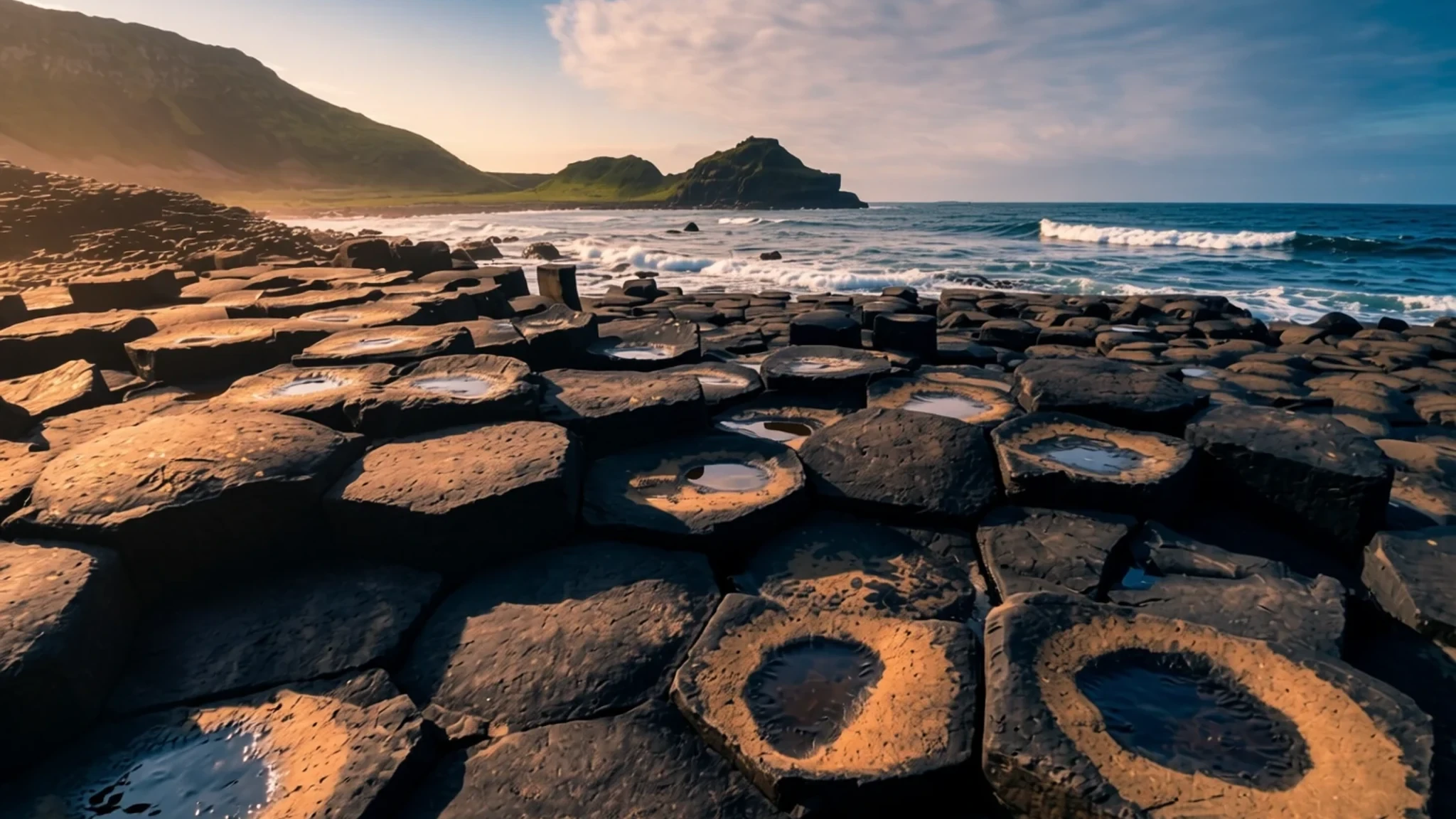
The Giant's Causeway is a field of hexagonal basalt columns on the Antrim coast, made by lava cooling and cracking over millions of years.
The place
The Giant's Causeway sits on the north coast of Northern Ireland, in County Antrim, a few miles northeast of the village of Bushmills. What greets you first is a broad slope of dark basalt columns, most of them six-sided, though some have four sides and others as many as eight. Their flat tops form a path that runs down from the cliff foot and disappears under the sea, so at low tide you can walk out over stones that look as though they were laid by hand. Behind them the cliffs rise in layers of solidified lava, up to 28 metres thick in places. The site draws a steady crowd from across Northern Ireland and beyond. The National Trust looks after much of it, along with the wider Causeway Coast World Heritage Site, and the rock has been protected for decades. The walk down to the columns is free, and you do not have to pass through the paid visitor centre to reach them. Summer brings a busy car park and queues at the best viewpoints, so arriving early or staying into the late afternoon makes a real difference. Walk the cliff paths in both directions, because each bay shows the columns from a new angle, and the sea moving between them changes the picture with every tide.
Its story
The Giant's Causeway became a subject of scientific argument before it became a tourist destination. A bishop from Derry visited the shore, and a Dublin scholar soon presented a description to the Royal Society in London, which carried the site to an international audience. Susanna Drury, a Dublin artist, then painted watercolours of the columns; they won her an award and were later engraved. Those engravings found their way into the French Encyclopédie, and a caption to one of its plates made the claim, new in print, that such columns were volcanic in origin. The geology is the story of molten basalt forced up through chalk and spreading across a broad plateau. As the lava cooled it contracted, cracking downward into columns much as drying mud cracks, and then fracturing across into stacked segments. The speed of cooling set the column size, with slower cooling producing larger ones. Visitors came in growing numbers in the Victorian era, helped by a tramway along the coast. Brazil's emperor Pedro II made a visit during a short tour of Ireland. Today the telling is shared between the National Trust and the visitor centre, though the rocks have been doing their work far longer than any of the stories about them.
What to see
- Portcoon Jetty and Portcoon Cave — West of the main path
Most people walk straight past Portcoon, because the route to it leaves the main path and turns west. Stand at the jetty and look right, to the eastern side of the cove, where a large cave opens in the rock. You can only reach the beach and wander into it at low tide, and you will want a torch if you intend to go any distance inside.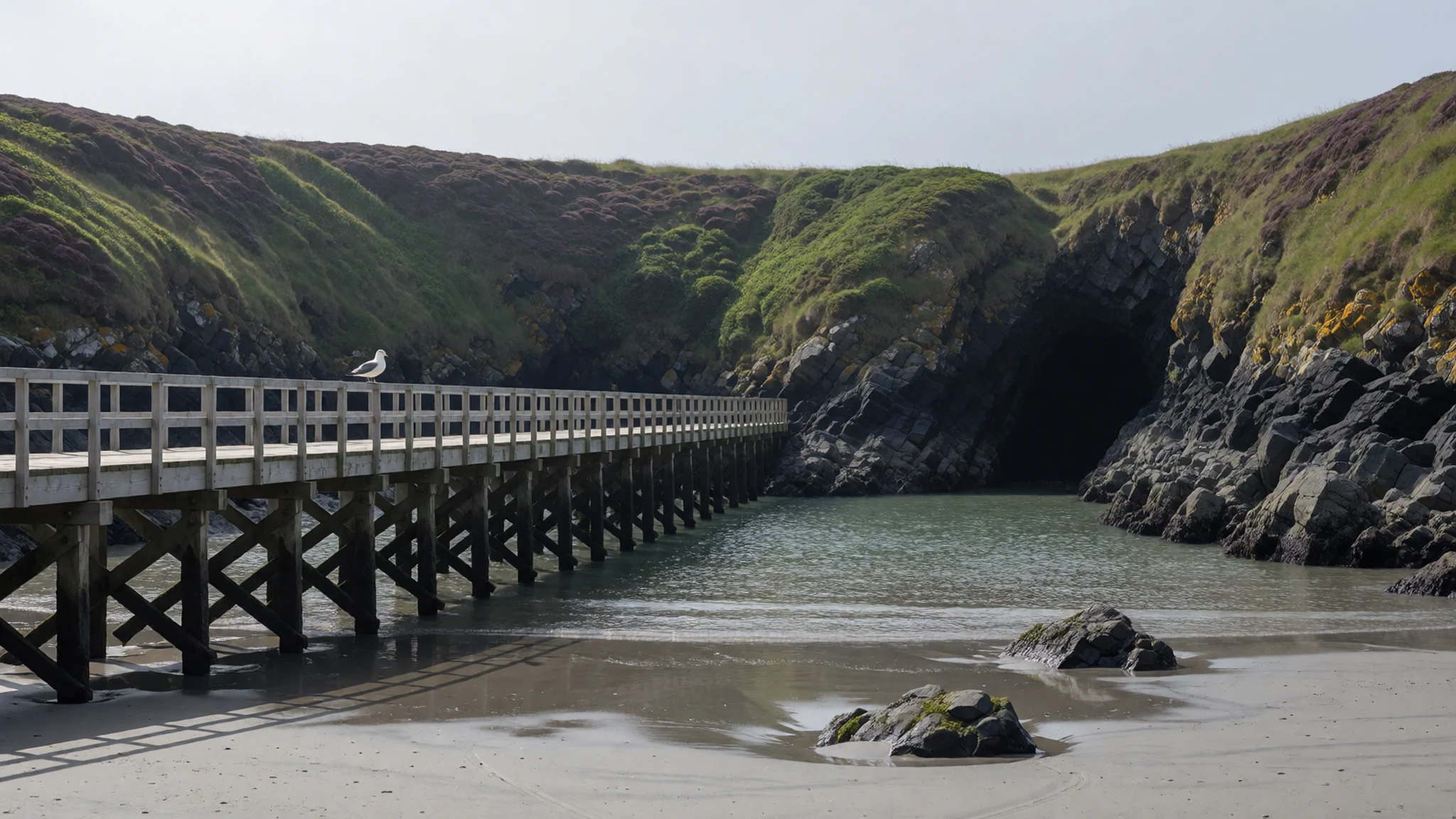
- Portnaboe and The Camel — The low-level path north of the visitor centre
Portnaboe, sometimes called the Bay of the Cow, is the first inlet you reach when you take the low-level path north from the visitor centre. Look along the shore for a hump-backed spur of rock that looks like a crouching camel. It is a dyke, formed when lava filled a crack in rocks that have since worn away, so it is a vein, not a column.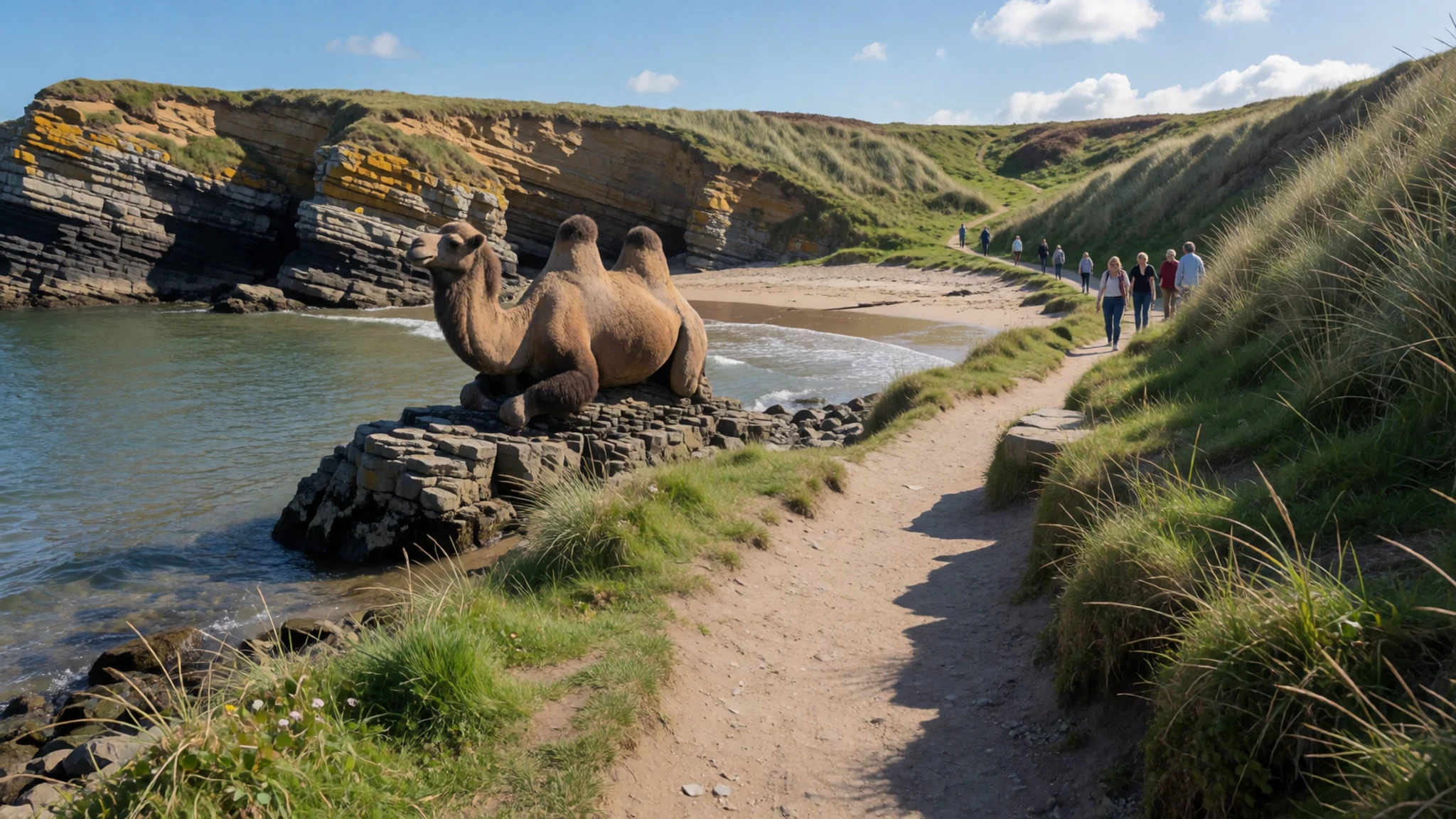
- Grand Cascade and the Wishing Chair — The central columns, east of Port Ganny
The Grand Cascade is the stepped view of columns that appears in nearly every photograph of the site, a staircase that looks built for show. Beside it The Wishing Chair is a natural seat formed by columns. Sitting on it is cold and damp, because the hexagonal tops hold water, so bring a plastic bag to sit on. Above it, Aird Snout is climbed by the steep Shepherd's Steps.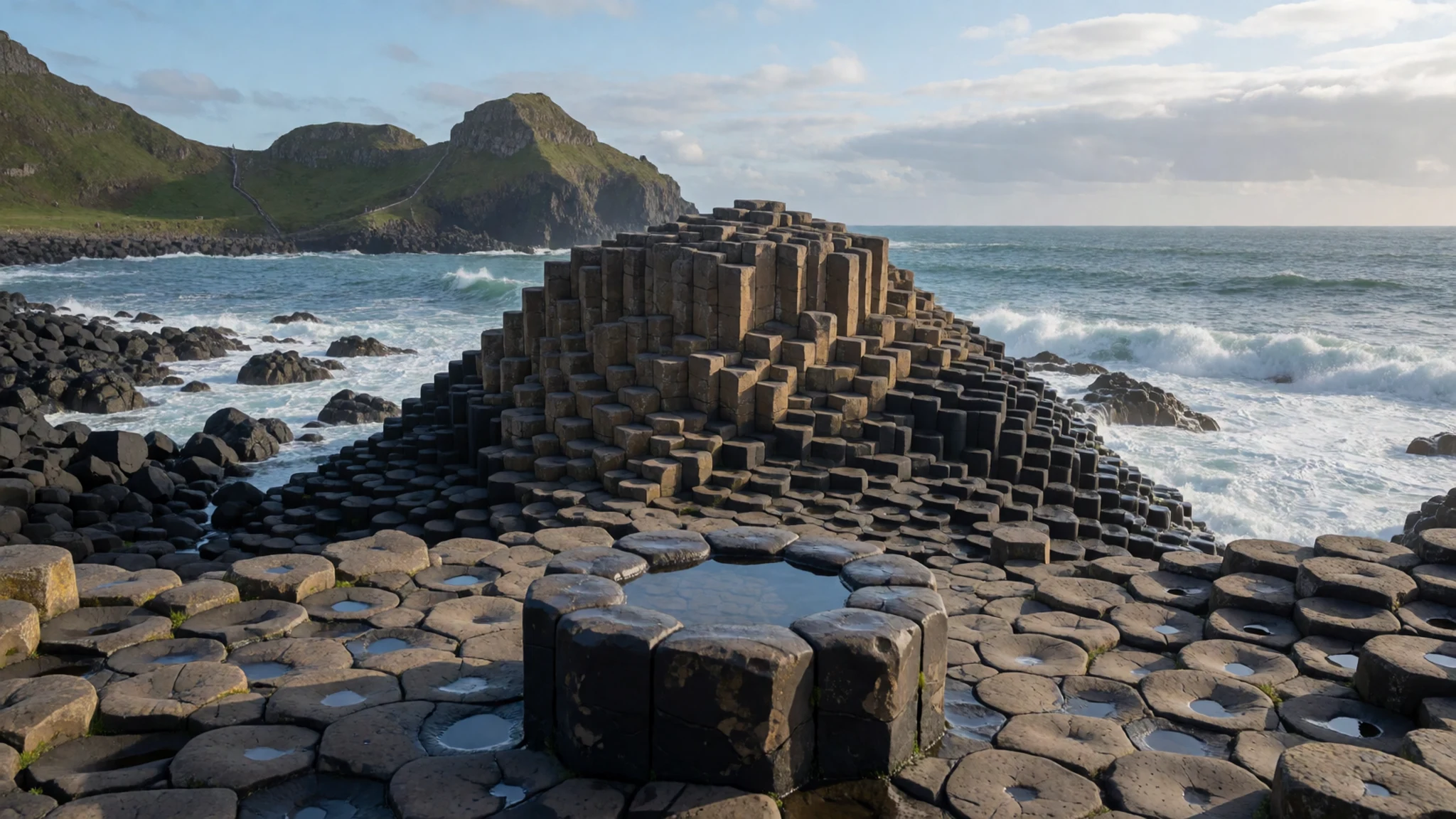
- Port Noffer and The Boot — The next small bay east of the causeway
Port Noffer is the next small bay east of the main causeway. On its shore stands The Boot, a large rock that looks, from the right angle, like an enormous footwear. Local legend credits Finn McCool with it. It is a good place to pause on the way east.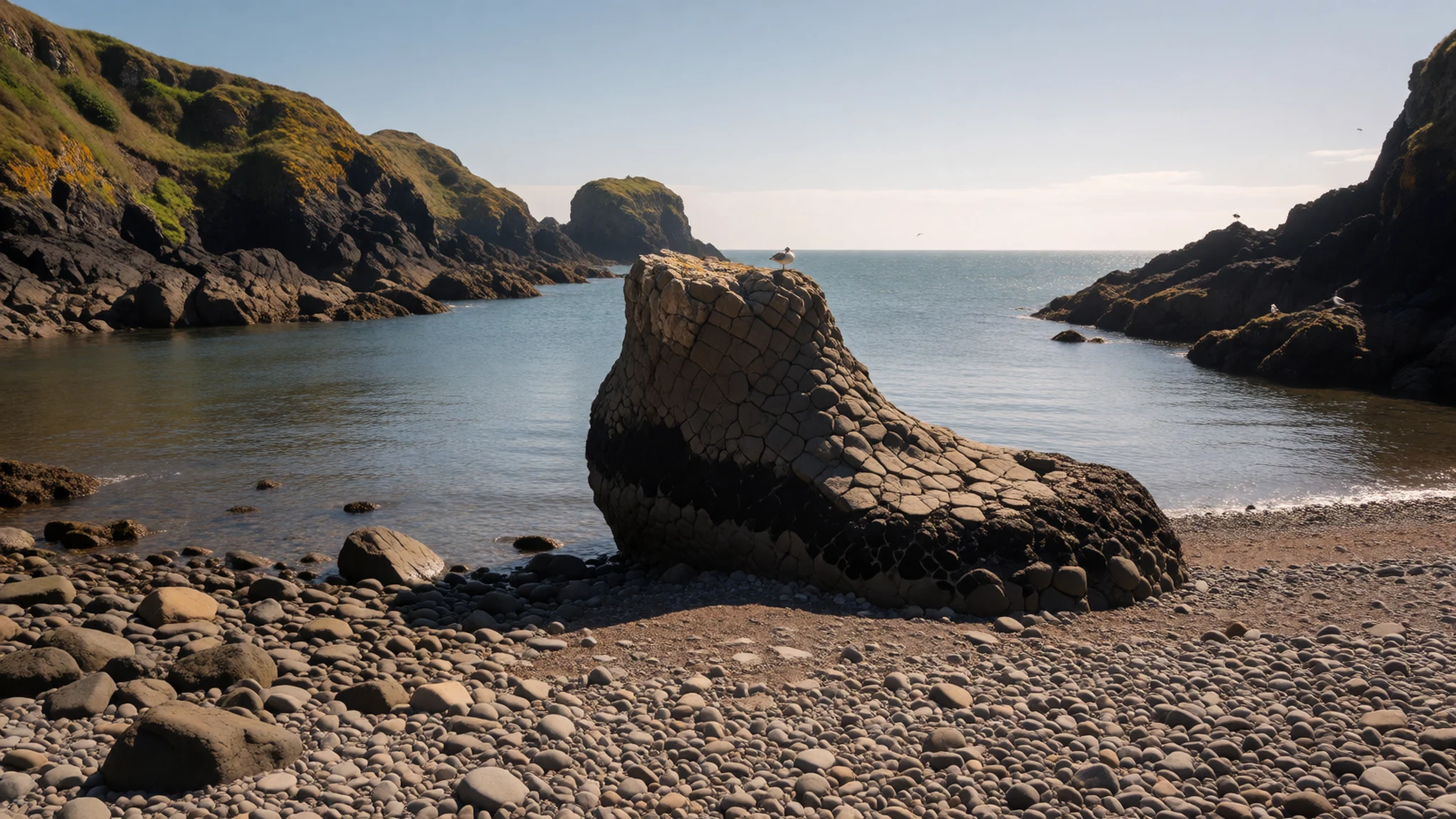
- The Granny and Port Ganny — The slopes west of the central columns
Look up from the inlets west of the causeway and the Granny, a rock part way up the slope, is said to resemble an old woman stooped as she climbs the hill. Many visitors find it hard to pick out, and some never see any likeness at all. The inlet beyond it is Port Ganny, bordered to the east by the centrepiece of the causeway.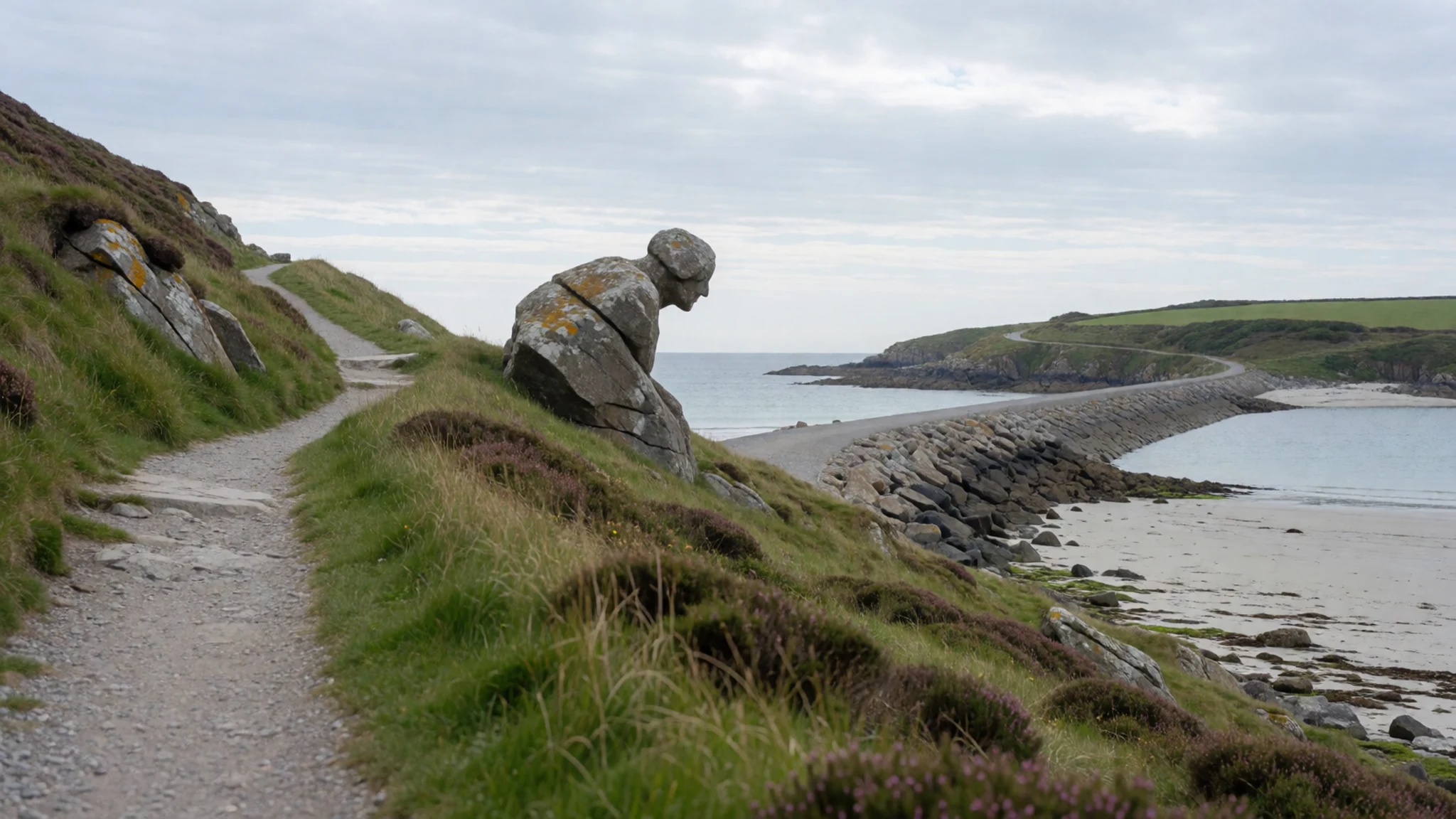
Culture
The Giant's Causeway is a natural site rather than a religious or heritage building, so the etiquette is mostly about the rock and the people sharing it. The columns are slippery, often wet with spray, and the cliff paths can be treacherous when the weather turns. The National Trust looks after the site and asks visitors to keep to marked routes so that the cliffs and vegetation are not damaged. Walkers, families and photographers all share the same few viewpoints, so it helps to step aside when a group wants a clear view. Local stories about Finn McCool are told with a laugh, and it is fine to join in, but nobody expects a performance. The Wishing Chair and the stepping stones attract hopeful children and the occasional daredevil, so let others have their turn. Eating and drinking are best kept for the cafés by the car park or the eateries in Bushmills, not for the rocks. Keep off the cliff edges above the sea, leave the stones where they lie, and take your litter back with you.
What to wear
The Giant's Causeway itself has no dress of its own, so the traditional textiles around it come from the wider north of Ireland. Linen is the local thread: Northern Ireland's linen industry spun and wove flax for generations, and linen is still the cloth people here associate with hard-wearing work clothes and good tablecloths. Knitwear is the other strand. Aran jumpers, cabled in undyed wool, belong to the islands off the west coast, while the heavier Donegal tweed woven in the north-west is a favourite for outdoor wear. People on the coast today dress much as they do anywhere in the UK: waterproof jackets, fleeces, jeans and walking trainers, with a wool hat when the wind comes off the sea. Visitors should plan for wind and rain more than heat, and dress in layers that can be taken off on the cliff path. Wear shoes with real grip, because the basalt is wet and slippery even on a fine day, and a waterproof shell is more useful than an umbrella on the exposed headlands. There is no formal dress code at the site, but modest, practical clothing suits a visit to the village churches and the distillery in Bushmills.
What to eat
- Hot café food by the car park — The eateries beside the main car park
The cafés and bar-restaurants beside the main car park serve hot lunches and snacks to people arriving off the coaches and day trips. The convenience costs a little more than you might pay in the village, and it gets very busy around midday. If you want to sit down for a proper meal, it is easy enough to wait until you have walked the cliffs.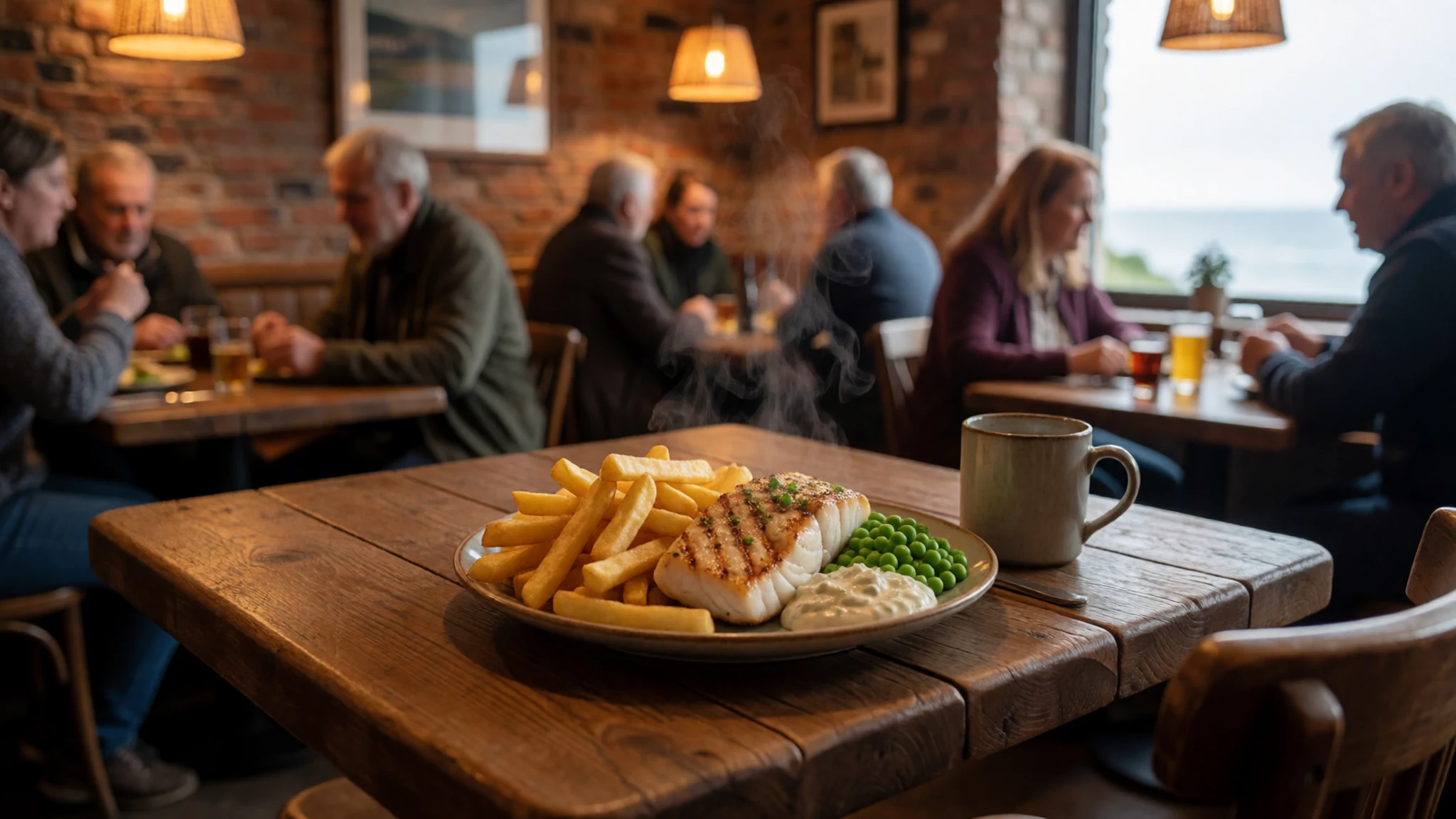
- Ulster fry — Breakfast menus in Bushmills or Ballycastle
An Ulster fry is a cooked breakfast of bacon, sausages, eggs, mushrooms and tomatoes, often with soda bread and potato bread fried alongside. It is a good fuel before a long coastal walk, and most cafés in the villages serve it all day. Ask for it without black pudding if that is not to your taste.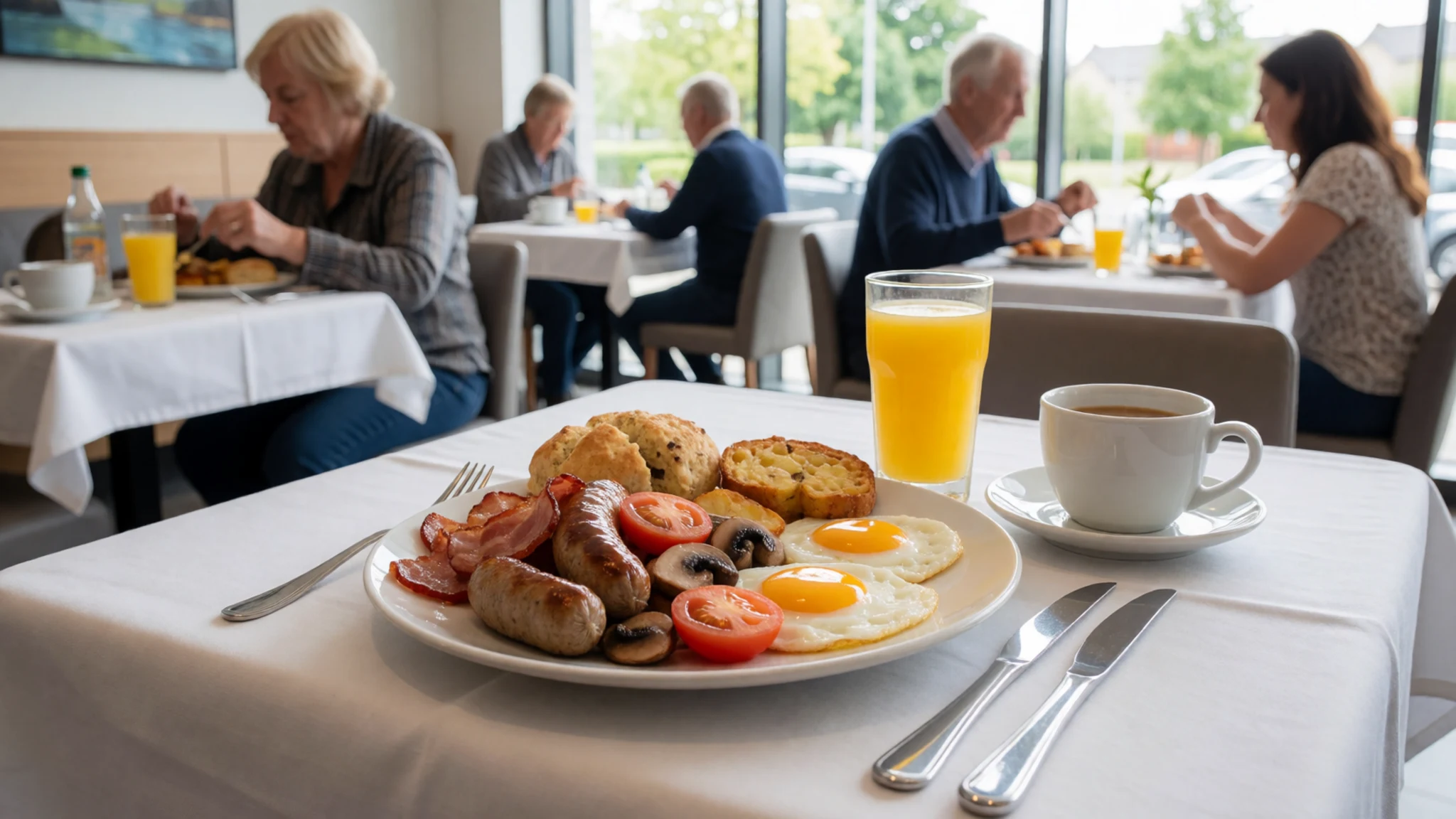
- Irish soda bread and tea — A tea room in Bushmills village
Irish soda bread is a dense loaf raised with bicarbonate of soda rather than yeast, and it is often served warm with butter and jam. Pair it with a pot of strong tea in one of the village tea rooms. It makes a relaxed break between the causeway and the distillery.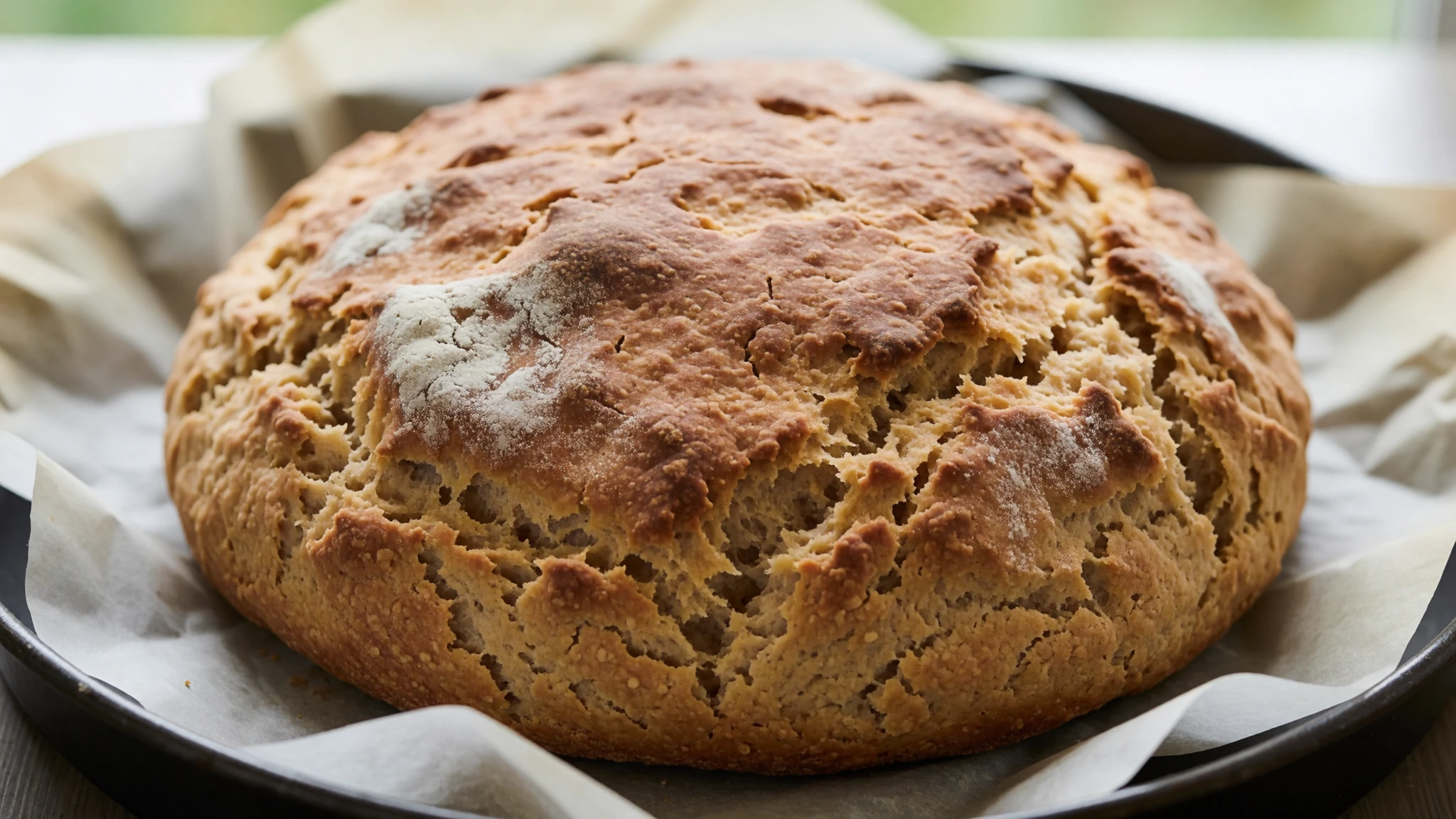
- Fresh fish on the harbour front — The harbour and seafront in Ballycastle
Ballycastle is a pleasant seaside town with a working harbour, and simple fish dishes are served along the front. Haddock, mackerel and crab turn up on menus here, usually grilled or fried in batter. Go at lunchtime for the best choice, and check the menu at the door before you sit. - Bushmills whiskey in the evening — Bars and pubs in Bushmills village
Bushmills gives its name to a famous Irish whiskey, and the village bars pour it neat or with a splash of water. Save the glass for the evening, after the cliffs and the wet rocks are behind you. The distillery offers tours, and the bars are a relaxed place to end the day.
Plan it
Best time. Late spring and summer are the most comfortable months for the cliff walk, when the paths are drier and the light lasts into the evening. Winter brings wind and spray, and the rocks stay slippery whatever the season, so pack for wet weather at any time of year.
How long. 1–2
Getting there. Fly into Belfast, then take the direct Goldline bus from Belfast Laganside or Donegall Square. It runs daily and takes about an hour and a half via Ballymena and Bushmills. Alternatively, take the train to Coleraine and a coastal bus; the last leg is the coast road, and you get off at the Giant's Causeway stop, a short ride past Bushmills.
Budget. mid
Tips
- Take the early bus from Belfast if you want the columns before the coaches arrive
- Check timetables and buy tickets through TransLink before you leave Belfast
- Access to the causeway is free, so you do not need to pay the visitor centre to walk down
- Wear grippy shoes and carry a waterproof, because the stones are slippery after rain
- Check the official site for current parking and visitor centre details
Etiquette
- Stay on marked paths and well back from the cliff edges, because the drop is serious
- Leave the columns and plants as you find them, and take your litter home
- Keep the stepping stones clear for people trying to cross
- Give nesting seabirds space and keep noise down along the cliffs
Nearby
Sources
- Wikidata Q106187 (CC0)
- Wikipedia: Giant's Causeway (rev 1381547322) (CC BY-SA 4.0)
- Wikivoyage: Giant's Causeway (rev 5259429) (CC BY-SA 4.0)
- Photo 01 Giant's Causeway, Lindy Buckley (CC BY 2.5)
- Photo 02 Causeway-code poet, Jim (CC BY-SA 2.0)
- Photo 03 Chaussee geants prismes rouges, missfitzphotos (CC BY 2.5)
- Photo 04 Giant's Causeway (14), Chmee2 (CC BY 3.0)
- Photo 05 Giants boot Dec2004, Sean McClean (CC BY 3.0)
- Photo 06 The Chimney Stacks, David A. Victor (CC BY-SA 2.0)
- Photo 07 Giant's Causeway, Bushmills, JoachimKohler-HB (CC BY-SA 4.0)
- Photo 08 Giant's Causeway, Jonashtand (CC BY-SA 4.0)


