Geneva
Geneva, Switzerland
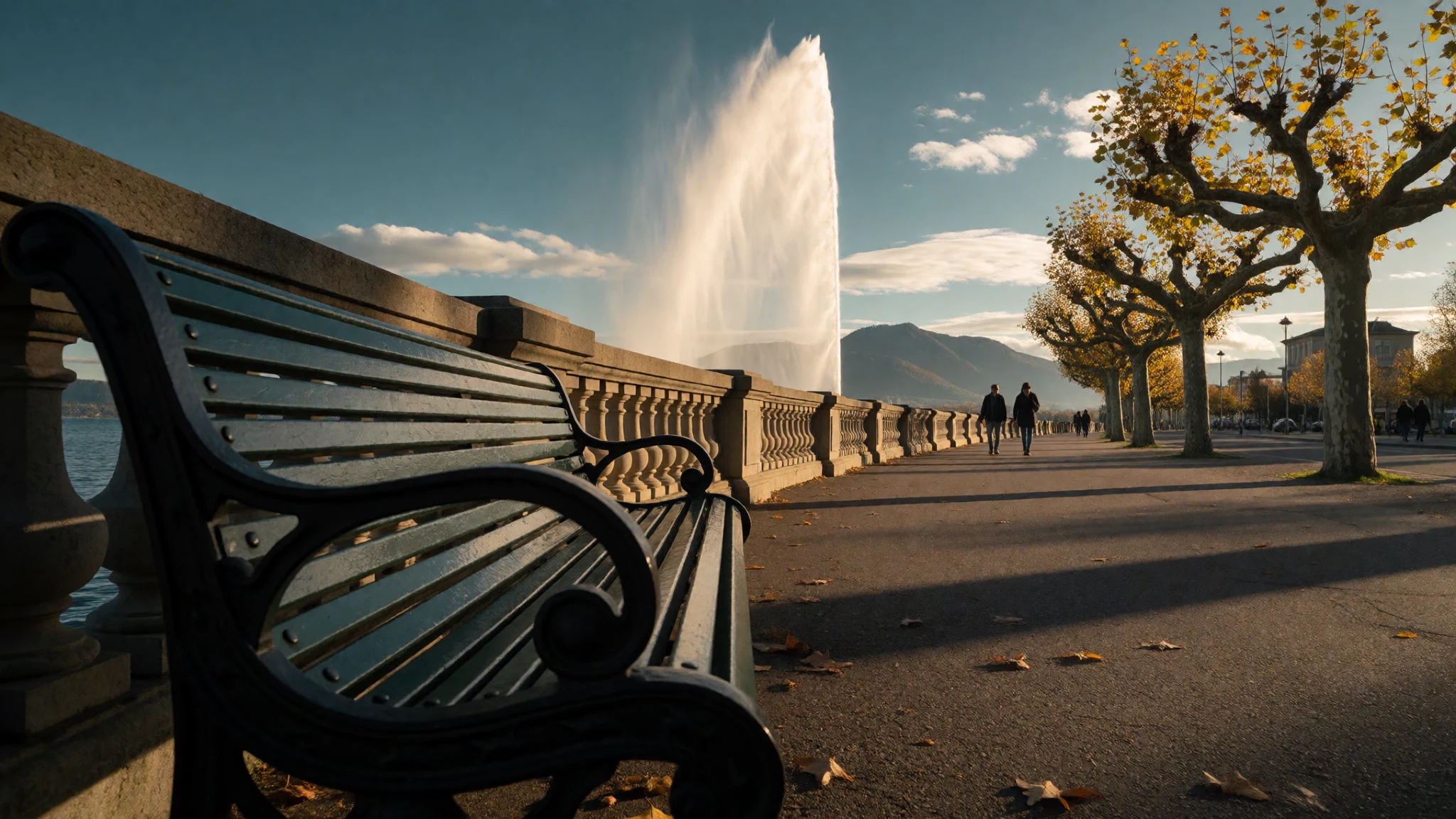
Geneva pairs a calm lakeside old town with the diplomacy of the Red Cross and the United Nations, all within an easy walk.
The place
Geneva sits in the south-west corner of Switzerland, where the Rhône flows out of Lake Geneva on its way towards France. The city proper holds roughly 211,000 people. It is the largest city in French-speaking Romandy and the second most populous in the country. Much of the wider urban area spills over the border into Vaud and French Haute-Savoie, so a daily commute can cross a frontier without anyone thinking twice. The lake organises everything. Promenades, bathing platforms, ferries and the tall plume of the Jet d'Eau all face the water, while the Rhône splits the centre into a left and a right bank. The old town climbs a small hill on the south bank with the cathedral at its top. On the right bank the Pâquis neighbourhood is more lived-in, with cafés, small guesthouses and lakeside baths. Mount Salève rises just inside France and gives a wide view back over the city and the water. Geneva's character is unusual for a city of its size. It is a global centre for diplomacy, home to many United Nations agencies and to the International Committee of the Red Cross, so the streets carry a polyglot crowd of delegates, interns and aid workers alongside students and bankers. It is also prosperous and expensive, quiet by late evening, and orderly in a way that feels Swiss rather than French. Anyone expecting an Alpine village will find a lake port with a serious international job instead, framed by mountains on clear days and often by low cloud in winter. The city's official site, https://www.geneve.ch/, is the place to check events and services.
Its story
Geneva began as a border town of the Allobroges, a Gallic people, fortified against their neighbours the Helvetii until Rome took it in 121 BC. Christianity arrived in the late Roman period, and the city had its own bishop by the fifth century. Through the Middle Ages a count ruled it under the Holy Roman Empire, and by the end of the fourteenth century it had won a charter granting real self-government, even as the House of Savoy kept pressing its influence. A republic run through councils of leading families took shape in the fifteenth century. Then came the Reformation. Religious conflict in the sixteenth century ended Savoyard control, and Geneva allied itself with the Swiss Confederacy. In 1541 John Calvin became the city's spiritual leader and turned it into a model Protestant community, sometimes called the Protestant Rome. That legacy is why the Reformers' Wall stands in the park beside the old ramparts today. Jean-Jacques Rousseau, born in the old town, later wrote about civic ideals that owed much to this republican habit. Over the eighteenth century French cultural influence grew strong, and tension between the ruling families and ordinary townspeople led to the failed revolution of 1782, an attempt to give men of modest means a voice in government. Geneva's later role as a place of refuge, peace talks and humanitarian law grew out of this long habit of independence and of taking in people from elsewhere.
What to see
- Jet d'Eau — Lakefront, left bank
The Jet d'Eau is a pumped fountain that throws a tall white plume into the air from the edge of the lake, and it can be seen from much of the shoreline. Walk out along the jetty for spray on a breezy day, or watch from the opposite quay at dusk when the light softens.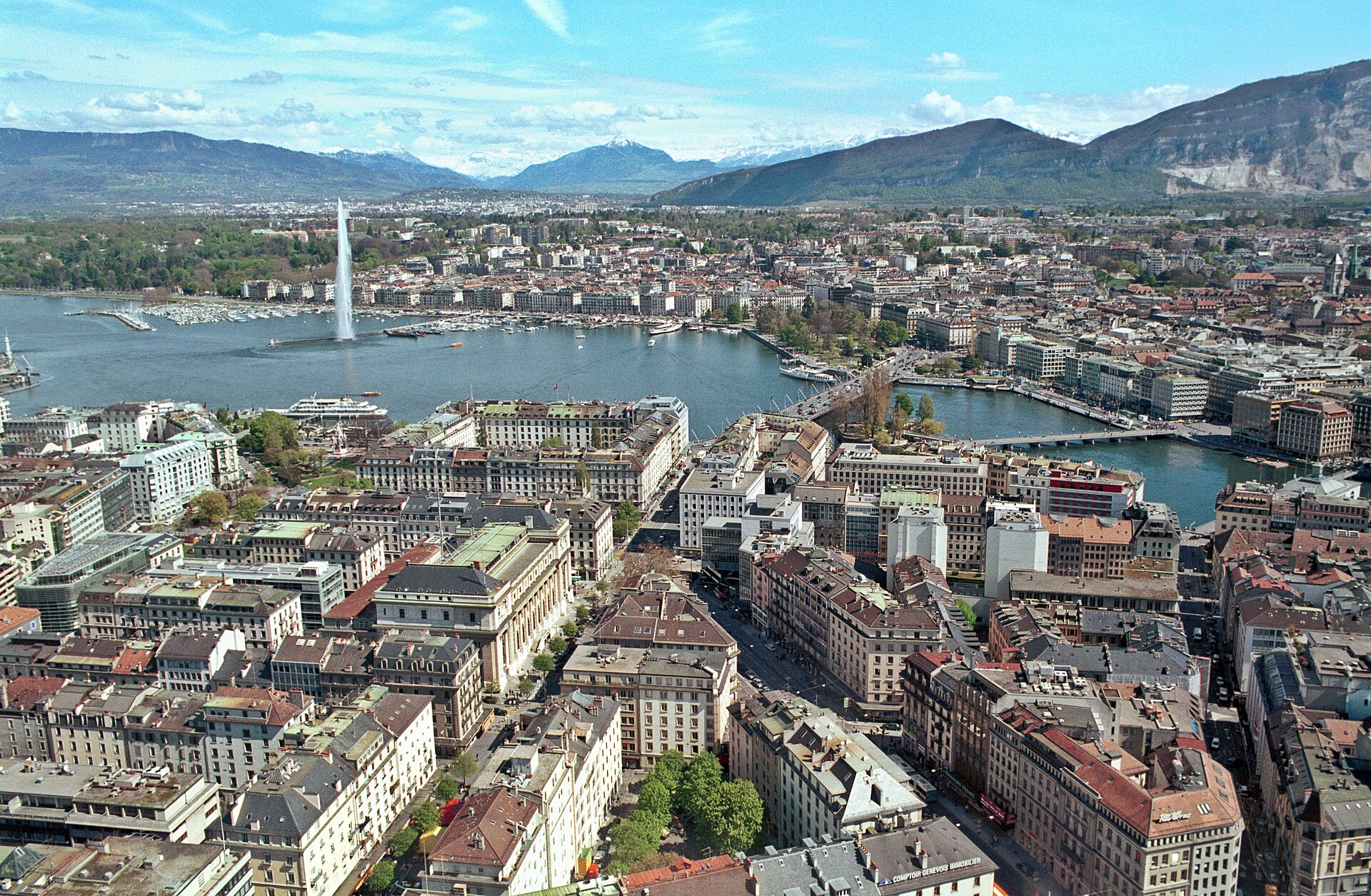
- Cathédrale St-Pierre — Old town
Cathédrale St-Pierre crowns the old town and is closely tied to Calvin, who taught in the area. A combined ticket covers the cathedral and the neighbouring sites around Cour Saint-Pierre, including Calvin's auditorium; check the official site for current terms. Climbing the tower rewards visitors with a view over rooftops, lake and mountains on clear days. - Old Town — South bank, upper town
Geneva's old town is best explored on foot over an hour or two, wandering between the cathedral and the city hall. Cannons stand in the small square opposite the hall, and Rousseau's birth house is on the main street. Cobbled lanes, galleries and small cafés fill the rest, and weekday mornings are calmest. - Palais des Nations — International district, north of the centre
The Palais des Nations was built for the League of Nations and now serves the United Nations in Geneva. Visits centre on the large Assembly Hall, the collection of public art, the library and the landscaped grounds. Entry normally needs advance booking and photo identification, so check the official UN Geneva site before setting out.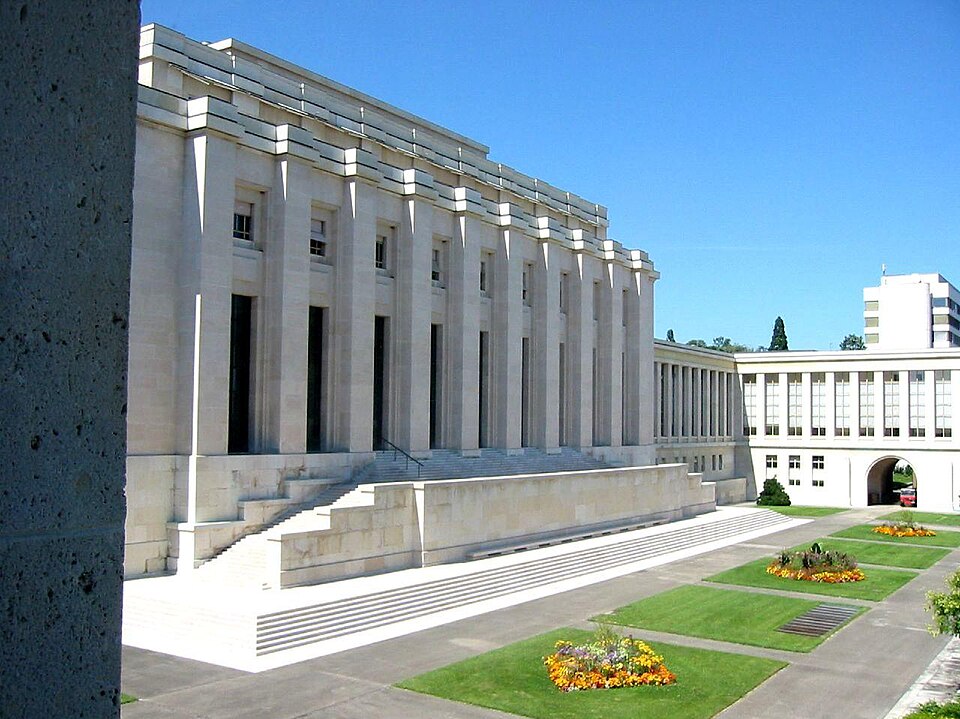
- Reformers' Wall — Parc des Bastions, below the old town
The Reformers' Wall runs along a stretch of the old city ramparts in the Parc des Bastions, with large carved figures of Calvin and other leading Protestant reformers. It makes a short, easy stop beside the university and the outdoor chess boards, and it explains quickly why Geneva once saw itself as a Protestant Rome.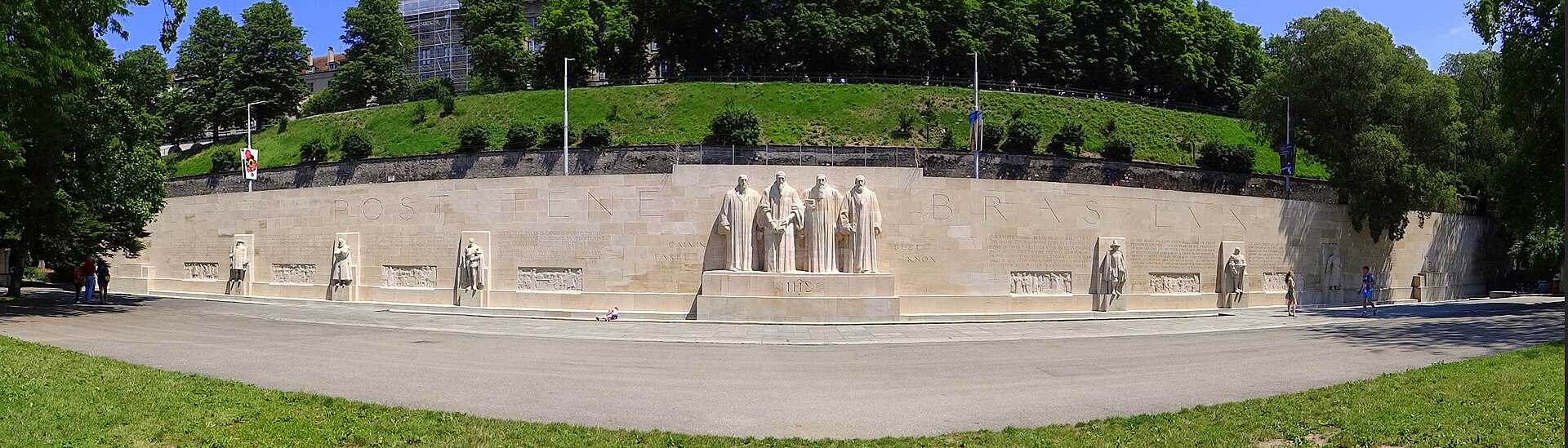
Culture
Geneva speaks French first, though English is heard everywhere in a city where diplomats, bankers and aid workers share the same trams. Local life leans towards restraint and punctuality, a habit often linked to the city's Protestant past. Conversation is polite, noise is kept down, and rules about rubbish, quiet hours and crossing roads are taken seriously. The city is the media centre of French-speaking Switzerland. The daily Tribune de Genève is the main local paper, Le Temps is edited here, and Radio Télévision Suisse broadcasts from the city, alongside a local television channel, Léman Bleu. Civic culture revolves around the lake as much as the museums. On warm evenings people swim from the bathing platforms, picnic on the quays and sit outside cafés until late, then the streets empty early. Humanitarian work shapes the city's self-image: the Red Cross and the Geneva Conventions are matters of local pride and the subject of museums and school visits. Opening hours are shorter than in many European cities, and many shops close early on Saturday and stay shut on Sundays, so errands are best done on weekdays. Greet staff with a quiet 'bonjour' when entering a shop or café, and keep your voice low on trams and in the old town's courtyards.
What to wear
Geneva has no single everyday costume of its own, and what is often called traditional Swiss dress, the Tracht, belongs more to the rural cantons. In Geneva, period costume appears mainly at civic festivals, above all the Escalade each December, when processions wear historical clothing: heavy wool and linen for townspeople, plumed hats and armour for soldiers. Older Genevan dress was plain by design, shaped by Calvinist ideas of sobriety, and the city's craft tradition in watchmaking and jewellery still colours taste today: one good watch rather than much ornament. Day to day, locals dress smart casual and neat, in dark or neutral colours, tailored coats, scarves, clean trainers or leather boots. Cyclists and lake swimmers add technical jackets and quick-dry towels. Offices and banks lean formal, and evening restaurants are a little dressy but rarely strict. Visitors should pack layers: summers are warm, evenings by the lake can turn cool, and the cold north wind known as the bise makes winter feel colder than the thermometer says. A waterproof jacket and comfortable shoes with grip suit the cobbled old town and wet pavements. No special dress code applies at the cathedral beyond ordinary modesty, so cover bare shoulders when arriving from the beach, and keep swimwear to the lake baths and the water's edge.
What to eat
- Cheese fondue — Old town cafés and the Pâquis lakeside baths
Melted Alpine cheese, eaten by dipping bread on long forks, is the winter staple across western Switzerland. Many cafés and restaurants in the old town and Pâquis serve it from autumn, and some lakeside baths turn into fondue rooms in winter. - Filets de perche — Lakeside restaurants and quay terraces
Small perch fillets from the lake, lightly fried and served with fries or salad and lemon. They are a staple of lakeside restaurants and café terraces along the quays, especially in warmer months, and the menu will say whether the fish is local or imported. - Longeole — Butchers, markets and traditional brasseries
A smoked pork sausage flavoured with fennel seed, traditional to the canton of Geneva and usually served with potatoes or lentils. Look for it at butchers, market stalls and traditional brasseries in the city and surrounding villages, mostly in the colder months. - Gratin de cardons — Old-town brasseries and city markets in winter
Cardoon, a relative of the artichoke, baked in a creamy cheese gratin, is a Geneva speciality and a traditional Christmas dish. It appears on winter menus in old-town brasseries and at the markets, where the thorny stalks are sold bundled and blanched. - Chinese dumplings and noodles — Eateries around Cornavin station and Pâquis
Dumplings and noodles from small Chinese eateries reflect the city's international population. Look around the station and Pâquis, where Chinese, Japanese and other Asian kitchens sit beside inexpensive lunch cafés. They are a welcome change for anyone tired of cheese.
Plan it
Best time. June to September for lake swimming, long evenings and café terraces; May and September are milder and quieter. December suits Christmas markets and fondue, but winters are often grey, damp and cold, with the bise wind off the lake.
How long. 2–3
Getting there. Fly to Geneva Airport, whose railway station is only a few minutes by train from the main station, Cornavin; buses also link the airport and the centre. Train and bus tickets share one integrated fare, sold at machines at the stop or station. Trains from elsewhere in Switzerland and from France arrive at Cornavin, and trams and buses cover the city.
Budget. high
Tips
- Buy transport tickets at the machine before boarding rather than on the vehicle
- Book the Palais des Nations visit in advance through the official UN Geneva site, and carry photo identification
- Go to the lake early or at dusk, and explore the old town on weekday mornings when it is quietest
- Carry a layer even in summer, as lake breezes cool the evenings
- Cards are widely accepted, but keep a little cash for market stalls and some lake baths
- A plat du jour at a café is usually the cheapest hot meal in an expensive city
Etiquette
- Greet staff with 'bonjour' when entering shops and cafés
- Keep voices low on trams and in quiet residential streets, especially in the evening
- Cover bare shoulders and remove hats inside the cathedral
Nearby
Sources
- Wikidata Q71 (CC0)
- Wikipedia — Geneva (rev 1384287159) (CC BY-SA 4.0)
- Wikivoyage — Geneva (rev 5402710) (CC BY-SA 4.0)
- Geneva from Mount Salève — Yann (CC BY-SA 2.5)
- Aerial photograph of Geneva, the harbour and the Jet d'Eau — fr:Utilisateur:Stéphane_Pecorini (CC BY-SA 2.0 fr)
- Reformers Wall — Geri340 (CC BY 3.0)
- United Nations, Geneva — MadGeographer (CC BY 3.0)
- Geneva artwork, 1858 — Frances Elizabeth Wynne (CC0 1.0)
- Geneva by Sentinel-2 — Copernicus Sentinel-2, ESA (CC BY-SA 3.0 igo)
- Genève vue aérienne — Sdnegel (CC BY-SA 4.0)
- Confluence Rhône et Arve — Schnäggli (CC BY 3.0)


