Gdańsk
Gdańsk, Poland
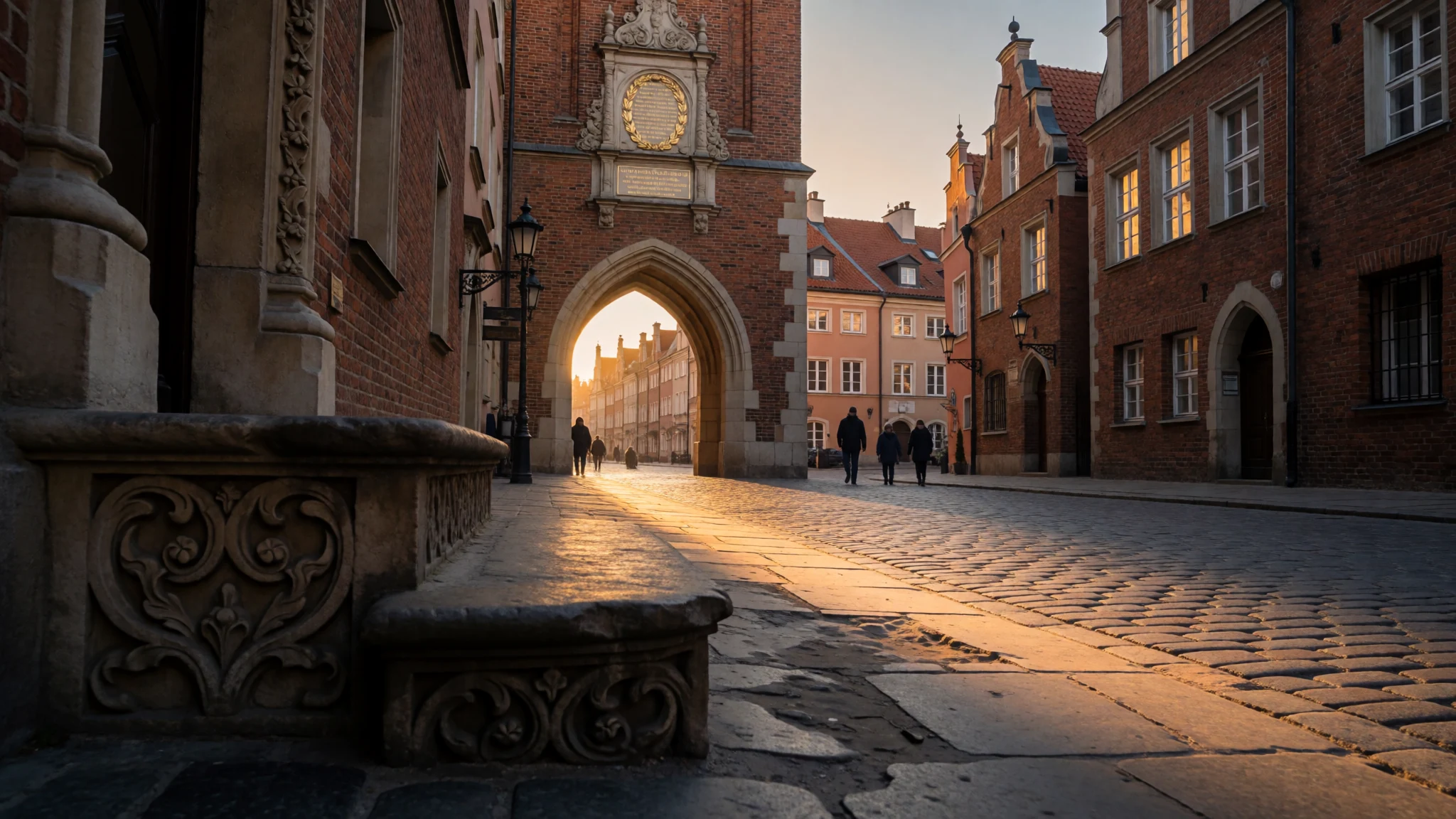
Gdańsk is a carefully rebuilt Hanseatic port on the Baltic, with merchant-house streets, shipyard history and beaches a short train ride away.
The place
Gdańsk sits on the Baltic coast of northern Poland, where the Motława river meets the southern edge of Gdańsk Bay, and it is the capital of the Pomeranian Voivodeship. It has a little under half a million residents. It runs into its neighbours Sopot, a seaside resort, and Gdynia, a younger port, to form the Tricity (Trójmiasto), a conurbation that works like one long town linked by a commuter railway. The historic core is compact and flat, only about 11 metres above sea level. It is organised around Długa, a straight ceremonial street that opens into the Long Market. Tall, narrow merchant houses with carved stone stoops, brick gables and gilded details line the streets and the quays. Almost all of it was reconstructed after the Second World War, so the old look is a patient rebuild rather than a survival, and that is part of what makes it interesting to walk. Beyond the centre are shipyards, cranes and big industrial sites that show the port's working life, and the beaches lie a short tram or train ride north. Summer brings crowds to the main street, especially when cruise passengers and weekend visitors from Warsaw overlap, but the quays thin out in the evening and the Baltic light lasts late. Winters are cold, grey and quiet. The city is also known by its German name, Danzig, which still turns up on older maps and in family histories, while the Kashubian name, Gduńsk, is heard across the wider region.
Its story
Gdańsk enters the written record in 997, when a biography of Saint Adalbert mentions his visit to a town called Gyddanyzc, though historians have not settled exactly where it stood. Excavations have found a fortified site on the hill of Góra Gradowa from the tenth century, and a later stronghold near the meeting of the Motława and the Vistula. Older traces reach back to the Bronze Age, with the Lusatian culture and the amber trade along the Amber Road. Through the medieval centuries the town passed between Polish and Teutonic Order control, joined the Hanseatic League and grew wealthy on grain, timber and amber. It enjoyed wide self-government while serving as the Polish Crown's principal seaport. That money paid for the Artus Court, the town hall and the rows of merchant houses. The Partitions of Poland brought Prussian rule in the late eighteenth century, followed by a place in the German Empire. Twice the city was a Free City, the second spell ending as the Second World War began, with fighting at Westerplatte, a peninsula by the harbour mouth. After 1945 the German-speaking population left or was expelled, Polish settlers arrived, and the ruined centre was rebuilt from old drawings, paintings and photographs. The result is a city whose identity has been argued over for centuries, and whose streets carry that argument in their stone.
What to see
- Main Town Hall — Long Market, Main Town
The Main Town Hall in Gdańsk has a tall brick tower that works as a landmark from most of the old centre. Inside, a museum shows the richly decorated chamber where the town council once sat, with exhibitions on the city's past. Go early, because tour groups arrive by late morning.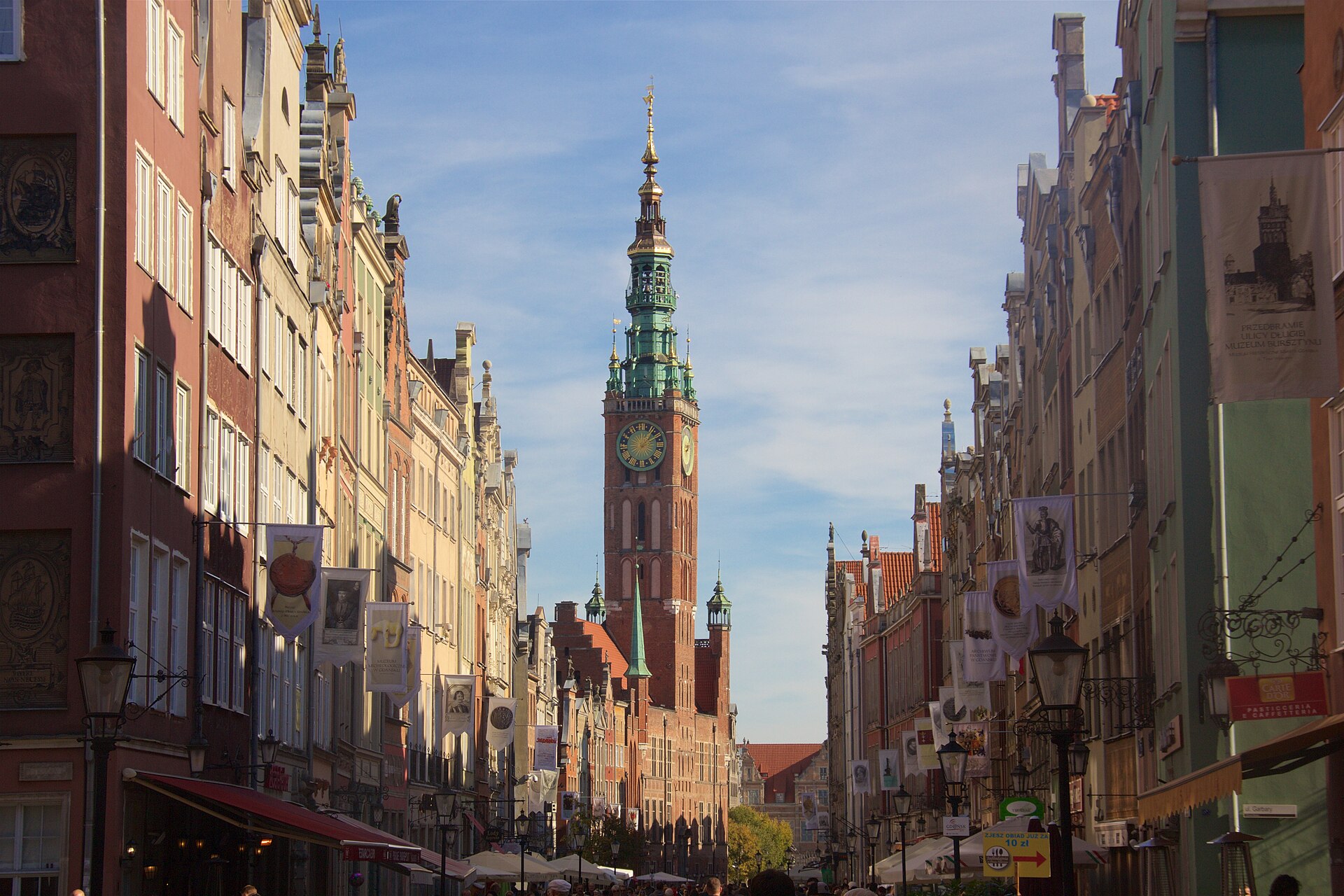
- Artus Court — Long Market, Main Town
Artus Court was a merchants' hall and meeting place, a statement of how rich and self-confident the city's patricians were. It served as an exchange and as the seat of brotherhoods of wealthy citizens. Today it is part of the Gdańsk History Museum, and the grand interior is worth the ticket.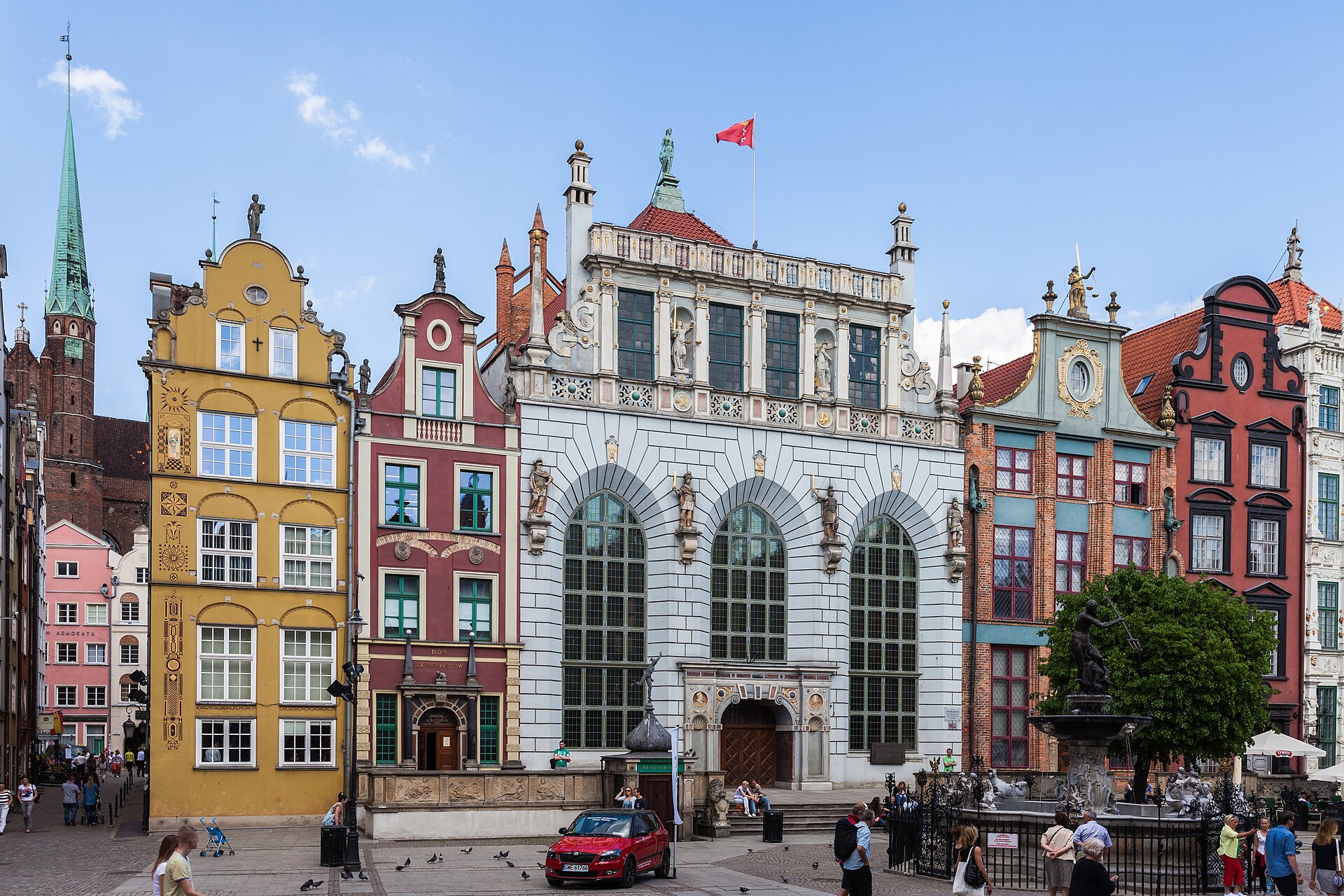
- Neptune Fountain — Long Market, Main Town
The bronze Neptune stands in front of Artus Court as the city's patron and a symbol of its link with the sea. The statue was hidden during the Second World War and returned to the Long Market afterwards. It is a favourite meeting point and a good place to start a walk.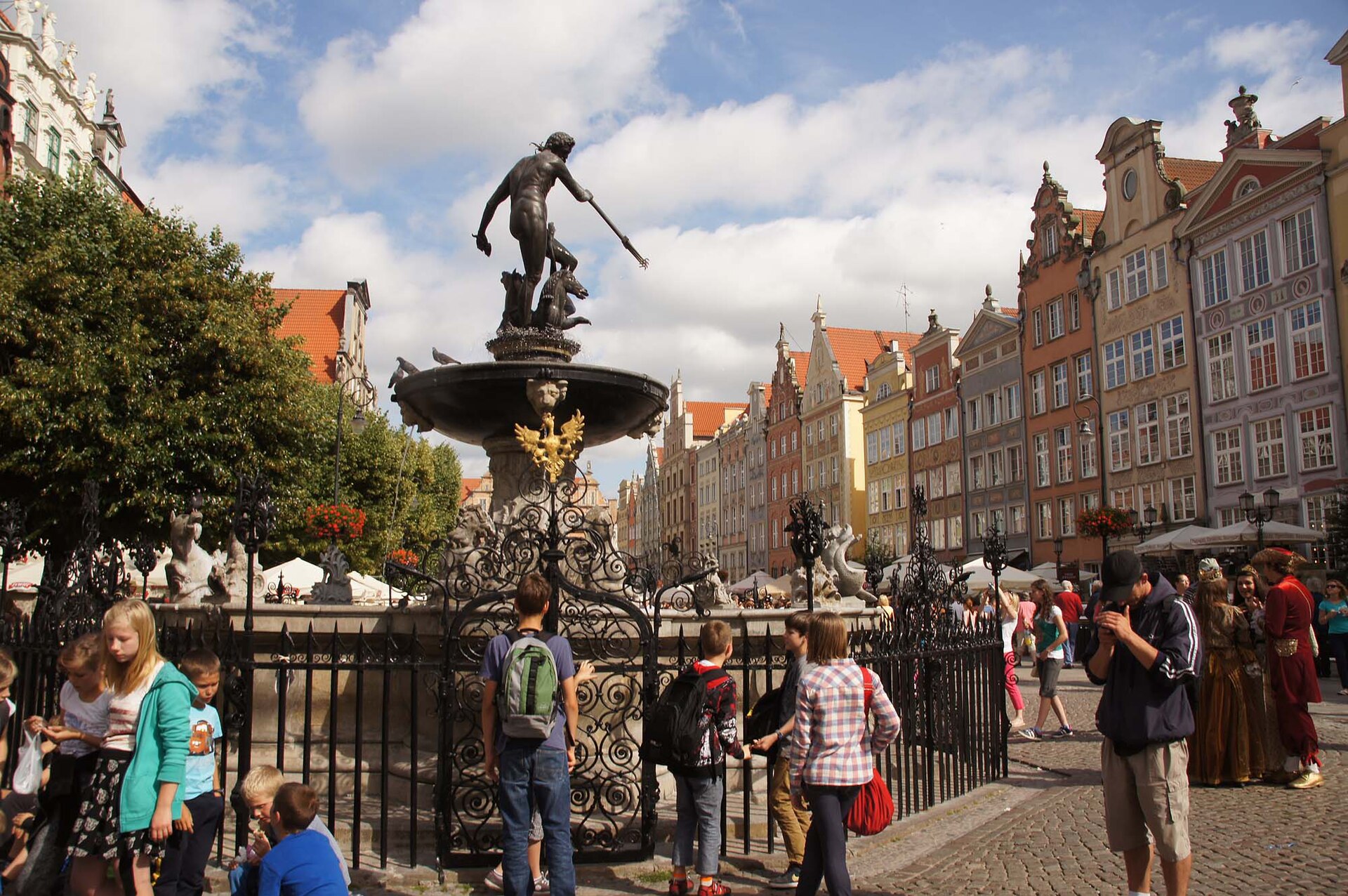
- Uphagen House — Długa Street, Main Town
Uphagen House is named after Johann Uphagen, the merchant who bought it in the eighteenth century. It was destroyed in the war and then completely rebuilt, and it now opens as a museum of a wealthy home. Furnished rooms show how a trading family lived, and it is quieter than the main street outside. - Highland Gate — Western edge of the Main Town
The Highland Gate, also called the Upland Gate, was built as part of the city's fortifications and now marks the western end of the Royal Way. Its Renaissance stonework is more decorative than defensive. It is worth walking through at the start of a day, before the main street fills up. - Motława waterfront and the Crane — Długie Pobrzeże, Main Town
The quay along the Motława is where Gdańsk's trading past is easiest to read. The old timber port crane, the Żuraw, rises above the water beside restored granaries and warehouses. Walk it in the evening, when the light turns the brick warm and the day-trippers thin out.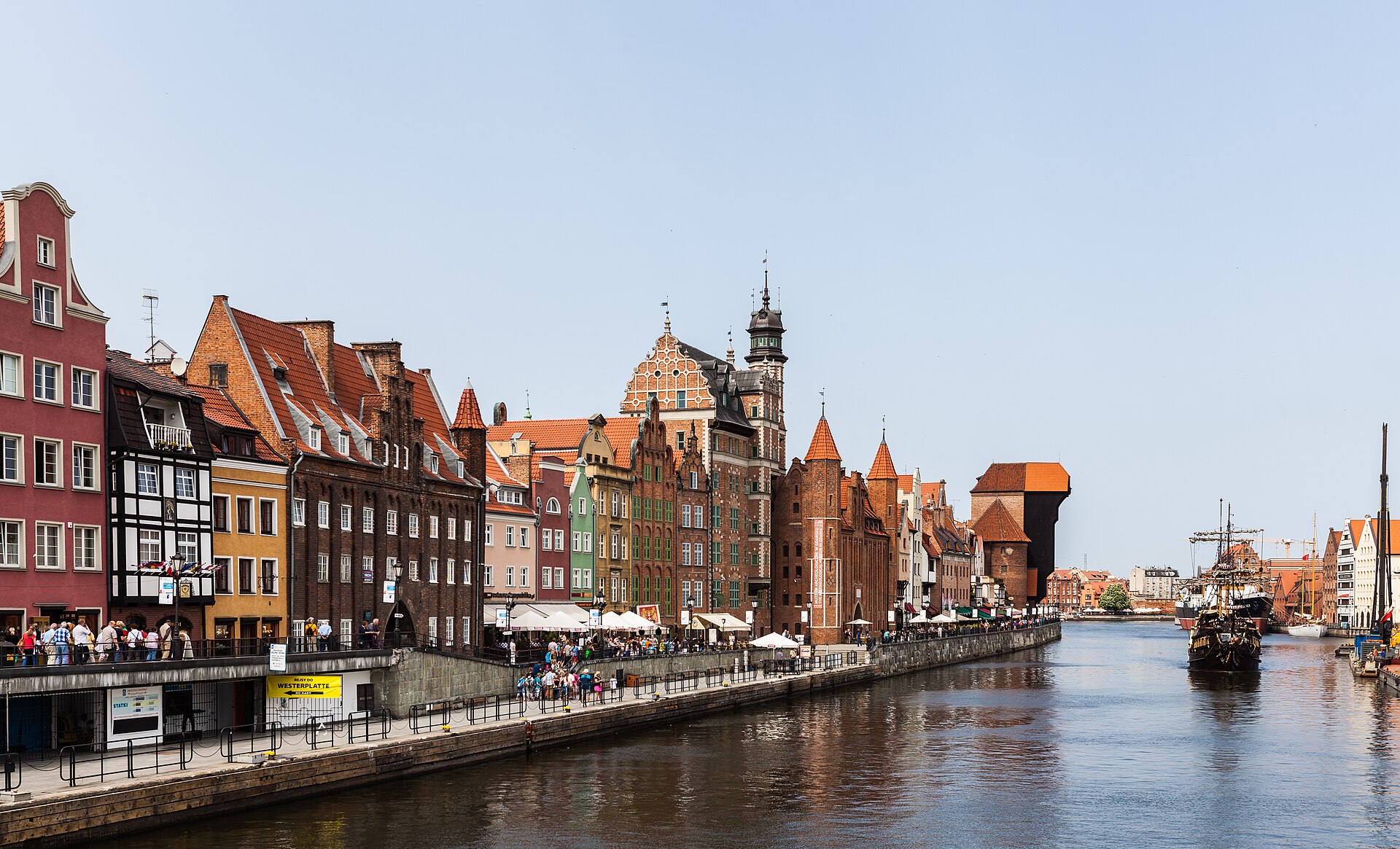
Culture
Gdańsk has a layered culture shaped by the sea trade, by Polish Catholicism and by centuries of German, Kashubian and Polish influence. Amber is the city's signature craft, worked and sold here for centuries, and stalls and workshops along Mariacka Street show it off as jewellery and small carvings. The surrounding Kashubian region has its own language and embroidery, which turns up in souvenirs and on festival days. The shipyards are central to the modern story, since the strikes there gave rise to the Solidarity movement, and that history is told seriously at the European Solidarity Centre and the Museum of the Second World War. Many residents have family stories of displacement, so talk about the past tends to be considered, not casual. The big brick churches, St Mary's above all, are active places of worship as well as landmarks, and Sunday mass is well attended. Summer fills the city with street musicians, an international amber fair and the long Saint Dominic's Fair in late summer, a market tradition that echoes the old trading days. In the evenings, bars and cafés spread out along the lanes behind the main street, and the mood is relaxed and friendly. In Gdańsk's churches, keep your voice low, cover bare shoulders and do not take photographs or walk around while a service is under way.
What to wear
Gdańsk's traditional dress is mostly regional. The Kashubian folk costume uses linen, wool and cotton, with bright embroidery of flowers and stylised motifs on aprons, bodices and shawls, often in blue, green and red on a pale or dark ground. Historic merchants and nobles favoured heavier cloth, with silk sashes and fur trim in the colder months. Amber beads and brooches finish many outfits. Folk dress is worn today at festivals, dance groups, weddings and village celebrations, not on the street. What people wear now is smart-casual and practical: dark jackets, jeans, trainers or boots, scarves in cooler months and a lot of layers, since the Baltic wind changes the feel of the day quickly. Summer is lighter, with beachwear in Sopot and on the Gdańsk seafront but ordinary clothes in the old town. Evenings out are casual rather than dressy. Visitors should pack for changeable weather: a windproof, waterproof jacket in most seasons, a warm layer even in summer evenings, and a hat and gloves for winter. The old streets are cobbled and uneven, so comfortable, closed shoes are better than thin sandals. For churches, carry a scarf or shawl to cover shoulders, and keep swimwear for the beach.
What to eat
- Żurek — Traditional restaurants in the Main Town
A sour rye soup, often served with sausage and a halved boiled egg, sometimes in a bread bowl. It is warming and tangy, and it suits the cold, windy months. Look for it in traditional Polish restaurants around the Main Town. - Pierogi — Milk bars and home-cooking eateries across the centre
Filled dumplings, boiled or fried, with fillings such as potato and cheese, meat, cabbage and mushroom, or seasonal fruit. They are inexpensive, filling and easy for vegetarians. Milk bars and small home-cooking eateries serve them in large portions. - Pomidorowa — Casual lunch spots and milk bars near Długa Street
Polish tomato soup, usually served with rice or noodles. It is simple, comforting and the kind of dish regulars praise at everyday canteen-style places. Order it as a starter or a light lunch before more walking. - Herring (śledź) — Restaurants along the Motława quays and seafront snack stalls
Pickled or marinated herring is a Baltic staple, served with onion, sour cream or oil, and often with boiled potatoes. It is a fair taste of the port's history. Fish also appears fried or smoked at seafront stalls. - Goldwasser — Bars and gift shops around Mariacka Street and the Long Market
A herbal liqueur with tiny flakes of gold leaf floating in it, tied to Gdańsk's old reputation as a rich trading city. It is sweet, strong and mostly a novelty, so a small glass or a bottle as a souvenir is enough.
Plan it
Best time. May–June and September for mild weather and long light, with fewer crowds than midsummer; July–August is warmer and best for the beaches but busy on the main street; winters are cold, grey and windy.
How long. 2–3
Getting there. Gdańsk Lech Wałęsa Airport has city buses to the main station, Gdańsk Główny, which takes under an hour. Trains from other Polish cities arrive at Gdańsk Główny, and the commuter railway links the Tricity. The old town is a short walk from the station.
Budget. mid
Tips
- Visit the Long Market and the quays early in the morning or in the evening to avoid cruise and day-trip crowds
- Use the Jakdojade app for buses and trams, or buy tickets from machines, kiosks and drivers
- Carry a little cash for small stalls and markets, though cards are widely accepted
- Pack a windproof layer even in summer, as the Baltic breeze can be cool
- Book museum visits ahead in July and August, and check the official site, gdansk.pl, for current hours
Etiquette
- Dress modestly and stay quiet in churches, especially during services
- Treat war and Solidarity museums with a serious tone, as many local families have personal links to the history
- Wait your turn when queuing at kiosks and bakeries
Nearby
Sources
- Wikidata Q1792 (CC0)
- Wikipedia: Gdańsk (rev 1384685498) (CC BY-SA 4.0)
- Wikivoyage: Gdańsk (rev 5402675) (CC BY-SA 4.0)
- Diego Delso, Dlugie Pobrzeze St., Gdansk (photo 01) (CC BY 3.0)
- Diego Delso, Dlugie Pobrzeze St., Gdansk (photo 02) (CC BY 3.0)
- Diego Delso, Artus Court, Gdansk (CC BY 3.0)
- Barbara Maliszewska, Gdańsk, fontanna Neptuna (CC BY-SA 3.0 pl)
- Diego Delso, Great Armoury, Gdansk (CC BY 3.0)
- Mike Peel, The Main Town Hall in Gdańsk (CC BY-SA 4.0)
- Jroepstorff, Museum of World War II in Gdansk (CC BY-SA 4.0)
- Scotch Mist, Gdańsk 2023 (CC BY-SA 4.0)


