Ferrara
Ferrara, Italy
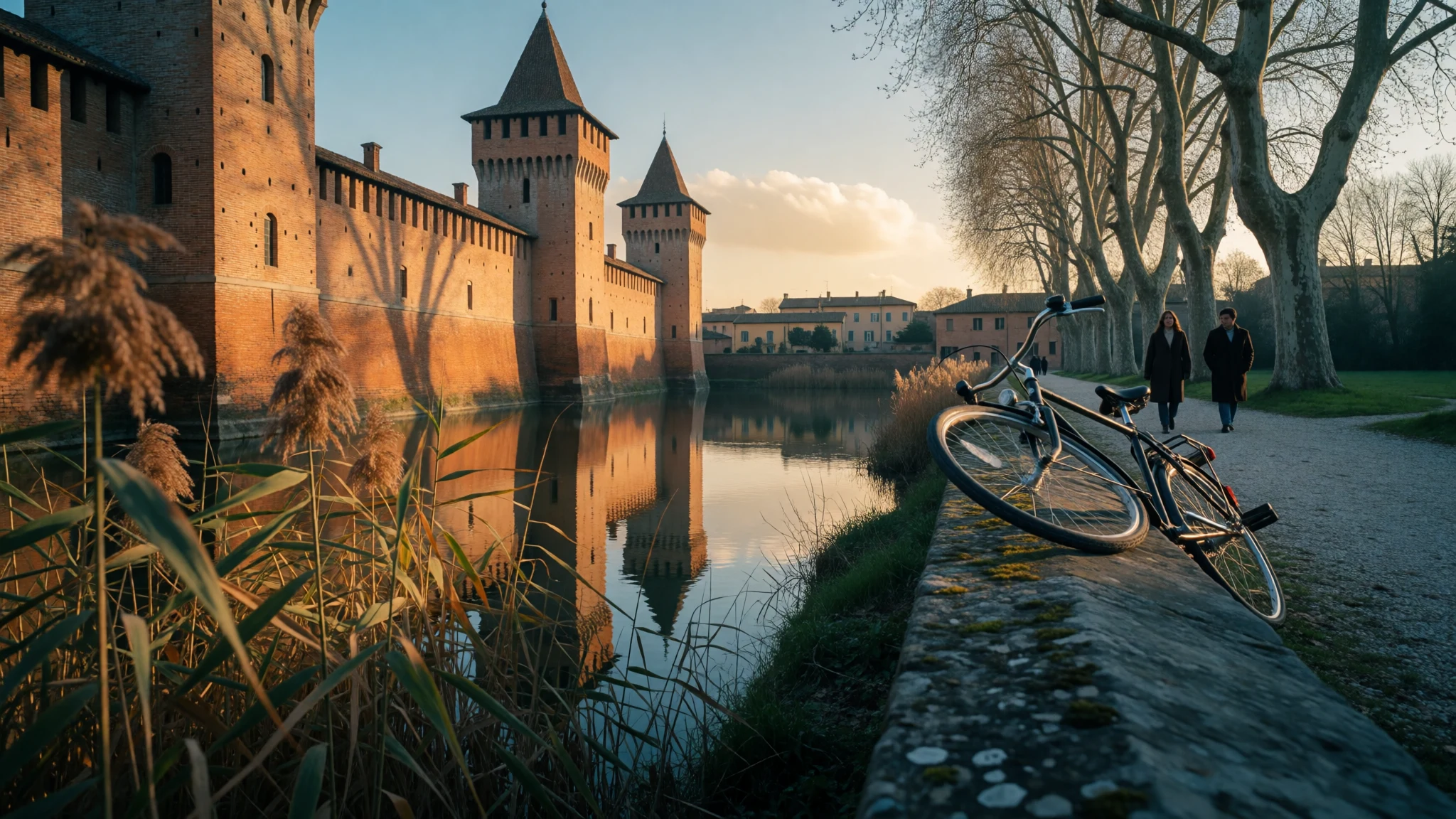
Ferrara is a calm Renaissance city of brick palaces, a moated castle and cycling paths along its old walls, far quieter than its famous neighbours.
The place
Ferrara lies on the flat Po plain in Emilia-Romagna, northern Italy, about 44 km north-east of Bologna and 87 km south of Venice. Around 129,000 people live in the comune, and the ground beneath them is only 9 metres above sea level, so the whole city is level and bicycles are a main way of getting about. The river Po runs a few kilometres to the north, while a smaller channel, the Po di Volano, passes close to the centre. The historic core is a Renaissance city planned for a court: streets are broad by Italian standards, palaces sit behind brick and marble fronts, and a moated castle stands at the heart of it all. Much of the circuit of walls survives and now serves as a long, shaded path for walking and cycling. UNESCO has listed the city, yet the centre feels lived in rather than preserved, with students, shoppers and office workers filling the squares. Ferrara is far calmer than Venice or Florence, and many visitors come only for an afternoon from Bologna. That is a pity, because an overnight stay brings quiet evenings and nearly empty streets in the morning. Summers are hot and humid, winters cold and often foggy, and spring and autumn are the kindest seasons for walking.
Its story
Ferrara's story begins in the wetlands near the old mouth of the Po, where the Etruscans founded the port town of Spina around the sixth century BC. Spina slipped out of memory until drainage works in the Comacchio marshes, early in the twentieth century, exposed a cemetery with thousands of graves. Ferrara itself has murkier beginnings. Scholars debate whether it had Roman roots, and one theory points to two small Byzantine settlements facing each other across the river: a cluster around a church of St George on one bank, and a fortified camp on the other to guard against the Lombards. The first written mention comes in the eighth century, when the Lombard king Desiderius seized the town from the Byzantine authorities at Ravenna. The city's great age came later under the House of Este, who ruled as a ducal court. Under Duke Ercole I the city drew artists, scholars and wealthy families, and the new streets and palaces date from that confident period. When the Este line moved its seat to Modena at the end of the sixteenth century, Ferrara passed to the Papal States and slowly lost its glitter. Water remained a worry throughout, and the Po caused serious floods as recently as 1951.
What to see
- Castello Estense — Historic centre
The Este family's castle rises from a water-filled moat right in the middle of town, a block of brick with four corner towers begun in the late fourteenth century. It is one of the few medieval castles in Europe to keep its moat. Check the official site for opening times.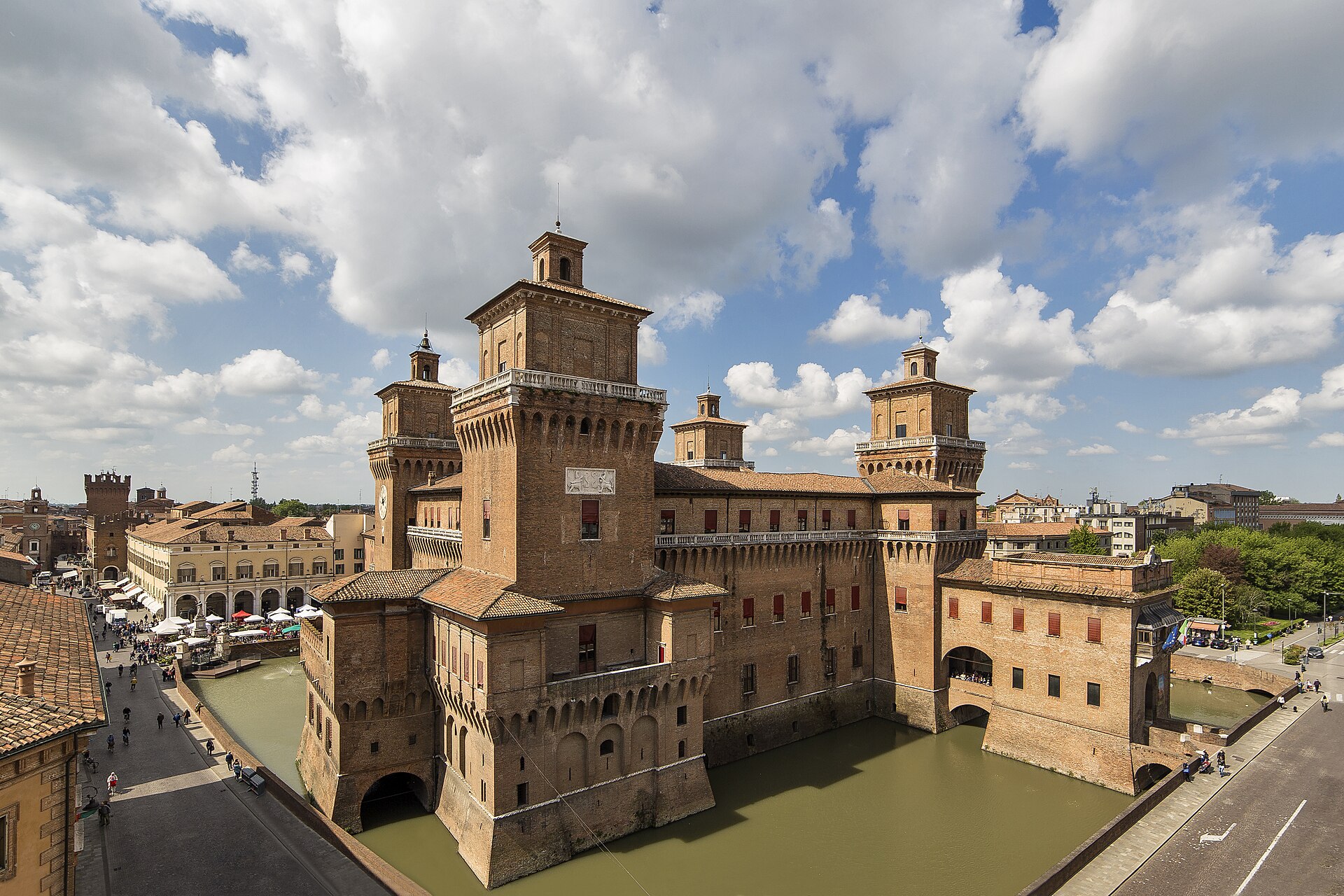
- Cattedrale di San Giorgio Martire — Piazza Trento e Trieste
The cathedral was begun in the twelfth century, and its lower storeys still show the plain arches and carved detail of the Romanesque style. It faces the main square, next to the municipal palace, and the contrast between the two makes a good first stop for orientation.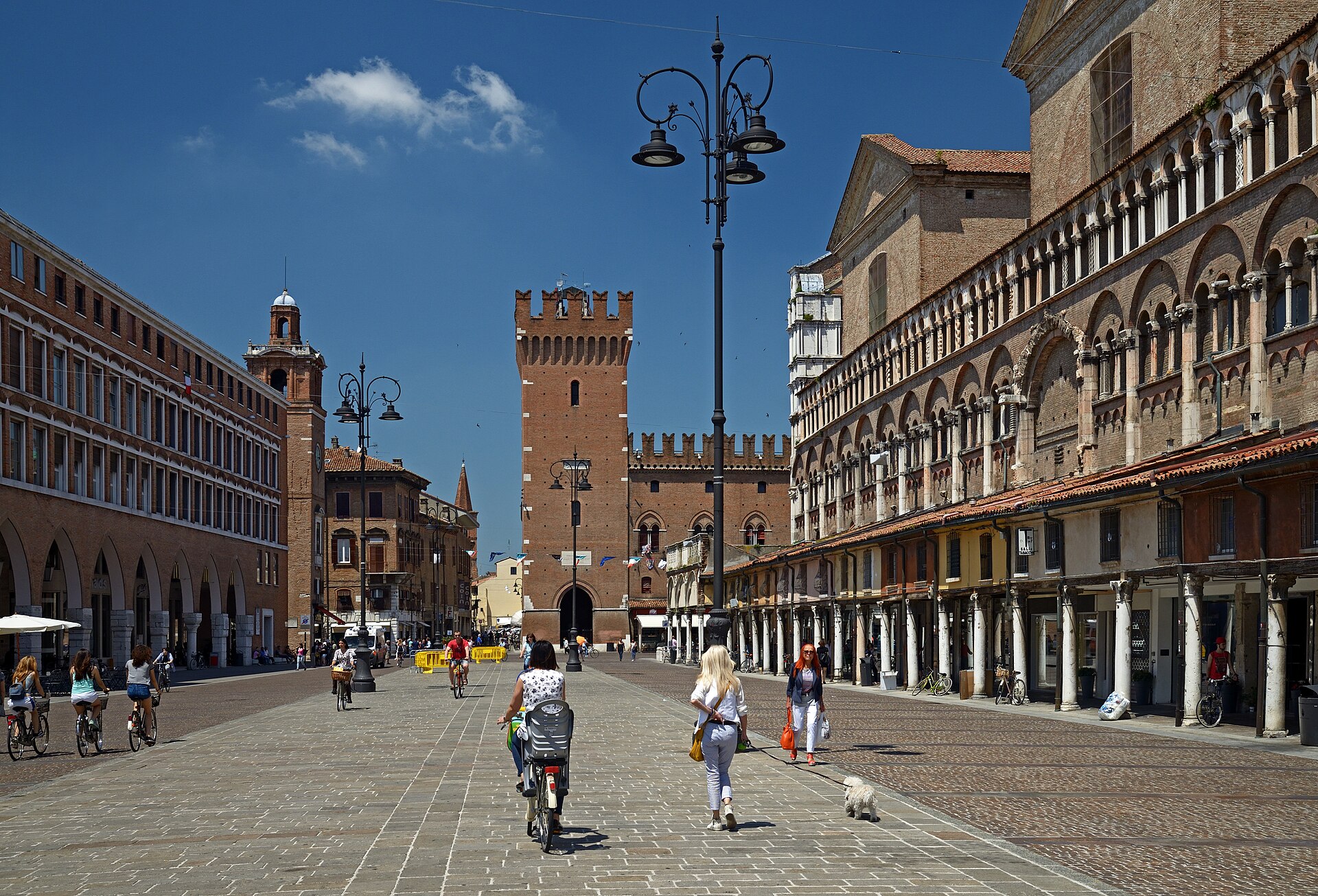
- Palazzo Schifanoia — South-east of the centre
Schifanoia was the Este family's pleasure house inside the city walls, a place for leisure rather than government. Its star is the Hall of the Months, where frescoes lay out the calendar in bands of myth, astrology and court life. Allow time to study the detail. - Palazzo dei Diamanti — Corso Ercole I d'Este, northern centre
The palace takes its name from the thousands of pointed marble blocks that cover its outer walls, which catch the light at different angles through the day. Upstairs is the National Gallery, while the ground floor hosts temporary exhibitions that often draw the biggest crowds.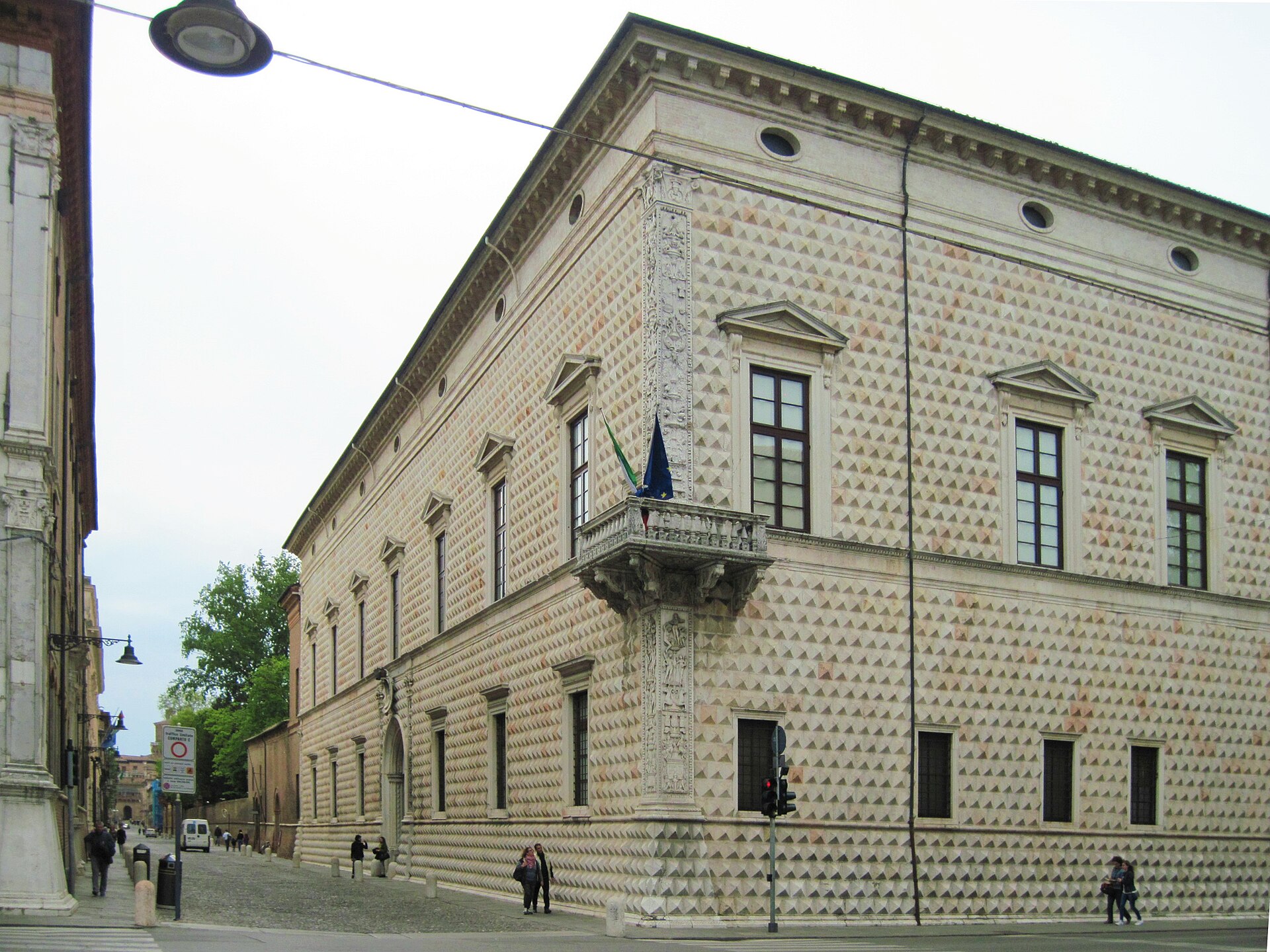
- Palazzo Costabili and the Archaeological Museum — Via XX Settembre, south-east of the centre
The National Archaeological Museum fills this Renaissance palace and is the best place to meet Spina, the lost Etruscan port. Most exhibits are objects from Greek and Etruscan tombs, including fine gold ornaments, pottery and jewellery that explain the city's far older past.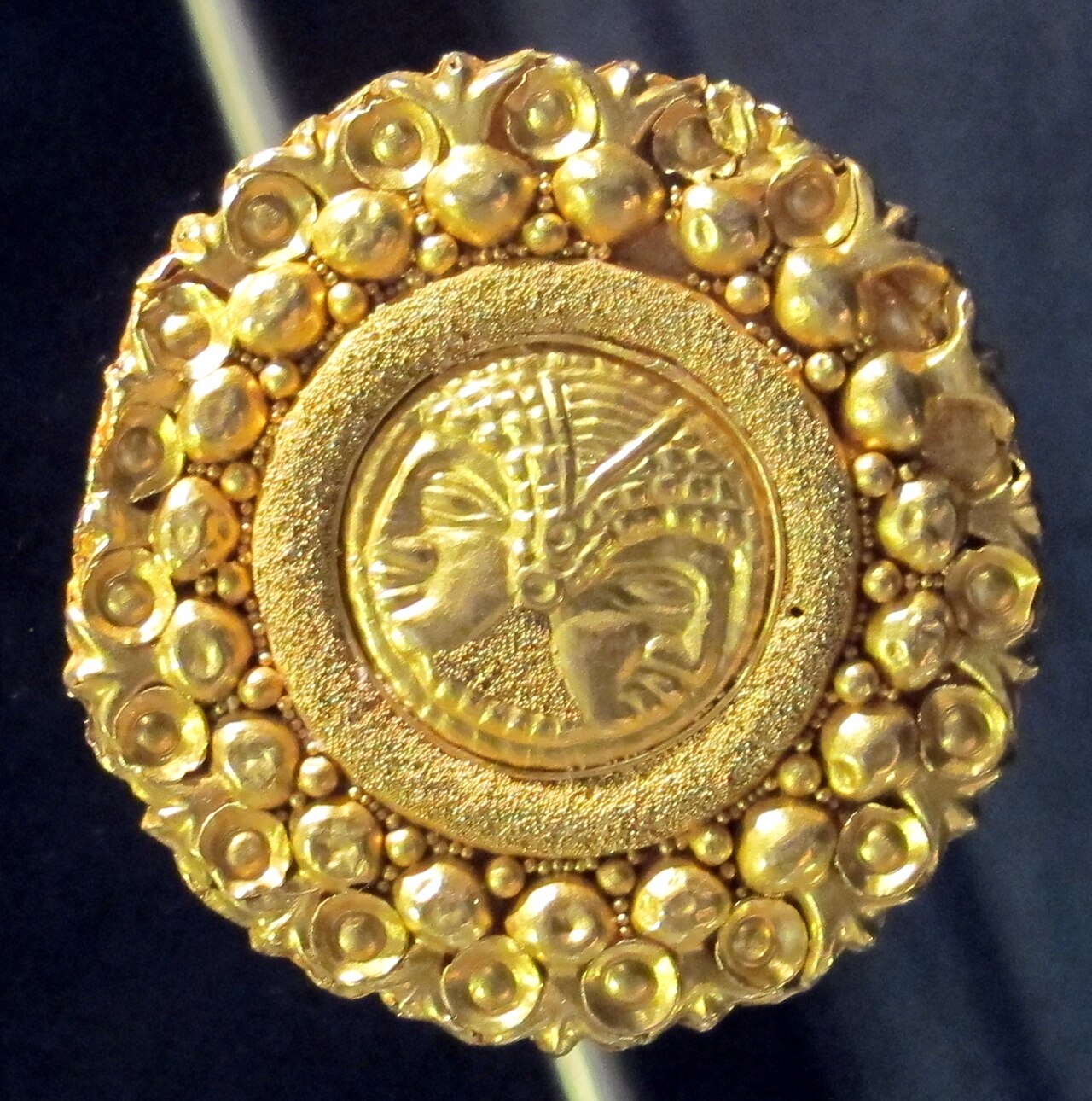
- The Jewish quarter and synagogue — Via Mazzini area, near the cathedral
Three narrow streets near the cathedral form the old Jewish quarter, which was walled as a ghetto for more than two centuries. The synagogue and the community museum tell a long story of trade, learning and survival. Check the official site or the community's pages for visiting arrangements.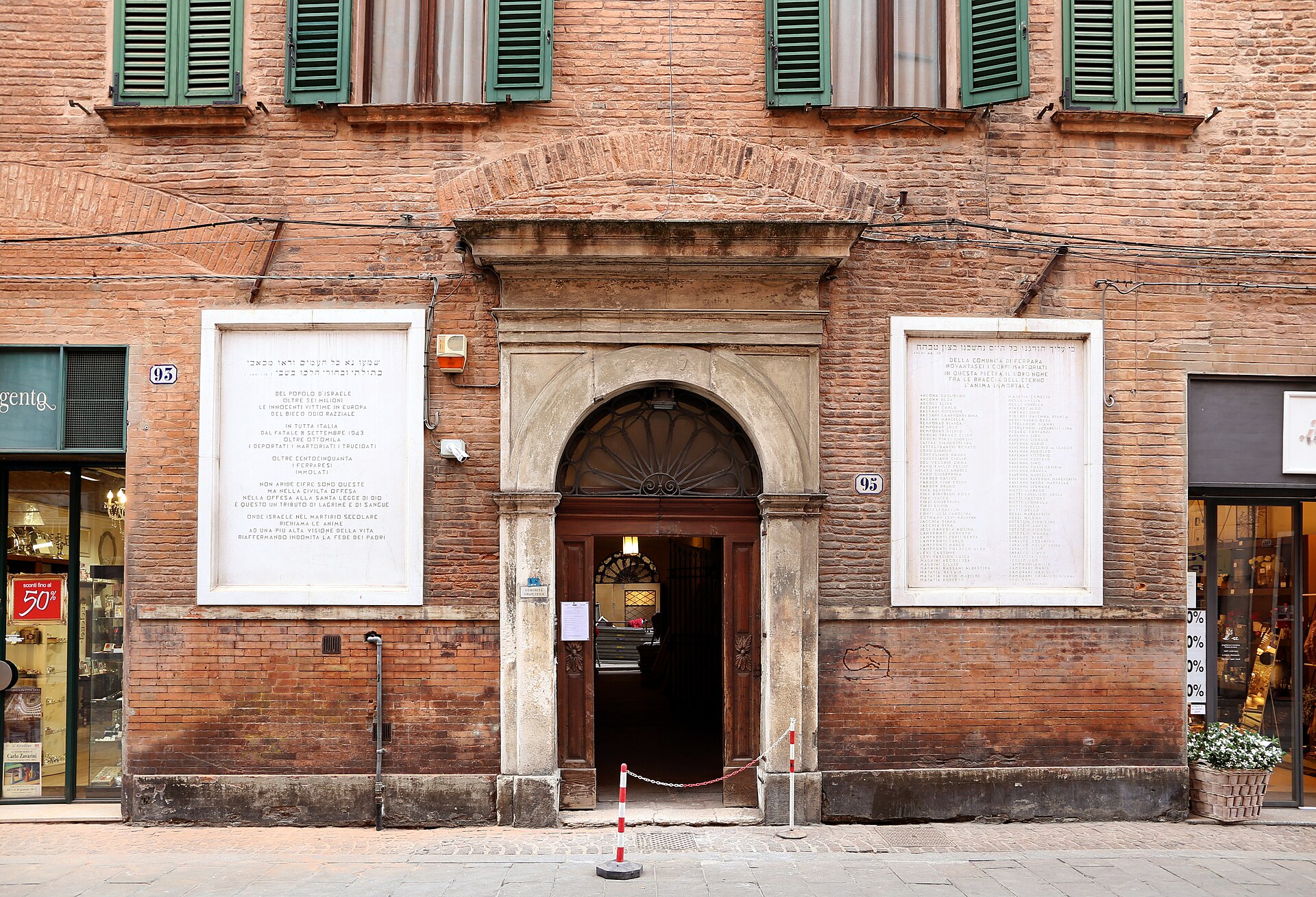
Culture
Ferrara's character comes from its court past and from the communities that made it work. The Jewish community has lived here without interruption since medieval times, which sets the city apart in the region. Its members flourished under the Este, were confined to a walled ghetto after papal rule began, and were released only with Italian unification in the nineteenth century. Their synagogue, museum and quiet streets are still part of everyday Ferrara, and well worth an unhurried visit. The Este left a taste for pageantry that survives in the Palio, a historic contest between the city's districts held in spring, with parades in period costume. Daily life is gentler. The evening stroll, or passeggiata, fills the main streets as families, students and older couples walk, chat and stop for an aperitivo. Cycling is part of local identity, with riders of every age crossing the cobbles in office clothes, so visitors on foot should stay alert for bells. Meals are unhurried and lunch often closes shops for a couple of hours in the middle of the day, which is worth planning around. People tend to be reserved at first but helpful, and a few words of Italian go a long way. Cover your shoulders and knees when entering the cathedral or any church, and ask permission before taking photographs inside the synagogue or of people at prayer.
What to wear
Ferrara has no everyday folk costume, but its textile history belongs to the Renaissance court. Silk, velvet and brocade defined the Este wardrobe, with fitted doublets for men and long, richly embroidered gowns for women, and these styles come back in the Palio each spring, when district teams parade in period dress with banners and trumpets. Frescoes in the palaces and portraits in the galleries show the cut and colours of the age. In daily life, people dress smartly but simply. Dark jeans, linen shirts, light jackets and good leather shoes are common, and scarves appear as soon as the autumn fog rolls in. Cyclists often ride in work clothes. Visitors should pack for the season: breathable cotton or linen and a hat for hot, humid summers, and a warm coat, scarf and waterproof layer for damp winters. Comfortable flat shoes matter more than anything else, since the old centre has cobbles and long walks, and the city wall path is best done in trainers. For churches and the synagogue, carry a light scarf or shirt to cover shoulders and knees. Shorts and sleeveless tops are fine on the street, but smarter casual wear fits better for evening restaurants.
What to eat
- Cappellacci di zucca — Traditional trattorias in the old centre
Large pasta parcels filled with sweet pumpkin, often finished with melted butter, sage and grated hard cheese. The filling is mildly sweet, a legacy of the court kitchens. Look for them on the menu at family trattorias around the cathedral. - Salama da sugo — Traditional trattorias and delicatessens
A soft, rich pork sausage, aged and then slowly cooked, traditionally served with mashed potato. It is a heavy, wintry dish with deep flavour, so share a portion if the rest of the meal is long. - Coppia ferrarese — Neighbourhood bakeries and morning stalls
A twisted, crusty bread shaped like a pair of horns, crisp outside and soft inside. It is the local daily bread and appears on most tables, but is best bought fresh and still warm for breakfast. - Pasticcio di maccheroni — Older restaurants and festive-day menus
A baked pasta pie with a sweet shortcrust shell, filled with macaroni, ragù and béchamel. The mix of sweet pastry and savoury filling is unusual to visitors, and it is often served on festive occasions. - Tenerina — Pastry shops and cafés in the centre
A thin, dense chocolate cake with a crackled top and a soft, almost fudgy middle. It is usually dusted with icing sugar and sold in slices, which suit coffee in a bar near the castle moat.
Plan it
Best time. April–May and September–October, when days are mild and good for walking or cycling the walls. July and August are hot and humid, and winter is cold and often foggy, though the city is quiet then.
How long. 1–2
Getting there. Fly to Bologna (the nearest major airport) or Venice, then take a train; Ferrara is on the line linking Florence, Bologna and Venice. The last leg from the station to the old centre is a short walk or local bus.
Budget. mid
Tips
- Stay at least one night, as the city is most atmospheric early in the morning and in the evening, after day trippers leave.
- Hire a bicycle and ride the top of the city walls for an easy introduction to the layout.
- Check the official site (http://comune.fe.it/) for castle, museum and exhibition opening times, and book popular exhibitions ahead.
- Carry some cash for small bars and bakeries, and expect a lunchtime break when many shops close.
Etiquette
- Cover shoulders and knees in churches and the synagogue.
- Give way to cyclists and keep to the edge of the lanes marked for bikes.
- Greet staff with a quick 'buongiorno' on entering shops and bars.
Nearby
Sources
- Wikidata Q13362 (CC0)
- Wikipedia: Ferrara (rev 1380107678) (CC BY-SA 4.0)
- Wikivoyage: Ferrara (rev 5403138) (CC BY-SA 4.0)
- Castello Estense — Nbisi (CC BY-SA 4.0)
- Museo Archeologico Nazionale - MIBAC — Sailko (CC BY 3.0)
- Portrait by Bartolomeo Veneto (Public domain)
- Piazza cattedrale, Ferrara — Nicola Quirico (CC BY 3.0)
- Piazza Trento e Trieste — Ввласенко (CC BY 3.0)
- Palazzo dei Diamanti — Lungoleno (CC BY-SA 2.5)
- Ferrara synagogue — Sailko (CC BY 3.0)
- Servizio fotografico: Ferrara, 1973 — Paolo Monti (CC BY-SA 4.0)


