Everglades National Park
Everglades National Park, United States
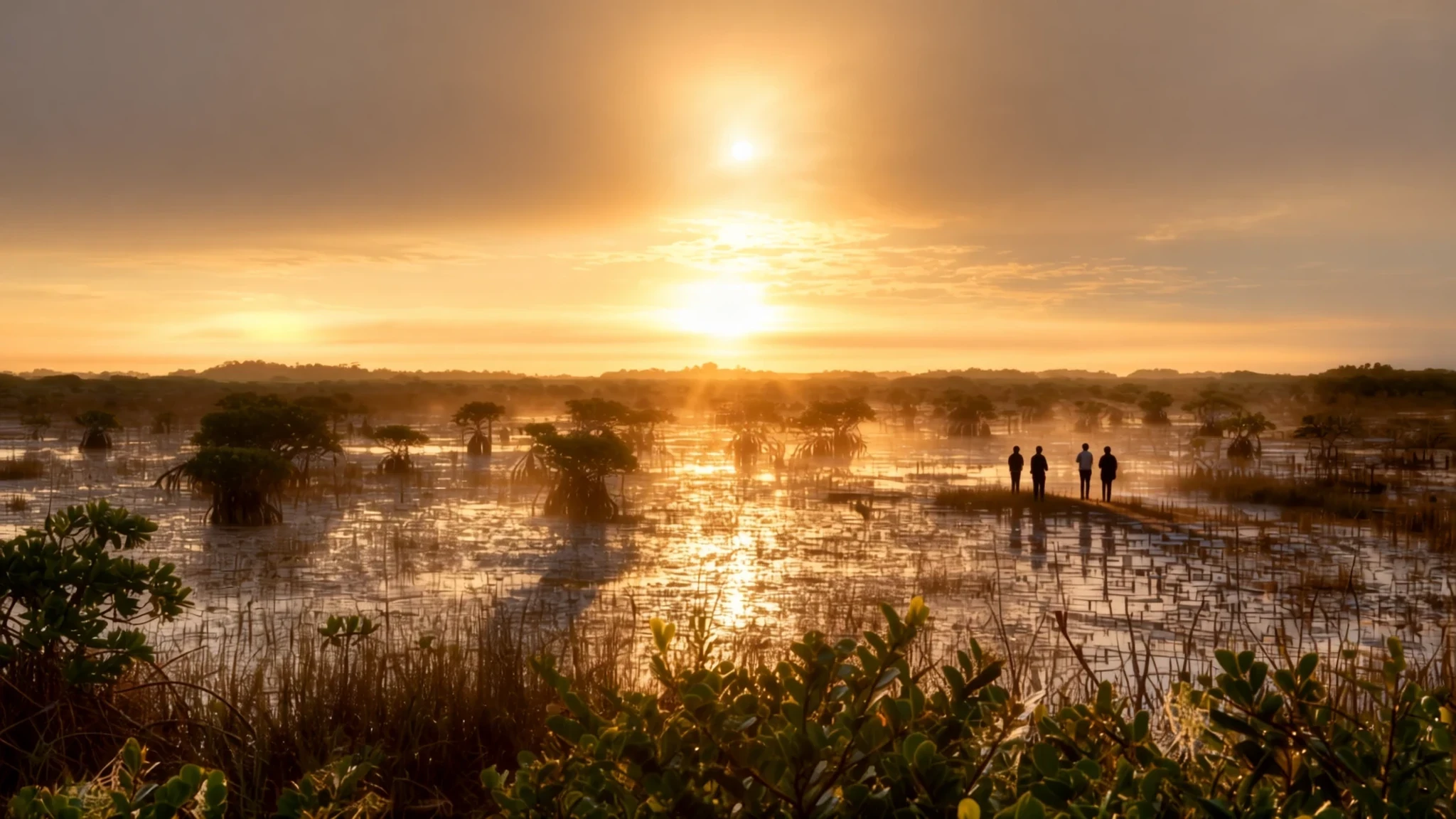
Everglades is a slow river of grass where alligators, wading birds and manatees share a watery landscape built for water rather than for hikers.
The place
Everglades National Park protects the southern fifth of the original Everglades ecosystem in Florida, a mosaic of sawgrass prairie, cypress domes, mangrove channels and shallow bays. It covers more than 1.5 million acres, and most of that land is designated wilderness. The water moves very slowly, draining from Lake Okeechobee towards Florida Bay, so the whole region reads as one broad, gentle sheet rather than a river with banks. About a million people visit each year, but most stay near the main roads and the visitor centres at the edges, and the interior feels far emptier than the figures suggest. The park is a major breeding ground for tropical wading birds, and its mangrove forest is the largest in the Western Hemisphere. Wildlife is varied: the Florida panther, the American crocodile and the West Indian manatee all live here, alongside hundreds of bird species and dozens of fish and reptile species. Much of South Florida's fresh water is stored in the Biscayne Aquifer and recharged through the park. The land sits very low, so the boundary between fresh and salt water is fragile, and scientists are watching it closely as sea levels rise. The park is also a UNESCO World Heritage Site and a Ramsar wetland, a combination shared by only three places in the world. Visitors should expect heat, mosquitoes and long stretches without services, but the rewards are quiet ones: birds lifting off the water and slow boats gliding past mangroves at dusk.
Its story
Everglades National Park exists because generations of people tried to drain its water away. Humans have lived in and around these wetlands for thousands of years, adapting to a landscape that floods and dries with the seasons. From 1882 onwards, planners began to see the marsh as wasted land, and schemes to drain it for farming and housing gathered pace. Over the following decades, canals and water control works redirected the slow southward flow, with consequences for birds, fish and the aquifer beneath. Conservationists argued instead that the wetlands had their own value, and that a whole living system deserved protection, not just a scenic peak or canyon. The park was established in 1947 as the first national park created to safeguard a delicate ecosystem, which was unusual when most parks had been set aside for dramatic scenery. Later decades turned towards repair: restoring water flow, controlling invasive species and tracking how rising seas push salt into freshwater habitats. In 1976 the park was named a biosphere reserve, in 1979 a World Heritage Site and in 1987 a Ramsar wetland, recognitions that mark its journey from a problem to be drained to a system to be kept alive. Today the Everglades is valued for the very quality earlier generations tried to change: the slow, shallow water that moves from Lake Okeechobee to the bay.
What to see
- Florida Bay — Flamingo, southern tip of the park
About 85% of Florida Bay lies inside Everglades National Park, and the southern end of the park is a good base for exploring it. Flamingo, at the park's southern edge, has the boat docks and marina from which tours and canoes depart. The bay holds more than 200 small islands called keys, separated by shallow channels that suit paddlers and careful skippers alike.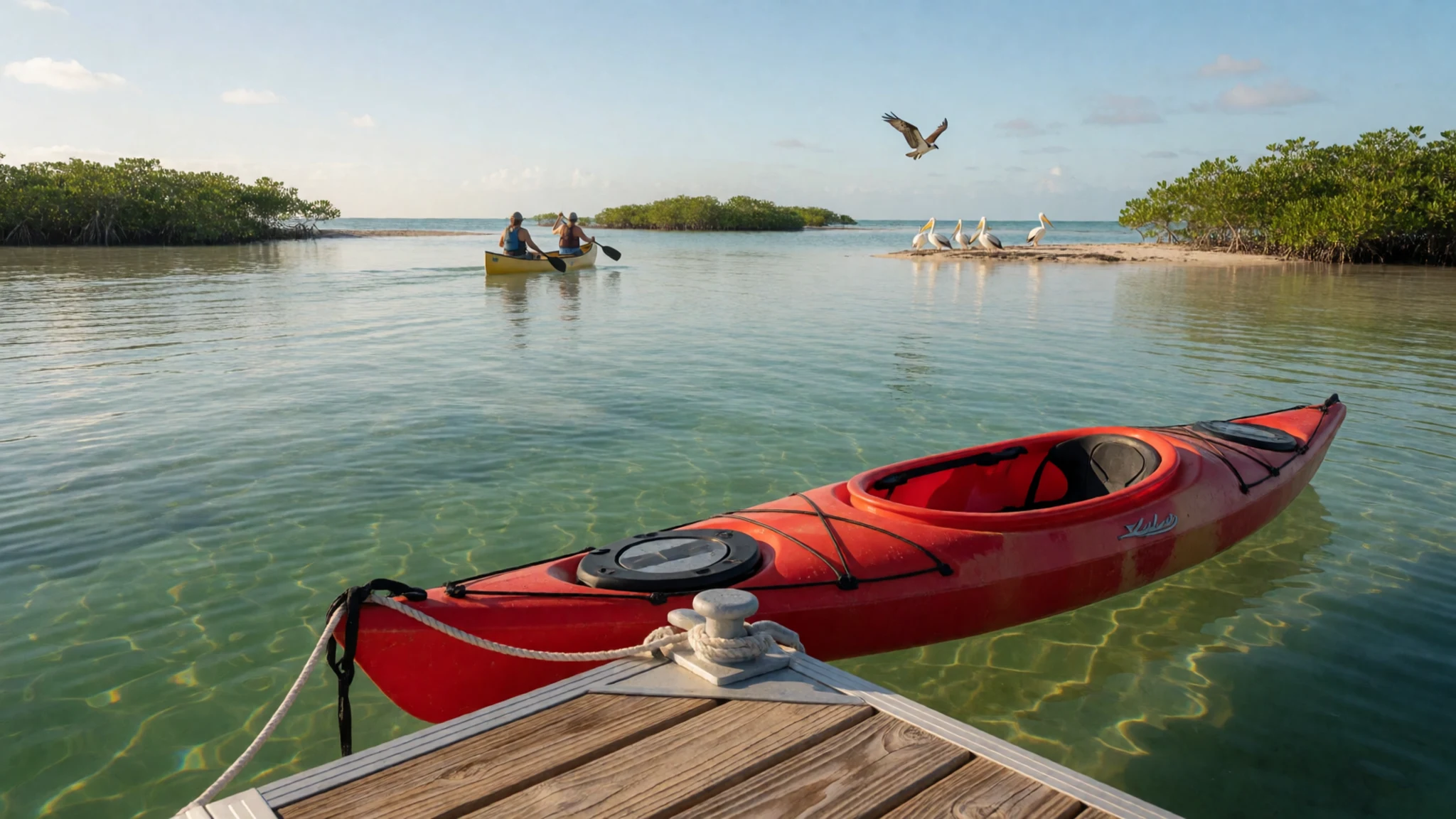
- Royal Palm and the Anhinga Trail — Royal Palm, southern park
Royal Palm and the Anhinga Trail make the easiest introduction to the park's wildlife, especially in the dry season, when water levels fall and animals gather around the remaining pools. The boardwalk runs over sawgrass water where alligators, herons and anhingas can often be watched at close range. Go early, when light is soft and the trail is quieter, and carry plenty of water.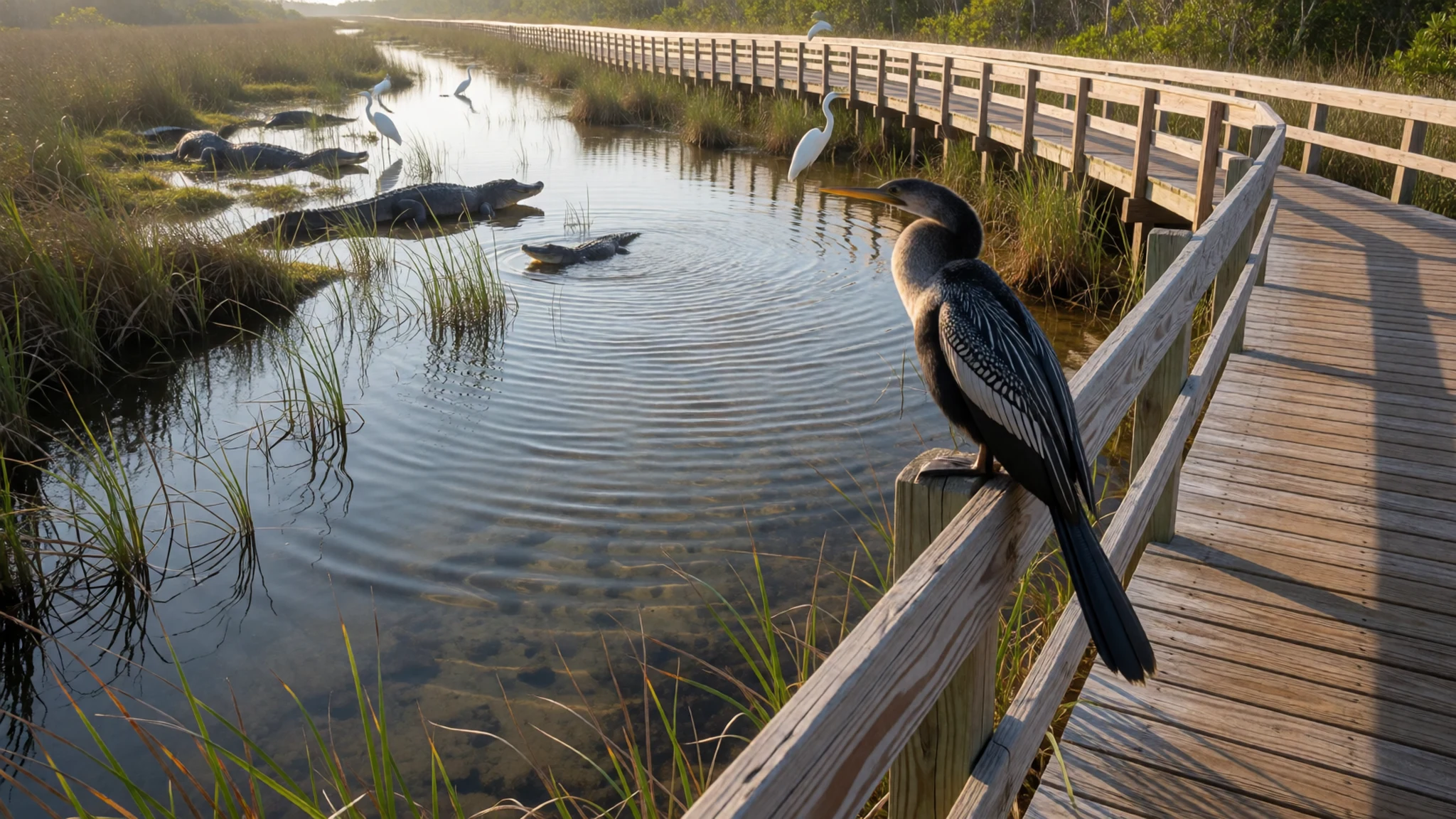
- Shark Valley tram tour — Shark Valley, north-east of the park
Shark Valley runs a guided, narrated tram tour of about two hours along a loop road through the heart of the River of Grass. Tours leave from the visitor centre, and the open tram gives a good view of wading birds, alligators and the wide sawgrass horizon. It suits anyone who wants the interior without walking far. Book ahead in the busy dry season, when seats can run short.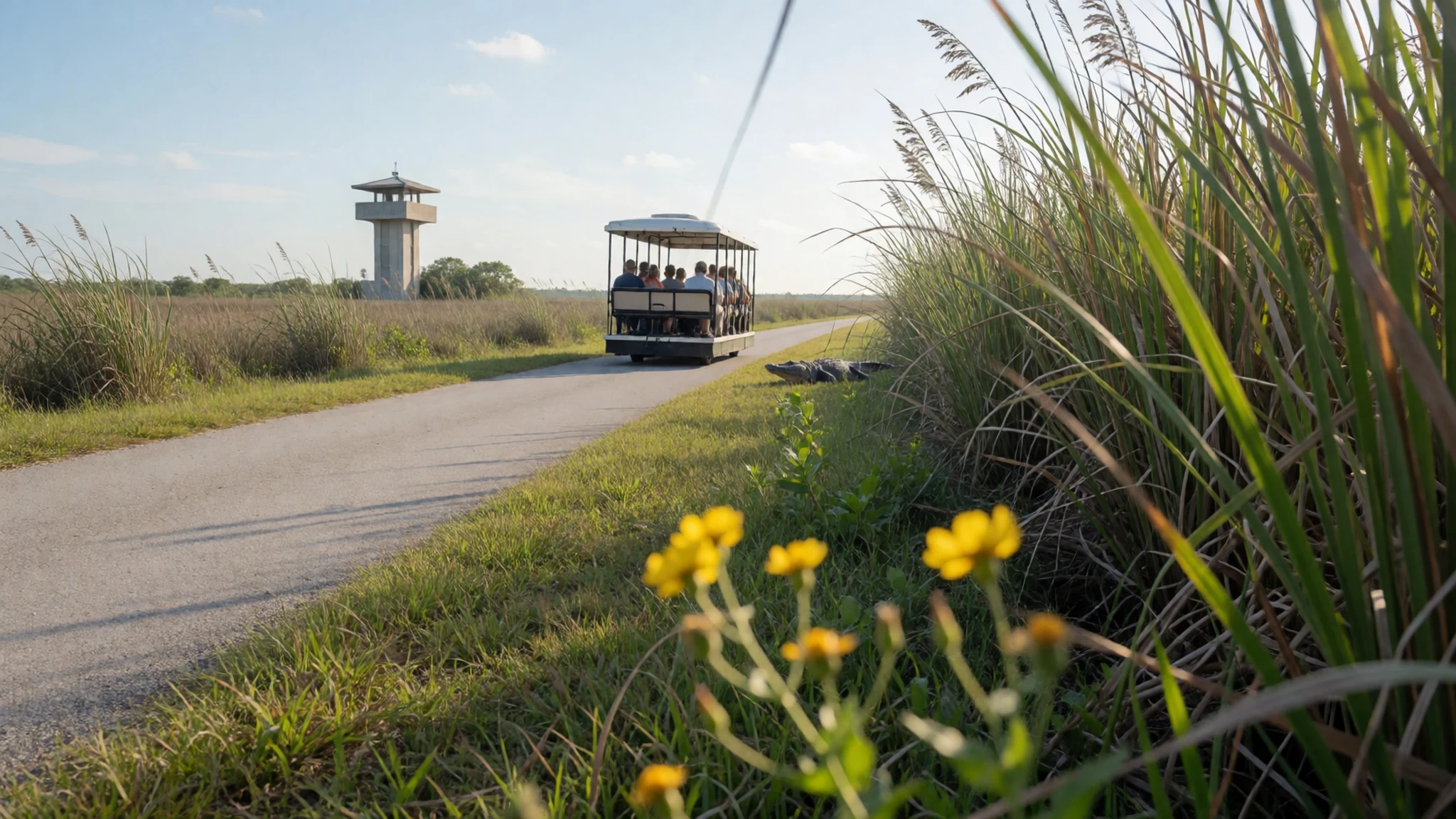
- Ten Thousand Islands boat tour — Gulf coast, western park
The narrated boat tour of the Ten Thousand Islands follows mangrove-lined channels along the park's Gulf coast, where tidal creeks wind between small islands. The tour explains how the mangroves shape the coastline. Canoe rentals are available for exploring nearby waterways at a slower pace. Reservations are strongly encouraged in the dry season.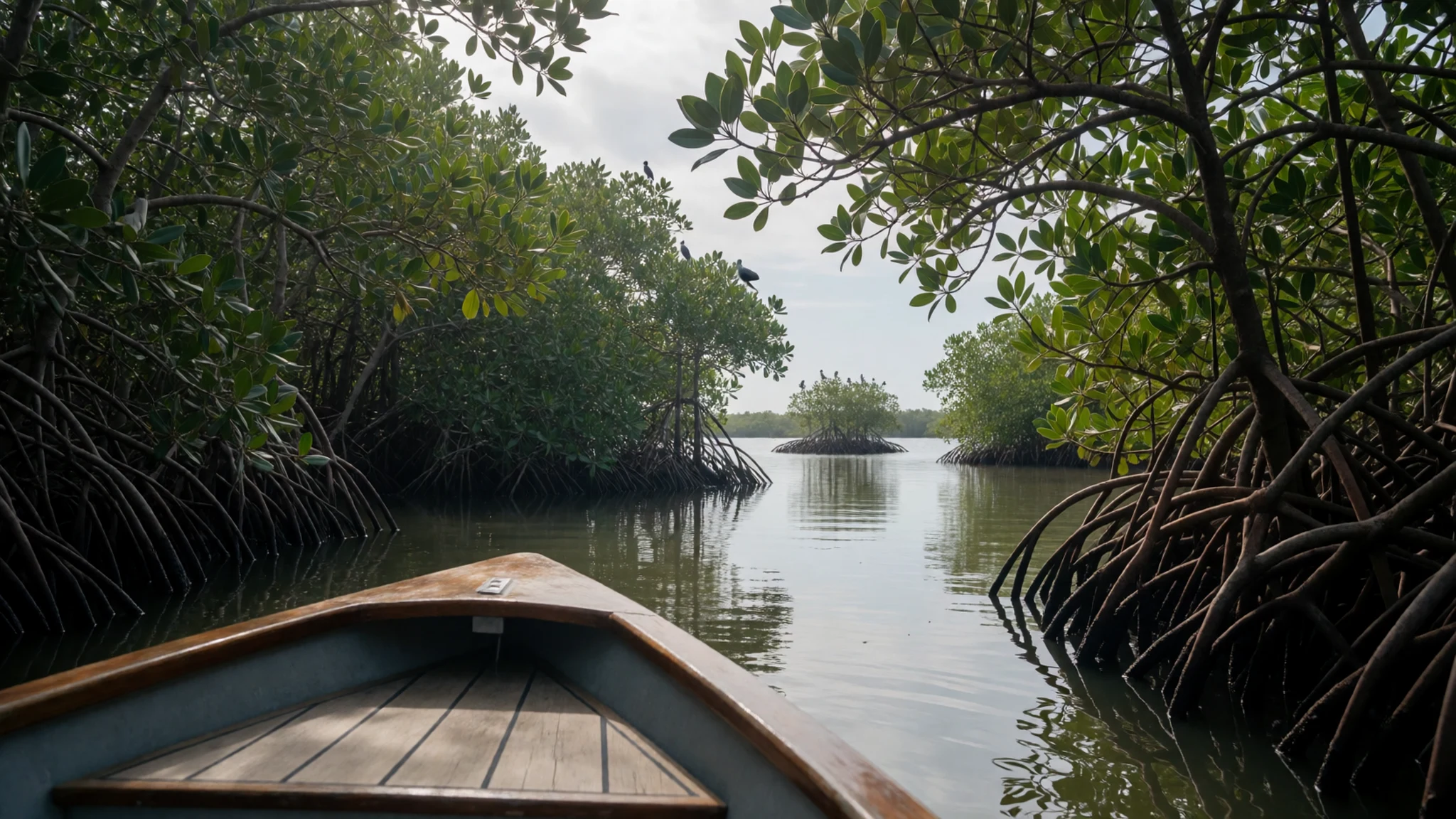
- Cypress airboat rides — Wetland edges and cypress domes
Cypress airboat rides are open year round and offer a fast, low view across the marsh. Cypress domes are dense clusters of trees rising from slightly higher ground, and alligators often rest at their edges. The ride is loud and quick, so it suits visitors who want a short, lively look at the wetland rather than a quiet afternoon. Check the operator for current times and prices.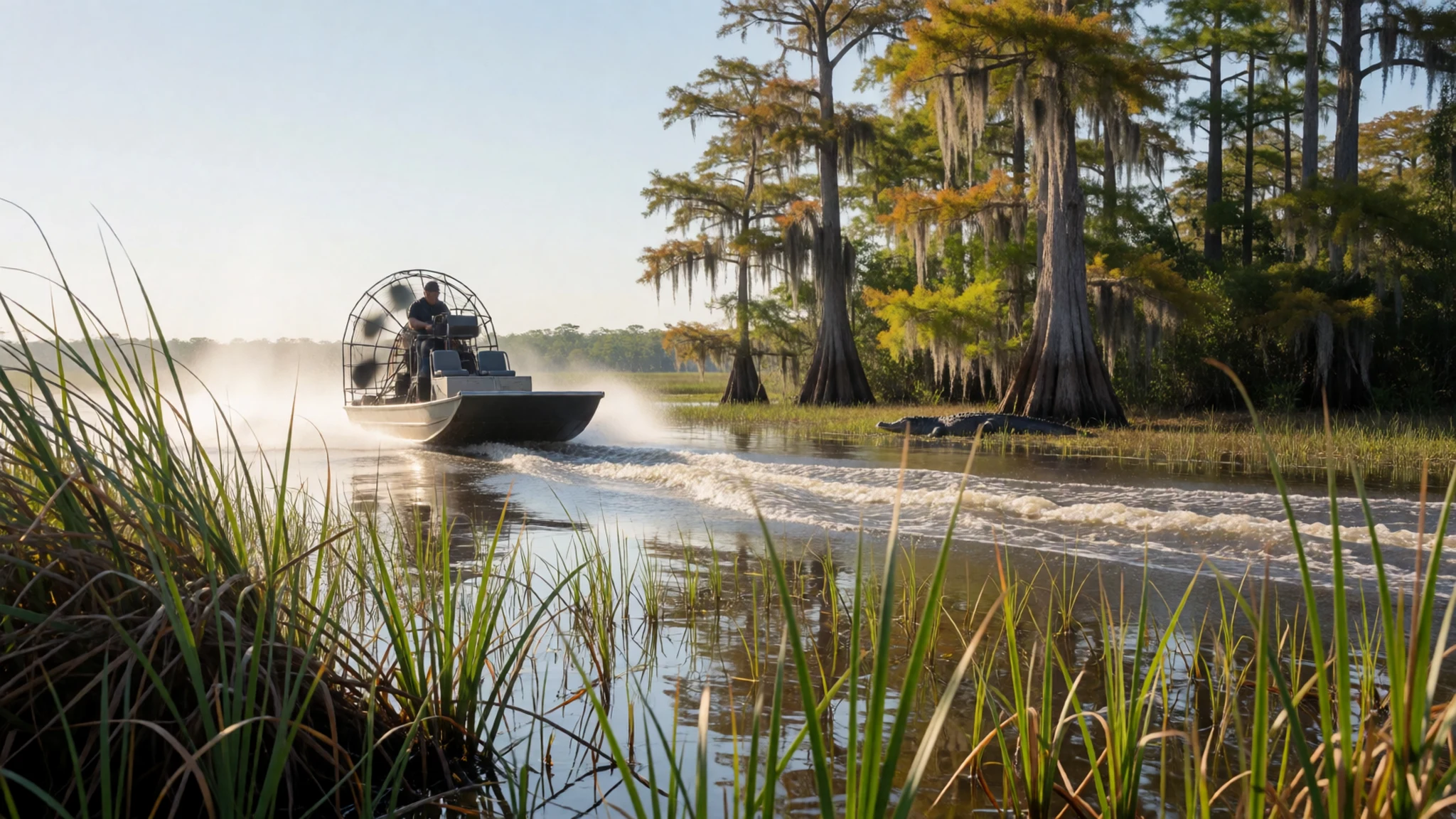
Culture
Everglades National Park is run by the National Park Service, but its culture is shaped by people who have lived with these waters for generations. The Miccosukee and Seminole peoples have deep ties to the wetlands, and many of their communities still live in and around the Everglades today. Their presence is a reminder that the park is a home as well as a protected landscape, so visitors should approach local settings with the same care they would give any community. Daily life here follows the water: fishing families, guides and rangers talk about tides, rain and water levels as a matter of course, and their advice on conditions is worth listening to. Wildlife is treated with real respect, and rangers take the rules seriously because animals that learn to expect food can become dangerous. Keep to marked trails and boardwalks, stay well back from alligators, and never feed wildlife. Ask before photographing anyone from a local community, and keep voices low near the birds.
What to wear
Everglades National Park has no single traditional dress, but the Miccosukee and Seminole peoples, whose ancestors settled these wetlands, are known for distinctive patchwork and appliqué clothing. The designs are built from strips of cotton cloth stitched into geometric bands, often in bold colours, and they were traditionally made for everyday wear and ceremonies. Women's skirts and blouses are the best-known forms, while men wear shirts and trousers that have been adapted over time. Today most people in these communities dress much like anyone else in Florida, in jeans, t-shirts and work boots for fishing or hunting, with patchwork pieces kept for festivals, markets and public events. Visitors should dress for heat and insects. Light, long-sleeved cotton or linen shirts and trousers help against sun and mosquitoes, a wide-brimmed hat and sunglasses are sensible, and sturdy closed shoes suit the boardwalks, which can be slippery, and the muddy trails. Bring a light waterproof layer for sudden storms. Dress modestly at community events and ask before wearing or buying traditional patchwork pieces.
What to eat
- Fried alligator — Seafood eateries in Everglades City, outside the park
Fried alligator is a local dish in Everglades City, a small town on the park's north-west side, where seafood eateries serve it. Ask at the counter, as it is not always on the menu.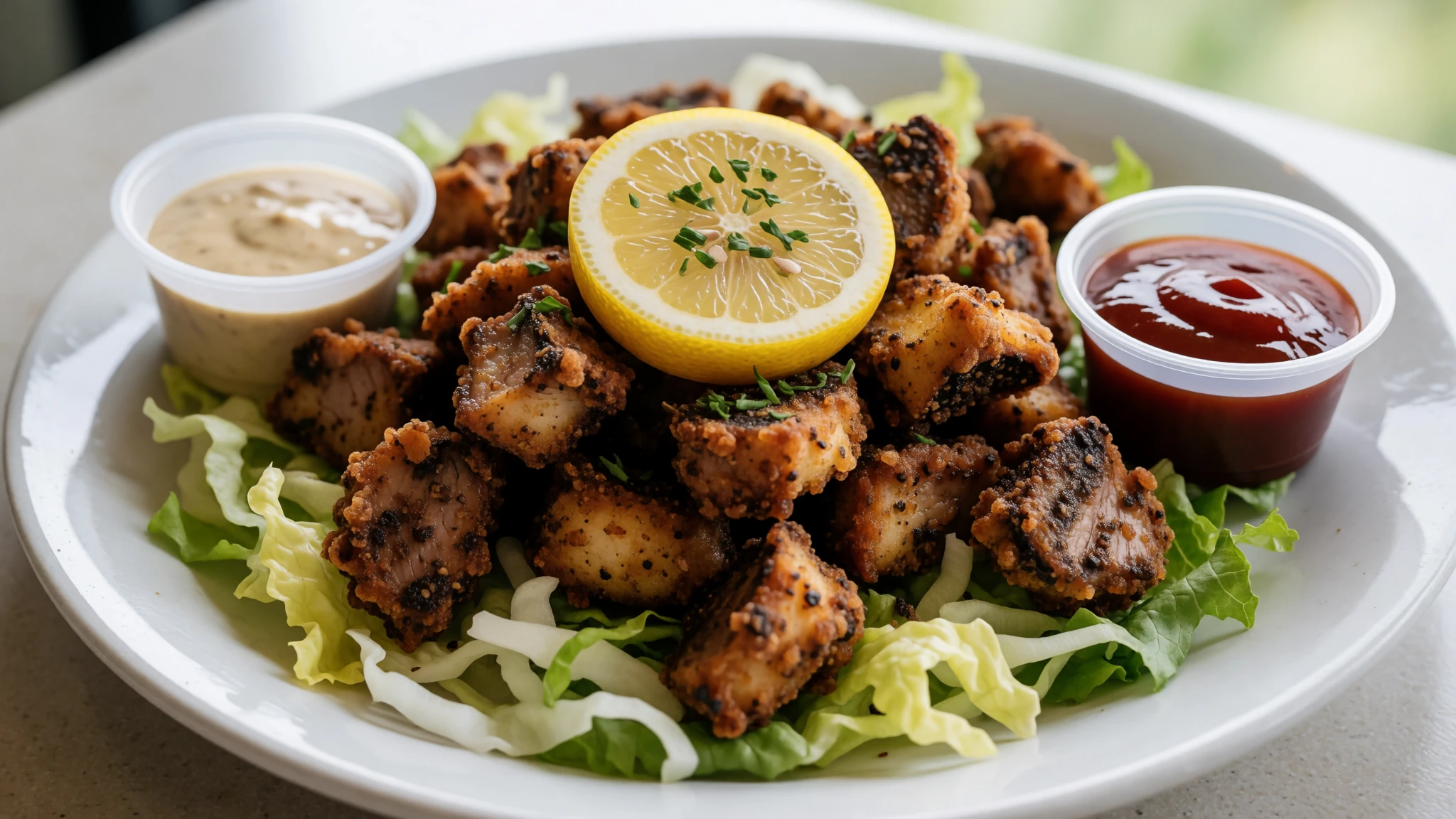
- Local seafood plate — Harbour-side seafood eateries in Everglades City
A plate of fried or grilled local fish and shellfish is the standard order at the harbour-side eateries in Everglades City. Simple dishes are often served with fries or hushpuppies, and portions tend to be generous.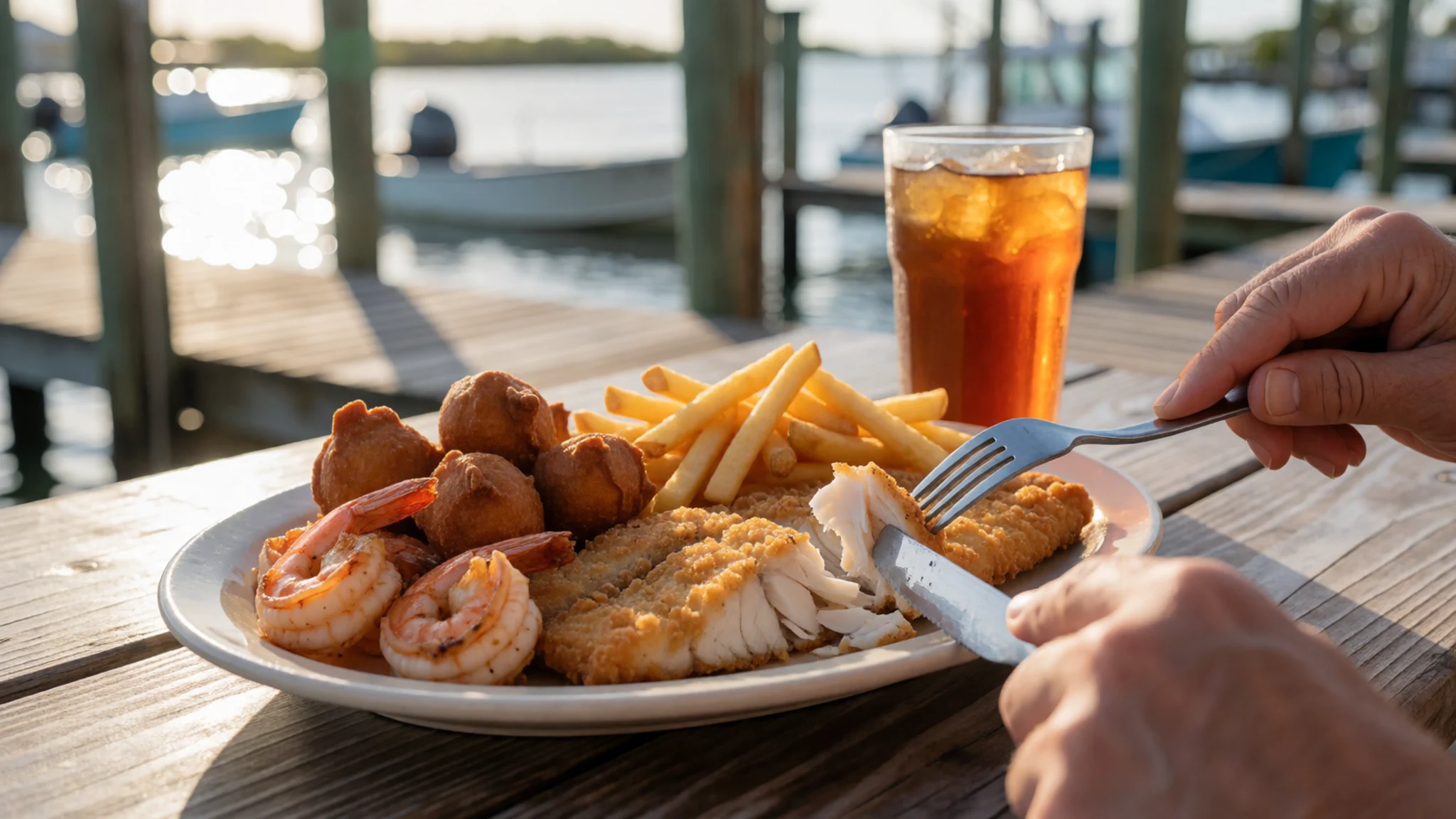
- Sandwiches and cold drinks — Royal Palm nature centre, inside the park
Inside the park, the Royal Palm nature centre keeps a refrigerator with cold drinks and a few sandwiches. There are no restaurants along the southern stretch from Homestead to Flamingo, so it is wise to stock up before arriving.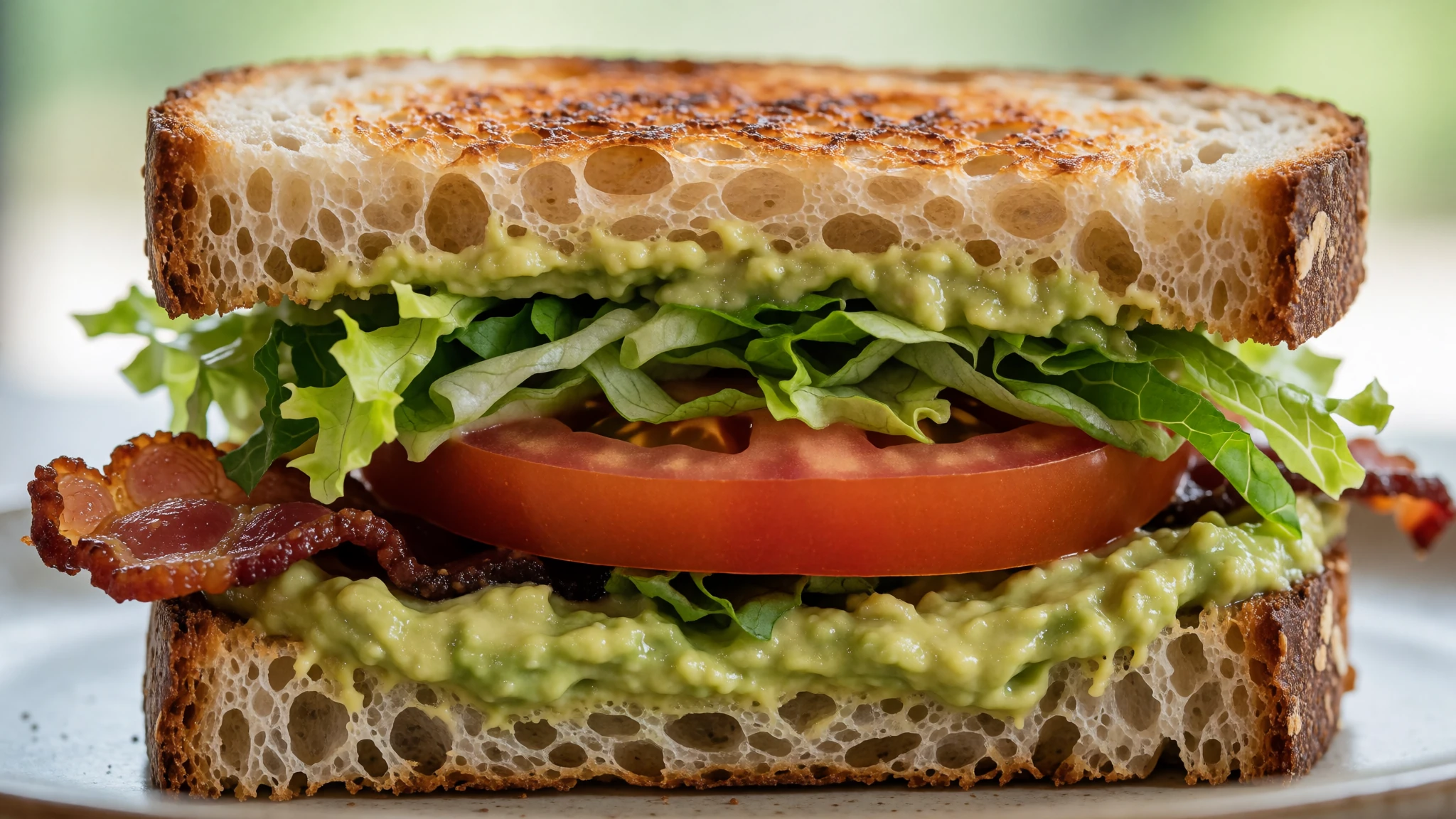
- Snacks and beer at the Flamingo Marina store — Flamingo Marina store, southern park
The Flamingo Marina store works as a convenience store, with snacks, cold drinks and beer, the only alcohol sold inside the park. Check current opening times on the official site before relying on it.
Plan it
Best time. November to April is the dry season, when water drains, wildlife gathers around shrinking pools and the heat is gentler. June to October is long, hot and very wet, with heavy rain and plenty of mosquitoes.
How long. 2–3
Getting there. Fly into Miami International Airport, then drive to the park on the main US highways heading west and south; fill the tank before setting out, as fuel inside the park is limited.
Budget. mid
Tips
- Book boat tours and canoe rentals ahead in the dry season, when they fill up
- Go out in the early morning, when wildlife is active and the air is cooler
- Carry all the water you need for the southern stretch, since none is available between Long Pine Key Campground and Flamingo
- Carry some cash for small kiosks, and use cards where you can
- Pack insect repellent, sun protection and a hat
Etiquette
- Keep a safe distance from alligators and never feed any wildlife
- Stay on marked trails and boardwalks to protect the fragile ground
- Keep noise low so that birds are not disturbed
Nearby
Sources
- Wikidata Q274131 (CC0)
- Wikipedia: Everglades National Park (rev 1380563764) (CC BY-SA 4.0)
- Wikivoyage: Everglades National Park (rev 5370483) (CC BY-SA 4.0)
- Photo: Sunset over the River of Grass, NPSphoto, G.Gardner (Public domain)
- Photo: Main Everglades map from the official park brochure (Public domain)
- Photo: Alligator, Everglades National Park (Public domain)
- Photo: Great Blue Heron, Everglades (CC BY 3.0)
- Photo: Florida Panther (1), NPSPhoto, Rodney Cammauf (Public domain)
- Photo: South Florida rocklands, Long Pine Key (CC BY 3.0)
- Photo: Cypress dome with alligator, NPSphoto, G.Gardner (Public domain)
- Photo: Manatee 1670 EVER, NPSPhoto, Nov 76 (Public domain)


