Euboea
Euboea, Greece
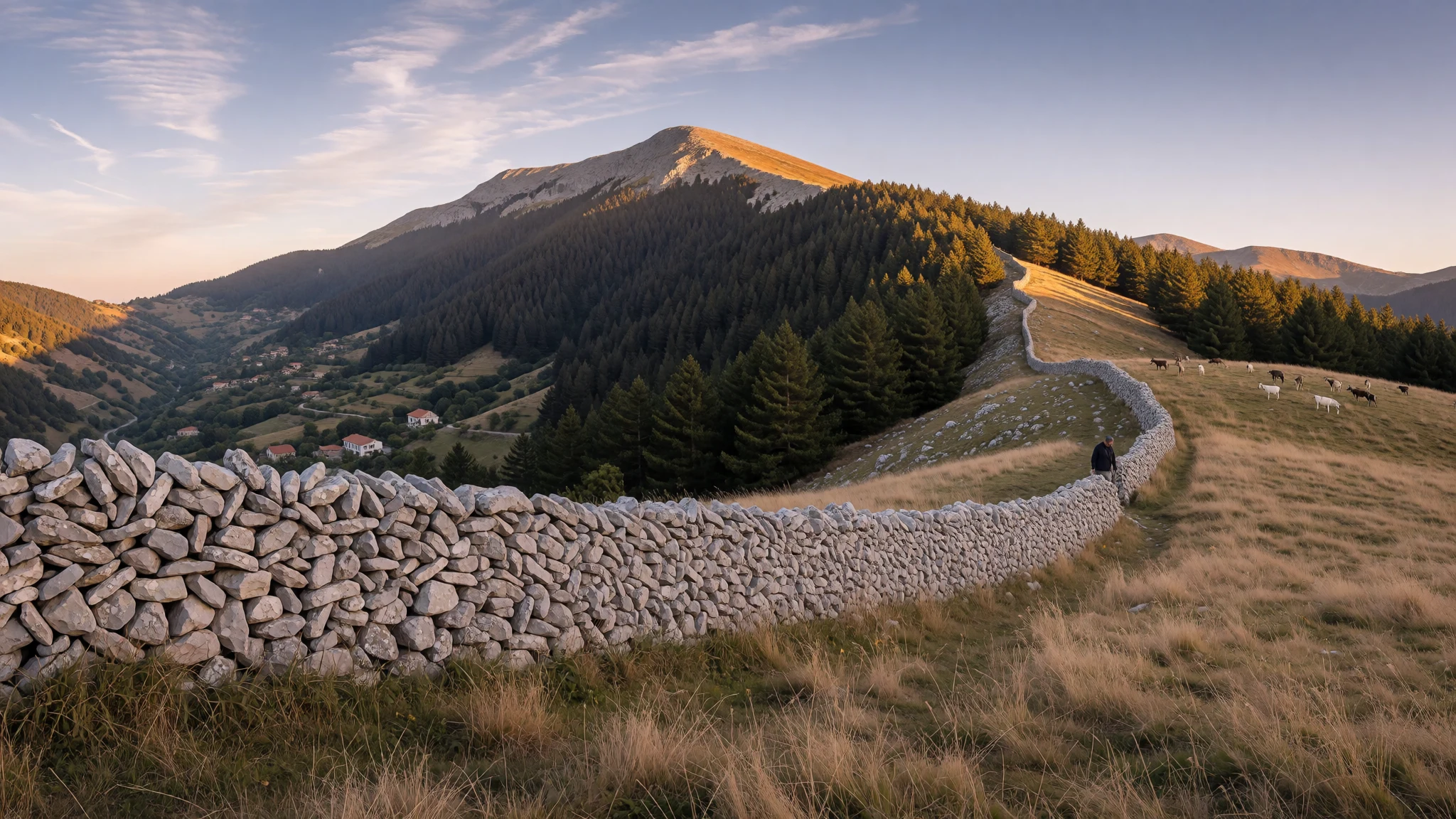
Euboea is a long, green Greek island close to Athens, with ancient ruins, hot springs, mountain villages and quiet beaches far from the Cyclades crowds.
The place
Euboea, known as Evia in Greek, lies like a long green breakwater alongside the mainland, running from north-west to south-east. After Crete it is the largest Greek island by area and by population, yet it draws far fewer foreign visitors than the Cyclades, mostly because Athenians treat it as their own weekend coast. A mountain spine runs down its whole length, with heights reaching 1,743 m, and the range carries on south as the island chain of Andros, Tinos and Mykonos. Pine and chestnut forest covers many slopes, villages sit in folds between ridges, and beaches turn up on both flanks, the sheltered gulf side and the more open Aegean side. The narrow Euripus Strait separates Euboea from the mainland beside the main town, Chalkida, and its tides are odd enough that sailors have remarked on them since antiquity. Two bridges link island and mainland there, and ferries cross at several further points. Away from Chalkida the island is mostly rural: small farms, olive groves, hot-spring towns in the north, working fishing harbours, and a few mining districts. Skyros, further out to sea, belongs to the same regional unit. Distances are bigger than the map suggests because roads wind through the hills, so north and south can feel like different islands. Expect Greek holiday crowds in August, near-empty lanes in spring, and menus and signs that are less often translated than on the famous islands.
Its story
Euboea's early history is the story of two rival cities, Chalcis and Eretria, both already named in Homer's list of ships. Settlers from Attica founded them, and Euboean colonists later sailed west to southern Italy and Sicily, founding places such as Cumae and Rhegium, and north to the Macedonian coast. Their trading reach was wide enough that Euboean weights and measures were used by many Ionian cities, and by Athens until the age of Solon. Excavations at Lefkandi show that life on the island carried on through the Greek Dark Ages, when much of the Aegean world fell quiet. One modern classicist has argued that Euboea may be where the Greek alphabet was first put to everyday use. The two cities eventually fought the Lelantine War, an early large-scale conflict that pulled in allies from across the Greek world. Later, Persian forces destroyed Eretria and carried its people off as captives, after the city had joined Athens in backing the Ionian revolt that burned Sardis. Geology adds its own tale: ancient writers believed an earthquake had torn the island from the mainland, a reasonable guess given the fault line running beneath the strait. Legend, meanwhile, says that Agamemnon's fleet was held up by contrary winds in the cramped bays near Chalcis.
What to see
- Euripus Strait and the Chalkida waterfront — Chalkida
The strait at Chalkida is where Euboea almost touches the mainland, and where the tide behaves strangely, with water pouring through the channel and shifting direction. Two bridges cross it, a modern suspension span and an older lifting bridge. Walk the waterfront in the evening, when locals fill the cafés and fishing boats sit below the bridges.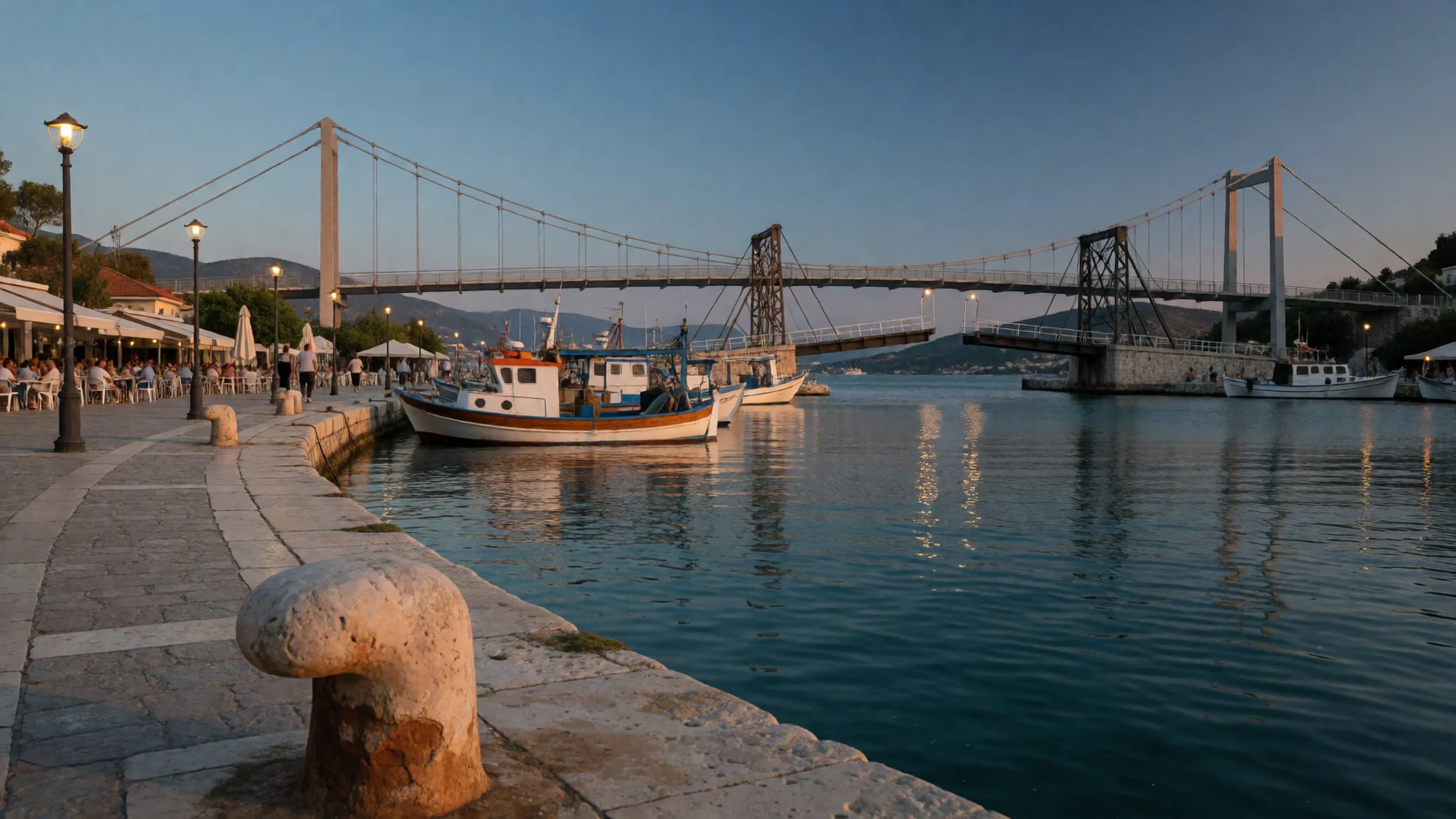
- Archaeological Museum, Chalkida — Chalkida
The Archaeological Museum in Chalkida gathers finds from the island's ancient past and gives useful context for the rival cities and the Dark Age settlement at Lefkandi. It is a modest, manageable stop, worth doing before heading out to the ruins. Opening hours change by season, so check the official site before going.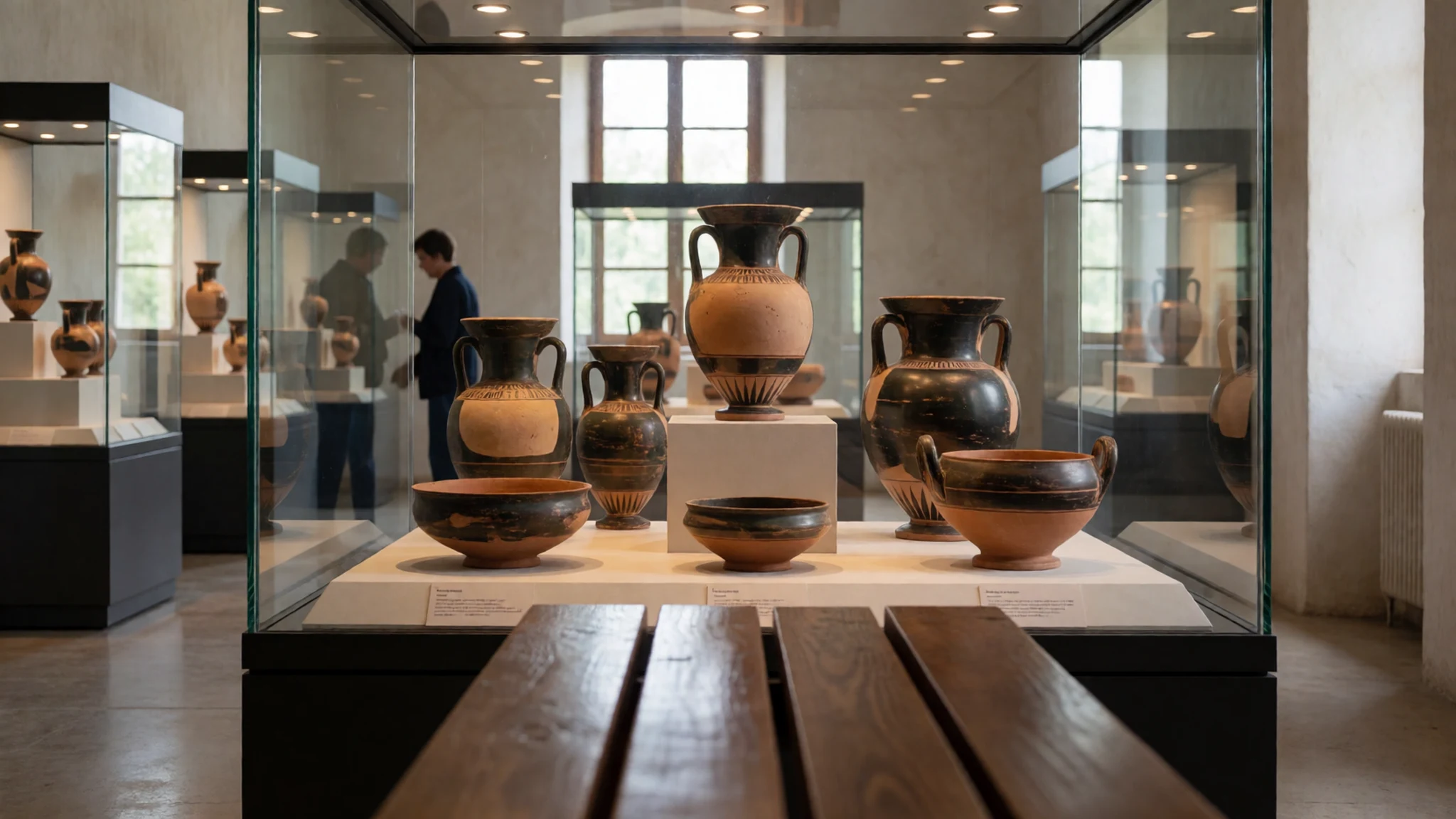
- Agia Paraskevi church — Chalkida
The medieval church of Agia Paraskevi stands in the old part of Chalkida, a reminder that the town's story runs well beyond the ancient period. Look at the layered stonework and the modest scale of the building beside modern streets. It combines easily with coffee in the old quarter and a wander through nearby lanes.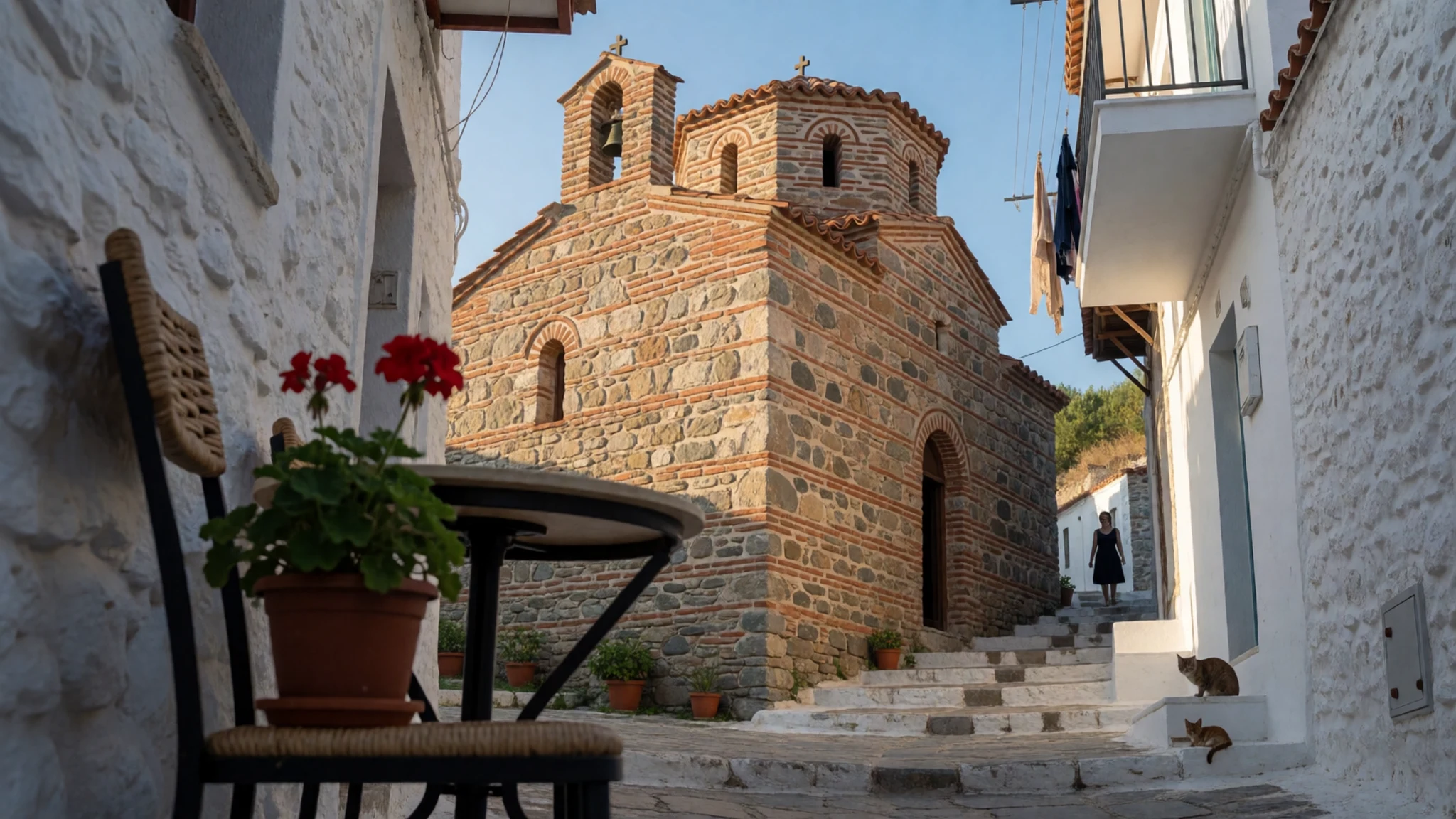
- Eretria — Central Euboea
Eretria, on the gulf side of the island, was destroyed by Persian forces and its people deported, yet the site still holds visible ancient remains within a calm seaside town. Pair the ruins with a swim and a fish lunch on the front. The surrounding olive groves and low hills are typical of the central coast.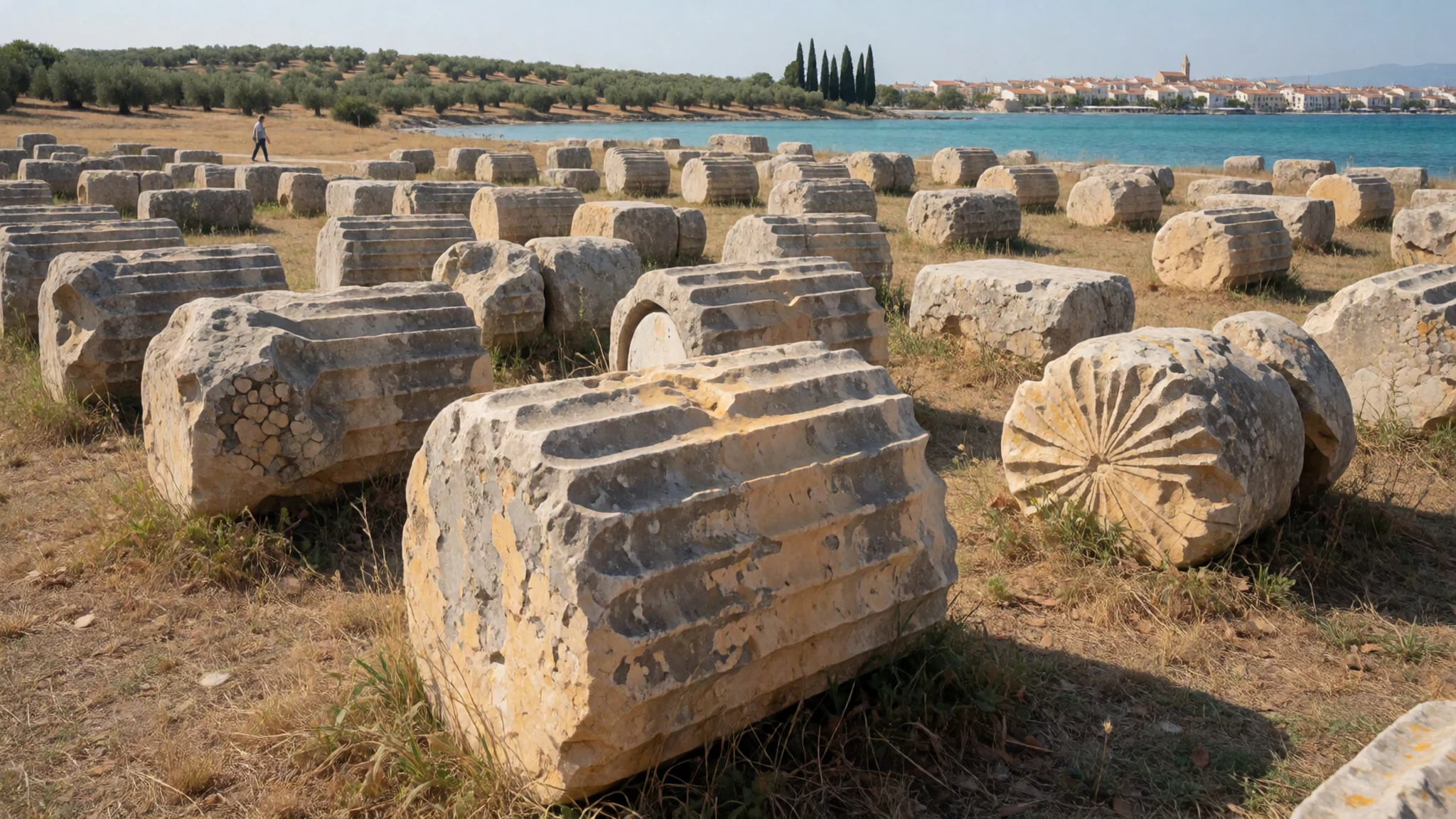
- Saint Demetrius church, Hania Avlonariou — Inland central Euboea
The church of Saint Demetrius at Hania Avlonariou is a very old Byzantine building in the hills inland. Its age and rural setting make it a reward for a drive through central Euboea, though roads are narrow and signs sparse. Keep an offline map handy, and ask in the village if the door is locked.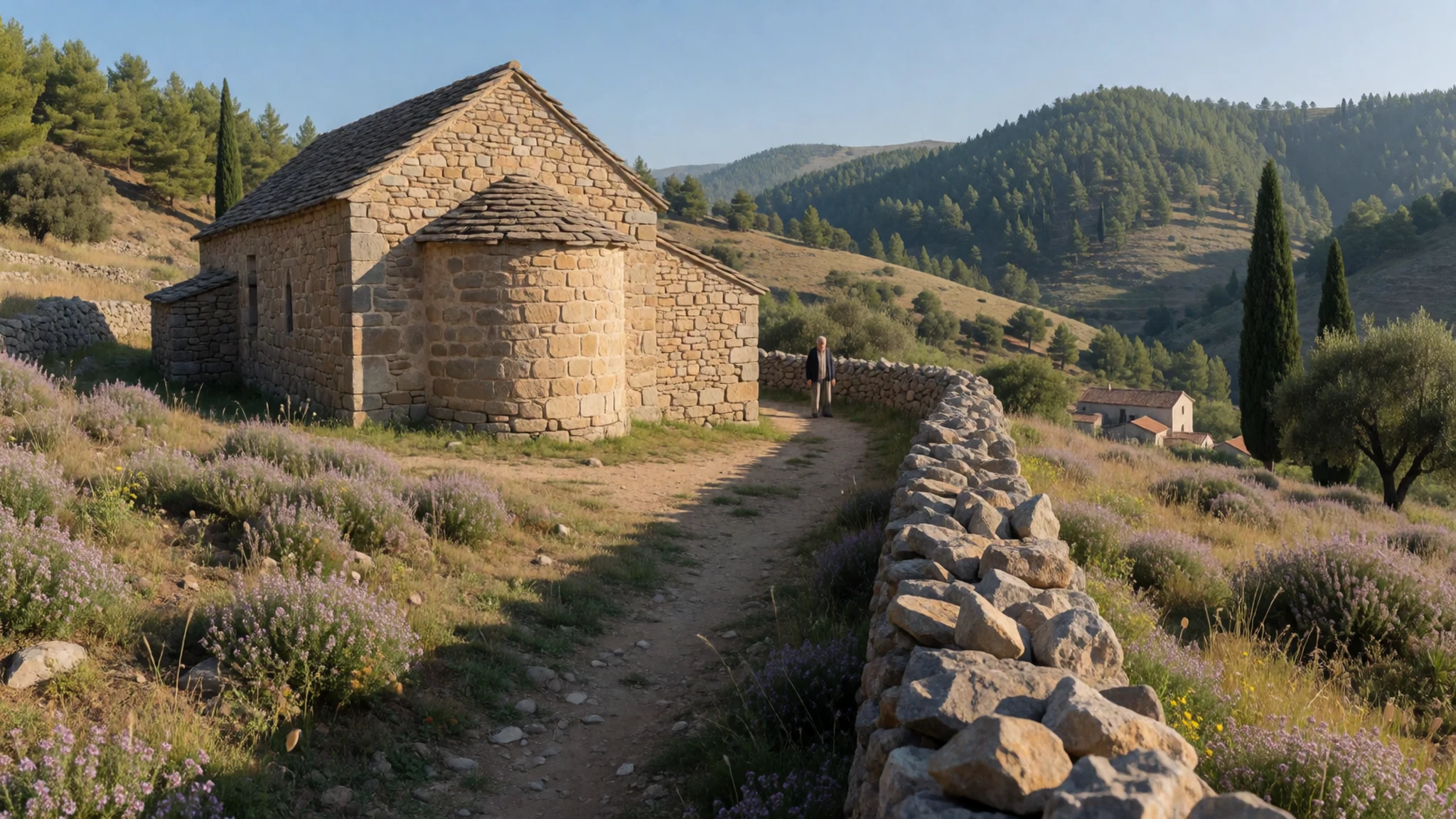
Culture
Euboea's culture is Greek island life without the resort gloss. Orthodox faith shapes the calendar: village churches hold name-day gatherings and festivals, known as panigiria, where whole communities eat, dance and talk late into the night. Many families have roots in the villages even if they now live in Athens, so summer weekends bring a rush of returning relatives, and the quiet hamlets of spring turn lively. Farming, fishing and small-scale mining still matter here, and conversation often turns to the harvest, the weather and the ferries. Hospitality is real rather than staged: a stranger who shows interest in a local cheese or a church may be offered a coffee or a spoonful of something sweet. In the north, spa towns around the hot springs have a long habit of taking the waters, with older visitors arriving for treatments in much the way people go to British or Indian hill and spa towns. Chalkida has a mixed history layered in its churches and old quarter, and its evening promenade by the strait is a ritual in itself. Tavernas keep slow hours, with lunch late and dinner later. Cover your shoulders and knees when entering a church or monastery, and ask before photographing inside it or any person at prayer.
What to wear
Traditional dress on Euboea followed the wider Greek village pattern: hand-woven wool, linen and cotton, with embroidered aprons, headscarves and waistcoats for women, and wool breeches, sashes and short jackets for men. Southern villages with Arvanite roots had their own variations on these garments. Today this clothing appears mainly at festivals, national holidays and in local dance groups, where families bring out carefully kept costumes. Everyday wear is plain and practical: shorts and linen shirts in summer, jeans and fleeces in the hill villages, with smarter clothes for evening promenades and church services. Beach towns are relaxed, though swimwear belongs on the sand rather than in the shops or on the street. A visitor should dress for sun and uneven ground. Pack light cotton or linen, a brimmed hat, sunscreen and sturdy sandals or walking shoes, because village lanes, archaeological sites and mountain paths are stony and uneven. Water shoes help on pebbly beaches. Carry a light jacket for mountain evenings and a rain layer outside summer. For churches and monasteries, bring something that covers the shoulders and knees; a lightweight scarf or sarong in the bag solves the problem. Spa towns are casual, but robes and swimwear stay inside the bathing areas.
What to eat
- Grilled fish and seafood — Harbour tavernas in Chalkida, Eretria and the coastal villages
Fish and seafood are the island's staple, served simply grilled with olive oil and lemon, or as a plate of small shared dishes. Order what the boats landed that day, and ask the server what is freshest before choosing.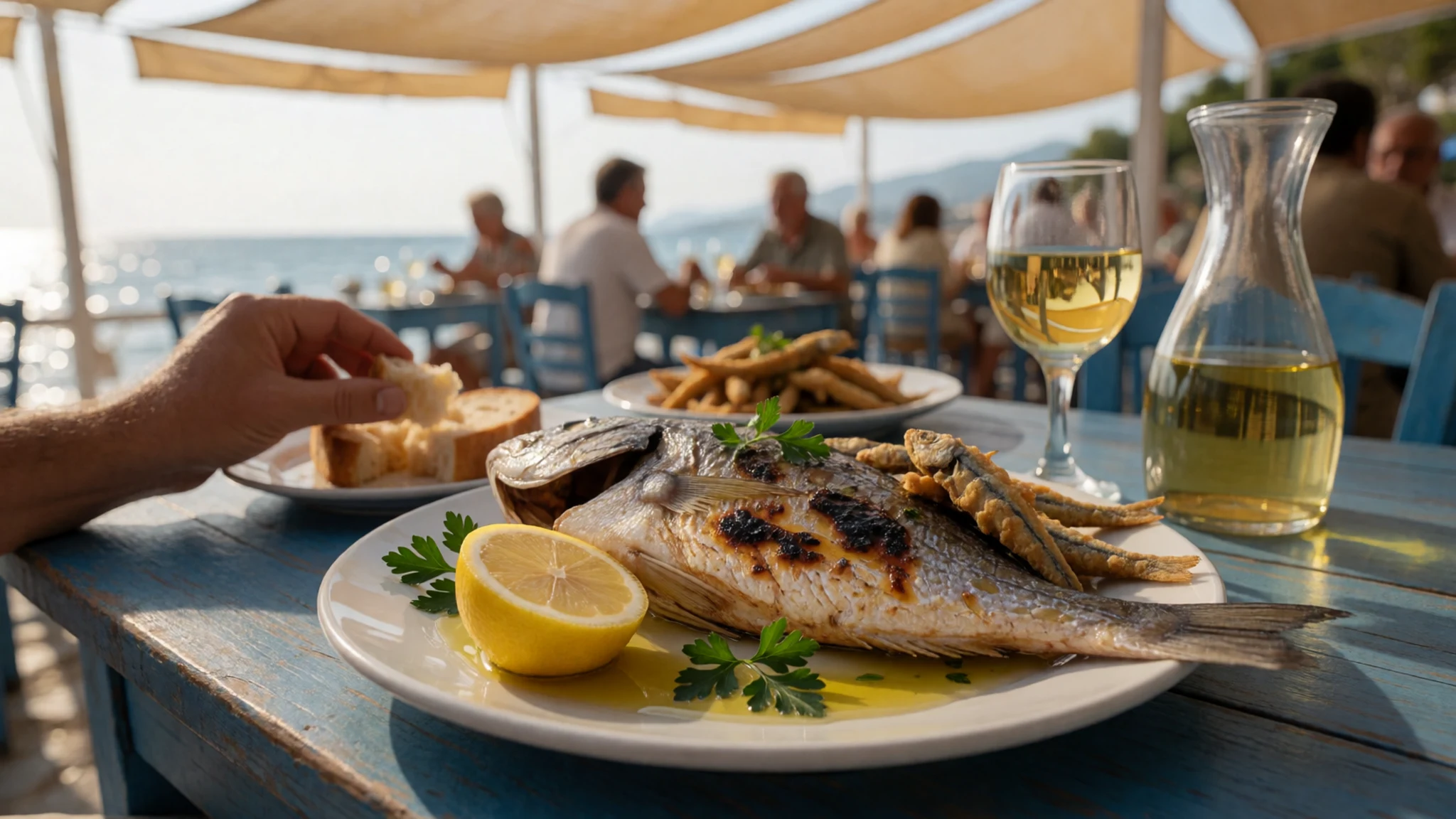
- Sheep and goat cheese — Village shops, farm stalls and the market in Chalkida
Local sheep and goat cheeses range from fresh and mild to sharp and salty. They arrive at the table with bread and olives or crumbled over salads, and make an easy picnic purchase for a drive through the hills.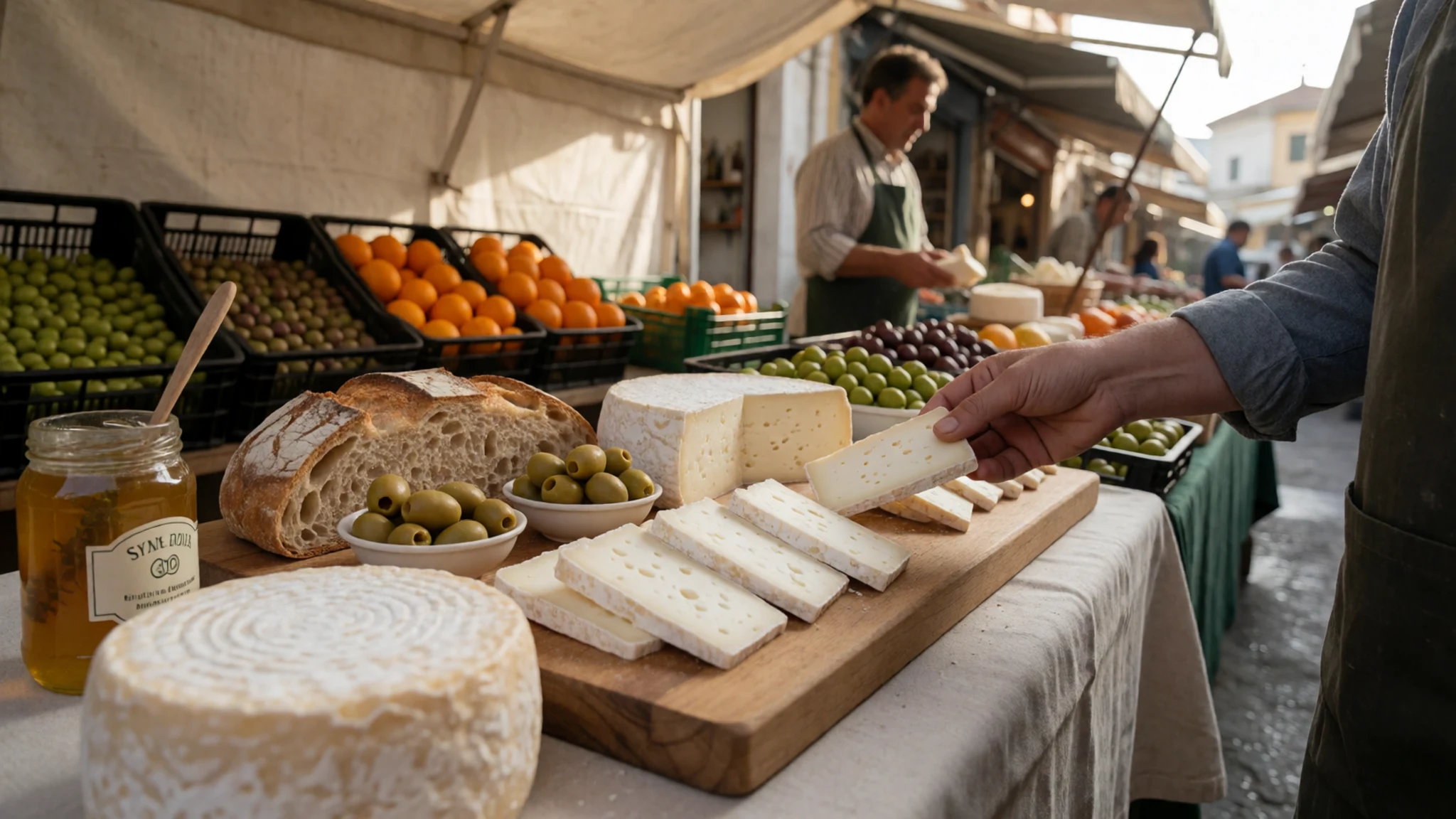
- Yogurt with honey — Dairies and village cafés across the island
Thick yogurt from sheep or goat milk is a regional tradition, eaten at breakfast or as a light dessert with honey poured over. It tastes tangier than most supermarket versions and works well after a hot day of walking. - Pork sausage with orange — Village tavernas and butchers' counters
A local sausage of pork seasoned with orange is the island's best-known speciality. The citrus cuts through the richness, and the sausage is usually grilled and served with bread, chips or a simple salad on the side. - Taverna lunch with house rosé — Any family-run taverna, especially inland villages
A long taverna lunch is the way to taste several dishes at once: grilled meat, fish, salads and local greens, with beer or the house rosé wine poured from a carafe. Order a few plates to share and let the meal run slowly.
Plan it
Best time. May–June and September–October for warm sea, walkable hills and manageable crowds. July and August are hot and busy with Greek families, while winter is quiet and many seasonal places close, especially on the eastern side.
How long. 3–5
Getting there. Fly to Athens airport, then take an intercity KTEL coach or the suburban rail line to Chalkida, which connects to the mainland by bridge. Ferries also run from Rafina to Marmari, Arkitsa to Loutra Edipsou, and Glyfa to Agiokampos; check current timetables locally. Skyros links to Kymi by ferry.
Budget. mid
Tips
- Hire a car if you want to see more than Chalkida; public transport thins out quickly in the villages
- Drive slowly on narrow, twisting roads and allow extra time, since distances are longer than they look
- Carry travel insurance and a basic first-aid kit, as medical help outside the main towns can be slow to reach
- Carry some cash for village tavernas, shops and small ferries, and check ferry times before you set out
- Book rooms early for August; private accommodation is widely available and many seasonal places close outside summer
Etiquette
- Dress modestly in churches and monasteries, covering shoulders and knees
- Ask before photographing people, especially at festivals or in church
- Take litter with you from beaches and wild camping spots
Nearby
Sources
- Wikidata Q173096 (CC0)
- Wikipedia: Euboea (rev 1374707473) (CC BY-SA 4.0)
- Wikivoyage: Evvia (rev 5345323) (CC BY-SA 4.0)
- Euboea from space (NASA) (Public domain)
- Location Map of Euboea in Greece (Abeslinskens) (CC BY-SA 4.0)
- Topography of Euboea (Zamonin) (CC BY 3.0)
- Landscape of Euboea, close to Eretria (Jebulon) (CC0 1.0)
- Kantili mountain, Evia island (Ggia) (CC BY 3.0)
- Archaeological Museum in Chalkida (ChristosV) (CC BY 3.0)
- Church of Saint Demetrius at Hania Avlonariou (C messier) (CC BY-SA 4.0)
- Medieval church of Agia Paraskevi, Chalkida (C messier) (CC BY-SA 4.0)


