Espoo
Espoo, Finland
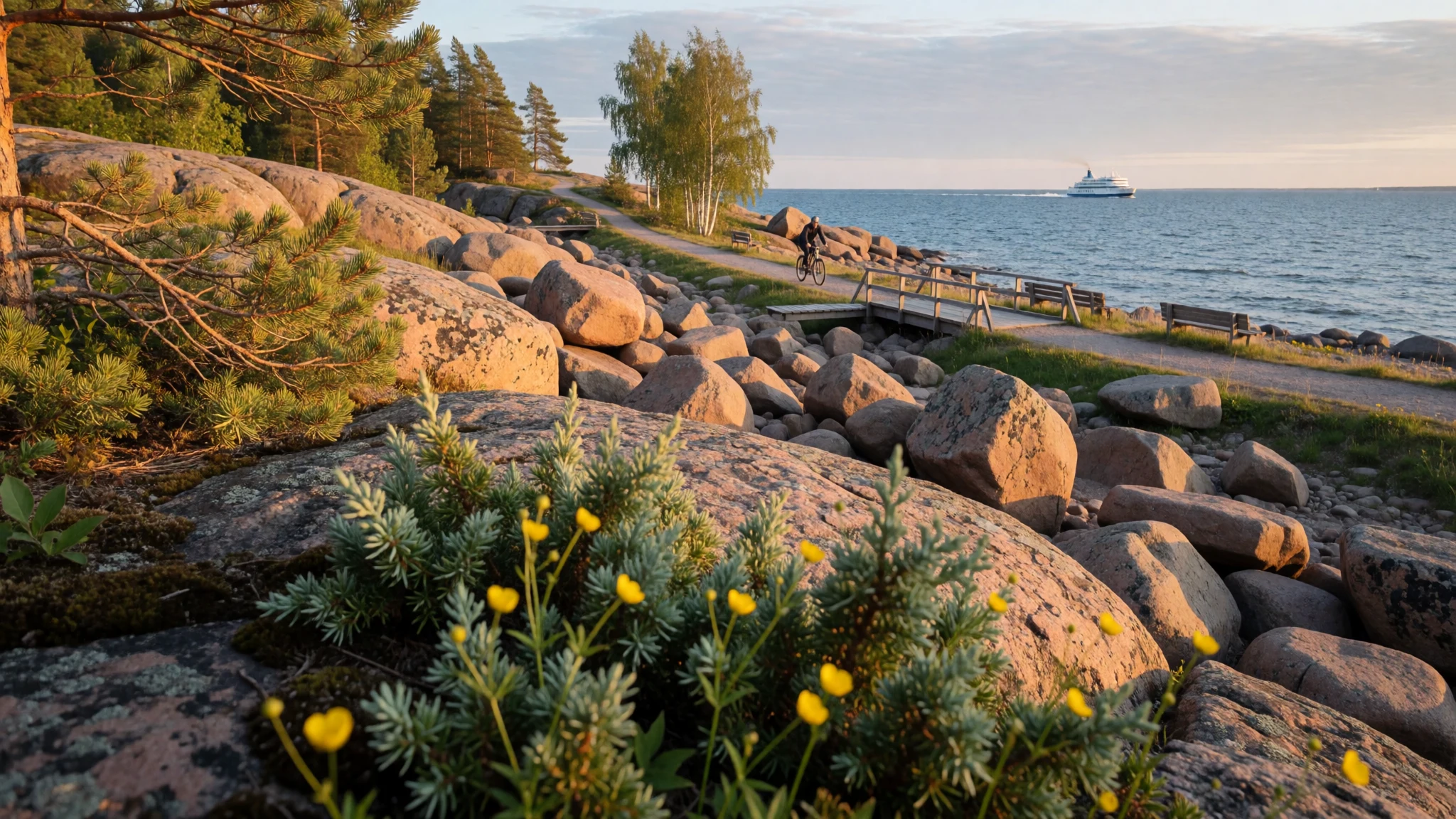
Espoo pairs cutting-edge Nordic design and thriving tech campuses with vast pine forests, rocky islands, and quiet Baltic shores.
The place
Espoo stretches across the northern shore of the Gulf of Finland in southern Uusimaa, sitting directly west of the capital. As the nation's second most populous municipality, it accommodates over three hundred thousand residents within a sprawling landscape that defies the usual boundaries of a dense urban centre. Instead of a single crowded core, Espoo functions as a constellation of distinct regional hubs like Tapiola, Otaniemi, and Kivenlahti, separated by patches of deep pine woodland, granite outcrops, and long stretches of coastal inlets. The city shares borders with several neighbouring districts, including Helsinki, Vantaa, and Kirkkonummi, while entirely enclosing the independent enclave of Kauniainen. Officially bilingual, Espoo reflects a diverse community where Finnish and Swedish share administrative space alongside a growing international populace drawn to its academic and research institutions. The coastal terrain remains relatively low-lying, shaped by ancient glacial activity and indented by bays that invite sailing, kayaking, and long walks along gravel pathways. Moving inland, the topography gradually rises toward rugged lake uplands and protected natural reserves, where quiet mires and dark forest pools create a striking contrast to the sleek glass-and-steel architecture found along the commercial waterfronts. This interplay between modern municipal planning and untamed wilderness defines the daily rhythm of the city, offering travellers a distinct perspective on contemporary Finnish life where urban convenience and natural solitude exist side by side.
Its story
Espoo carries a deep history shaped by early tribal migrations, medieval trade routes, and centuries of administrative shifts under both Swedish and Russian rule. Long before the arrival of Swedish colonists, the lands around Espoo were inhabited by Tavastians and other Finnish tribes who hunted, fished, and gathered across the forested lake uplands. The modern name of Espoo is believed to trace back to the medieval village of Espaby, a reference to the stands of aspen trees that once lined the local riverbanks. Following the Northern Crusades and the establishment of Swedish rule, the coastal territories saw an influx of settlers, and Espoo was formally founded as an autonomous Catholic parish during the fifteenth century. A vital artery through the settlement was the historic King's Road, a medieval trade route stretching from Turku to Vyborg that carried officials, merchants, and prisoners across the realm, leaving behind stone bridges and old manor foundations that still mark the regional landscape. For centuries, the local economy remained largely agrarian, anchored by large rural estates and coastal fishing communities. The nineteenth century brought a transformative shift when the capital was moved to nearby Helsinki, spurring regional growth and modern infrastructure development. Over the subsequent decades, Espoo evolved from a quiet rural parish into a major urban centre, pioneering planned garden districts like Tapiola while carefully preserving pockets of its ancient heritage through historic farmsteads and stone ecclesiastical monuments.
What to see
- Nuuksio National Park — Northern Espoo
Nuuksio National Park offers classic Finnish wilderness with deep pine forests, rugged granite crags, and silent glacial lakes. Well-marked hiking trails wind through protected habitats where visitors can spot rare birds, forage for wild berries, and experience the profound peace of the northern lake uplands just outside the city. - Espoo Waterfront Walkway — Coastal Espoo
Espoo Waterfront Walkway is a scenic gravel path stretching for dozens of kilometres along the jagged Baltic coastline. It connects bustling marinas, rocky viewpoints, public saunas, and lively summer cafés, making it a favourite route for cyclists, joggers, and leisurely afternoon strollers seeking fresh sea breezes. - Pentala Island — Espoo Archipelago
Pentala Island preserves the heritage of an old fishing community that thrived on the remote archipelago from the late eighteenth century until recent decades. The island features restored wooden dwellings, a fascinating museum showcasing maritime traditions, and serene nature paths encircling a unique inland lake. - Tapiola Cultural Centre — Tapiola district
Tapiola Cultural Centre serves as the beating artistic heart of the garden district, hosting vibrant theatrical productions and classical concerts by the world-renowned Tapiola Sinfonietta. The striking architectural venue brings together local residents and visitors for year-round cultural events, art exhibitions, and community gatherings. - Espoo Manor — Espoonkartano district
Espoo Manor stands as one of the region's most historically significant estates, with land records dating back to the late fifteenth century. Owned by noble families for generations, the historic property features preserved manor architecture, ancient tree-lined avenues, and a glimpse into the aristocratic rural past of the municipality.
Culture
Espoo nurtures a vibrant cultural landscape that bridges contemporary art, classical music, and historical preservation. The municipality is home to the acclaimed Espoo Museum of Modern Art, housed in a converted printing facility within the WeeGee Exhibition Centre, which also shares space with unique institutions dedicated to horology and toys. In the planned garden district of Tapiola, music lovers gather for orchestral performances by the internationally celebrated Tapiola Sinfonietta. Rural traditions are preserved at old estate museums and nineteenth-century farmsteads, while the Haltia Nature Centre in Nuuksio celebrates the country's deep ecological connection to its forests and lakes. Daily social interactions are characterised by a polite, reserved demeanor and a strong respect for personal privacy and quietude. Visitors will find that punctuality is valued, English is universally spoken, and public spaces are kept remarkably clean and orderly. Always remove your outdoor shoes when stepping inside a residential home or traditional sauna dressing room.
What to wear
Espoo locals favour a practical, understated approach to dress that prioritises comfort, durability, and clean Scandinavian design over fleeting fashion trends. Traditional Finnish folk garments, featuring heavy wools, geometric patterned weaves, and embroidered linen detailing, are reserved exclusively for national holidays, midsummer celebrations, and formal civic ceremonies. In everyday settings, whether walking through tech innovation hubs or commuting across the municipal districts, residents wear contemporary casual attire built for the changing seasons. Layering is essential: breathable cottons and lightweight knits serve indoors, while windproof jackets, waterproof shells, and sturdy footwear are standard for navigating coastal breezes and forest trails. Travellers should pack versatile layers, comfortable walking shoes with good grip, and a warm, weather-resistant jacket regardless of the season. Dressing in neat, functional layers will ensure you blend in seamlessly whether visiting a university campus, dining at a local bistro, or hiking through remote national park reserves.
What to eat
- Student Diners in Otaniemi — Otaniemi university district
The university canteens and family-run lunch spots in the Otaniemi campus district serve hearty, wholesome, and affordable daily meals, welcoming both students and travellers looking for honest, unpretentious cooking. - Archipelago Fish Soups — Coastal harbours and island kiosks
Traditional creamy salmon and whitefish chowders prepared with fresh Baltic catch, dill, and root vegetables, commonly served at harbour-side cafés and coastal market stalls during the warmer months. - Classic Finnish Bakery Treats — Local neighbourhood bakeries
Freshly baked cinnamon buns and traditional Karelian rice pastries topped with egg butter, found in local bakeries and neighbourhood grocery stores throughout the municipal area. - Home-Cooked District Lunches — Suburban lunch restaurants
Comforting weekday lunch buffets featuring traditional meatballs, mashed potatoes, lingonberry preserves, and seasonal vegetable soups, offered in neighbourhood eateries across districts like Iivisniemi.
Plan it
Best time. June to August brings long daylight hours, pleasant weather for coastal walks, and accessible island ferries; autumn brings vibrant foliage to the national parks.
How long. 2–3
Getting there. Fly into Helsinki Airport, then take the commuter train or metro directly into Espoo's municipal centres in under half an hour.
Budget. mid
Tips
- Use the efficient regional metro and bus network to travel easily between Espoo's scattered districts
- Pack waterproof outerwear and sturdy walking shoes for exploring coastal paths and forest trails
- Embrace local public saunas as an essential part of the regional cultural experience
- Book island ferries and guided nature excursions in advance during the peak summer months
Etiquette
- Remove your footwear when entering private homes and traditional sauna spaces
- Respect the quiet atmosphere in residential neighbourhoods and natural forest reserves
- Observe local queuing customs and personal space norms in public areas
Nearby
Sources
- Wikidata Q47034 (CC0)
- Wikipedia (CC BY-SA 4.0)
- Wikivoyage (CC BY-SA 4.0)