Erfurt
Erfurt, Germany
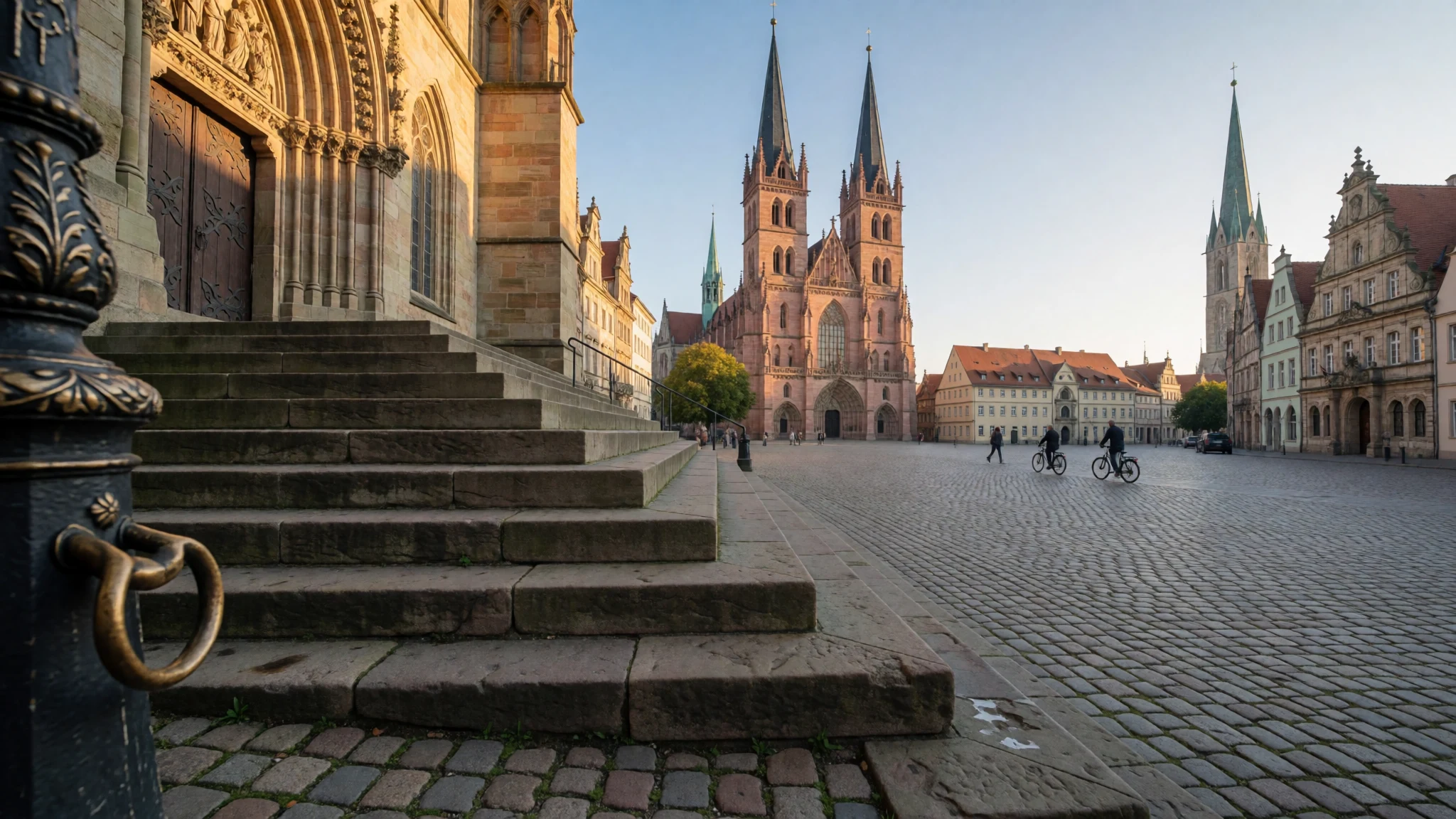
Erfurt offers an exceptionally preserved medieval old town defined by timber-lined bridges, towering Gothic cathedrals and centuries of Central European trading history.
The place
Erfurt serves as the capital of the German federal state of Thuringia, positioned within the wide valley of the River Gera in the southern sector of the Thuringian Basin. Lying north of the Thuringian Forest, the city anchors the middle of an urban belt connecting several major regional centres across central Germany. The surrounding landscape features gentle agricultural fields and horticultural plots that have supplied local markets for generations.
At the heart of the settlement lies an urban core that escaped heavy destruction during twentieth-century conflicts, leaving behind one of the most intact medieval layouts in the region. Narrow lanes wind past half-timbered townhouses, stone merchants' residences and Gothic ecclesiastical structures. The River Gera weaves through this historic fabric, splitting into branching streams and quiet canals spanned by dozens of bridges. Among these, the famous Krämerbrücke carries residential timber buildings directly upon its stone arches, creating a lived-in streetscape unique in the country. Above the rooftops, the vast Cathedral Hill gathers monumental religious architecture into a single dramatic silhouette, anchoring the skyline and drawing the eye across the municipal expanse.
Modern economic activity reaches beyond traditional commerce into microelectronics, advanced manufacturing and regional administration. Yet the atmosphere remains rooted in its civic history, where pedestrian squares, quiet courtyards and traditional beer halls maintain a steady rhythm of daily life removed from the frantic pace of larger metropolitan hubs.
Its story
Erfurt traces its documented origins back to 742, when Saint Boniface wrote to the Papacy describing a settlement established amid pagan inhabitants along a vital river crossing. Archaeological investigations across the municipal area, however, reveal much older roots, including Neolithic domestic remains and Germanic artefacts discovered during highway construction and infrastructure digs.
Throughout the medieval era, the strategic ford across the River Gera transformed Erfurt into a major inland trading hub. Merchants from across Europe gathered at its markets, exchanging textiles, metals and agricultural goods. In 1505, Martin Luther entered the Augustinerkloster to begin his path as an Augustinian friar, studying theology and philosophy at the local university before sparking a religious transformation that reshaped European thought.
Political control shifted across centuries between the Electorate of Mainz, Prussian administration and various German states, leaving behind layered architectural styles that reflect both ecclesiastical power and mercantile wealth. The preservation of its historic fabric through turbulent political eras allows modern visitors to walk through streets virtually unchanged since the late medieval period, where ancient synagogues, fortress walls and Gothic churches bear silent witness to centuries of central European history.
What to see
- Dom — Domplatz
Perched high above the central square on an imposing stone staircase, this magnificent 14th-century Gothic cathedral features an expansive high choir illuminated by soaring stained-glass windows. Visitors can admire intricate stone carvings and listen to the resonance of its monumental medieval bell hanging quietly within the tower. - Severikirche — Domplatz
Flanking the cathedral square, this striking 14th-century Gothic hall church presents a distinctive five-aisled layout beneath slender spires. Inside, worshippers and architecture enthusiasts encounter the finely sculpted stone sarcophagus of Saint Severus of Ravenna alongside historic cast-bronze bells. - Krämerbrücke — Altstadt
This remarkable medieval stone bridge is lined on both sides with continuous timber-framed houses accommodating artisan workshops, small galleries and specialty food shops. Walking across the narrow span reveals a vibrant residential community operating upon a historic thoroughfare over the flowing river water. - Fischmarkt — City Centre
Framed by richly decorated Renaissance townhouses and historicist mercantile facades, this central pedestrian square serves as the civic heart of the old town. Ornate bay windows, carved portals and public monuments reflect the accumulated wealth of historic trading families. - Augustinerkloster — Augustinerstraße
This tranquil 13th-century monastery complex offers quiet stone cloisters and peaceful monastic gardens where Martin Luther once walked and studied as a young monk. Exhibition spaces within the stone walls document his formative years and the daily life of medieval religious orders. - Petersberg Citadel — Petersberg
Dominating the western elevation above the town, this extensive 17th-century Baroque fortress ranks among the largest and best-preserved military installations in Central Europe. Expansive ramparts, deep defensive ditches and brick-vaulted tunnels provide sweeping panoramic views across the entire municipal basin.
Culture
Local culture in Erfurt reflects a proud Thuringian heritage rooted in craftsmanship, gardening traditions and community festivals. Residents maintain a warm, down-to-earth demeanor, valuing polite directness and quiet hospitality in neighbourhood taverns and local markets. Traditional customs often revolve around seasonal changes, from autumn wine celebrations to lively Christmas markets set against the illuminated medieval backdrop. Music and theatre hold a strong place in daily life, with open-air productions regularly filling the cathedral steps during summer evenings. Traditional handicrafts, particularly pottery and metalwork, continue in small workshops tucked away in historic lanes. Visitors will find that locals appreciate basic German greetings and polite etiquette when entering small independent shops or traditional eateries. When entering churches or historical religious sites, maintain a respectful quiet tone and keep shoulders and knees covered.
What to wear
Traditional attire across Thuringia historically featured embroidered waistcoats, heavy wool skirts and distinctive local headwear worn during regional festivals and harvest celebrations, though these garments are now reserved entirely for heritage events and folk parades. Today, residents dress in practical, contemporary European styles suited for urban life, favouring durable denim, comfortable footwear for cobblestone streets, and weather-resistant coats during cooler months. Visitors should pack comfortable walking shoes with sturdy soles to navigate uneven medieval paving stones safely. Layers are essential year-round, alongside a reliable waterproof jacket or umbrella to handle sudden showers in the river valley. For dining in traditional restaurants or attending cultural performances, smart-casual attire is entirely appropriate, while modest clothing is recommended when visiting historic churches and sacred architectural monuments.
What to eat
- Thüringer Bratwurst — Street stalls across Domplatz and Fischmarkt
The iconic local grilled sausage seasoned with marjoram and garlic, served sizzling hot in a simple bread roll with sharp mustard. - Thuringian Rostbrätel — Traditional old-school taverns in the Altstadt
Tender pork neck marinated in beer, onions and mustard before being chargrilled over an open fire, delivering a smoky and succulent flavour. - Thüringer Klöße — Historic regional restaurants near the river
Large, chewy potato dumplings made from a mixture of raw and cooked potatoes, traditionally served alongside rich meat roasts and gravy. - Kürbis and Local Produce — Erfurt weekly outdoor farmers' markets
Seasonal vegetables and herbs grown in the surrounding fertile Thuringian Basin, featuring prominently in fresh market soups and daily specials. - Schmandkuchen — Traditional bakeries around Michaelisstraße
A traditional regional sour cream pastry baked with fruit or a crumb topping, perfectly paired with an afternoon coffee in a historic café.
Plan it
Best time. May to September brings warm weather, outdoor café dining and lively square events, while December transforms the historic centre with traditional holiday markets.
How long. 2–3
Getting there. Arrive by high-speed ICE train directly to Erfurt Hauptbahnhof from major hubs like Berlin, Frankfurt or Leipzig; Frankfurt Airport is the main international arrival point.
Budget. mid
Tips
- Wear flat, sturdy shoes to manage slippery and uneven cobblestones across the old town.
- Carry some cash for small street food stalls, market vendors and bakeries.
- Book cathedral tours or museum visits online in advance during peak summer months.
- Explore the historic lanes early in the morning before crowds gather on the bridge.
Etiquette
- Always greet shopkeepers and servers with a polite German greeting upon entering.
- Keep noise levels low when visiting sacred ecclesiastical interiors and quiet courtyards.
Nearby
Sources
- Wikidata Q1729 (CC0)
- Wikipedia (rev 1384660837) (CC BY-SA 4.0)
- Wikivoyage (rev 5421489) (CC BY-SA 4.0)
- Photo 1 (CC BY-SA 4.0)
- Photo 2 (CC BY 3.0)
- Photo 3 (CC BY-SA 4.0)


