Erawan National Park
Erawan National Park, Thailand
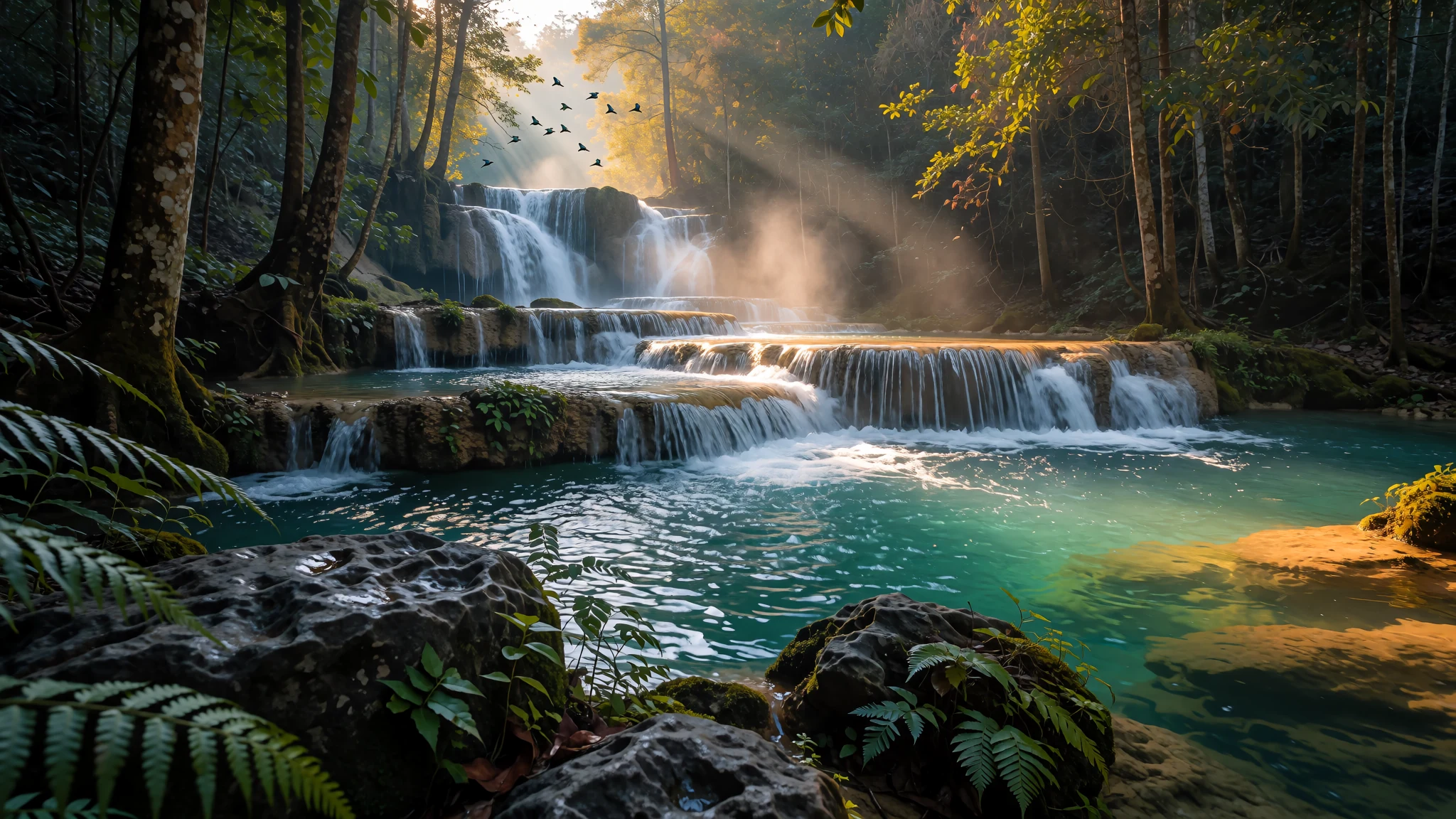
Go for the turquoise tiers of Erawan Falls, and for a cooler, quieter forest day than Kanchanaburi town offers.
The place
Erawan National Park lies in the Tenasserim Hills of Kanchanaburi Province, in western Thailand, roughly 50 kilometres northwest of Kanchanaburi town. Its 550 square kilometres stretch across several subdistricts and meet neighbouring protected land on nearly every side, so the park feels far larger than the single road that leads into it. Most of the ground is limestone mountain, with peaks reaching 996 metres, and the streams that drain these slopes drop through the forest in steps. The park was established in 1975 and was slightly reduced in area in 1995. The climate follows the monsoons, but the park sits in the rain shadow of the hills, so it receives less rain than its green canopy might suggest. Most people come for Erawan Falls, the seven-tiered cascade at the heart of the park. The rest of the park is quieter: forest trails, limestone outcrops and a few caves. Facilities are modest. The headquarters has cabins and a camping area, and a handful of restaurants serving Thai food stand just outside the entrance. Alcohol is banned in Thai national parks, so there is no bar or drinks trade inside. Weekends and Thai public holidays bring the heaviest crowds to the falls, and the walk up them can be steep, so plan for heat and an early start.
Its story
The park's formal history begins in 1975, when it was declared the twelfth national park of Thailand in the Royal Gazette and took effect the following day. Its creation was part of a wider push by then-Prime Minister Field Marshal Sarit Thanarat to set aside forest in the hill ranges of Kanchanaburi, a region where logging and clearance had been reshaping the landscape. The boundaries did not stay fixed. In 1995 the area was modified, trimmed slightly, so the park as it stands today is the product of two decisions taken two decades apart. The land itself tells a longer story. The hills are karst, formed from limestone that dissolves slowly under rain and running water, which is why the slopes are broken by cliffs, sinkholes and caves. Water finds its way through this rock and emerges as springs and streams. Several of the streams in the wider area feed the Srinagarind Dam, now part of the neighbouring Khuean Srinagarindra National Park, while others run down into the falls that draw visitors to Erawan today. The park's name is tied to its waterfall, and the falls are the piece of the story most people carry home. Much of the rest of its history, including its earlier use by local communities and the detail of how boundaries were drawn, is less well recorded in the sources available for this reading, so it is best read as a sketch rather than a full account.
What to see
- Erawan Falls — Erawan Falls, Erawan National Park
The seven-tiered waterfall is the main attraction of the park, and each tier runs a turquoise blue that is striking against the grey limestone and green forest. The walk to the top is about 2.2 km and can be steep in places, so wear proper shoes and carry water. A life vest is required if you go into the pools, and the park staff enforce this. Go early in the day, before the tour groups arrive.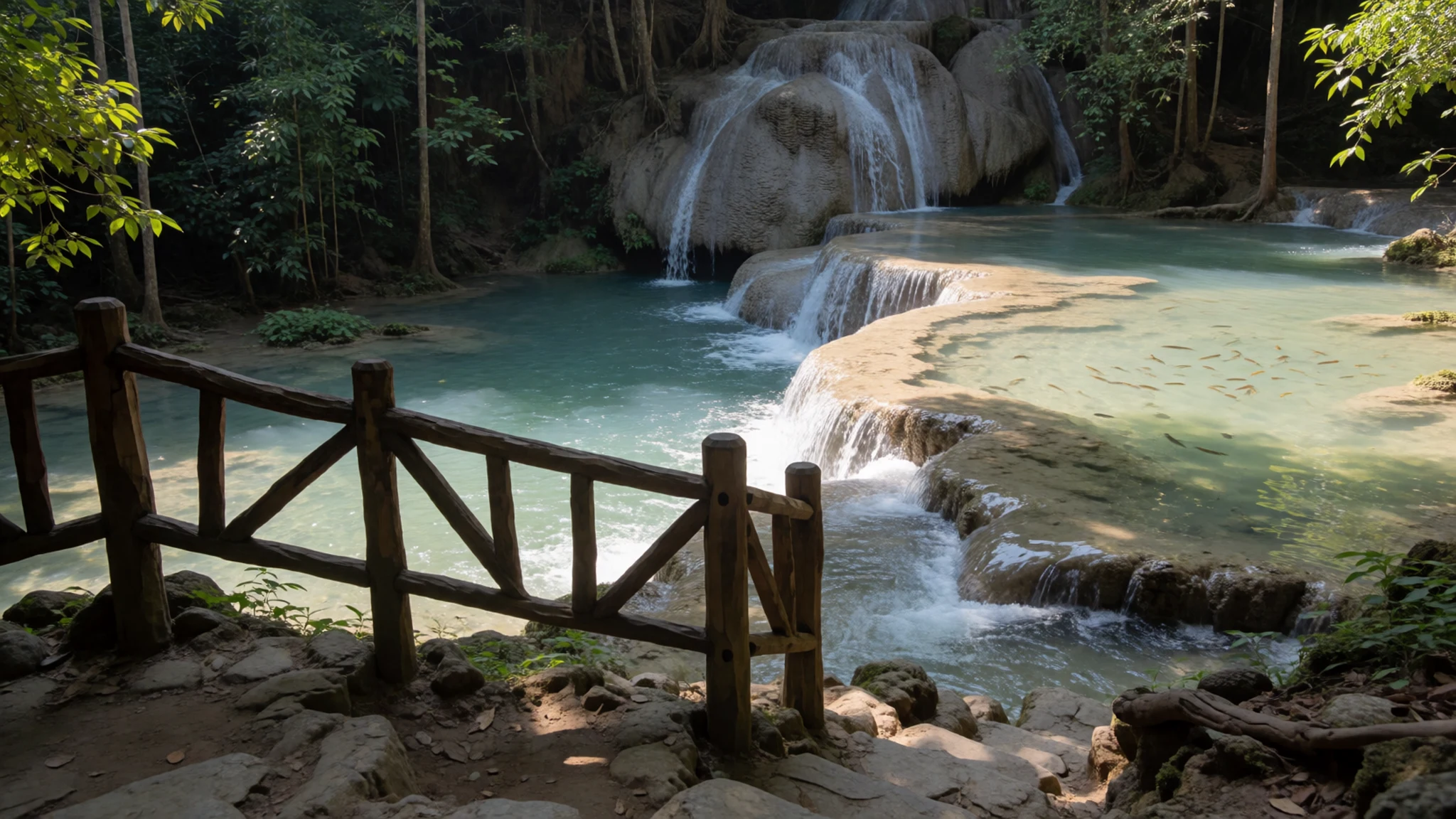
- Phra That Cave — Phra That Cave area, Erawan National Park
A short hike leads to the entrance of this limestone cave. There are no lights inside, so you need a guide to go in. Plan for a dim, cool and damp interior, and bring a torch as a backup in case the guide's light is not enough for your comfort. Check locally whether guides are available on the day you visit.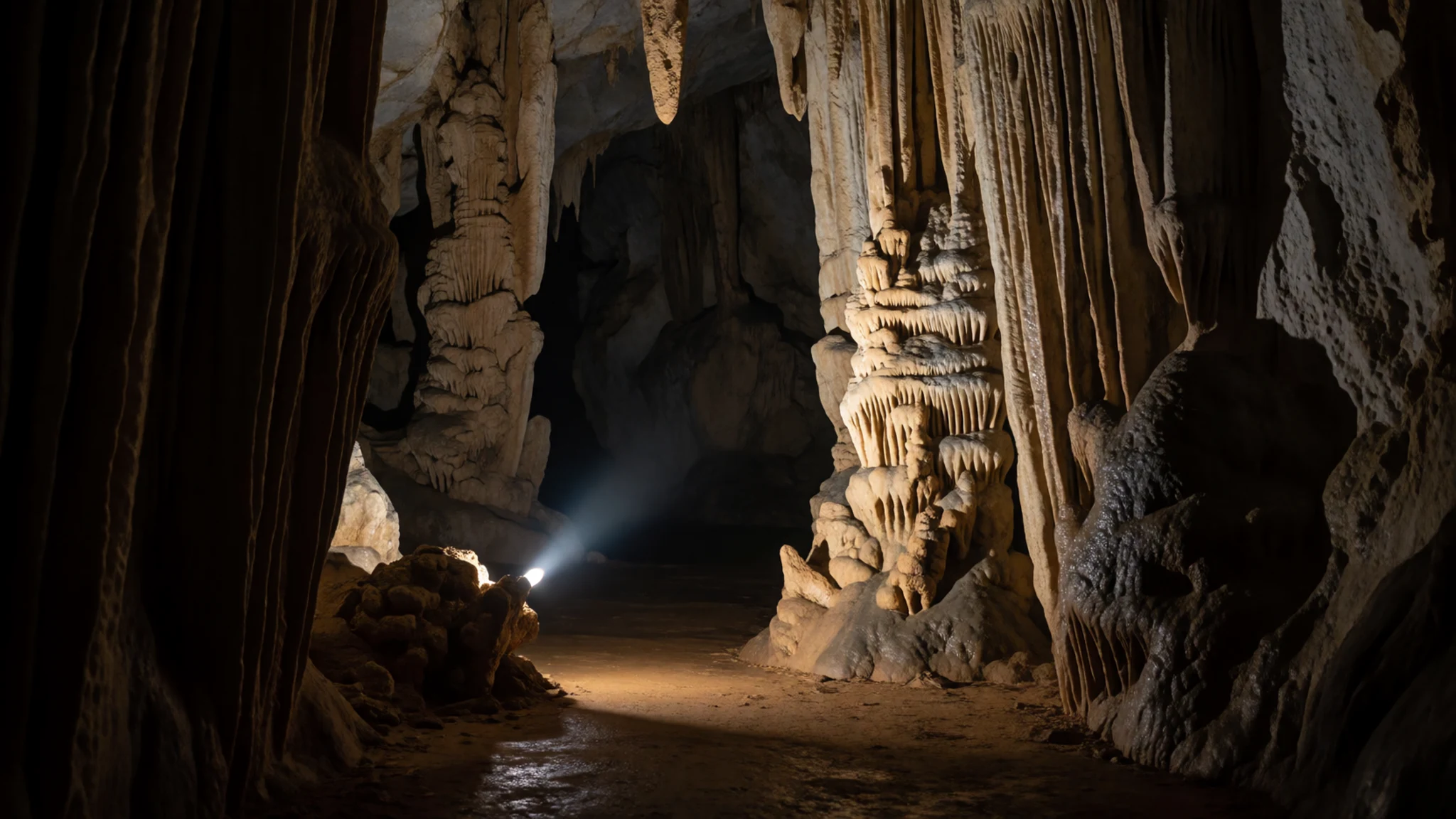
- Mong Lai Dry Evergreen Forest Trail — Trail branching from the main waterfall hike
The first of three nature study trails branches off the main waterfall hike and runs about 1.1 km through dry evergreen forest. It is the most gentle way to see the park's plants and birds without the climb to the falls. Trail signs are in Thai and English where they exist, so a park map from the headquarters helps. Mornings are the best time for birdwatching, before the heat builds.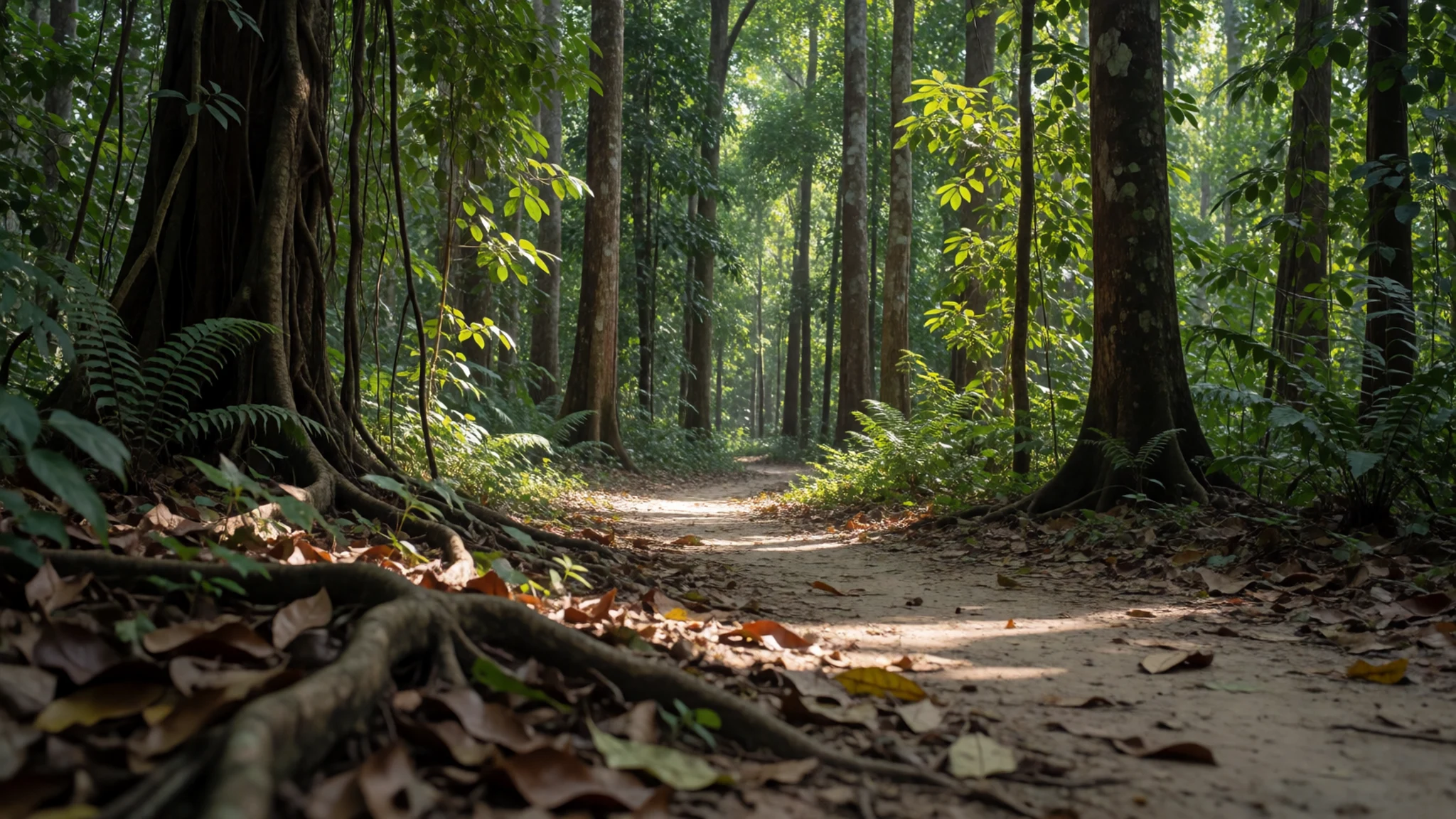
- The park headquarters and viewpoints — National park headquarters, Erawan National Park
The headquarters area is where you find cabins, the camping ground, the information desk and the start of the main walk. It is a practical base for a longer stay, and in the cooler months it makes a pleasant place to spend the afternoon. Ask the staff about the current state of trails, since some sections can be closed after heavy rain.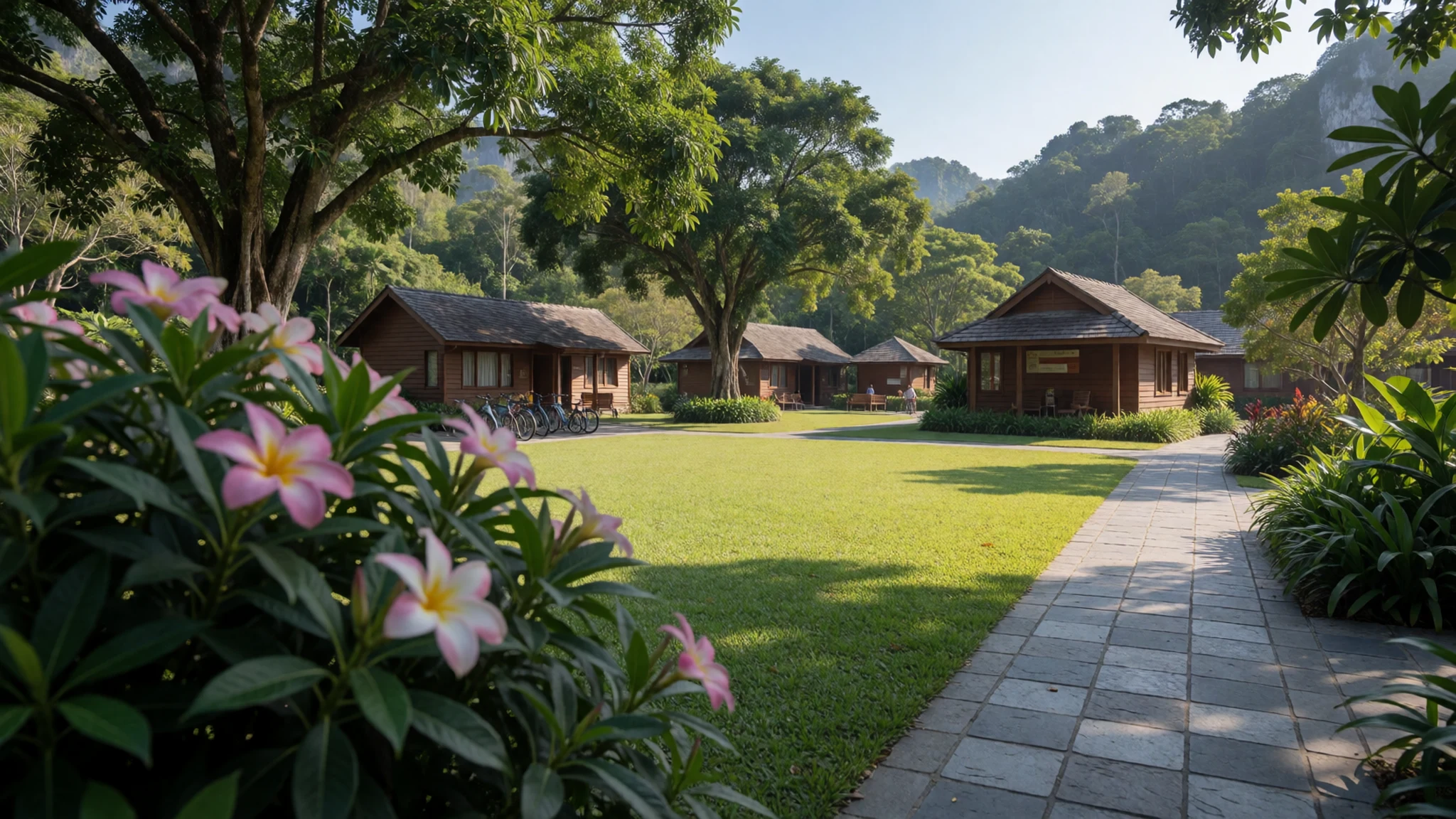
Culture
Erawan is a protected forest first and a tourist site second, and the rules reflect that. Alcohol is banned in Thai national parks, so keep drinks to water and soft drinks. Thai culture places a high value on modest dress, and while the park is relaxed, cover your shoulders and knees if you stop at a temple or a cave shrine. Visitors are expected to queue patiently at the falls, to keep the paths clear for others, and to carry rubbish back out rather than leaving it at the pools. Keep noise down near the water, and do not climb onto the rock ledges where the park staff have asked people to stay back. Before you go into the cave, follow the guide's instructions about where to walk and where to stop. In the rainy season, if the water turns suddenly brown or cloudy, leave the falls at once and follow the rangers without argument, since flash floods can arrive quickly. When you are in doubt, follow what the rangers and the guides tell you, because that is how the park stays open. Wear a life vest where it is required, and never swim past the marked areas.
What to wear
Traditional Thai dress for women is the sinh, a wrapped skirt woven in silk or cotton, often with a woven band of contrasting colour at the hem. The phasin, a tube-cut patterned cloth, is the everyday version in many regions and is still worn for work and village life. Formal events call for silk, with the wrap skirt paired with a fitted top. Men traditionally wear the pakama, a tubular wrap cloth, at home and in rural settings. The sources for this reading do not describe local textile traditions specific to the Erawan area, so these are the national patterns you will see across Thailand. In everyday life, people in Kanchanaburi wear light cotton, shorts and t-shirts, and jeans, with flip-flops or trainers, and the heat means loose, breathable clothing is the norm. For your own visit, dress for heat and for the terrain. Pack quick-drying shorts or lightweight trousers, a T-shirt you can get wet, and sturdy sandals with straps or closed trainers with good grip for the wet, slippery rock of the falls. Carry a light shirt for the cave and for sun protection. Cover your shoulders and knees if you visit a temple or a shrine on the way.
What to eat
- Grilled chicken and sticky rice — The food stalls and restaurants just outside the park entrance
Charcoal-grilled chicken, often marinated with garlic, coriander root and pepper, is served with a bag of steamed sticky rice and a sweet-sour dipping sauce. It is one of the most common roadside dishes in Thailand, and it makes a good, filling lunch to eat before or after the walk.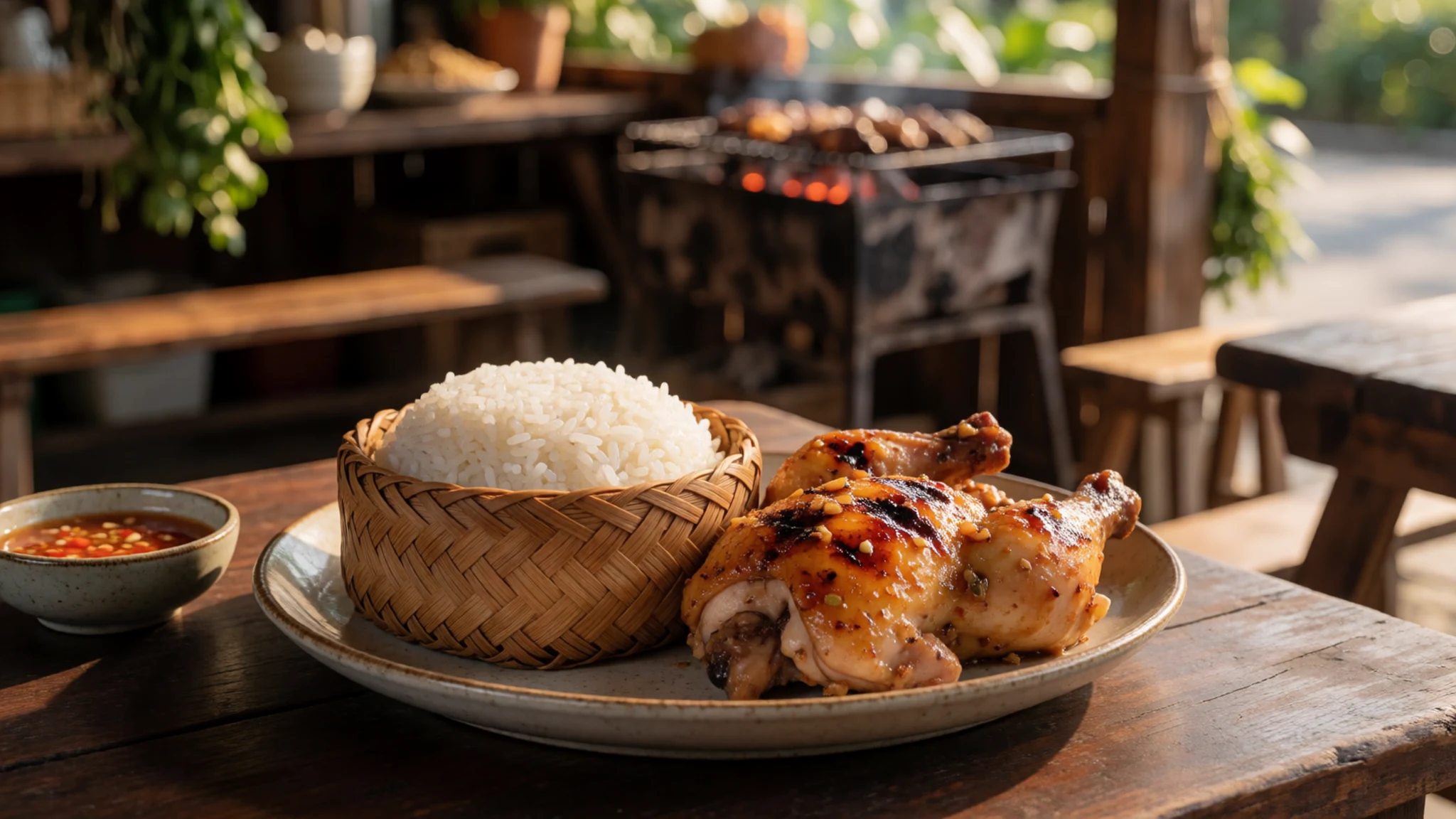
- Green papaya salad — Any restaurant serving Thai food near the entrance
Shredded unripe papaya is pounded in a mortar with chilli, lime, fish sauce, palm sugar and peanuts. It is sharp, crunchy and refreshing in the heat, and it is often ordered as a side. Ask for it mild if you are not used to chilli.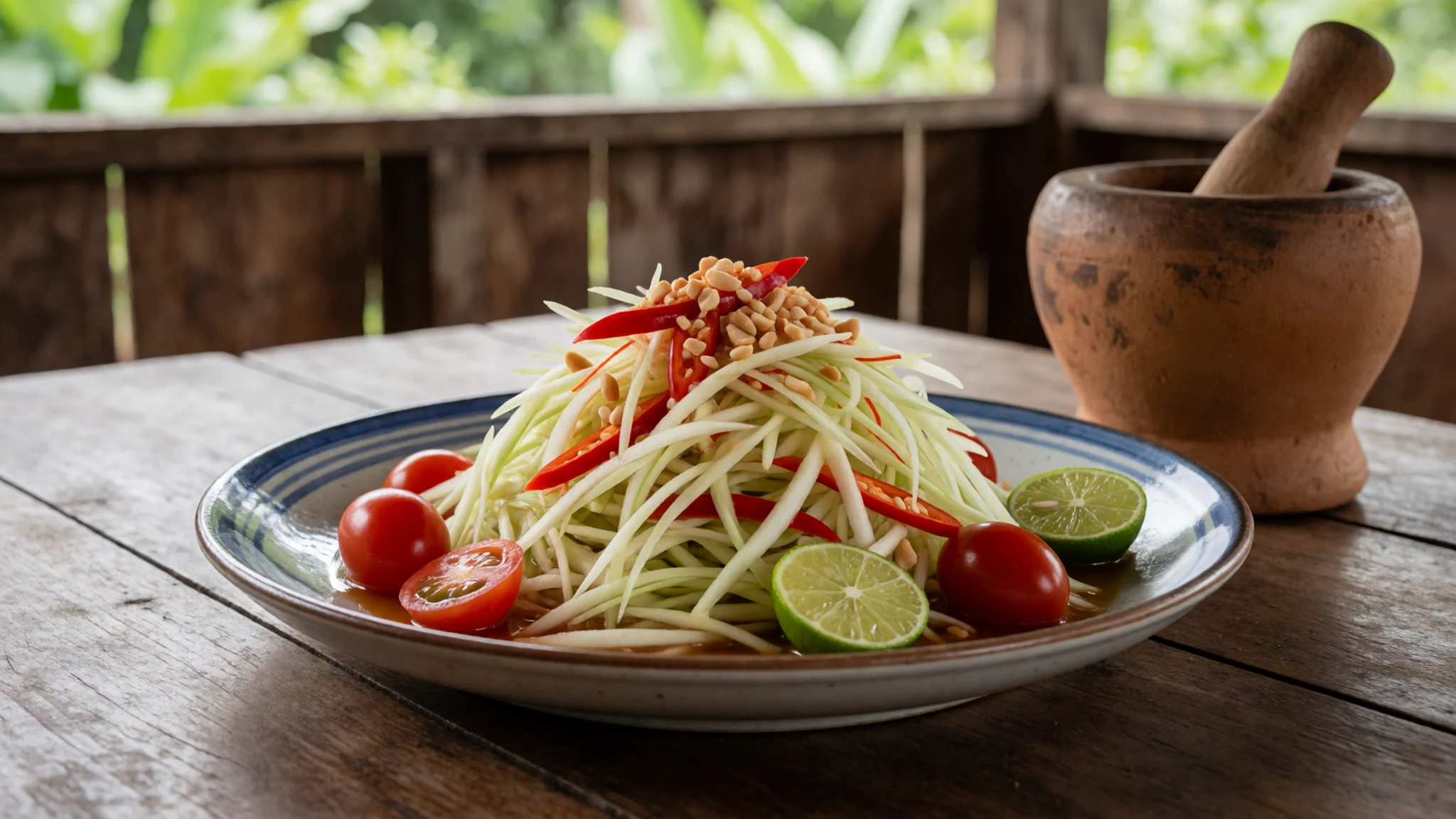
- Tom yum soup — A Thai restaurant in Kanchanaburi town on the drive back
A hot-and-sour soup built on lemongrass, galangal, lime leaves and chilli, usually with prawns or chicken. It is a standard order in Thai restaurants and works well as a restorative bowl after a steep climb.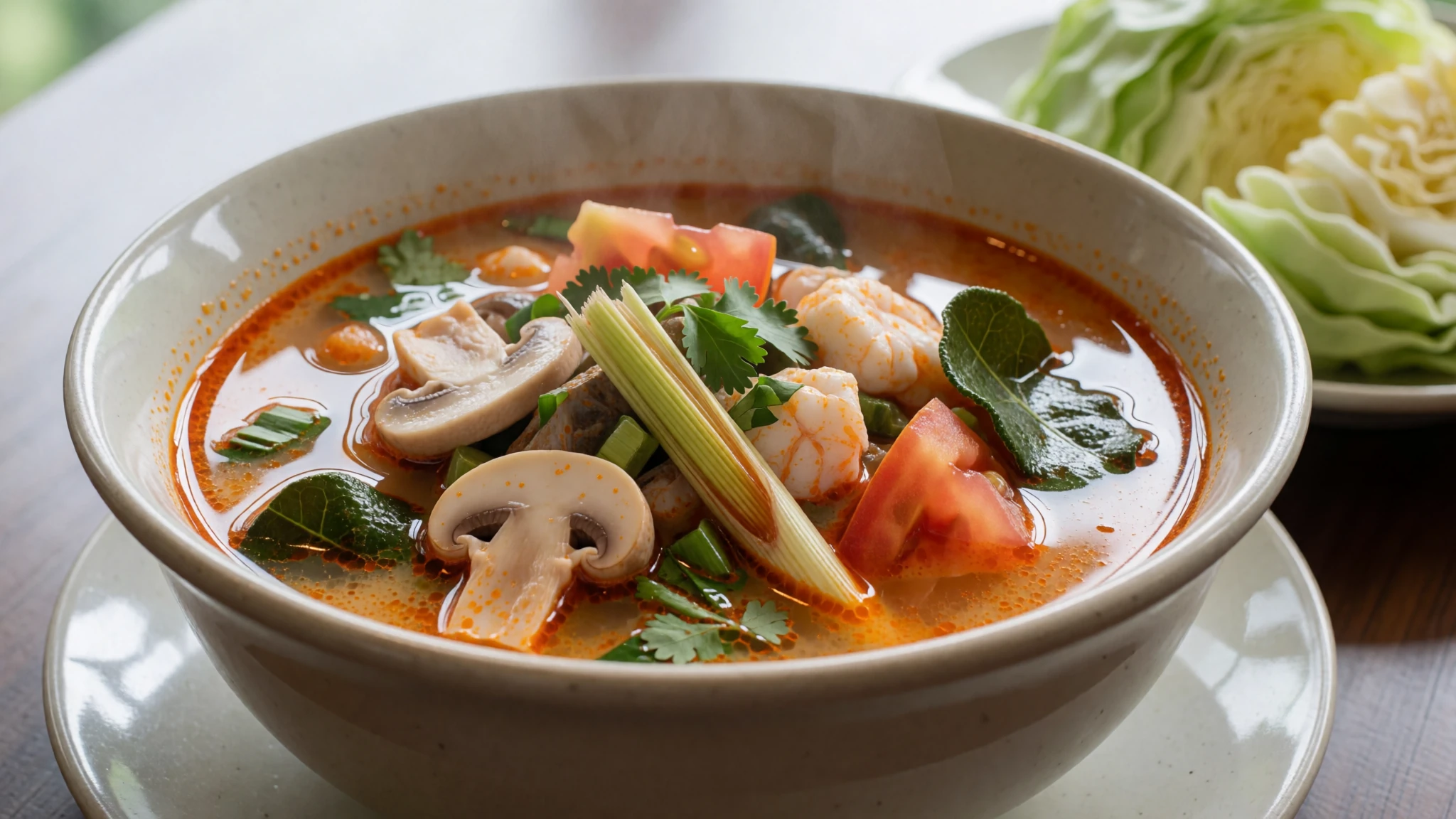
- Pork fried rice — A roadside eatery or the small restaurants at the park gate
A plain, reliable plate of fried rice with pork, egg and spring onion, served with cucumber and a wedge of lime. It is cheap, quick and easy to order at a simple restaurant if you want something light before the drive. - Fresh fruit from a roadside stall — Roadside stalls on the approach road to the park
Mango, pineapple and watermelon are sold cut into bags at many stalls on the roads around Kanchanaburi. Buy fruit for the walk, since it is easy to carry and keeps you hydrated in the heat.
Plan it
Best time. December and January are the cool, dry season and the most comfortable time for the falls and the trails. March and April are hot, and May to October is the rainy season, when the falls run strongest but flash floods can occur, so check with the park before you go.
How long. 1–2
Getting there. Kanchanaburi town is the usual base. From Bangkok, drive west on the main highways to Kanchanaburi, then follow the signed road to the park. A regular bus runs from Kanchanaburi bus station toward the park during the day, but check the current timetable locally, since services change.
Budget. low
Tips
- Start the walk to Erawan Falls early, before the heat and the tour groups arrive
- Book cabins at the headquarters well in advance through the official national park website
- Carry cash for food stalls and small purchases, as card payment is not reliable at the park
- Bring more water than you think you need, and wear shoes with good grip for wet rock
- Check with rangers about flash flood conditions before you go in the rainy season
Etiquette
- Wear a life vest where it is required and stay inside the marked swimming areas
- Take your rubbish back out with you and keep the paths clear
- Follow the guide's instructions when you enter the cave, since there are no lights inside
Nearby
Sources
- Wikidata Q990128 (CC0)
- Wikipedia: Erawan National Park (rev 1379528553) (CC BY-SA 4.0)
- Wikivoyage: Erawan National Park (rev 5133572) (CC BY-SA 4.0)
- Erawan National Park, Nina R (CC BY 2.5)
- Erawan Waterfall, Kanchanaburi Province, Diliff (CC BY 3.0)
- Siberian Chipmunk, AndiW (Public domain)
- Scaly-breasted munia, Yathin S Krishnappa (CC BY 3.0)
- Erawan waterfall tier 5, Chris huh (CC BY 3.0)
- อุทยานแห่งชาติเอราวัณ ดอกไม้บนที่สูง, ํีนาถชนน์ ลำภูเงิน (CC BY-SA 4.0)
- อุทยานแห่งชาติเอราวัณ น้ำตกชั้นที่สูงที่สุด, ํีนาถชนน์ ลำภูเงิน (CC BY-SA 4.0)
- อุทยานแห่งชาติเอราวัณ คนกับน้ำตกชั้นที่สูงที่ลุด, ํีนาถชนน์ ลำภูเงิน (CC BY-SA 4.0)


