Eltz Castle
Eltz Castle, Germany
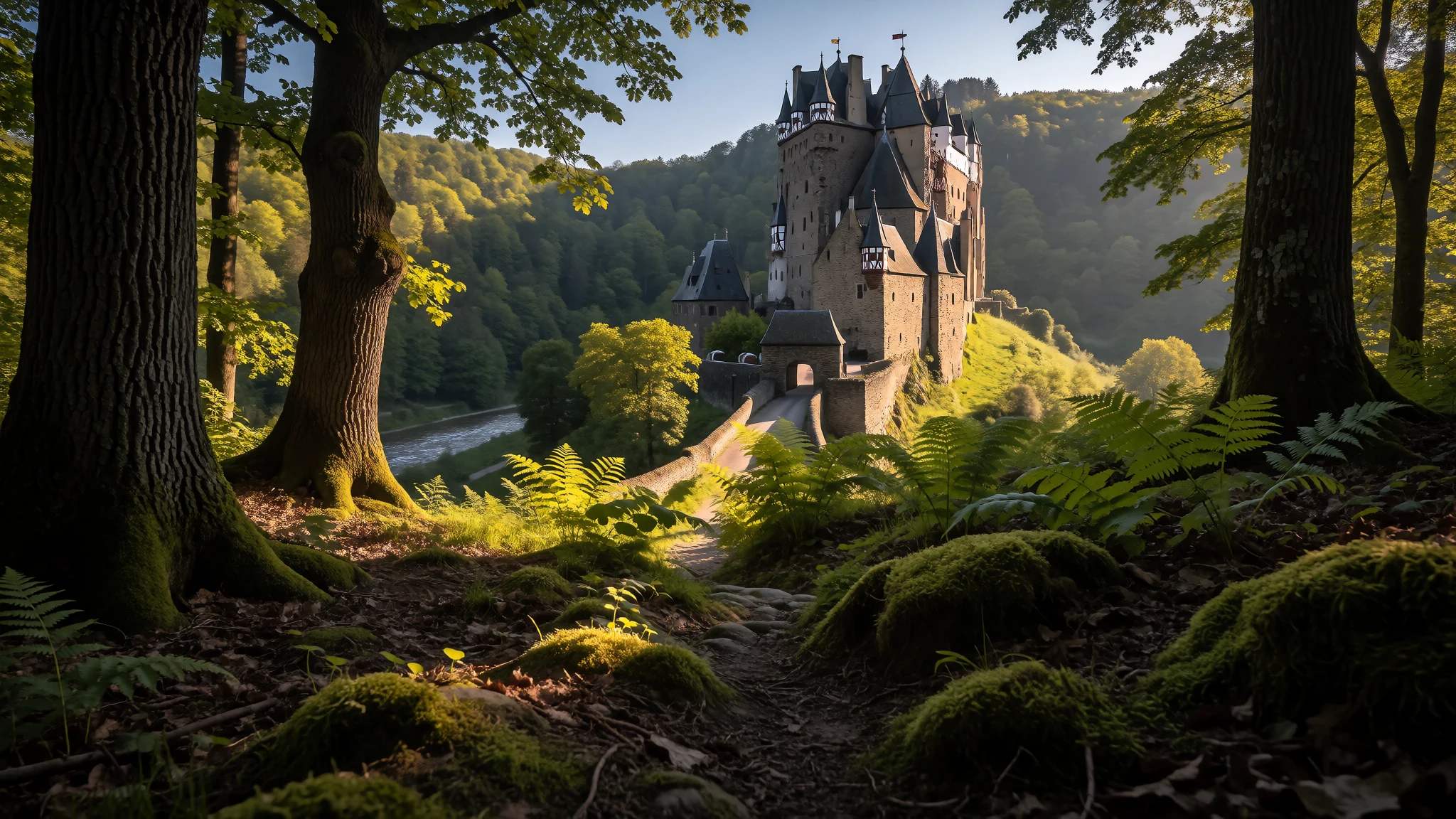
Eltz Castle rises from a forested valley above the Moselle, a medieval home never destroyed and still owned by the Eltz family.
The place
Eltz Castle (Burg Eltz) sits in the hills above the Moselle, between Koblenz and Trier in western Germany, yet it is tucked out of sight of the river itself. It stands on a rock spur about 70 metres high, with the Elzbach curling round three sides, and the forest presses in so closely that the towers only show themselves as the path drops towards them. The silhouette is a tall, crowded cluster of half-timbered upper floors, turrets and steep slate roofs, squeezed onto a small footprint because the rock allowed nothing wider. Several branches of one family built their own houses here, so the castle reads as a set of homes sharing a courtyard rather than a single grand design. A branch of the House of Eltz still owns it, and the family has lived here since the 12th century. It is one of only three castles in the Eifel region that have never been destroyed, the others being Bürresheim and Lissingen. The surrounding Eltz Forest is a protected nature reserve, which is part of why the approach feels more like a woodland walk than a trip to a monument. Wikidata classes the place as both a castle and a museum, and that fits: rooms are open to visitors while the family's ownership carries on. Opening dates and tickets change, so the official site, https://burg-eltz.de/, is the place to check. Most people arrive on foot, either from a car park or from the river valley, and the descent through trees is a large part of the experience.
Its story
Eltz Castle grew out of a landscape that mattered for trade long before any castle stood there. In Roman times the route linked rich farmland with its markets, and after the western empire collapsed the Franks took the area. The first building on the rock was a simple manor hall with an earthen palisade. The Eltz family later raised the Platteltz, a Romanesque keep, on the same spot, and it remains the oldest part of the castle. By the 12th century the fortress sat within the Holy Roman Empire and helped guard the roads from the Moselle valley and the Eifel. Its one serious military test came in the 14th century, in the Eltz Feud. Local lords and free imperial knights, Johann of Eltz among them, resisted the territorial ambitions of Balduin, Archbishop-Elector of Trier. Balduin besieged the castle, battering it with early cannon and catapults fired from a small siege castle, Trutzeltz, built on the hillside above. A few ruined walls of Trutzeltz can still be seen. After two years the knights accepted Trier's authority, and Johann was reinstated only as Balduin's vassal. Peace let the castle grow upward in late Gothic style, as family branches added the Rodendorf houses, with their flag hall and vaulted banner-room, and the Rübenach wing. In the 17th century the Kempenich branch replaced the original hall.
What to see
- The courtyard and façades — Inside the castle walls
The inner courtyard is where the family houses crowd together, with timber-framed storeys leaning out over stone bases and turrets at odd angles. It is the best place to understand how separate households shared one rock. Look up as much as across; the roofline is the show.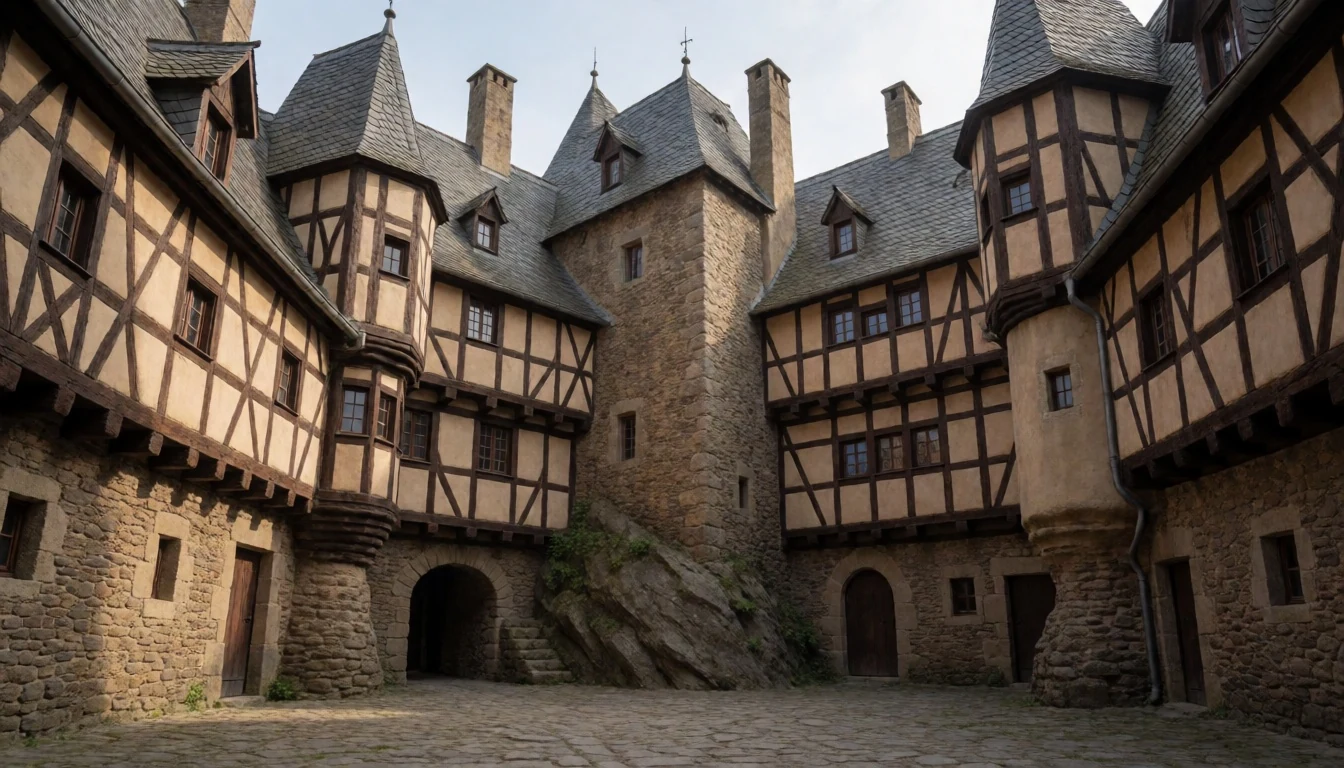
- Trutzeltz and the valley viewpoints — Hillside above the castle
The ruined walls of Trutzeltz, the siege castle from the Eltz Feud, stand on the slope above. The paths near it give the classic views down onto the towers among trees. In mist the castle seems to float, and in summer leaf it nearly vanishes.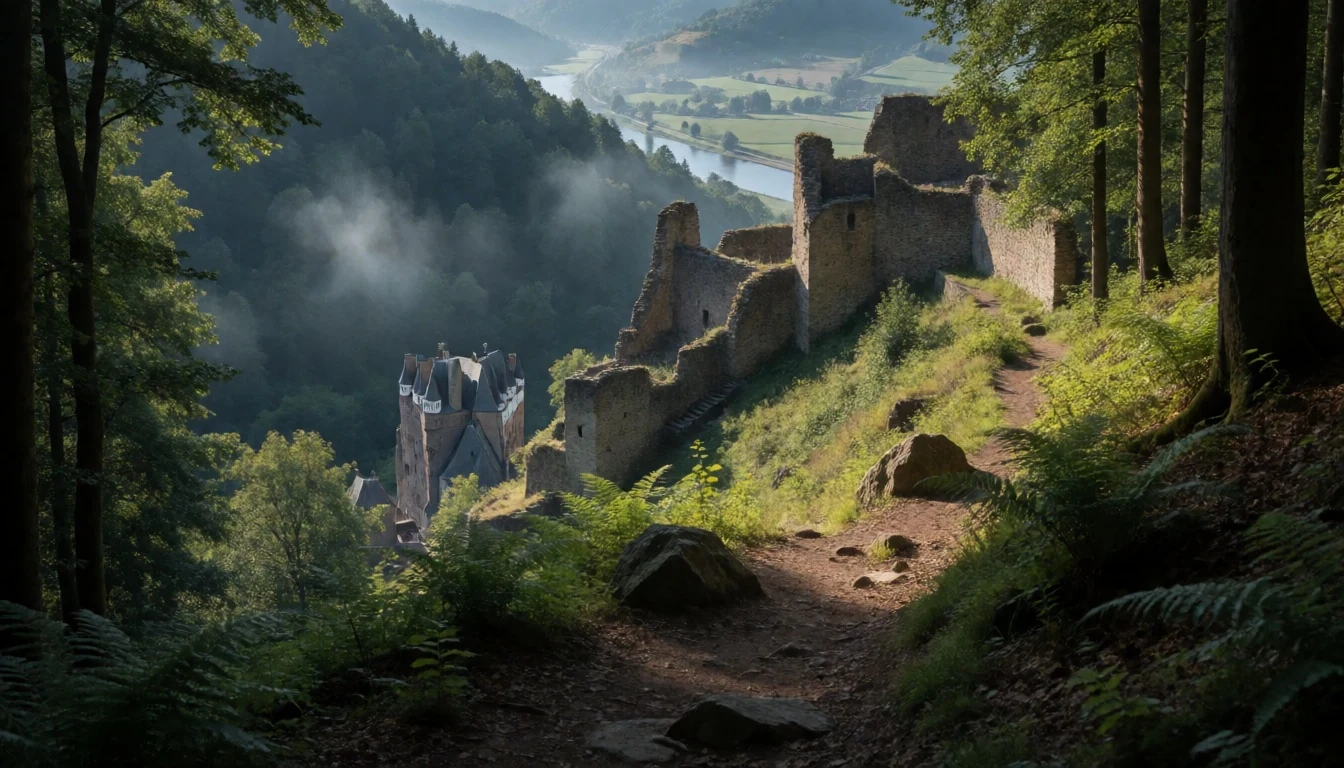
- The Rodendorf houses — Castle interior
The Greater Rodendorf House is the tallest block, begun in the late Gothic period. Its oldest part is the flag hall, with a vaulted ceiling that was probably a chapel first. The Little Rodendorf house holds the vaulted banner-room. Both show how a knightly family lived upward when the rock gave no space sideways.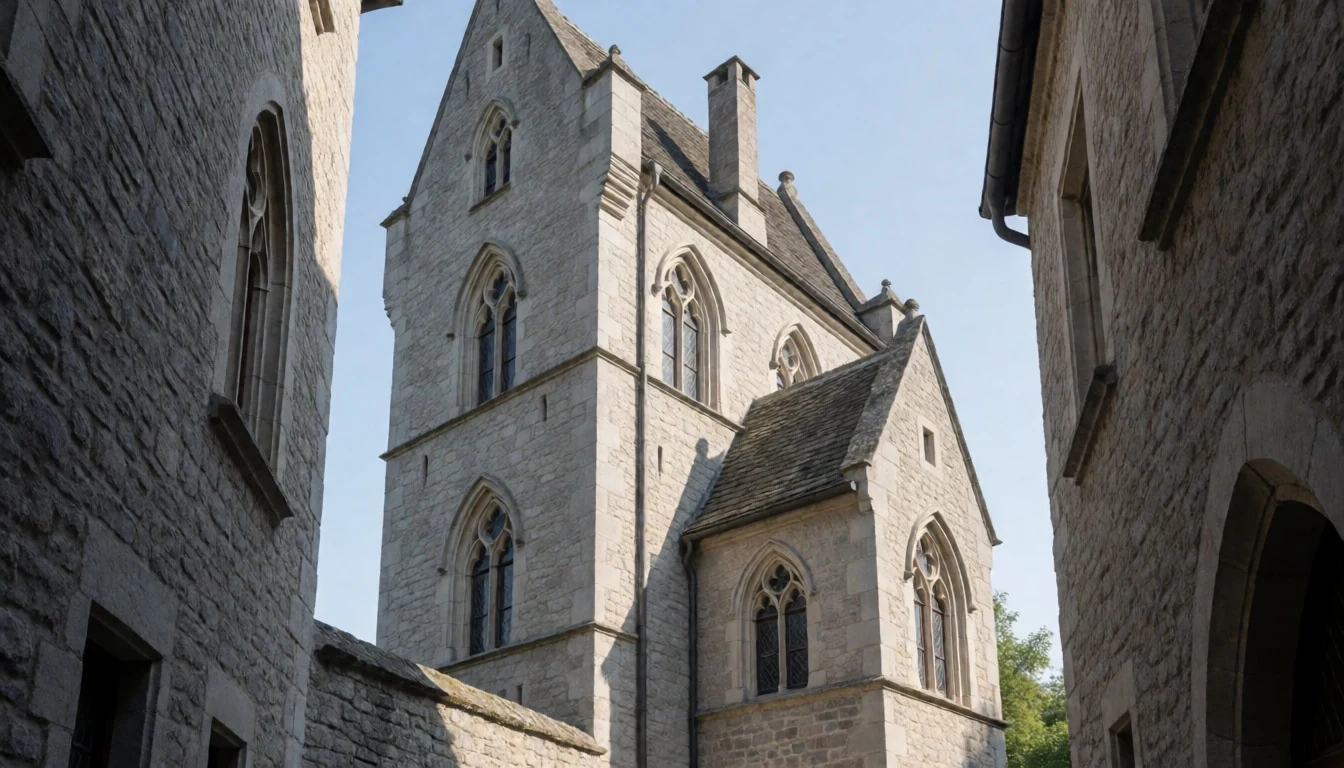
- The Rübenach wing — Castle interior
The Rübenach family's wing contains a lower hall, a living room and a bedchamber with richly decorated walls. These rooms are the most domestic part of a visit, and they make the point that Eltz was always a home before it was a monument. Interiors are usually seen on a guided tour; check the official site.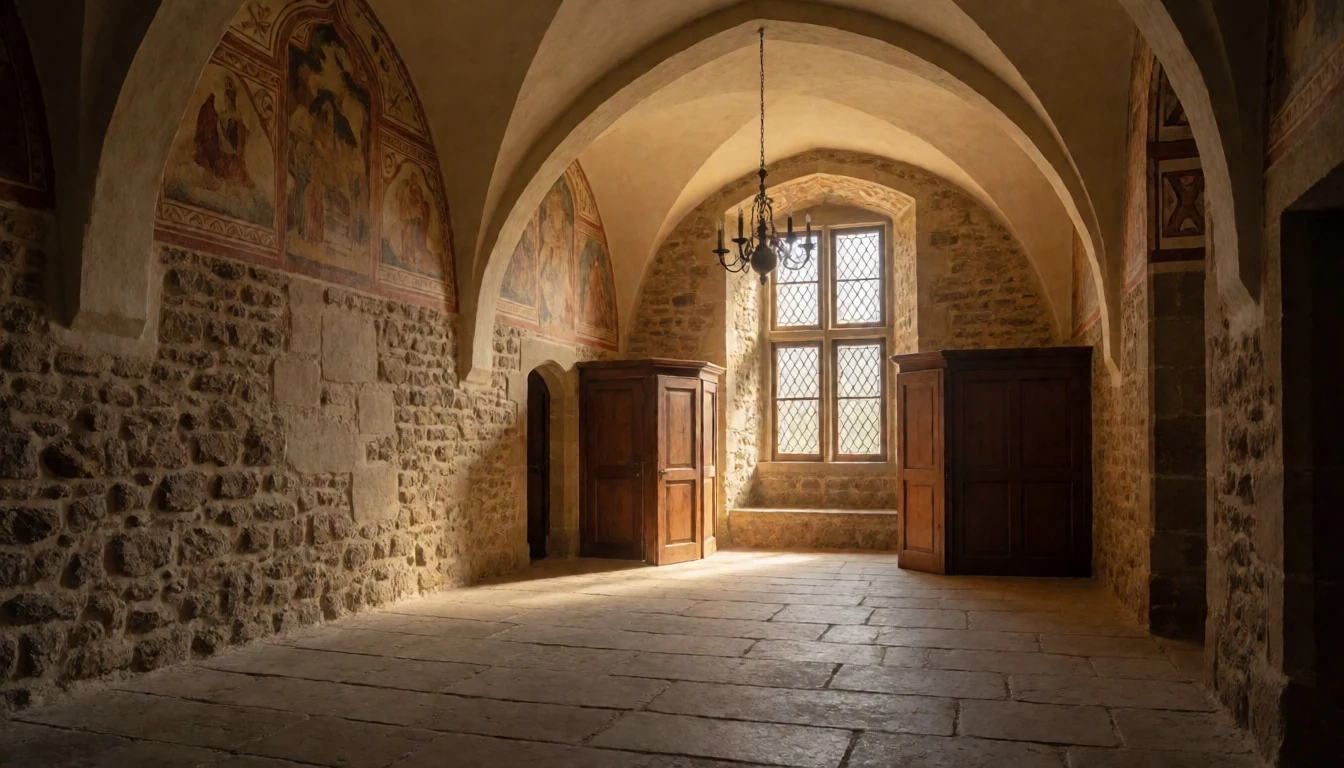
- The forest approach — Eltz Forest, Elzbach valley
The walk in along the Elzbach through the nature reserve is worth taking in its own right. The towers appear gradually through the trees, and the stream and steep wooded sides explain why the spur was so easy to defend. Sturdy shoes matter more than any plan.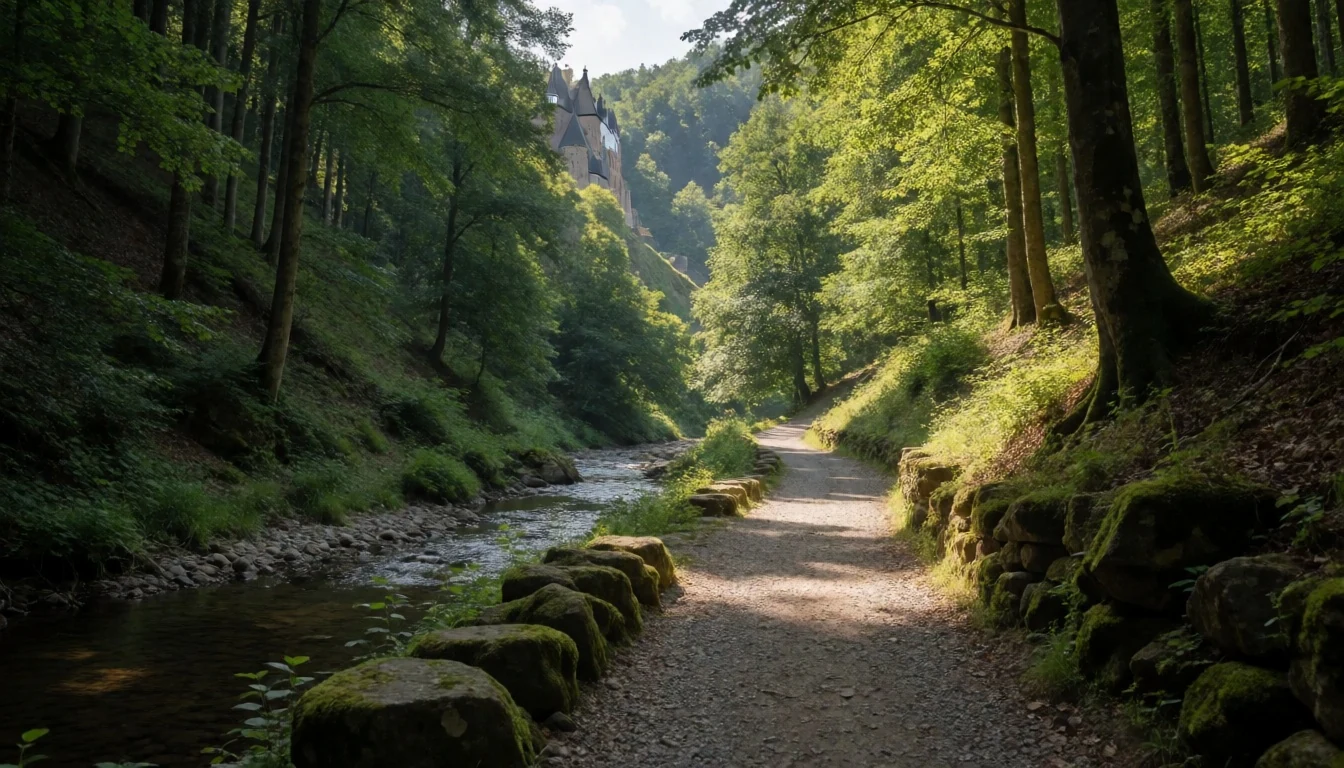
Culture
Eltz Castle belongs to the Moselle and Eifel country of Rhineland-Palatinate, a region of steep vineyards, small wine villages and a long Catholic and agricultural rhythm. What sets the castle apart is continuity. Instead of being a ruin or a state-run palace, it is a family seat that has passed down within the House of Eltz since the 12th century, and the branches that built its separate houses took their names from estates elsewhere, such as Rodendorf in Lorraine and Rübenach near Koblenz. That shows in the way the rooms are kept: banners, weapons, furniture and painted walls sit as the household left them rather than as a museum would stage them. The region around it lives on wine, forestry and, increasingly, visitors, and local people tend to be proud but unfussy about the castle. Harvest time brings new wine and onion tart to village taverns, and church bells mark Sundays in every parish. German visitors treat the forest as a place for walking and quiet, so the path to the castle is usually calm even when the courtyard is busy. Guided tours are given in German or English depending on the day, and guides expect questions at the end rather than during rooms. Keep your voice low on the forest path and in the rooms, follow the guide's instructions about photography indoors, and leave the vaulted halls exactly as you found them.
What to wear
Eltz Castle sits in a part of Germany where the old regional costume has mostly retreated to festivals. Wine queens and village societies still dress in traditional outfits for harvest and Moselle wine-festival parades, typically a fitted bodice, full skirt and apron in wool or cotton for women, and waistcoats and dark jackets for men, but this is occasional dress, not daily wear. The bold Alpine dirndl and lederhosen belong to Bavaria, not here, and are best treated as a costume if you see them. Everyday clothing in the Moselle and Eifel is practical and low-key: walking trousers, fleeces, waterproof jackets and sturdy shoes for locals and day-trippers alike, with smarter shirts or jackets for wine taverns and evenings. Visitors should dress for the walk rather than the building. The path to the castle goes down through forest and can be steep, muddy or leaf-slick, so shoes with grip are far better than sandals or smooth soles. Spring and autumn mornings are cool and damp in the valley, so bring layers and a light rain jacket, and summer days can be warm but shaded under trees. The castle is not a religious site, so no special covering is needed, though the stone interiors feel cold even in summer and a thin extra layer helps on a tour.
What to eat
- Moselle Riesling — Wine taverns (Weinstuben) in the Moselle villages, and estate wine shops along the river
The steep slate slopes of the Moselle produce Riesling that ranges from bone dry to gently sweet. A glass in a village tavern, often with a plate of local bread and cold meats, is the natural way to end a day at the castle.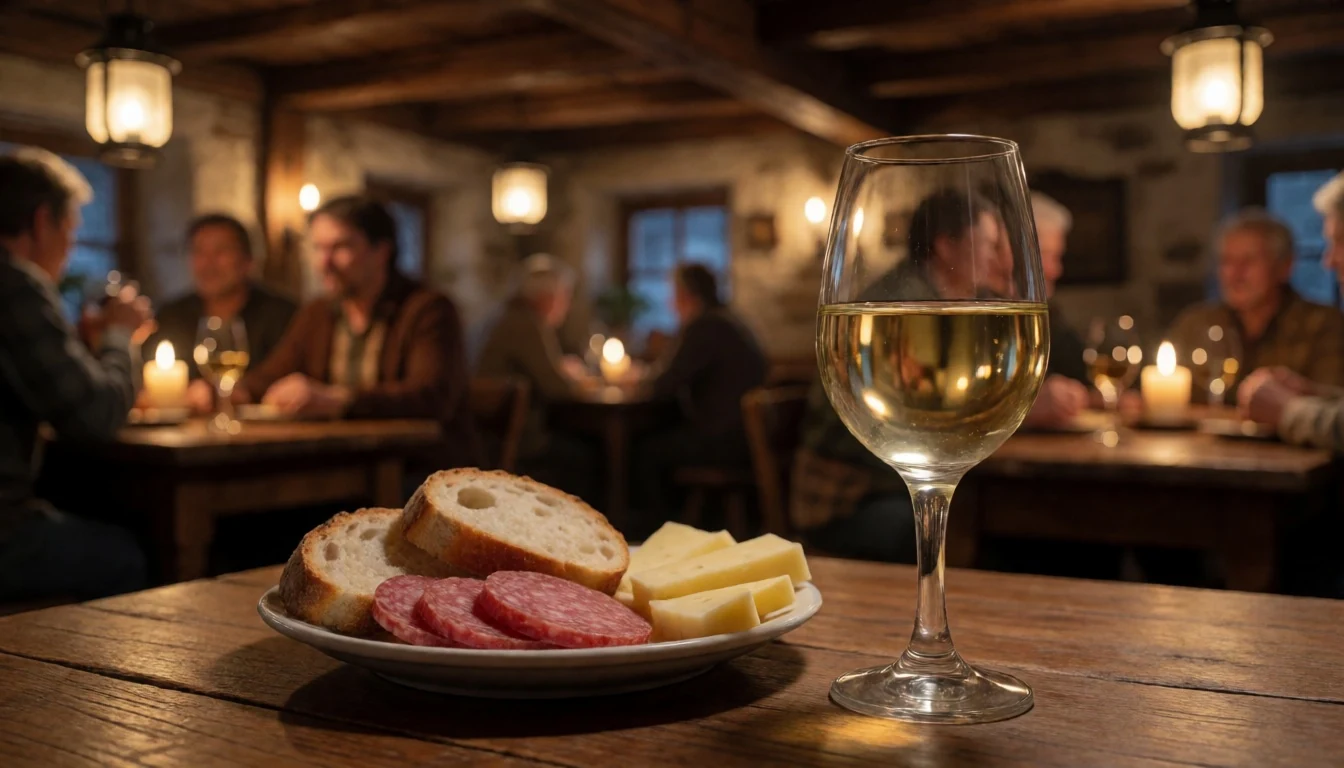
- Flammkuchen — Tavern gardens and casual eateries in river towns
A thin, crisp flatbread spread with cream, onions and bacon, cut into strips and shared at the table. It is not unique to this valley, but it is easy to find in the region and suits a glass of Riesling very well.
- Zwiebelkuchen with Federweisser — Wine villages during the autumn harvest
Onion tart, warm and soft, eaten with cloudy, half-fermented young wine called Federweisser. It is a seasonal pairing of the harvest weeks, so ask in September and October at taverns and village stalls. Federweisser is stronger than it tastes. - Reibekuchen — Market stalls and festival stands in the Rhineland and Eifel
Crisp fried potato pancakes, often served with apple sauce or, for a savoury version, with bread and smoked fish. They are cheap, filling street food and a good option for a walking day through the forest. - Rheinischer Sauerbraten — Traditional restaurants and inns across the Rhineland
Beef marinated for days in vinegar and spices, then braised and served with a sweet-sour gravy, potato dumplings and red cabbage. It is a heavier meal and best saved for a cool evening after the walk.
Plan it
Best time. April–June and September–October. Spring brings fresh leaf and cooler walking, early autumn brings vineyard harvest and colour in the forest, while summer is warmer and busier and winter is cold, damp and often closed to visits, so check the official site before travelling.
How long. 1–2
Getting there. Fly into Frankfurt, then take a train to Koblenz or Cochem on the Moselle line. From there local trains and taxis reach the valley near the castle, and the final leg is a walk through the forest from a car park or from the river village of Moselkern. Check the official site, https://burg-eltz.de/, for current access and any shuttle service.
Budget. mid
Tips
- Arrive early or late in the day, since tour groups cluster around midday
- Wear shoes with grip, because the forest path can be steep and slippery after rain
- Check the official site for opening dates, tour times and ticket options before you set out
- Carry some cash and water, as facilities by the castle are limited
- Combine the visit with a wine village on the Moselle for lunch or an evening meal
Etiquette
- Follow your guide's instructions about photography and touching objects indoors
- Keep to the marked paths in the nature reserve and take your litter with you
- Keep voices low in the forest and the rooms
Nearby
Sources
- Wikidata Q153426 (CC0)
- Wikipedia — Eltz Castle (CC BY-SA 4.0)
- Wikivoyage — Eltz Castle (CC BY-SA 4.0)
- Johannes Dörrstock, Burg Eltz am frühen Morgen (CC BY-SA 4.0)
- Clementp.fr, Le château d'Eltz (Burg Eltz) en allemagne (cropped) (CC BY-SA 4.0)
- Carsten Steger, Aerial image of the Eltz Castle (view from the south) (CC BY-SA 4.0)
- Rumpadong, Eltz Castle with surroundings, summer of 2022 (CC BY-SA 4.0)
- BeckenhamBear, Schloss Elz, c. 1860 (CC BY-SA 4.0)
- Dkvtig, Burg Eltz und Trutzeltz, August 2019 (CC BY-SA 4.0)
- Dirk Vorderstraße, Burg Eltz (10561184156) (CC BY 2.5)
- salomon10, Burg Eltz (37674849212) (CC BY 2.5)


