El Tajín
El Tajín, Mexico
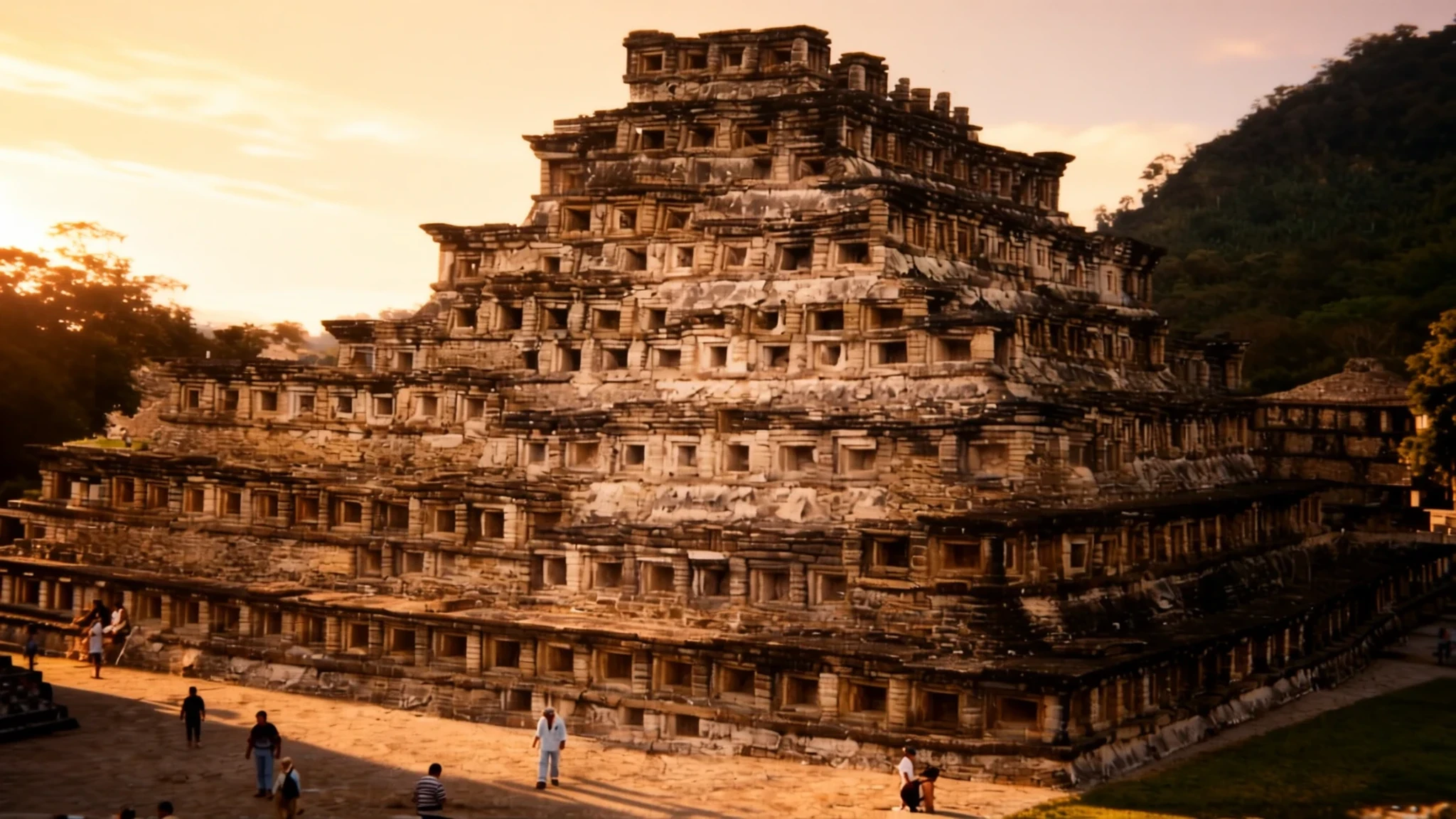
A Classic-era Totonac-region city of pyramids, ballcourts and carved niches, best seen in the cooler months of the dry season.
The place
El Tajín is a pre-Columbian archaeological site in the Mexican state of Veracruz, set in low rolling hills that run from the Sierra Madre Oriental down towards the Gulf coast. The ruins sit in the highlands of Papantla municipality, not far from the town of Poza Rica. At its peak, roughly from 600 to 1200 CE, it ranked among the great urban centres of Mesoamerica's Classic period, counted among its biggest. The name comes from the Totonac rain god.
The city grew up around two streams that merge into a tributary of the Tecolutla River. Most of the major buildings cluster at the southern end, where the ground is flat and the streams meet, while terraces to the northwest held buildings for the elite. Households of lesser means lived on the hills to the east and west. Walking the site, you move between pyramids, temples, palaces and ballcourts. What sets it apart is the decorative niche work and the use of cement in forms found almost nowhere else in Mesoamerica.
The site is open-air with a lot of stone steps and little shade, so plan the main walk for the morning. Allow at least a couple of hours for the central area, longer if you like studying the carvings. Weekends and holidays bring domestic visitors in numbers. Bring water and a hat, and expect the heat to build quickly once the sun is up.
Its story
People have lived in this part of Veracruz for thousands of years. Archaeologists trace occupation back to around 5600 BCE, when hunter-gatherers gradually settled into farming and built more complex communities. The neighbouring Olmec civilisation, which rose around 1150 BCE, quickened that change, although Olmec settlers never arrived here in large numbers. Who founded the city remains uncertain. Some scholars point to the Totonacs, others to the Xapaneca, and a good deal of evidence suggests the Huastec were living here when the settlement took root. Big building began soon after, and by about 600 CE El Tajín had become a city.
Its rise owed much to geography. The city sat on old Mesoamerican trade routes and could control goods moving in and out, from vanilla to materials from further afield. Objects from Teotihuacan turn up in the early layers, a sign of far-reaching contacts. Between 600 and 1200 CE the city-state grew powerful enough to govern much of what is now Veracruz state. It was tightly centralised and home to people of more than fifty ethnic backgrounds. Its food came from the surrounding lowland fields, which grew staples and luxuries such as cacao, shown in a carved panel on the Pyramid of the Niches.
Religion turned on the movements of the Sun, Moon, stars and planets, and on the ballgame and pulque. That belief explains the many temples and an unusually large number of ballcourts. Its influence spread to neighbouring sites such as Yohualichan, which carries the same niche style. By 1785, when a government inspector came upon the Pyramid of the Niches, no European seemed to have known the city existed.
What to see
- Pyramid of the Niches — Main site, southern end
The best-known monument at El Tajín, this pyramid is covered with rows of small recessed niches across its faces, the feature that gives the site its character. One of its carved panels shows a ceremony held at a cacao tree, a reminder of how much the city relied on crops from the lowlands. Give it time, since the steps are steep and the front is where most photographs are taken.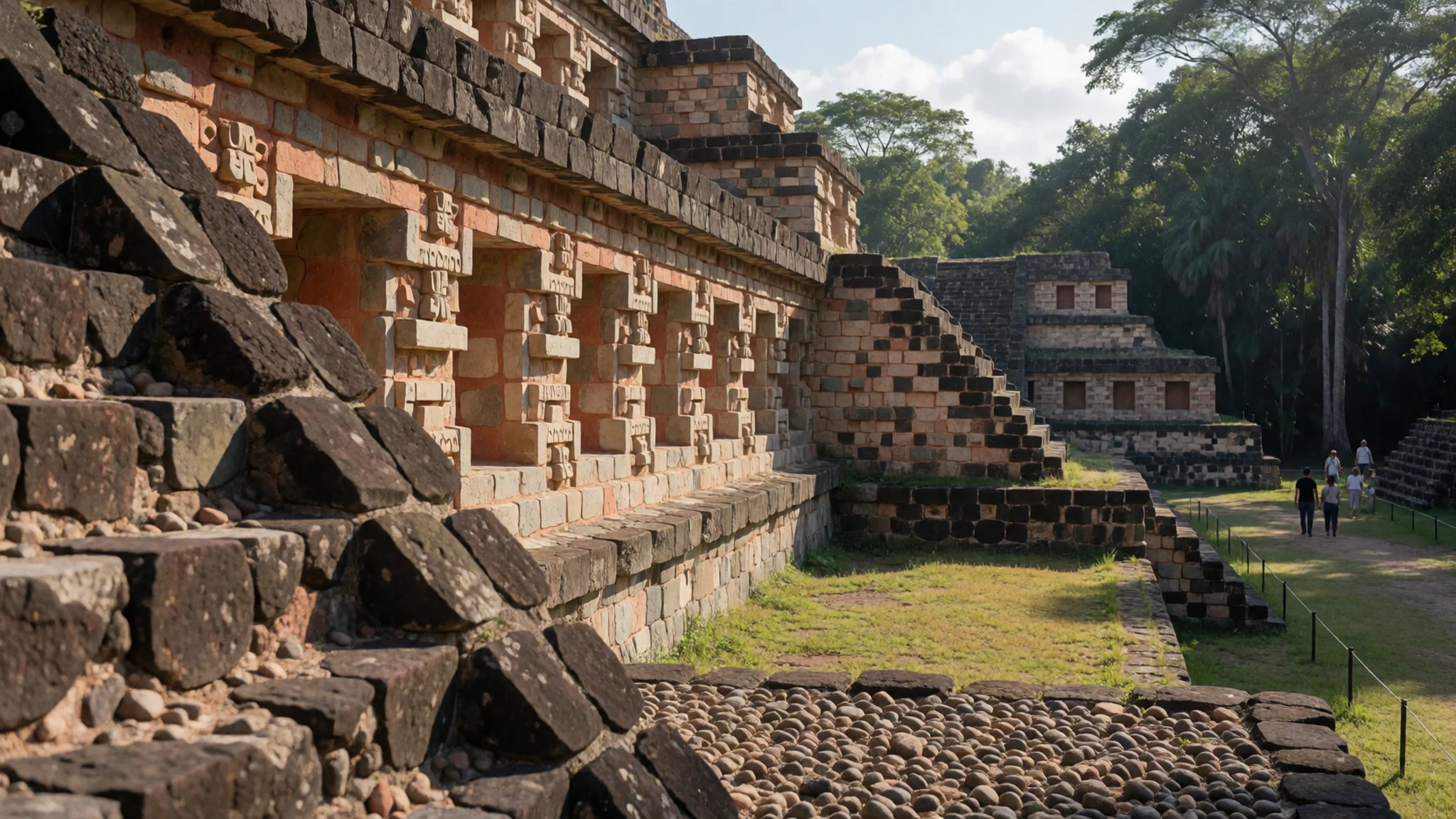
- Arroyo Group — Main site, flat ground by the streams
This cluster of structures sits near the streams that gave the city its drinking water and shaped how it was laid out. Pause here to see how the buildings step down towards the flat ground where the two channels meet. It is a good place to understand how the city was organised around its water supply before you move on to the bigger monuments.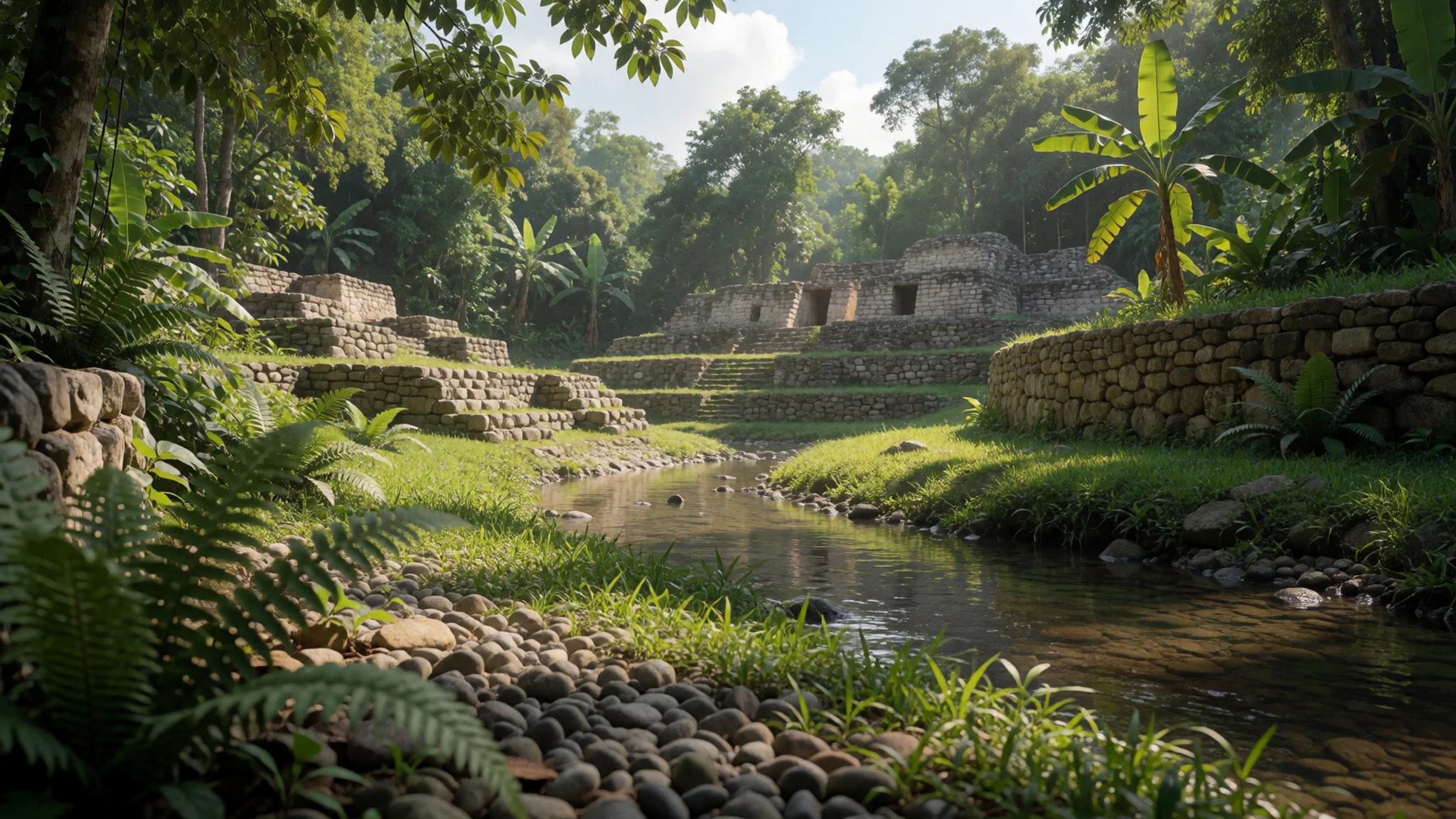
- North and South Ballcourts — Main site, ceremonial area
Twenty ballcourts have been identified at El Tajín, and the most recent three were found only in March 2013. The ballgame was central to the city's religion, so these courts are where the site's ritual life is easiest to picture. Stand at one end, look along the sloping walls and imagine the play that once filled them.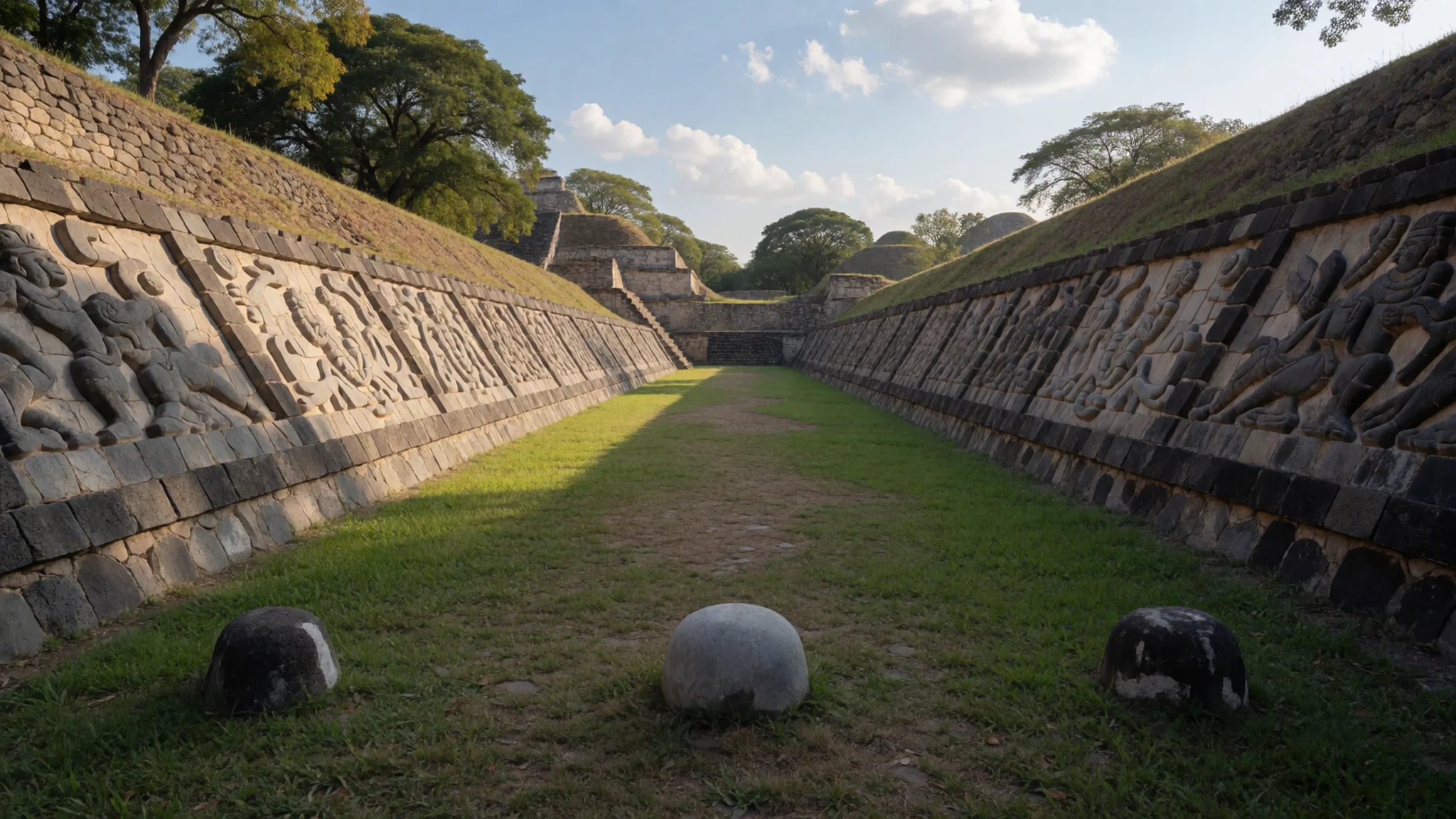
- Palaces of Tajín Chico — Short walk from the main group
A short walk from the main group, Tajín Chico holds palace complexes that were probably home to the city's elite. The rooms and courtyards are more modest than the pyramids, but they help explain how power and daily life were arranged. Combine a visit here with the main site if you have the energy, and plan the walk around the heat of the day.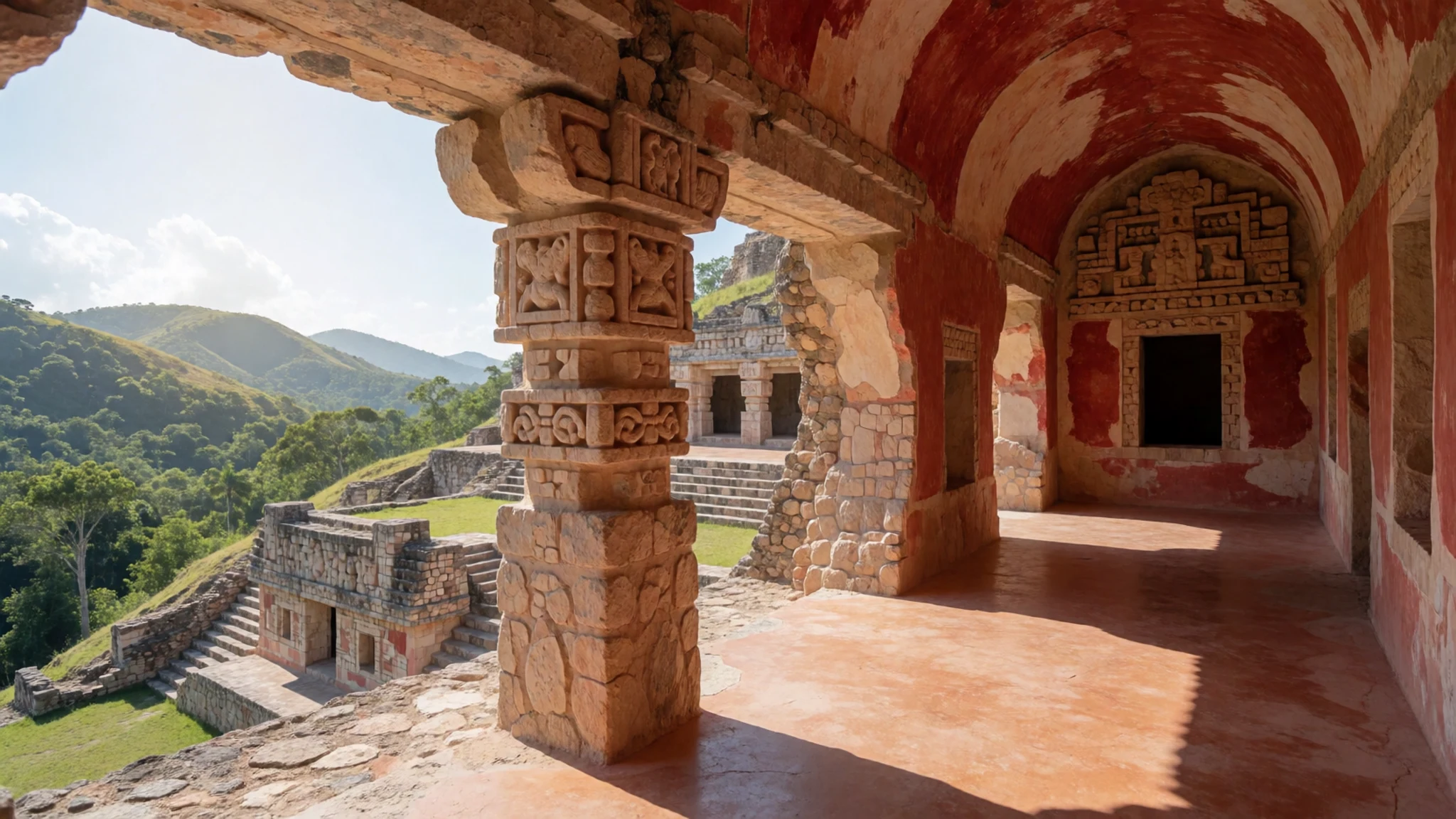
- Danza de voladores in Papantla — Town of Papantla, a short drive away
The Totonac version of the danza de voladores is the best-known living tradition of the Papantla area. Dancers spin down from tall poles while a musician plays above them. The performance is staged just outside the main gate of the site every half-hour, and most visitors watch it on their way in, so there is no need to go into town; give the dancers a few coins or a modest tip if you watch from close by.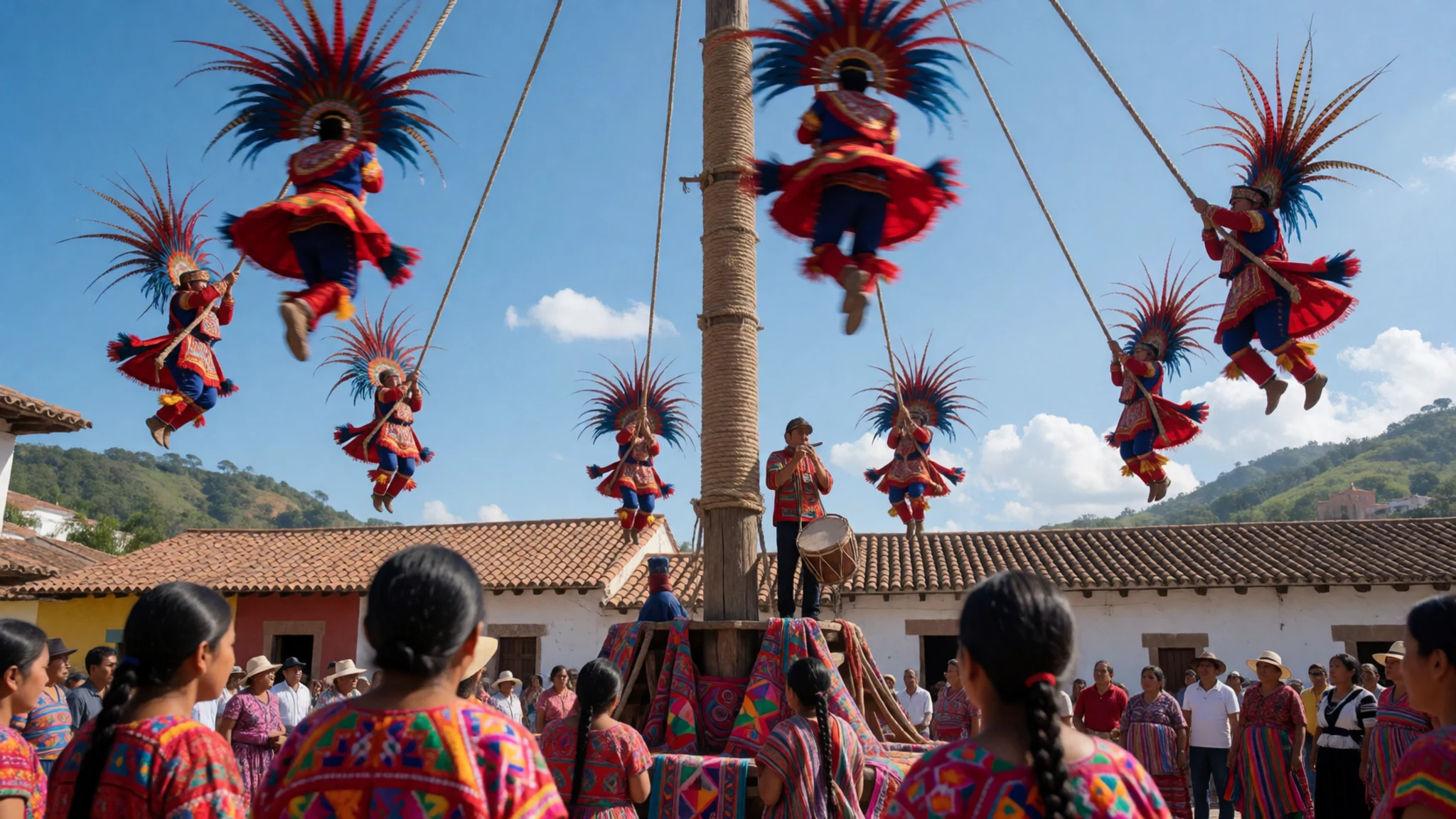
Culture
El Tajín is a living cultural landscape as well as a ruin. The site is part of the heritage of the Totonac people, whose ceremonies continue in the region around Papantla, and the ruins take their name from a Totonac rain god. The best-known living tradition nearby is the danza de voladores, performed for visitors and for local festivals alike. Many travellers come for the March festival, Cumbre Tajín, which mixes indigenous and foreign cultural events with concerts, so expect music and crowds at that time.
Mexican hospitality is generally warm and relaxed, but a few habits go down well. Greeting people with buenos días or buenas tardes before asking for something is polite. Haggling is normal at markets but less so in shops with fixed prices. Tipping is customary in restaurants and for guides. Photographing a performance from a distance is usually fine, but it is courteous to ask before taking close pictures of individual people in traditional dress.
Stay on marked paths, do not climb the stonework, and ask before photographing performers or people in traditional dress.
What to wear
Traditional dress in the Totonac communities of the Papantla area centres on handwork. Women have worn embroidered blouses and wrapped skirts, usually made from cotton and decorated with bright thread, and these garments still appear at festivals and in local markets. The dancers of the danza de voladores wear brightly coloured costumes that stand out against the sky as they spin, and the textiles that make up these outfits are a clear link to the older clothing traditions of the region.
Day to day, people in Papantla and Poza Rica dress much as they would anywhere in Mexico, in jeans, t-shirts, dresses and trainers. Traditional textiles are more likely to be seen at festivals, on market stalls or at ceremonies than in everyday street life.
For a visit to El Tajín, wear light, loose cotton that breathes in the heat, and bring a hat and sunscreen because there is little shade on the open plazas. Choose closed shoes with good grip, since the stone steps and uneven ground can be slippery. If you visit a church in a nearby town, cover your shoulders and knees as a sign of respect.
What to eat
- Huachinango a la veracruzana — Seafood restaurants in the port city of Veracruz
The signature dish of the region is red snapper cooked in a tomato base with capers, garlic and olive oil, with a touch of heat. It is a dish you order in the port city of Veracruz, where the seafood tradition is strongest. Expect it to cost more than street food, because the fish is the point of the meal, and go in the evening when the restaurants are busiest.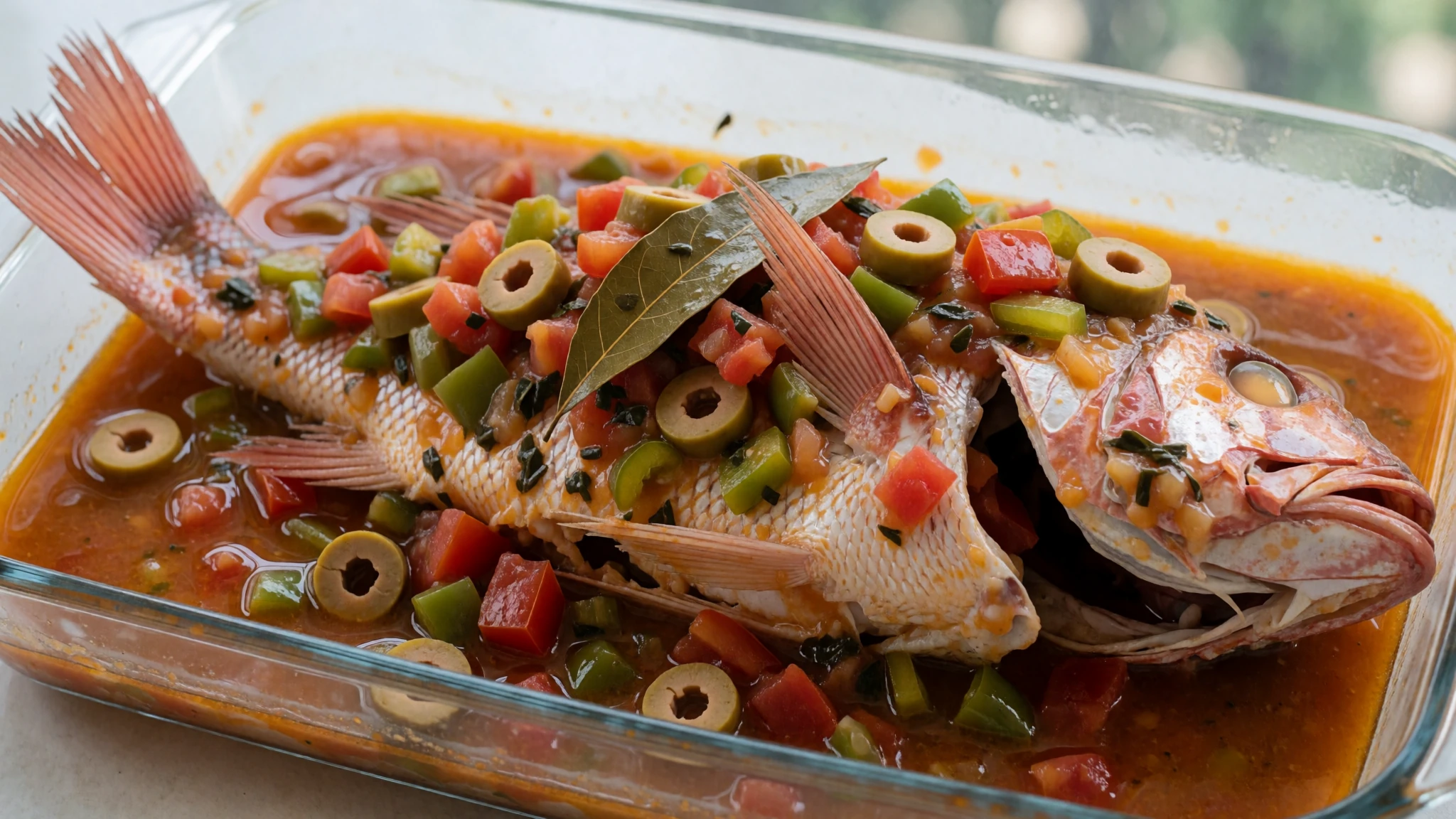
- Veracruz seafood feasts — Waterfront and historic-centre seafood restaurants, port city of Veracruz
The port city is known across Mexico for its seafood, and Cuban and African influences show in many plates here. Dishes can resemble those of Cuba, with fish and shellfish prepared in bright, simple sauces. Seafood restaurants near the waterfront are the places to sit down for a long lunch, which is often where a trip to the coast becomes memorable.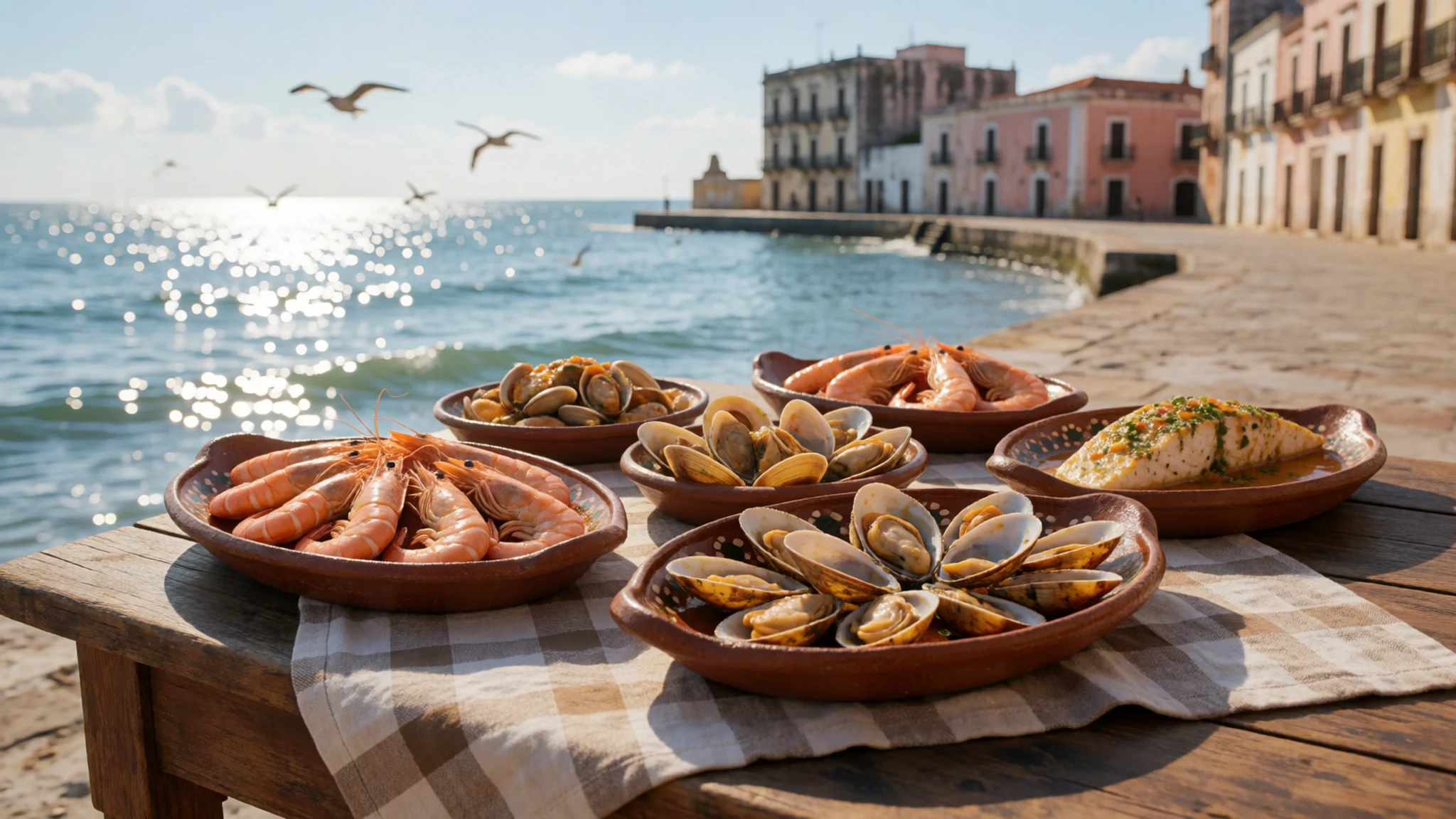
- Fresh fruit drinks — Market stalls and street vendors around Papantla and Veracruz
Fresh fruit drinks are widely available, blended from whatever fruit is in season and served cold in plastic cups at stalls. They are an easy way to cool down after a morning among the ruins. Choose a stall where the fruit looks fresh and ask for less sugar if you prefer your drink lighter. - Veracruz coffee — Small cafés in Coatepec and Xalapa, in the hills inland
Veracruz is a traditional coffee-growing state, and small roasters and coffee shops have opened in several towns. Coatepec and Xalapa, inland in the hills, are good places to try it, where cafés often roast and brew their own beans. Ask for a filter cup or an espresso and compare the different roasts side by side. - Papantla vanilla — Markets and bakeries in Papantla
The area around Papantla is the native home of the vanilla bean, so vanilla appears in desserts and drinks across the region. Look for it in bakeries and market stalls rather than generic souvenir shops. Check the label, since real vanilla is worth more than flavouring, and ask the seller where the bean was grown.
Plan it
Best time. The dry season, roughly December to April, is the usual window on the Gulf coast, with April the hottest month and the rains peaking in September, when heat and humidity are heaviest. March brings the Cumbre Tajín festival, which means bigger crowds and busier roads, so book early if you plan to visit then.
How long. 2
Getting there. Veracruz International Airport (VER) is the largest airport, with domestic flights from Mexico City and some international links. Poza Rica (PAZ) is closer to the site but has no commercial flights. Buses run from Mexico City and Veracruz by ADO or Estrella Blanca, and from there a short taxi or shared ride takes you to the ruins.
Budget. low
Tips
- Start early, before the heat builds and the groups arrive
- Book ahead if you plan to visit during the March festival
- Carry cash for small purchases, vendors and taxis
- Bring water and sunscreen, as there is little shade on the open plazas
- Time your arrival to catch the danza de voladores at the site entrance, performed every half-hour
Etiquette
- Stay on marked paths and keep off the stonework
- Ask before photographing people in traditional dress
- Dress modestly when visiting churches in nearby towns
Nearby
Sources
- Wikidata Q61250700 (CC0)
- Wikipedia, El Tajín (rev 1377686493) (CC BY-SA 4.0)
- Wikivoyage, Veracruz (state) (rev 5313913) (CC BY-SA 4.0)