Ein Gedi
Ein Gedi, Israel
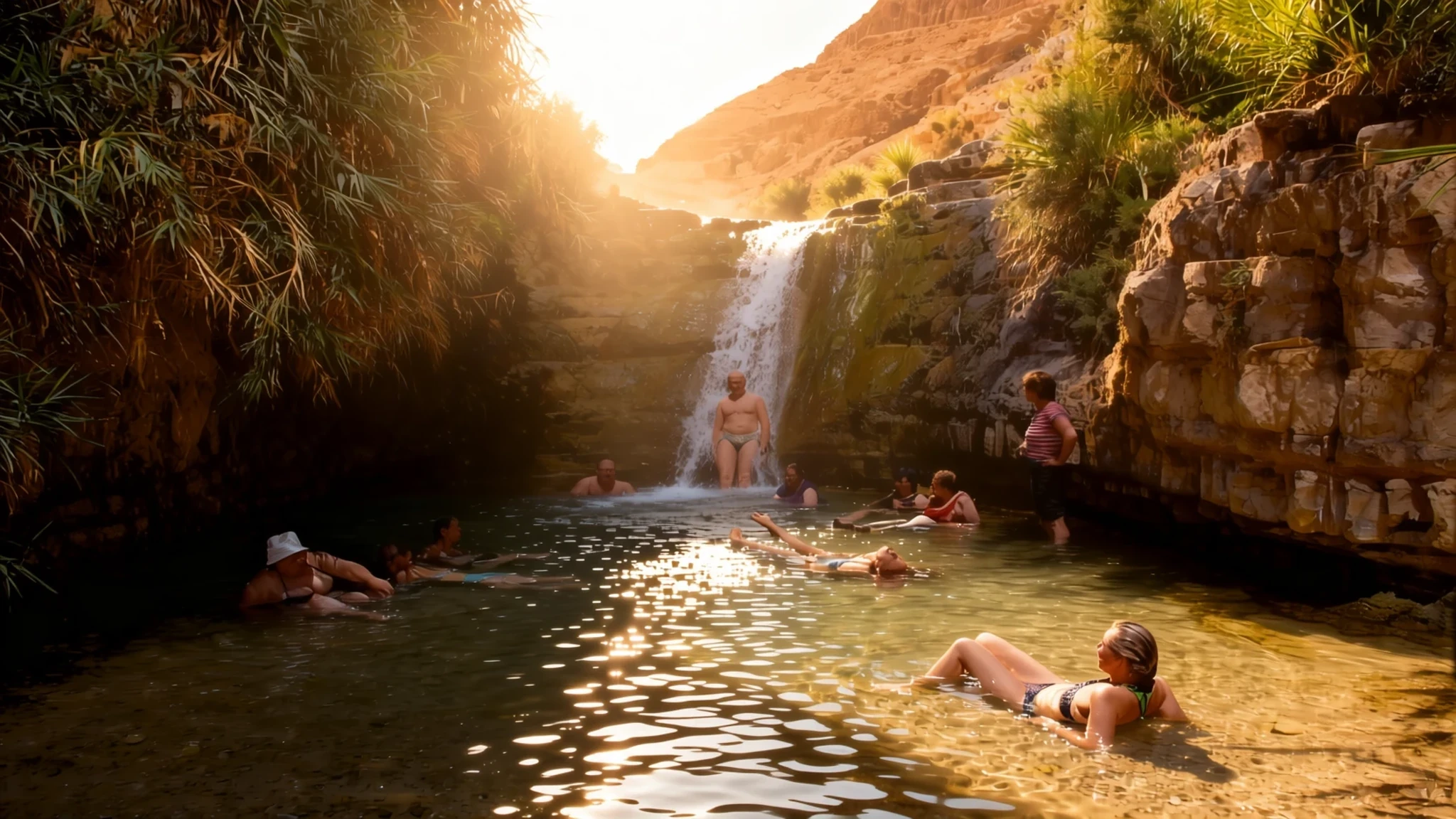
A desert oasis where four springs keep streams running all year, bringing waterfalls, ibex and ancient ruins to the Dead Sea shore.
The place
Ein Gedi is an oasis and nature reserve on the western shore of the Dead Sea in Israel, a short drive from Masada and the Qumran Caves. The name is usually given as "spring of the kid". The reserve draws about one million visitors a year and is counted among the most popular nature sites in the country.
What sets it apart is water. Four springs, the David, Arugot, Shulamit and Ein Gedi, keep streams running through the reserve all year, which is rare in the Israeli desert. Along those streams grow dense greenery and a range of desert wildlife, including ibex on the slopes above. Canyons, falls and pools cut into the rock make a sharp contrast with the bare hills around them.
The reserve sits in the Dead Sea Valley, part of the wider Great Rift Valley, where the land falls steeply towards the lake. Next to it lies the Ein Gedi Archaeological Park, with remains of a Roman and Byzantine-era Jewish settlement. Immediately south, the kibbutz of Ein Gedi, founded in 1954, has laid out much of its outdoor area as a botanical garden of more than 900 species. The climate is desert: hot, dry summers and mild winters with a little rain.
Its story
The valley's history runs far deeper than the modern trails. Archaeologists have found the remains of a Chalcolithic temple between the two river canyons, and these ruins are believed to be several thousand years old. Later, a community built a synagogue on the flat coast nearby, and its surviving mosaics reflect the craft of the Roman and Byzantine-era settlement that once stood here.
The names on the map carry another layer. The David stream and the nearby Mount Yishay and Mount Tzruya take their names from figures in the Biblical stories of King David, who is said to have sheltered in the Judaean Desert while fleeing King Saul. Scholars point out that the Bible does not place him in this exact spot, so the names reflect a tradition rather than proof.
The landscape has hazards of its own. Salt beneath the coast dissolves over time and leaves sinkholes, and the public beach here was closed as of 2016 for that reason. Flash floods are a serious danger in the canyons when rain falls far upstream. The reserve's story is therefore one of water: the gift of the springs, and the force that can carve the land away.
What to see
- David Stream trail — Ein Gedi Nature Reserve, from the entry gate below the Field School
The most popular walk in the reserve is the David Stream trail, short and easy but worth a slow afternoon. It begins at the entry gate just below the Ein Gedi Field School and passes a series of ponds fed by the stream. The walk ends at the largest pool, below a tall waterfall, and the shade along the water makes the heat bearable. Expect it to be busy around midday.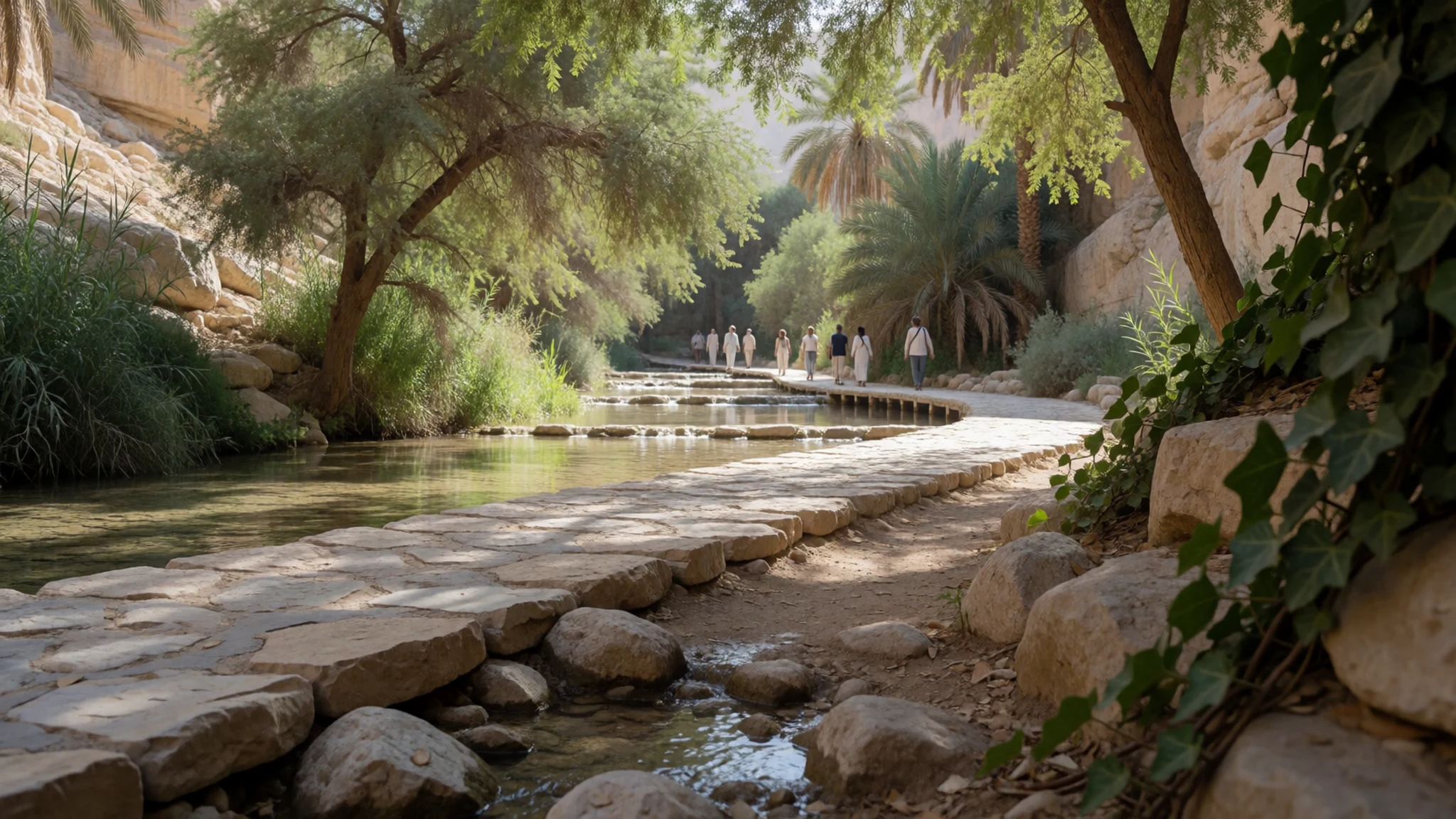
- Na'ama Lookout — Above the oasis, from the Ein Gedi Field School
The Na'ama Lookout, run from the Ein Gedi Field School, gives a clear view over the oasis below, with the greenery of the springs set against the bare rock of the valley. It is a good first stop if you want the layout of the reserve before you walk. A parking fee applies to visitors who are not guests of the inn, so check the official site for the current arrangement before you drive up.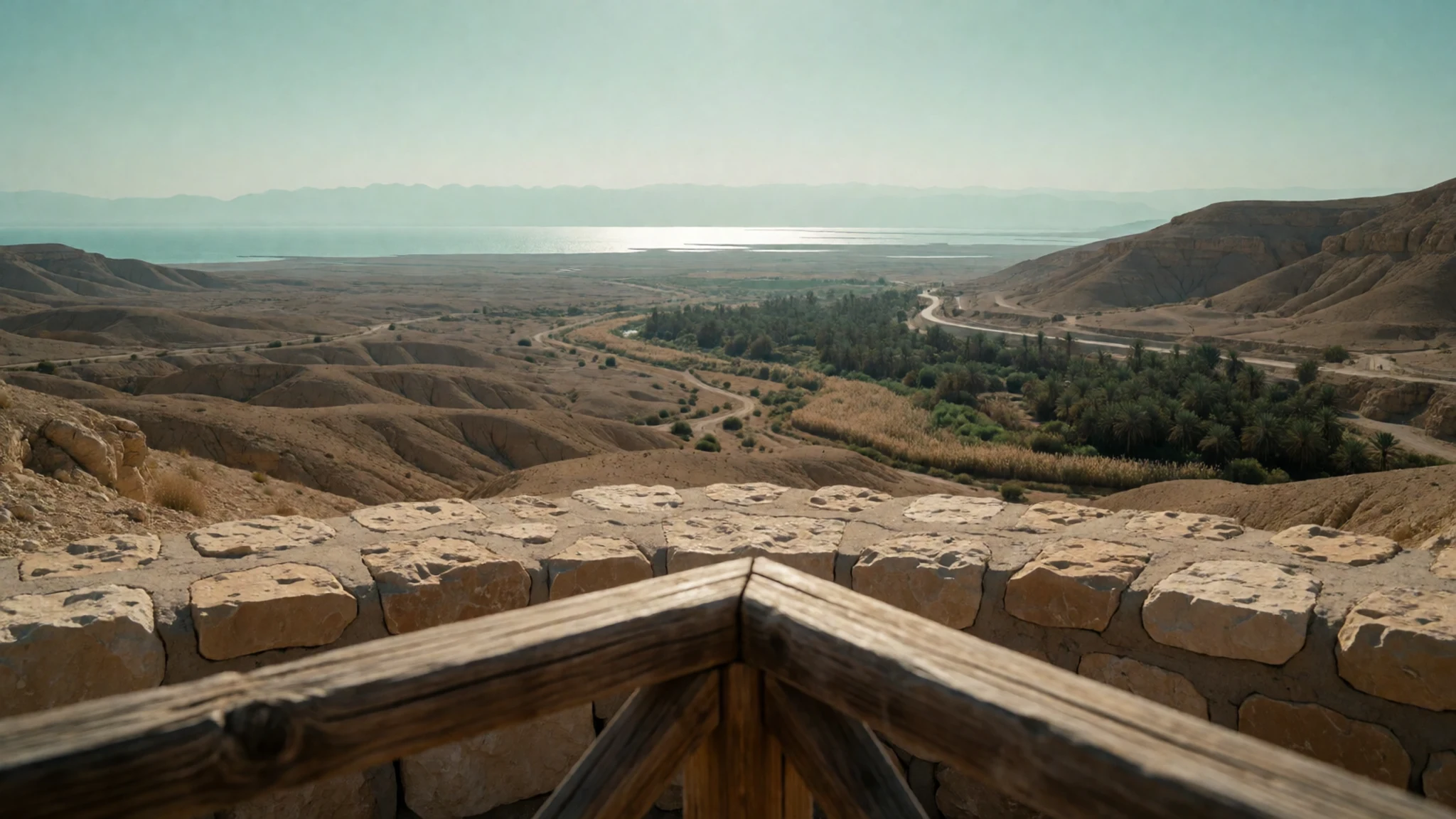
- Ein Gedi Synagogue — Flat coast between Nachal David and Nachal Arugot
The ruins of an ancient synagogue lie on the flat coast between the river canyons of Nachal David and Nachal Arugot. Parts of its floor mosaics survive, and they show the craft of the Roman and Byzantine-era settlement that once stood here. The site is open ground with little shade, so the morning is the better time to visit, and the paths marked around the ruins should be kept to.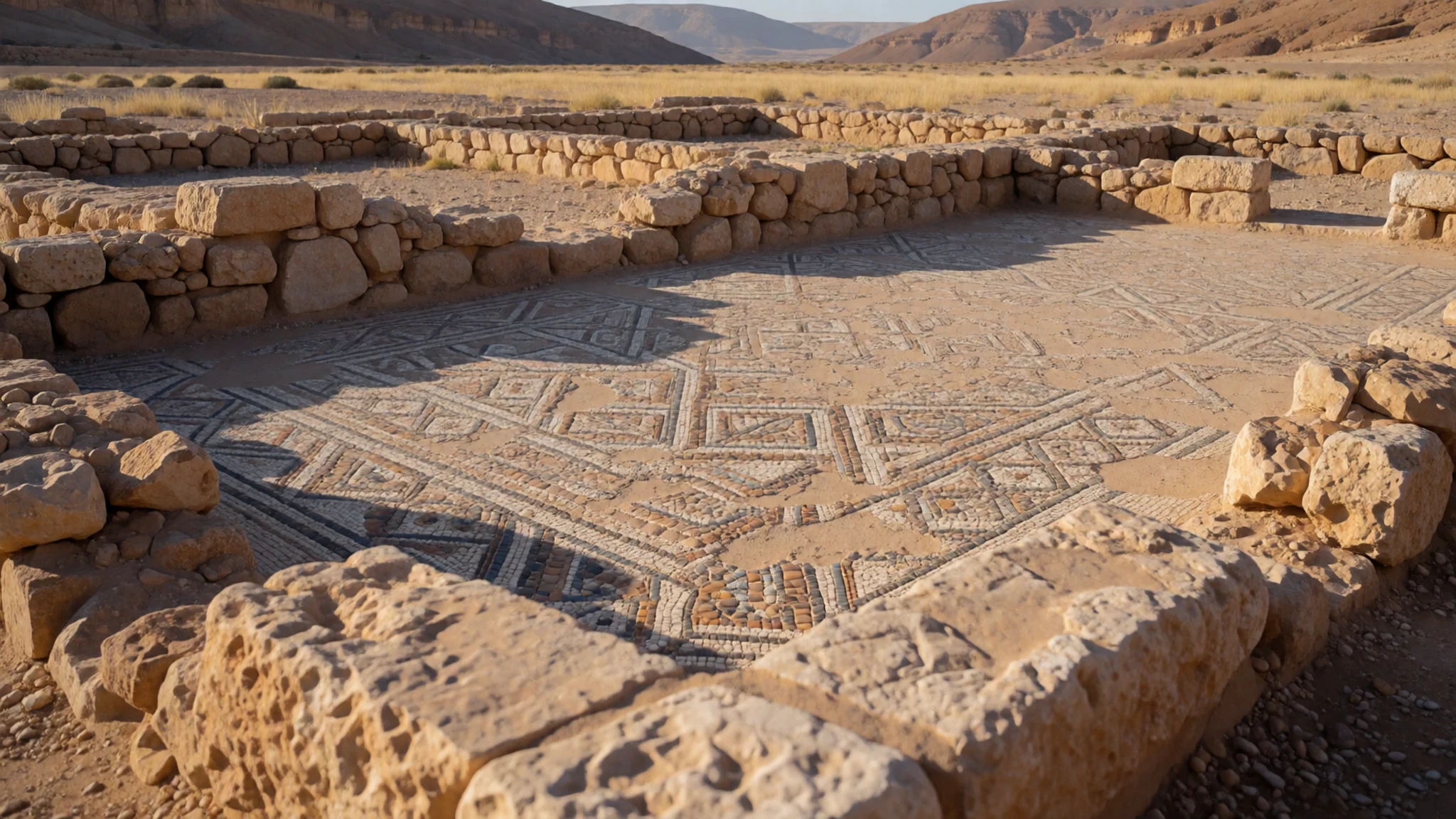
- Chalcolithic Temple — Between Nachal David and Nachal Arugot, south of the reserve
Between the same two canyons, the remains of a Chalcolithic temple are believed to be several thousand years old. Close by stands the ruin of a former water mill, a reminder of how long people have worked this water. The stonework is fragile, so stay on the path and read the signs at the site before you step closer.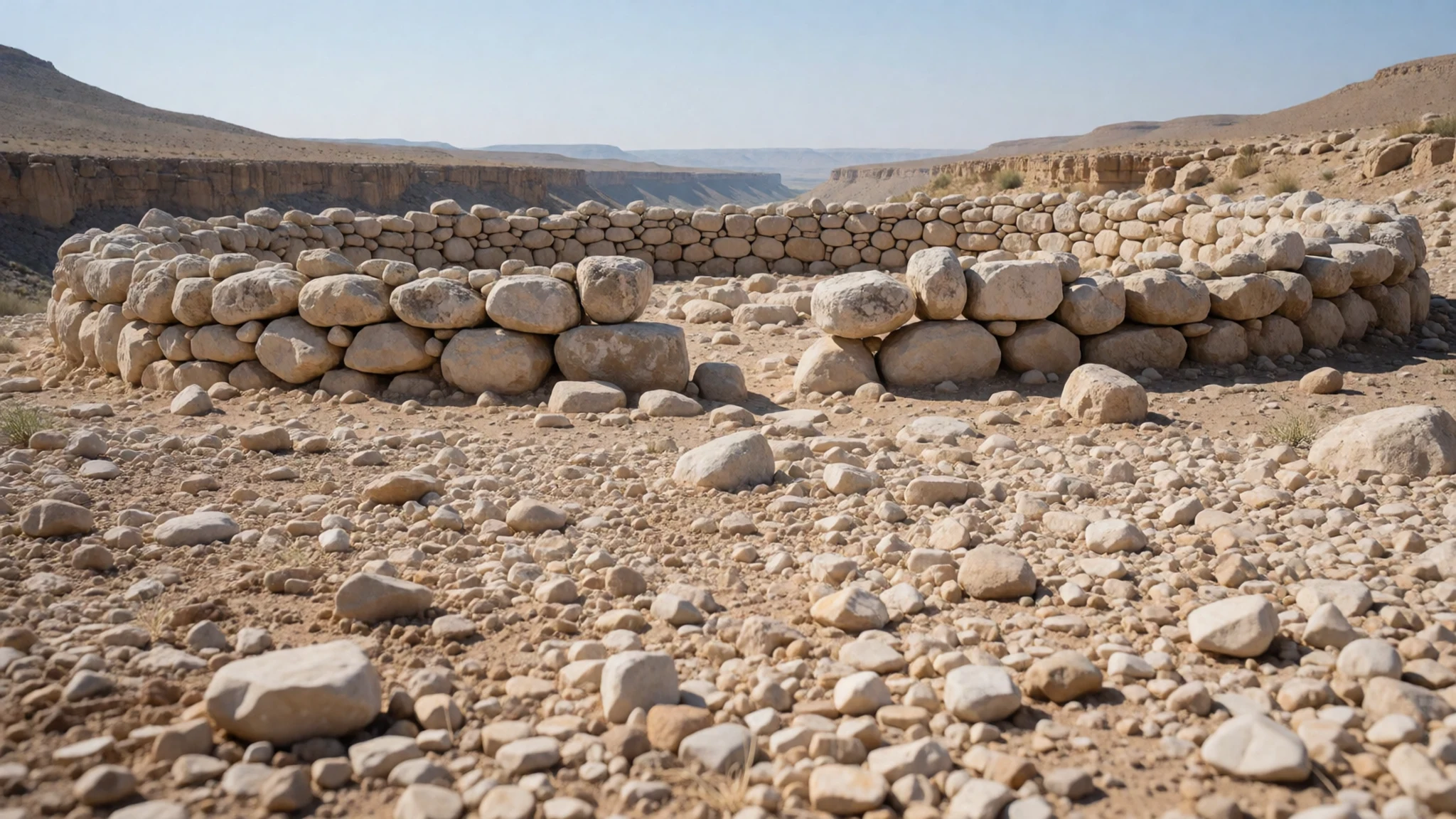
- Ein Gedi Spa Beach — Dead Sea shore, further south along the coast
The Spa Beach is the place for the Dead Sea's black mud, long used for its cosmetic and therapeutic reputation. The mud is said to cleanse and stimulate the skin, ease muscle tension and improve circulation, though these are traditional claims rather than medical findings. Rinse off in fresh water afterwards, keep the salty water out of your eyes, and check the official site for current opening arrangements.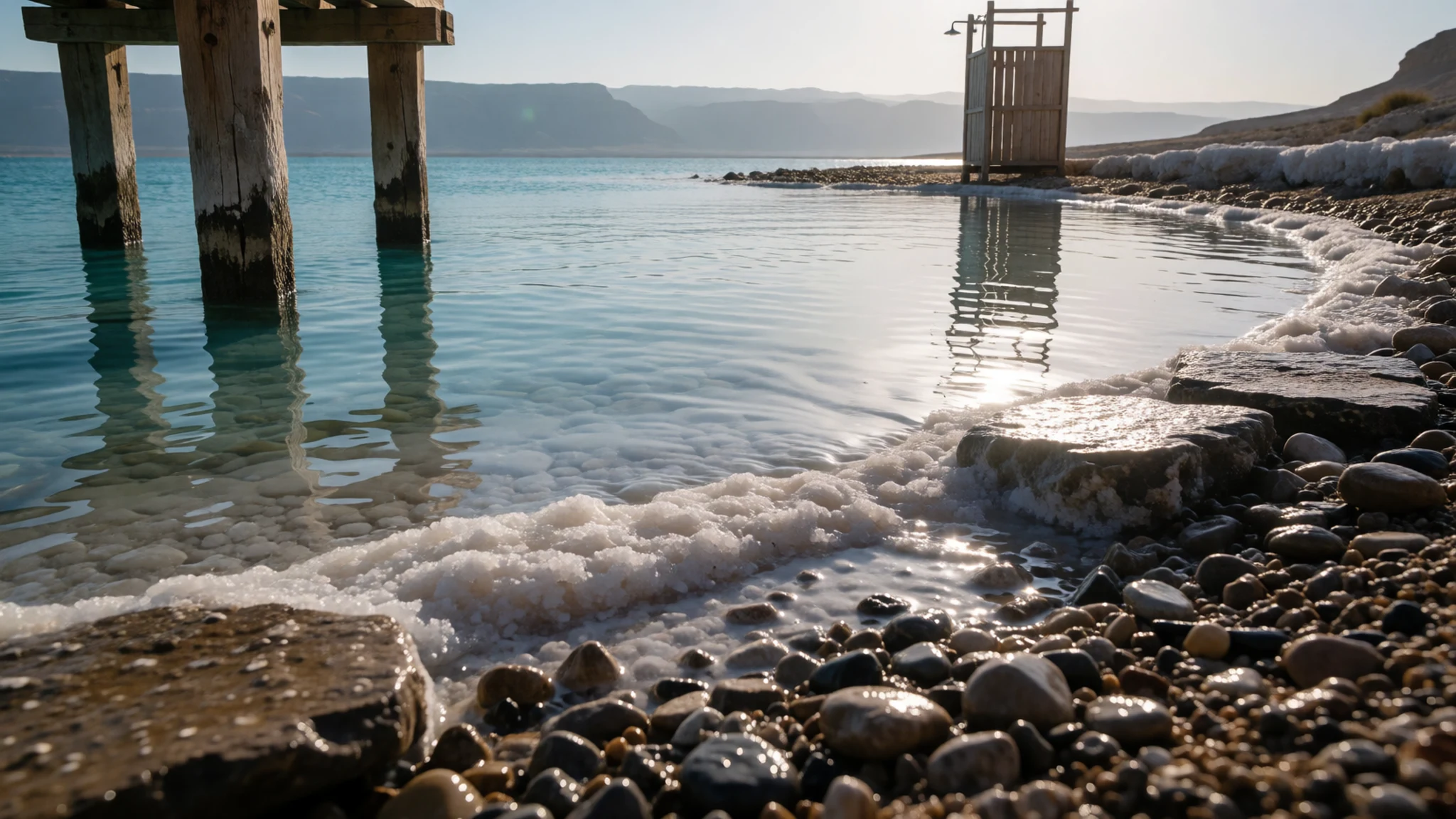
Culture
Ein Gedi is a nature reserve first and a working kibbutz beside it, so the manners that suit a national park also suit the village. Stay on the marked trails, because stream banks are soft and the ibex and other wildlife are wild. Keep to the paths around the ruins, and do not pick plants or move stones at the temple and synagogue sites, which are protected. Expect the kibbutz to be quiet on Shabbat, when public transport slows and some services stop, so plan your visit around that rhythm rather than expecting a weekday pace. Dress with some modesty in the village and at the archaeological sites, and keep voices low near the residential areas beside the botanical garden. Please stay on marked paths and out of any ground signed as unsafe, because sinkholes can open without warning on the coast.
What to wear
Ein Gedi has no costume tradition that a visitor will see today. It is a nature reserve and a kibbutz, not a community defined by a regional dress, so there is little local clothing to describe here. People you meet on the trails wear what Israelis wear almost anywhere: light cotton, sun hats, sturdy sandals or walking shoes, and swimwear at the pools and the shore.
For a visitor, dress for heat and rock. Light long-sleeved cotton or linen protects against sun and scratches on the trails, and a wide-brimmed hat matters more than sunglasses on the open slopes. Wear closed walking shoes with good grip for the rocky paths, and water sandals or old trainers for the stream crossings, where the stones are slippery. Swimwear is fine at the pools, but cover up in the kibbutz and at the synagogue ruins as a mark of respect. Carry a light layer for the cooler evenings, because the desert air drops quickly after dark.
What to eat
- Falafel — A counter near the car parks, selling by the piece
Falafel is the simplest meal here. Look for a counter that sells it by the piece, with pita, salad and pickles on the side, often near the car parks. It is fried to order, so the first batch is hot and crisp. Eat it in the shade.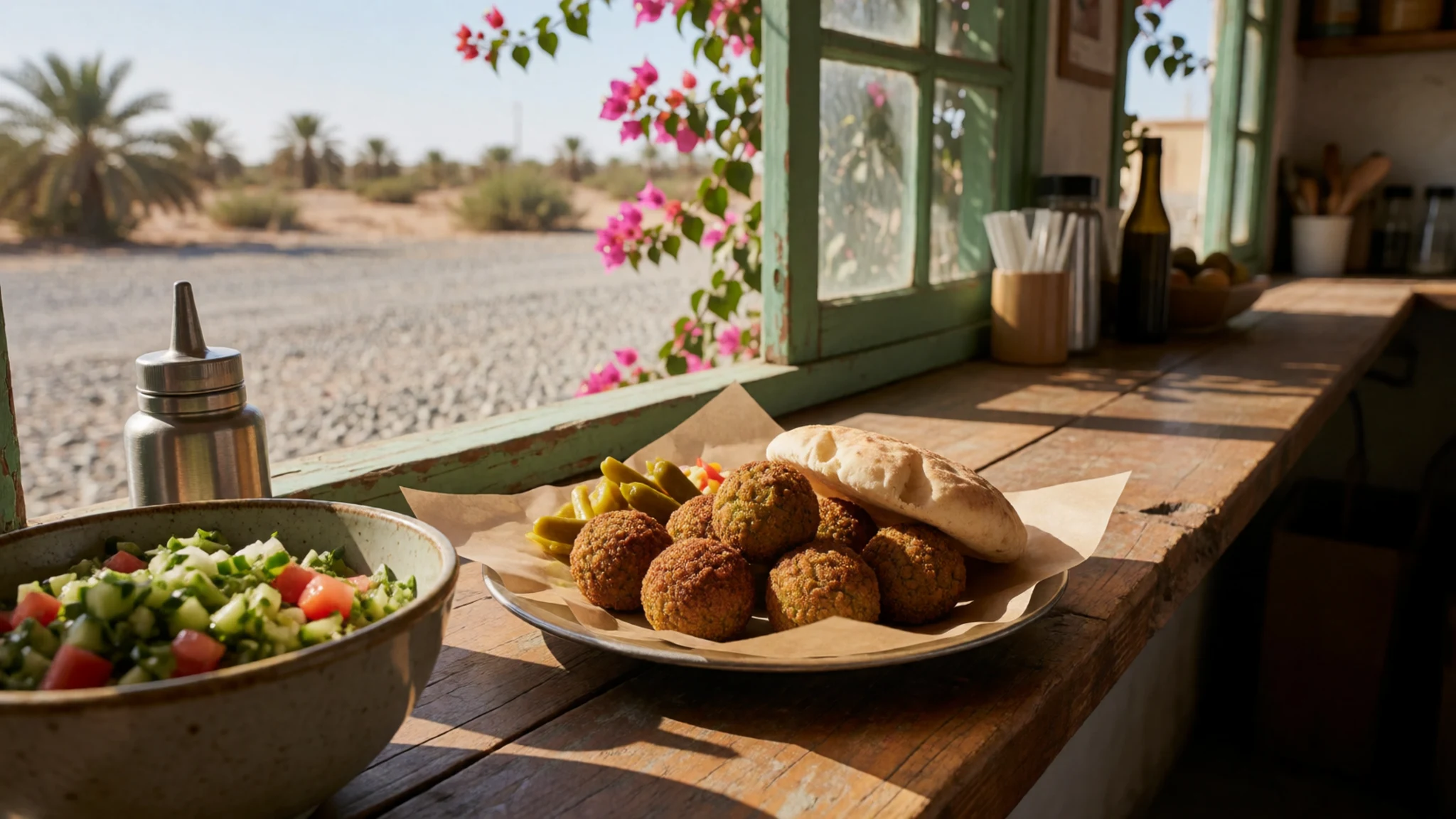
- Hummus and fresh pita — The Ein Gedi Tavern or a guest house restaurant
Hummus and fresh pita make a good lunch between walks. Ask for it at the Ein Gedi Tavern or at a guest house restaurant, where it is usually served warm with olive oil and whole chickpeas. Order a second plate for the table. Dinner rarely needs more than that.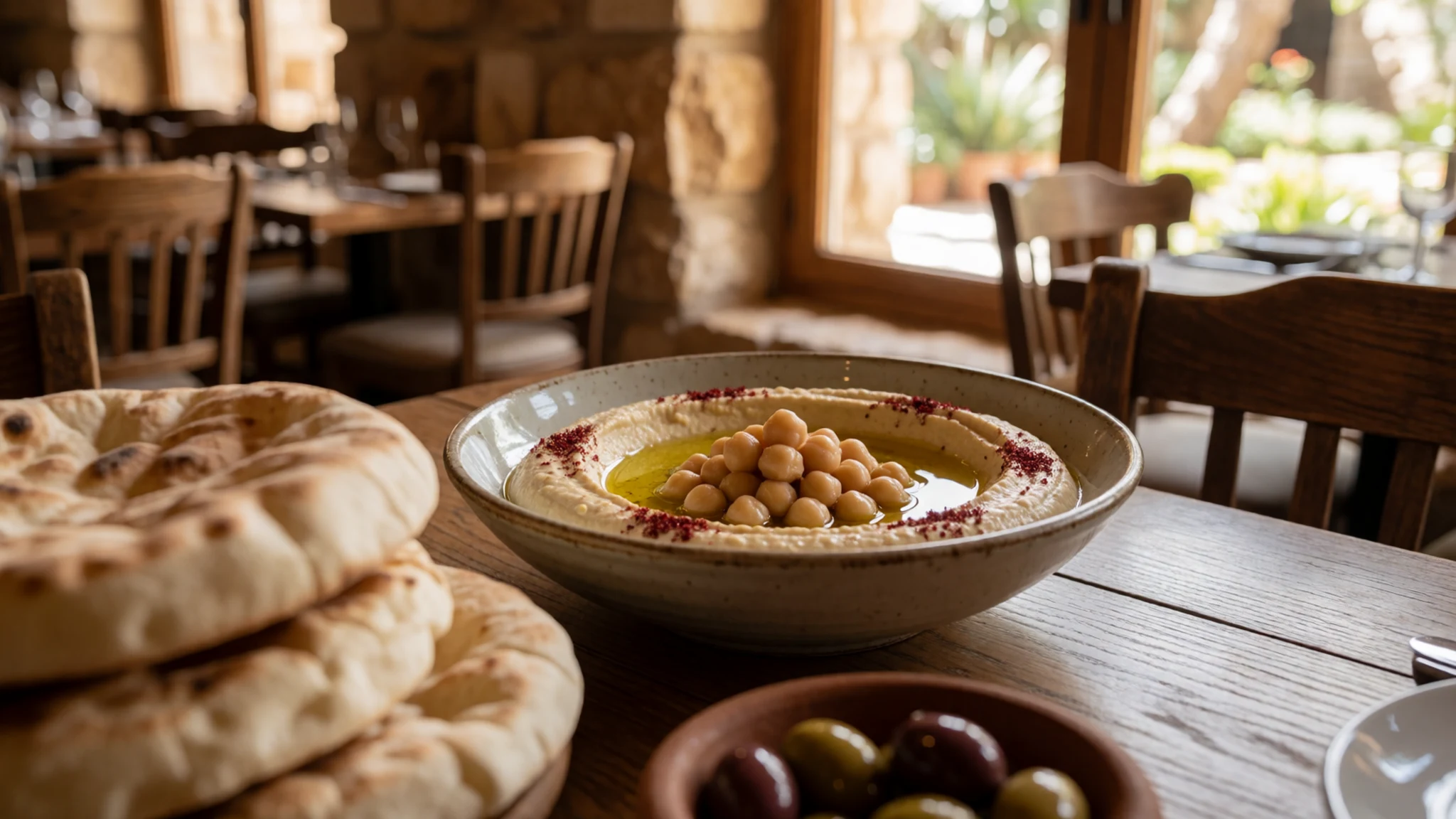
- Shakshuka — Breakfast at a guest house restaurant or a morning café
Shakshuka, eggs poached in spiced tomato and pepper sauce, is the breakfast to order at any guest house restaurant that serves early. Eat it before the heat builds, around the time the reserve trails are still cool. Ask for extra pita to mop up the sauce. - Fresh-pressed juice — A stall or café near the kibbutz
Fresh-pressed juice from a stall or café near the kibbutz is the right reward after the trail. Pomegranate and orange are typical, and a cold glass helps more than any snack. Buy it before the last stretch to the car, since not every kiosk stays open into the afternoon.
Plan it
Best time. November to April suit walking best, with mild days, though nights in January and February can fall close to freezing. Summers are hot and dry with little rain, and midday trails are hard going in the heat. Winter brings a little rain, and flash floods are a risk whenever it falls, so check conditions before entering the canyons.
How long. 1–2
Getting there. Driving is the simplest option: the Dead Sea coast road reaches Ein Gedi in about half an hour from the Lido junction, or around 45 minutes from the Arava junction in the south. Buses run from Jerusalem central bus station and from Eilat via the Arava junction. The Tel Aviv service runs only once a day and not on Saturdays, so check times before you travel.
Budget. low
Tips
- Start the David Stream trail early, before the heat and the day groups arrive
- Carry all the drinking water you need: water taps are found at the entry gates but not within the reserve, and stream water is not guaranteed safe
- Check flash flood warnings before entering canyons, and ask the Field School or park staff on the day
- Bring cash for small stalls, and check card acceptance before you order
- Plan the Spa Beach mud separately, since the public beach has been closed for sinkholes
Etiquette
- Keep to marked paths and stay off ground signed as unsafe, especially east of the coast road unless signs show an open beach
- Leave plants, rocks and wildlife where they are, and watch the ibex from a distance
- Keep noise low around the kibbutz, particularly on Shabbat
Nearby
Sources
- Wikidata Q1011544 (CC0)
- Wikipedia: Ein Gedi Nature Reserve (CC BY-SA 4.0)
- Wikivoyage: Ein Gedi (CC BY-SA 4.0)
- Photo: Shulamit Waterfall in Nahal David (Grauesel) (CC BY 3.0)
- Photo: David Waterfall (Jan Helebrant) (CC0 1.0)
- Photo: En Gedi Region (Boris Carmi) (CC BY 4.0)
- Photo: Two Nubian Ibexes (Yuvalr) (CC BY 3.0)
- Photo: heritage site, Ein Gedi (Jonathan Pelah) (CC BY-SA 4.0)
- Photo: The ancient synagogue in Ein Gedi (Israel Preker) (CC BY 2.5)
- Photo: Chalcolithic Temple (Holyland2026) (CC BY-SA 4.0)
- Photo: Dead Sea (josefstuefer) (CC BY 3.0)


