Eiffel Tower
Eiffel Tower, France
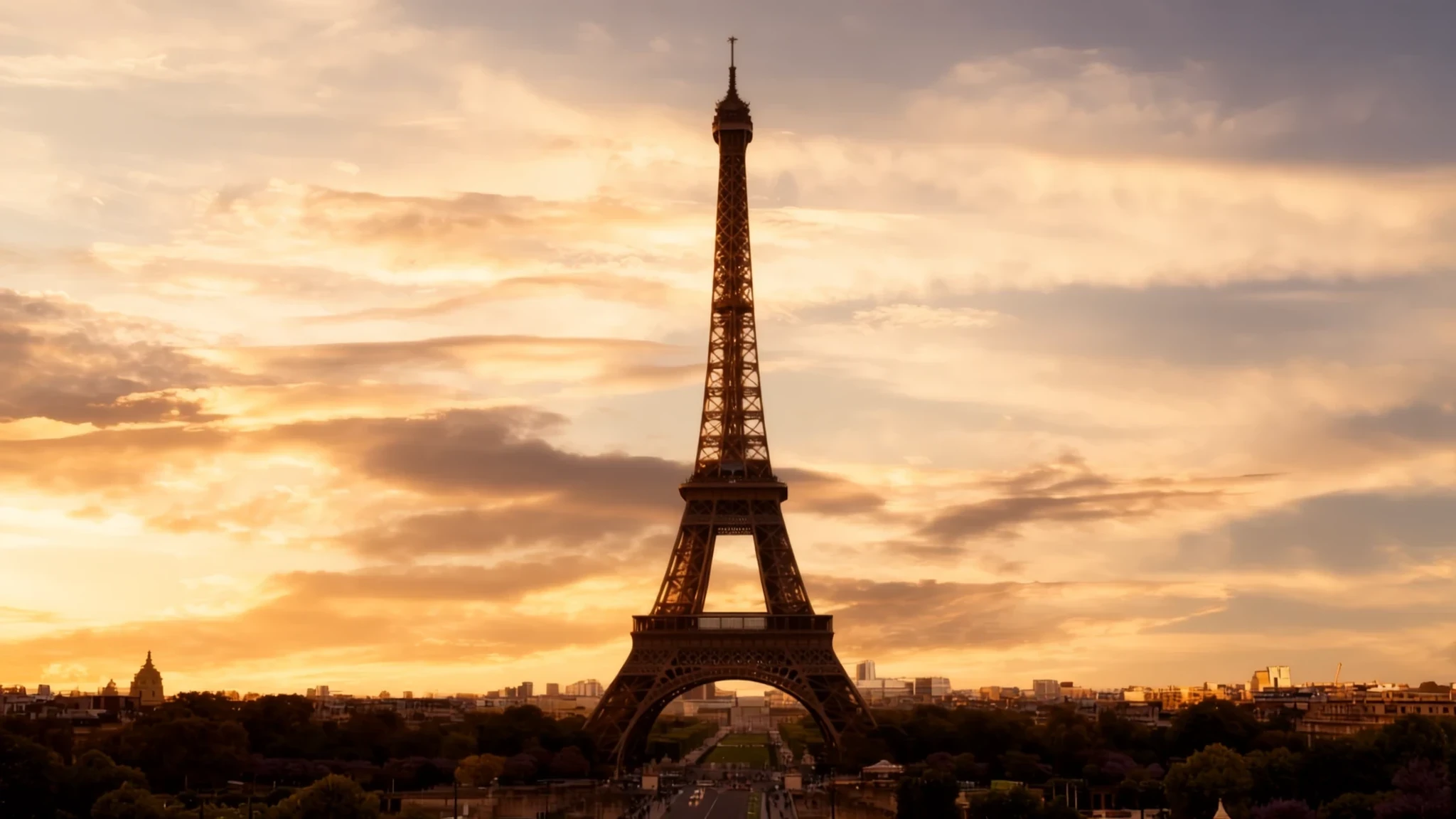
Go for the views, the engineering and the chance to stand under a 19th-century iron icon that still divides opinion, but plan around the crowds.
The place
The Eiffel Tower stands on the Champ de Mars, a long lawn that runs down from the École Militaire towards the Seine, and it is the image most people carry in their heads when they think of Paris. The name comes from Gustave Eiffel, whose engineering company designed and built the structure between 1887 and 1889. Parisians gave it the affectionate nickname 'the Iron Lady', a nod to the wrought iron that makes up nearly all of it.
The tower was built as the centrepiece of the 1889 World's Fair, a showcase of French industry and invention that marked a century since the Revolution. Many artists and critics disliked the design at first, and plenty expected it to be taken down once the fair closed. It survived because it proved useful, first as a platform for radio and telegraph aerials, and it has since become a global symbol of France.
At 330 metres it is the tallest structure in Paris. Its base is a square about 125 metres on each side, and the open lattice means the wind passes through rather than pushing hard against it. Lifts and stairs carry visitors to three levels, each with its own views over the city. The surrounding gardens are wide and open, so the tower looks different from every angle: close up it is a web of girders, from the Trocadéro it is a silhouette against the sky. Most people visit in the late afternoon or after dark, when the lights come on.
Its story
The design began as a practical question about a centrepiece for the 1889 world's fair, which was planned to mark a century since the Revolution. Two senior engineers at Eiffel's firm, Maurice Koechlin and Émile Nouguier, worked up the first idea at home. Koechlin's sketch showed a tall pylon of four lattice girders, spread wide at the base and meeting at the top, with metal braces tying them together at intervals. Eiffel was not enthusiastic at first, but he agreed to further study.
The team then brought in Stephen Sauvestre, head of the company's architectural department, who added the ornamental arches at the base, a glass pavilion on the first level and other decorative touches that made the structure easier to accept as a public monument. With the refined scheme in hand, Eiffel bought the patent rights from the three designers and showed the model publicly under his company's name, which helped secure the commission.
Construction used prefabricated wrought iron pieces, carried to the site and joined by riveting, so that the frame rose steadily through the late 1880s. The work was finished in time for the fair, and the tower became the most talked-about object in the city. Its future was less secure. Once the exhibition ended, the permit to keep it standing was tied to its scientific and military uses, and in the first decade of the new century it nearly came down. Its radio aerial kept it in service, and the tower survived the twentieth century as one of Paris's most photographed objects. Today it is part of the wider world heritage listing covering the banks of the Seine.
What to see
- The Eiffel Tower — Champ de Mars, seventh arrondissement
The tower itself is the main event. Walk the Champ de Mars for the full sweep of the ironwork, then decide how high you want to go. The lifts are quicker but often queued, and the stairs are a tiring alternative for the first level. Book a timed slot ahead for the summit in busy months, because same-day tickets can sell out.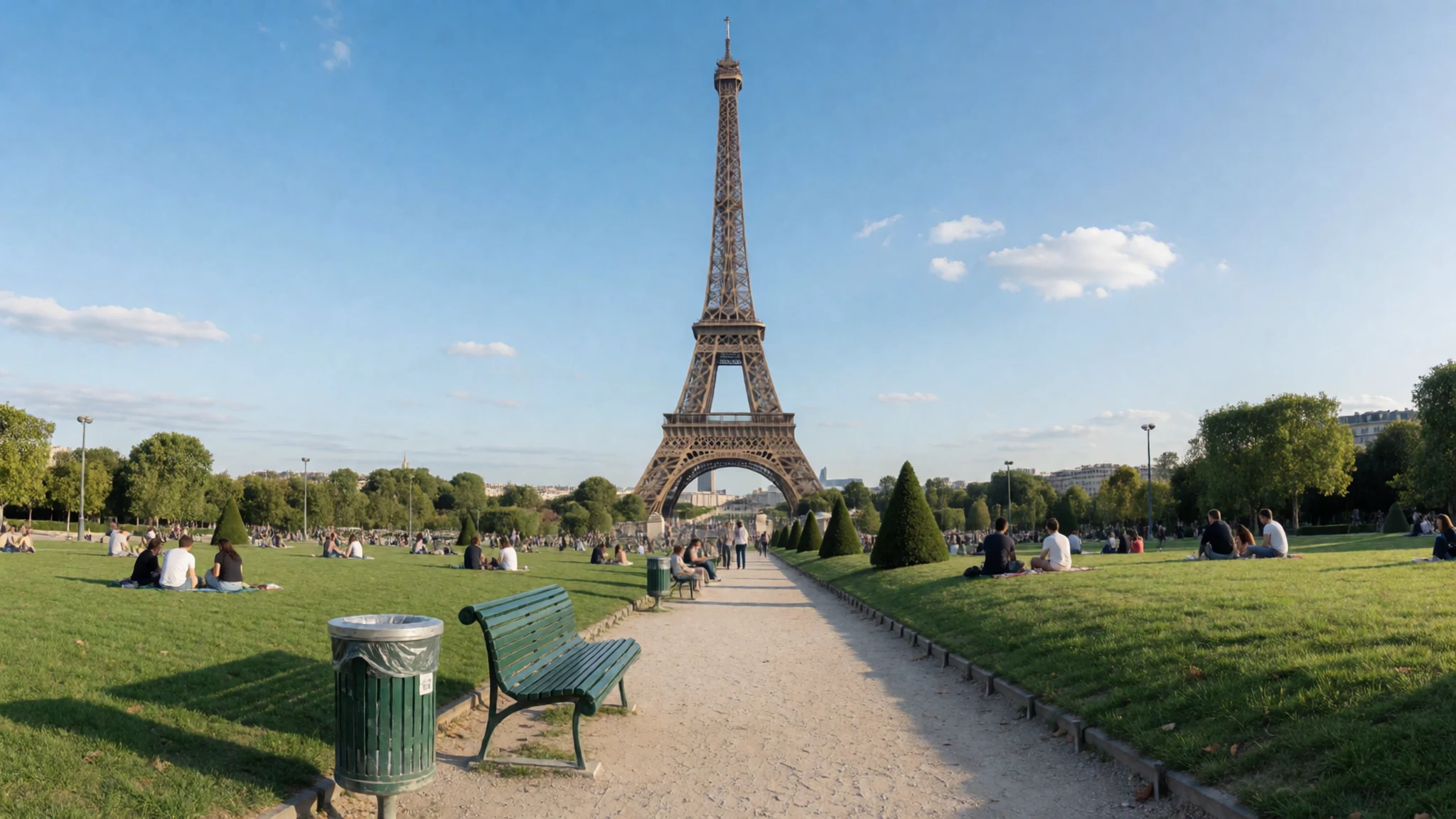
- Hôtel des Invalides — Esplanade des Invalides, a short walk north-east
Louis XIV founded this complex as a hospital for wounded soldiers, which explains its name. Its golden dome is visible from many points around the tower and is worth a slow walk through the courtyards. The building still serves a medical function, so treat the grounds with the quiet respect that a working institution deserves.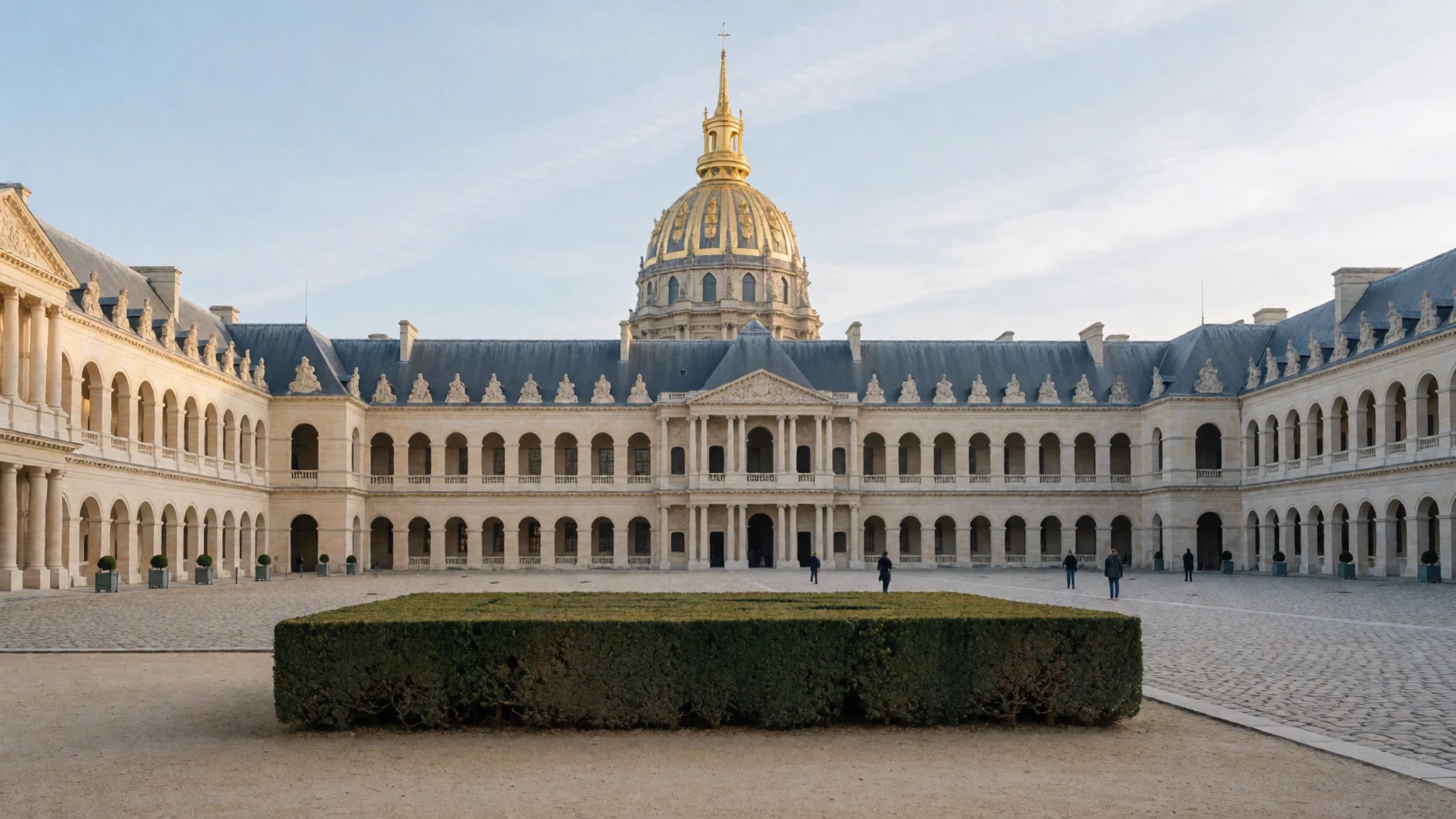
- Musée de l'Armée — Invalides complex
Housed in the historic Invalides complex, this museum traces the history of the French Army through weapons, uniforms, armour and military art. It makes a good indoor stop in bad weather. Allow a few hours if you want to see the main galleries properly, and check the official site for current opening arrangements before you go.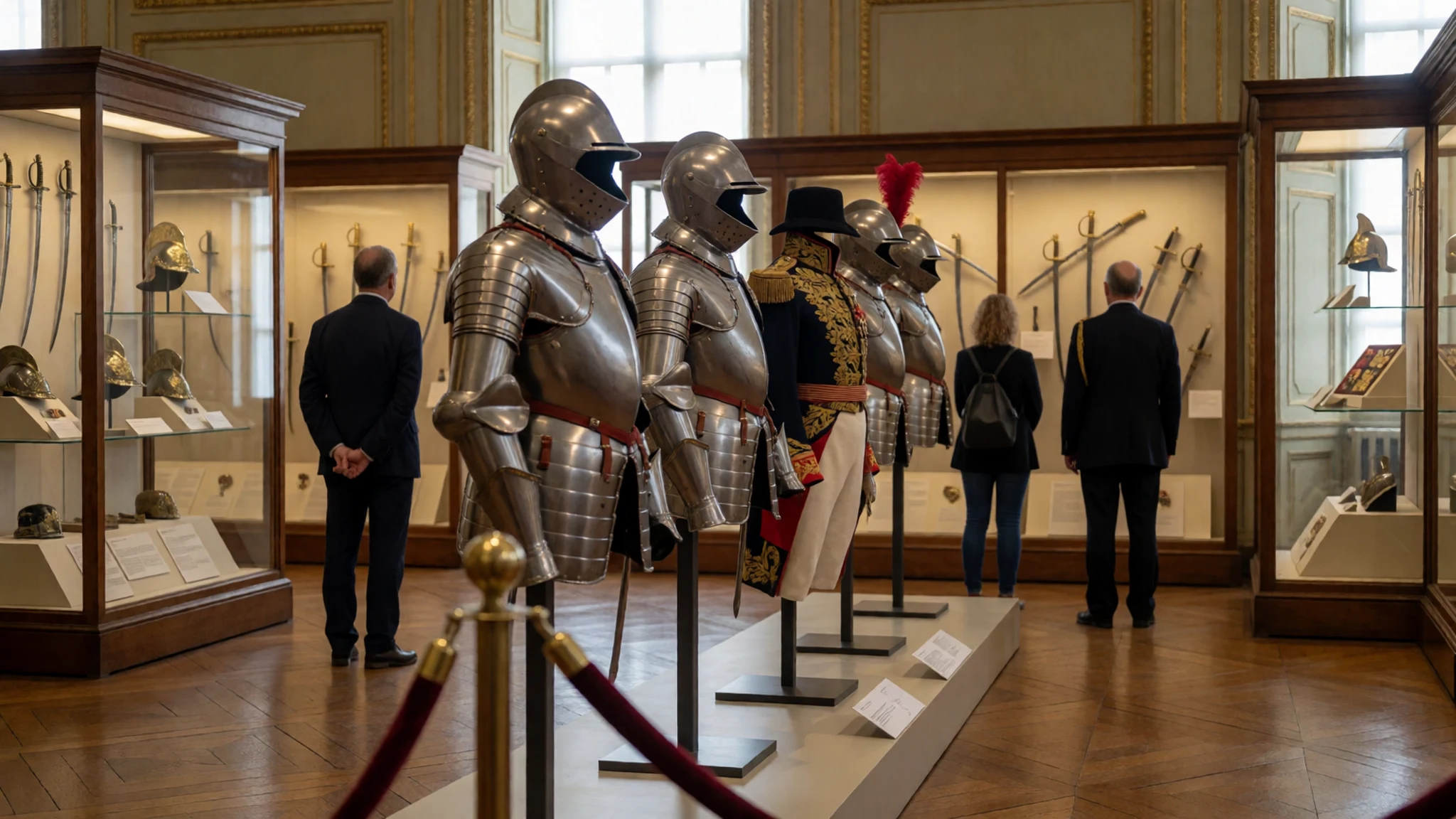
- The National Assembly — Quai d'Orsay, across the river
The Palais Bourbon has housed the lower house of the French parliament since the nineteenth century. Guided tours run through the day, but you need photo identification to enter, and places can be limited. The building's classical front faces the Seine and gives a useful contrast with the iron of the tower across the river.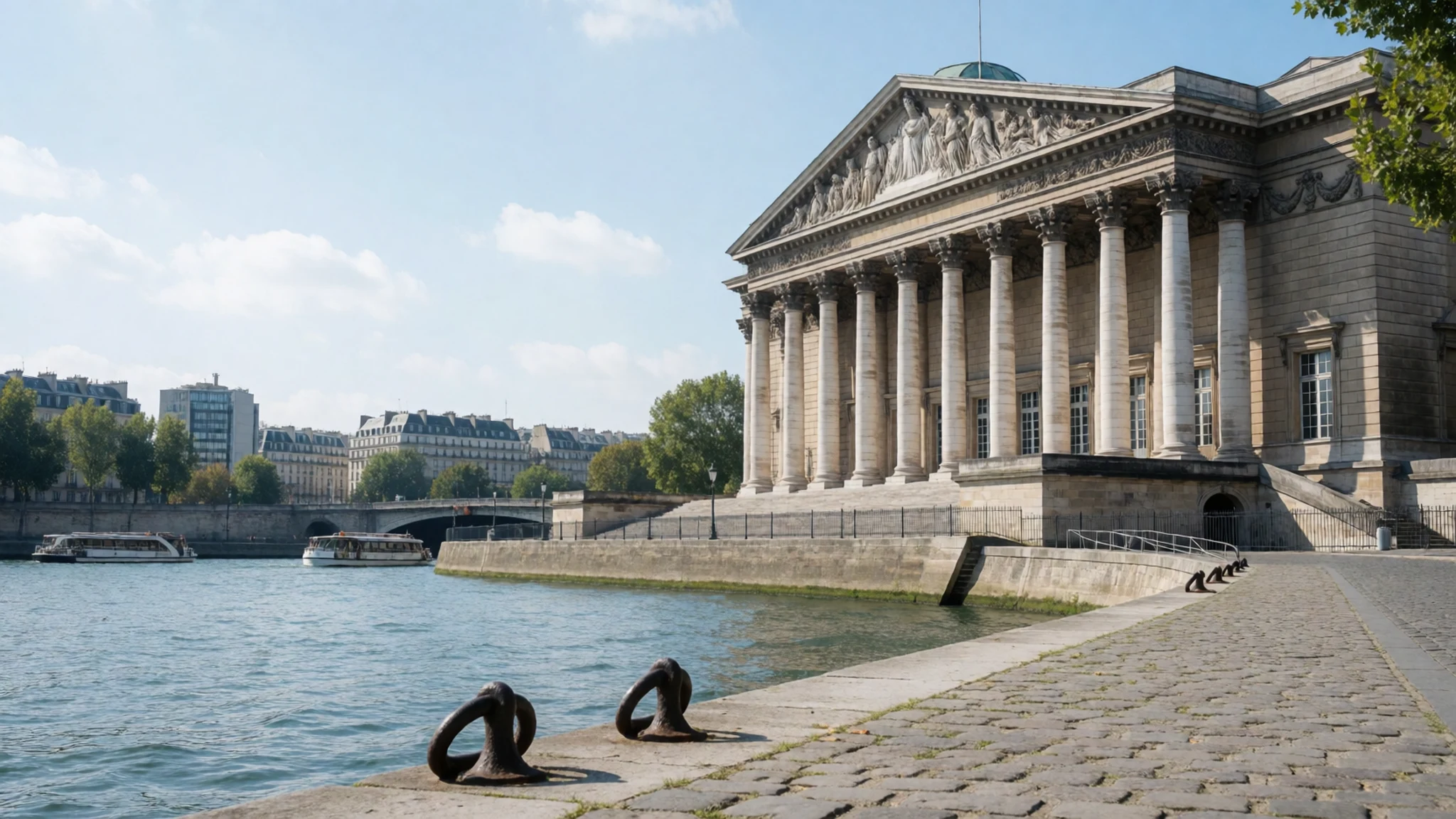
- UNESCO headquarters — Place de Fontenoy, near the Ségur metro
The organisation's headquarters holds a large collection of art gifted by member states, much of it modern and contemporary. The building is a working office rather than a museum, so access to the art is limited, but the plaza outside is a calm place to sit. It is a quiet counterpoint to the crowds at the tower's base.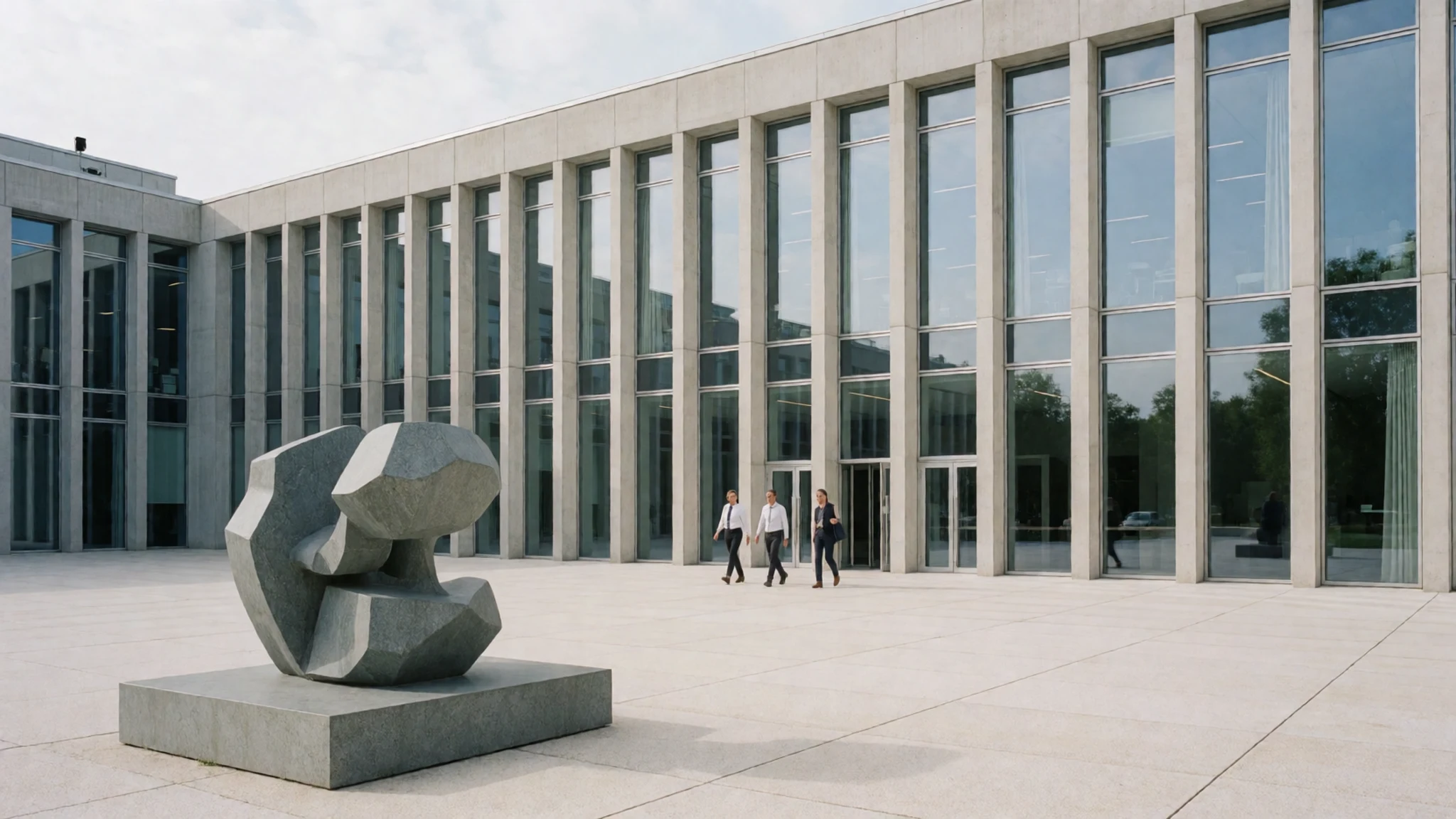
Culture
The Eiffel Tower is a working national monument rather than a quiet memorial, so the culture around it is busy, informal and sometimes loud. Visitors will see street vendors offering small replica towers and sparkling souvenirs at the foot of the legs, and the tower's lights and evening sparkle draw large, cheerful crowds on most nights. Locals treat the tower as part of everyday city life. People picnic on the Champ de Mars, jog past it in the mornings and use it as a landmark for directions. Nobody expects the reverence that some religious monuments command, but the French do value courtesy in queues and public spaces. Expect a polite but firm line of waiting at the lifts and security, and do not push ahead of people who have been waiting. Pickpockets operate at the base and inside the lifts, so keep bags closed and in front of you at all times.
What to wear
The Eiffel Tower has no dress code of its own, but Parisian clothing has a long history of wool, cotton, linen and silk, with the city's textile trade drawing much of its silk from Lyon. Traditional regional dress elsewhere in France, such as the lace coiffes of Brittany, is rarely seen on the Champ de Mars. Locals now dress in a relaxed version of classic style: dark wool coats, scarves in autumn, jeans, simple knitwear and leather shoes, with an emphasis on neat fit rather than logos. Visitors should dress in layers, since evenings by the river turn cool even in late spring and early autumn. Choose comfortable shoes with good grip for long walks and queues on the uneven gravel and paving, and avoid shorts at the top level if the wind is strong. There is no requirement to cover up, but a smart-casual look suits the city.
What to eat
- Steak frites — Bistros and brasseries near the Champ de Mars
A bistro staple of thin-cut steak with crisp fried potatoes, usually served with a pat of herb butter. Portions are generous, and the sauce is often a simple pan jus or a mustardy pepper sauce. Order it medium rare if you like it pink, and expect the menu to change little between seasons.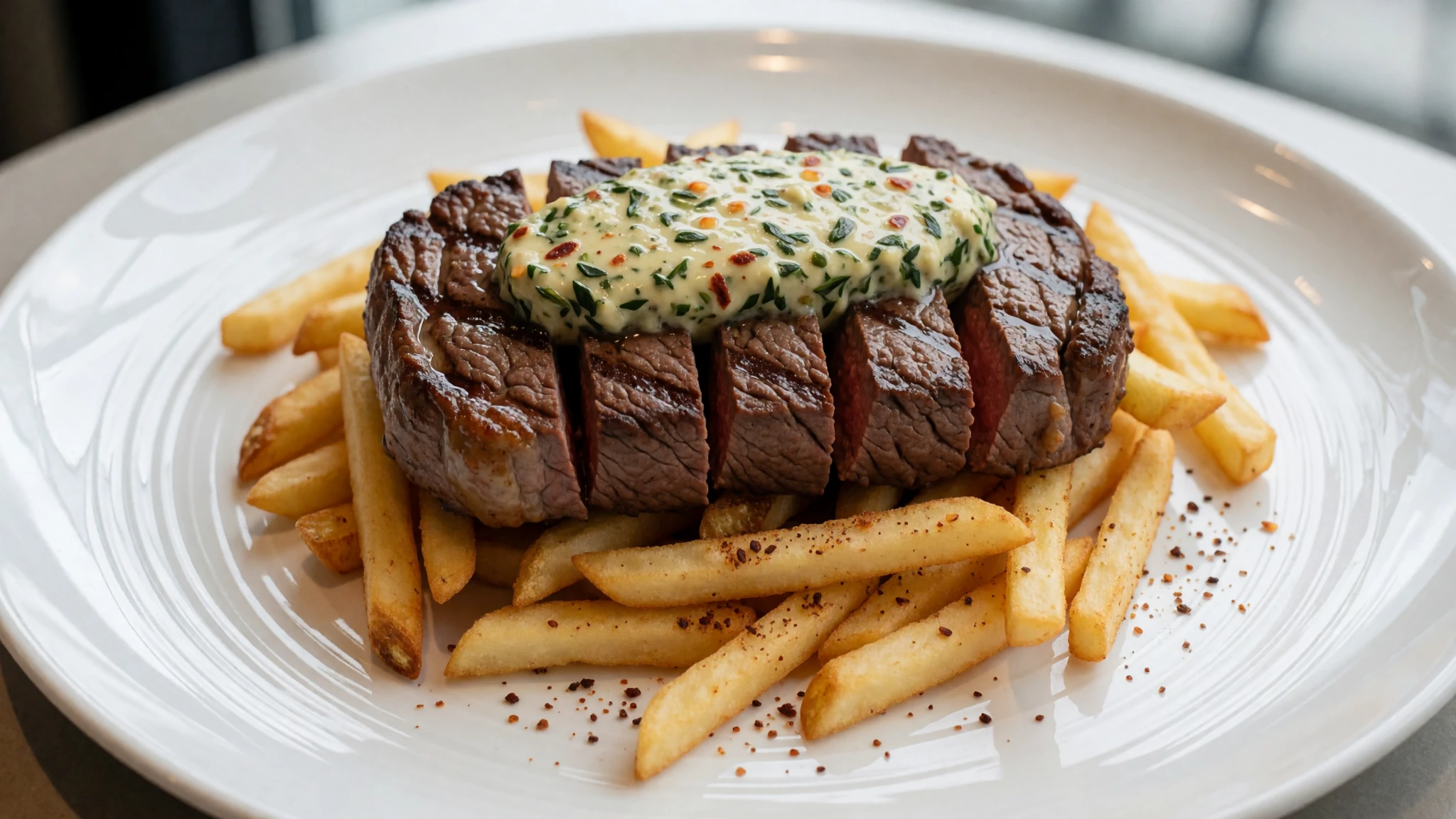
- Croque monsieur — Café terraces on the pedestrian rue Cler
A toasted ham and cheese sandwich, topped with melted Gruyère and sometimes a fried egg for a croque madame. It is a classic café lunch, quick to eat and reliably filling. Sit at a terrace with a coffee and watch the pedestrians on the rue Cler.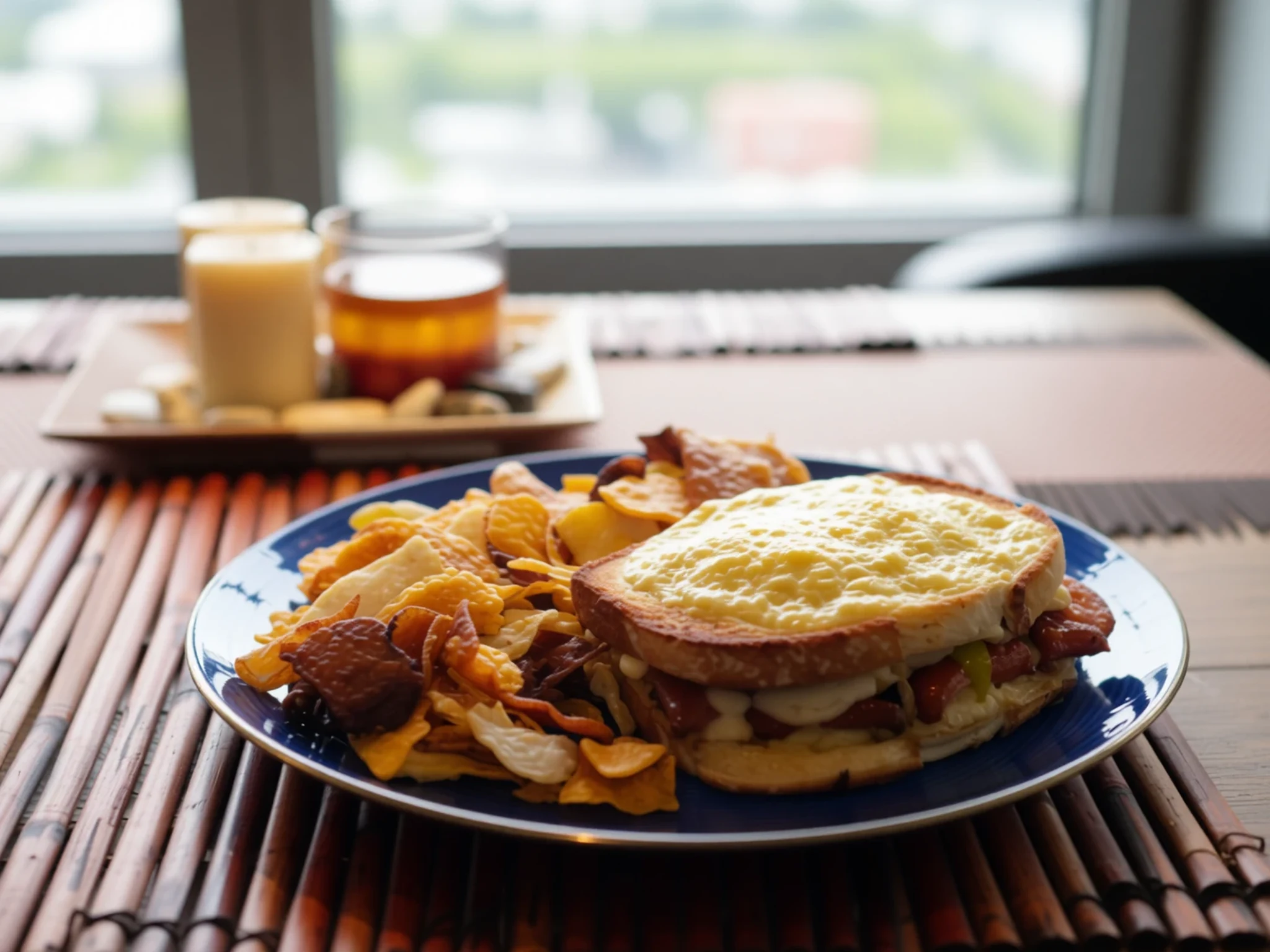
- Onion soup — Traditional brasseries in the seventh arrondissement
Gratinée à l'oignon is a rich broth of slow-cooked onions, topped with toasted bread and melted cheese. It suits a cold evening after the tower lights up. Brasseries across the seventh arrondissement serve it year-round, and it is often the most satisfying choice on a cheap menu.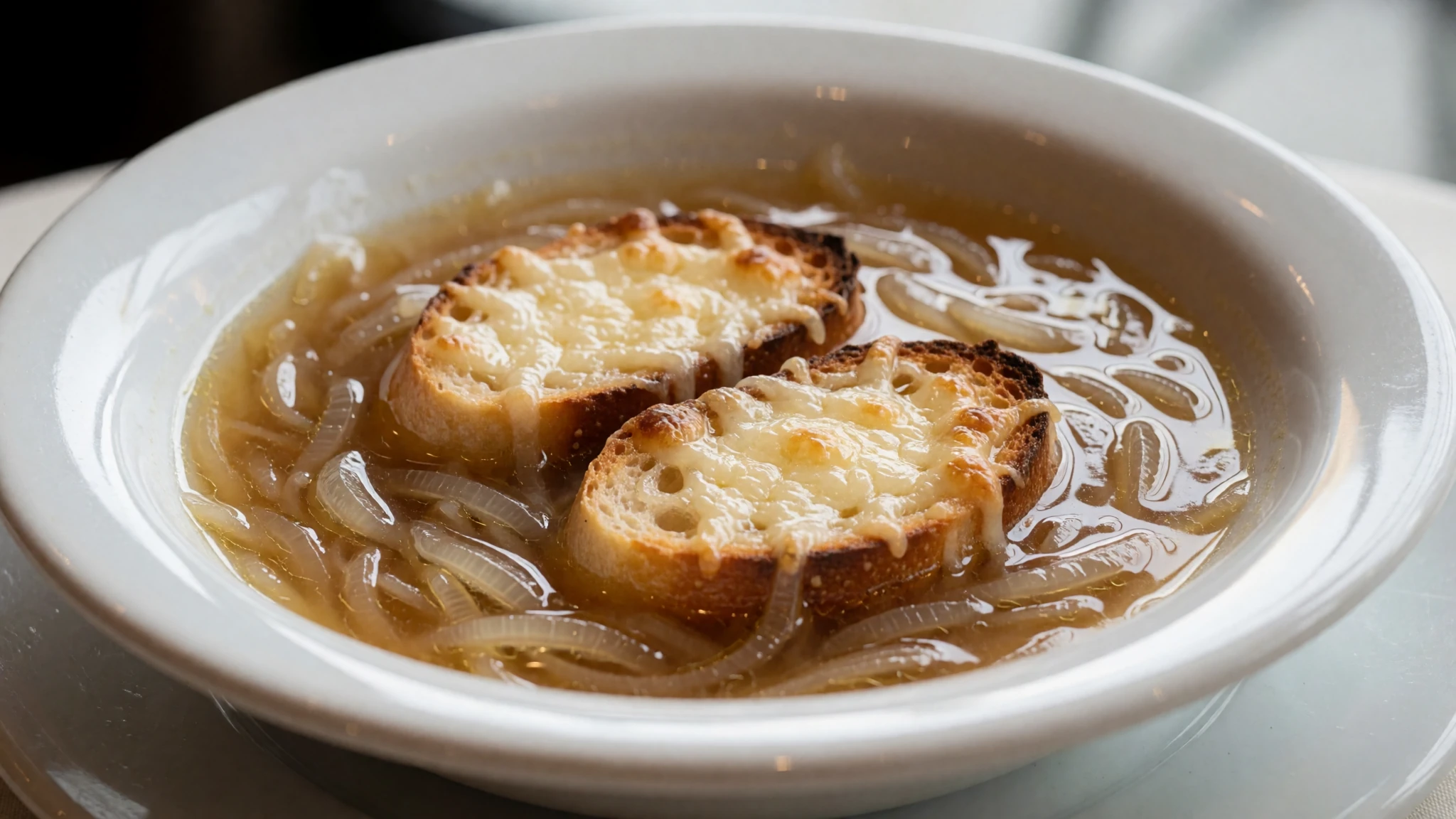
- Crêpes — Crêperies in the streets near the tower
Thin buckwheat galettes with savoury fillings such as ham, egg and cheese, or sweet crêpes with butter and sugar or chocolate. They are cooked on a flat griddle in front of you. Crêperies are everywhere in the area, and a sweet crêpe makes a good late-afternoon snack. - Fruit tart or éclair — Neighbourhood pâtisseries near the Invalides
A pâtisserie display of glossy fruit tarts, custard-filled éclairs and seasonal cakes is part of everyday Paris life. Buy one to take to the gardens or eat on a bench. Choose a shop with a queue of locals, which is usually a good sign.
Plan it
Best time. April to May and September to October suit most visitors, with mild weather, lighter queues than high summer and clear views. July and August bring the heaviest crowds and warm afternoons, and the tower can feel hot in its shaded lifts. Winter is cold and grey, but the summit is quieter.
How long. 1–2
Getting there. Fly into Charles de Gaulle or Orly, then take the RER or a taxi to the tower. The nearest RER station is Champ de Mars–Tour Eiffel on the C line, and the Métro stop at Bir-Hakeim is a short walk. A Batobus boat from the Seine also stops at the tower.
Budget. mid
Tips
- Book summit or lift tickets online for a timed slot, especially in summer
- Go early in the morning or after dark to avoid the worst queues
- Carry some cash for small vendors, though most visitors pay by card
- Keep a water bottle with you, as the gardens have little shade
- Set aside time to walk across the Champ de Mars and along the river for the best photographs
Etiquette
- Keep bags closed and in front of you at the base and inside the lifts
- Do not climb the structure or sit on the lower railings
- Wait your turn in queues and avoid pushing ahead at security
Nearby
Sources
- Wikidata Q243 (CC0)
- Wikipedia, Eiffel Tower (rev 1380433272) (CC BY-SA 4.0)
- Wikivoyage, Paris/7th arrondissement (rev 5385960) (CC BY-SA 4.0)
- Eiffel Tower seen from the Champ de Mars (Benh LIEU SONG) (CC BY 3.0)
- Eiffel Tower, Paris, cropped (Benh LIEU SONG) (CC BY 3.0)
- Exposition Universelle de Paris 1889 (Public domain)
- Embrasement de la Tour Eiffel, Georges Garen (1889) (Public domain)
- Champs de Mars: La Tour Rouge, Robert Delaunay (Public domain)
- Fireworks on Eiffel Tower, July 14 2013 (Yann Caradec) (CC BY-SA 2.0)
- Looking up the centre of the Eiffel Tower (Jebulon) (CC0 1.0)
- Lightning striking the Eiffel Tower, 1902 (Gabriel Loppé) (Public domain)


