Edmonton
Edmonton, Canada
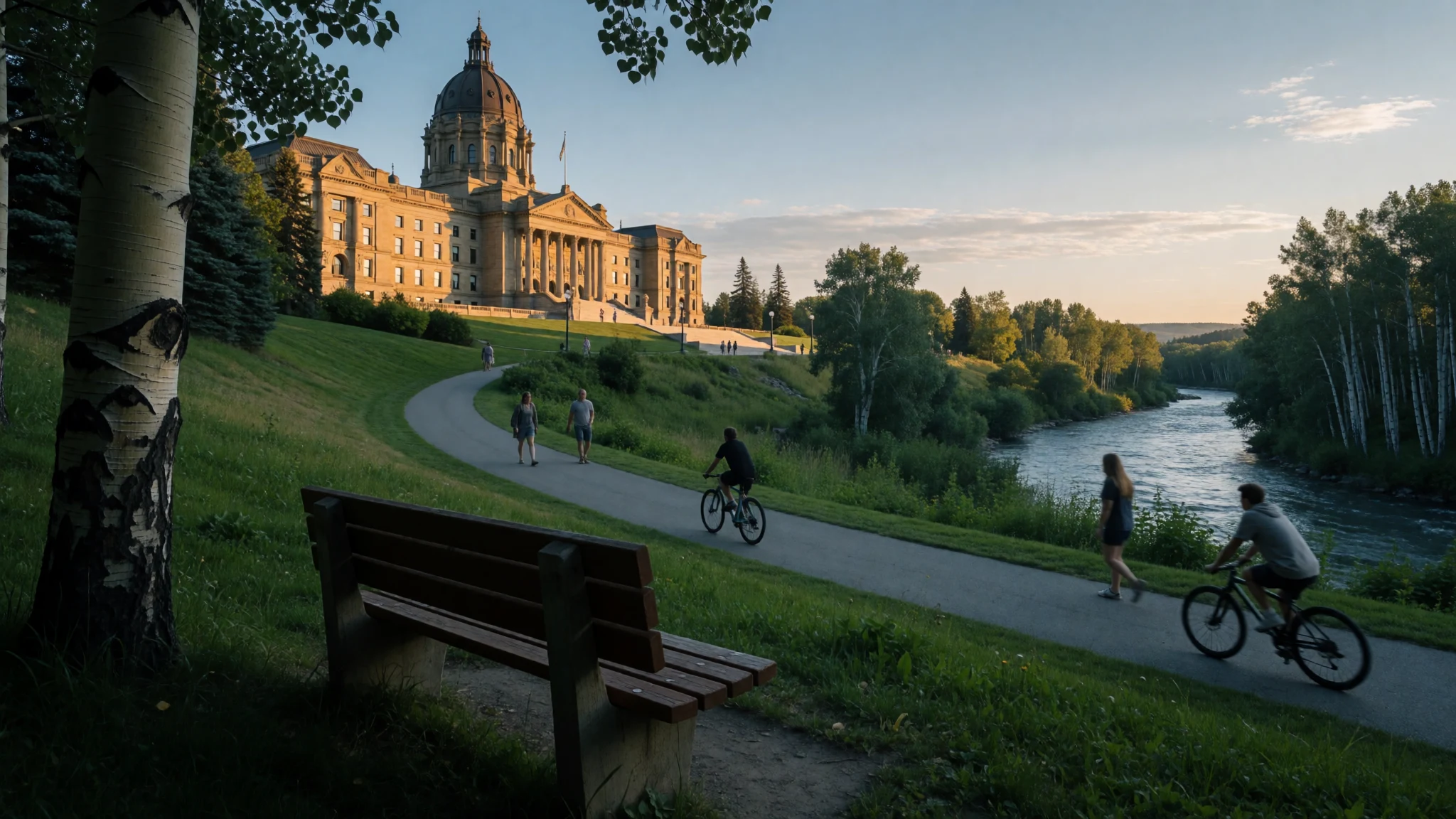
Edmonton is a prairie capital on a deep river valley, with festivals, big skies and a frontier-fort past, best in the bright, long-daylight summer.
The place
Edmonton is the capital of Alberta, set on the North Saskatchewan River in the middle of the province, about 290 km north of Calgary. The city has a population of 1,010,899 and stands 674 m above sea level on open prairie country where the plains begin to give way to northern forest. People who live here are called Edmontonians.
The river is the key to the layout. It runs through a deep, wooded valley that cuts across the whole city, and the parkland, trails and viewpoints along it make a green spine well below the street grid. Downtown sits on the north bank, with government buildings, galleries and theatres clustered around Churchill Square. Across the water on the south side, the university district and Whyte Avenue bring bookshops, bars and live music. Further west, the huge West Edmonton Mall pulls in shoppers all year.
It is a spread-out, car-friendly city, and an honest visitor should plan around that: distances between districts are real, and winters are long and properly cold. Summers are short and bright, with very late dusk, and the city fills with festivals, patios and cyclists. Edmonton is also the main gateway to the Northwest Territories, so the airport is busy with miners, field crews and northern travellers as well as holidaymakers. The mood is friendly, practical and a little understated rather than showy.
Its story
Edmonton's human story starts long before any fort. People are thought to have reached this stretch of the river around 3,000 BC, and possibly as early as 12,000 BC, once an ice-free corridor opened at the end of the last glacial period. The valley offered fish, timber, medicinal plants and chert and quartzite, which toolmakers could chip into axes, knives and arrowheads.
Many First Nations lived and travelled here, including the Cree, Nakota Sioux, Blackfoot, Tsuut'ina, Ojibwe and Denesuline. The Métis were also part of the river's history, holding narrow lots that ran back from the water so each family could reach the river's resources. By 1882 about 44 such lots remained, and they were soon absorbed by the growing town.
European contact came through the fur trade. The Hudson's Bay Company explorer Anthony Henday may have been the first European in the area, in 1754, and by 1795 trading posts stood along the river. Fort Edmonton became the region's main trading centre after the Hudson's Bay Company and North West Company merged in 1821.
Growth stayed slow until Canada acquired Rupert's Land in 1870. The Calgary and Edmonton Railway arrived in 1891, Edmonton became a city in 1904, and in 1905 it was named capital of the new province of Alberta. Much of what visitors see downtown dates from that confident, young-province period or later.
What to see
- Alberta Legislature Building — Central, near the river valley
The provincial parliament dates from 1911, soon after Edmonton became capital, and is a Beaux-Arts building on high ground above the river. Tours have been offered free; check the official site for current arrangements. The grounds have wading pools in summer and, in winter, lit-up skating paths. A relaxed place to wander.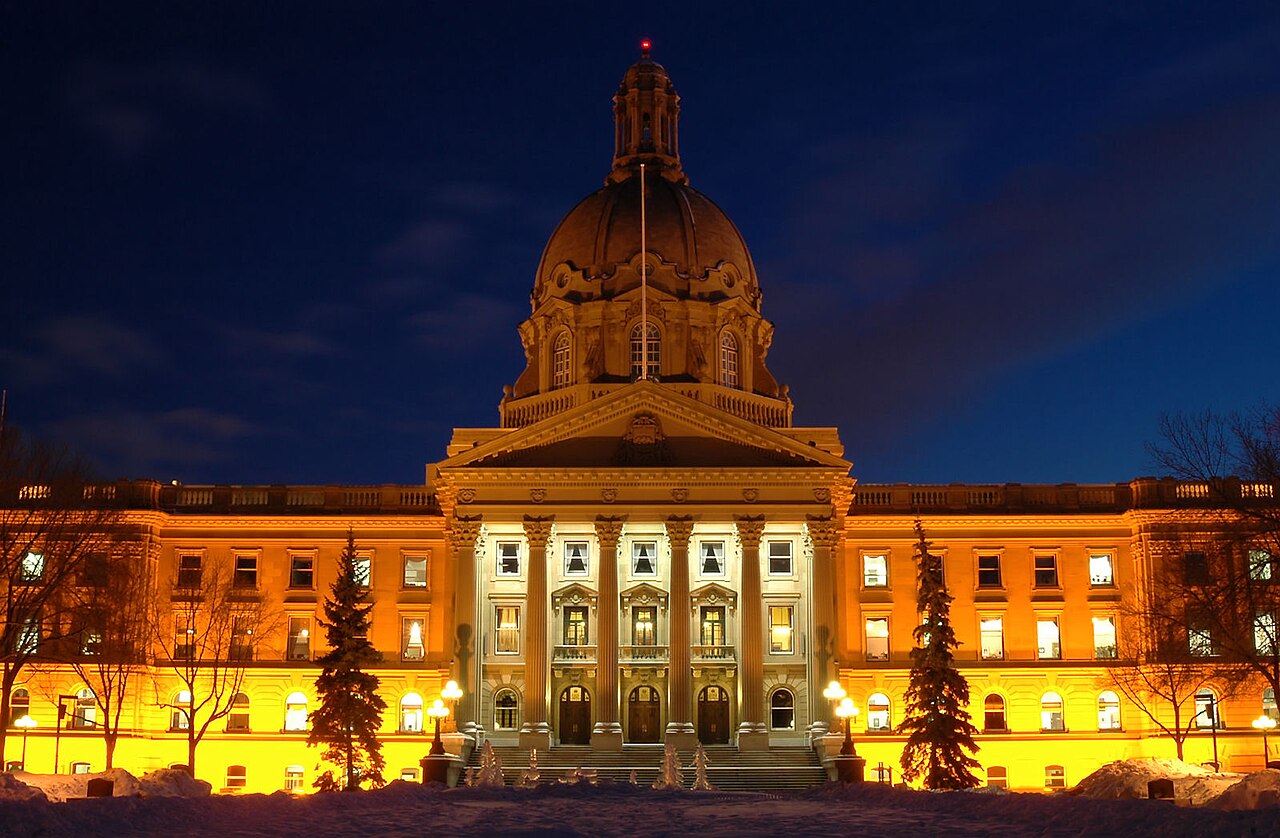
- Art Gallery of Alberta — Downtown Arts District, Churchill Square
A modern gallery on Churchill Square, showing Canadian and international work and regularly hosting touring exhibitions. Its angular, sculptural building is worth a look from the outside too. The gallery also sells Capital Modern, a book on the city's mid-century architecture, handy for anyone curious about how Edmonton grew up.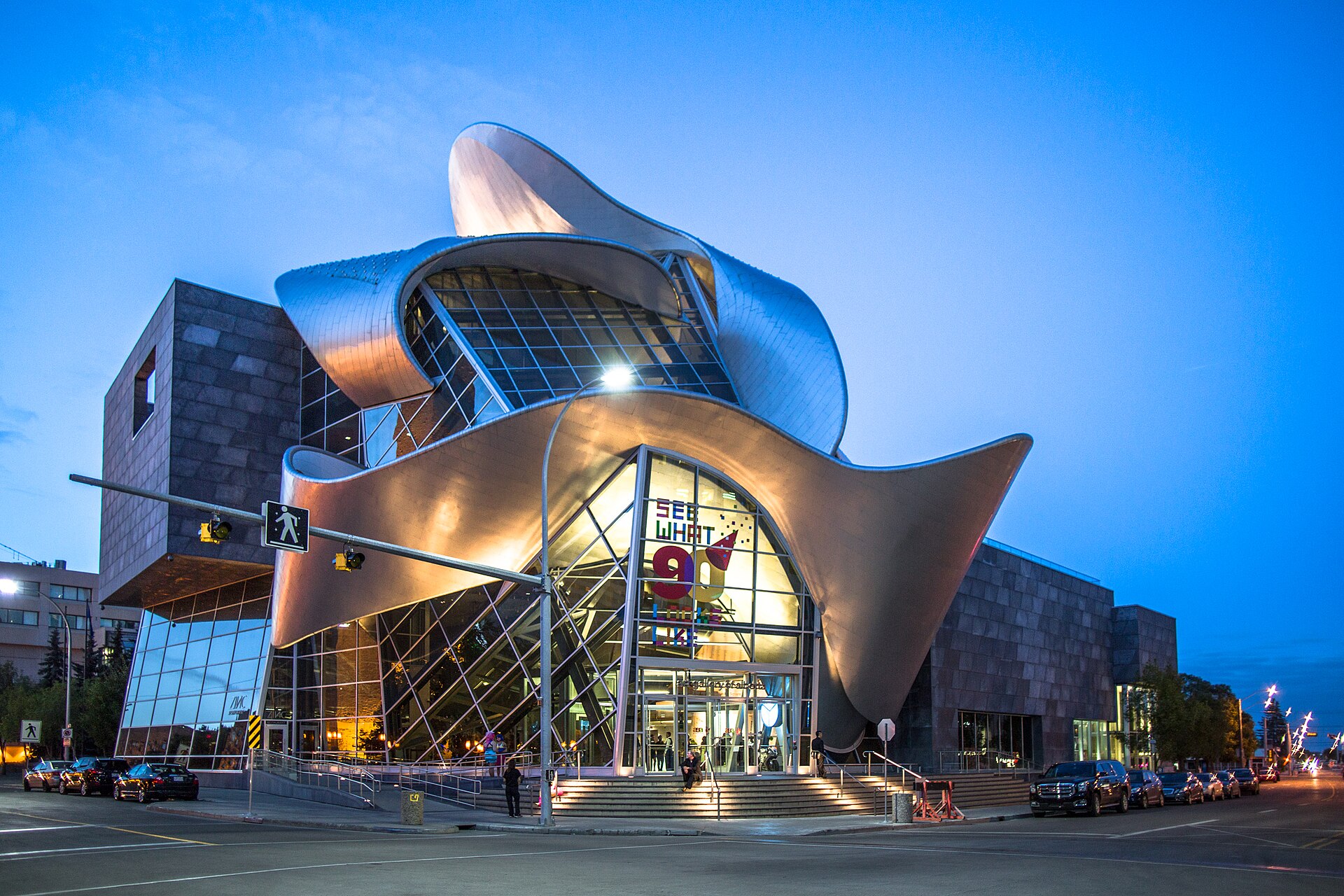
- Fort Edmonton Park — River valley, south-west
A living-history park on the river's south bank that rebuilds the city's past in stages, from the fur-trade fort to a main street of early-twentieth-century shops. Costumed interpreters, period buildings and open ground make it good for families. Check the official site for seasons, since many areas run mainly in warmer months.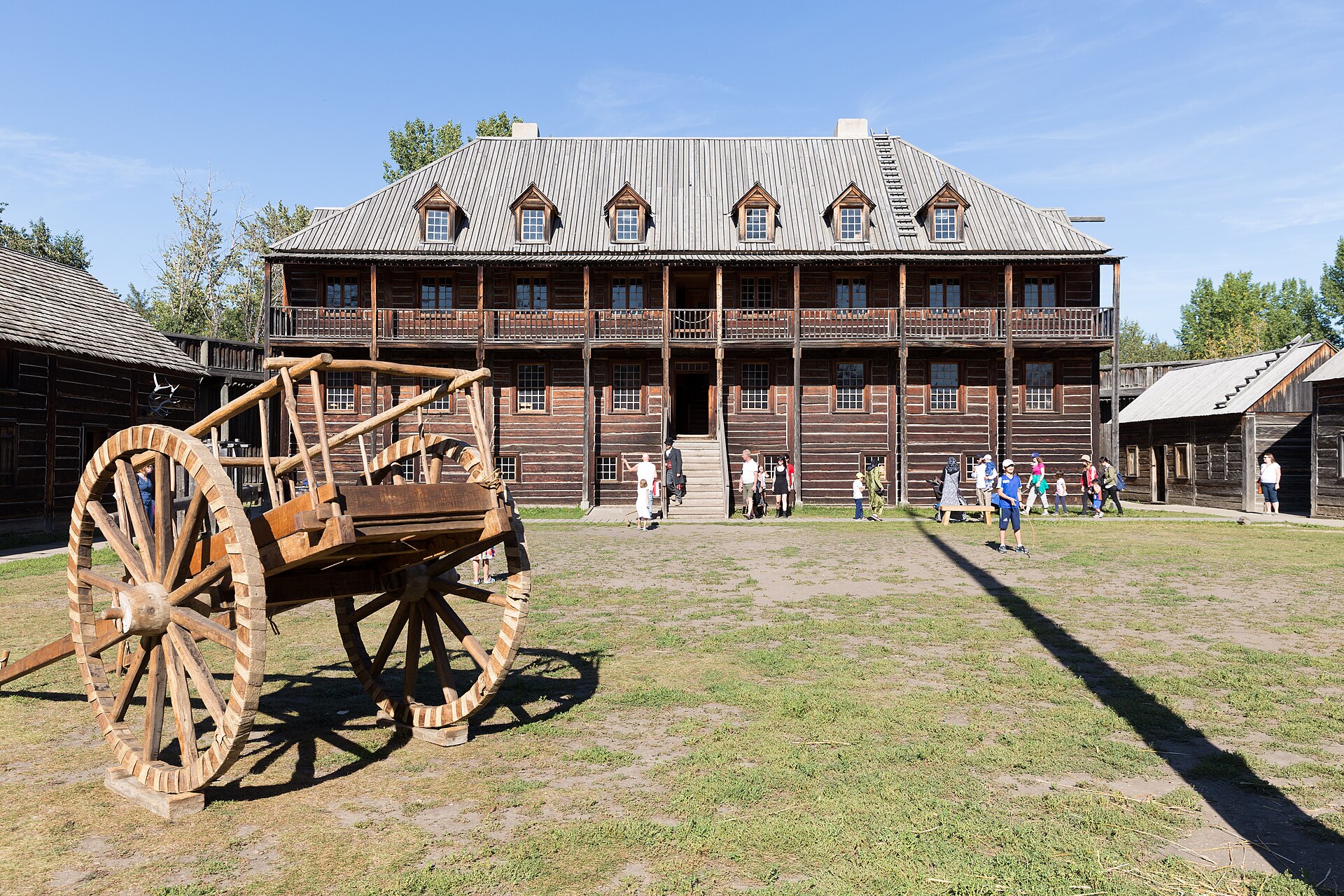
- Muttart Conservatory — River valley, south bank
Four glass pyramids on the river's south bank hold separate gardens, from dry desert plants to tropical greenery, with changing floral displays. It is a pleasant refuge on a cold day, when the contrast with the snow outside is striking, and the pyramids look good against the downtown skyline.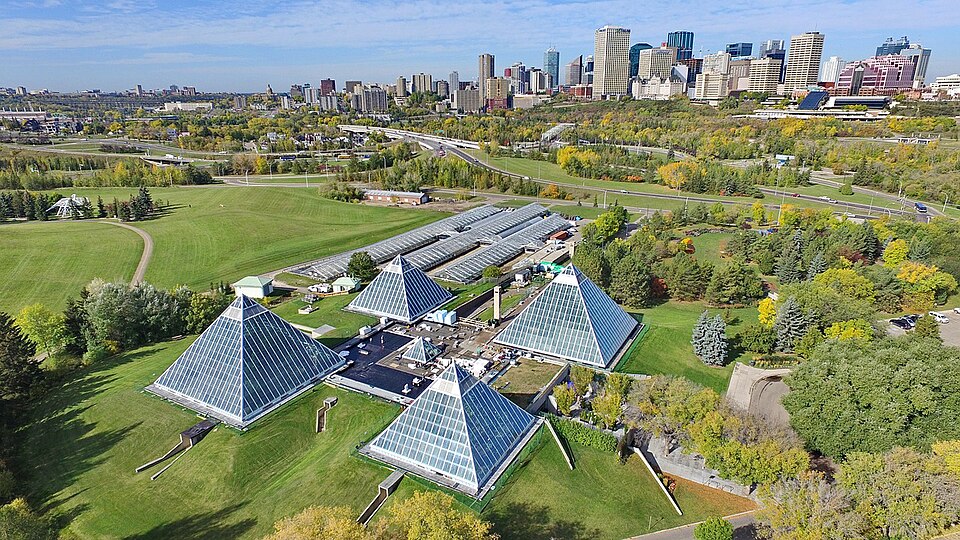
- Skyline lookout — South of the river, Strathcona side
A public viewpoint on the south side of the valley gives a clear view across the river to the downtown towers. It suits a quiet half hour near sunset, when the glass catches the light and the valley's trees fill the foreground. Bring a layer in any season, as the wind can bite.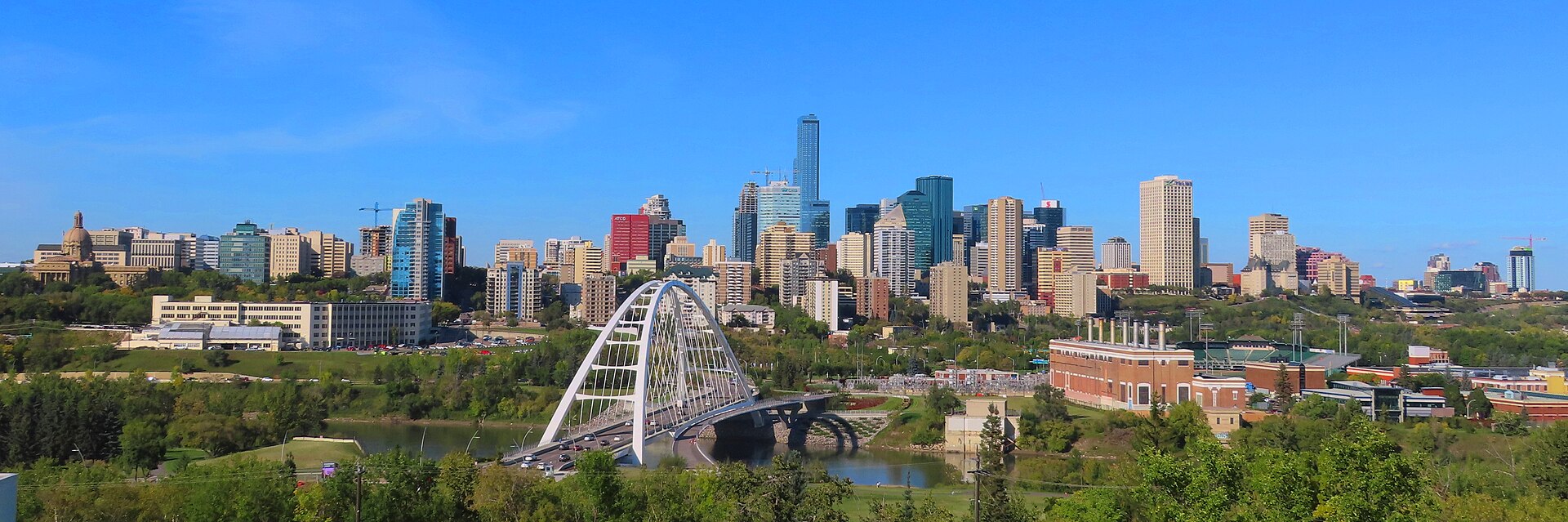
- West Edmonton Mall — West Edmonton
A vast indoor complex of shops, restaurants and attractions, including a full-size pirate ship floating in a lagoon. It is as much a day out as a shopping trip, and most useful in deep winter or heavy rain. Expect crowds at weekends and during school holidays.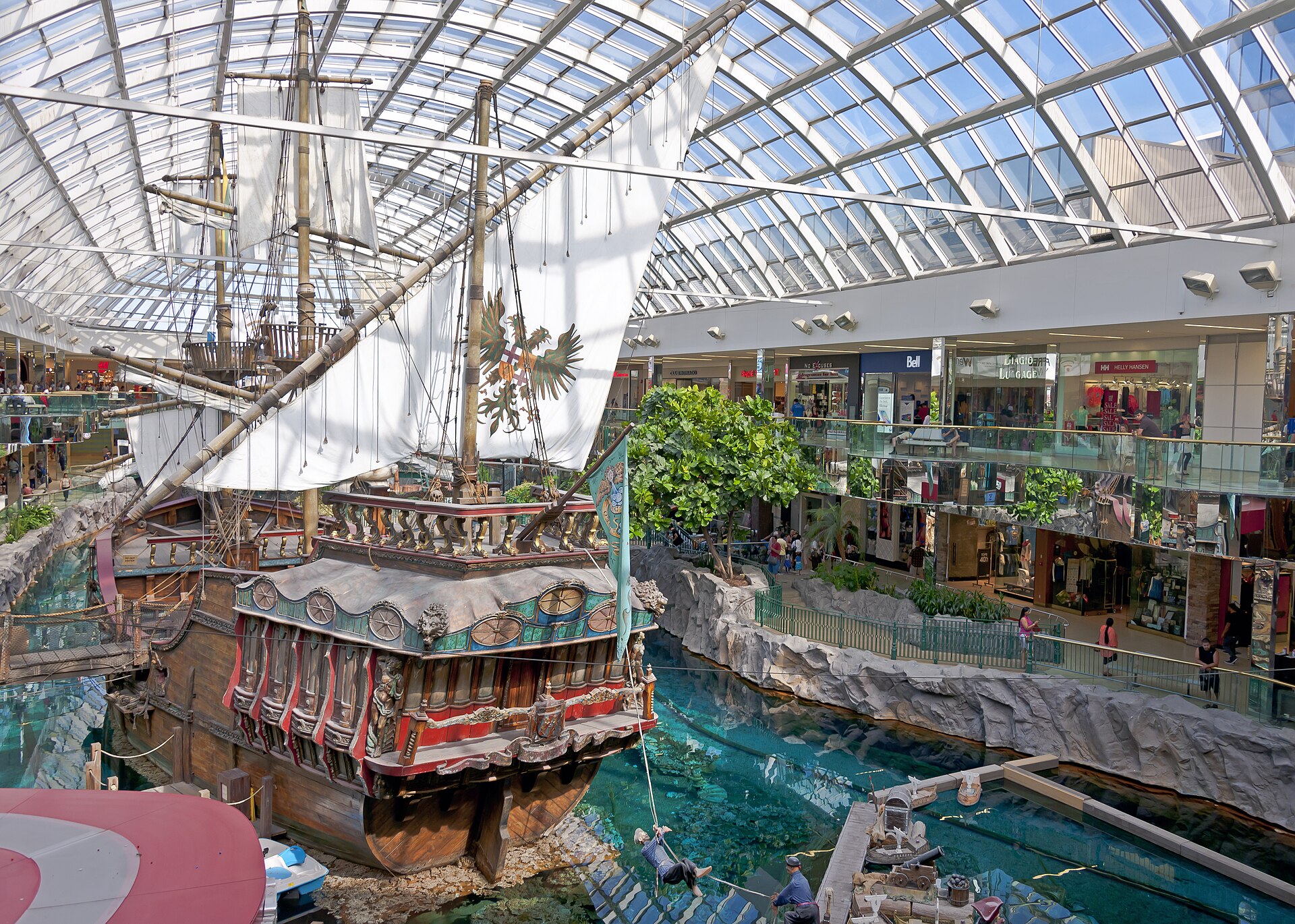
Culture
Edmonton's cultural life runs on festivals, theatre and music, and a lot of it is concentrated in two places. Downtown, the Arts District around Churchill Square, named for Sir Winston Churchill and marked by a bronze statue of him, is the centre for galleries, theatres and outdoor events. Across the river, Whyte Avenue and the university district bring live music venues, small theatres and bars.
The city's concert hall is home to the Edmonton Symphony Orchestra, and the Citadel Theatre has been staging plays since the 1960s. Summer is the main festival season, when long evenings let street performances and open-air stages run late. The long winter has shaped habits too: people skate on outdoor rinks, gather in cafés and cheer for the local hockey team with real loyalty.
The land under the city belongs to a long Indigenous history, and Cree, Métis and other First Nations cultures remain part of everyday Edmonton life, through public art, events and food. The prevailing manner is polite, low-key and informal; people queue, apologise easily and expect the same in return. Waiters and drivers appreciate a tip, and tipping is customary in restaurants.
When visiting Indigenous cultural events or sites, listen first, ask before photographing people or ceremonies, and follow any guidance from hosts.
What to wear
Edmonton has no single national costume, but its traditional dress is tied to the Indigenous and Métis peoples of the prairies. Métis clothing is known for beadwork and floral embroidery on cloth and hide, and for the colourful woven sash, traditionally worn at the waist. First Nations regalia, made with hide, beads, quills, feathers and cloth, is worn at ceremonies and powwows, and each piece carries personal and community meaning.
Day to day, Edmontonians dress for the weather first. In winter that means long insulated coats, wool hats, thick gloves, scarves and boots with proper grip; in summer it is shorts, T-shirts, sandals and sunglasses. Jeans and outdoor jackets are normal even at theatres and restaurants, and only formal events call for suits and evening wear. Hockey shirts are everywhere in the season.
Visitors should plan for weather rather than formality. From late autumn to early spring, bring a warm, windproof coat, a hat, gloves, thermal layers and waterproof boots with a good sole, as pavements are icy and often salted. In summer, light layers, a sun hat, sunscreen and insect repellent for river-valley trails are useful, along with a light jacket for cool evenings. Comfortable walking shoes suit the city's long distances. No religious dress rules apply for ordinary sightseeing, but respect posted notices at places of worship.
What to eat
- Alberta beef steak — Downtown restaurants around Jasper Avenue
Beef is the prairie province's signature meat, and steakhouses are a fixture of the downtown dining streets. A grilled cut with potatoes and seasonal vegetables is a hearty meal after a cold day outside. Expect the cost to be higher than in casual places. - Pierogi — Ukrainian delis, community halls and summer festivals
Ukrainian settlers shaped the prairies, and these filled dumplings, usually potato and cheese and served with fried onions and sour cream, are a staple. Home-style versions appear at church suppers, delis and festivals. - Bannock — Indigenous food stalls and cultural events
A simple, hearty bread of Indigenous and Métis tradition, fried or baked and served warm, sometimes with jam or alongside soup and stew. Look for it at Indigenous-run food stalls and cultural events. - Saskatoon berry pie — Bakeries and farmers' markets
The saskatoon is a purple-blue prairie berry with a sweet, slightly nutty flavour, baked into pies, jams and muffins. Late summer is when fresh fruit appears; bakeries often sell it out of season in frozen or preserved form. - Pub fare and a prairie beer — Pubs and bars along Whyte Avenue
Whyte Avenue has the densest cluster of pubs in the city, where burgers, wings and local craft beer fill long evenings. Edmonton is also the birthplace of the Canadian restaurant chain Earl's, which serves casual 'Canadiana' dishes.
Plan it
Best time. June to August for long daylight, warm weather and the festival season, with July and August the busiest. Winter, from December to February, is long, cold and snowy, but suits skating, museums and indoor attractions; spring and autumn are changeable.
How long. 2–3
Getting there. Fly to Edmonton International Airport, which has many Canadian routes, services from the United States, seasonal charters to Mexico and the Caribbean, and some flights from Europe. From the airport, take a bus or taxi into the city, a drive of well under an hour in normal traffic. Calgary is a straightforward drive south.
Budget. mid
Tips
- Check the city's official site (https://www.edmonton.ca/) for events and opening arrangements before booking, as many attractions change seasonally
- Book festival-week accommodation early, because summer weekends fill up fast
- Hire a car or use ride-hailing for sights outside the centre, since distances are long and public transport is thinner outside downtown
- In winter, pack thermal layers and check the forecast daily, as cold snaps can be sharp
- Carry a card for most spending; cash is rarely needed
Etiquette
- Queue politely and keep to the right on stairs and escalators
- Tip in restaurants and for taxi and ride-hailing journeys as is customary locally
- Ask before photographing people, especially at Indigenous events
Nearby
Sources
- Wikidata Q2096 (CC0)
- Wikipedia: Edmonton (rev 1384759207) (CC BY-SA 4.0)
- Wikivoyage: Edmonton (rev 5401518) (CC BY-SA 4.0)
- Photo: Downtown Edmonton in 2018 (IQRemix) (CC BY-SA 2.0)
- Photo: Edmonton skyline from the lookout, 2019 (awmcphee) (CC BY-SA 4.0)
- Photo: Alberta Legislature Building at night (Hugh Lee) (CC BY-SA 2.0)
- Photo: Art Gallery of Alberta (IQRemix) (CC BY-SA 2.0)
- Photo: Fort Edmonton Park (Mack Male) (CC BY-SA 2.0)
- Photo: Muttart Conservatory (Johnnyfly) (CC0 1.0)
- Photo: Edmonton Law Courts (own work) (CC BY 3.0)
- Photo: Pirate ship in the West Edmonton Mall (Daniel Case) (CC BY 3.0)


