Düsseldorf
Düsseldorf, Germany
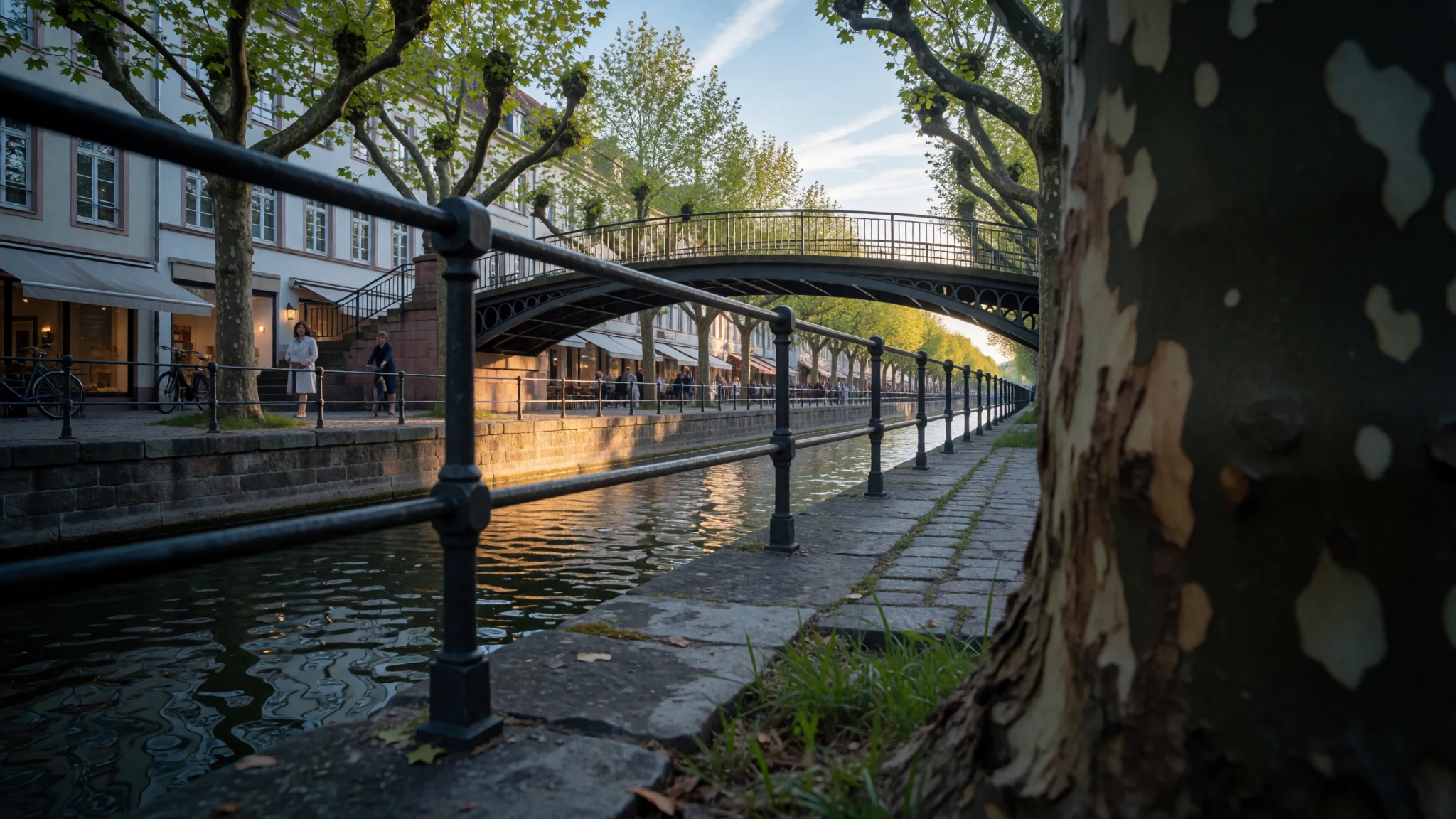
Düsseldorf pairs a Rhine-side old town and serious art collections with bold waterfront architecture, all easy to cover on foot in a couple of days.
The place
Düsseldorf is the capital of North Rhine-Westphalia, the most populous German state, and home to about 620,000 people. Most of the city lies on the right bank of the Rhine, where the small Düssel river joins it, at an elevation of 38 metres. The ground is flat and the river sets the rhythm: promenades follow the water, barges pass the old town, and a clock near the embankment, the Pegeluhr, shows the current water level. Neighbouring towns such as Neuss, Krefeld, Ratingen and Solingen have grown right up against its edges, and Düsseldorf is the central city of the Rhine-Ruhr region, a dense urban belt running from Bonn through Cologne to the Ruhr. That makes it a working city of offices, trade fairs and an airport inside the city limits, not a preserved museum piece. Yet it is compact where it matters. The Altstadt (old town) packs brewhouses and narrow lanes between the river and the Burgplatz. Königsallee, a tree-lined shopping boulevard with a water channel down its middle, cuts through the centre. The Medienhafen, a former harbour, now holds striking contemporary buildings, among them Frank Gehry's Neuer Zollhof, while Daniel Libeskind designed the Kö-Bogen complex near the Hofgarten. Museums, an art academy and several theatres give the city a cultural weight beyond its size. Expect a polished, slightly reserved place, busy on trade-fair weeks and calmer on Sunday mornings, with most of the interest packed into a walkable stretch along the river.
Its story
Düsseldorf grew from a modest settlement at the point where the Düssel meets the Rhine, a marshy bank where farmers and fishermen lived in the early medieval centuries. The first written mentions fall between 1135 and 1159, and by 1162 the name appears as Thusseldorp. Upriver, Kaiserswerth was fortified under Emperor Friedrich Barbarossa to watch traffic on the Rhine, and it only became a suburb of Düsseldorf in 1929. In 1186 the village came under the County of Berg, a state of the Holy Roman Empire, and in 1288, after the Battle of Worringen, Count Adolf of Berg granted it town privileges. The city still treats that date as its founding. Under the Dukes of Berg, and later as capital of the United Duchies of Jülich-Cleves-Berg, it became a regional centre of politics and the arts. The court of Jan Wellem and his wife, Anna Maria Luisa de' Medici, supported painting and building, and an early art academy took root. The castle beside the river was rebuilt as a baroque palace, but fire destroyed it in 1872, leaving only a tower that now houses a museum. Napoleonic rule brought a brief spell as part of the Grand Duchy of Berg, then Prussia took over in 1815, and the city industrialised quickly through the nineteenth century. The mix of court culture, art teaching and commerce explains much of what the city feels like today.
What to see
- Burgplatz and the Schifffahrtmuseum — Altstadt, riverside
Burgplatz sits at the edge of the old town beside the Rhine, on the site of the ducal castle that later became a baroque palace before burning down in 1872. The surviving tower now holds the shipping museum. It is a good first stop, with the river promenade right alongside. - St. Lambertus Basilika — Altstadt
This brick church in the Lower Rhine Gothic style is a landmark of the old town skyline. Its twisted spire is easy to spot from the river. Inside, the church is tied to St Apollinaris, the city's patron saint. It is a calm break from the lively bars nearby. - Cartwheelers' Fountain — Altstadt, under the plane trees
The fountain celebrates the Radschläger, the cartwheeling children who are a local emblem. Its dialect motto says the people will remain cartwheelers however crazy the world gets. It stands under old plane trees, and local children still turn cartwheels around it. It is small, but it captures the city's humour well. - Medienhafen — Former harbour, south of the centre
The Medienhafen is a former harbour reborn with media offices, restaurants and daring architecture. Frank Gehry's Neuer Zollhof, with its three curving, differently finished buildings, is the best-known stop. Walk the quays in the late afternoon, when the light picks out the façades, then stay on for dinner along the water.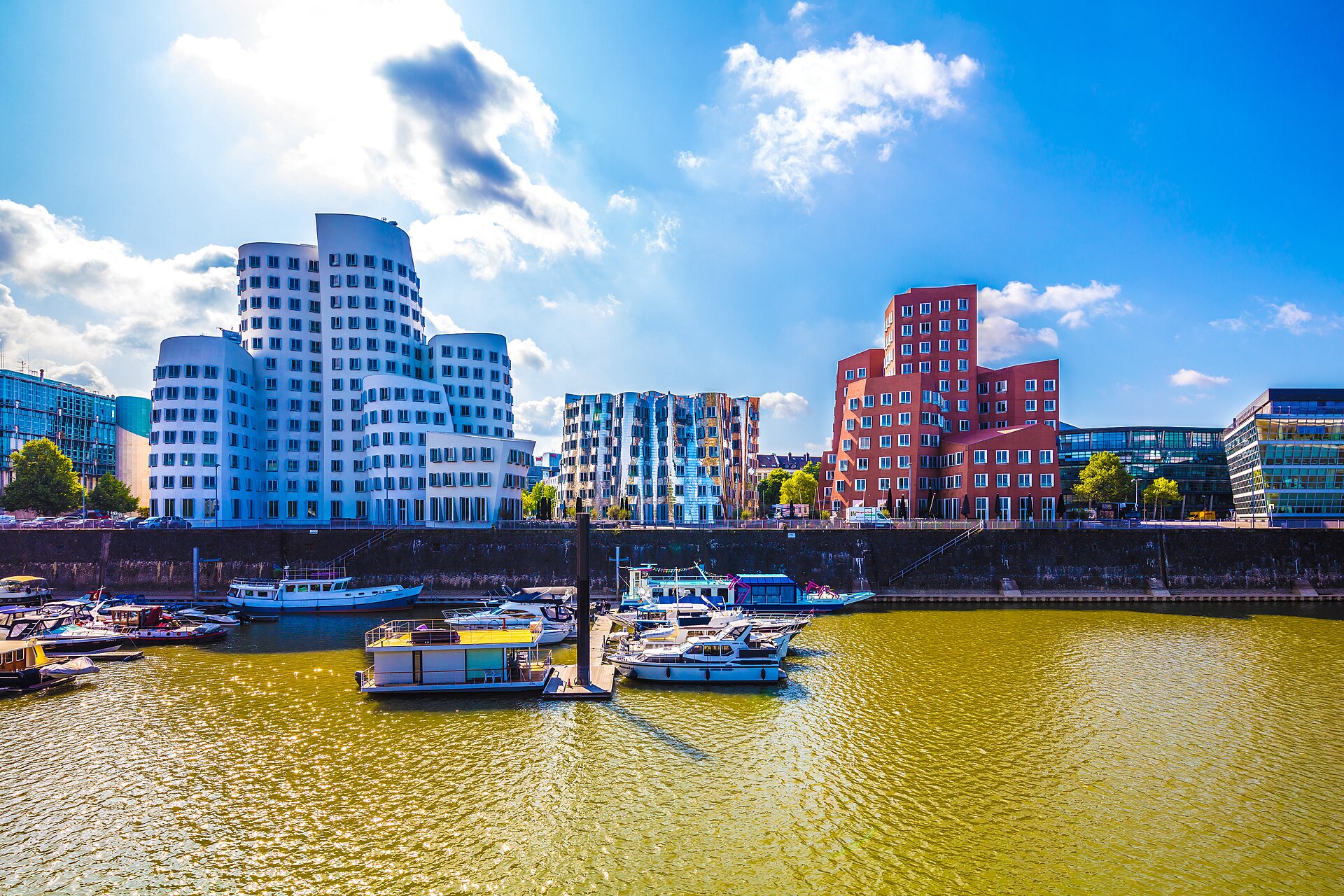
- Königsallee — City centre
Known locally as the Kö, this tree-lined boulevard runs beside a water channel and is the city's main shopping street. Even visitors who do not shop come for the people-watching, the bridges over the water and the cafés. At the northern end, the Kö-Bogen complex by Daniel Libeskind adds a modern counterpoint.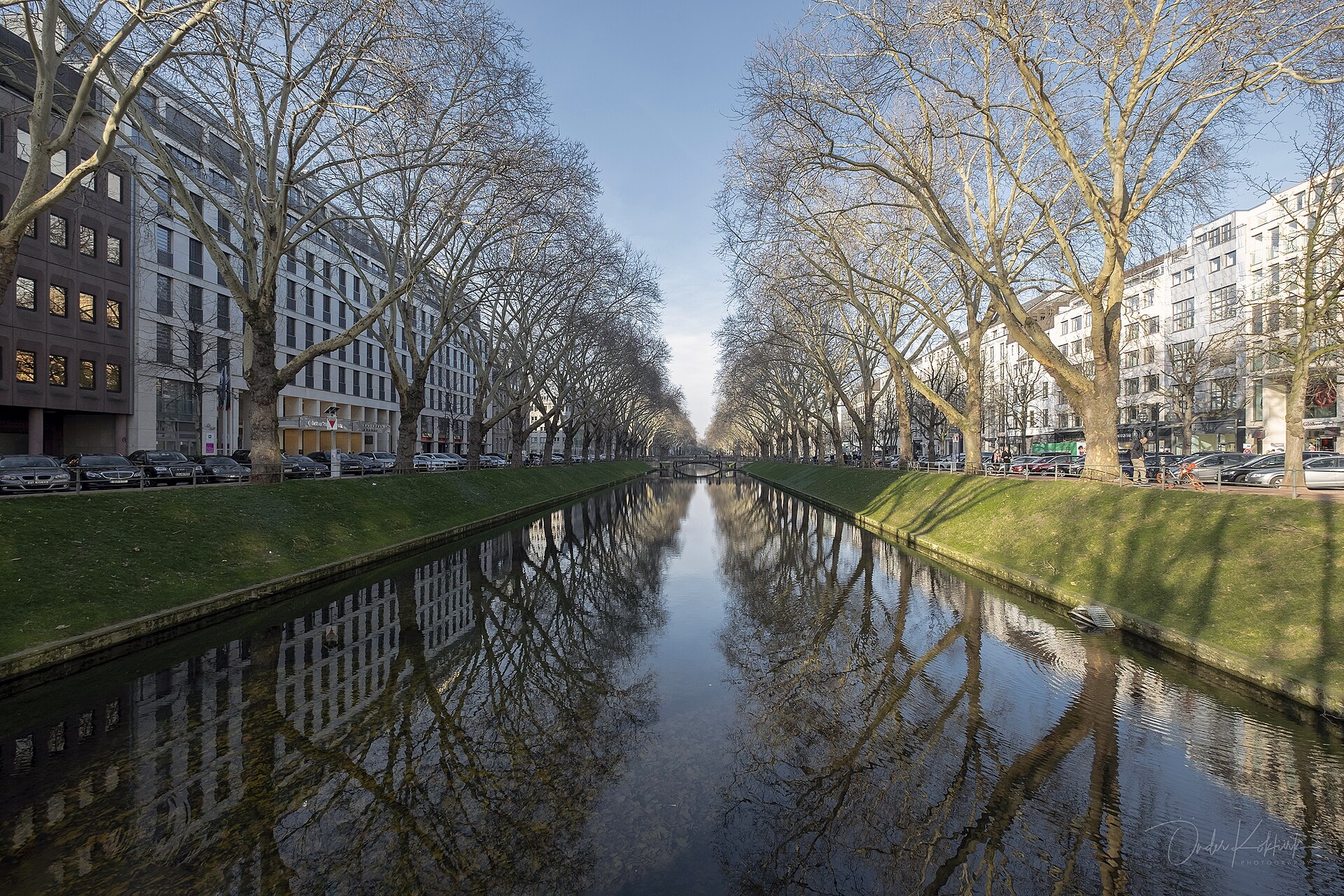
- K21 Kunstsammlung Nordrhein-Westfalen — Ständehaus, near the Hofgarten
K21 is the contemporary wing of the North Rhine-Westphalia art collection, housed in a historic former parliament building beneath a glass dome. It suits a rainy afternoon and reflects the city's long link with art teaching. Opening hours and ticket details change, so check the official city site before going.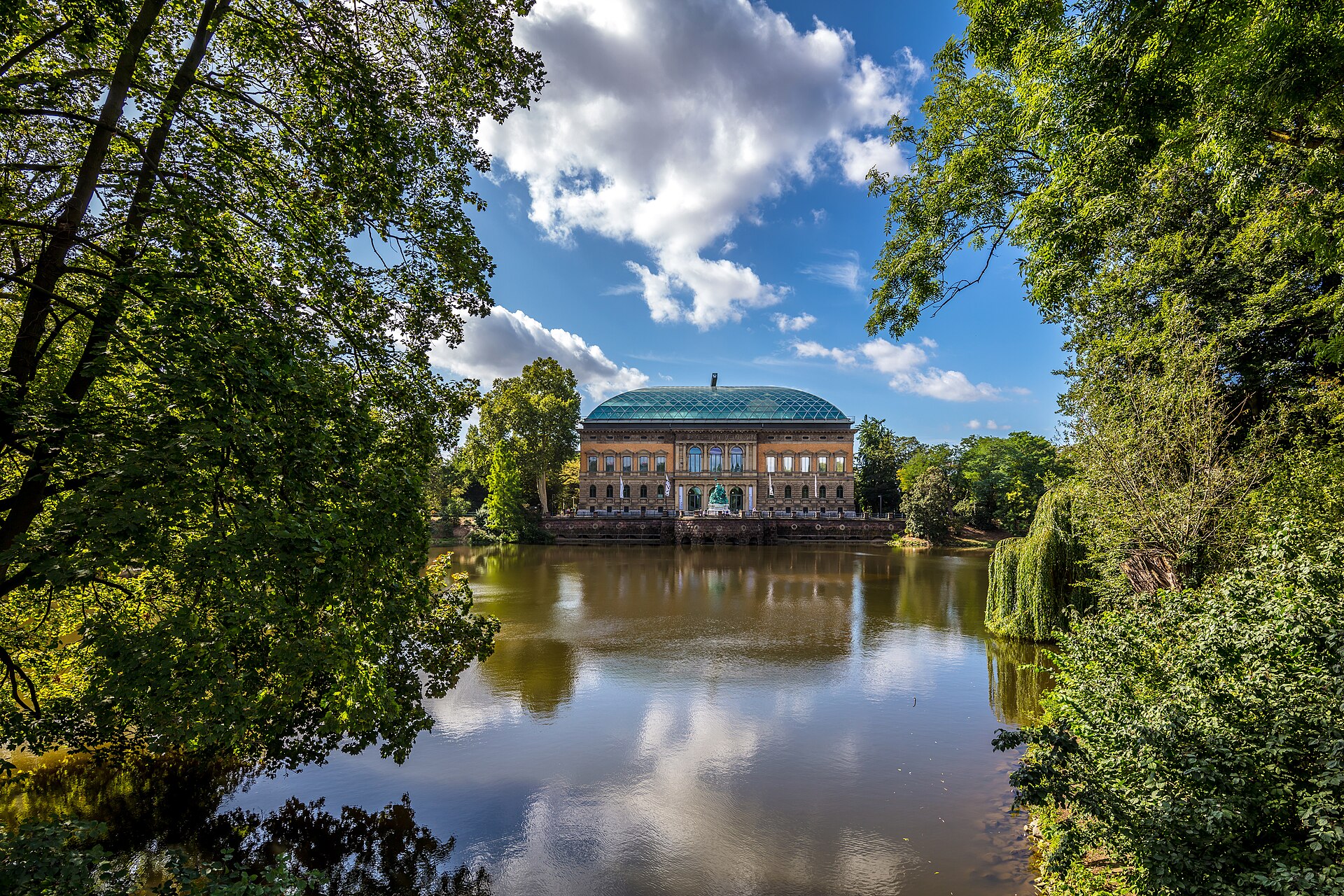
Culture
Düsseldorf is one of Germany's centres for art and performance, and the habit goes back to the court of Jan Wellem and Anna Maria Luisa de' Medici, who were early patrons of cultural life. The Düsseldorf Art Academy later gave its name to the Düsseldorf School of Painting in the nineteenth century and the Düsseldorf School of Photography in the twentieth. Today the North Rhine-Westphalia art collection, smaller galleries, the Schauspielhaus theatre and the Kom(m)ödchen cabaret keep that tradition active, and several well-known German musicians and poets were born here or settled here. Beyond the galleries, local identity is playful. The cartwheeling Radschläger figure appears on fountains and souvenirs, and the Rhineland carnival season draws costumed crowds into the old town. Everyday social life leans on the Altstadt brewhouses, where altbier, the city's dark, top-fermented beer, arrives in small straight glasses carried on round trays by waiters called Köbes, who tend to be brisk and teasing. Locals are generally direct and polite, and dinner conversation moves easily between football, art and the Rhine. People from nearby Cologne are the subject of a friendly rivalry, which visitors can enjoy but should not stoke. In a brewhouse, put your beer mat on top of your empty glass when you have had enough, or the waiter will keep bringing fresh ones.
What to wear
Düsseldorf has no everyday traditional dress, and the nearest thing is carnival costume. During the Rhineland carnival season, groups wear brightly coloured uniforms and fancy dress, often in felt, wool and satin, and the city fills with them. Older regional rural clothing from the Lower Rhine, made from wool and linen, now survives mainly in museums and folk groups. In daily life the city is known as a fashion town, partly thanks to Königsallee and its trade fairs. Office workers dress sharply, with tailored coats, good shoes and dark colours, while students and creative workers favour trainers, denim and layered streetwear. Evenings in the Altstadt are casual, though restaurants near the Kö lean smarter. Visitors should pack for changeable weather, since the Rhine valley is mild but prone to rain in every season. A light waterproof, layers and comfortable shoes that cope with cobbles and long riverside walks are more useful than anything formal. Winters feel damp and cold, so add a warm coat, scarf and hat from November onwards. Summers can turn warm and humid, so breathable cotton helps. Churches such as St. Lambertus have no strict dress code, but covered shoulders and quiet clothing are polite, especially during services. For smart restaurants and theatre evenings, a neat shirt or dress and clean shoes will fit in.
What to eat
- Altbier — Any Altstadt brewhouse
Altbier is the city's signature drink, a copper-brown, top-fermented beer served in small straight glasses and refilled quickly. It is mildly bitter and easy to drink. The old town brewhouses pour it fresh, usually with hearty plates alongside. Pace yourself, because the glasses keep coming. - Halve Hahn — Brewhouses and traditional pubs
Despite the name, which means half a chicken, this is a rye roll with mature cheese, mustard and onion. It is a simple pub snack that goes well with altbier. Ordering it is a small local ritual, and the waiters expect the question. - Himmel un Ähd — Traditional Rhineland restaurants in the Altstadt
The name means heaven and earth in local dialect. It combines apple and mashed potato, traditionally served with fried black pudding or liver. The sweet-and-savoury mix is typical of the Lower Rhine and suits cool evenings. - Düsseldorfer Senf with sausage — Old town brewhouses and market stalls
Düsseldorf is known for its sharp mustard, served beside sausages, pork knuckle or cold cuts. Many brewhouses put a pot on the table, and local delis sell small jars to carry home. A modest, portable edible souvenir. - Reibekuchen — Seasonal markets and street stalls
These crisp potato fritters are fried on the spot and served hot, usually with apple sauce, though savoury toppings also appear. They are a common sight at Christmas markets and fairs. Eat them straight from the paper while still hot and crunchy.
Plan it
Best time. May–June and September–October, when the Rhine valley is mild and the riverside terraces are open. Winters are grey, damp and cold, though December brings Christmas markets. Summer can turn warm and humid.
How long. 2–3
Getting there. Düsseldorf Airport lies within the city limits, about 15 km from the main railway station, with good rail links into the centre. Cologne/Bonn Airport is a workable alternative, and Frankfurt Airport has direct high-speed trains to Düsseldorf Hauptbahnhof. The low-cost airport branded Düsseldorf Weeze is about 75 km away.
Budget. mid
Tips
- Check the official city website (https://www.duesseldorf.de/) for events and opening times, since trade fairs fill hotels and raise prices.
- Walk the Rhine promenade in the morning or early evening, when it is quieter and the light is softer.
- Carry a small umbrella or light waterproof in any season.
- Cards are widely accepted, but keep some cash for small brewhouses and market stalls.
- Book museum slots and weekend restaurant tables ahead during busy fair and carnival periods.
Etiquette
- Put your beer mat on top of your glass when you have had enough altbier.
- Keep your voice down in churches and during services.
- Tip by rounding up the bill when service has been good.
Nearby
Sources
- Wikidata Q1718 (CC0)
- Wikipedia: Düsseldorf (rev 1382448466) (CC BY-SA 4.0)
- Wikivoyage: Düsseldorf (rev 5425084) (CC BY-SA 4.0)
- Panorama of the city of Duesseldorf — Kai Pilger (CC BY-SA 4.0)
- New Zollhof, Media Harbor — GraphyArchy (CC BY-SA 4.0)
- Hofgartenterrassen am Kö-Bogen — GraphyArchy (CC BY-SA 4.0)
- K21 Kunstsammlung Nordrhein-Westfalen — GraphyArchy (CC BY-SA 4.0)
- Königsallee 2019 — Onderkokturk (CC BY-SA 4.0)
- Girardetbrücke on Königsallee at night — Johann H. Addicks (CC BY 3.0)
- Statuen im Schlosspark Benrath — Frank Vincentz (CC BY 3.0)
- View of Düsseldorf with the church of St. Andrew — Jan van der Heyden / Adriaen van de Velde (Public domain)


