Durrës
Durrës, Albania
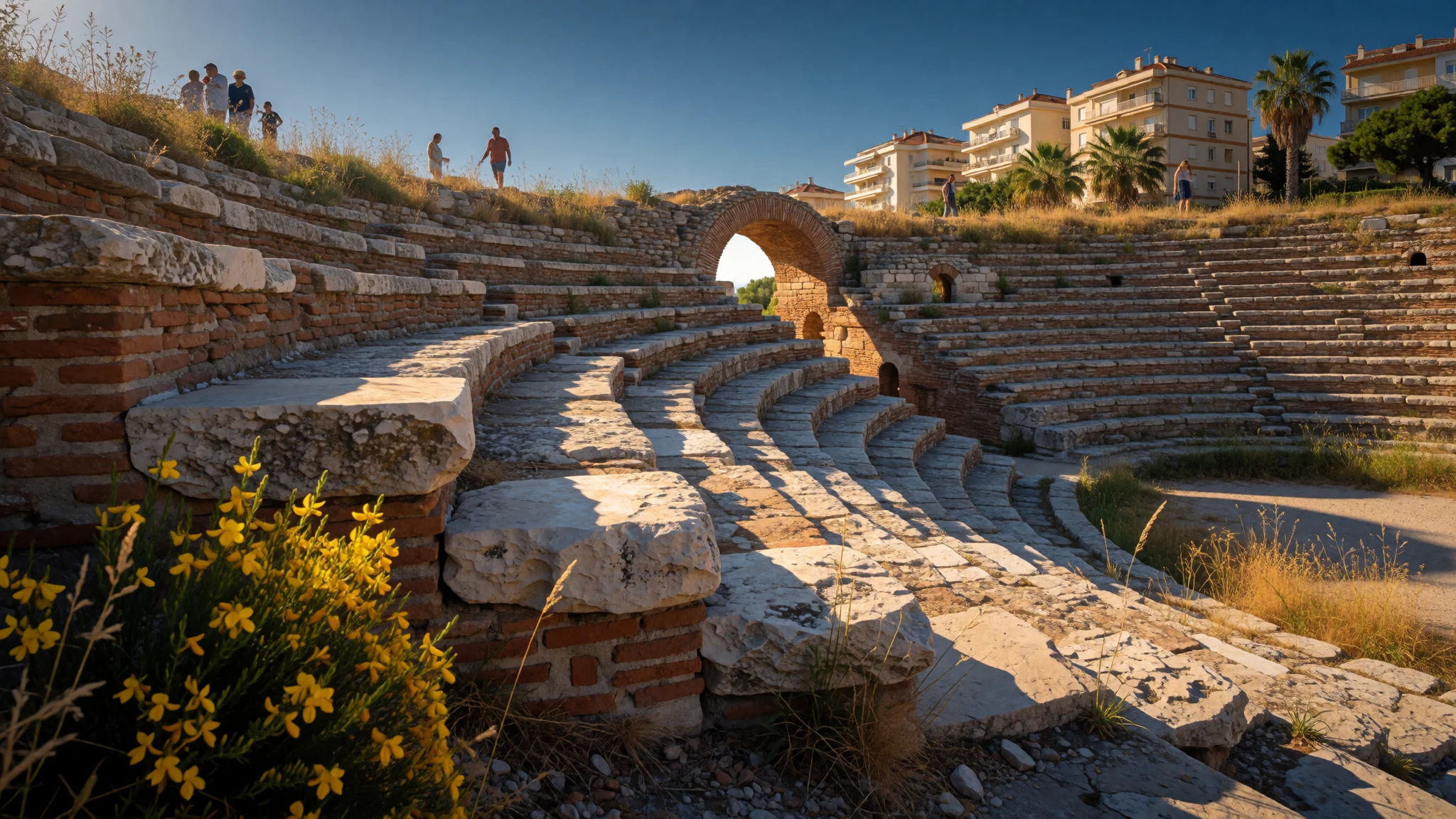
Durrës is an Adriatic port where Greek, Roman, Ottoman and modern Albania sit within a short walk of each other and the sea.
The place
Durrës is Albania's main port on the Adriatic, a flat, busy coastal city of just over 100,000 people and the country's second most populous. It sits on a low plain between the mouths of two rivers, the Erzen and the Ishëm, at the south-eastern corner of the Adriatic. The climate is seasonal Mediterranean: summers are hot and bright, winters milder and wetter, and the beach crowds follow the sun accordingly.
The city has two faces that sit side by side without much fuss. One is ancient: old walls, a Roman-era amphitheatre and a museum of finds from the settlement that stood here long before Albania existed as a state. The other is modern, with long promenades, ferry terminals, apartment blocks, shopping centres and green spaces laid out in recent years. Neither face is polished. Scaffolding, traffic and building sites are part of the picture, and the seafront can feel loud on a summer evening.
Durrës works well as a day out from Tirana, which is close by road, and as a first or last stop for people arriving by sea from Italy. Locals use the beach and promenade after sunset, when the heat eases and the walk up and down the front becomes the main event. Anyone expecting a purpose-built resort will find a working city instead, with mosques, churches and ruins within a few minutes' stroll of each other and a harbour that never quite stops moving.
Its story
Durrës began as a Greek colony. Settlers from Corinth and Corcyra arrived around 627 BC, working alongside the Taulantii, an Illyrian people already living on this stretch of coast, and called the new town Epidamnos. Later tradition added layers of myth: stories name a local Illyrian king Epidamnos, his grandson Dyrrachos, a Corinthian descended from Heracles, and even Poseidon as Dyrrachos's father. The Romans knew the place as Dyrrachium, and that name survives, worn down, in modern Durrës.
Trade made the town rich early. By the 6th century BC its citizens had paid for a Doric-style treasury at Olympia, a sign that Epidamnos counted among the wealthier cities of the Greek world. Under Rome and then Byzantium the port mattered even more, because the Via Egnatia, the road across the Balkans toward Constantinople, began here.
The Middle Ages were turbulent. Bulgarians, Venetians, Albanian noble families and the Ottomans all contested the harbour, and the Ottomans prevailed, holding the city from 1501 until 1912. When Albania declared independence, Durrës briefly served as capital of the new principality. Italy annexed it between the two world wars, and German forces occupied it during the second. Not much of the Greek town is visible now, so the Roman and Byzantine layers, and the later mosques and churches, carry most of the story.
What to see
- Amphitheatre — Central Durrës
Durrës has a Roman-era amphitheatre set among ordinary city streets, and a basilica built inside it carries mosaics from the 6th century. The ground is uneven stone, so shoes with grip help. The International Film Summerfest has used the amphitheatre as a venue, usually in late August or early September.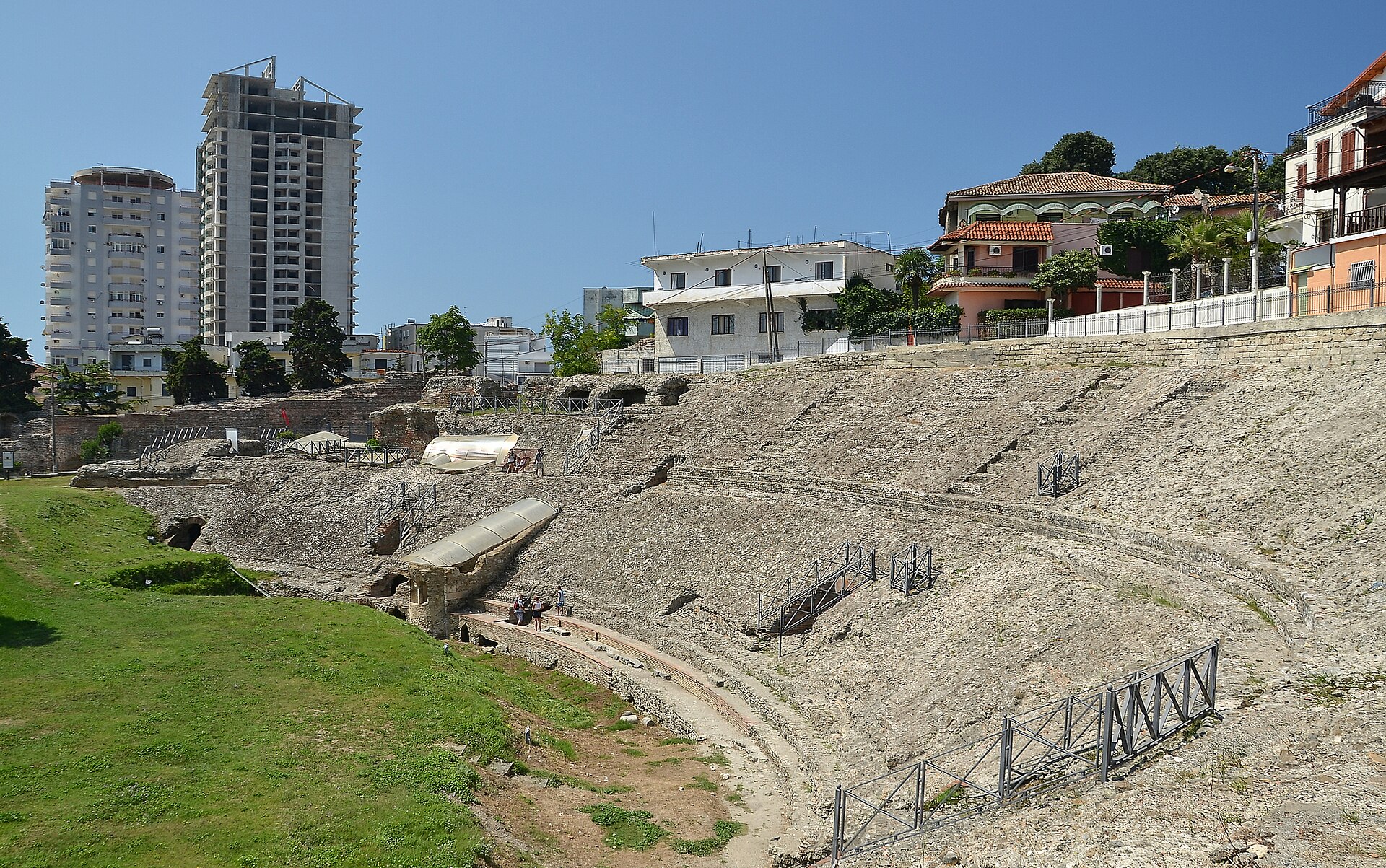
- City walls and the Venetian Tower — Old town
Stretches of the old defences survive in Durrës, patched and rebuilt across the centuries, with a squat brick tower usually called the Venetian Tower standing among the modern streets. It suits a short wander rather than a long visit, and shows how the walled town once sat beside its harbour.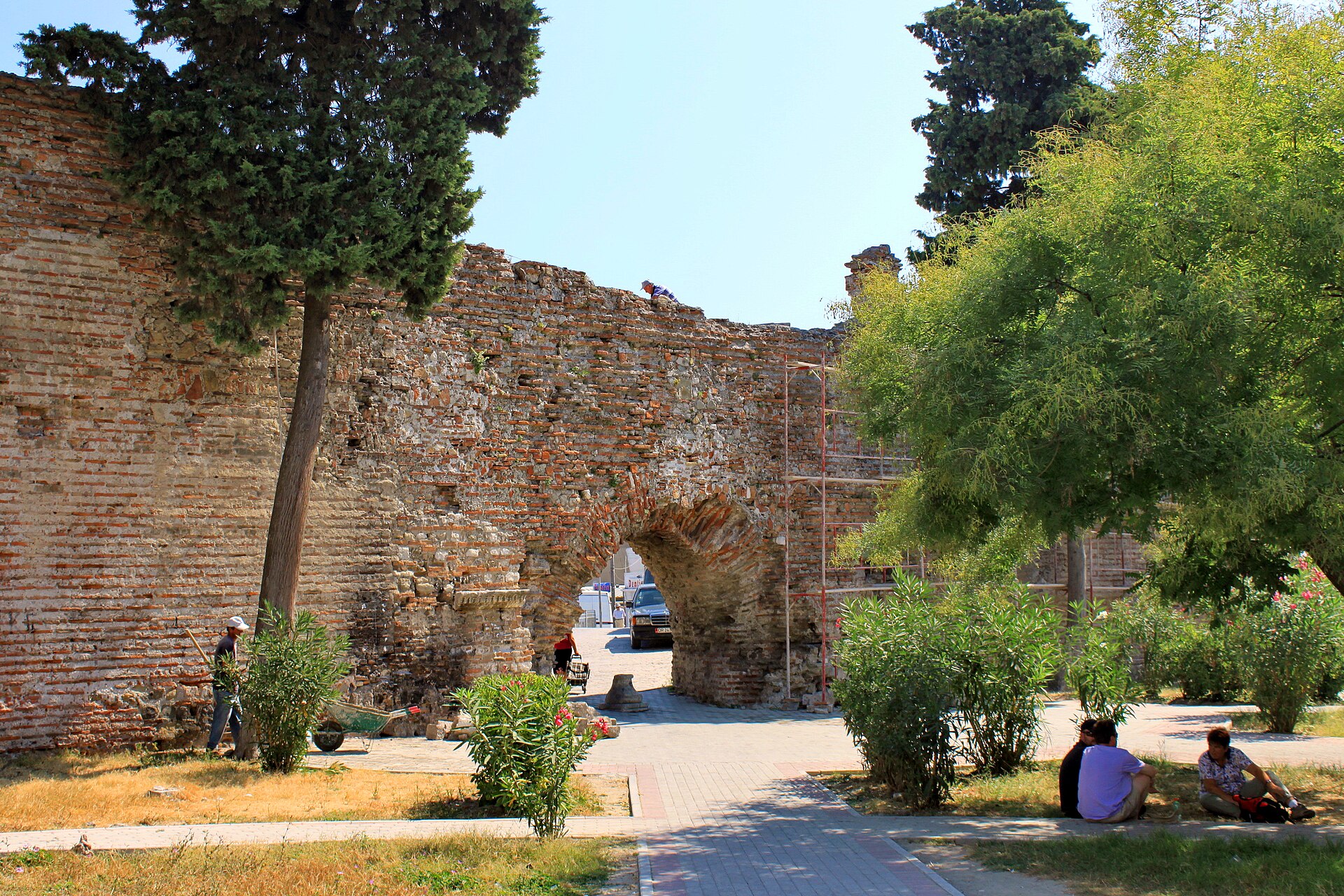
- Archaeological Museum — Near the centre
The Archaeological Museum in Durrës gathers finds from ancient Dyrrachium and the surrounding region. It pairs well with the amphitheatre, since objects here explain what the ruins no longer can. Opening times change, so check the city's official site, https://durres.gov.al/, before setting out. - Fatih Mosque — City centre
The Fatih Mosque dates from 1503, soon after the Ottomans took the city, and takes its name from Sultan Mehmed the Conqueror. It is a quiet counterpoint to the seafront noise. Visitors should dress modestly, remove shoes at the door and avoid prayer times. - Great Mosque — City centre
Built in 1937, the Great Mosque is sometimes called the New Mosque because it came long after the Ottoman-era mosques. It shows that Durrës kept building places of worship well into the twentieth century. Respectful dress is expected, and visits are best kept outside prayer times. - Cathedral of Saint Asti and Saint Paul — City centre
The main Orthodox cathedral in Durrës was built in 2001, after religious life revived following the communist period. It is a large modern church rather than an ancient one, which makes it a useful marker of how recently public worship returned. Covered shoulders and knees are expected.
Culture
Durrës has a cultural life that is larger than its seaside reputation suggests. The Aleksandër Moisiu Theatre, the Estrada Theatre, a puppet theatre and a philharmonic orchestra anchor the performing arts, and the International Film Summerfest, founded in 2008, brings audiences to the amphitheatre in late August or early September. The city has also hosted beauty pageants, a reminder of how much it leans on its role as a coastal showcase.
The buildings tell the same mixed story. Illyrian, Greek, Roman and Italian influences all left marks, and in the twenty-first century large apartment blocks, new shopping centres and planted green spaces have added a modern layer. The religious map is mixed too: Ottoman and later mosques, a Catholic church from the early twentieth century and a large modern Orthodox cathedral all stand within the central area, and people of different faiths live alongside each other without much comment.
Education has deep roots here, running from antiquity to the present, and the town has a reputation for being outward-looking because of the port. Evenings are social: families and friends walk the promenade, sit over coffee and talk late. Visitors will find hospitality easy to accept and conversation easy to start, especially if a few words of Albanian are attempted. In mosques and churches in Durrës, cover shoulders and knees, take off your shoes at a mosque door, and keep your voice low and your camera away from anyone at prayer.
What to wear
Traditional Albanian dress varies by region, and Durrës sits on the coastal plain rather than in the highlands where the most famous costumes developed. Across the country, men's festive dress includes the white fustanella, a pleated kilt-like garment, and the qeleshe, a rounded white felt cap. Women's dress in the north features the xhubleta, a bell-shaped wool skirt, alongside embroidered waistcoats and woven aprons. These are worn today mainly at folk festivals, weddings, dance performances and national celebrations, not on ordinary days.
What people wear now in Durrës is largely contemporary and Mediterranean. In summer, locals wear light cottons, linen shirts, sundresses and sandals, with swimwear kept to the beach. The evening promenade is a dress-up occasion, and many people choose smart casual clothes, often in dark or neutral colours. In cooler months, jackets and scarves appear, and rain is common enough to justify a light waterproof.
For visitors, the climate makes breathable fabrics and a sun hat the sensible baseline from late spring to early autumn, with sunscreen and sunglasses. At mosques and churches, shoulders and knees should be covered, and a light scarf or shawl in a day bag solves the problem. Women may want to cover their hair in a mosque. Footwear matters more than expected: the amphitheatre, the walls and older pavements are uneven, so closed shoes or sturdy sandals are better than flip-flops for sightseeing.
What to eat
- Grilled fish — Seafront fish restaurants and the harbour area
Durrës is a port, so grilled sea bream, sea bass and other catches of the day are the natural order. Fish is typically cooked simply with olive oil and lemon, and served whole. Ask what arrived that morning rather than choosing by the menu. - Tavë kosi — Traditional lunch eateries in the city centre
A baked dish of lamb and rice under a set yoghurt-and-egg topping, tavë kosi is a staple of Albanian home cooking. It is rich and filling, best taken at lunch. The tangy topping lifts the meat. - Byrek — Bakeries and byrek counters near the bus and ferry areas
Byrek is flaky layered pastry filled with cheese, spinach or minced meat, sold by the slice. It is a cheap, quick breakfast or snack, eaten warm and often with a glass of drinking yoghurt on the side. - Qofte — Grill houses and kebab places around the centre
Qofte are small seasoned meatballs, grilled or fried and served with bread, salad or chips. They are a reliable choice when a menu is long and the kitchen is busy. Expect herbs and a little spice rather than heat. - Albanian-style pizza — Neighbourhood piceri away from the seafront
Pizza places called piceri are common in Durrës and show the Italian link across the water. Bases are thin to medium, toppings are generous and portions are large. Sharing one between two is a reasonable plan.
Plan it
Best time. May–June and September–October, when the sea is warm enough for swimming and the heat is easier to manage. July and August are the hottest and busiest months, with full beaches and crowded promenades. Winters are milder and wetter, and the city is quieter.
How long. 1–2
Getting there. Fly into Tirana International Airport Nënë Tereza, then take a bus or taxi to Durrës. Buses from Tirana's Northern Bus Station take around 45 minutes. Ferries arrive from Bari, Ancona and Trieste in Italy, run by several companies, so check each operator's site for current schedules.
Budget. low
Tips
- Check ferry and bus timetables just before travelling, as schedules change by season.
- Get off the bus before it turns onto the highway south towards Golem; going past is hard to fix and taxis back can be costly.
- Visit the amphitheatre and walls in the morning, before the heat builds.
- Carry some Albanian lek in cash for buses, bakeries and small cafés, and keep a card as a back-up.
- Carry water and sun protection in summer, as shade is limited on the promenade and at the ruins.
Etiquette
- Cover shoulders and knees and remove shoes when entering a mosque; keep voices low in churches too.
- Ask before photographing people, especially at prayer or in family groups.
- Keep beachwear for the beach and cover up when walking in the centre.
Nearby
Sources
- Wikidata Q83285 (CC0)
- Wikipedia: Durrës (rev 1383962822) (CC BY-SA 4.0)
- Wikivoyage: Durrës (rev 5416613) (CC BY-SA 4.0)
- Photo: Durrës, Albania (a.dombrowski) (CC BY-SA 2.0)
- Photo: Stitched Panorama of Durres (Matthias Krüttgen) (CC0 1.0)
- Photo: The 6th century mosaics of the basilica in the amphitheatre of Durrës (Attila Terbócs) (CC BY 3.0)
- Photo: Benátská věž v Drači, Albánie (Musli Berisha) (CC BY-SA 4.0)
- Photo: Albanian College of Durres 2016 (Jed Horne) (CC BY-SA 2.0)
- Photo: Monument in Albania (ShkelzenRexha) (CC BY-SA 4.0)
- Photo: Old city walls in Durrës (Marcin Konsek) (CC BY 3.0)
- Photo: Durrës Amphitheatre, Albania (Pudelek) (CC BY-SA 4.0)


