Durham Castle
Durham Castle, United Kingdom
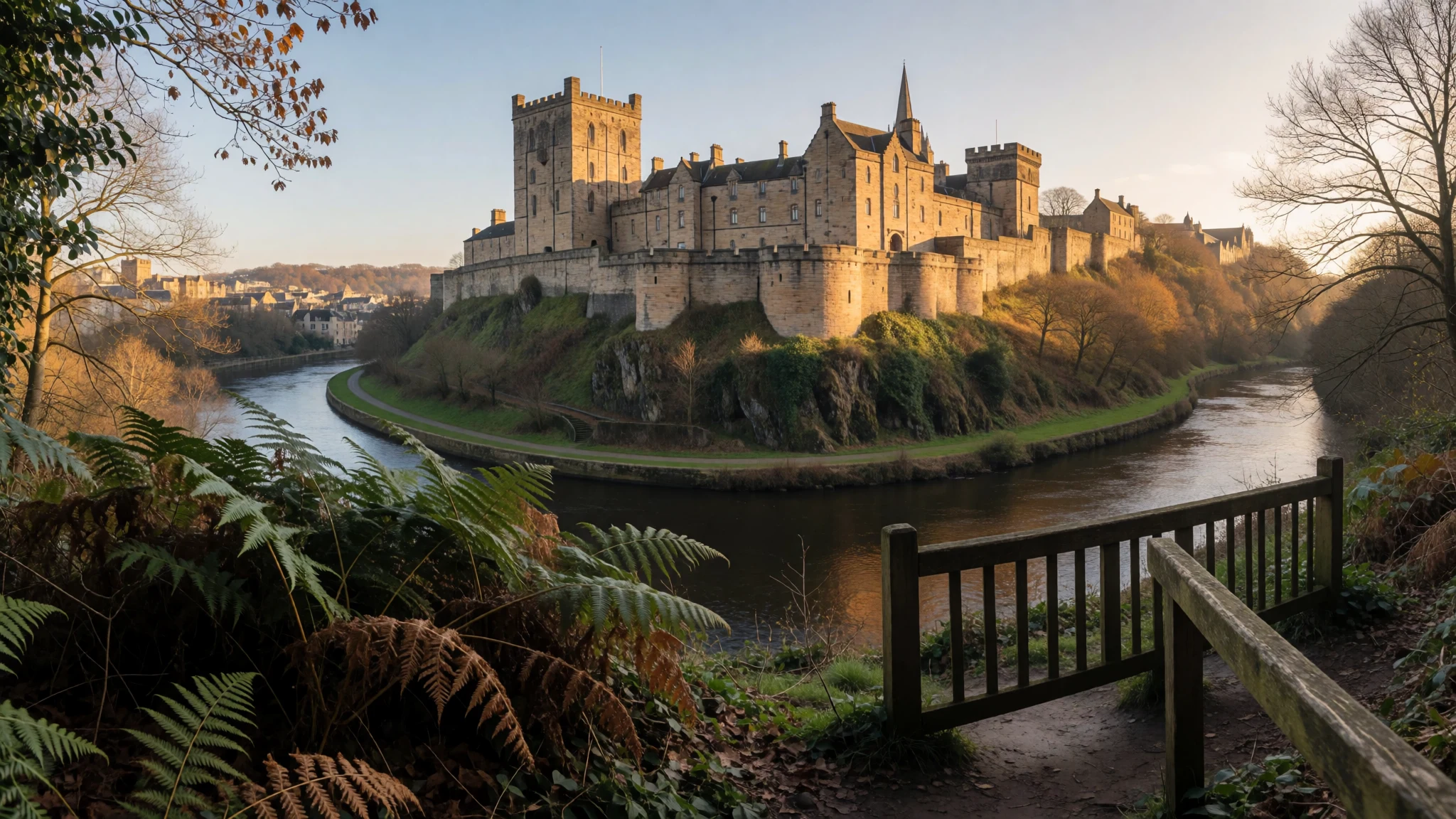
Durham Castle is a Norman fortress turned bishop's palace turned student college, and its guided tours take visitors inside a building people still live in.
The place
Durham Castle stands on a hill inside a tight loop of the River Wear, facing Durham Cathedral across the open green of the peninsula. It began as a Norman fortress, became the palace of the bishops of Durham, and has been home to University College, Durham since 1837. More than 100 students live in it today. That fact shapes every visit: the castle is a working college, so the public can enter only on guided tours, and some rooms close when the students need them. The official site, https://www.dur.ac.uk/durham.castle, is the place to check what is running before travelling.
The castle and the cathedral together form a World Heritage Site, listed in 1986, and they are best read as one composition: fortress and church sharing a single rock, with wooded river banks dropping away below. The old city around them is small and hilly, with cobbled lanes, bridges over the Wear and steep walks back down to the station. A weekend is plenty to cover it, and one full day is workable.
The wider county has an odd place in English history. Medieval bishops governed it almost as a separate realm, which is why "county" still sits in its name in a way few English counties can claim. The castle was their seat, and that explains its mixture of defence and domestic comfort.
Some honest notes. Tour places are limited, so busy summer weekends can fill up. The climb from the market place to the castle is steep. North-east weather can turn quickly even in summer, so the courtyard and the riverside paths are both better on a dry day.
Its story
Durham Castle began in 1072, six years after the Norman Conquest, when William the Conqueror ordered a fortress on the rock above the Wear to hold a newly conquered and restless north. It followed the motte-and-bailey plan the Normans used across England: a raised mound carrying a keep, with enclosed yards alongside. Waltheof, Earl of Northumbria, oversaw the early work, but he rebelled against the king and was executed in 1076. Builders cut stone from the cliffs beneath the walls and hauled it up by winch, so the hill supplied its own castle.
The castle's long life as a bishop's seat started with Walcher, whom the king appointed to rule the region on his behalf. Walcher also bought the earldom of Northumbria and so began a line of prince-bishops. These men could raise armies, collect taxes and strike their own coins. The crown allowed such freedom because the Scottish border needed a strong hand, and because rebellion at home was a constant fear.
Walcher and his successors turned the site into both palace and stronghold, with inner and outer yards and a keep. The first buildings may have been timber, but there is evidence of stonework from the end of the 11th century. The bishops kept their worldly powers for centuries, until an Act of 1836 stripped them away. The next year the castle passed to University College, and a fortress became a place of study. That change of use is the reason it survives as a lived-in building rather than a ruin.
What to see
- The castle courtyard — Palace Green, Durham peninsula
The central courtyard of Durham Castle is a good place to take in how the fortress grew in layers around its old mound. Stone ranges from different periods face one another across the open space, and the keep stands on its raised ground. It helps to look properly here before going indoors.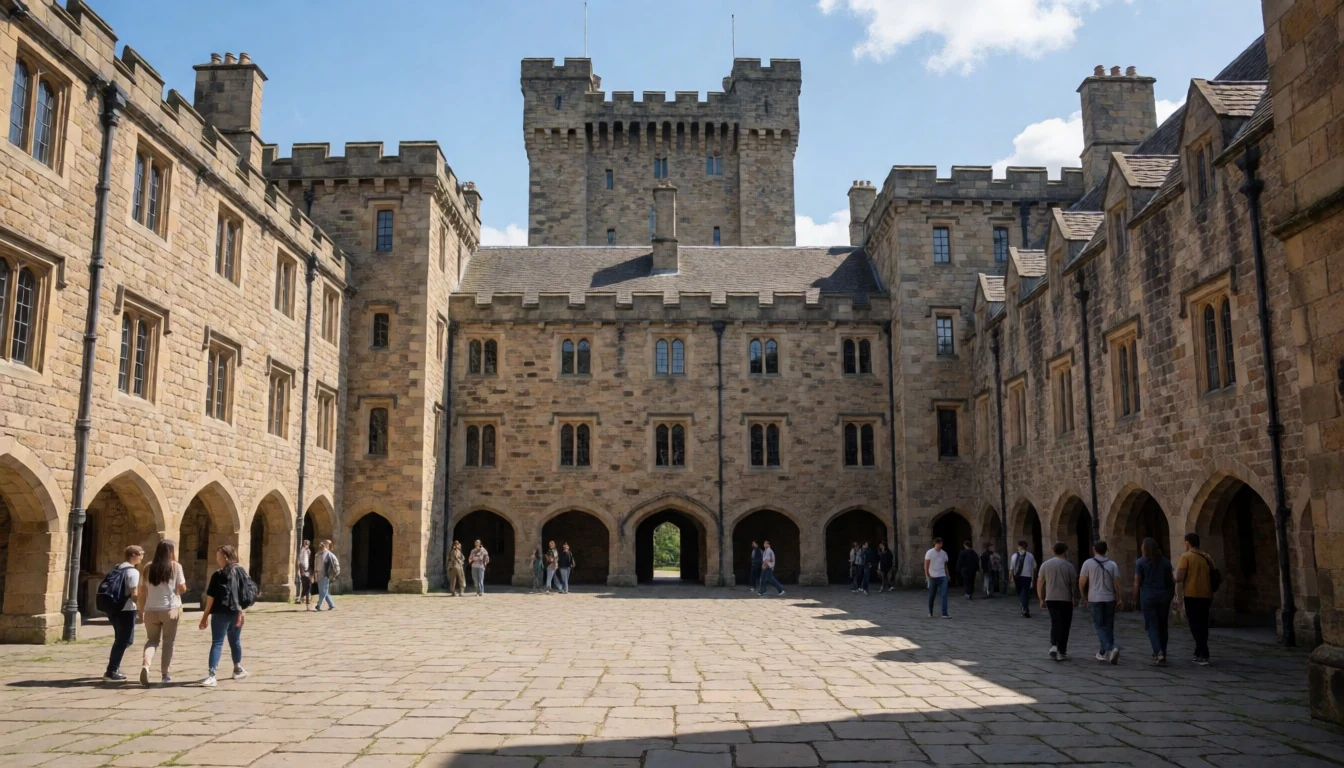
- The Norman chapel — Inside the castle, on the tour route
The chapel at Durham Castle survives from the 11th century and is low, plain and dim compared with later rooms. Its carved stone capitals are the detail to look for: simple, bold shapes cut by masons working soon after the Conquest. Photography rules vary, so ask the guide.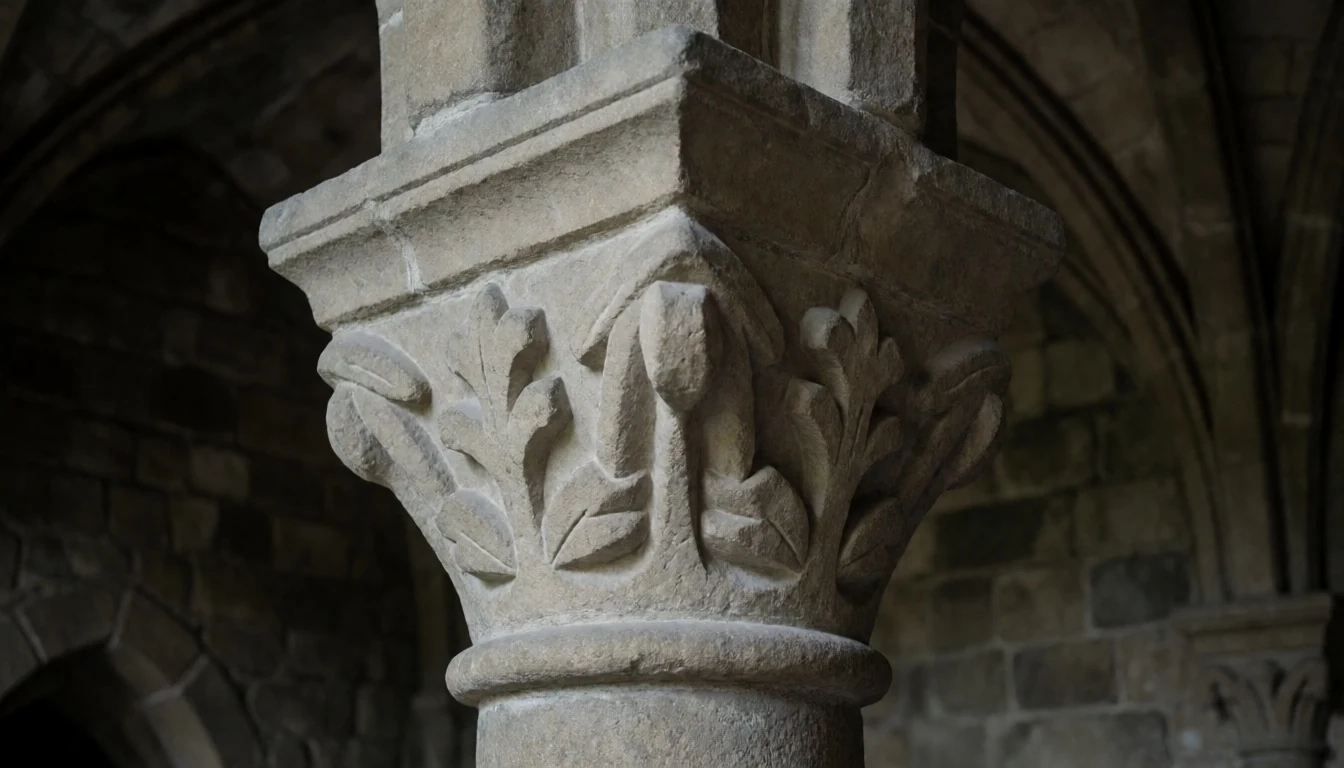
- Tunstall chapel — Inside the castle, on the tour route
Tunstall chapel is a later and more richly furnished space than the Norman one, and a useful contrast with it. The carved misericords are the highlight: small ledges under hinged seats, once used to rest during long services, often decorated with figures and foliage. Access depends on the tour.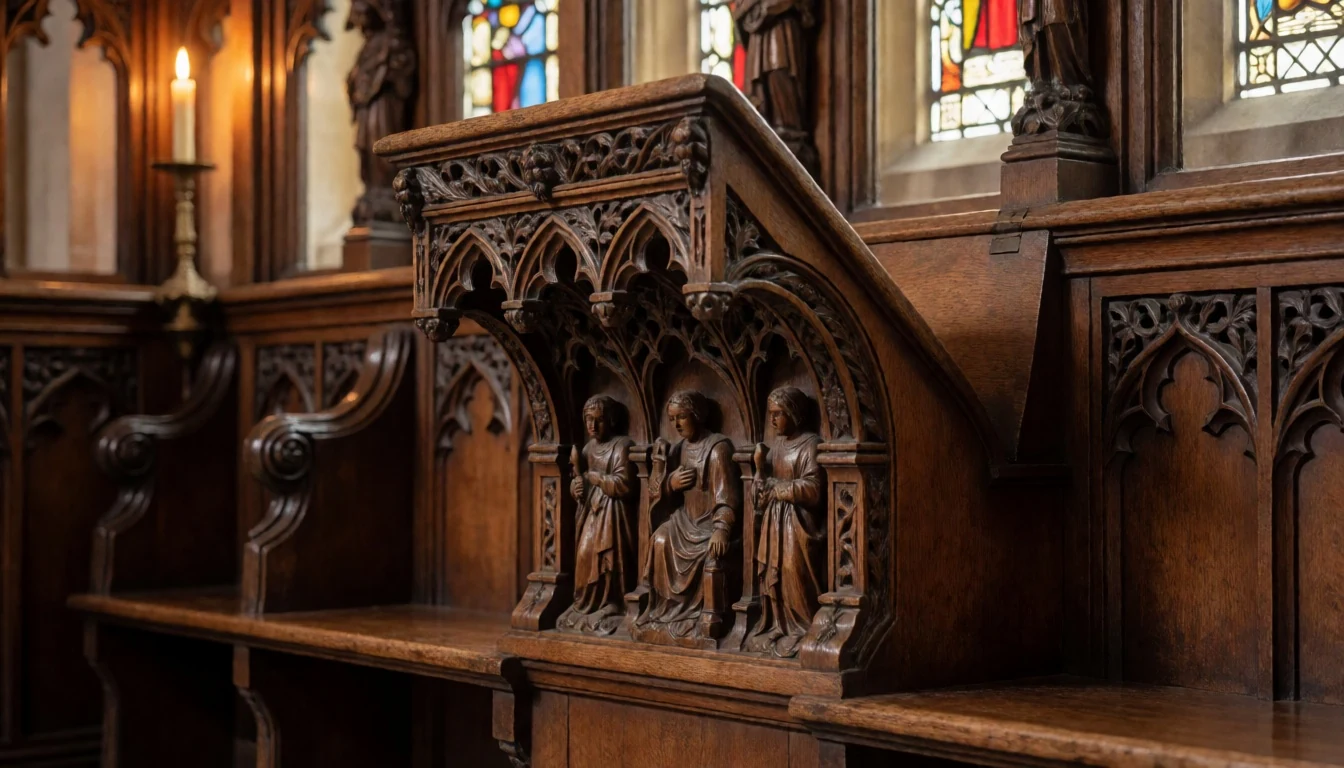
- The Great Hall — Inside the castle, on the tour route
The Great Hall is the dining room of University College, which means the castle's medieval grandeur and ordinary student life share one space. It is not always available, since the college uses it, so treat it as a possible tour stop rather than a promise and check the official site.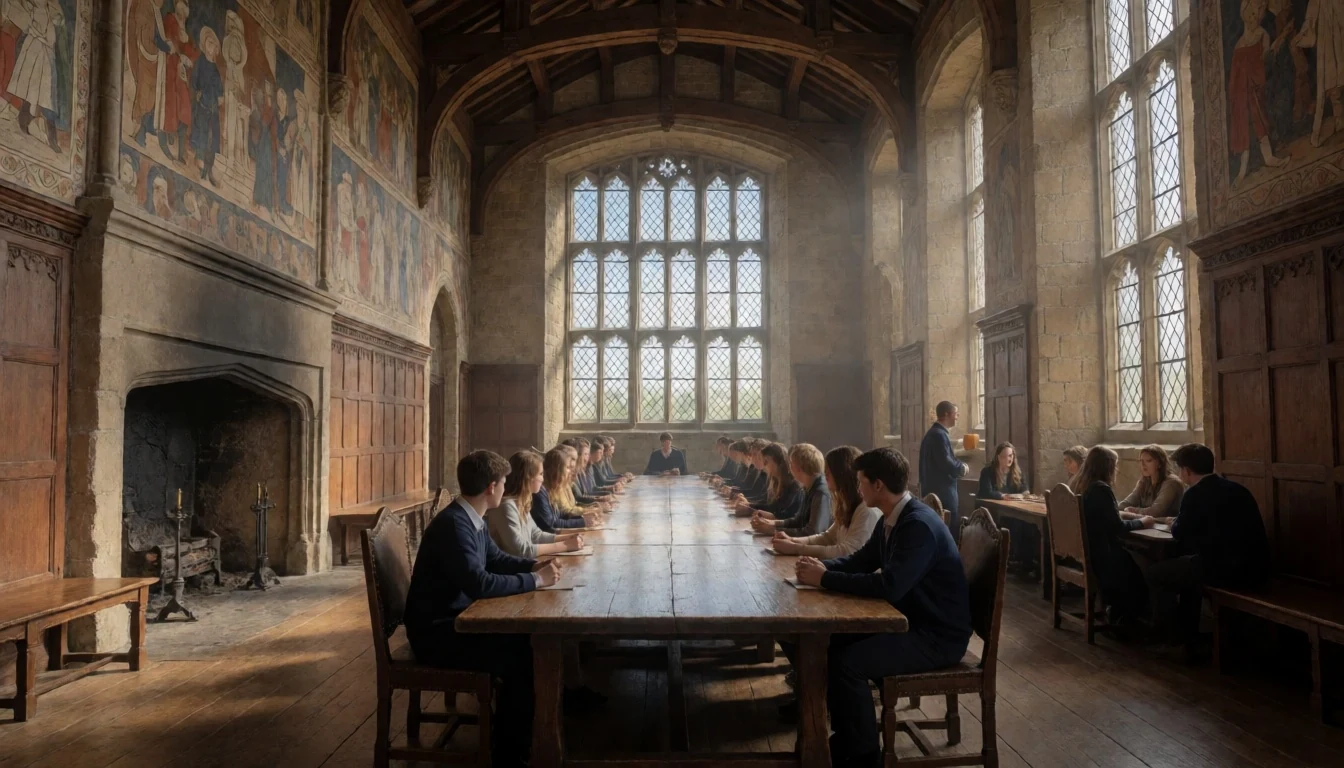
- The view from the cathedral tower — Durham Cathedral, opposite the castle
Looking across to Durham Castle from the central tower of the cathedral gives the clearest sense of its position on the rock above the Wear. The climb is a separate visit with its own booking, so check the cathedral's official site before planning around it.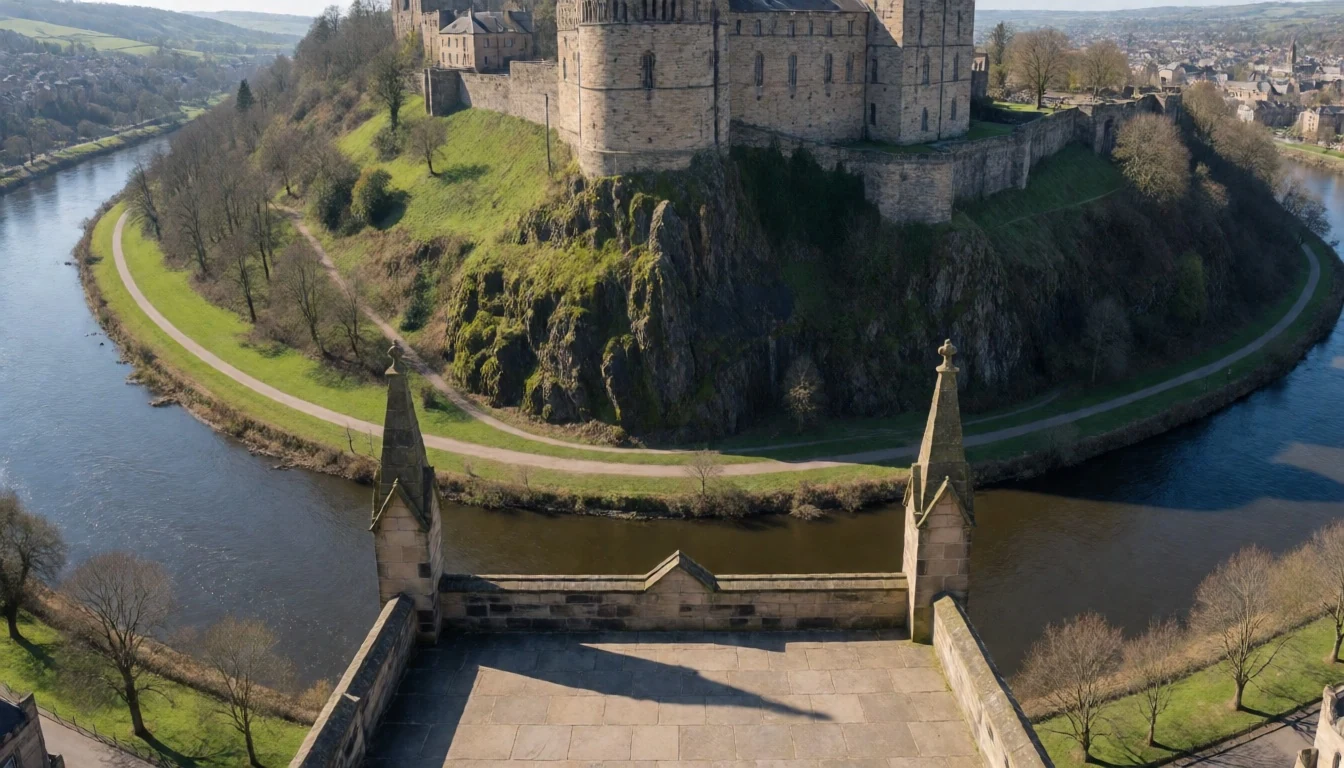
- The riverside paths — River Wear banks, below the peninsula
Walking the wooded banks of the River Wear shows the castle and cathedral from below, where the steepness of the rock is easy to judge. Paths are uneven and can be muddy after rain. Rowing on the river is also possible in the city, for a slower view.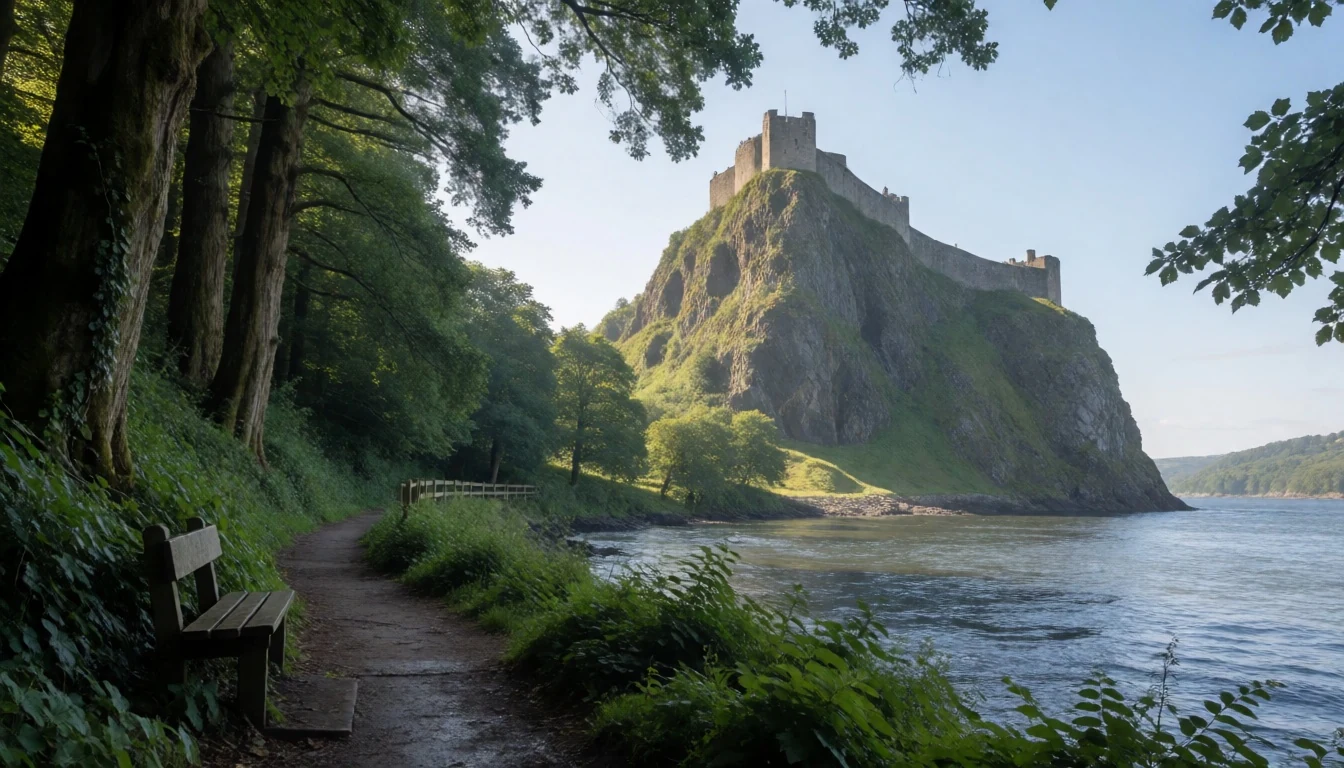
Culture
Durham Castle carries two cultures at once, and the visit makes more sense with both in mind. The first is the old authority of the prince-bishops, who ruled this corner of England with powers closer to a small kingdom than a diocese. Their legacy is still visible in the county's name, in the pairing of castle and cathedral, and in a local pride that likes to point out how Durham differs from the rest of England.
The second is student life. Since 1837 the castle has been a college, which means gowns at formal dinners, shared staircases, a dining hall used daily and a rota of tours worked around exams and term dates. Guides are often connected to the college, and questions about living in a castle usually get cheerful answers.
Beyond the peninsula, the county's identity is shaped by its mining past, which left behind many villages, brass bands and a pub in nearly every community. Northerners in Durham tend to be friendly and direct, and a conversation in a pub is often the best way to learn how locals see the city's grand buildings.
On a castle tour, stay with the guide, keep your voice low near student rooms, and do not photograph residents or wander off the route.
What to wear
Durham has no single regional costume, so the clothing story here is one of working cloth and ceremony. Traditional everyday wear in the north-east came from wool, tweed and waxed cotton, made for cold wet weather, and the flat cap became a symbol of the region's mining communities. Ceremonial dress belongs to the university: students wear black academic gowns at formal college dinners and graduation, and the bishops' robes belong to the castle's older history.
What people wear now is easy and practical. Students and locals dress in jeans, hoodies, trainers and padded jackets, with scarves and woollen hats for winter. Football shirts are common in the region on match days. Smart clothes appear for evening events and weddings, and nobody expects formal dress for daytime sightseeing.
A visitor should dress for weather and terrain more than for any rule. Pack layers and a waterproof, because rain can arrive in any month and the hill is exposed to wind. Wear sturdy, grippy shoes, as the lanes are cobbled and steep and the riverside paths turn slippery. Nothing special is required inside the castle chapels or the cathedral, but covered shoulders and a quiet manner suit those spaces, and hats are usually removed indoors.
What to eat
- Parmo — Takeaways and pubs, especially in the south of the county
A breaded chicken (sometimes pork) cutlet covered in béchamel sauce and cheese, the north-east's answer to chicken Parmesan. It is the classic late-night meal after a pub visit and turns up most often towards the Middlesbrough side of the county.
- Stottie cake sandwich — Bakeries and sandwich shops in Durham's city centre
A flat, dense, round loaf from the north-east, split and filled with ham, pease pudding or bacon. It is a cheap lunch that feels hearty after a walk along the river.
- Pub Sunday roast — Village and city pubs across County Durham
Roast meat with potatoes, vegetables, gravy and a large Yorkshire pudding is the standard weekend meal in this part of England. In small towns and villages the local pub is often the best place for a proper sit-down dinner. - Local real ale — Micro-breweries and traditional pubs in Durham and Darlington
Durham and Darlington have plenty of pubs, among them micro-breweries pouring cask beer. Ask for a half pint to taste something local, and expect the bar staff to have views on what you should try. - Fish and chips — Chip shops near the market place and station
Battered white fish with thick chips, salt, vinegar and mushy peas is a staple across northern England. It makes an easy picnic, and the riverside is a pleasant place to eat it when the weather is dry.
Plan it
Best time. March–May and September for the longest dry spells and green riverbanks; winter is cold, short on daylight and often wet, and the nearby Pennines can have severe weather.
How long. 1–2
Getting there. Fly to Newcastle Airport (on the metro) and take a train south to Durham, or fly to Manchester Airport for an hourly train to Durham. From London King's Cross, trains on the East Coast Main Line reach Darlington in about 2 hr 30 min and call at Durham. The last leg is a steep walk uphill from the station or a short taxi.
Budget. mid
Tips
- Castle entry is by guided tour only, so check the official site (https://www.dur.ac.uk/durham.castle) for tour times and booking before travelling
- Book ahead for summer weekends and school holidays, when tour places run out
- Wear shoes with grip, as the cobbles are steep and slippery after rain
- Carry a waterproof in every season
- Cards are widely accepted in the city, but keep a little cash for small cafés and market stalls
Etiquette
- Follow the guide and stay on the tour route, as students live in the building
- Keep voices low near residential areas and do not photograph students
- Ask before taking photographs in the chapels
Nearby
Sources
- Wikidata Q752266 (CC0)
- Wikipedia: Durham Castle (rev 1378475006) (CC BY-SA 4.0)
- Wikivoyage: County Durham (rev 5288456) (CC BY-SA 4.0)
- Photo: Durham Castle, April 2017 (14), Carla Brain (CC BY-SA 2.0)
- Photo: View from the central tower of the cathedral, Benjamin Smith (CC BY-SA 1.0)
- Photo: Durham Castle, April 2017 (18), Carla Brain (CC BY-SA 2.0)
- Photo: Durham Castle, Great Hall, Benjamin Smith (CC BY-SA 1.0)
- Photo: Durham Castle from the courtyard, Christophe Meneboeuf (CC BY-SA 4.0)
- Photo: Durham Castle, Norman chapel capital, Benjamin Smith (CC BY-SA 1.0)
- Photo: Durham Castle, Tunstall chapel, Benjamin Smith (CC BY-SA 1.0)
- Photo: Durham Castle, misericord in Tunstall chapel, Benjamin Smith (CC BY-SA 1.0)


