Durban
Durban, South Africa
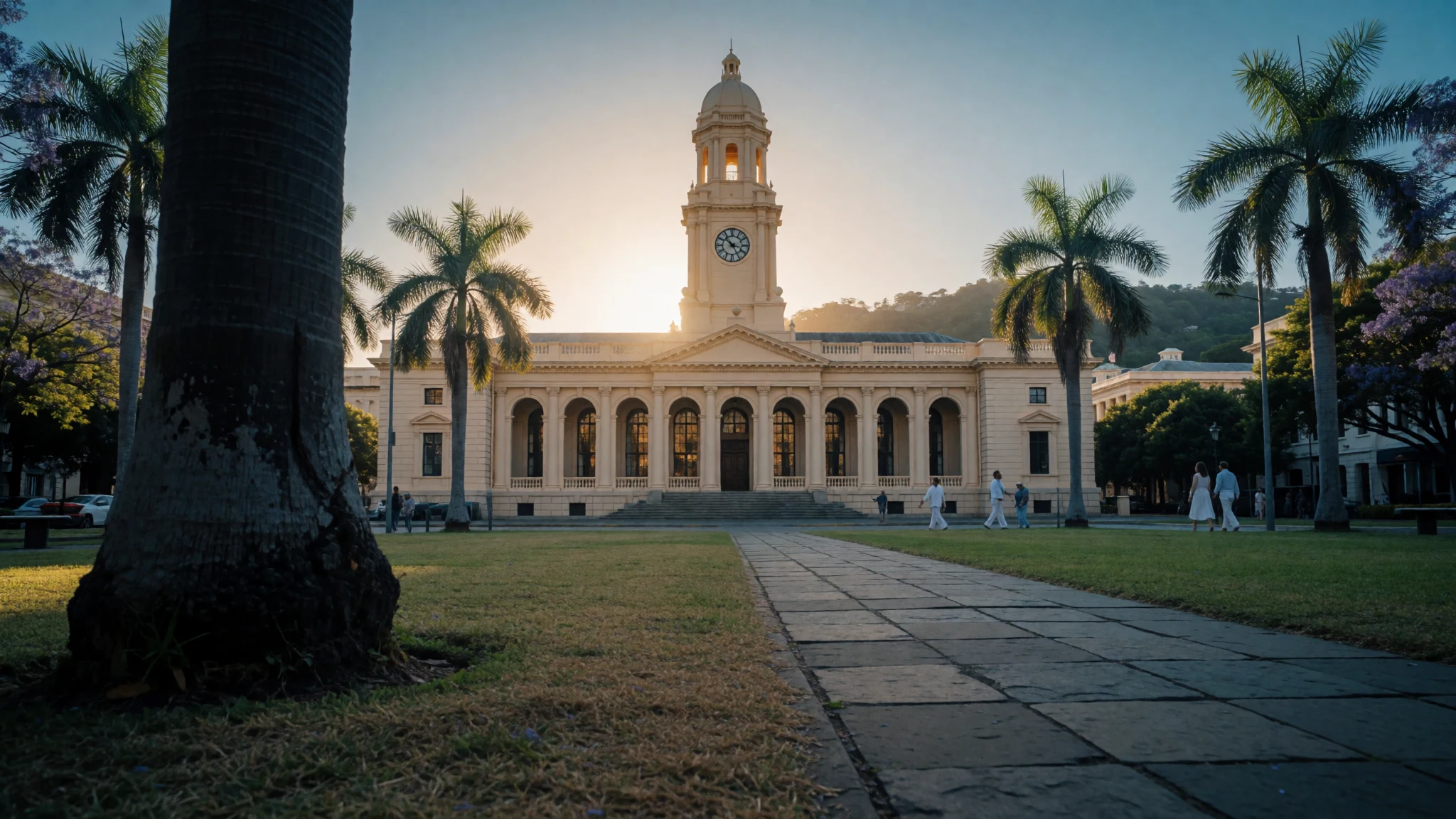
Durban is a warm-water beach city where Zulu, Indian and British histories meet, and where a curry in bread is lunch.
The place
Durban sits on the Indian Ocean coast of KwaZulu-Natal, wrapped around a sheltered bay that gives the city its Zulu name, eThekwini. The city proper has about 595,000 residents, and the centre stands only 22 m above sea level, though that flat ground does not last long. Heading west, the land climbs into the Berea, a ridge of apartment blocks and leafy streets with views back over the harbour. To the south the Bluff runs out along the shore, and to the north the Umgeni River reaches the sea. The port is the reason Durban exists and still shapes it: cranes, ships waiting offshore and the smell of the docks are part of daily life. Beyond the centre, the municipality stretches far into surrounding hills and sugar country, so locals often mean something much wider than the compact downtown when they say Durban. The climate is humid subtropical. Summers are hot, wet and sticky, with storms rolling in off the ocean in the afternoons; winters are mild and mostly dry, which is when the beachfront feels most comfortable. The mix of people matters as much as the geography. Zulu, Indian, British-descended and other communities share the city, and that shows in language, temples, mosques, churches and above all in what is on the plate. It is a beach city, but also a working one, and the two sit side by side along the seafront promenade and the docks.
Its story
Durban's story begins long before any town had a name. Hunter-gatherers lived in this part of KwaZulu-Natal for a very long time, and later farming and herding communities moved down from the north and absorbed many of them. Zulu oral history carries the memory of this land; there are no written records until Portuguese ships passed the coast at Christmas, and the navigator Vasco da Gama called the region Natal after the festival. In the late seventeenth century a Dutch ship was wrecked on this coast, and survivors who reached the bay were sheltered by local people, who they found welcoming. The Dutch later bought the bay from them, though European control stayed thin for generations. English traders from the Cape set up at Port Natal in the 1820s, receiving land around the bay from King Shaka. The settlement took the name Durban in 1835, honouring the Cape governor of the day, and it became a borough a few years after. Later in the nineteenth century, indentured labourers came from British India to work the sugar estates, and many stayed after their contracts ended, with traders following. That migration gave Durban its large South Asian community, which is why the city feels so different from Cape Town or Johannesburg. Colonial rule, then segregation, left marks on where people lived and worked that the city is still dealing with.
What to see
- Durban Botanical Gardens — Berea
Durban Botanical Gardens, on the slope below the Berea, are a calm green pocket close to the centre. Saturdays are the lively day, when wedding parties arrive in their finest clothes for photographs among the palms and lawns. Go in the morning, before the humidity builds, and carry water.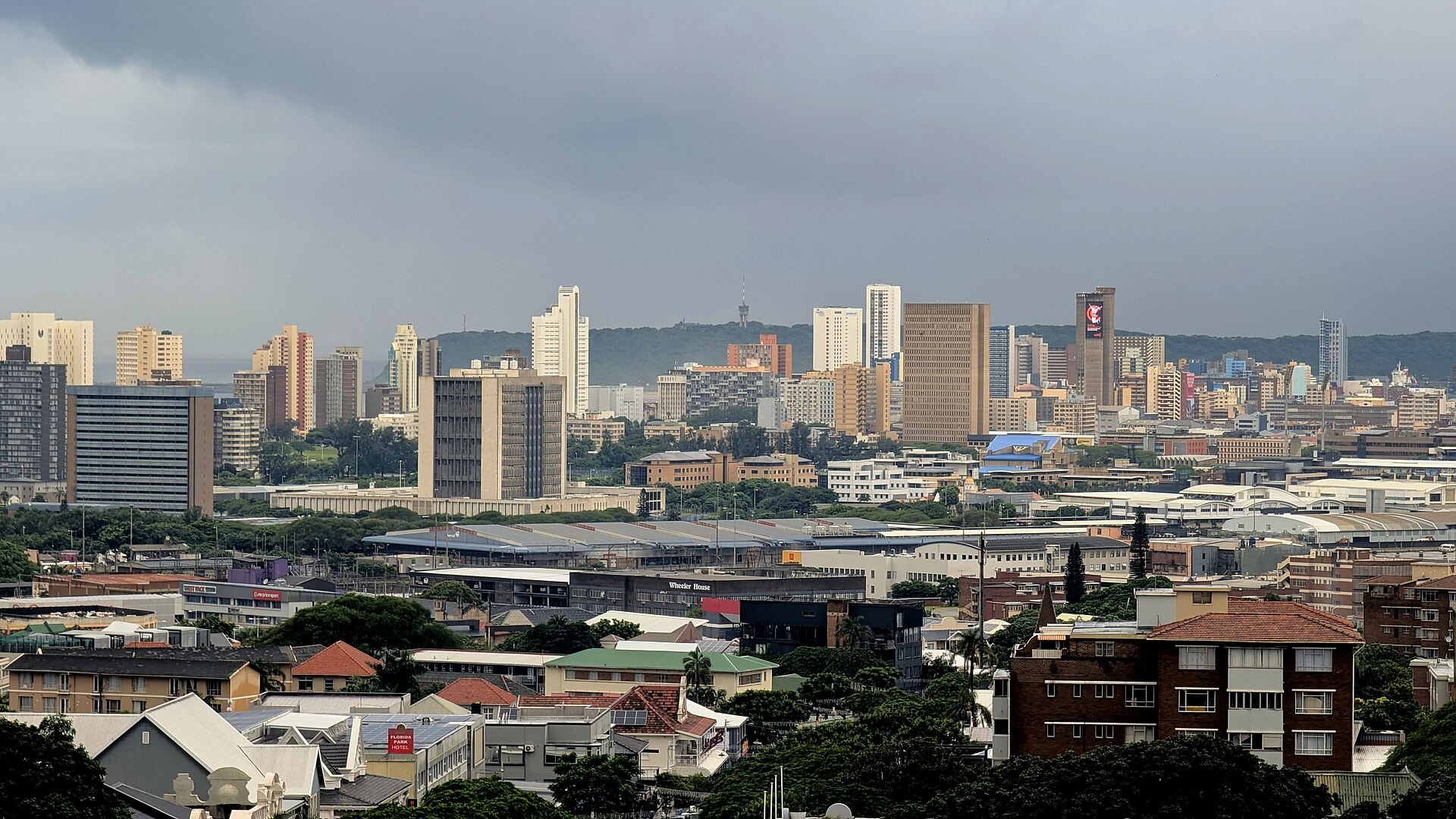
- Moses Mabhida Stadium — North of the city centre
Moses Mabhida Stadium was built for the football World Cup and is now the modern landmark of the city, just north of the centre. A cable car called the Skycar, or a walk up the arch, brings a wide view over downtown, the Berea and the sea. Check the official site for arrangements.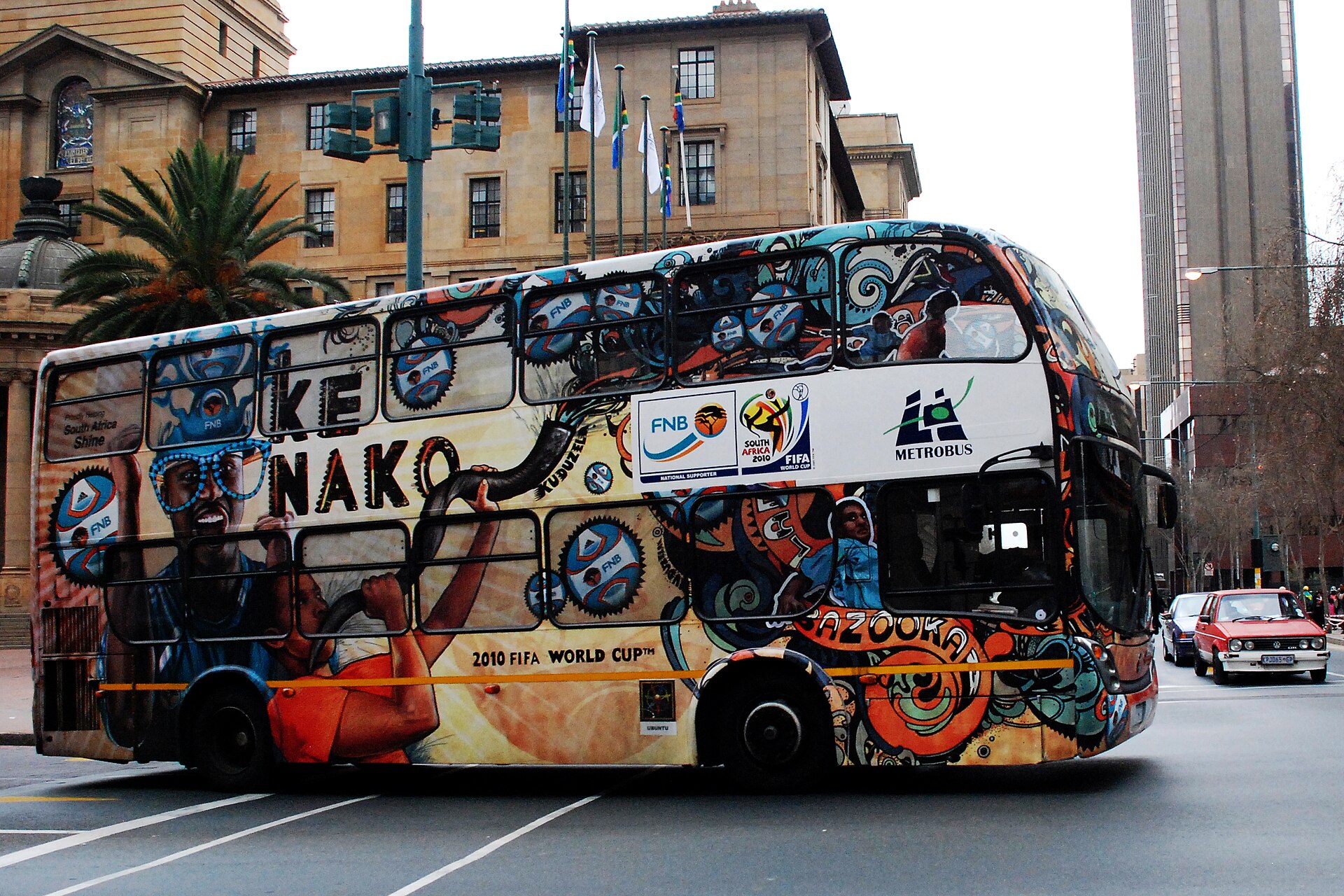
- City Hall — City centre
Durban City Hall stands in the middle of the old centre, a grand civic building that houses an art gallery, a natural science museum and a public library. Some displays feel dated, but the building and its square make a good short stop while exploring the downtown streets on foot.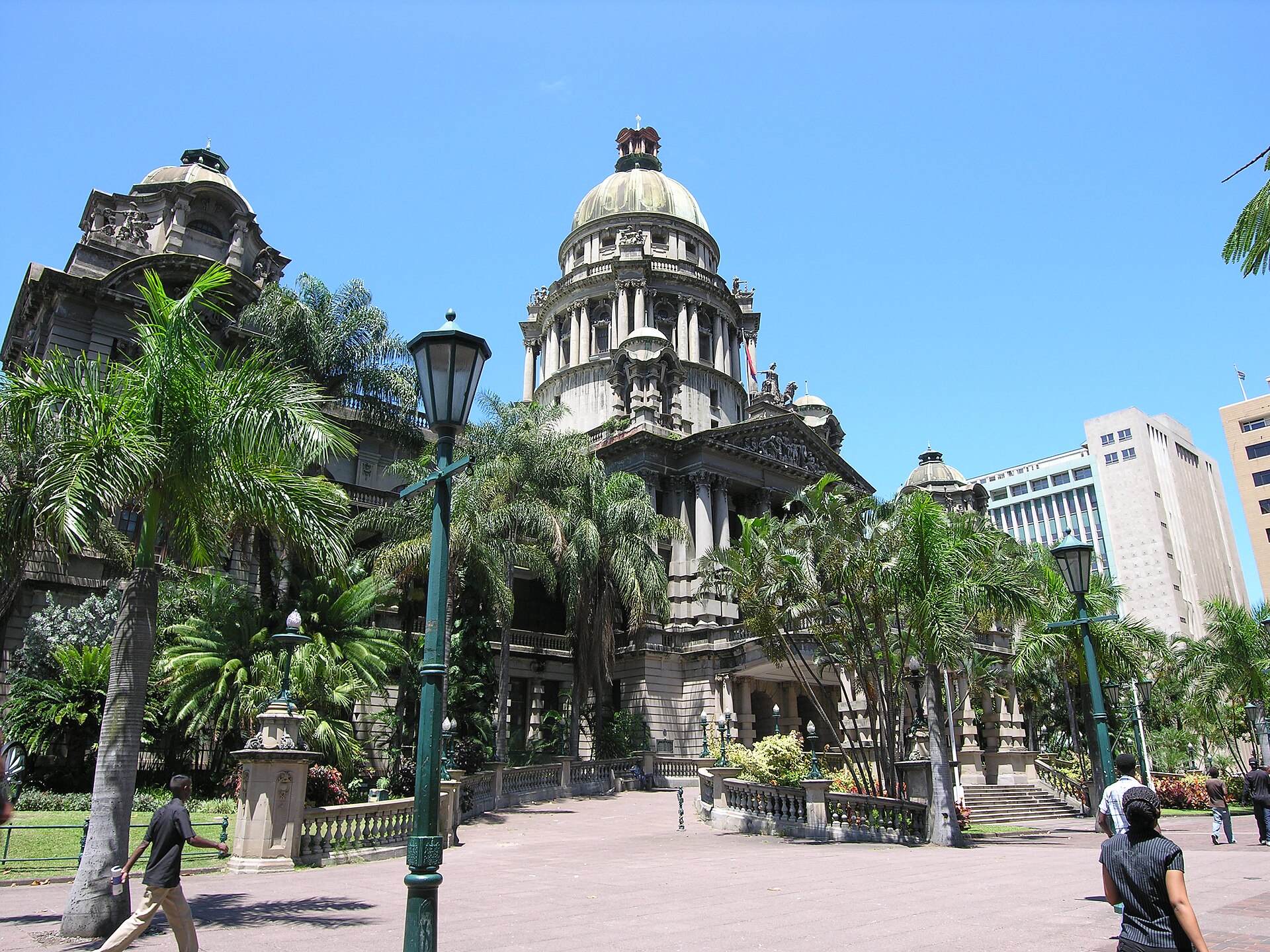
- Wilson's Wharf — Harbour edge
Wilson's Wharf sits on the harbour edge and is an easy place to watch boats, with a cluster of waterside eateries serving seafood. It suits a slow late lunch after a morning in the centre. Tables with a view fill at weekends, so arrive early or book ahead.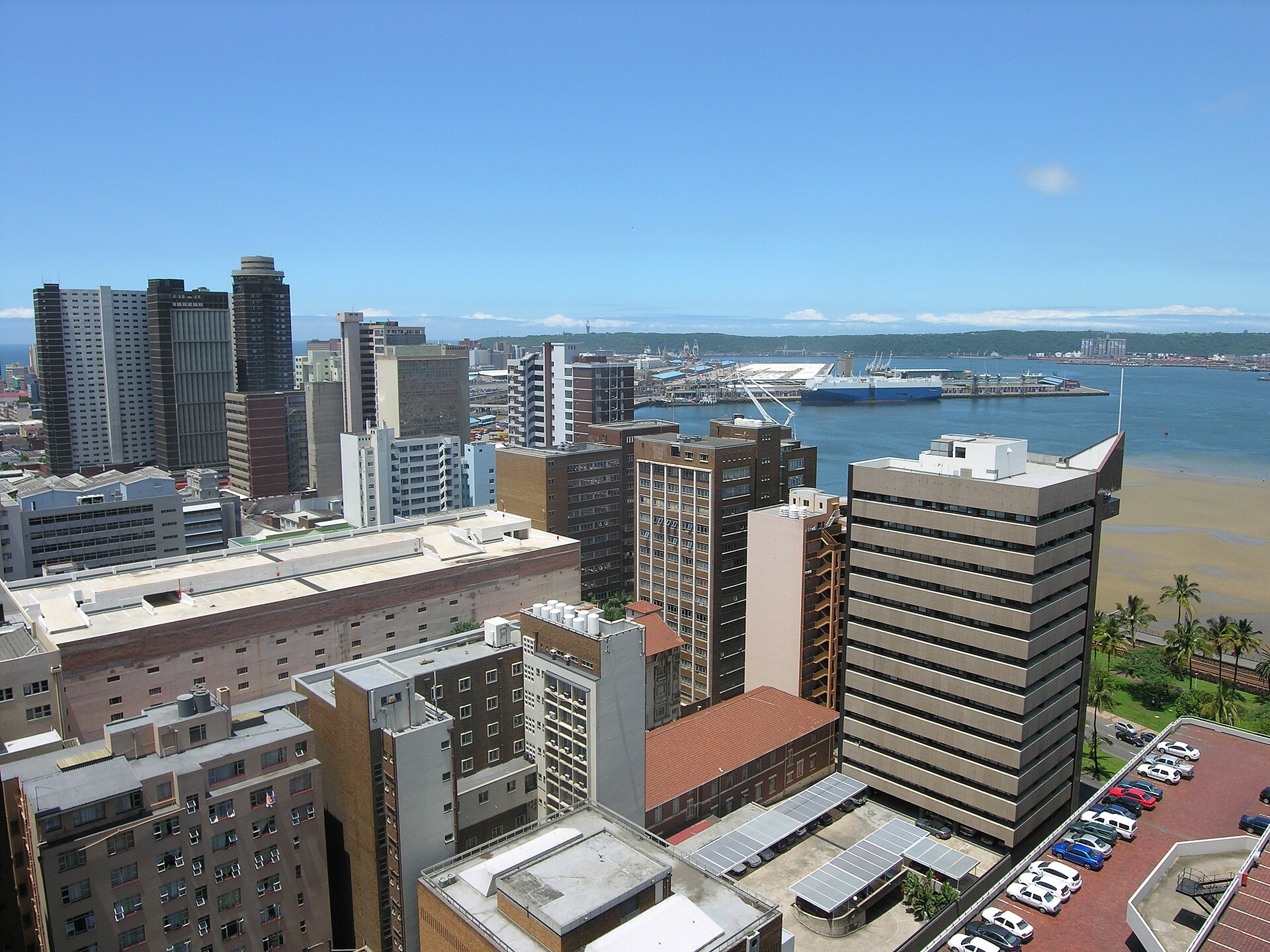
- Hare Krishna Temple — Western suburbs
The Hare Krishna Temple lies in the western suburbs, an ornate complex of gardens and shrines that reflects the city's Indian heritage. Visitors come for the architecture and the calm, and there is a vegetarian restaurant on site. Dress modestly and check visiting times with the temple beforehand. - Kenneth Stainbank Nature Reserve — South-west Durban
Kenneth Stainbank Nature Reserve, in the south-west of the municipality, offers coastal forest walking and a chance to see zebra and antelope without leaving the city limits. Booking ahead is needed for the gallery and castle on site. Go early, keep to marked paths and carry water.
Culture
Durban's culture is a layered one, built from Zulu, Indian and British threads that overlap more than they separate. Zulu is widely spoken alongside English, and many residents move between languages in a single conversation. The Indian community, descended largely from indentured labourers and later traders, shapes the city's temples, mosques, spice shops and festivals; Diwali lights and Eid gatherings are as much part of the calendar as Christmas on the beach. Zulu heritage shows in music, beadwork, choral singing and the way families mark weddings and funerals. Sport is a shared language too: cricket at Kingsmead, rugby and football fill weekends, and a conversation with a stranger often starts there. Beach life is central, with surfers at dawn, walkers on the promenade and families on the sand on Sundays. The city's history of segregation is still discussed openly, and visitors will find museums, tours and neighbours willing to talk about it. Humour is dry and friendly, and a polite greeting before any request goes a long way. When visiting a temple, mosque or a family home, take your shoes off where others have left theirs at the door, and ask before photographing people.
What to wear
Durban's traditional dress reflects its two largest cultural traditions. Zulu women's dress includes beadwork collars and bands, where colour and pattern carry messages, and the isidwaba, a pleated leather skirt worn by married women; men wear animal-skin aprons and beaded accessories for ceremonies, weddings and cultural events. In the Indian community, saris, salwar kameez and kurtas in silk and cotton, often richly embroidered, come out for weddings, Diwali and temple festivals. Day to day, most people wear what suits a warm coast: shorts, linen shirts, sundresses, sandals and trainers, with surf brands common near the beach. Florida Road and the business districts lean smart-casual, and offices and church services call for a step up. Visitors should pack light, breathable cotton or linen, a hat, sunglasses and strong sunscreen, plus a thin rain jacket for summer storms. Sandals or flip-flops are fine for the sand, but closed, comfortable shoes are better for the botanical gardens, nature reserves and walking the city. For temples and mosques, cover shoulders and knees, bring a scarf if you have one, and be ready to remove your shoes. Swimwear belongs on the beach, so change before wandering into shops or restaurants.
What to eat
- Bunny chow — Indian takeaways and curry eateries around the Workshop shopping centre and the older Indian quarter
Bunny chow is the city's signature takeaway: a hollowed-out section of white loaf used as an edible bowl for curry, often beans or mutton. Tear off the bread to scoop up the sauce with your fingers. Spice levels vary, so ask before ordering. - Durban curry — Family-run Indian eateries across the city centre and suburbs
Durban curry is a robust, red-tinged dish of meat, chicken or vegetables in spiced gravy, with heat from gentle to fierce. It comes with rice or roti, so ask the cook how hot a pot runs before committing. - Samosas and fried snacks — The Victoria Street Market area and small snack shops in the city centre
Samosas, bhajias and similar fried snacks are sold hot in paper bags, good for a walking bite between sights. Fillings usually include spiced potato, mince or lentils, with a sharp chutney on the side. Eat them fresh, as they soften quickly. - Grilled seafood — Harbour-side eateries at Wilson's Wharf and beachfront restaurants along the Golden Mile
Fresh prawns and fish grilled with garlic, lemon or peri-peri are standard along this coast. Portions are generous, and a plate eaten with the sea in view makes a good lazy lunch on a warm day. Ask what came in that morning. - Vegetarian temple meals — The Hare Krishna Temple's vegetarian restaurant and similar temple-linked eateries
Vegetarian thalis and sweets are served around the city's Hindu temples and in simple vegetarian kitchens, built on dal, vegetable curries, rice and bread. They suit anyone avoiding meat, and a meal is filling and easy on the budget. Opening times vary, so check ahead.
Plan it
Best time. May to September, when winters are mild, mostly dry and sunny, good for the beach and for walking. December to February is hot, humid and wet, with afternoon storms, and coincides with busy holiday crowds.
How long. 2–3
Getting there. King Shaka International Airport at La Mercy, north of the city, has domestic flights and some international links, including a direct British Airways service from London Heathrow (check current schedules). From there, an airport shuttle or taxi takes you to Marine Parade and the centre.
Budget. mid
Tips
- Agree a taxi fare or use a ride-hailing app rather than accepting the first offer at the airport
- Swim only on beaches with lifeguards and flags, and heed their advice
- Keep phones and valuables out of sight, and use arranged transport after dark
- Carry water and sunscreen, and plan outdoor sights for the morning before the heat
- Check the official city site, https://www.durban.gov.za/, and venue websites for opening arrangements
Etiquette
- Remove your shoes at temples and mosques, and in homes where others have done so
- Ask before photographing people, especially at religious sites and ceremonies
- Dress modestly away from the beach, covering shoulders and knees at places of worship
Nearby
Sources
- Wikidata Q5468 (CC0)
- Wikipedia: Durban (rev 1384862962) (CC BY-SA 4.0)
- Wikivoyage: Durban (rev 5425077) (CC BY-SA 4.0)
- Durban — ---=XEON=--- (CC BY 3.0)
- Durban from the Balcony — Dennis Sylvester Hurd (CC BY 2.5)
- Durban City Hall — Chris Eason (CC BY 2.5)
- Marine theme park in Durban — Ossewa (CC BY 3.0)
- Durban Central, seen from space — Planet Labs, Inc. (CC BY-SA 4.0)
- View of Durban harbor — Chris Eason (CC BY 2.5)
- Kingsmead during AUS vs RSA match, 2009 (CC BY 2.5)
- Métrobus transportant les supporters de football à Durban — Happiraphael (CC BY-SA 4.0)


