Great Mosque of Djenné
Great Mosque of Djenné, Mali
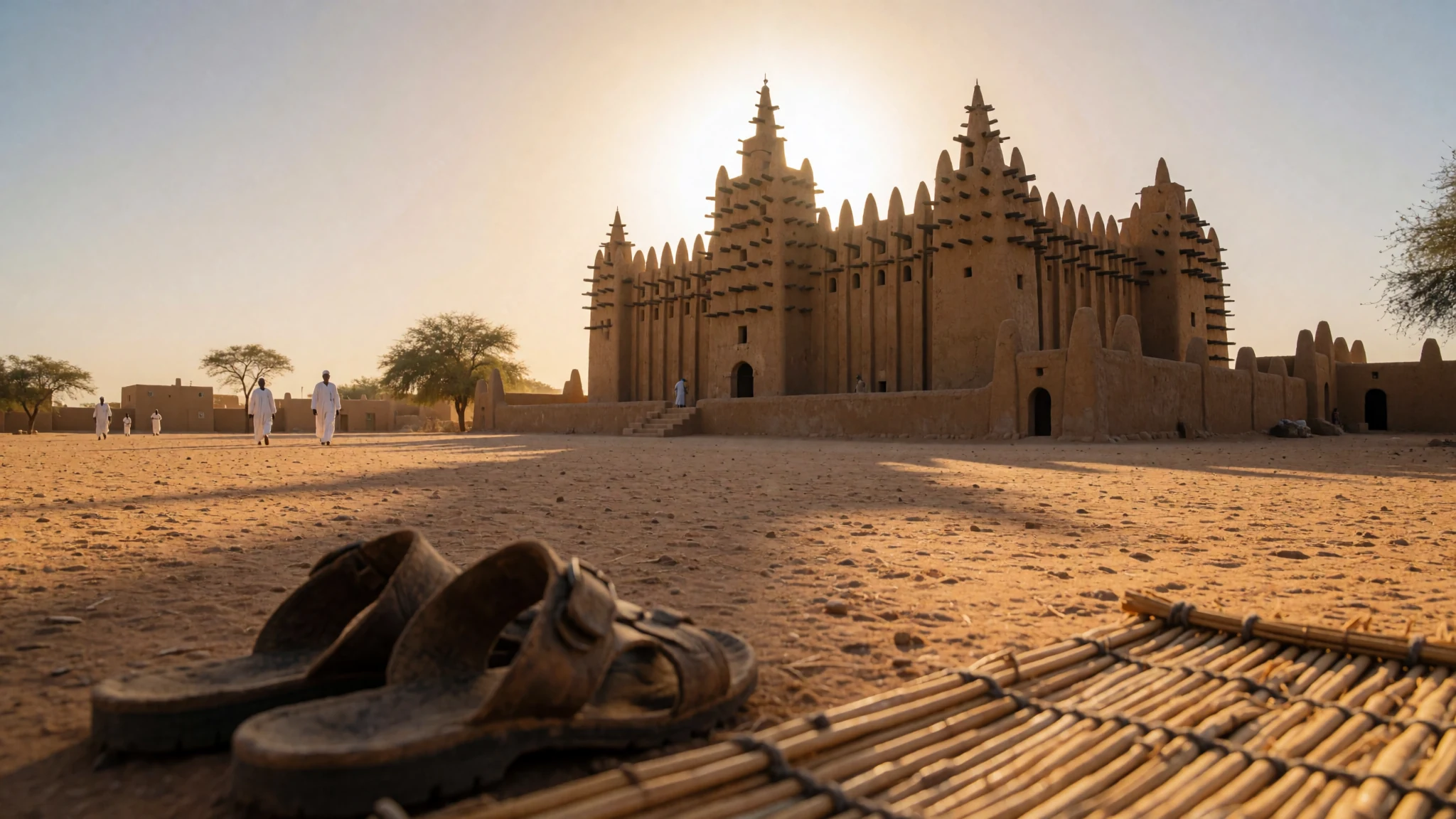
Africa's largest mud-brick building, a working mosque rising from the floodplain of the Bani River in the old town of Djenné, Mali.
The place
The Great Mosque of Djenné stands in the town of Djenné in central Mali, on the flood plain of the Bani River. It is built in the Sudano-Sahelian style, entirely from adobe brick, and is described as the largest adobe building in the world. Its walls are covered in a thick layer of earth plaster that is regularly renewed, and short wooden beams jut out from the façade, which hold the scaffolding used for that work. Three large box-like towers rise along the eastern prayer wall, and a wide open courtyard lies behind the prayer hall. The mosque is still the centre of the local community, so it works as a place of worship first and a monument second.
The town is compact, with narrow lanes of earth-walled houses that echo the mosque's colour and texture. The Bani floods the surrounding land for part of the year, so the town has long depended on raised ground and on the trade that moved along the river and across the Sahel. The mosque and the Old Towns of Djenné were recognised together by UNESCO in 1988.
The mosque is the reason most people come, and the square in front of it is where many of the first impressions form. Early morning and late afternoon bring the warmest light to the earth walls, and the square is busiest on market days, when traders, children and guides fill the space around the building.
Its story
The Great Mosque of Djenné has a history of rebuilding that reaches much further back than its present walls.
Nobody knows exactly when the first mosque on the site was built. Estimates range from the 13th century into the following century. The earliest written account is the Tarikh al-Sudan, a chronicle that drew on oral tradition. It says that a local ruler, Sultan Kunburu, converted to Islam, pulled down his palace and turned the site into a mosque. Later rulers added the towers and a surrounding wall, and one built a new palace nearby.
According to the architectural historian Labelle Prussin, the mosque was rebuilt several times. Each new ruler cleared the old structure and raised another, and the Songhay ruler Askia Mohammed restored an earlier design at the end of the 15th century. After a Moroccan invasion destroyed the Songhay version, a sumptuous mosque went up in its place, but a later Fulani ruler, Sheku Ahmadu, found it too lavish and had its roof timbers removed and a plainer building put up.
The French explorer René Caillié visited in the early nineteenth century, when the mosque had fallen into ruin. He described a large earthen building swarming with swallows, whose nests and droppings made the interior unpleasant, so worshippers had taken to praying in a small outer courtyard. The present mosque replaced those remains and was completed in the early twentieth century, on the foundations of earlier buildings.
What to see
- The Great Mosque — Town centre, Djenné
The mosque is the main attraction and the reason the town is on the UNESCO list. Walk around the outside slowly to see how the buttresses, the box-like towers and the projecting timber beams are arranged. Ask before going inside, since access for non-Muslim visitors can vary. The view from the square at the front is often the most memorable.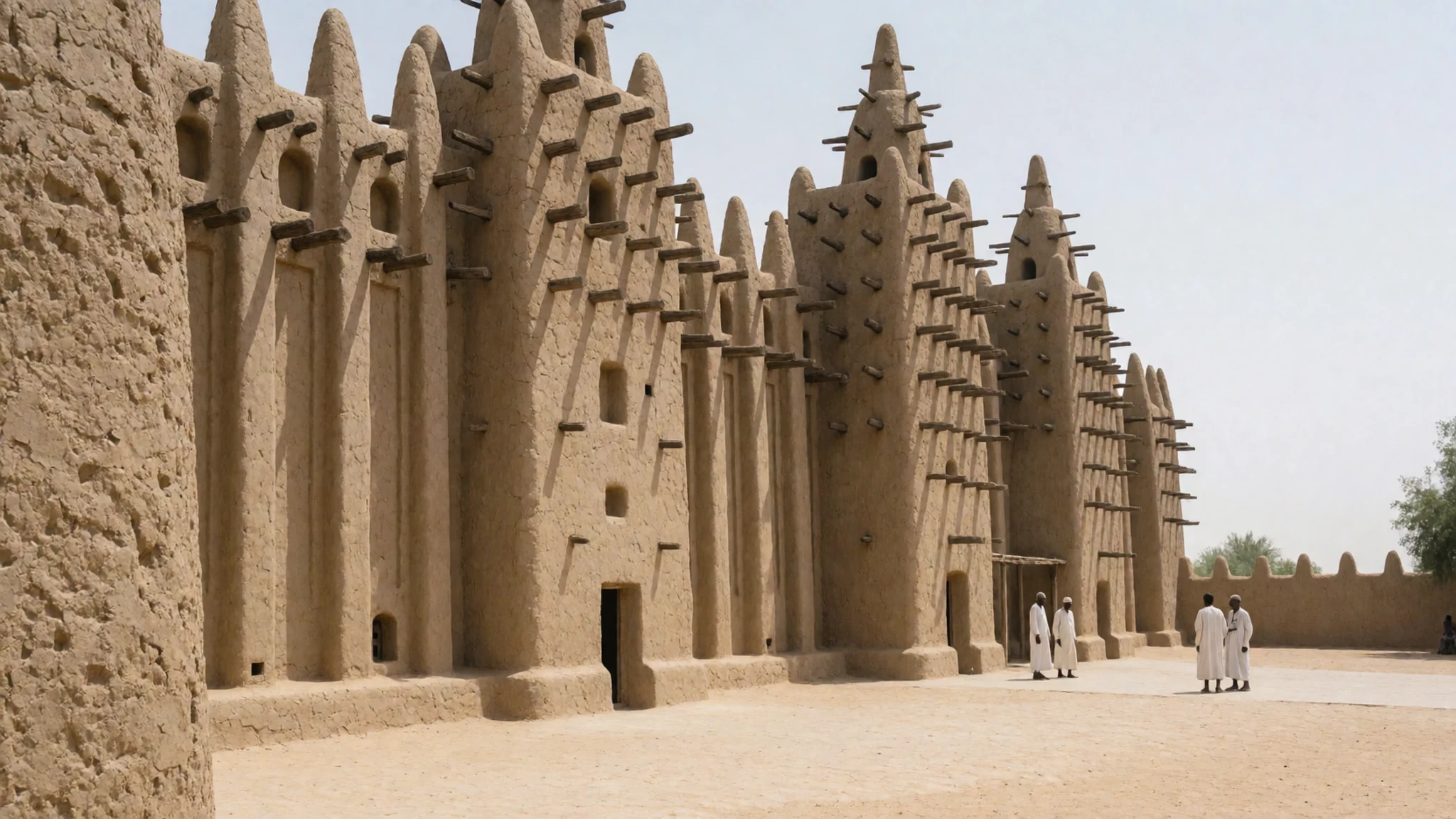
- Monday market — Streets around the mosque, Djenné
The big weekly market fills the streets and the ground around the mosque on Mondays. Traders sell cloth, spices, dried fish, pottery, vegetables and household goods, and farmers and herders come in from the surrounding villages. It is loud, crowded and hot by midday, so arrive early and expect to bargain politely.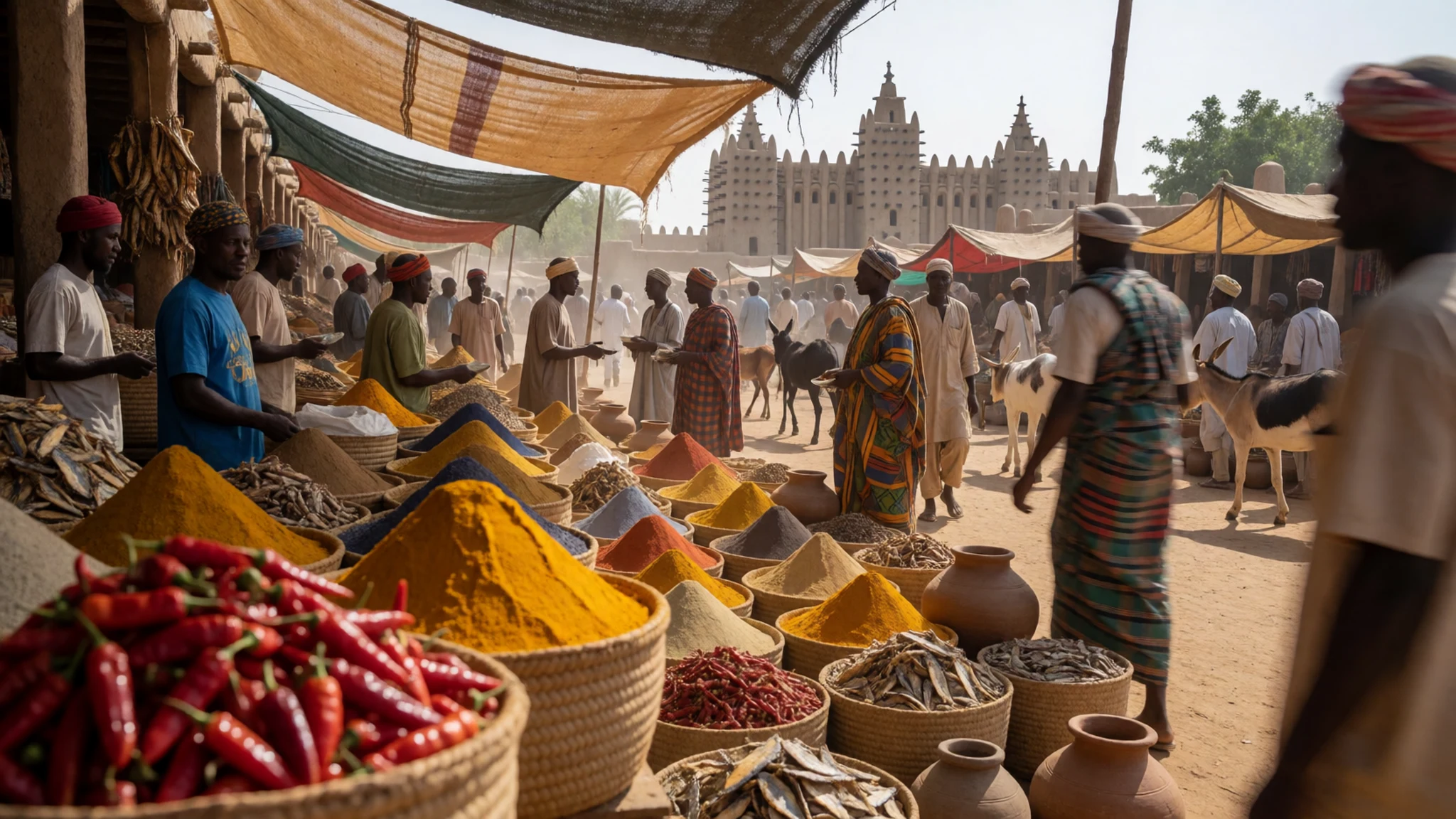
- Old town lanes — Old town, Djenné
The lanes behind the mosque lead past family houses built of the same earth as the great building. Many have carved wooden doors and decorative mud ornaments on the walls. Walking here is quiet compared with the square, and it gives a good sense of how the town is put together block by block.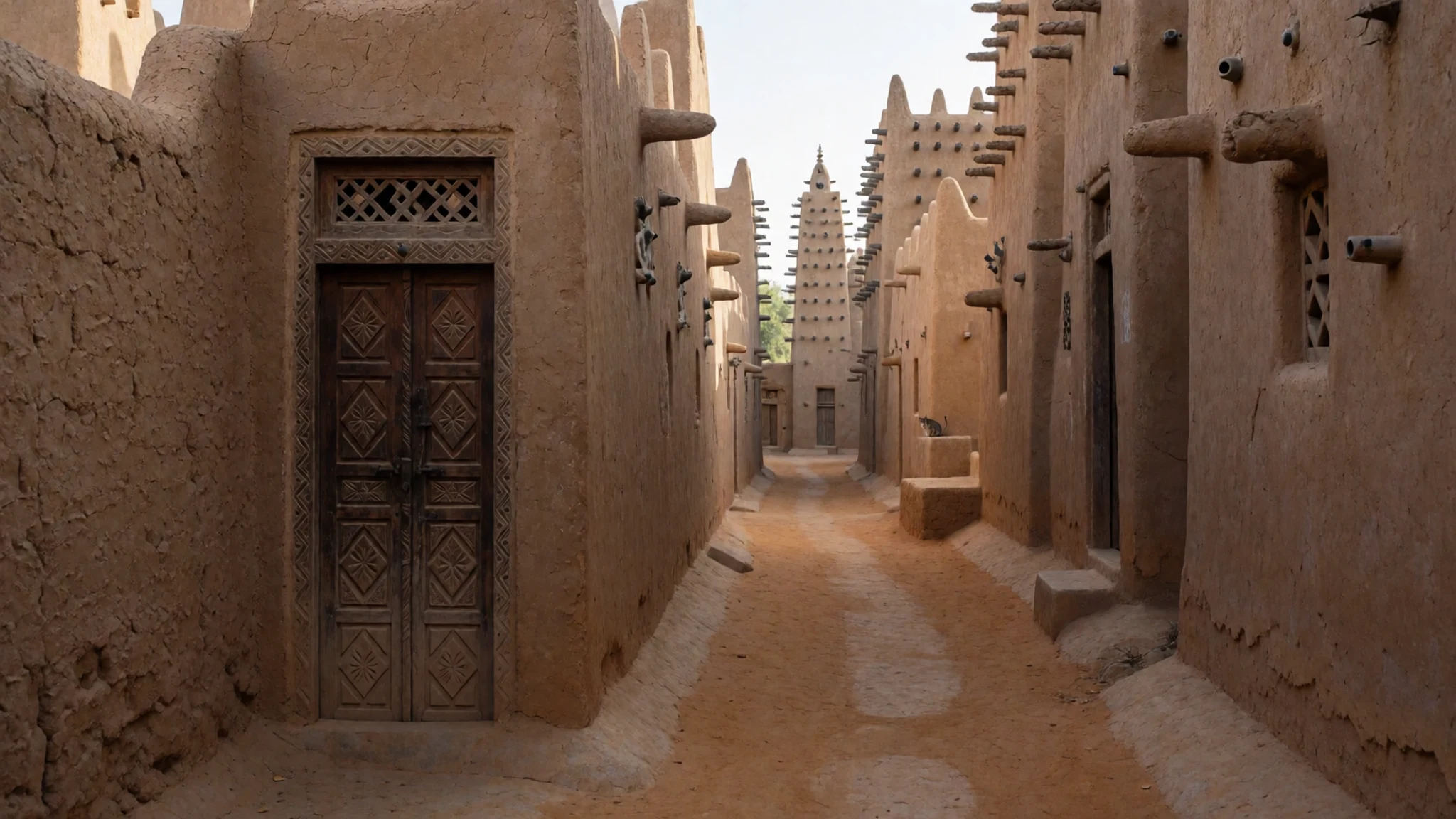
- Mud plaster and rebuilding — The mosque walls, Djenné
Each year the walls are resurfaced by hand, a communal task that takes many people and involves a lot of carrying, mixing and smoothing. If work is under way, watch from a respectful distance and ask a guide what is being done. It makes clear why the building looks the way it does.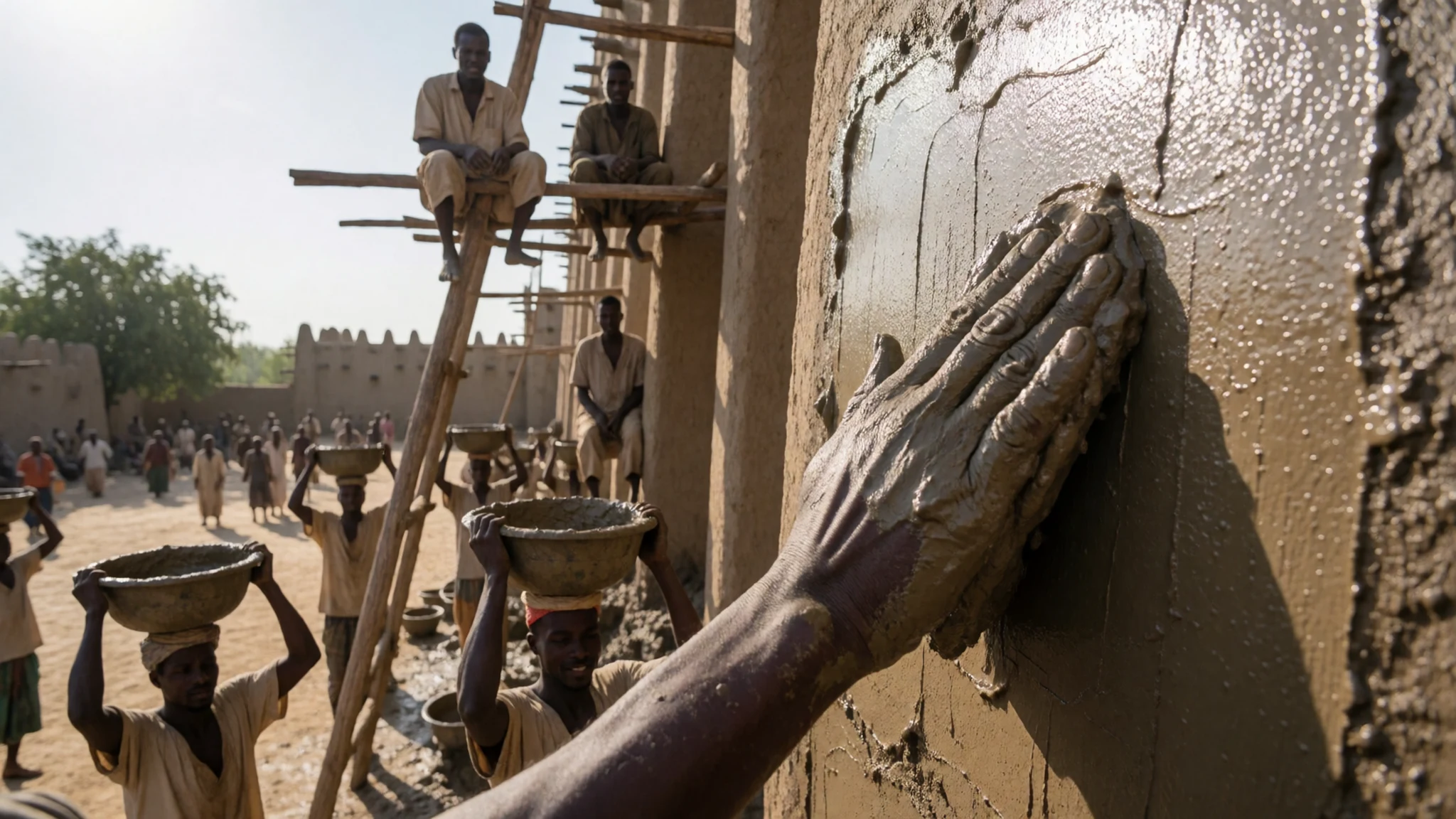
- The river edge — Riverside near Djenné
The Bani River lies a short walk from the town and shapes everything about it, from the flood season to the fish on the market stalls. The riverbank is a good place for an unhurried look at the land and the boats. Go in the cooler hours, and carry water.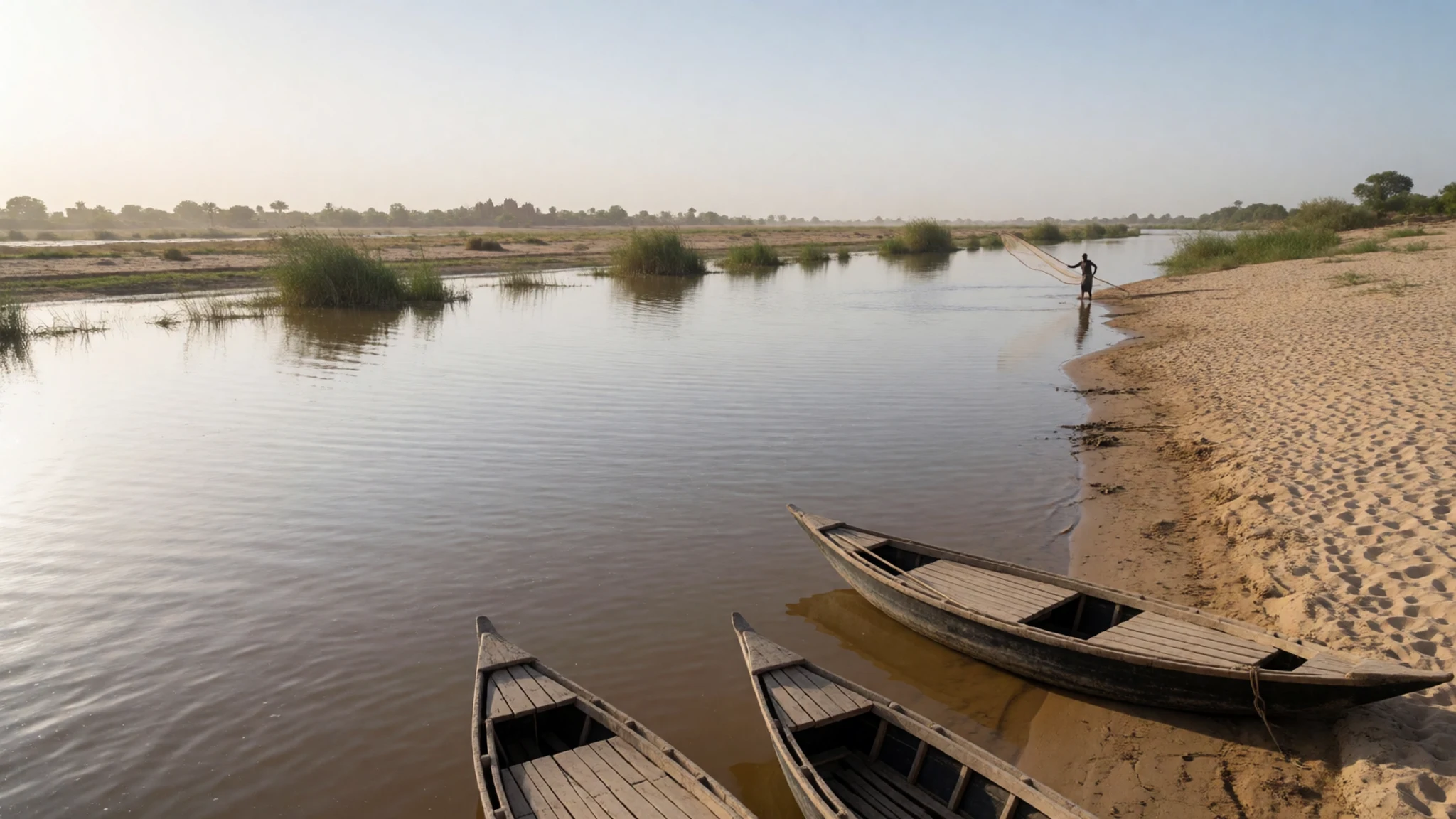
Culture
Djenné is a Muslim town, and daily life revolves around the mosque, the market and the family compound. Greetings matter, so take a moment to greet people properly before asking for anything, and accept that many conversations begin with questions about where you are from and whether you are well. Dress modestly in the town, covering shoulders and knees, and do not treat the market as a backdrop for your photographs. Many people are happy to be photographed, but ask first and accept a refusal gracefully. Children often follow visitors through the lanes, so keep your pace calm and avoid handing out money or sweets, which encourages begging. Women often cover their hair at religious sites, so carry a light scarf. Do not enter the mosque or its courtyard without checking whether visitors are welcome at that time, and never walk through prayers. Keep your voice low near the mosque.
What to wear
The Great Mosque of Djenné sits in a town where clothing has long been a clear marker of identity and occasion. Traditional men's dress is the boubou, a long, loose robe sewn from cotton cloth, often in plain white or pale colours for prayer and in richer patterns for festivals. Women wear wrapper skirts and blouses, with head ties and shawls. Locally woven cotton and dyed fabrics are common, and bogolan, or mudcloth, is a Malian textile made by painting cotton with fermented mud dyes. Its geometric patterns are associated with particular meanings and are worn for ceremonies.
In daily life, people in Djenné wear a mix of traditional and modern clothing. Men often wear trousers with a shirt, and younger people wear imported fabrics and western styles. Women frequently wear brightly coloured wrappers and tops to the market, and head coverings are common on the street.
For a visit, choose loose, lightweight clothing that covers your shoulders and knees, in cotton or linen, since heat and dust are constant. Carry a scarf that can cover your hair when you approach the mosque. Closed, sturdy shoes are best for the uneven earth lanes and market ground, and sandals will get dusty quickly.
What to eat
- Tô with okra sauce — Eateries near the Monday market, Djenné
Tô is a stiff porridge made from millet or sorghum flour, shaped into a ball and dipped into a sauce. Okra sauce is a common accompaniment in Mali, cooked with onion, fish or meat, and sometimes tomato. Eat with your right hand. It is filling and inexpensive, and you will find it in simple eateries and at the market.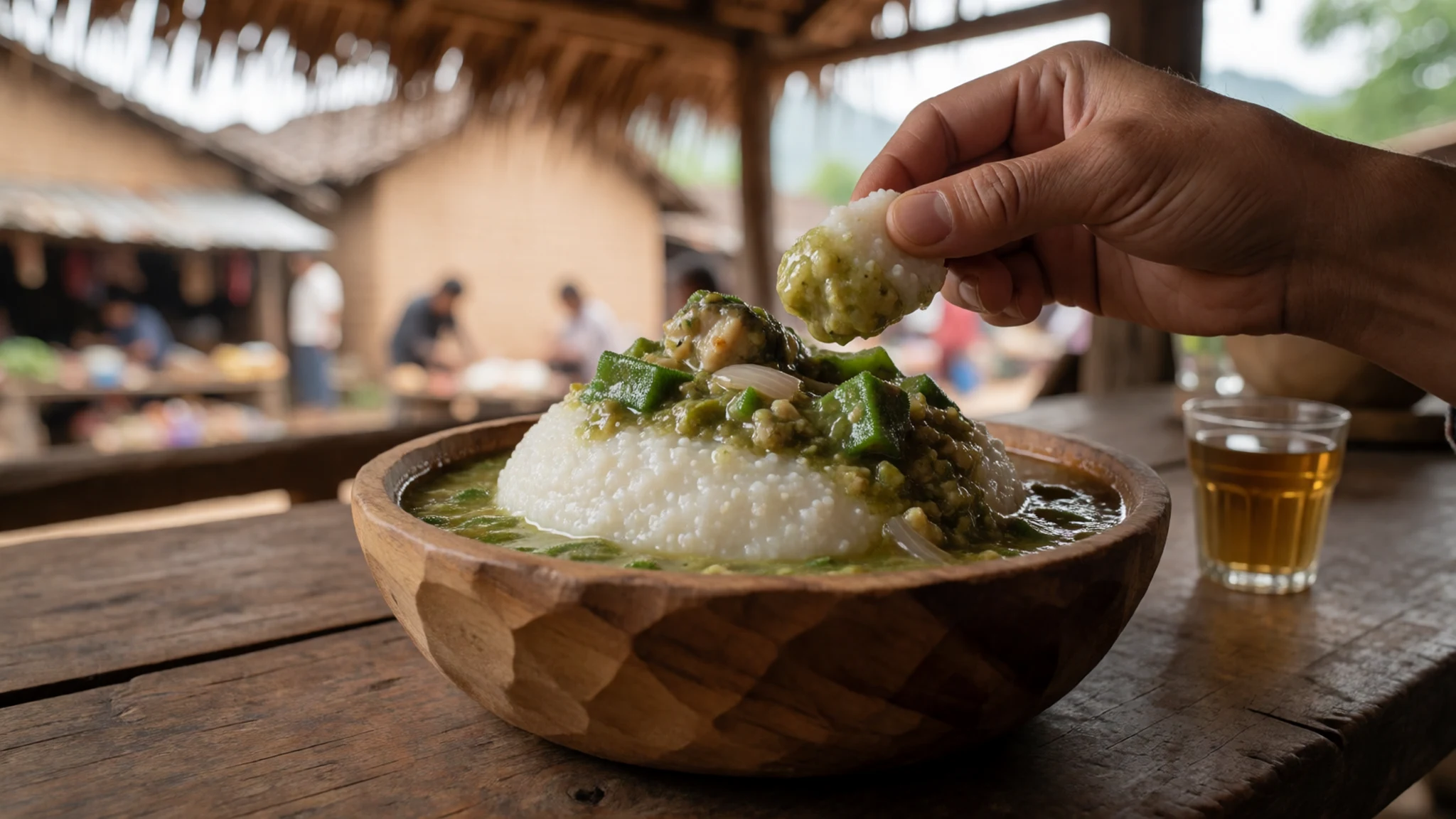
- Riz gras — Roadside stalls and family eateries, Djenné
Riz gras is a Malian rice dish cooked in a rich tomato-based sauce with vegetables and often fish or meat. It is a staple at celebrations and is commonly sold by women cooking at roadside stalls. It is a good introduction to Malian cooking and filling after a long walk.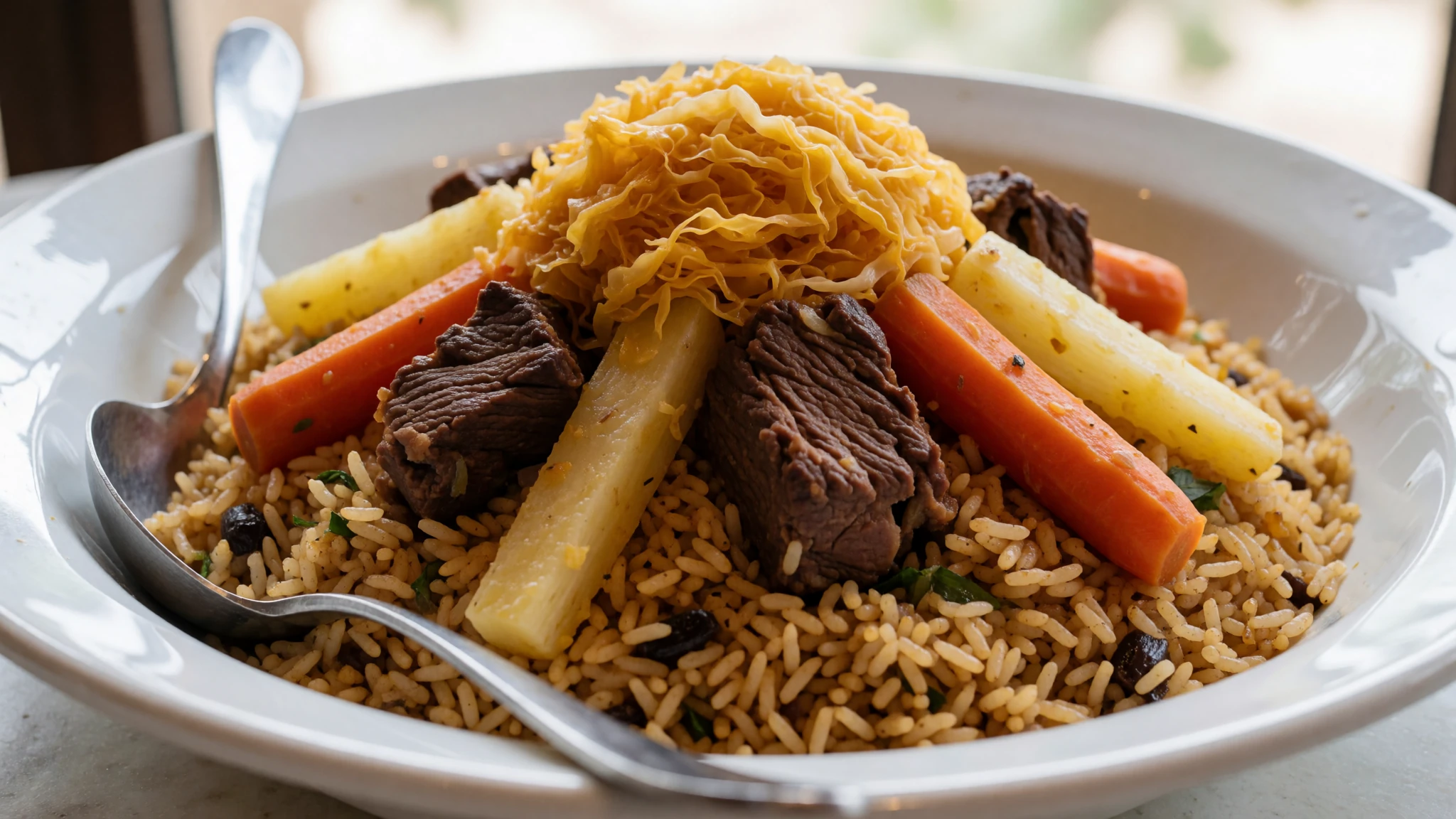
- Grilled river fish — Riverside grills near the town
The Bani and its channels supply fish that is grilled over charcoal and served with onion, pepper and sometimes a spiced oil. Fish is cooked fresh and eaten quickly. Choose a stall where the fish is cooking over a visible fire and the turnover looks steady. - Dégué — Market stalls, Djenné
Dégué is a sweet, thick drink or dessert made from fermented millet and milk or yoghurt, sweetened with sugar. It is cool and tangy, which makes it welcome in the heat. You will find it sold in small bowls or bags in markets and at the roadside. - Bissap — Drink sellers in the market and on the streets
Bissap is a deep red drink made by steeping dried hibiscus flowers in water and sweetening them with sugar, sometimes with mint or ginger. It is widely sold across Mali and is refreshing after walking in the sun. Drink from clean bottles or sealed cups where possible.
Plan it
Best time. November to February, when the weather is cooler and drier and the river is lower, so the roads and the walk around town are easier. March to June gets very hot, and July to September brings rain and flooding to the Bani floodplain, which can cut off roads.
How long. 2–3
Getting there. Fly to Bamako, then take a bus or shared taxi to Mopti and onward to Djenné. Public transport is most reliable on Monday, the market day, when minibuses and bush taxis run to the town; on other days you may need to reach the junction on the main road and wait for a connection.
Budget. low
Tips
- Plan your arrival for a Monday if you want the market and the most transport options
- Start the walk around the mosque early, before the midday heat
- Carry cash in small notes for food, drink and market purchases, since cards are rarely accepted
- Bring plenty of water and a hat, and rest during the hottest hours
- Check the official site or with a local guide about current access to the mosque before you go
Etiquette
- Ask permission before photographing people, especially women and children
- Check whether visitors may enter the mosque before going in, and dress and behave respectfully if you do
- Greet people before asking for directions or favours
Nearby
Sources
- Wikidata Q683632 (CC0)
- Wikipedia: Great Mosque of Djenné (CC BY-SA 4.0)
- Wikivoyage: Djenné (CC BY-SA 4.0)
- Great Mosque of Djenné 1, Andy Gilham (CC BY 3.0)
- Great Mud Mosque, Djenné, Ruud Zwart (CC BY 3.0)
- Ruins of the ancient mosque of Djenné, Albert Rousseau (Public domain)
- Ruines de la Mosquée de Djenné, H. Danel (Public domain)
- Collection Générale Fortier 413, Edmond Fortier (Public domain)
- Dubois 1896 p164, Félix Dubois (Public domain)
- Djenné street market, Devriese (CC BY 3.0)
- Djenné Mosque Dubois 1911, Félix Dubois (Public domain)


