Dionysiou Monastery
Dionysiou Monastery, Greece
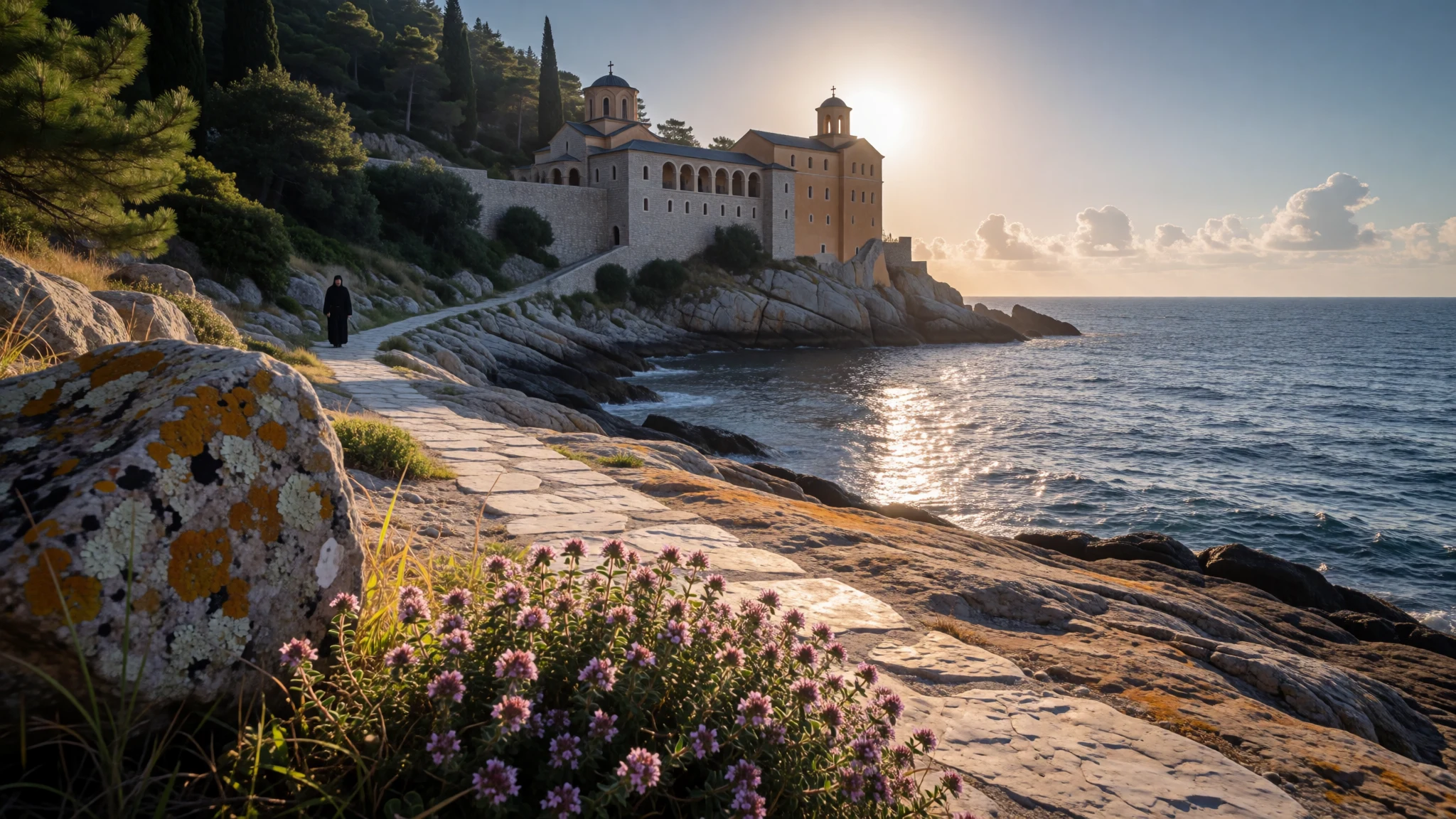
Dionysiou Monastery is an Orthodox house on a sea-facing rock at the edge of Mount Athos, reached by pilgrimage and by boat.
The place
Dionysiou Monastery stands at the south-western end of the Athos peninsula in northern Greece, a self-governing Orthodox community inside the monastic state of Mount Athos. It is dedicated to John the Baptist, yet it carries the name of its founder, Saint Dionysius of Korisos. Among the twenty Athonite monasteries it holds fifth place in the traditional order, which is a matter of rank and precedence rather than size. Photographs taken from the water show why it is remembered: tall stone ranges perched on a rocky shelf above the sea, with the forested slopes of the peninsula climbing behind. Seen from a boat, it looks less like a building and more like part of the cliff. Reaching it is not like visiting an ordinary landmark. Mount Athos admits only a limited number of pilgrims, who need advance permission; women are not admitted to the peninsula; and the day follows the monastery's own rhythm of prayer rather than any visitor timetable. The surroundings are quiet, with sea, bells and footsteps on stone. Greece as a whole is busiest from April to October, with the crowds gathered on the islands and beaches, but this corner is far from that scene. A stay here means being a guest in a working religious community, with early rising, plain meals and little to do but watch, listen and rest. Anyone who only wants the view can get a good one from the water on a coastal cruise.
Its story
Dionysiou Monastery takes its name from Dionysius of Korisos, a monk who founded it in the 14th century; the records give about 1301. His brother was the metropolitan of Trebizond, a Greek-speaking state on the Black Sea coast, and that family tie brought the project its royal patron, Alexios III Komnenos, ruler of Trebizond. In September 1374 Alexios issued a chrysobull, a formal charter with a gold seal, confirming his support. The document is still kept in the monastery's archive, and a miniature in it shows Alexios beside his wife Theodora. Its argument is candid about motive. Rulers of standing had long endowed houses on Athos so that they would be remembered, and the emperor of Trebizond, ranking above many of them, ought to add a foundation of his own. Piety and reputation were meant to work together. By the end of the 15th century a Russian pilgrim named Isaiah recorded the community as Serbian, a sign of how Athonite houses drew their members from across the Orthodox Balkans and beyond, and shifted with the politics of the region. Over the centuries the monastery built up a library of hand-copied manuscripts and printed books, the earliest manuscripts dating from the 11th century. Today it remains a working monastic community, governed by its monks, with its founder's name and its royal charter as the main threads running back through its past.
What to see
- The monastery from the sea — Coast of the Athos peninsula
Dionysiou Monastery is best understood from the water, where its stacked walls and balconies sit on a rock shelf above the waves. Boats that run along the Athos coast pass close enough for a long look. Bring a camera with a zoom, since landing is only for permitted pilgrims.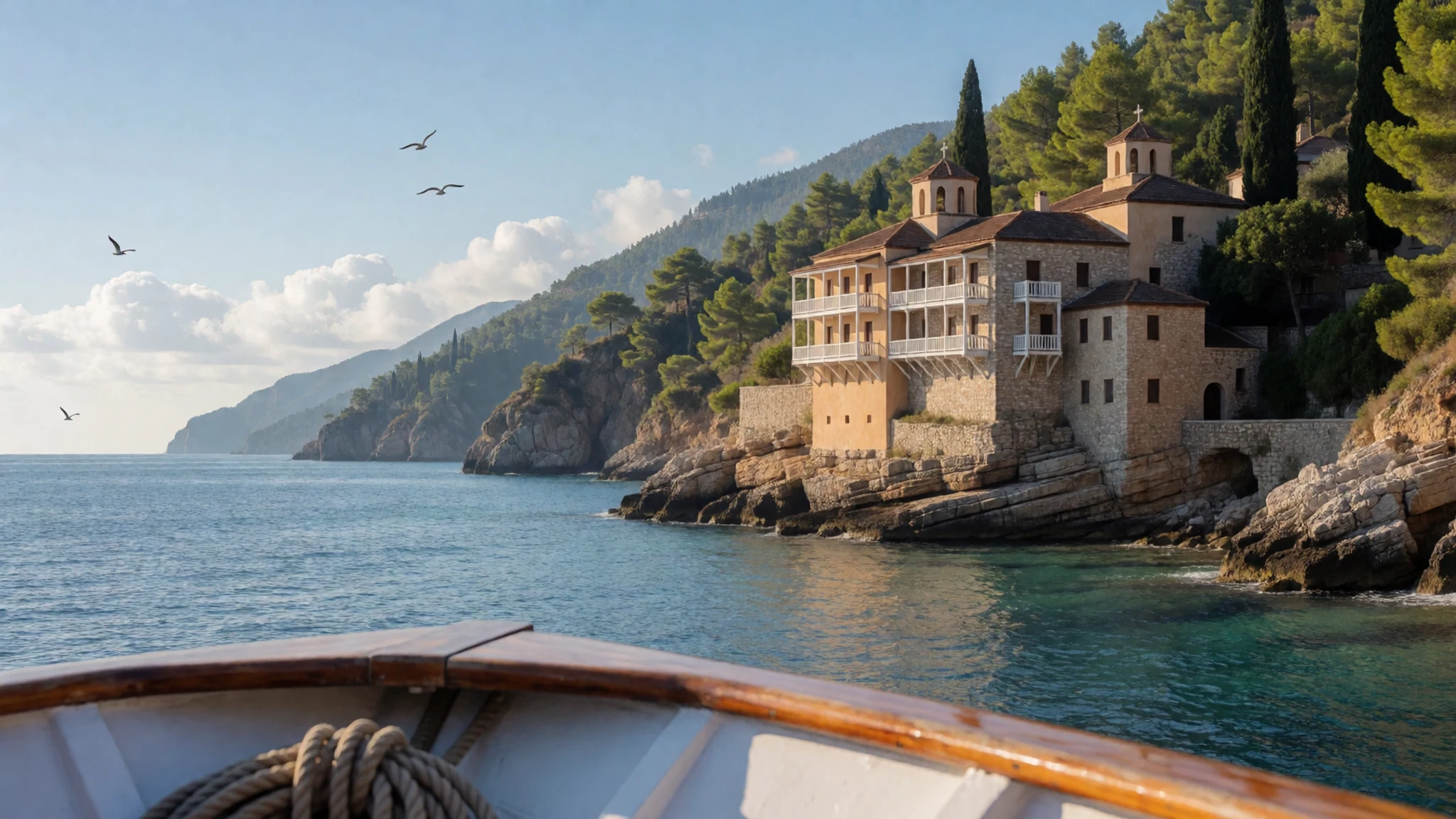
- The main courtyard and katholikon — Inside the monastery walls
Inside the walls, the main church, called the katholikon, stands in a paved courtyard ringed by the monks' residences and galleries. Services here follow the Orthodox calendar. Guests may usually attend, standing quietly at the back. Painted walls and candlelight are the main attraction rather than architecture alone.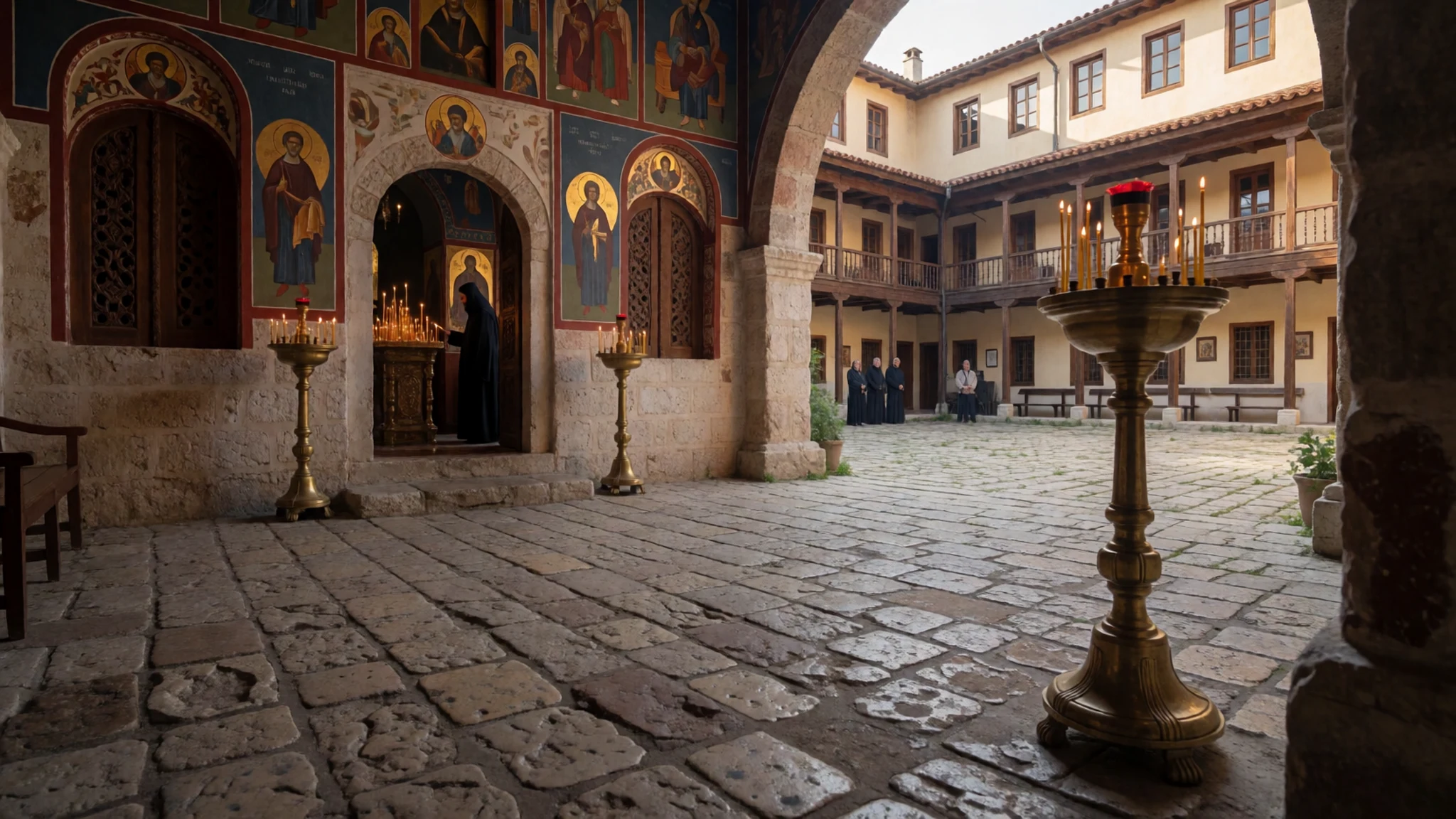
- The archive and library — Monastery archive
The founding charter of Alexios III and the monastery's manuscripts are kept here as working records of the community, not as a museum display. Access is a matter for the monks, so ask politely through the guest master and do not expect an open exhibition.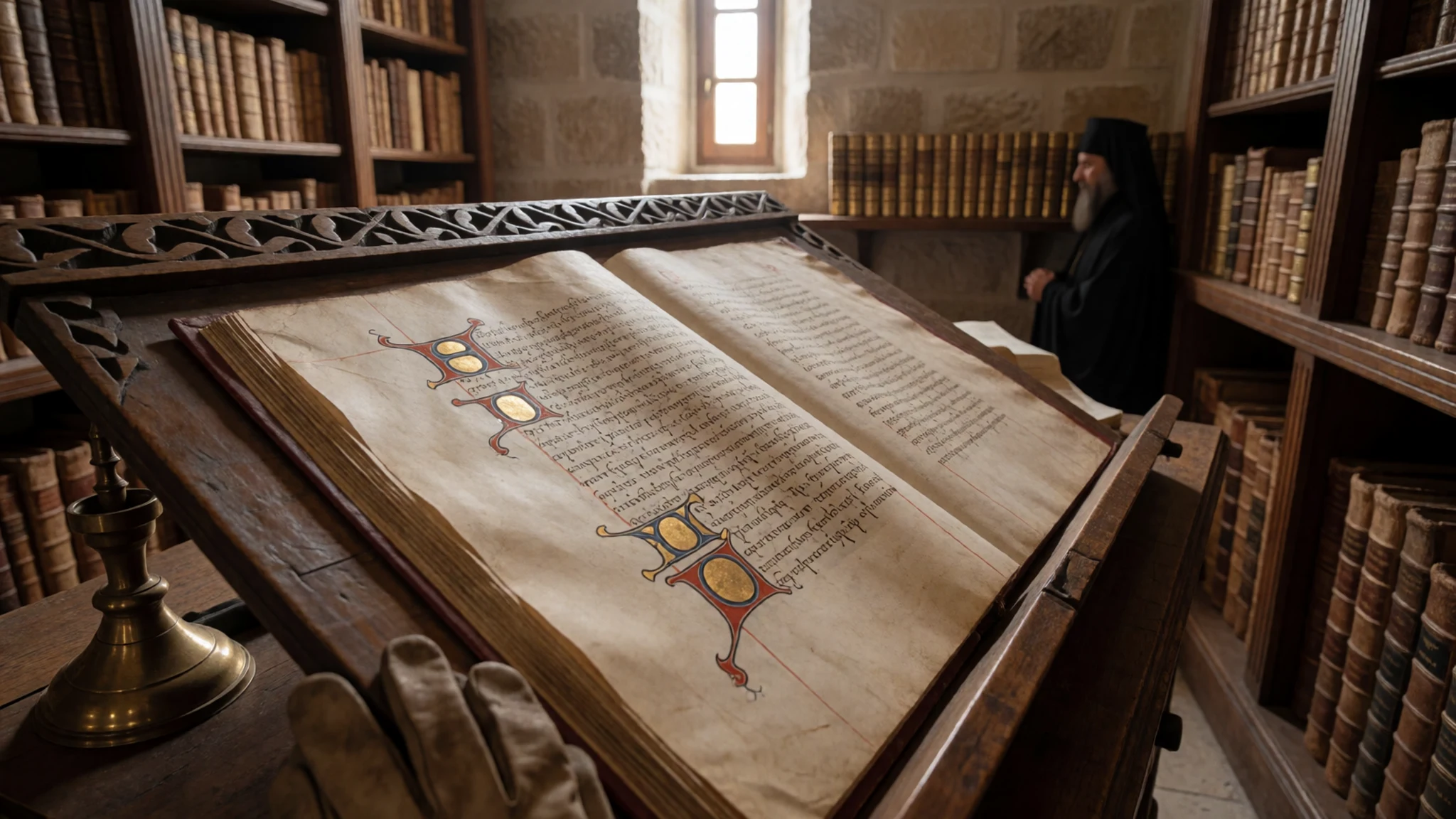
- Views from the guest quarters — Guest quarters
Guests are lodged in the monastery's reception wing, and the windows and balconies there face the sea and the wooded slope behind. Early morning is the best moment, when the light is soft, the bells are ringing, and the monastery grounds are still and quiet.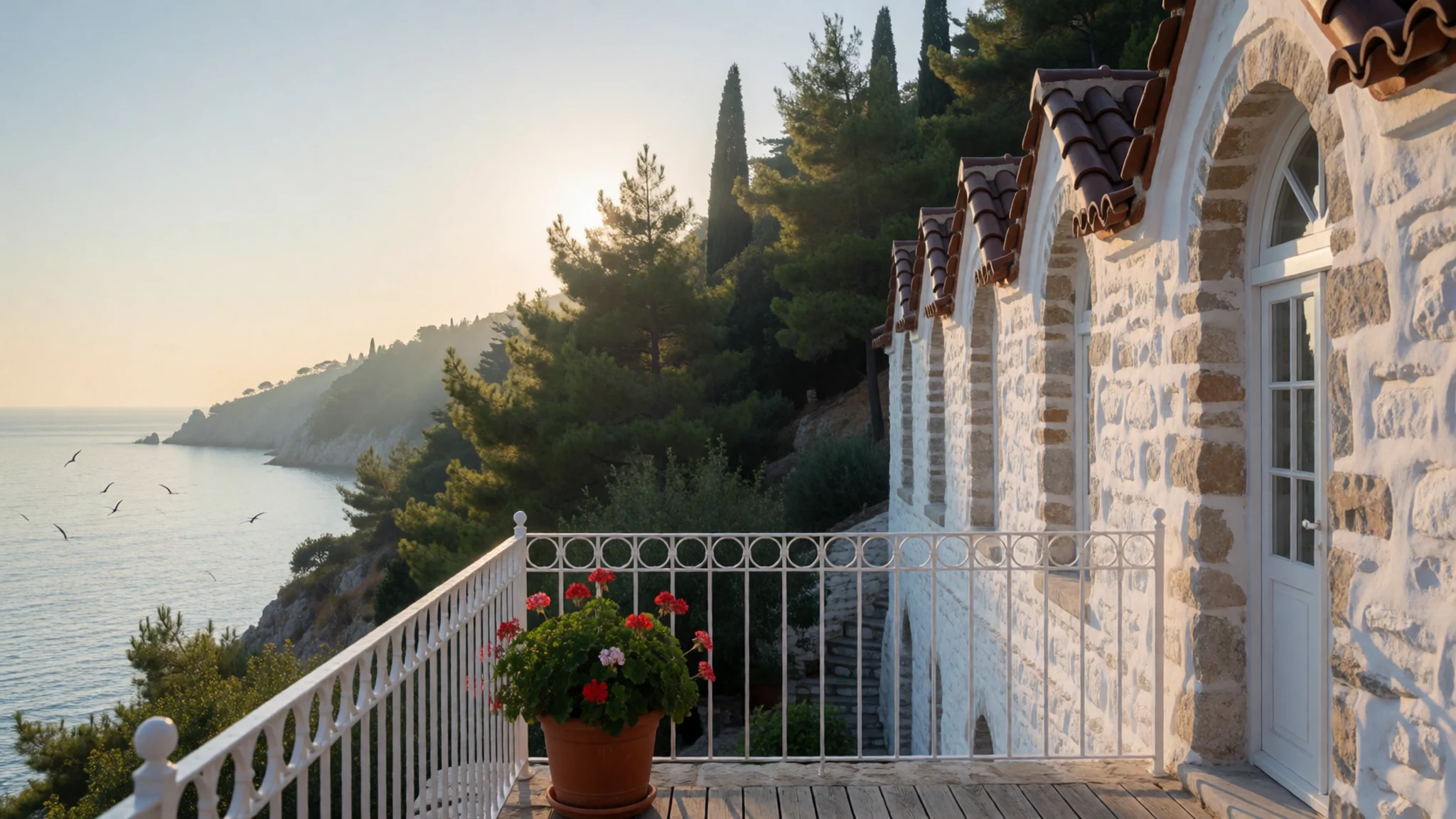
- The footpaths of the south-west coast — South-west Athos coast
Old footpaths link the monasteries along this side of the peninsula, running through forest above the sea. Walking is steady rather than technical, but summer heat, loose stone and long distances call for water, a map and an early start. Paths between houses can be quiet for hours.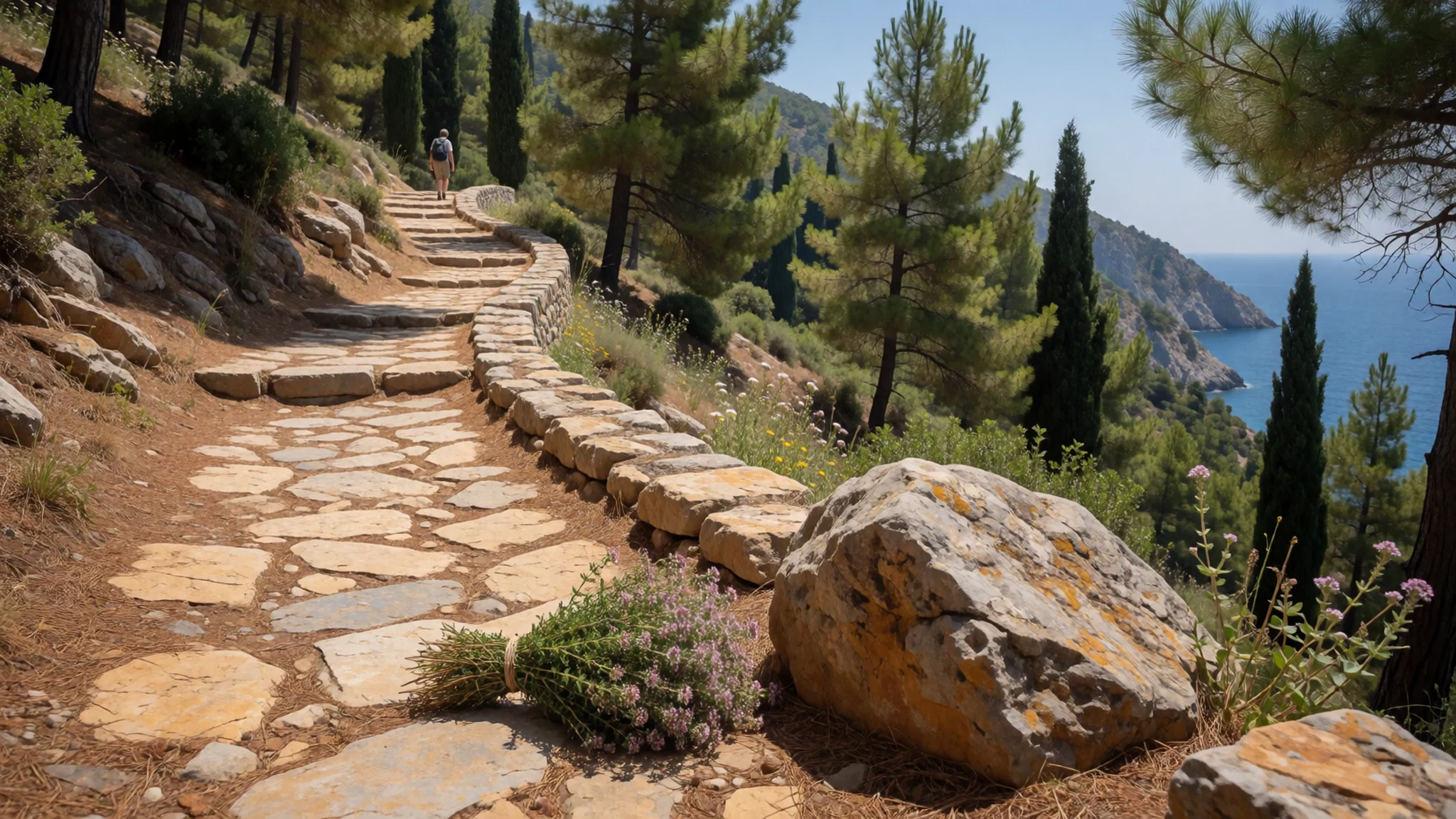
Culture
Dionysiou Monastery belongs to a Greek Orthodox tradition in which daily life is arranged around services, work and shared meals, and the visitor's task is to fit in rather than to be shown around. The community lives by the Orthodox calendar, with its feast days and fasts, and its patron, John the Baptist, is honoured in its main church. Greeks in general put a high value on warmth and informality, and a simple greeting in Greek, such as a thank you or a please, goes a long way. Strangers often wait for the visitor to speak first, so a friendly hello usually changes the mood at once. Inside a monastery the tone is gentler still, with quiet voices, patience and a willingness to listen. Monks may be glad to talk, but they are at work and at prayer, and conversation follows their pace. Mount Athos has its own rules, set by the monastic community, and they matter more here than ordinary tourist habits. Permits, boat arrivals and the hours of services are not negotiable, and the guest master has the final word on where guests may go. Treat the visit as a stay in someone's home and a place of worship at once, and accept hospitality with thanks. Do not photograph monks or services without asking first, switch your phone to silent, and follow the guest master's instructions about where you may walk.
What to wear
Dionysiou Monastery is a place where dress is set by religious life rather than by fashion. The monks wear the traditional black Orthodox habit, a long robe with a tall cylindrical hat and, for some, a veil, made in plain dark cloth and worn every day of the year. Nothing about it is meant to be decorative; the point is humility and sameness within the community. In the wider Greek world, folk costume with embroidered wool and linen is now mostly kept for festivals and dance, and everyday dress follows ordinary European habits. Visitors to the monastery will see pilgrims and workers in simple, modest clothes, often practical and dark. A visitor should dress to match. Wear trousers, not shorts, and a shirt with sleeves that cover the shoulders and upper arm, with nothing low-cut, sheer or printed with slogans. Colours do not matter as much as modesty, though neutral tones draw less attention. Footwear matters more than usual: walking between houses on the peninsula means stone steps and forest paths, so choose broken-in boots or sturdy trail shoes. Summers can be hot and dry, so pack light cotton or linen layers and a hat, and add a warm layer for early services, cool evenings and any boat crossing, where the wind can be sharp. A small scarf or a light jacket can also help for church.
What to eat
- Monastery bread — The monastery dining hall for guests
Dionysiou Monastery meals often start with thick, plain bread baked in the community, served with olives and sometimes a little oil. It is simple, filling and made for people who rise early and work hard. Expect it at the shared table in the guest dining hall.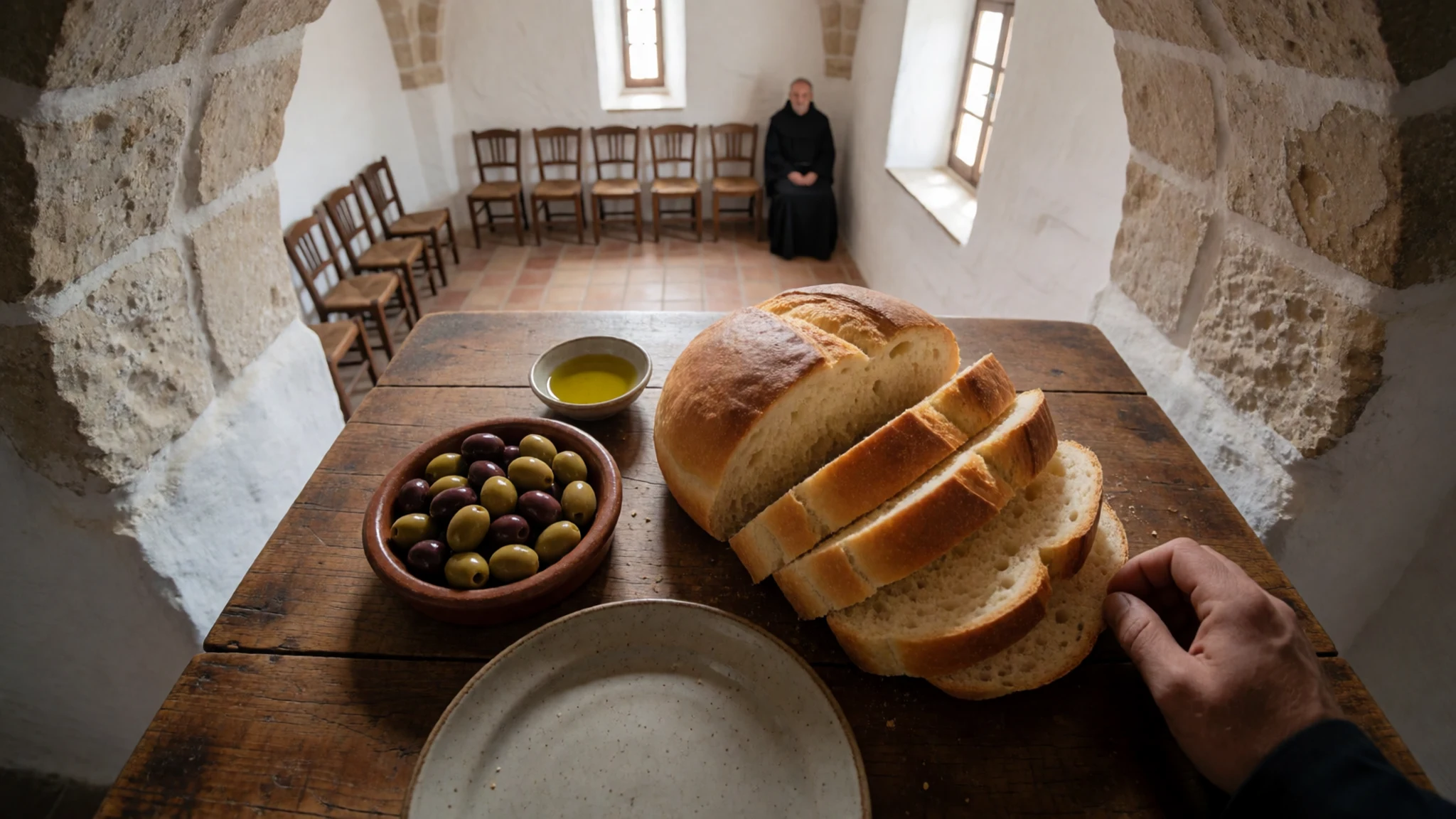
- Lenten bean soup — Guest meals at the monastery, and village tavernas on the coast
A bean soup, often called fasolada, is a staple on fasting days in Greece. It is built on beans, tomato, onion and olive oil, and needs no meat or dairy. On Athos, where fasting is frequent, it is a regular and welcome dish.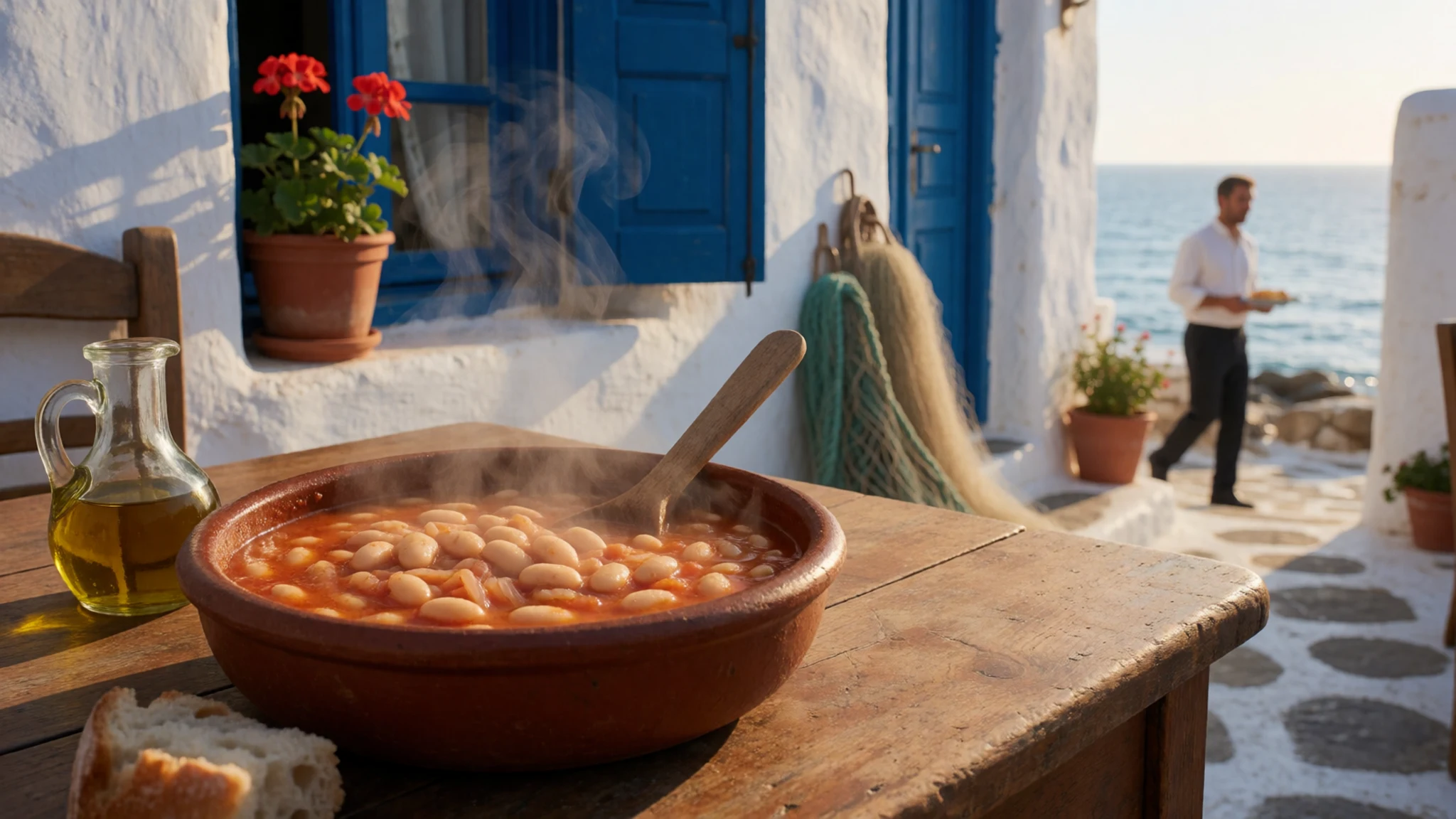
- Olives and olive oil — Monastery tables and any village taverna in the region
Olive oil is the basis of Greek cooking, and on a fast day it carries most of the flavour. Salty olives, tomatoes and lemon often arrive alongside the bread, with the oil poured generously over almost everything. - Grilled or fried fish — Harbour tavernas in the gateway villages
Greece is a maritime country, and fish is a natural meal on days when meat is not served. Small fried fish or a grilled catch, with lemon and greens, is a common choice for travellers arriving on the coast before or after a stay. - Tsipouro and local wine — Offered to guests at monasteries, and sold in shops in the gateway villages
Many Athonite houses are known for making their own spirit and wine. Tsipouro is a clear grape spirit, sipped in small glasses with a little food. It may be offered as a welcome, so accept a small measure politely and drink slowly.
Plan it
Best time. Late May and September–October, when the days are warm without the full heat of July and August; walking is easier, and the sea is calm for boats. The main Greek tourist season runs from April to October, but this corner of Athos stays quiet. Winter brings rain, wind and fewer boat services.
How long. 2–3
Getting there. Fly to Thessaloniki, then travel by road to Ouranoupoli, the usual gateway village to Mount Athos. From there, boats serve the Athos coast; check current boat arrangements and arrival rules with the official Mount Athos pilgrims' bureau before you travel.
Budget. low
Tips
- Apply for your Mount Athos permit well ahead of time, because daily numbers are limited and the process runs through the official pilgrims' bureau
- Contact the monastery in advance to confirm that a bed is available for your dates
- Carry cash, as there are no shops or card machines inside the monastery
- Bring water, sun protection and sturdy shoes for the walking between houses
- Arrive with an open schedule, since boats and services follow weather and the monastic day
Etiquette
- Dress modestly and cover your shoulders and legs at all times
- Ask before photographing monks, services or interiors
- Follow the guest master's instructions on meals, services and where you may walk
Nearby
Sources
- Wikidata Q1059939 (CC0)
- Wikipedia: Dionysiou Monastery (rev 1362385698) (CC BY-SA 4.0)
- Wikivoyage: Greece (rev 5425334) (CC BY-SA 4.0)
- Kloster Dionisiou, Fingalo (CC BY-SA 2.0 de)
- View of Dionysiou Monastery from the sea, Explorer1940 (CC BY-SA 4.0)
- Natura 2000 protected area photograph, Kodras (CC BY-SA 4.0)
- Mt Athos monasteries 12, michael clarke stuff (CC BY-SA 2.0)
- Dionysios Monastery, Mount Athos, Sigma vita (CC BY-SA 4.0)
- Alexios III Komnenos miniature, unknown author (Public domain)
- Daphne vid ett av Athosbergets kloster, Göran Schildt (CC BY 4.0)
- Dionissiou, Manuel Castillo Fraile (CC BY 3.0)


