Dhuandhar Falls
Dhuandhar Falls, India
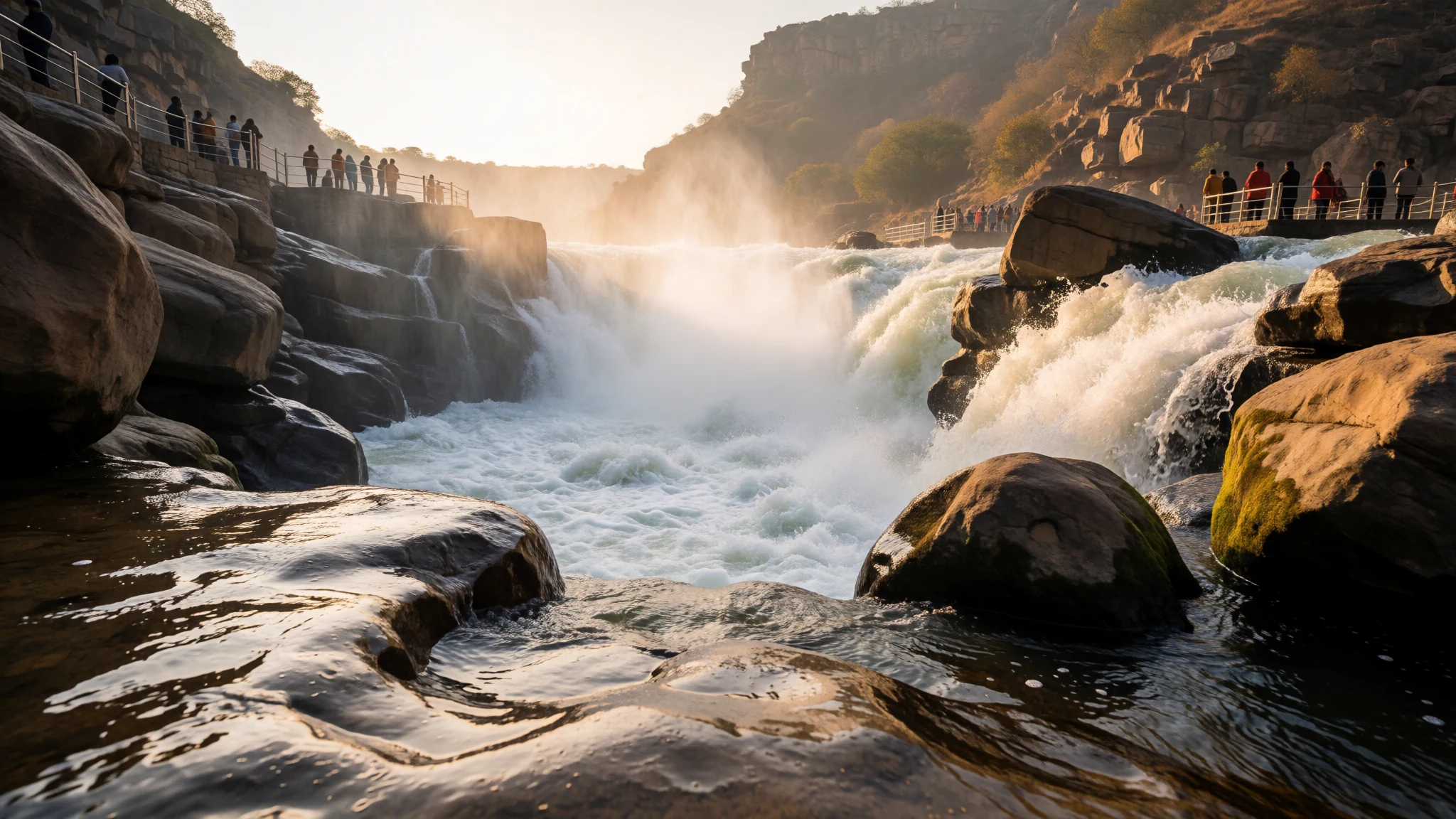
Witness the Narmada River transform into a roaring cascade of white mist through ancient marble gorges in Madhya Pradesh.
The place
Dhuandhar Falls sits within the Jabalpur district of Madhya Pradesh, marking a dramatic narrowing of the sacred Narmada River as it cuts through deep, ancient bedrock. The name itself hints at the natural phenomenon that occurs here: as the heavy volume of water plunges over the rocky barrier, it beats against the stone and throws up a dense, continuous cloud of fine spray that hangs thick in the air like smoke. Visitors arriving at the site are immediately met by the thunderous roar of the current, which echoes across the riverbanks long before the cascade comes into full view. The surrounding terrain is characterised by rugged gorges and towering rock formations that shift in tone depending on the angle of the sun, creating an imposing natural amphitheatre around the churning pool below. The river's relentless force has sculpted the surrounding landscape over countless centuries, polishing the stone surfaces and carving deep channels that funnel the roaring waters onward. Whether viewed from the paved terraces built along the brink or from an elevated cable car suspended high above the roaring channel, Dhuandhar Falls presents an arresting picture of raw geological energy at play in the heart of central India. The constant plume of mist cools the warm air of the riverbanks, offering a refreshing sanctuary for travellers who make the journey out to this dramatic corner of Madhya Pradesh.
Its story
For generations, Dhuandhar Falls and the broader Narmada Valley have held a profound place in the cultural and spiritual imagination of central India. The Narmada is revered as one of the most sacred rivers on the subcontinent, believed by tradition to have sprung from the body of Lord Shiva and possessing purifying qualities that draw pilgrims from all across the region. Unlike many other northern rivers that flow eastward toward the Bay of Bengal, the Narmada carves its path westward through ancient fault lines and marble canyons, a unique geographic journey that deepens its mystical standing in local folklore. Local oral traditions and regional histories recount how sages and ascetics meditated in the quiet caves and rocky overhangs carved by the river upstream from the main cascade. The dramatic drop at Dhuandhar was long seen as a powerful manifestation of divine power, where the raw fury of the falling water symbolized the untamed might of the cosmos. Over the decades, as modern roads and rail links connected the remote gorges of Bhedaghat to the expanding districts of Madhya Pradesh, the site evolved from an isolated sanctuary of hermits and wandering pilgrims into a celebrated gathering place for nature lovers, artists, and curious travellers seeking to witness the legendary river in all its untamed majesty.
What to see
- Main Viewing Platforms — West bank viewing area
Positioned directly opposite the raging torrent, these concrete viewing platforms allow travellers to stand face to face with the plummeting water. The air here is perpetually saturated with a heavy, cool mist that drenches visitors within moments. Railings keep crowds safely back from the sheer drop, while local vendors sell hot tea and snacks nearby.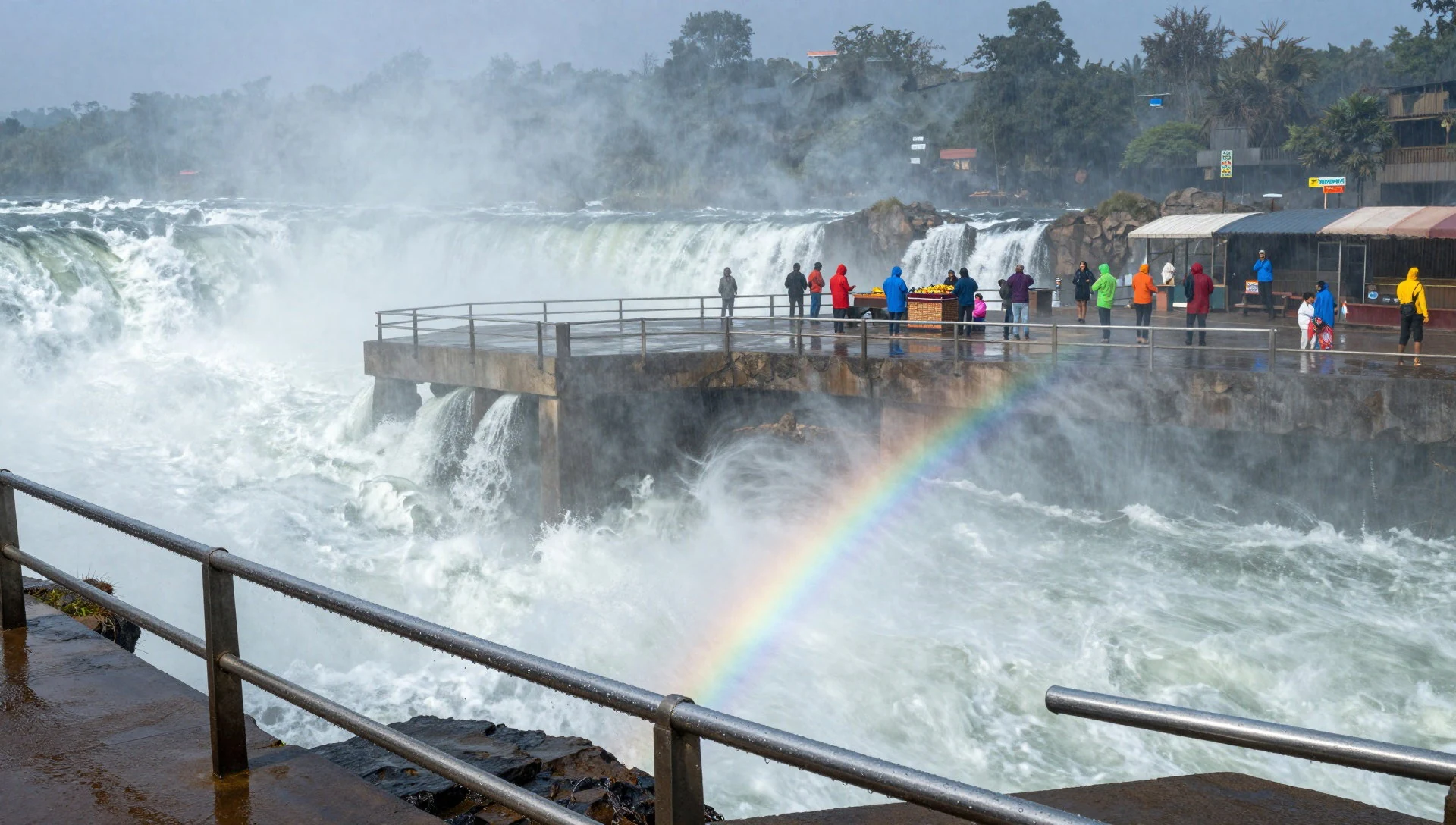
- Cable Car Crossing — Spanning the Narmada gorge
A suspended cable car system stretches high across the deep gorge, carrying passengers in small cabins from one side of the river to the other. This aerial transit provides an uninterrupted, bird's-eye perspective of the Narmada River as it narrows sharply before plunging into the churning white abyss below.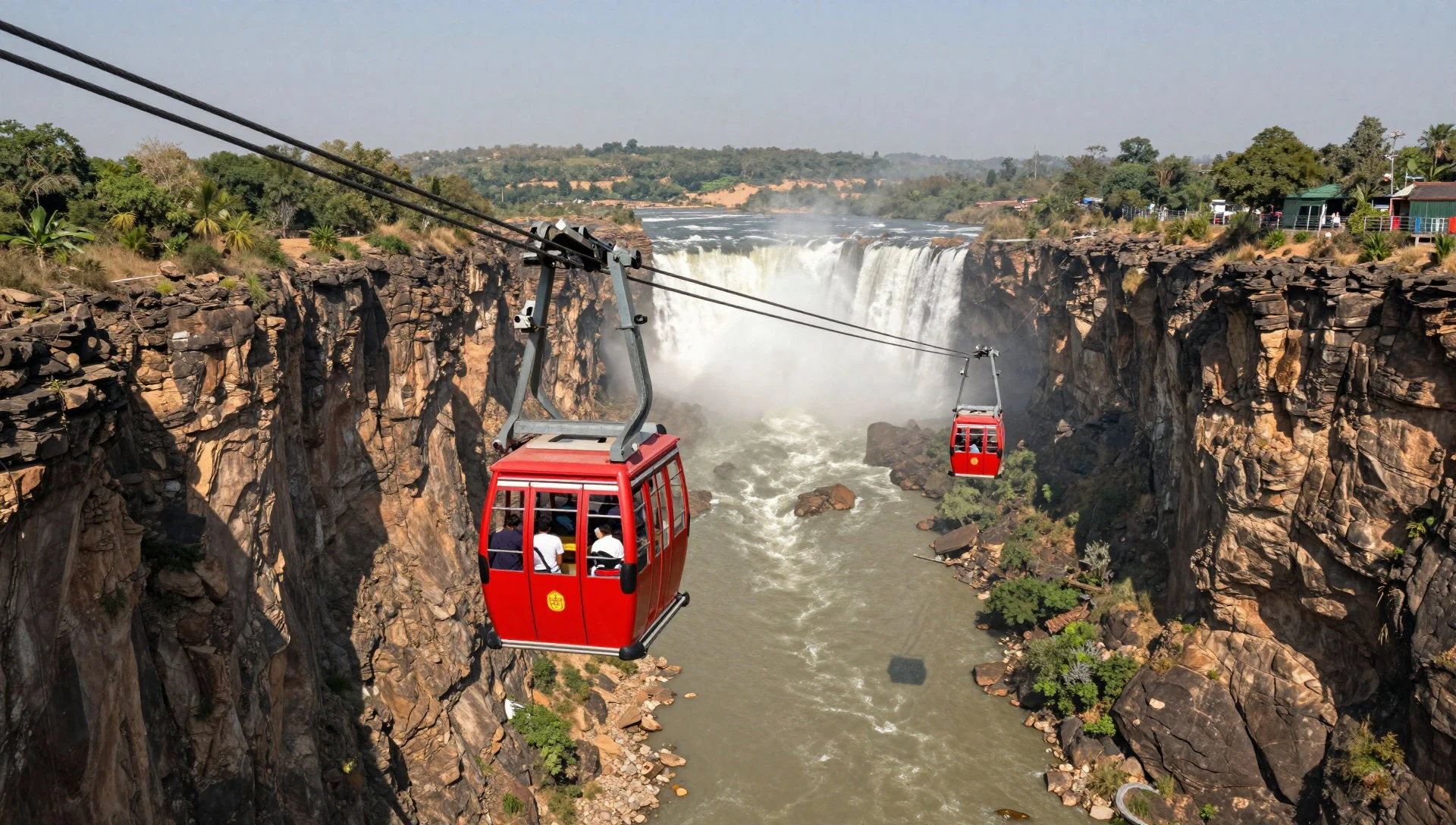
- Marble Rocks Gorge — Bhedaghat boat station
Just downstream from the roaring falls, towering magnesite and calcium-magnesium rocks rise sharply on either side of the narrow river channel. Gliding quietly along this calm stretch in a traditional oar-driven boat reveals pale cliffs that glow brilliantly under the afternoon sun and cast deep shadows upon the water.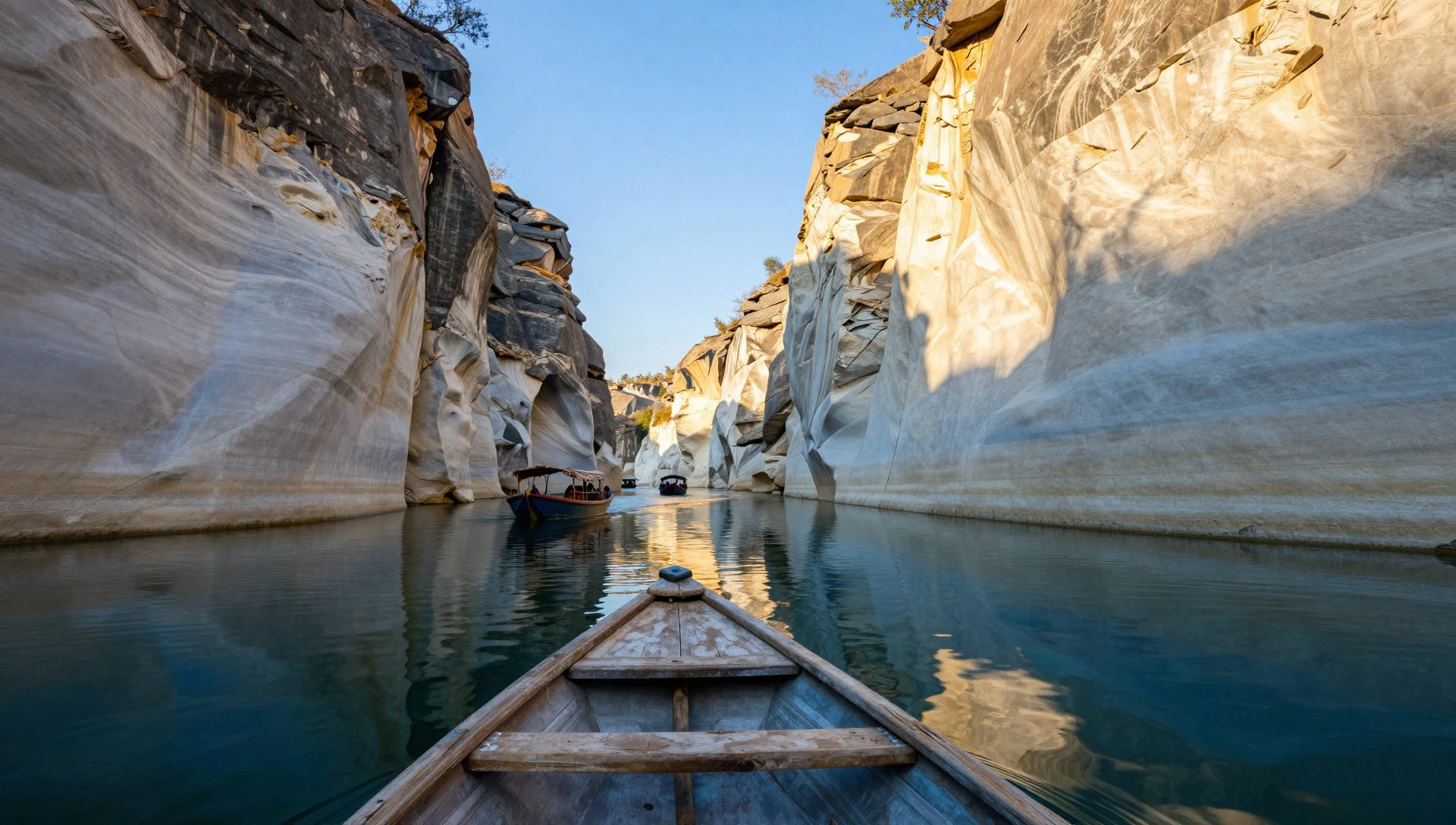
- East Bank Vantage Points — East bank paths
For a wider perspective away from the congested western entrance, travellers can cross over to the eastern bank. These quieter vantage points offer elevated angles that capture the full width of the cascade against the sprawling backdrop of the surrounding district and the verdant countryside beyond.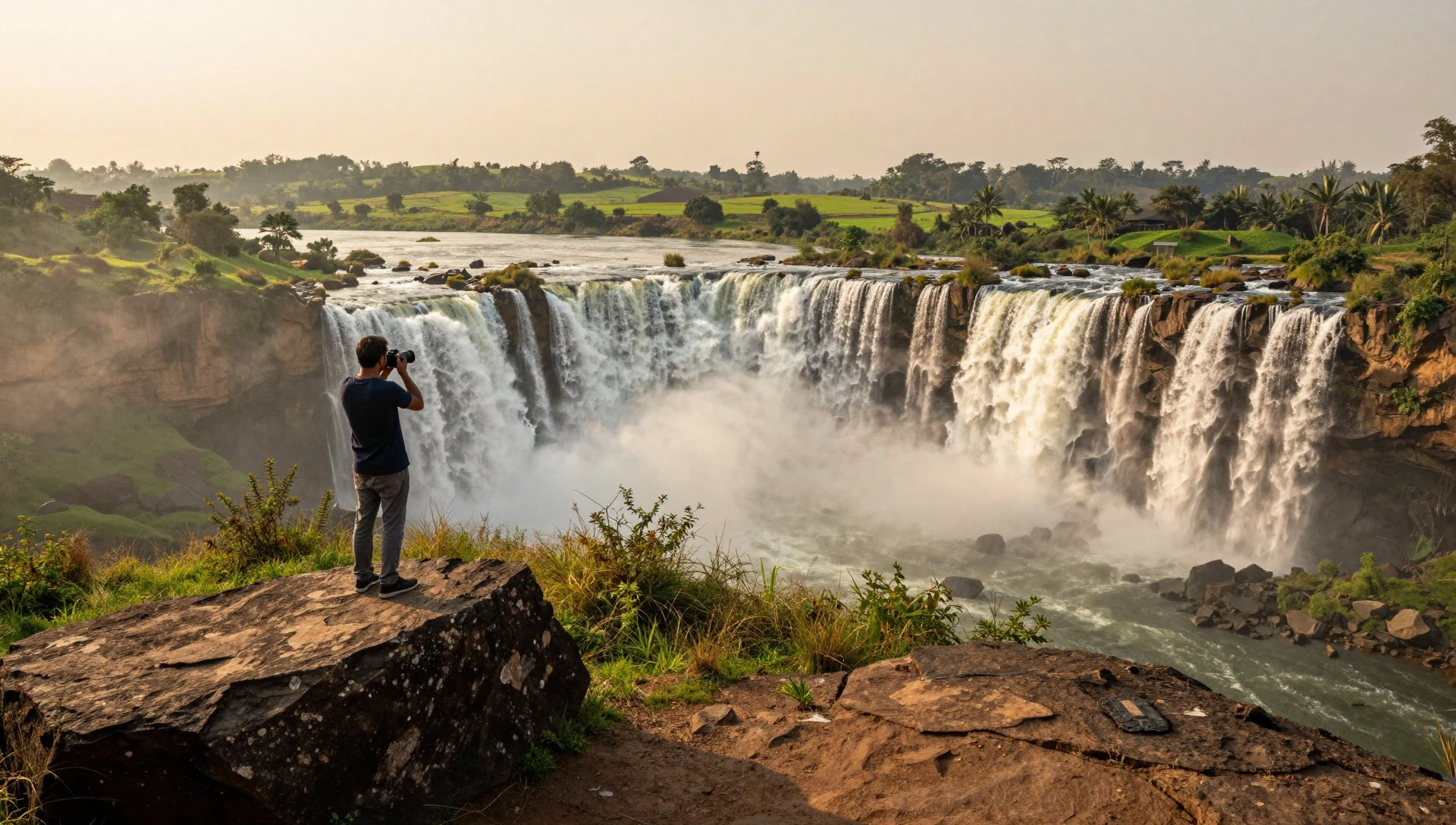
- Bhedaghat Riverside Ghats — Bhedaghat riverside
Stone steps lead directly down to the water's edge where pilgrims and locals gather to offer morning prayers and witness the quiet rituals performed along the Narmada. These peaceful riverside platforms offer a sharp, contemplative contrast to the deafening roar of the nearby waterfall downstream.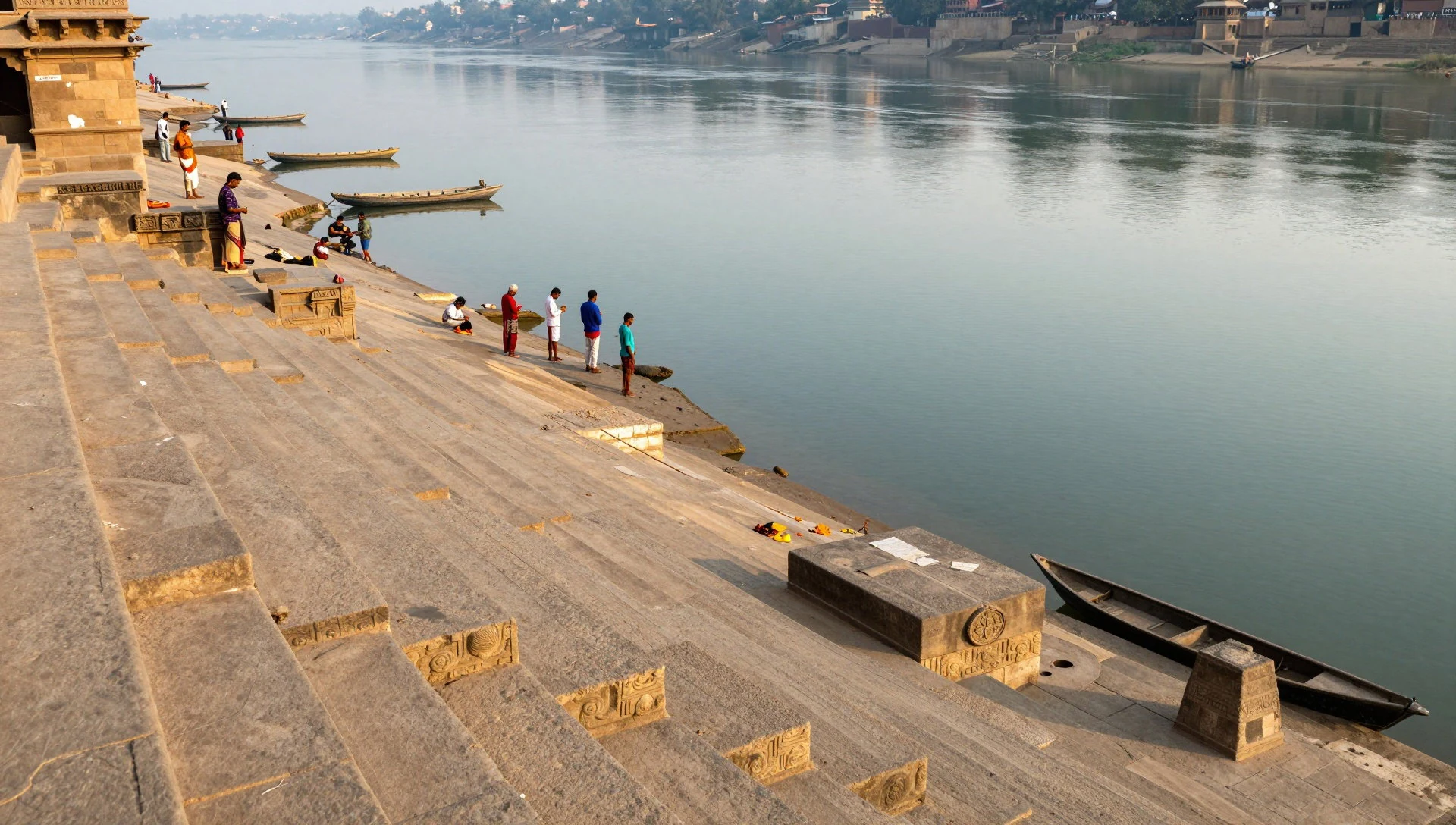
Culture
Dhuandhar Falls and its surrounding communities reflect the vibrant cultural fabric of Madhya Pradesh, where traditional rural customs blend seamlessly with the rhythms of modern Indian life. Daily existence along the Narmada River is deeply intertwined with age-old spiritual rituals, daily prayers, and seasonal festivals that honour the sacred waters. Visitors will encounter a welcoming atmosphere shaped by local traders, boatmen, and temple priests who are eager to share stories of the river's storied past. Regional crafts, including polished marble artifacts and stone carvings fashioned by local artisans, fill the bustling market lanes near the entrance. Traditional attire remains common among older generations and rural residents visiting the shrines, while younger locals frequently wear contemporary casual clothing. When visiting temples, shrines, or sacred river ghats near Dhuandhar Falls, always remove your footwear before stepping onto the premises.
What to wear
Traditional dress around Dhuandhar Falls reflects the practical and cultural heritage of rural Madhya Pradesh. Local women commonly wear vibrant cotton or silk sarees and flowing salwar kameez, prized for their breathability in the warm regional climate. Men often opt for traditional kurtas paired with loose trousers or standard shirts and trousers for daily work. Among younger residents and urban visitors in Jabalpur, western-style casual wear such as jeans, t-shirts, and sneakers is widely worn for everyday convenience. For travellers exploring Dhuandhar Falls, practical clothing is essential given the heavy mist and slippery stone pathways near the cascade. Lightweight, quick-drying fabrics are ideal, accompanied by sturdy footwear with reliable traction to handle wet rocks and muddy riverbanks. Modest attire that covers shoulders and knees is strongly recommended out of respect for local customs, particularly when visiting nearby temples and sacred river ghats.
What to eat
- Poha Jalebi — Local street stalls in Jabalpur
A classic breakfast pairing across Madhya Pradesh featuring flattened rice tossed with turmeric, onions, and green chillies, served alongside freshly fried, spiral-shaped sweet jalebis. Find this popular morning combination at street stalls near the local markets.
- Bhopali Gosht Korma — Traditional restaurants in Jabalpur
A rich, aromatic mutton curry slow-cooked with whole spices, browned onions, and yogurt, reflecting the rich culinary heritage of the state. Savour this hearty dish at traditional local eateries in the nearby city.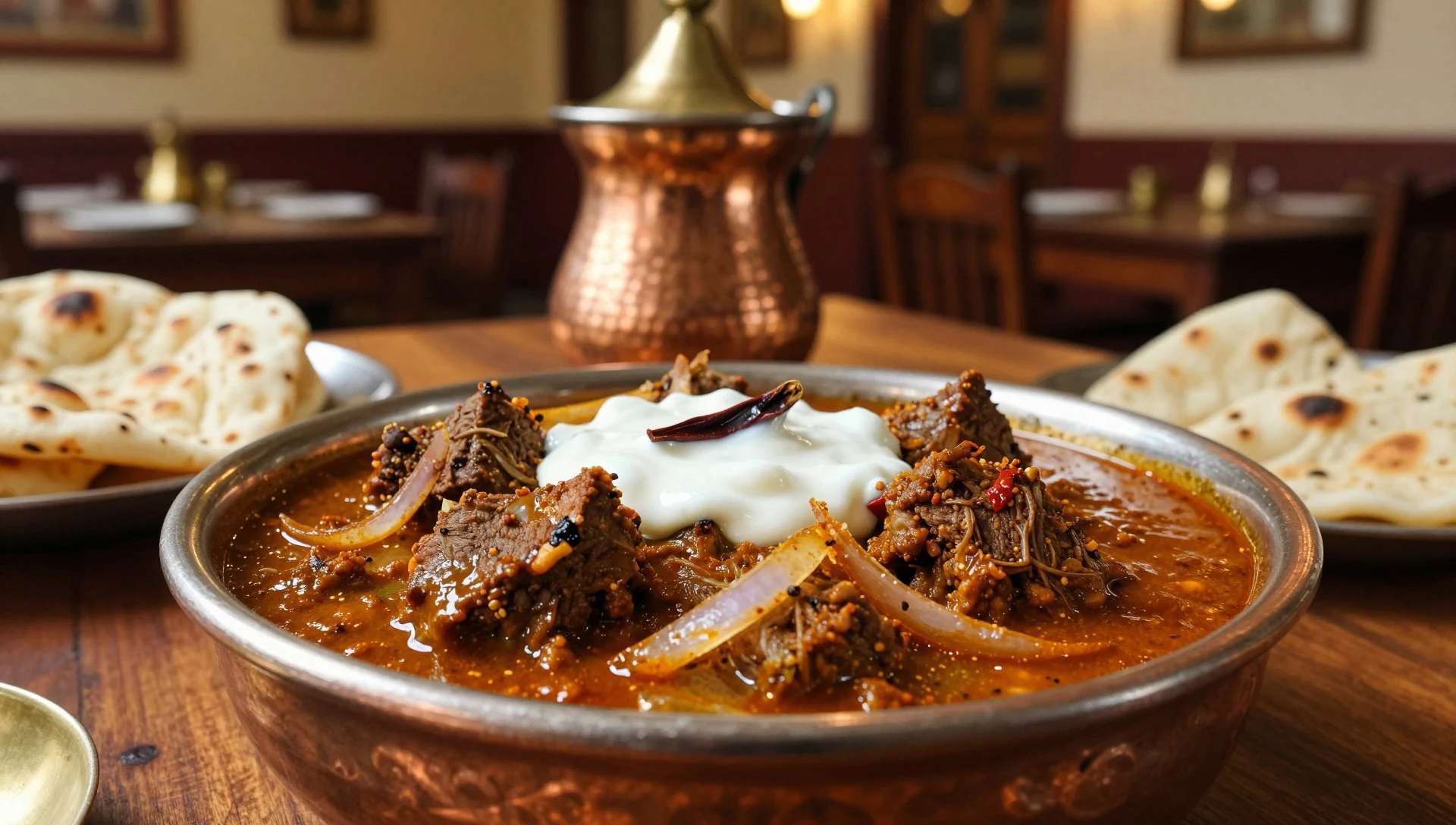
- Dal Bafla — Roadside eateries across the district
Hard wheat dough balls that are first boiled and then baked before being generously dipped in rich ghee and served alongside a hot lentil soup. This hearty meal is widely enjoyed in homes and traditional roadside diners. - Bhutte Ka Kees — Evening food stalls near tourist areas
A comforting local delicacy made from grated fresh corn sautéed in ghee, milk, and spices until thick, then garnished with mustard seeds and fresh coriander. Look for this savoury snack at evening food stalls.
Plan it
Best time. October to March offers the most pleasant weather for exploring the waterfalls and taking boat rides along the river, as daytime temperatures are comfortable and the monsoon humidity has subsided.
How long. 1–2
Getting there. Fly into Khajuraho Airport, then travel onward by road or rail to Jabalpur district, followed by a short local taxi or bus ride to Bhedaghat and the falls.
Budget. low
Tips
- Visit early in the morning to beat the midday crowds and catch the best light on the mist.
- Wear waterproof jackets or carry a protective cover for cameras, as the heavy spray soaks visitors instantly.
- Wear shoes with strong grip, as the stone viewing areas and pathways become extremely slippery.
- Keep cash handy for small purchases, boat tickets, and local snacks near the entrance.
- Stay hydrated and wear sunscreen, as the open viewing terraces can get quite warm during midday.
Etiquette
- Remove shoes before entering any temple or sacred shrine near the river.
- Ask permission before photographing local residents, boatmen, or pilgrims.
- Dispose of all litter responsibly in designated bins to help protect the natural river environment.
Nearby
Sources
- Wikidata Q38177 (CC0)
- Wikipedia (CC BY-SA 4.0)
- Wikivoyage (CC BY-SA 4.0)