Derinkuyu Underground City
Derinkuyu Underground City, Turkey
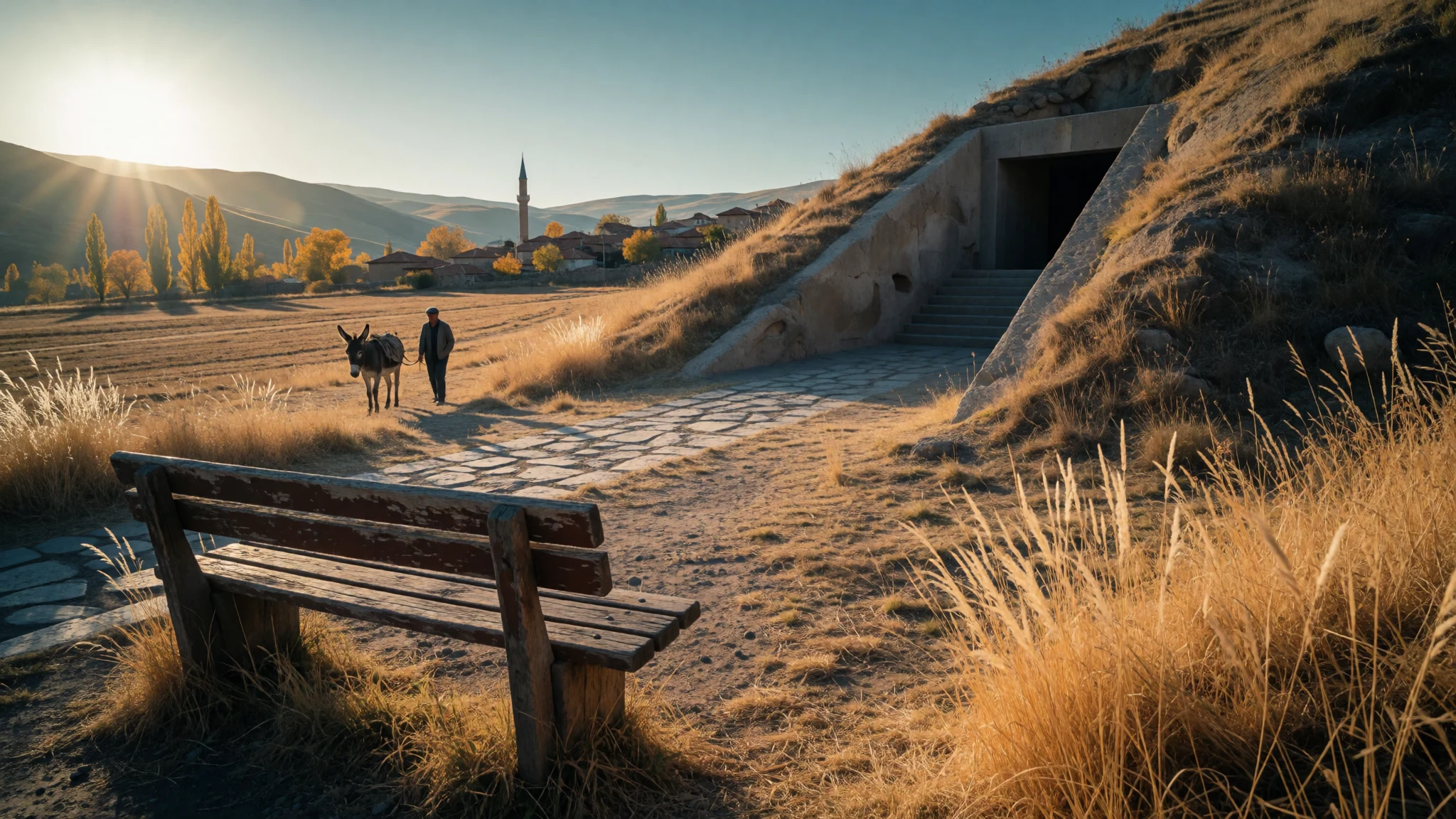
Derinkuyu Underground City is a tunnelled refuge beneath a Cappadocian town, where soft volcanic rock hides stairways, chapels and stables far below ground.
The place
Derinkuyu Underground City lies beneath a small town of the same name in Nevşehir Province, in the middle of Turkey's Cappadocia region. It is also known as Malakopi. What visitors reach through a modern entrance is only the opened part of a vertical honeycomb: floors stacked one under another, joined by narrow stairways and sloping passages, and reaching about 85 metres down. Estimates of its capacity run to around 20,000 people, along with their animals and food stores, which gives a sense of how many families once depended on it.
The ground here is volcanic tuff, a pale, soft rock that is easy to carve with simple tools and firms up once exposed to air. That is why Cappadocia is full of rock-cut churches, dovecotes and cave houses, and why Derinkuyu is one of several underground complexes in the region. The town above is ordinary and agricultural, with tea houses, small shops and a few souvenir stalls. The extraordinary part is out of sight.
Inside, the experience is physical. Ceilings drop low in places, corridors squeeze to single file, and the air is cool and still compared with the summer plateau outside. Rooms open off the passages: stables, storerooms, kitchens, a wine press, a school room and chapels. Ventilation shafts run through the levels and also served as wells, which fits the name, since Derinkuyu means deep well in Turkish. Heavy round stone doors, rolled across passages from the inside, could close off whole sections. Signed arrows keep the route simple, but the lower levels are hard going for anyone who dislikes enclosed spaces.
Its story
Derinkuyu Underground City begins its story with rock rather than records. The first tunnels and rooms may have been cut by the Phrygians, an Iron Age people of Anatolia, though carved spaces are hard to date because they leave so little behind. What is clearer is the later expansion. During the Christian centuries of the late Roman and Byzantine periods, local people deepened simple cave homes into multi-storey structures and added chapels and Greek inscriptions. By the Byzantine era the city had reached its full form, with a school and a network of tunnels among its features.
The strongest push came during the Arab–Byzantine wars, when raiding armies of the Umayyad and later Abbasid dynasties crossed the plateau. Local Christians used the city as a refuge, and its design was openly defensive. Sections could be sealed off from one another, people could move about inside without being seen, and defenders could even counterattack if one part was breached. A long tunnel is said to link Derinkuyu with the neighbouring underground city of Kaymakli, so that families had more than one way out.
Memory of the place lingered in the Greek-speaking Christian villages of Cappadocia, whose communities stayed in the region until the exchange of populations between Greece and Turkey. Today the city is a state-run museum. Its tunnels read less as a single emergency than as a habit, a way ordinary families coped with insecurity over generations by going down into the ground. The carved stables, storerooms and chapels show that people intended to live there, not just hide.
What to see
- The main route underground — Derinkuyu town, Nevşehir Province
The opened route at Derinkuyu Underground City descends level by level through stairways and sloping passages carved into tuff. Corridors are narrow and ceilings low, so the pace slows naturally. Follow the signed circuit and look for the tool marks on the walls, which show how the rock was cut by hand. - Ventilation shafts — Inside the underground city
Narrow vertical shafts pierce the levels of Derinkuyu Underground City, carrying air down from the surface and doubling as wells. Standing at the base of one and looking up gives a clear sense of the depth. They explain how thousands of people, animals and stores could share enclosed space without the air turning stale.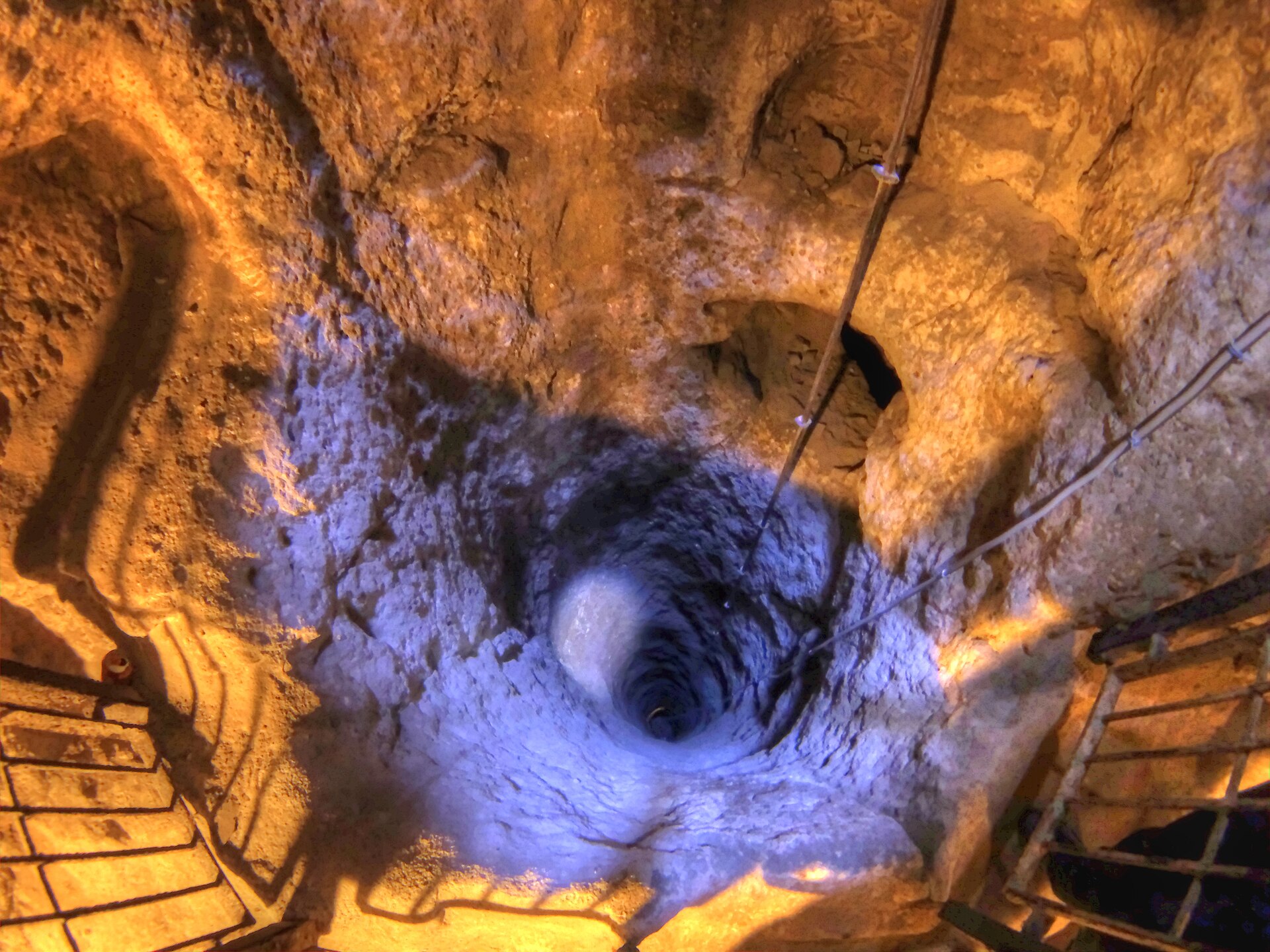
- Rolling stone doors — Inside the underground city
Heavy round stone discs stand beside several passages at Derinkuyu Underground City. Pushed across from the inside, they could seal a section, which is how defenders kept raiders out or cut off a breached area. The discs are easy to walk past in dim light, so pause at the narrow doorways and look closely.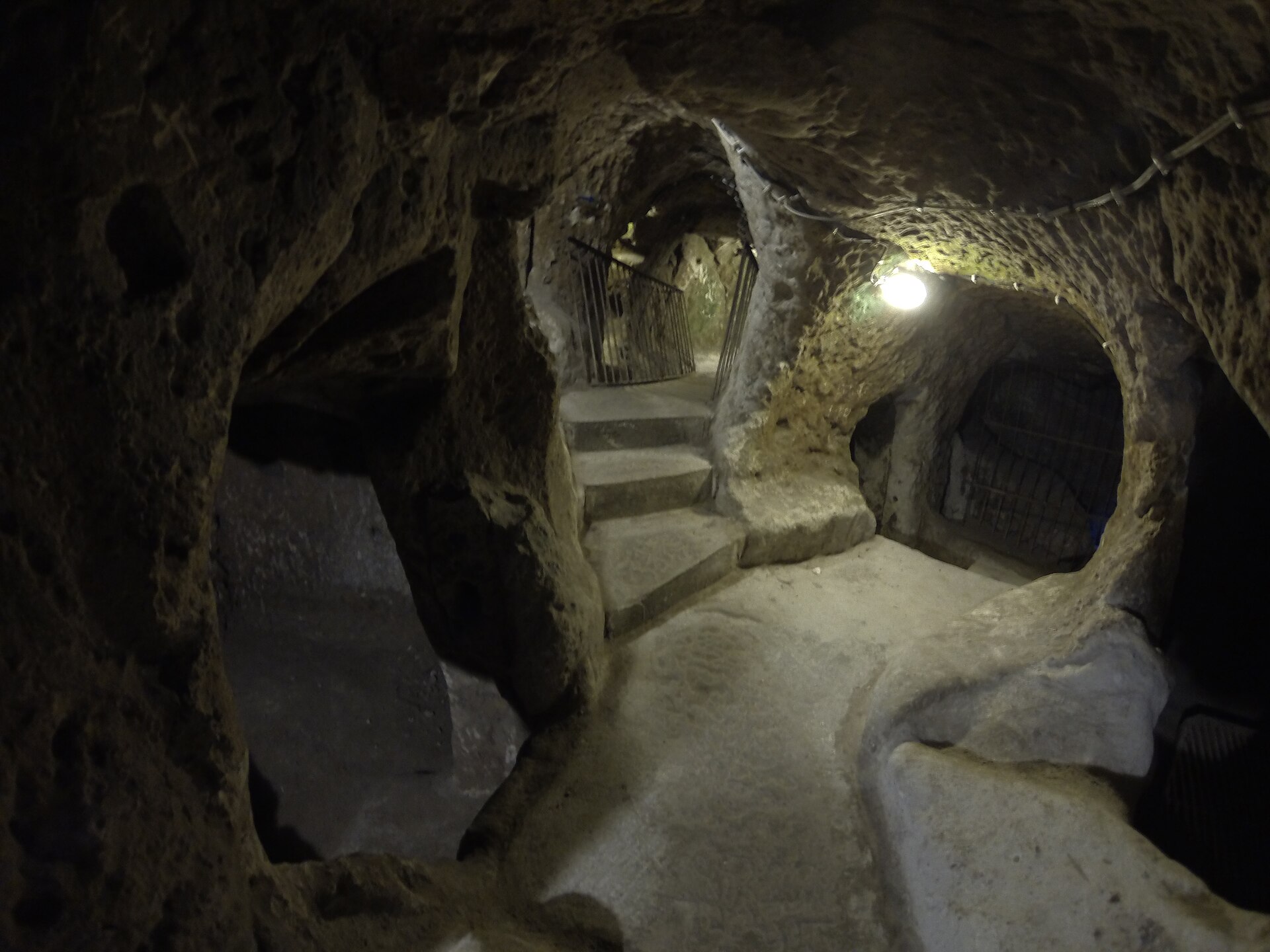
- Chapels and the large room — Lower and exit levels of the underground city
Chapels at Derinkuyu Underground City carry the marks of the Christian communities who sheltered here: simple carved spaces, with Greek inscriptions among the later additions. Close to the final exit, a large room opens out after the tight passages, and it is a good place to imagine communal life underground.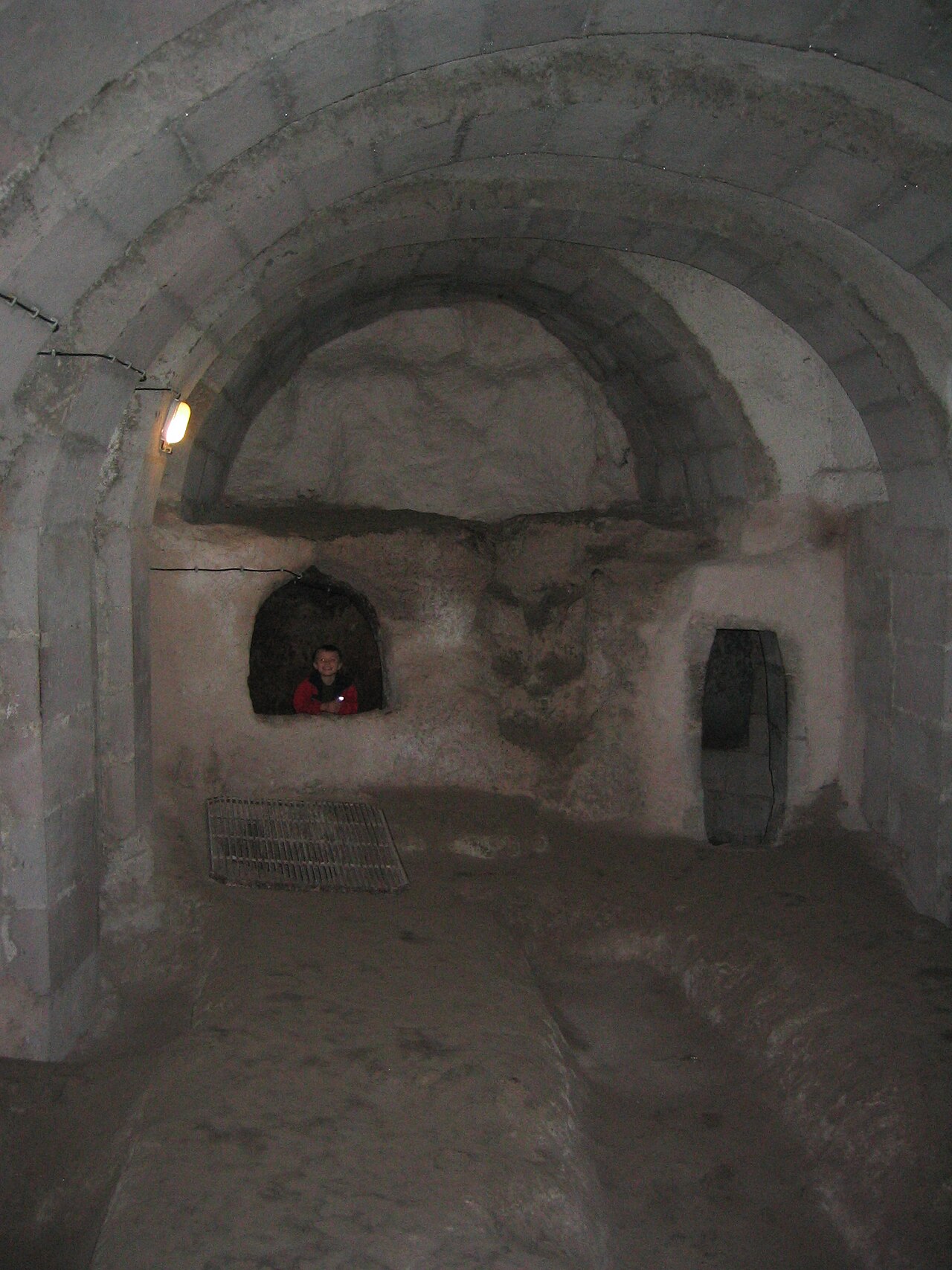
- Aziz Theodoros Trion Church (Üzümlü Kilise) — Derinkuyu town centre
This church in Derinkuyu town stands above ground with a bell tower, a reminder that the Christian community lived on the surface as well as taking refuge below. It is worth a short stop before or after the underground visit, though access can vary, so ask locally or check the official site.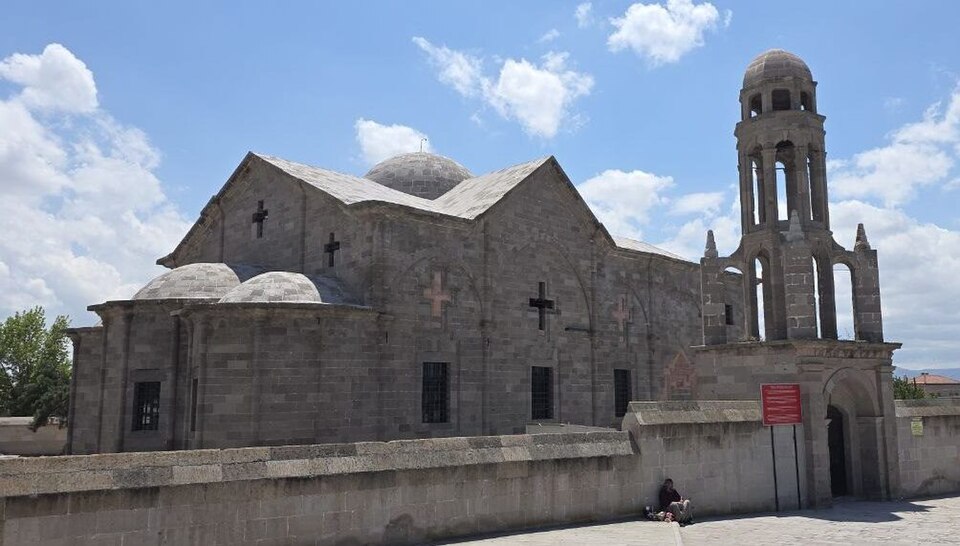
Culture
Derinkuyu is a working Turkish town as well as a heritage stop, and daily life runs on farming, tea houses and family. People in this part of Anatolia are generally friendly and hospitable, sometimes to the point of insisting that a visitor sit down for tea. Accepting a glass with a word of thanks is the easiest way to be polite.
Being invited into a home brings its own customs. Guests bring a small gift such as sweets or flowers, avoid alcohol as a present unless they know the family well, and take their shoes off at the door. The host will offer food and drink without being asked, so there is no need to request anything.
The heritage matters locally too. Cappadocia was home to Greek-speaking Orthodox Christians for centuries, and the churches and carved chapels belong to that history, which is remembered with a mix of pride and sensitivity. Most people in town today are Muslim, and the call to prayer is part of the everyday soundscape. Visitors who treat the underground city as a historic monument rather than an adventure playground fit in well, and a local guide, where one is hired, often adds stories that the signs do not.
Keep your voice low and stay on the marked route inside the tunnels, where narrow passages echo and groups bunch up, and never touch or scratch the carved walls and inscriptions.
What to wear
Fashion around Derinkuyu Underground City follows central Anatolian village habits rather than any catwalk. Traditional dress here is the rural Turkish wardrobe: for women, şalvar (loose gathered trousers) in printed cotton, worn with a long entari robe or tunic and a light headscarf tied under the chin; for men, wool or cotton trousers, waistcoats and flat caps. The region's textile pride lies in hand-knotted wool carpets, flatwoven kilims and patterned knitted socks, still made in villages and sold to visitors. Traditional clothes mostly appear at weddings, folk dance shows and festivals, and in daily life they survive chiefly among older women.
What people wear now is what they would wear in any Turkish small town: jeans or trousers, shirts and practical jackets, with many women choosing headscarves and long coats or tunics, while younger people dress much as they would in a European city.
For a visit, the first need is sturdy shoes with grip, because steps are worn and floors can be damp or uneven. Wear layers: the tunnels stay cool even when the plateau is hot, and winters here are properly cold. Trousers are easier than skirts for stooping and climbing. At mosques and active churches, cover shoulders and knees, carry a scarf for mosque visits, and favour slip-on shoes. Leave bulky backpacks behind, since they catch in tight passages.
What to eat
- Testi kebabı — Restaurants in Nevşehir and nearby Cappadocian towns
A Cappadocian speciality of meat and vegetables sealed in a clay jug and cooked slowly, then cracked open at the table. It is theatrical, filling and easy to share, so order one between two. - Gözleme — Roadside garden eateries and village stalls
Thin hand-rolled dough filled with spinach, white cheese or potato, folded and cooked on a round griddle. It is a cheap, quick lunch, often made in front of you by women at garden tables. Eat it hot with a glass of ayran or tea. - Mantı — A family-run lokanta (eatery) in town
Tiny dumplings of minced meat, boiled and served under garlicky yoghurt with melted butter and red pepper. The Kayseri version, from the nearby province, is the one many Turks have in mind. Look for it at a family-run lokanta. - Mercimek çorbası — Almost any lokanta or tea-house eatery
Red lentil soup, smooth and lightly spiced, served with lemon wedges and bread. It is a standard starter at almost any eatery, and a warming first meal after the cool of the tunnels. Squeeze lemon in just before eating. - Pekmez with tahini — Village shops and weekly markets
Grape molasses stirred into tahini and eaten with bread at breakfast, sweet, dark and energising. Cappadocia's vineyards make it a local pantry staple, and it is sold at village shops and weekly markets beside dried fruit.
Plan it
Best time. April–May and September–October, when days are mild for walking and queuing. Summers on the plateau are hot, though the tunnels stay cool, and winters are cold, with snow possible.
How long. 1–2
Getting there. Fly to Nevşehir Kapadokya or Kayseri Erkilet airport, then continue by road to Derinkuyu, south of Nevşehir, by bus, hire car or a tour from Göreme.
Budget. mid
Tips
- Arrive at opening time to get ahead of tour groups, and check the official site for current hours and closing days.
- Carry some cash for small shops and tea houses, though cards work in larger places.
- Wear shoes with grip and bring a light layer, since the tunnels are cool and floors can be uneven.
- Anyone uneasy in enclosed spaces should note that passages narrow and ceilings drop on the lower levels.
Etiquette
- Stay on the marked route and keep voices low in the tunnels.
- Do not touch or mark the carved walls and inscriptions.
- Remove shoes at a home door and accept offered tea with thanks.
Nearby
Sources
- Wikidata Q1328958 (CC0)
- Wikipedia: Derinkuyu underground city (CC BY-SA 4.0)
- Wikivoyage: Turkey (CC BY-SA 4.0)
- Photo: Nevit Dilmen, Ventilation well in Derinkuyu Underground City (CC BY 3.0)
- Photo: Nevit Dilmen, Derinkuyu Underground City (CC BY 3.0)
- Photo: Squeaks 41, Cappadocian Greek-speaking villages before 1924 (CC BY 4.0)
- Photo: Wmmorrow, Derinkuyu large room (CC BY-SA 4.0)
- Photo: Elena Pleskevich, Cappadocia / Derinkuyu (CC BY-SA 2.0)
- Photo: Joe Wallace, Derinkuyu Underground City Türkiye (CC BY-SA 2.0)
- Photo: MuratGemici50, Aziz Theodoros Trion Kilisesi, Derinkuyu (CC BY 4.0)
- Photo: The.Turk.46, Derinkuyu (CC BY-SA 4.0)


